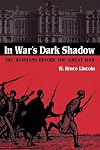
In War's Dark Shadow: The Russians Before the Great War
by W. Bruce Lincoln
On This Page
Description
The Russians before the Great War. In War's Dark Shadow is the story of the Russian people as they entered the twentieth century. It takes the reader into areas of Russian life that have remained virtually unknown in the West to all but those specialists who read and speak Russian.--[book jacket].Tags
Recommendations














Member Reviews
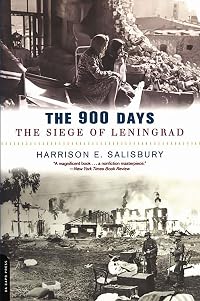
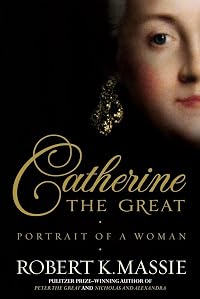
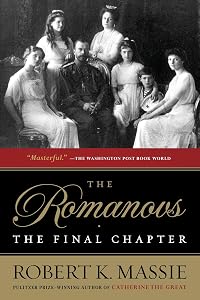
Well written account of a very violent and sad period of Russian history. It compares favorably with other works (Crankshaw, Salsbury, Massie in particular) on the end of the Romanov dynasty. Russian history is about as tragic and bloody as any novel, and this is brought out admirably by the author.
In War's Dark Shadow covers the 25 year period from 1891-1914 (the start of the Great War). In fact, the book also mentions events going back as far as the 1860's for added perspective. This helps fill in some area covered in the 25 years under review. That said, this is a marvelous book discussing in some detail how Russians lived prior to WWI. The life of the peasants is particularly shocking. I was not aware of the condiltions under which they lived and were governed. Small wonder there was a Russian Revolution(s) and the Romanov's executed!
It is really a sad tale of how autocratic rule can become so far removed from the daily life of the citizens that upheaval and revolution become inevitable. The book also deals with the overall show more culture, society and ecomonics of Imperial Russia.. Of great interest to me was the impact of industrialization on the peasants in the agricultural areas of Russia. Once industrialization took place, these folks began moving into the citites looking for work and imrpovement in their standard of living. They may have found work, but their living standard did not improve; it may actually have been reduced in some ways.
I strongly recommend this book to anyone with an interest in Russia, the revolution, WWI or the raise of Socialism in Europe. Great Book!! show less
It is really a sad tale of how autocratic rule can become so far removed from the daily life of the citizens that upheaval and revolution become inevitable. The book also deals with the overall show more culture, society and ecomonics of Imperial Russia.. Of great interest to me was the impact of industrialization on the peasants in the agricultural areas of Russia. Once industrialization took place, these folks began moving into the citites looking for work and imrpovement in their standard of living. They may have found work, but their living standard did not improve; it may actually have been reduced in some ways.
I strongly recommend this book to anyone with an interest in Russia, the revolution, WWI or the raise of Socialism in Europe. Great Book!! show less
In War's Dark Shadow is the history of Russia beginning in 1891 and ending at the onset of WW I. My main interest in reading it was to further my education about how and why the country ended up having a revolution in 1917. This book satisfied that objective. There are many chapters dedicated to the cultural climate......the peasant life, the small but powerful middle class, the Jewish pogroms, and the unyielding monarchy. Very informative! It held my interest as much as any good novel about Russia.
2640 In War's Dark Shadow: The Russians Before the Great War, by W. Bruce Lincoln (read 25 Aug 1994) This 1983 book covers the territory popularly covered by Harrison Salisbury in his Black Night, White Snow (read 10 Nov 1983) and by Edward Crankshaw in his The Shadow of the Winter Palace (read 8 Sep 1990). And also in First Blood by Sidney Harcave (read 30 Sep 1990). All these books explain why I did not find this book too informative. But some of it was new to me: a chapter on Russia's 'Silver Age'--the years from 1900 to 1907, about, was new and shocking--apparently the puritanical Communist attitude to sex was in reaction to the nuts of the Silver Age.
Ottimo libro. Sicuramente uno dei migliori che abbia letto finora sulla storia della Russia prima della Grande Guerra. E' uno spaccato molto interessante di un Paese che nonostante le sue grandi potenzialità entrava nel XX Secolo in condizioni di inferiorità rispetto a molti paesi europei dell'epoca. La Russia degli inizi del 900 infatti era già attraversata da conati rivoluzionari. Il malcontento era già cominciato a farsi sentire nelle città come San Pietroburgo e Mosca, ma anche ad Odessa, Kiev, etc. Un sempre crescente proletariato urbano, proveniente per la maggior parte dalle campagne, riversatosi nelle città dove la Rivoluzione Industriale, cominciata in Russia peraltro molto in ritardo rispetto a molti paese d'Europa show more dell'epoca, cominciava a far sentire il proprio malcontento nei confronti dello sfruttamento a cui era sottoposto da parte dei proprietari nelle fabbriche. Tuttavia il governo riteneva di non dover fare alcuna concessione e ignorare le proteste che andavano ogni giorno di più aumentando. L'autocrazia degli zar in Russia, agli inizi del 900 era mortalmente in pericolo ma nessuno sembrava accorgersene. Il governo stroncava sul nascere ogni tentativo da parte dei semplici cittadini, stanchi e affamati, di far sentire le proprie ragioni. Nel 1904 gli interessi della Russia nel Lontano Oriente andavano a collidere con quelli di una nuova potenza che cominciava a far sentire il proprio peso e aveva mire imperialiste sulla Corea. Proprio gli eventi relativi al possesso della Corea e la necessita, cercata dal governo russo di deviare il malcontento del cittadino medio, facendogli dimenticare il proprio malcontento verso il governo e l'autocrazia, distraendolo con una guerra contro un nemico esterno, portarono quindi alla guerra contro il Giapppne. Inizialmente sottovalutato come un nemico di seconda categoria, il giapponese veniva ritenuto dai russi alla stessa stregua di uno "scimpanzé". Tuttavia dopo appena pochi mesi di guerra era ormai chiaro che i giapponesi erano riusciti a far collassare il "colosso" russo. L'anno successivo la Russia non poteva far altro che firmare un trattato di pace e concedere al Giapppne territori in Manciuria. L'anno 1905 portava in Russia un primo vero tentativo di insurrezione diffuso su vasti territori dell'Impero. In questo caso pero l'esercito riusciva a stroncare i moti rivoluzionari i quali peraltro non erano organizzati trattandosi perlopiù di eventi spontanei. Negli anni tra il 1905 e lo scoppio della I Guerra Mondiale l'Autocrazia degli zar in Russia riusciva a tenersi in piedi ormai non tanto per consenso del popolo, il quale aveva oramai iniziato ad odiare il vecchio sistema, bensì sulle baionette dell'esercito, le cariche di cavalleria dei cosacchi e il lavoro della polizia politica. Tuttavia la fine si avvicinava inesorabile con l'avvento della guerra in Europa. Questa volta quindi l'esercito (composto in massima parte da contadini) non avrebbe più difeso i Romanov ma avrebbe contribuito alla loro fine dopo 300 anni di regno. show less
Dec 29, 2010Italian
Ratings
Members
- Recently Added By
Lists

All Things Russia
459 works; 11 members
Author Information

15 Works 1,869 Members
W. Bruce Lincoln was Distinguished Research Professor of Russian History at Northern Illinois University.
Common Knowledge
- Important places
- St Petersburg, Russia; Moscow, Russia; Odesa, Ukraine; Kyiv, Ukraine; Russian Empire
Classifications
- Genres
- History, Nonfiction, General Nonfiction
- DDC/MDS
- 947.08 — History & geography History of Europe Eastern European Counties and Russia Russian & Slavic History by Period 1855-
- LCC
- DK240 .L56 — History of Europe, Asia, Africa and Oceania Russia. Soviet Union. Former Soviet Republics – Poland History of Russia. Soviet Union. Former Soviet Republics History House of Romanov, 1613-1917
- BISAC
Statistics
- Members
- 308
- Popularity
- 104,374
- Reviews
- 5
- Rating
- (4.12)
- Languages
- English
- Media
- Paper
- ISBNs
- 4
- ASINs
- 9