On This Page
Description
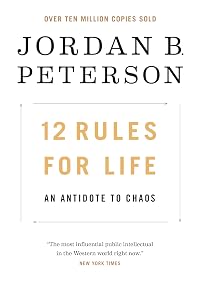
#1 NATIONAL BESTSELLER#1 INTERNATIONAL BESTSELLER
What does everyone in the modern world need to know?
Renowned psychologist Jordan B. Peterson's answer to this most difficult of questions uniquely combines the hard-won truths of ancient tradition with the stunning revelations of cutting-edge scientific research.
Humorous, surprising and informative, Dr. Peterson tells us why skateboarding boys and girls must be left alone, what terrible fate awaits those who criticize too easily, and show more why you should always pet a cat when you meet one on the street.
What does the nervous system of the lowly lobster have to tell us about standing up straight (with our shoulders back) and about success in life? Why did ancient Egyptians worship the capacity to pay careful attention as the highest of gods? What dreadful paths do people tread when they become resentful, arrogant and vengeful?
Dr. Peterson journeys broadly, discussing discipline, freedom, adventure and responsibility, distilling the world's wisdom into 12 practical and profound rules for life. 12 Rules for Life shatters the modern commonplaces of science, faith and human nature, while transforming and ennobling the mind and spirit of its readers. show less
Tags
Recommendations
Member Recommendations
Member Reviews
I really wanted this book to be good. I've seen interviews with the author and he seemed to be intelligent, rational, open to listen and explore new ideas with the scientific method (regardless of his personal views, which might be controversial to some)... and 12 Rules for Life is everything but :(
Contrary to its subtitle "an antidote to chaos", it is pure chaos, much too long, convoluted, with many digressions and loose ends, full of stories that bring little or none value to the argument for the choice of those 12 rules. Analogies used by the author are far-fetched and often fail to take into account the nuances and complexity of human life. There is little research done to validate those rules, and when data is presented it is show more cherry-picked and often misinterpreted in favor of the author's thesis. For many rules the only justification is "because I say so. Period" or "I had this one situation and it worked for me, so it's universal" or "because the Bible says so. Period" (and I have nothing against the Bible itself, just missing a bit more contemporary source of knowledge to argument applicability of those rules to modern life... or, in fact, any other source).
And the worst part is that this book is not totally bad. As in any chaos, as the author repetitively claims, there is some order - there are bits and themes that are interesting and make you question rules of life as you know them. They lure you deeper into the book wishing there will be more, that it will get better later on... but it doesn't. Some rules are written more coherently, some are painful to go through without a facepalm, some provide some insight, some are banal, all of them seem to miss the editor work.
I expected much more of this book and I wish I had stopped at watching videos with Peterson. My recommendation is rather to explore YouTube than start reading this book as for me it was a waste of time. show less
Contrary to its subtitle "an antidote to chaos", it is pure chaos, much too long, convoluted, with many digressions and loose ends, full of stories that bring little or none value to the argument for the choice of those 12 rules. Analogies used by the author are far-fetched and often fail to take into account the nuances and complexity of human life. There is little research done to validate those rules, and when data is presented it is show more cherry-picked and often misinterpreted in favor of the author's thesis. For many rules the only justification is "because I say so. Period" or "I had this one situation and it worked for me, so it's universal" or "because the Bible says so. Period" (and I have nothing against the Bible itself, just missing a bit more contemporary source of knowledge to argument applicability of those rules to modern life... or, in fact, any other source).
And the worst part is that this book is not totally bad. As in any chaos, as the author repetitively claims, there is some order - there are bits and themes that are interesting and make you question rules of life as you know them. They lure you deeper into the book wishing there will be more, that it will get better later on... but it doesn't. Some rules are written more coherently, some are painful to go through without a facepalm, some provide some insight, some are banal, all of them seem to miss the editor work.
I expected much more of this book and I wish I had stopped at watching videos with Peterson. My recommendation is rather to explore YouTube than start reading this book as for me it was a waste of time. show less
I see many five-star reviews here, so here is the contrarian position. I’m giving this one star for a couple of reasons.
1. The content does not justify the length of the book. When you strip away the pseudo-profundity and verbosity, you’re left with rather simple ideas you could find in any self-help book or discover on your own. Rule # 1, for instance, essentially states that females prefer males with confidence and that success breeds confidence and further success. This is rather obvious without having to understand the evolutionary history of lobsters.
2. The introduction of the book presents the author as an objective investigator of the truth, disillusioned by dogmatic ideology and prepared to demonstrate its dangers. He then show more proceeds to incessantly quote from the bible, perhaps the most dogmatic text ever written. I didn’t purchase the book to be preached at, and found it unexpected and highly obnoxious.
I understand that the author is interested in story and “archetypes,” but the bible is quoted out of proportion. There are many ancient stories to choose from, each with endless interpretive possibilities, but the bible is, for some reason, the primary text. Now I’m sure this is fine with many people, but I was unpleasantly surprised that I had purchased a book on biblical criticism or theology.
The stories the author has selected to focus on, his preferred interpretations, and the stories he ignores, says more about his psychology than anything else. It appears that he NEEDS religion to be true to prevent his own nihilistic tendencies, a viewpoint he foists on his readers.
More than once he states in no unequivocal terms that Jesus is the “archetypal perfect man.” Perhaps, but without getting into it here, there are many reasons to think perhaps not. For those more philosophically inclined, or for those that appreciate the progress of humanism and science, Socrates, for example, would probably be a better fit for the archetypal perfect man. And if I want insight into morality and human nature from an ancient source, I’d turn to Plato and Aristotle before the Good Book.
Again, this is all too subjective, which is the problem in general with using “ancient wisdom” to support a particular viewpoint. The author presents his interpretive schemes as objective truths about human nature and the only display of humility is found in the introduction.
--------------------------------------
For those seeking an alternative to Jordan Peterson’s dark vision of the world, questionable approach to truth and knowledge, and retreat to religion, they will find the answer in Bertrand Russell, whose essays on religion seem to, at times, be speaking directly to Peterson himself.
Here’s the final paragraph from Russell’s essay Why I Am Not a Christian:
Russell wishes to replace fear, religion, and dogma with free-thinking, intelligence, courage, knowledge, and kindness. To believe something because it is seen to be useful, rather than true, is intellectually dishonest to the highest degree. And, as Russell points out elsewhere, he can’t recall a single verse in the Bible that praises intelligence.
Here’s Russell in another essay, titled Can Religion Cure Our Troubles:
We can see that the Peterson fallacy is at least as old as 1954. The fact that Communism and Nazism committed evils is not justification to return to religious dogma; in fact, that would just be replacing one dogmatic ideology for another.
The solution is not a retreat to the Age of Faith, which was no more pleasant than living under communism; the solution is a renewal of the Enlightenment values of reason, science, humanism, and progress espoused by Russell himself.
---
And here are some worthwhile alternatives to 12 Rules For Life:
The Happiness Hypothesis: Finding Modern Truth in Ancient Wisdom by Jonathan Haidt
The Practicing Stoic: A Philosophical User's Manual by Ward Farnsworth
Why I Am Not a Christian and Other Essays on Religion and Related Subjects by Bertrand Russell
The God Argument: The Case against Religion and for Humanism by AC Grayling show less
1. The content does not justify the length of the book. When you strip away the pseudo-profundity and verbosity, you’re left with rather simple ideas you could find in any self-help book or discover on your own. Rule # 1, for instance, essentially states that females prefer males with confidence and that success breeds confidence and further success. This is rather obvious without having to understand the evolutionary history of lobsters.
2. The introduction of the book presents the author as an objective investigator of the truth, disillusioned by dogmatic ideology and prepared to demonstrate its dangers. He then show more proceeds to incessantly quote from the bible, perhaps the most dogmatic text ever written. I didn’t purchase the book to be preached at, and found it unexpected and highly obnoxious.
I understand that the author is interested in story and “archetypes,” but the bible is quoted out of proportion. There are many ancient stories to choose from, each with endless interpretive possibilities, but the bible is, for some reason, the primary text. Now I’m sure this is fine with many people, but I was unpleasantly surprised that I had purchased a book on biblical criticism or theology.
The stories the author has selected to focus on, his preferred interpretations, and the stories he ignores, says more about his psychology than anything else. It appears that he NEEDS religion to be true to prevent his own nihilistic tendencies, a viewpoint he foists on his readers.
More than once he states in no unequivocal terms that Jesus is the “archetypal perfect man.” Perhaps, but without getting into it here, there are many reasons to think perhaps not. For those more philosophically inclined, or for those that appreciate the progress of humanism and science, Socrates, for example, would probably be a better fit for the archetypal perfect man. And if I want insight into morality and human nature from an ancient source, I’d turn to Plato and Aristotle before the Good Book.
Again, this is all too subjective, which is the problem in general with using “ancient wisdom” to support a particular viewpoint. The author presents his interpretive schemes as objective truths about human nature and the only display of humility is found in the introduction.
--------------------------------------
For those seeking an alternative to Jordan Peterson’s dark vision of the world, questionable approach to truth and knowledge, and retreat to religion, they will find the answer in Bertrand Russell, whose essays on religion seem to, at times, be speaking directly to Peterson himself.
Here’s the final paragraph from Russell’s essay Why I Am Not a Christian:
"WHAT WE MUST DO
We want to stand upon our own feet and look fair and square at the world—its good facts, its bad facts, its beauties, and its ugliness; see the world as it is, and be not afraid of it. Conquer the world by intelligence, and not merely by being slavishly subdued by the terror that comes from it. The whole conception of God is a conception derived from the ancient Oriental despotisms. It is a conception quite unworthy of free men. When you hear people in church debasing themselves and saying that they are miserable sinners, and all the rest of it, it seems contemptible and not worthy of self-respecting human beings. We ought to stand up and look the world frankly in the face. We ought to make the best we can of the world, and if it is not so good as we wish, after all it will still be better than what these others have made of it in all these ages. A good world needs knowledge, kindliness, and courage; it does not need a regretful hankering after the past, or a fettering of the free intelligence by the words uttered long ago by ignorant men. It needs a fearless outlook and a free intelligence. It needs hope for the future, not looking back all the time towards a past that is dead, which we trust will be far surpassed by the future that our intelligence can create.
Russell wishes to replace fear, religion, and dogma with free-thinking, intelligence, courage, knowledge, and kindness. To believe something because it is seen to be useful, rather than true, is intellectually dishonest to the highest degree. And, as Russell points out elsewhere, he can’t recall a single verse in the Bible that praises intelligence.
Here’s Russell in another essay, titled Can Religion Cure Our Troubles:
Mankind is in mortal peril, and fear now, as in the past, is inclining men to seek refuge in God. Throughout the West there is a very general revival of religion. Nazis and Communists dismissed Christianity and did things which we deplore. It is easy to conclude that the repudiation of Christianity by Hitler and the Soviet Government is at least in part the cause of our troubles and that if the world returned to Christianity, our international problems would be solved. I believe this to be a complete delusion born of terror. And I think it is a dangerous delusion because it misleads men whose thinking might otherwise be fruitful and thus stands in the way of a valid solution.
The question involved is not concerned only with the present state of the world. It is a much more general question, and one which has been debated for many centuries. It is the question whether societies can practise a sufficient modicum of morality if they are not helped by dogmatic religion. I do not myself think that the dependence of morals upon religion is nearly as close as religious people believe it to be. I even think that some very important virtues are more likely to be found among those who reject religious dogmas than among those who accept them. I think this applies especially to the virtue of truthfulness or intellectual integrity. I mean by intellectual integrity the habit of deciding vexed questions in accordance with the evidence, or of leaving them undecided where the evidence is inconclusive. This virtue, though it is underestimated by almost all adherents of any system of dogma, is to my mind of the very greatest social importance and far more likely to benefit the world than Christianity or any other system of organised beliefs.
We can see that the Peterson fallacy is at least as old as 1954. The fact that Communism and Nazism committed evils is not justification to return to religious dogma; in fact, that would just be replacing one dogmatic ideology for another.
The solution is not a retreat to the Age of Faith, which was no more pleasant than living under communism; the solution is a renewal of the Enlightenment values of reason, science, humanism, and progress espoused by Russell himself.
---
And here are some worthwhile alternatives to 12 Rules For Life:
The Happiness Hypothesis: Finding Modern Truth in Ancient Wisdom by Jonathan Haidt
The Practicing Stoic: A Philosophical User's Manual by Ward Farnsworth
Why I Am Not a Christian and Other Essays on Religion and Related Subjects by Bertrand Russell
The God Argument: The Case against Religion and for Humanism by AC Grayling show less
Jordan B. Peterson can be controversial given his strong opinions on certain topics and the people he interviews for his podcast, but I find him an interesting character.
Given how hyper intelligent he is, it was no surprise that the 12 rules / chapters in this book could get pretty complex at times, and on occasions I had to circle back to make sure I was following the thread of his point, but heavy going as it was from time to time I enjoyed his philosophising and following the meandering path of this key point for each chapter.
The rules sound pretty random from the titles, but Peterson covers a lot of ground with each:
Stand up straight with your shoulders back
Treat yourself like someone you are responsible for helping
Make friends show more with people who want the best for you
Compare yourself to who you were yesterday, not to who someone else is today
Do not let your children do anything that makes you dislike them
Set your house in perfect order before you criticise the world
Pursue what is meaningful (not what is expedient)
Tell the truth - or, at least, don't lie
Assume that the person you are listening to might know something you don't
Be precise in your speech
Do not bother children when they are skateboarding
Pet a cat when you encounter one on the street
Do I agree with everything Peterson thinks? No (for instance, his thoughts on men and women can be quite stereotypical and black and white), but he's got an exceptional brain and I find his thought process incredibly interesting.
4 stars - thought provoking and insightful. I'll look out for the follow up (but will give my brain a rest first). show less
Given how hyper intelligent he is, it was no surprise that the 12 rules / chapters in this book could get pretty complex at times, and on occasions I had to circle back to make sure I was following the thread of his point, but heavy going as it was from time to time I enjoyed his philosophising and following the meandering path of this key point for each chapter.
The rules sound pretty random from the titles, but Peterson covers a lot of ground with each:
Stand up straight with your shoulders back
Treat yourself like someone you are responsible for helping
Make friends show more with people who want the best for you
Compare yourself to who you were yesterday, not to who someone else is today
Do not let your children do anything that makes you dislike them
Set your house in perfect order before you criticise the world
Pursue what is meaningful (not what is expedient)
Tell the truth - or, at least, don't lie
Assume that the person you are listening to might know something you don't
Be precise in your speech
Do not bother children when they are skateboarding
Pet a cat when you encounter one on the street
Do I agree with everything Peterson thinks? No (for instance, his thoughts on men and women can be quite stereotypical and black and white), but he's got an exceptional brain and I find his thought process incredibly interesting.
4 stars - thought provoking and insightful. I'll look out for the follow up (but will give my brain a rest first). show less
Canadian psychologist Jordan Peterson isn't such a Big Thing in UK as the States, but I saw his name mentioned on numerous sites - and, it seemed, with feather-spitting bile by the more Leftist brigade. Intrigued, I tuned into some of his Youtube lectures: if he so upset such folk, surely he must have something to offer. I found him astonishingly erudite...and rational. So I got the book.
There's a plethora of self help type books out there, taking you, step by step, through ways to improve yourself. I've read a few and am a bit 'meh' about them, since it always feels you'd need to be reading and re-reading them 'in an undertone, day and night', in order to to re-shape your narural flawed inclinations. One read might impress you- but can show more it honestly effect any change?
Peterson's book, for all its fun chapter headings is emphatically not to be read with the expectation of something light and simple. It's readable, but you sure have to concentrate. And it moves from little individual things into the bigger picture of how society is going. Thus Rule 11 "Do not bother children when they are skateboarding" begins by advocating adults not to wrap up kids in cotton wool, not to forbid all risks. But this simple idea is followed on to the increasing societal emphasis on the 'nice, safe, accepting" ethos enjoined on all - the feminization, Peterson argues, of society, the vilification of the male. Well argued and with many references to notable philosophers- and the Bible- he writes an impressive and all-encompassing tome.
I feel I should have made copious notes. I've only scratched the surface..and it's due back at library But this is emphatically worth reading, if only to realize there actually ARE great brains out there who 'get' the strange and entirely irrational beliefs which postmodernism has led to in 2019 show less
There's a plethora of self help type books out there, taking you, step by step, through ways to improve yourself. I've read a few and am a bit 'meh' about them, since it always feels you'd need to be reading and re-reading them 'in an undertone, day and night', in order to to re-shape your narural flawed inclinations. One read might impress you- but can show more it honestly effect any change?
Peterson's book, for all its fun chapter headings is emphatically not to be read with the expectation of something light and simple. It's readable, but you sure have to concentrate. And it moves from little individual things into the bigger picture of how society is going. Thus Rule 11 "Do not bother children when they are skateboarding" begins by advocating adults not to wrap up kids in cotton wool, not to forbid all risks. But this simple idea is followed on to the increasing societal emphasis on the 'nice, safe, accepting" ethos enjoined on all - the feminization, Peterson argues, of society, the vilification of the male. Well argued and with many references to notable philosophers- and the Bible- he writes an impressive and all-encompassing tome.
I feel I should have made copious notes. I've only scratched the surface..and it's due back at library But this is emphatically worth reading, if only to realize there actually ARE great brains out there who 'get' the strange and entirely irrational beliefs which postmodernism has led to in 2019 show less
Utter codswallop.
Basically, the author's modus operandi seems to have been (more or less):
1. establish an idiosyncratic reading of a few biblical passages (roughly speaking: "Satan" is a code for "chaos"; "God" is a code for "order" and "evil" is a code for "chaos caused by humans").
2. cite some examples of a particular rule derived from his application of the code to some biblical event -- typically such examples come from his own life (although there's no independent evidence to establish that these are actual events described without bias -- nor that there weren't other events that refute the derived rule).
3. Generalise the rule to a universal truth in life -- or at least a rule that will help the reader live a happier and/or better show more -- or perhaps merely more ordered -- life.
I was pretty skeptical after reading the first rule, the thrust of which is to act so that people think highly of you -- because that will fill your system with seratonin, which will make you feel better and more confident, because of which you will accomplish more. Honestly, is one really expected to take this stuff seriously? Anyway, it all went downhill from there. I finally gave up partway through rule 8, and read a Wodehouse instead -- which I reckon did me far more good, as "laughter is the best medicine". show less
Basically, the author's modus operandi seems to have been (more or less):
1. establish an idiosyncratic reading of a few biblical passages (roughly speaking: "Satan" is a code for "chaos"; "God" is a code for "order" and "evil" is a code for "chaos caused by humans").
2. cite some examples of a particular rule derived from his application of the code to some biblical event -- typically such examples come from his own life (although there's no independent evidence to establish that these are actual events described without bias -- nor that there weren't other events that refute the derived rule).
3. Generalise the rule to a universal truth in life -- or at least a rule that will help the reader live a happier and/or better show more -- or perhaps merely more ordered -- life.
I was pretty skeptical after reading the first rule, the thrust of which is to act so that people think highly of you -- because that will fill your system with seratonin, which will make you feel better and more confident, because of which you will accomplish more. Honestly, is one really expected to take this stuff seriously? Anyway, it all went downhill from there. I finally gave up partway through rule 8, and read a Wodehouse instead -- which I reckon did me far more good, as "laughter is the best medicine". show less
I read this through hungrily - not because of its revelations, but rather because of how frighteningly this man has managed to get a following in 2018. He clearly represents a piece of flotsam for any white men desperately searching for a way to escape their sense of persecution. His logic and reason are so blatantly peppered with nonsensical comparisons, cherry picking, and deep-rooted fear and loathing for women and minorities, that it seems artfully designed to both appeal to cavemen and to extract delicious liberal tears to enjoy while they gather their war-party.
Because lobster males subjugate lobster females - it's fighting the natural order of things for women to resist subjugation. Because women are outperforming men in school show more and the workplace, women should be resisted in school and the workplace - so men don't feel outperformed. It hurts their feelings (the feelings they don't have, at that... don't ask me to make it make sense - the point is that it doesn't pass the merest scratch test on any area of its philosophy). Because a man invented the tampon (in a nation and cultural climate where female industry hadn't a prayer of gaining traction), there is no patriarchy (I shit you not).
After telling his audience what an ideologue is, and why they are to be avoided and cautioned against, he reveals to his literate audience that he is exactly that - while the portion of his audience who came for the delicious bowl of red pills yuck it up at the concession stand.
Truly a wine that pairs perfectly with the age of Trump - while proudly parading the irony in front of anyone who knows what irony actually is. Another example of a personality that unintelligent people will mistake for intelligent - because they have the same brands of hate, now with 100% more multisyllabic apologetics. Nothing could be more reprehensible than lying and deception, he says - while paving the hungry minds of confused and frightened white guys with arguments designed to make them think Orwell is holding their hand up the cattle chute into an age of tyranny.
Please teach your children well. Otherwise, some of them will be drawn under this tent - where might always makes right, and the downtrodden and disenfranchised are asking for it. show less
Because lobster males subjugate lobster females - it's fighting the natural order of things for women to resist subjugation. Because women are outperforming men in school show more and the workplace, women should be resisted in school and the workplace - so men don't feel outperformed. It hurts their feelings (the feelings they don't have, at that... don't ask me to make it make sense - the point is that it doesn't pass the merest scratch test on any area of its philosophy). Because a man invented the tampon (in a nation and cultural climate where female industry hadn't a prayer of gaining traction), there is no patriarchy (I shit you not).
After telling his audience what an ideologue is, and why they are to be avoided and cautioned against, he reveals to his literate audience that he is exactly that - while the portion of his audience who came for the delicious bowl of red pills yuck it up at the concession stand.
Truly a wine that pairs perfectly with the age of Trump - while proudly parading the irony in front of anyone who knows what irony actually is. Another example of a personality that unintelligent people will mistake for intelligent - because they have the same brands of hate, now with 100% more multisyllabic apologetics. Nothing could be more reprehensible than lying and deception, he says - while paving the hungry minds of confused and frightened white guys with arguments designed to make them think Orwell is holding their hand up the cattle chute into an age of tyranny.
Please teach your children well. Otherwise, some of them will be drawn under this tent - where might always makes right, and the downtrodden and disenfranchised are asking for it. show less
"Aim to be the person at your father's funeral that everyone, in their grief and misery, can rely on." (pg. 365)
There will be two types of people approaching Jordan B. Peterson's new book and perhaps wanting something from this review. I won't be going into any of Peterson's ideas here. There would be a lot to get into, and a lot that requires context. And – importantly, considering the political attacks he suffers – it is best to hear it from the man himself rather than risk misquoting or misrepresenting or oversimplifying him. Anyway, there are two types of people here: those who know who Jordan Peterson is, and those who do not.
Briefly, to those who know. This book is at the high standard he has set in his videos, interviews, show more lectures and public talks. He is a more engaging and more fluent speaker than he is a writer, but I do not mean this to suggest that he is a bad writer. No – he is coherent and structured and, in many ways, he writes the way he speaks (and Peterson has said that he wrote this book to consolidate what he has been speaking about for years, but in a more public-friendly way than the academic Maps of Meaning). But there is such a wealth of ideas and information that it is easier to lose your train of thought in reading the book or, as I did, you might spend ages just turning over in your mind a paragraph you had just read, in order to unpack the ideas. In a book you go at your own pace, for the most part. In a lecture or an interview (even a three-hour-long one, which is less daunting than you would think once he really gets going) there is a set pace. Peterson's fantastic three-hour interview with Dave Rubin on The Rubin Report (https://www.youtube.com/watch?v=GJJClhqGq_M) is a great approximation of what he talks about in the book, but I did not feel like I was going over old ground when I got around to reading it. There's a lot to get into. Long story short, for those who know who he is, Peterson hits his marks here. (Though his footnotes are out of sync.)
Now, to those who do not know. You might have heard 12 Rules for Life described as a self-help book. (Which would imply it was cheap and hokey.) You might have heard Peterson described in the media as a 'hero to the alt-right' or a 'transphobe'. Now, you're likely sick of that sort of politically-correct agitprop crap – who isn't, by now? – and those sorts of slurs don't land like they used to (Peterson would probably note that that is scary in itself – that words like 'racist' have become so devalued that they have no power any more. It's the 'boy who cried wolf' story.) But you would be forgiven for wanting to keep a wide berth – we're all politicked out lately. All I would say is that the attacks are not even remotely true, and the best antidote to them is to take a look at some of his stuff for yourself – particularly his YouTube videos – and make up your own mind. (I don't have 12 rules, I have one – and that is it.)
The most remarkable thing is that Peterson is not very political. Rather, he is a trained and widely respected clinical psychologist who is trying to address why so many people are dissatisfied with their lives and disaffected with the modern world. And so, he gets down into the roots of things, the psychological roots, and he writes about them lucidly and honestly. And he finds that the best – though not perfect – attempt yet made by humans to deal with the problem of life and consciousness (the problem of Being, he would call it) is the construction of Western civilization, under the twin pillars of Christianity and the Classical tradition. And he finds that ideology (of the sort which brought Europe to its knees – and beyond, in places like Auschwitz and the gulags – with fascism and communism, and the sort which is being perpetuated by the post-modern, neo-Marxist, social justice warrior type activists in universities and the media) is the road to Hell, because it reduces things to a single problem – usually caused by something other, out there in the world, that you can project your hate onto – rather than sorting yourself out. As the popular meme goes: Jordan Peterson says clean your damn room. (Rule 6 here is an expansion on this: 'Set your house in perfect order before you criticize the world.') And for this, he is pilloried by the ignorant. (And perhaps also the malevolent.)
The book is more philosophy than self-help (though the boundary between the two is permeable, in theory, if you think about it). 12 Rules for Life is an unfortunate title in a sense (Antidote to Chaos, the subtitle, would have been better), as it does reinforce the false impression that it is a self-help book. (I imagine the publishers were pleased with the title, however, because such suggestiveness would help book sales.) 'Self-help' enables Peterson's many detractors to be unfairly dismissive of the book without even trying. And some of the lines that have been quoted in reviews by mainstream media organizations do sound self-help-y when taken out of context. (Sidebar: Every mainstream review or interview I have seen only talks about the lobsters bit – which is Chapter 1, implying the presenter/reviewer hasn't read the book – or the chapter on child-rearing – which would be the one chapter to appeal to the middle-class media types who project their neuroses onto their children. This tells you everything you need to know about the established media class.)
But Peterson does not provide easy answers. He is here to tell you that there are none. Life is suffering, as he often (and rightly) says. There are no magic words or maxims to make life meaningful, and even his 12 Rules require a lot of unpacking and context so that they not only make sense but you understand why they make sense (which is why I'm not trying to unpack them in this review). If you read the book honestly, you will not like yourself. You will be shown many of your failings, and you will be shown how easy it is (sometimes) to fix them, and how sometimes you don't want to fix them. It is hard when someone shows you so clearly that you are not special and that everything is on you. You will instinctively resent this. But the reason Peterson has such a wide appeal is, firstly, that he also points out what is wonderful about being human and being you, the individual you. This is not trivial. And secondly, when he speaks about this stuff, you know it to be true. You really sit up and pay attention. You know it to be true. It speaks to the core of you.
I've come rather late to Peterson's videos and lectures and so on (just a few months now), but I've been thinking along these lines for a few years. If I've not been setting down grooves, I've at least been skating across the ice. And things began to click as soon as I started delving into what Peterson was saying. He was getting down into the roots of why things are the way they are – in life, in politics, in our individual minds – and it all sounded right. Not by sleight-of-hand or by lofty rhetoric or feel-good soothers, but in fact by the exact opposite: by stark, no-nonsense lucidity about the flaws and the good things in people. "An idea is more credible when it emerges as a consequence of investigations in different realms," he writes on page 42, and this is what it feels like. You are already thinking along these lines – even if subconsciously or with bare whispers – and someone comes along and explains the ideas much more clearly than they have been in the sludge of your own mind, and you think: Yes. He's got it, man. It's honesty. That might sound easy, but who really wants to be honest about the world and the things in it, let alone about themselves? This is honesty here.
Now, a lot of the stuff here, when you delve into it, is not new stuff. A lot of it could be classed as accepted wisdom, whether proverbial or Biblical or acquired. But that's the point. It's not a criticism. Peterson is not shy in admitting this is 'ancient wisdom' and not his own (pg. 368). Indeed, he revels in it, and rightly so. It's the human struggle. It's Being. It's why certain pieces of art quicken the blood – because you're being exposed to something which chimes with that inner sense of worth and struggle. It's what the twin pillars of Christianity and the classical tradition were erected for in the first place. To maintain man. (And woman.) "Life is indistinguishable from effortful maintenance" (pg. 273). Yes. That's it. And when you read it or you hear it, you know it.
Now, certainly, you should not accept things as gospel. To speak of 'teachings' or 'rules' or 'the way' does sound a bit lame, and you can understand why many people instinctively scoff at Peterson's popularity. And I am no fan of self-help stuff. Not by a long shot. But in our popular culture there has been no-one really addressing hard truths. Certainly not in politics; Peterson is rarely political, despite his reputation – Chapter 11 is where he is most explicitly political – but when he is, he is lucid. And it is rare nowadays for someone to speak about politics in the public sphere and base their stated viewpoints on verifiable science and logical consistency.
That stand against the politically-correct culture in Canadian universities is what made Peterson famous (or infamous), but people stayed because of what he was saying not about politics, but about life. His 'message' – again, it sounds a bit lame – is the lessons of all the great storytellers and philosophers, the lessons and the archetypes, codified and told with a popular touch. His main draw is that he gets down to the root of why these are true, psychologically speaking. And he does so with eloquence, a wealth of anecdote and analogy and example, and he is not without some humour. (There is a daft 'dad joke' early on in the first chapter of which any embarrassing father would be proud.)
It's a lot to take in. But there's no-one out there really looking this stuff in the eye and speaking honestly about it. Something is coming, so I am reading as much as I can, and getting as many tools as I can. Because you can feel something is coming. And if we don't know what it is, and what tools we need to fight it, we can at least decide what we would want to preserve when it comes. I've read a lot (though still not enough) and I think Jordan B. Peterson is the best out there right now. Read him, and have a thousand compelling and terrifying and inspiring thoughts fizzing through your brain as you do. You see, I did not think I would be able to get my thoughts together to write a proper review of this book, and yet somehow I've written nearly two thousand words and still barely scratched the surface. show less
There will be two types of people approaching Jordan B. Peterson's new book and perhaps wanting something from this review. I won't be going into any of Peterson's ideas here. There would be a lot to get into, and a lot that requires context. And – importantly, considering the political attacks he suffers – it is best to hear it from the man himself rather than risk misquoting or misrepresenting or oversimplifying him. Anyway, there are two types of people here: those who know who Jordan Peterson is, and those who do not.
Briefly, to those who know. This book is at the high standard he has set in his videos, interviews, show more lectures and public talks. He is a more engaging and more fluent speaker than he is a writer, but I do not mean this to suggest that he is a bad writer. No – he is coherent and structured and, in many ways, he writes the way he speaks (and Peterson has said that he wrote this book to consolidate what he has been speaking about for years, but in a more public-friendly way than the academic Maps of Meaning). But there is such a wealth of ideas and information that it is easier to lose your train of thought in reading the book or, as I did, you might spend ages just turning over in your mind a paragraph you had just read, in order to unpack the ideas. In a book you go at your own pace, for the most part. In a lecture or an interview (even a three-hour-long one, which is less daunting than you would think once he really gets going) there is a set pace. Peterson's fantastic three-hour interview with Dave Rubin on The Rubin Report (https://www.youtube.com/watch?v=GJJClhqGq_M) is a great approximation of what he talks about in the book, but I did not feel like I was going over old ground when I got around to reading it. There's a lot to get into. Long story short, for those who know who he is, Peterson hits his marks here. (Though his footnotes are out of sync.)
Now, to those who do not know. You might have heard 12 Rules for Life described as a self-help book. (Which would imply it was cheap and hokey.) You might have heard Peterson described in the media as a 'hero to the alt-right' or a 'transphobe'. Now, you're likely sick of that sort of politically-correct agitprop crap – who isn't, by now? – and those sorts of slurs don't land like they used to (Peterson would probably note that that is scary in itself – that words like 'racist' have become so devalued that they have no power any more. It's the 'boy who cried wolf' story.) But you would be forgiven for wanting to keep a wide berth – we're all politicked out lately. All I would say is that the attacks are not even remotely true, and the best antidote to them is to take a look at some of his stuff for yourself – particularly his YouTube videos – and make up your own mind. (I don't have 12 rules, I have one – and that is it.)
The most remarkable thing is that Peterson is not very political. Rather, he is a trained and widely respected clinical psychologist who is trying to address why so many people are dissatisfied with their lives and disaffected with the modern world. And so, he gets down into the roots of things, the psychological roots, and he writes about them lucidly and honestly. And he finds that the best – though not perfect – attempt yet made by humans to deal with the problem of life and consciousness (the problem of Being, he would call it) is the construction of Western civilization, under the twin pillars of Christianity and the Classical tradition. And he finds that ideology (of the sort which brought Europe to its knees – and beyond, in places like Auschwitz and the gulags – with fascism and communism, and the sort which is being perpetuated by the post-modern, neo-Marxist, social justice warrior type activists in universities and the media) is the road to Hell, because it reduces things to a single problem – usually caused by something other, out there in the world, that you can project your hate onto – rather than sorting yourself out. As the popular meme goes: Jordan Peterson says clean your damn room. (Rule 6 here is an expansion on this: 'Set your house in perfect order before you criticize the world.') And for this, he is pilloried by the ignorant. (And perhaps also the malevolent.)
The book is more philosophy than self-help (though the boundary between the two is permeable, in theory, if you think about it). 12 Rules for Life is an unfortunate title in a sense (Antidote to Chaos, the subtitle, would have been better), as it does reinforce the false impression that it is a self-help book. (I imagine the publishers were pleased with the title, however, because such suggestiveness would help book sales.) 'Self-help' enables Peterson's many detractors to be unfairly dismissive of the book without even trying. And some of the lines that have been quoted in reviews by mainstream media organizations do sound self-help-y when taken out of context. (Sidebar: Every mainstream review or interview I have seen only talks about the lobsters bit – which is Chapter 1, implying the presenter/reviewer hasn't read the book – or the chapter on child-rearing – which would be the one chapter to appeal to the middle-class media types who project their neuroses onto their children. This tells you everything you need to know about the established media class.)
But Peterson does not provide easy answers. He is here to tell you that there are none. Life is suffering, as he often (and rightly) says. There are no magic words or maxims to make life meaningful, and even his 12 Rules require a lot of unpacking and context so that they not only make sense but you understand why they make sense (which is why I'm not trying to unpack them in this review). If you read the book honestly, you will not like yourself. You will be shown many of your failings, and you will be shown how easy it is (sometimes) to fix them, and how sometimes you don't want to fix them. It is hard when someone shows you so clearly that you are not special and that everything is on you. You will instinctively resent this. But the reason Peterson has such a wide appeal is, firstly, that he also points out what is wonderful about being human and being you, the individual you. This is not trivial. And secondly, when he speaks about this stuff, you know it to be true. You really sit up and pay attention. You know it to be true. It speaks to the core of you.
I've come rather late to Peterson's videos and lectures and so on (just a few months now), but I've been thinking along these lines for a few years. If I've not been setting down grooves, I've at least been skating across the ice. And things began to click as soon as I started delving into what Peterson was saying. He was getting down into the roots of why things are the way they are – in life, in politics, in our individual minds – and it all sounded right. Not by sleight-of-hand or by lofty rhetoric or feel-good soothers, but in fact by the exact opposite: by stark, no-nonsense lucidity about the flaws and the good things in people. "An idea is more credible when it emerges as a consequence of investigations in different realms," he writes on page 42, and this is what it feels like. You are already thinking along these lines – even if subconsciously or with bare whispers – and someone comes along and explains the ideas much more clearly than they have been in the sludge of your own mind, and you think: Yes. He's got it, man. It's honesty. That might sound easy, but who really wants to be honest about the world and the things in it, let alone about themselves? This is honesty here.
Now, a lot of the stuff here, when you delve into it, is not new stuff. A lot of it could be classed as accepted wisdom, whether proverbial or Biblical or acquired. But that's the point. It's not a criticism. Peterson is not shy in admitting this is 'ancient wisdom' and not his own (pg. 368). Indeed, he revels in it, and rightly so. It's the human struggle. It's Being. It's why certain pieces of art quicken the blood – because you're being exposed to something which chimes with that inner sense of worth and struggle. It's what the twin pillars of Christianity and the classical tradition were erected for in the first place. To maintain man. (And woman.) "Life is indistinguishable from effortful maintenance" (pg. 273). Yes. That's it. And when you read it or you hear it, you know it.
Now, certainly, you should not accept things as gospel. To speak of 'teachings' or 'rules' or 'the way' does sound a bit lame, and you can understand why many people instinctively scoff at Peterson's popularity. And I am no fan of self-help stuff. Not by a long shot. But in our popular culture there has been no-one really addressing hard truths. Certainly not in politics; Peterson is rarely political, despite his reputation – Chapter 11 is where he is most explicitly political – but when he is, he is lucid. And it is rare nowadays for someone to speak about politics in the public sphere and base their stated viewpoints on verifiable science and logical consistency.
That stand against the politically-correct culture in Canadian universities is what made Peterson famous (or infamous), but people stayed because of what he was saying not about politics, but about life. His 'message' – again, it sounds a bit lame – is the lessons of all the great storytellers and philosophers, the lessons and the archetypes, codified and told with a popular touch. His main draw is that he gets down to the root of why these are true, psychologically speaking. And he does so with eloquence, a wealth of anecdote and analogy and example, and he is not without some humour. (There is a daft 'dad joke' early on in the first chapter of which any embarrassing father would be proud.)
It's a lot to take in. But there's no-one out there really looking this stuff in the eye and speaking honestly about it. Something is coming, so I am reading as much as I can, and getting as many tools as I can. Because you can feel something is coming. And if we don't know what it is, and what tools we need to fight it, we can at least decide what we would want to preserve when it comes. I've read a lot (though still not enough) and I think Jordan B. Peterson is the best out there right now. Read him, and have a thousand compelling and terrifying and inspiring thoughts fizzing through your brain as you do. You see, I did not think I would be able to get my thoughts together to write a proper review of this book, and yet somehow I've written nearly two thousand words and still barely scratched the surface. show less
Members
- Recently Added By
Published Reviews
ThingScore 75
Jordan Peterson may be the only clinical psychologist who believes that psychology is subordinate to philosophy and the one thing that psychology and philosophy both genuflect before is story. Story, or myth, predates religion and is, in fact, as old as language itself.
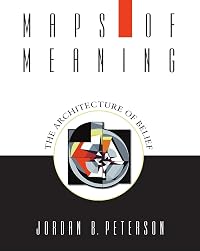
In his earlier book, Maps of Meaning: The Architecture of Belief, Peterson connects the stories we share with our earliest show more ancestors with modern knowledge of behavior and the mind. It’s a textbook for his popular University of Toronto courses.
The one-time dish washer and mill worker spent nearly 20 years at the University before garnering international attention. In September 2016, Peterson released a couple of videos opposing an amendment to the Canadian Human Rights Act which he contended could send someone to jail for refusing to use a made-up gender identity pronoun. Peterson went on to testify before the Canadian Senate, and has emerged as a foremost critic of postmodernism on North American campuses.
Postmodernism is the “new skin of communism,” In Peterson’s view. The ideology has been so thoroughly discredited from an economic standpoint that those who still advocate for it, for either political or emotional reasons, have resorted to attacking the very process in which something can be discredited—reason and debate. At the same time they have worked to change the face of oppression away from those living in poverty toward individuals who don’t look or act like those who hold most of the positions of power and authority in Western society.
Peterson’s classroom is now the entire globe. Millions are watching his lectures and other videos on YouTube. For this new and greater audience, a more accessible, more affordable compendium than Maps of Meaning was called for.
12 Rules for Life: An Antidote to Chaos is more affordable for sure, but only slightly more accessible. Part self-help book, part memoir, part Maps for the masses, it’s organized sprawlingly. Rule 2 (Treat yourself like someone you are responsible for helping), for example, opens with a discussion of biblical texts only addressing the lesson at hand at the very end. show less
In his earlier book, Maps of Meaning: The Architecture of Belief, Peterson connects the stories we share with our earliest show more ancestors with modern knowledge of behavior and the mind. It’s a textbook for his popular University of Toronto courses.
The one-time dish washer and mill worker spent nearly 20 years at the University before garnering international attention. In September 2016, Peterson released a couple of videos opposing an amendment to the Canadian Human Rights Act which he contended could send someone to jail for refusing to use a made-up gender identity pronoun. Peterson went on to testify before the Canadian Senate, and has emerged as a foremost critic of postmodernism on North American campuses.
Postmodernism is the “new skin of communism,” In Peterson’s view. The ideology has been so thoroughly discredited from an economic standpoint that those who still advocate for it, for either political or emotional reasons, have resorted to attacking the very process in which something can be discredited—reason and debate. At the same time they have worked to change the face of oppression away from those living in poverty toward individuals who don’t look or act like those who hold most of the positions of power and authority in Western society.
Peterson’s classroom is now the entire globe. Millions are watching his lectures and other videos on YouTube. For this new and greater audience, a more accessible, more affordable compendium than Maps of Meaning was called for.
12 Rules for Life: An Antidote to Chaos is more affordable for sure, but only slightly more accessible. Part self-help book, part memoir, part Maps for the masses, it’s organized sprawlingly. Rule 2 (Treat yourself like someone you are responsible for helping), for example, opens with a discussion of biblical texts only addressing the lesson at hand at the very end. show less
added by meritocrat
Lists

Best Self Help Books
87 works; 18 members

Jordan B. Peterson's Recommended Books
104 works; 5 members

Globe and Mail | Canadian Non-Fiction: Feb. 12, 2022
10 works; 1 member

Globe and Mail | Canadian Non-Fiction: September 10, 2022
10 works; 1 member

Globe and Mail | Canadian Non-Fiction: January 14, 2023
10 works; 1 member
Globe and Mail | Canadian Non-Fiction: September 17, 2022
10 works; 1 member

Globe and Mail | Canadian Non-Fiction: July 23, 2022
10 works; 1 member
Globe and Mail | Canadian Non-Fiction: Feb. 5, 2022
10 works; 1 member
Globe and Mail | Canadian Non-Fiction: January 7, 2023
10 works; 1 member
Globe and Mail | Canadian Non-Fiction: July 16, 2022
10 works; 1 member
Globe and Mail | Canadian Non-Fiction: July 30, 2022
10 works; 1 member
Globe and Mail | Canadian Non-Fiction: October 29, 2022
10 works; 1 member
Globe and Mail | Canadian Non-Fiction: August 27, 2022
10 works; 1 member

Globe and Mail | Canadian Non-Fiction: July 9, 2022
10 works; 1 member
Globe and Mail | Canadian Non-Fiction: September 3, 2022
10 works; 1 member

Globe and Mail | Canadian Non-Fiction: Jan. 15, 2022
10 works; 1 member
Globe and Mail | Canadian Non-Fiction: August 20, 2022
10 works; 1 member
Globe and Mail | Canadian Non-Fiction: Jan. 29, 2022
10 works; 1 member
Globe and Mail | Canadian Non-Fiction: October 22, 2022
10 works; 1 member
Globe and Mail | Canadian Non-Fiction: September 24, 2022
10 works; 1 member
Globe and Mail | Canadian Non-Fiction: October 15, 2022
10 works; 1 member

Globe and Mail | Canadian Non-Fiction: April 30, 2022
10 works; 1 member
Globe and Mail | Canadian Non-Fiction: November 5, 2022
10 works; 1 member

Globe and Mail | Canadian Non-Fiction: June 11, 2022
10 works; 1 member
Globe and Mail | Canadian Non-Fiction: October 1, 2022
10 works; 1 member

Globe and Mail | Canadian Non-Fiction: March 12, 2022
10 works; 1 member
Globe and Mail | Canadian Non-Fiction: March 5, 2022
10 works; 1 member
Globe and Mail | Canadian Non-Fiction: August 13, 2022
10 works; 1 member
Globe and Mail | Canadian Non-Fiction: August 6, 2022
10 works; 1 member

Globe and Mail | Canadian Non-Fiction: December 17, 2022
10 works; 1 member
Globe and Mail | Canadian Non-Fiction: December 24, 2022
10 works; 1 member
Globe and Mail | Canadian Non-Fiction: November 26, 2022
10 works; 1 member

Globe and Mail | Canadian Non-Fiction: June 4, 2022
10 works; 1 member
Globe and Mail | Canadian Non-Fiction: April 23, 2022
10 works; 1 member
Globe and Mail | Canadian Non-Fiction: Feb. 26, 2022
10 works; 1 member

Globe and Mail | Canadian Non-Fiction: October 8, 2022
10 works; 1 member

Globe and Mail | Canadian Non-Fiction: Oct. 23, 2021
9 works; 1 member
Globe and Mail | Canadian Non-Fiction: November 12, 2022
10 works; 1 member

Globe and Mail | Canadian Non-Fiction: June 25, 2022
10 works; 1 member
Globe and Mail | Canadian Non-Fiction: December 3, 2022
10 works; 1 member

Globe and Mail | Canadian Non-Fiction: Jan. 22, 2022
10 works; 1 member
Globe and Mail | Canadian Non-Fiction: July 2, 2022
10 works; 1 member
Globe and Mail | Canadian Non-Fiction: May 28, 2022
10 works; 1 member
Globe and Mail | Canadian Non-Fiction: December 10, 2022
10 works; 1 member

Globe and Mail | Canadian Non-Fiction: March 26, 2022
10 works; 1 member
Globe and Mail | Canadian Non-Fiction: May 14, 2022
10 works; 1 member

Guttabois
27 works; 1 member

Globe and Mail | Canadian Non-Fiction: June 18, 2022
10 works; 1 member
Globe and Mail | Canadian Non-Fiction: Dec. 18, 2021
10 works; 1 member
Globe and Mail | Canadian Non-Fiction: Jan. 8, 2022
10 works; 1 member
Globe and Mail | Canadian Non-Fiction: Dec. 11, 2021
10 works; 1 member
Globe and Mail | Canadian Non-Fiction: April 16, 2022
10 works; 1 member
Globe and Mail | Canadian Non-Fiction: May 21, 2022
10 works; 1 member
Globe and Mail | Canadian Non-Fiction: May 7, 2022
10 works; 1 member

Review 1
30 works; 1 member

Books Read in 2021
5,361 works; 113 members

Globe and Mail | Canadian Non-Fiction: September 16, 2023
10 works; 1 member
Globe and Mail | Canadian Non-Fiction: July 8, 2023
10 works; 1 member
Globe and Mail | Canadian Non-Fiction: July 15, 2023
10 works; 1 member
Globe and Mail | Canadian Non-Fiction: July 22, 2023
10 works; 1 member

Books Read in 2022
5,226 works; 112 members
Globe and Mail | Canadian Non-Fiction: July, 29, 2023
10 works; 1 member
Globe and Mail | Canadian Non-Fiction: August 5, 2023
10 works; 1 member
Globe and Mail | Canadian Non-Fiction: August 12, 2023
10 works; 1 member
Globe and Mail | Canadian Non-Fiction: August 19, 2023
10 works; 1 member
Globe and Mail | Canadian Non-Fiction: August 26, 2023
10 works; 1 member

Globe and Mail | Canadian Non-Fiction: September 2, 2023
10 works; 2 members
Globe and Mail | Canadian Non-Fiction: September 9, 2023
10 works; 1 member

Globe and Mail | Canadian Non-Fiction: September 23, 2023
10 works; 1 member

Globe and Mail | Canadian Non-Fiction: June 17, 2023
10 works; 1 member
Globe and Mail | Canadian Non-Fiction: September 30, 2023
10 works; 1 member
Globe and Mail | Canadian Non-Fiction: October 7, 2023
10 works; 1 member

Globe and Mail | Canadian Non-Fiction: October 14, 2023
10 works; 1 member
Globe and Mail | Canadian Non-Fiction: Year End, 2023
10 works; 1 member
Globe and Mail | Canadian Non-Fiction: January 6, 2024
10 works; 1 member
Globe and Mail | Canadian Non-Fiction: January 13, 2024
10 works; 1 member

Books by Cancelled People
40 works; 2 members
Globe and Mail | Canadian Non-Fiction: August 10, 2024
10 works; 1 member

Globe and Mail | Canadian Non-Fiction: December 14, 2024
10 works; 1 member

Globe and Mail | Canadian Non-Fiction: January 11, 2025
10 works; 1 member

Globe and Mail | Canadian Non-Fiction: July 12, 2025
10 works; 1 member
Globe and Mail | Canadian Non-Fiction: July 1, 2023
10 works; 1 member
Globe and Mail | Canadian Non-Fiction: June 10, 2023
10 works; 1 member

Books featured on I Don't Even Own a Television
167 works; 3 members

Globe and Mail | Canadian Non-Fiction: March 4, 2023
10 works; 1 member

Spiritual Growth/Philosophy/Self-Help
15 works; 1 member

Books Read in 2019
4,052 works; 110 members

Books Read in 2018
4,360 works; 110 members

Top Five Books of 2018
802 works; 265 members

The Joe Rogan Experience Library
254 works; 3 members
Globe and Mail | Canadian Non-Fiction: January 21, 2023
10 works; 1 member
Globe and Mail | Canadian Non-Fiction: January 28, 2023
10 works; 1 member
Globe and Mail | Canadian Non-Fiction: February 4, 2023
10 works; 1 member

Globe and Mail | Canadian Non-Fiction: February 11, 2023
10 works; 1 member
Globe and Mail | Canadian Non-Fiction: February 18, 2023
10 works; 1 member
Globe and Mail | Canadian Non-Fiction: February 25, 2023
10 works; 1 member
Globe and Mail | Canadian Non-Fiction: March 11, 2023
10 works; 1 member
Globe and Mail | Canadian Non-Fiction: June 3, 2023
10 works; 1 member
Globe and Mail | Canadian Non-Fiction: March 18, 2023
10 works; 1 member

Globe and Mail | Canadian Non-Fiction: March 25, 2023
10 works; 1 member
Globe and Mail | Canadian Non-Fiction: April 1, 2023
10 works; 1 member

Globe and Mail | Canadian Non-Fiction: April 8, 2023
10 works; 1 member
Globe and Mail | Canadian Non-Fiction: April 15, 2023
10 works; 1 member
Globe and Mail | Canadian Non-Fiction: April 22, 2023
10 works; 1 member
Globe and Mail | Canadian Non-Fiction: April 29, 2023
10 works; 1 member

Globe and Mail | Canadian Non-Fiction: May 5, 2023
10 works; 1 member
Globe and Mail | Canadian Non-Fiction: May 13, 2023
10 works; 1 member
Globe and Mail | Canadian Non-Fiction: May 20, 2023
10 works; 1 member
Globe and Mail | Canadian Non-Fiction: May 27, 2023
10 works; 1 member
Globe and Mail | Canadian Non-Fiction: July 19, 2025
10 works; 1 member
Author Information

29+ Works 8,747 Members
Jordan B. Peterson is a Canadian clinical psychologist, Professor of Psychology at the University of Toronto and author. He has published numerous scientific papers with colleagues and students regarding creativity and personality. His YouTube channel features his university and public lectures. He is the author of Maps of Meaning: The show more Architecture of Belief, published in March 1999. His latest book is 12 Rules for Life: An Antidote to Chaos, published January 2018. (Bowker Author Biography) show less
All Editions
Some Editions
Series

Work Relationships
Common Knowledge
- Canonical title
- 12 Rules for Life: An Antidote to Chaos
- Original publication date
- 2018-01-23
- First words
- If you are like most people, you don’t often think about lobsters
- Last words
- (Click to show. Warning: May contain spoilers.)What will you write with your pen of light?
- Original language
- English
Classifications
Statistics
- Members
- 5,887
- Popularity
- 2,204
- Reviews
- 121
- Rating
- (3.66)
- Languages
- 15 — Chinese, Danish, Dutch, English, Estonian, Finnish, French, German, Italian, Polish, Romanian, Slovenian, Spanish, Swedish, Portuguese (Brazil)
- Media
- Paper, Audiobook, Ebook
- ISBNs
- 64
- ASINs
- 22