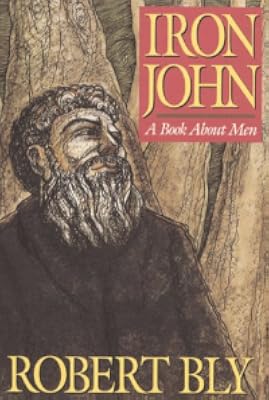
Iron John: A Book About Men
by Robert Bly
On This Page
Description
In this deeply learned book, poet and translator Robert Bly offers nothing less than a new vision of what it is to be a man. Bly's vision is based on his ongoing work with men and reflections on his own life. He addresses the devastating effects of remote fathers and mourns the disappearance of male initiation rites in our culture. Finding rich meaning in ancient stories and legends, Bly uses the Grimm fairy tale "Iron John," in which the narrator, or "Wild Man," guides a young man through show more eight stages of male growth, to remind us of archetypes long forgotten-images of vigorous masculinity, both protective and emotionally centered. Simultaneously poetic and down-to-earth, combining the grandeur of myth with the practical and often painful lessons of our own histories, Iron John is a rare work that will continue to guide and inspire men, and women, for years to come. show lessTags
Recommendations











Member Recommendations

Member Reviews
This book was written under the premise that fairy tales and mythology act like a genetic code carrying certain truths about mankind through the centuries. With their roots in ancient oral traditions, these stories have been used to teach for generations. Much of the writing in this book is a scholarly treatise on metaphor and symbolism. The metaphoric fairy tale used in this book is Iron John written by The Brothers Grimm. Bly uses it to explain two important aspects of manhood; the archetypes that make up a man's personality and the steps of initiation that must be completed to reach "full manhood."
It's important for younger men to interact with older men. Because of economic and societal issues, we've seen a gradual separation of show more boys from paternal figures. This creates profound feelings of abandonment and distrust. As a result, younger men will now tend to destroy and dismantle what has been built by those that came before them. I think this has resulted in some interesting workplace dynamics. For example, look at the high-tech industry where youth is so highly valued and older mentors are forced out. This connection with our elders is a deep need, however, and men invariably seek to reconnect with their fathers, typically after the age of 40.
In most societies, the elders are responsible for the initiation rites of manhood. Our separation from them has made rites of passage almost non-existent in modern cultures. This can lead to overt risk-taking as youth try to create their own unguided initiation rites. Bly uses the Iron John story to step through each of the important phases of initiation and explains the impact it can have on a man if they do not sufficiently complete the experience. In the Iron John story, Bly highlights some of these "ceremonies" as "suffering a wound," "dropping into the rat-hole/going to ashes," and "cultivating the warrior." In general, the required pattern of male initiation is:
Bonding with and separation from the mother
Bonding with and separation from the father (today, this might not happen until a man is in his 50s)
Arrival of a Mentor (also called the "masculine mother")
Apprenticeship to a hurricane energy (connecting to your wild man or warrior)
Joining with the Holy Woman or Queen
Incorrectly completed or absent initiation steps lead to unfulfilled manhood. For example, a man may tap into his "warrior" and learn to swing a broadsword at the wrong time. If he gets into an argument, he incorrectly turns his words against his "queen" by saying things meant to hurt, like "you always" or "you never." Watch how you use that weapon because the Queen has a few of her own!
A man's psyche is composed of the King, Warrior, Lover, Wildman, Trickster, Magician and Grief Man. A man is the totality of these parts and aspects left uncultivated through initiation leaves him incomplete. One example is that a man unseparated from his mother cannot fully develop his King (sense of self and purpose) nor partner fully with his Queen (for obvious reasons.)
One really interesting point was brought up about the prevalence of the red/white/black sequence in writing. In Iron John, it's three different horses presented to the main character. In Snow White, the Queen says "I want a child as white as snow, as red as blood, and as black as this window frame." I never appreciated how often this appears in stories but it conveys a similar meaning; separation (birth,) wound or trial and move to ashes (life,) and full realization into adulthood (death of the child form.) We all have to go through the full cycle.
When I first picked up the book, I thought it was going to be a lot of metaphysical woo-woo. However, I found it to be an insightful look into male psychology as shown through myths written across time. show less
It's important for younger men to interact with older men. Because of economic and societal issues, we've seen a gradual separation of show more boys from paternal figures. This creates profound feelings of abandonment and distrust. As a result, younger men will now tend to destroy and dismantle what has been built by those that came before them. I think this has resulted in some interesting workplace dynamics. For example, look at the high-tech industry where youth is so highly valued and older mentors are forced out. This connection with our elders is a deep need, however, and men invariably seek to reconnect with their fathers, typically after the age of 40.
In most societies, the elders are responsible for the initiation rites of manhood. Our separation from them has made rites of passage almost non-existent in modern cultures. This can lead to overt risk-taking as youth try to create their own unguided initiation rites. Bly uses the Iron John story to step through each of the important phases of initiation and explains the impact it can have on a man if they do not sufficiently complete the experience. In the Iron John story, Bly highlights some of these "ceremonies" as "suffering a wound," "dropping into the rat-hole/going to ashes," and "cultivating the warrior." In general, the required pattern of male initiation is:
Bonding with and separation from the mother
Bonding with and separation from the father (today, this might not happen until a man is in his 50s)
Arrival of a Mentor (also called the "masculine mother")
Apprenticeship to a hurricane energy (connecting to your wild man or warrior)
Joining with the Holy Woman or Queen
Incorrectly completed or absent initiation steps lead to unfulfilled manhood. For example, a man may tap into his "warrior" and learn to swing a broadsword at the wrong time. If he gets into an argument, he incorrectly turns his words against his "queen" by saying things meant to hurt, like "you always" or "you never." Watch how you use that weapon because the Queen has a few of her own!
A man's psyche is composed of the King, Warrior, Lover, Wildman, Trickster, Magician and Grief Man. A man is the totality of these parts and aspects left uncultivated through initiation leaves him incomplete. One example is that a man unseparated from his mother cannot fully develop his King (sense of self and purpose) nor partner fully with his Queen (for obvious reasons.)
One really interesting point was brought up about the prevalence of the red/white/black sequence in writing. In Iron John, it's three different horses presented to the main character. In Snow White, the Queen says "I want a child as white as snow, as red as blood, and as black as this window frame." I never appreciated how often this appears in stories but it conveys a similar meaning; separation (birth,) wound or trial and move to ashes (life,) and full realization into adulthood (death of the child form.) We all have to go through the full cycle.
When I first picked up the book, I thought it was going to be a lot of metaphysical woo-woo. However, I found it to be an insightful look into male psychology as shown through myths written across time. show less
My ex-husband was obsessed with this book. Finally reading it after many years I understand its appeal to fatherless men or those with dysfunctional fathers. That guided transition from boyhood to manhood is largely missing in modern society. This book may prove helpful to those who are trying to guide a boy and to help those who missed that step of development in understanding their loss. The mythological analogies can be tiresome, but Bly is a poet after all and without them the impact would be lost. Iron John can be helpful for a woman to understand the men in her life and for men to understand themselves.
Robert Bly looks at men something like Camille Paglia looks at women. He feels they need to retrieve their gender from the curse of androgeny. Men need to be fierce, he says . I'm not sure what that means. I'd just read Sebastian Junger and thought he was on to something, perhaps similar in that he tried to fix what the current culture gets wrong. Robert Bly is doing the same, but he takes more of a Joseph Campbell route. There was a time (and I'm not just saying that because I was taking psychedelics) when I thought that was where the answer lay. But I no longer think that's the way to go. Or, that we need to go back to how we used to do it. Initiation, wound, shamen, etc.
Yeah, there were things we've lost but also things we've gained show more since the older modes of looking at things. Yeah, the current culture is broken in many aspects but so were the older, more mythic ones. We just weren't around then to notice and so we glorify them.
Yes, men need to learn how to deal with their anger other than suppress it or act it out violently, but so do women. I'm not a poet so I use the language of psychotherapy but I understand why this book will appeal to a lot of men who feel they've lost something or were cheated out of it. A lot of people voted for Donald Trump because of feeling that way, but the poetic solutions of the mythic will not fix it for them any more than a Trump presidency. show less
Yeah, there were things we've lost but also things we've gained show more since the older modes of looking at things. Yeah, the current culture is broken in many aspects but so were the older, more mythic ones. We just weren't around then to notice and so we glorify them.
Yes, men need to learn how to deal with their anger other than suppress it or act it out violently, but so do women. I'm not a poet so I use the language of psychotherapy but I understand why this book will appeal to a lot of men who feel they've lost something or were cheated out of it. A lot of people voted for Donald Trump because of feeling that way, but the poetic solutions of the mythic will not fix it for them any more than a Trump presidency. show less
През 70-те тази книга предизвиква малка революция, говорейки за мъжественост, корени, мъжки архетипи и мъжки традиции, които ние в съвремието сме загубили, забравили и забранили. На нейна база се създават "мъжки клубове" които са практически мъжки групи за психическа взаимопомощ.
Базира се на приказката за Железния Ханс (от братя Грим), която пък се базира на няколко легенди и приказки на различни народи със show more сходен сюжет - за дивия човек, целия покрит с козина с ръждив цвят, който прави от момчето мъж.
Цялата книга представлява прочит дума по дума на приказката, като всяка сцена бива анализирана от психологическа гледна точка, свързана с архетипите и символиката на всяко нещо в нея - включвайки, според мен, немалка доза мистика и ню-ейдж-хипи бръщолевения.
Определено интересни неща има в нея обаче, за това как в съвременното общество през последните стотина-двеста години пътят на момчетата към мъжествеността е отрязан по много начини и древните традиции за укротяване на тяхната буйна младежка кръв вече не съществуват. Няма ги вече традиционните ритуали за преминаване в "племето на мъжете", няма ги възрастните ментори, които да насочат мъжката младежка енергия към положително развитие.
Резултатът от тази липса е виден - много млади мъже тръгват по двата грешни пътя: или се опитват да се правят на агресивни "мъжкари", стигайки дори до побои и престъпления, а други съвсем не успяват да открият мъжествеността, оставайки инфантили и/или мамини синчета до късна възраст. show less
Базира се на приказката за Железния Ханс (от братя Грим), която пък се базира на няколко легенди и приказки на различни народи със show more сходен сюжет - за дивия човек, целия покрит с козина с ръждив цвят, който прави от момчето мъж.
Цялата книга представлява прочит дума по дума на приказката, като всяка сцена бива анализирана от психологическа гледна точка, свързана с архетипите и символиката на всяко нещо в нея - включвайки, според мен, немалка доза мистика и ню-ейдж-хипи бръщолевения.
Определено интересни неща има в нея обаче, за това как в съвременното общество през последните стотина-двеста години пътят на момчетата към мъжествеността е отрязан по много начини и древните традиции за укротяване на тяхната буйна младежка кръв вече не съществуват. Няма ги вече традиционните ритуали за преминаване в "племето на мъжете", няма ги възрастните ментори, които да насочат мъжката младежка енергия към положително развитие.
Резултатът от тази липса е виден - много млади мъже тръгват по двата грешни пътя: или се опитват да се правят на агресивни "мъжкари", стигайки дори до побои и престъпления, а други съвсем не успяват да открият мъжествеността, оставайки инфантили и/или мамини синчета до късна възраст. show less
Poet Robert Bly has for a number of years now worn another hat: Men’s Movement guru. Iron John was first published in 1990 and was a bestseller, a cultural phenomena. Women read Iron John openly, hoping to glean some insider information while men read the book furtively—at least at first. By the mid-1990s, one could observe men dressed in tatters of leather, middle-aged bellies flapping in the breeze, beating drums in circles in the parks of many major, and a few minor, American metropolises. And those were just the straight men…
Like all fads, the Men’s Movement has lost its shiny-because-grubby allure over the years, though it’s by no means gone away. Da Capo has reissued what has become a “classic” of sexual politics. show more The reissue features a new preface by Bly in which he states that Iron John “belongs to a simple literary genre,” the fairy tale. That’s not quite true: it belongs to a much more complex genre, depth psychology, which for most of the twentieth century has harvested fairy tales for their psychological nutrition. The founder of depth psychology was either (depending on whose history you read) Freud, whose brilliant analysis of the Oedipus story launched a century, or Carl Jung. It was Jung who first analyzed folk stories for their psychological content. His students, Marie-Luise Von Franz, James Hillman, and many others, developed depth psychology over the course of the twentieth century.
Bly is indebted to James Hillman, especially, for the structure and analytical content of Iron John. Hillman is himself a prolific author, perhaps best known for his bestselling The Soul’s Code but admired by students of depth psychology (or, as Hillman calls it, archetypal psychology) for his books on the phenomenology of emotion, his controversial essay on suicide, and for his work on narrative and nightmare.
Iron John’s thesis is provocative yet simple: fathers aren’t doing a very good job of raising their sons because they are “absent” and also because our culture has lost the use of ritual in marking off the phases of maturation. In keeping with twentieth-century ideas of cultural construction, Bly argues that the roles of “man” and “father” have changed significantly over the past few generations, especially since the end of World War II. It’s hard to assess this later claim; as the great historian Fernand Braudel said, History doesn’t begin for fifty years. It’s been just that since the end of the Second World War.
It’s much easier to check Bly’s claim that fathers in the second half of the twentieth century were “absent” because they worked such long hours. Men, and women, were often “absent” for most of the day since at least the beginning of the Industrial Revolution in the eighteenth century. When those “dark satanic mills” kicked into high gear the children were often “absent” as well, as they were working long hours right along with their parents: but it wasn’t one big happy family working the power looms. Men, women and children all had separate tasks (women, with their long and slender fingers, worked the looms—at least until a shuttle nipped a finger off). Parents, and especially fathers, have long been absent from most children’s lives. We can listen to the angry-bee buzz of the religious right and convince ourselves, along with the very-leftist Bly, that there’s something critically wrong with our particular day and age. But there’s little new under the sun; humans have always been, in sum, pretty half-assed parents.
Where Bly clearly hits his mark is with his claim that we’ve lost all sense of maturation ritual. In our culture, puberty rites consist of obtaining a driver’s license and a cell phone. Forget vision questions; in fact, forget any type of prolonged solitude at all. The thing is, Bly never clearly articulates how one might go about initiating a boy-child: do you drop him off for a weekend alone in the woods? Make him walk the back roads between Boston and D.C. alone? Study for the SAT for days on end while sitting in a tree top? He’s better at recognizing that urban street gangs are groups of fatherless boys attempting to initiate themselves. The need for rites of passage clearly exists; what is not clear is just how we, as a culture, reinvent something that at best seems quaint and antiquated and at worst is labeled “pagan” and “satanic.”
This has made Iron John, twice in ten years, a frustrating read for me. His liquidescent prose and heartfelt analysis of the Iron John story are a delight to read and an inspiration. His commitment to grief, sorrow, sadness and melancholy are commendable and liberating. But just what is one supposed to do with this inspiration and liberation? Kill a small mammal, skin it, make a drum and join a Men’s group? Perhaps.
The answer, I think, lies outside of Bly’s book and in most of Hillman’s. Following Jung’s lead, Hillman suggests psychologizing. The soul, Hillman says, is largely ignored in our culture—and that’s bad, very bad. We pay a high price, in neuroses and physical ailments, for ignoring the soul. And, he continues, all the soul really wants is to talk. To converse with one’s soul sounds simple, and perhaps it is; Hillman suggests that one needs a powerful and disciplined imagination to, first, even notice the soul standing over there (in there, whatever: the geography of interior space, as you can read in Jung’s memoir, is confusing) and then, second, to engage it in conversation. As Hillman loves to remind us, it was Heraclitus who pointed out, some 2,500 years ago, that the soul is shy; like nature, she loves to hide.
I highly recommend Iron John but with a caveat: don’t stop there. Read Hillman’s Healing Fiction and his other work (A Blue Fire is a good place to start). If you must, dip into Thomas Moore (The Re-enchantment of Everyday Life), a sort of Reader’s Digest condenser and popularizer of Hillman’s ideas. Bly’s book is a great starting point for a foray into the rich ambiguities of depth psychology and the work of the soul.
[Originally published in Curled Up with a Good Book] show less
Like all fads, the Men’s Movement has lost its shiny-because-grubby allure over the years, though it’s by no means gone away. Da Capo has reissued what has become a “classic” of sexual politics. show more The reissue features a new preface by Bly in which he states that Iron John “belongs to a simple literary genre,” the fairy tale. That’s not quite true: it belongs to a much more complex genre, depth psychology, which for most of the twentieth century has harvested fairy tales for their psychological nutrition. The founder of depth psychology was either (depending on whose history you read) Freud, whose brilliant analysis of the Oedipus story launched a century, or Carl Jung. It was Jung who first analyzed folk stories for their psychological content. His students, Marie-Luise Von Franz, James Hillman, and many others, developed depth psychology over the course of the twentieth century.
Bly is indebted to James Hillman, especially, for the structure and analytical content of Iron John. Hillman is himself a prolific author, perhaps best known for his bestselling The Soul’s Code but admired by students of depth psychology (or, as Hillman calls it, archetypal psychology) for his books on the phenomenology of emotion, his controversial essay on suicide, and for his work on narrative and nightmare.
Iron John’s thesis is provocative yet simple: fathers aren’t doing a very good job of raising their sons because they are “absent” and also because our culture has lost the use of ritual in marking off the phases of maturation. In keeping with twentieth-century ideas of cultural construction, Bly argues that the roles of “man” and “father” have changed significantly over the past few generations, especially since the end of World War II. It’s hard to assess this later claim; as the great historian Fernand Braudel said, History doesn’t begin for fifty years. It’s been just that since the end of the Second World War.
It’s much easier to check Bly’s claim that fathers in the second half of the twentieth century were “absent” because they worked such long hours. Men, and women, were often “absent” for most of the day since at least the beginning of the Industrial Revolution in the eighteenth century. When those “dark satanic mills” kicked into high gear the children were often “absent” as well, as they were working long hours right along with their parents: but it wasn’t one big happy family working the power looms. Men, women and children all had separate tasks (women, with their long and slender fingers, worked the looms—at least until a shuttle nipped a finger off). Parents, and especially fathers, have long been absent from most children’s lives. We can listen to the angry-bee buzz of the religious right and convince ourselves, along with the very-leftist Bly, that there’s something critically wrong with our particular day and age. But there’s little new under the sun; humans have always been, in sum, pretty half-assed parents.
Where Bly clearly hits his mark is with his claim that we’ve lost all sense of maturation ritual. In our culture, puberty rites consist of obtaining a driver’s license and a cell phone. Forget vision questions; in fact, forget any type of prolonged solitude at all. The thing is, Bly never clearly articulates how one might go about initiating a boy-child: do you drop him off for a weekend alone in the woods? Make him walk the back roads between Boston and D.C. alone? Study for the SAT for days on end while sitting in a tree top? He’s better at recognizing that urban street gangs are groups of fatherless boys attempting to initiate themselves. The need for rites of passage clearly exists; what is not clear is just how we, as a culture, reinvent something that at best seems quaint and antiquated and at worst is labeled “pagan” and “satanic.”
This has made Iron John, twice in ten years, a frustrating read for me. His liquidescent prose and heartfelt analysis of the Iron John story are a delight to read and an inspiration. His commitment to grief, sorrow, sadness and melancholy are commendable and liberating. But just what is one supposed to do with this inspiration and liberation? Kill a small mammal, skin it, make a drum and join a Men’s group? Perhaps.
The answer, I think, lies outside of Bly’s book and in most of Hillman’s. Following Jung’s lead, Hillman suggests psychologizing. The soul, Hillman says, is largely ignored in our culture—and that’s bad, very bad. We pay a high price, in neuroses and physical ailments, for ignoring the soul. And, he continues, all the soul really wants is to talk. To converse with one’s soul sounds simple, and perhaps it is; Hillman suggests that one needs a powerful and disciplined imagination to, first, even notice the soul standing over there (in there, whatever: the geography of interior space, as you can read in Jung’s memoir, is confusing) and then, second, to engage it in conversation. As Hillman loves to remind us, it was Heraclitus who pointed out, some 2,500 years ago, that the soul is shy; like nature, she loves to hide.
I highly recommend Iron John but with a caveat: don’t stop there. Read Hillman’s Healing Fiction and his other work (A Blue Fire is a good place to start). If you must, dip into Thomas Moore (The Re-enchantment of Everyday Life), a sort of Reader’s Digest condenser and popularizer of Hillman’s ideas. Bly’s book is a great starting point for a foray into the rich ambiguities of depth psychology and the work of the soul.
[Originally published in Curled Up with a Good Book] show less
Upped my decades old rating by half a point (0.5)
I was probably just shy of 50 when I first read the book. The re-read was well worth it. One might observe Bly anticipated the #metoo moment. His describes of the decline of both men's and women's lives as a direct result of the industrial revolution, the proximate cause. The "modern" origins he dates to the 11th C, when story-telling killed off the "Wild Man". Other reviewers will/have related the binding thread of the myth/legend/story of Iron John, and its appearance in cultures around the world. It's universal.
A single instance where Bly uses history, non-fiction, if you will, is late in the chapter of the Red, White, and Black horses, where Abraham Lincoln is approached in the White show more House at 5 a.m. by a woman whose son is about to be hanged at 8 a.m. The good thing about the whole chapter is the leveling of sexual/gender stereotypes. No color horse is better than any other, Red horses aren't exclusively ridden by women, while or black by men. They are ridden in different orders to make different points; the different progressions describe different growth.
Most often, Bly introduces an image, by meditating on a section of the Iron John legend. For example, "Ralph Nader rides a white horse", this without further comment, allowing the reader to make their own judgement about any meaning. While a reference may slip over contemporary readers' event horizon, a bit of research supplies the context.
Risking repetition, the story is timeless. Bly sheds light on the now-emerging social issues of the last nearly 30 years. If he points to a solution, it is this: "Don't become the Wild Man; instead, get in touch with yours". And not in identical words, he suggests a similar solution for women. show less
I was probably just shy of 50 when I first read the book. The re-read was well worth it. One might observe Bly anticipated the #metoo moment. His describes of the decline of both men's and women's lives as a direct result of the industrial revolution, the proximate cause. The "modern" origins he dates to the 11th C, when story-telling killed off the "Wild Man". Other reviewers will/have related the binding thread of the myth/legend/story of Iron John, and its appearance in cultures around the world. It's universal.
A single instance where Bly uses history, non-fiction, if you will, is late in the chapter of the Red, White, and Black horses, where Abraham Lincoln is approached in the White show more House at 5 a.m. by a woman whose son is about to be hanged at 8 a.m. The good thing about the whole chapter is the leveling of sexual/gender stereotypes. No color horse is better than any other, Red horses aren't exclusively ridden by women, while or black by men. They are ridden in different orders to make different points; the different progressions describe different growth.
Most often, Bly introduces an image, by meditating on a section of the Iron John legend. For example, "Ralph Nader rides a white horse", this without further comment, allowing the reader to make their own judgement about any meaning. While a reference may slip over contemporary readers' event horizon, a bit of research supplies the context.
Risking repetition, the story is timeless. Bly sheds light on the now-emerging social issues of the last nearly 30 years. If he points to a solution, it is this: "Don't become the Wild Man; instead, get in touch with yours". And not in identical words, he suggests a similar solution for women. show less
Robert Bly offered one of those works that revisited the idea of what it means to be a man.
Young boys do not have the role models required for them to become mature men. Bly's vision is based on his ongoing work with men, as well as on reflections on his own life which addresses the devastating effects of remote fathers and mourns the disappearance of male initiation rites in our culture.
Bly rediscovered complex meanings in ancient stories and legends, for example from the Grimm's fairy tale "Iron John"--in which a mentor or "Wild Man" guides a young man through eight stages of male growth--to remind boys of ways to know what it means to be a man. Masculinity is strong, centered on others, and protective of the young.
Young boys do not have the role models required for them to become mature men. Bly's vision is based on his ongoing work with men, as well as on reflections on his own life which addresses the devastating effects of remote fathers and mourns the disappearance of male initiation rites in our culture.
Bly rediscovered complex meanings in ancient stories and legends, for example from the Grimm's fairy tale "Iron John"--in which a mentor or "Wild Man" guides a young man through eight stages of male growth--to remind boys of ways to know what it means to be a man. Masculinity is strong, centered on others, and protective of the young.
Members
- Recently Added By
Lists

Art of Manliness' Men's Reading List
37 works; 2 members

Books Read in 2020
4,379 works; 124 members

Top Five Books of 2020
982 works; 348 members
Men's healing resources
749 works; 1 member
Author Information

Some Editions
Awards and Honors
Distinctions
Common Knowledge
- Canonical title
- Iron John: A Book About Men
- Original title
- Iron John
- Original publication date
- 1990
- People/Characters
- Eisenhans
- Dedication
- For Noah, Micah, and Sam.
- First words
- Preface
We are living at an important and fruitful moment now, for it is clear to men that the images of adult manhood given by the popular culture are worn out; a man can no longer depend on them.
We talk a great deal about "the American man," as if there were some constant quality that remained stable over decades, or even within a single decade. - Last words
- (Click to show. Warning: May contain spoilers.)The Wild Man in our wedding scene says in effect: "A strong power forced me by enchantment to live under the water until a young man appeared who was ready to undergo the discipline and go through the suffering that you have gone through. Now that you have done that, I can appear as I am—a Lord."
- Original language
- English
Classifications
Statistics
- Members
- 2,312
- Popularity
- 8,622
- Reviews
- 24
- Rating
- (3.52)
- Languages
- 13 — Czech, Danish, Dutch, English, Finnish, French, German, Italian, Polish, Portuguese, Slovenian, Spanish, Swedish
- Media
- Paper, Audiobook, Ebook
- ISBNs
- 40
- ASINs
- 13