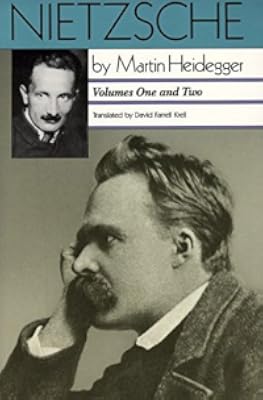
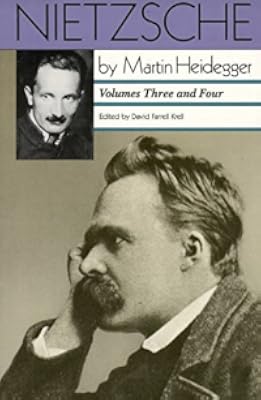
Nietzsche, Vol. 1: The Will to Power as Art, Vol. 2: The Eternal Recurrance of the Same
by Martin Heidegger
Nietzsche (Volumes 1-2)
On This Page
Description
A landmark discussion between two great thinkers, vital to an understanding of twentieth-century philosophy and intellectual history.Tags
Recommendations






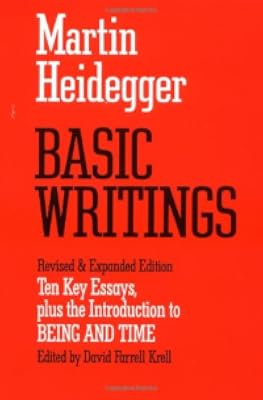

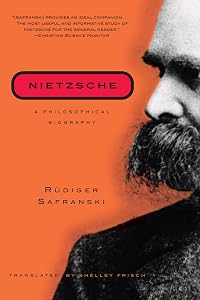



Member Reviews
It must have been bloody tough being a student of Martin Heidegger and not just because he was intellectually demanding. He seems to have had a strong tendency towards rambling, thinking as a process circling in on itself rather than crystallising what was being thought into an event or system.
These two volumes (of four) represent the barely edited (in the sense of being fully synthesised into total coherence) of lectures given by Heidegger on Nietzche between 1936 and 1940. The dates are important - this was Germany with a university system under national socialist discipline.
We should not let this over-excite us. Heidegger's active national socialist engagement preceded this and was brief. It is not incorrect to say that he had his show more doubts about the very anti-intellectual ideology of the Party. He was thinking his own thoughts.
Nevertheless, we have a quasi-national socialist philosopher of genius lecturing here on the philosopher most appropriated for its own uses by national socialism to an audience of students who were designated the youth of a future national socialist regeneration.
Personally I have less problem with this than many liberals think that I should have because the core thought of Heidegger was revolutionary, devastatingly so in some respects, in ways that spin Heidegger well out of any simplistic ideology into something entirely new and 'true'.
I will not try and regurgitate here what it is that Heidegger thought but rather concentrate on the fact that his philosophising returned to the myth of Socrates before Plato got his grubby hands on the man - that is, the thinking, the process of thinking, is what counts no matter where it leads.
In Heidegger's case, the thinking, the process, was always wholly centred on the question of Being which is central to our relation to everything that is the case. This question of Being enters into territory that was God to the past, perhaps the Abyss to Nietzsche and the Void to dark magicians.
Part of the text is about a contestation of Nihilism (the primary problem for humanity after Darwin and articulated by Nietzsche). Nietzsche's philosophy is a working against Nihilism without clear success. Heidegger attempts to make his philosophy more of a success than it was in this respect.
This made me suspicious because of the text's location in place and time. National Socialist ideology was also constantly struggling with nihilism - a fight that was to collapse in a bunker in 1945 - and the book reads sometimes like an attempt to speed up a recovery from Nietzsche's challenge.
We must remember just how important Nietzsche became as an appropriated icon for national socialists. Here is Heidegger lecturing to a future cadre under internal and external pressure not to let nihilism be the guiding light for a future Germany. There is some 'mauvaise foi' lurking here.
The relationship between Nietzsche and Heidegger is, quite separately, central to understanding how it was even possible to move from God towards Being and, in other hands perhaps, Nothingness. These lectures show a man struggling, almost in real time, with his own connection to his precursor.
The God-thing was of great consequence to both philosophers but in subtly different ways. Nietzsche asserted the death of God with some courage and found a gaping hole. Heidegger was filling that hole with Being yet knowing the danger (as someone trained in Thomism) of Being becoming God.
If Heidegger's Being was to become no more than God by another name, then Heidegger may as well pack up and go home or rather become a priest in the Catholic Church. But Being that is not God could equally become Nihil and so meaningless as to deny anything of worth to being human (Dasein).
This was the struggle - God was dead. The process of thinking about Being was one where Being might become Nihil or bring God back from the dead if a grip was not maintained on the process itself, that is on philosophising as a relation to Being.
We can see straight away why 'dealing with' Nietzsche (who had only died less than forty or so years before) was ideological, political, cultural and philosophical and why Heidegger was on very dangerous ground to himself (philosophically rather than politically) in providing any narrative.
Unfortunately, Heidegger declines to be very clear because clarity would be a false friend in the process of thinking what may be close to or in fact unthinkable, let alone the notorious 'unthought thought' which might be regarded as Heidegger's response to Kant.
To have systematised the 'unthought thought' that lies behind the thought thought as Kant did would have merely ended up with ... a system. The point is that what is behind us as Dasein (thrown into the world) cannot be systematised. There is a place for Kant but not here.
Does this book take us very far along the road to understanding all this? Personally I think it is a rocky and demanding by-way. To a Heideggerian trying to think along Heideggerian lines, the book will be suggestive and useful. The rest of us might not be so sure.
As you read the well over 500 pages of text, it becomes increasingly clear that Heidegger is appropriating Nietzsche (as the Nazis did) for his own ends. His references are scholarly but his interpretations are designed to elucidate Heidegger's thought more than Nietzsche's.
This makes the book problematic because one does not know whether to take it seriously as an insight into what Nietzsche may have actual meant (Heidegger's intuitions are not to be dismissed too easily) or into what Heidegger thought using Nietzsche as an almost mediumistic vehicle.
The task is made more difficult by the fact that amidst long passages of obscurity and the turgid, Heidegger suddenly delivers a flash of deep insight into either Nietzsche or what can be thought or both. Separating these components out requires time only scholars will have.
One thing is very clear. Heidegger's takes Nietzsche's 'eternal return' very seriously as something the latter truly believed in. I find this hard to accept. Krell, the very scholarly editor and translator of the book (no easy task), does sometimes give us cause to doubt the precision of Heidegger's scholarship.
There are three factors that create doubt. The ideological environment of the time. The incompleteness of access to Nietzsche's total work, Heidegger's propensity to a form of thought-egoism in which the world of thought is always grist to his thinking mill.
Nevertheless, this is a book (alongside a read of Volumes 3 & 4) that I may come back to in a better informed and constructively critical frame of mind, not in order to understand Nietzsche better (one should go to source for that) but to understand better what was taken from him by Heidegger.
A strange contribution to thought that in its uncertainties and ambiguities is a form of demonstration of how Heideggerian thinking works - after all, the aphoristic Nietzsche was not averse to a playful misuse of sources and of assertion to drive our thinking forward away from false systematising.
***
A friend adds in a private note: "I know you are not keen but I think volumes 3 and 4 would be very interesting because his reading of Nietzsche is even more insane, but is also very critical, so there is a big contrast with 1 and 2. If you wanted to be kind to students of Heidegger who are likely to find your review online (there is quite a lack of good material on Heidegger's Nietzsche) then it would be helpful to say that volumes 1 and 2 are English translation of the German volume 1. Volumes 3 and 4 are the English translation of the German volume 2. This difference causes loads of confusion and I wasted a lot of time trying to work out what was going on, because some people refer to volumes 1-4 and some to volumes 1 and 2 without clarifying which text they are actually referring to." I hope that this is useful advice. show less
These two volumes (of four) represent the barely edited (in the sense of being fully synthesised into total coherence) of lectures given by Heidegger on Nietzche between 1936 and 1940. The dates are important - this was Germany with a university system under national socialist discipline.
We should not let this over-excite us. Heidegger's active national socialist engagement preceded this and was brief. It is not incorrect to say that he had his show more doubts about the very anti-intellectual ideology of the Party. He was thinking his own thoughts.
Nevertheless, we have a quasi-national socialist philosopher of genius lecturing here on the philosopher most appropriated for its own uses by national socialism to an audience of students who were designated the youth of a future national socialist regeneration.
Personally I have less problem with this than many liberals think that I should have because the core thought of Heidegger was revolutionary, devastatingly so in some respects, in ways that spin Heidegger well out of any simplistic ideology into something entirely new and 'true'.
I will not try and regurgitate here what it is that Heidegger thought but rather concentrate on the fact that his philosophising returned to the myth of Socrates before Plato got his grubby hands on the man - that is, the thinking, the process of thinking, is what counts no matter where it leads.
In Heidegger's case, the thinking, the process, was always wholly centred on the question of Being which is central to our relation to everything that is the case. This question of Being enters into territory that was God to the past, perhaps the Abyss to Nietzsche and the Void to dark magicians.
Part of the text is about a contestation of Nihilism (the primary problem for humanity after Darwin and articulated by Nietzsche). Nietzsche's philosophy is a working against Nihilism without clear success. Heidegger attempts to make his philosophy more of a success than it was in this respect.
This made me suspicious because of the text's location in place and time. National Socialist ideology was also constantly struggling with nihilism - a fight that was to collapse in a bunker in 1945 - and the book reads sometimes like an attempt to speed up a recovery from Nietzsche's challenge.
We must remember just how important Nietzsche became as an appropriated icon for national socialists. Here is Heidegger lecturing to a future cadre under internal and external pressure not to let nihilism be the guiding light for a future Germany. There is some 'mauvaise foi' lurking here.
The relationship between Nietzsche and Heidegger is, quite separately, central to understanding how it was even possible to move from God towards Being and, in other hands perhaps, Nothingness. These lectures show a man struggling, almost in real time, with his own connection to his precursor.
The God-thing was of great consequence to both philosophers but in subtly different ways. Nietzsche asserted the death of God with some courage and found a gaping hole. Heidegger was filling that hole with Being yet knowing the danger (as someone trained in Thomism) of Being becoming God.
If Heidegger's Being was to become no more than God by another name, then Heidegger may as well pack up and go home or rather become a priest in the Catholic Church. But Being that is not God could equally become Nihil and so meaningless as to deny anything of worth to being human (Dasein).
This was the struggle - God was dead. The process of thinking about Being was one where Being might become Nihil or bring God back from the dead if a grip was not maintained on the process itself, that is on philosophising as a relation to Being.
We can see straight away why 'dealing with' Nietzsche (who had only died less than forty or so years before) was ideological, political, cultural and philosophical and why Heidegger was on very dangerous ground to himself (philosophically rather than politically) in providing any narrative.
Unfortunately, Heidegger declines to be very clear because clarity would be a false friend in the process of thinking what may be close to or in fact unthinkable, let alone the notorious 'unthought thought' which might be regarded as Heidegger's response to Kant.
To have systematised the 'unthought thought' that lies behind the thought thought as Kant did would have merely ended up with ... a system. The point is that what is behind us as Dasein (thrown into the world) cannot be systematised. There is a place for Kant but not here.
Does this book take us very far along the road to understanding all this? Personally I think it is a rocky and demanding by-way. To a Heideggerian trying to think along Heideggerian lines, the book will be suggestive and useful. The rest of us might not be so sure.
As you read the well over 500 pages of text, it becomes increasingly clear that Heidegger is appropriating Nietzsche (as the Nazis did) for his own ends. His references are scholarly but his interpretations are designed to elucidate Heidegger's thought more than Nietzsche's.
This makes the book problematic because one does not know whether to take it seriously as an insight into what Nietzsche may have actual meant (Heidegger's intuitions are not to be dismissed too easily) or into what Heidegger thought using Nietzsche as an almost mediumistic vehicle.
The task is made more difficult by the fact that amidst long passages of obscurity and the turgid, Heidegger suddenly delivers a flash of deep insight into either Nietzsche or what can be thought or both. Separating these components out requires time only scholars will have.
One thing is very clear. Heidegger's takes Nietzsche's 'eternal return' very seriously as something the latter truly believed in. I find this hard to accept. Krell, the very scholarly editor and translator of the book (no easy task), does sometimes give us cause to doubt the precision of Heidegger's scholarship.
There are three factors that create doubt. The ideological environment of the time. The incompleteness of access to Nietzsche's total work, Heidegger's propensity to a form of thought-egoism in which the world of thought is always grist to his thinking mill.
Nevertheless, this is a book (alongside a read of Volumes 3 & 4) that I may come back to in a better informed and constructively critical frame of mind, not in order to understand Nietzsche better (one should go to source for that) but to understand better what was taken from him by Heidegger.
A strange contribution to thought that in its uncertainties and ambiguities is a form of demonstration of how Heideggerian thinking works - after all, the aphoristic Nietzsche was not averse to a playful misuse of sources and of assertion to drive our thinking forward away from false systematising.
***
A friend adds in a private note: "I know you are not keen but I think volumes 3 and 4 would be very interesting because his reading of Nietzsche is even more insane, but is also very critical, so there is a big contrast with 1 and 2. If you wanted to be kind to students of Heidegger who are likely to find your review online (there is quite a lack of good material on Heidegger's Nietzsche) then it would be helpful to say that volumes 1 and 2 are English translation of the German volume 1. Volumes 3 and 4 are the English translation of the German volume 2. This difference causes loads of confusion and I wasted a lot of time trying to work out what was going on, because some people refer to volumes 1-4 and some to volumes 1 and 2 without clarifying which text they are actually referring to." I hope that this is useful advice. show less
Ratings
Members
- Recently Added By
Author Information

462+ Works 23,566 Members
Martin Heidegger was born in Messkirch, Baden, Germany on September 22, 1889. He studied Roman Catholic theology and philosophy at the University of Frieburg before joining the faculty at Frieburg as a teacher in 1915. Eight years later Heidegger took a teaching position at Marburg. He taught there until 1928 and then went back to Frieburg as a show more professor of philosophy. As a philosopher, Heidegger developed existential phenomenology. He is still widely regarded as one of the most original philosophers of the 20th century. Influenced by other philosophers of his time, Heidegger wrote the book, Being in Time, in 1927. In this work, which is considered one of the most important philosophical works of our time, Heidegger asks and answers the question "What is it, to be?" Other books written by Heidegger include Basic Writings, a collection of Heidegger's most popular writings; Nietzsche, an inquiry into the central issues of Friedrich Nietzsche's philosophy; On the Way to Language, Heidegger's central ideas on the origin, nature and significance of language; and What is Called Thinking, a systematic presentation of Heidegger's later philosophy. Since the 1960s, Heidegger's influence has spread beyond continental Europe and into a number of English-speaking countries. Heidegger died in Messkirch on May 26, 1976. (Bowker Author Biography) show less
Series

Work Relationships
Common Knowledge
- Canonical title
- Nietzsche, Vol. 1: The Will to Power as Art, Vol. 2: The Eternal Recurrance of the Same
- Original title
- Nietzsche
- Original publication date
- 1961 (original German) (original German); 1961; 1979/1984 (English: Krell) (English: Krell)
- People/Characters
- Nietzsche, Friedrich Wilhelm, 1844-1900
Classifications
Statistics
- Members
- 355
- Popularity
- 89,070
- Reviews
- 1
- Rating
- (4.37)
- Languages
- English, German
- Media
- Paper
- ISBNs
- 4