Eggs, Beans, and Crumpets
by P. G. Wodehouse
Drones Club (short stories), Golf stories, or The Oldest Member (US ed., short story), Ukridge (short stories), Mr. Mulliner (Short stories — one short story)
On This Page
Description
These wonderfully funny short stories feature a cast of outrageous characters, all plotting to save themselves from wedlock, poverty, or ignominy, with various degrees of success. This recording includes the following stories: 'All's Well with Bingo,' 'Bingo and the Peke Crisis,' 'The Editor Regrets,' 'Sonny Boy,' 'Anselm Gets His Chance,' 'Romance at Droitgate Spa,' 'A Bit of Luck for Mabel,' 'Buttercup Day,' and 'Ukridge and the Old Stepper.'.Tags
Recommendations





















Member Reviews
Wodehouse may be the most comic writer from his time. This book, in a consummately British, very moist audiobook reading, was constantly hilarious. This author's use of similes might be unequaled. The wordy acrobatics he pulls off juxtaposes a mundane setting for bumbling characters. The prevalent theme is money, and how it is variously lost and gained, in relatively trifling amounts by people who just can't resist themselves. Featuring lost Pekinese, stamp collections and top hats. Don't expect earth-shattering dramatic panoplies but endlessly entertaining small-time antics. Even if many situations are interchangeable, they are wonderfully wild.
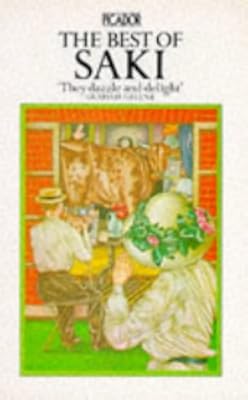
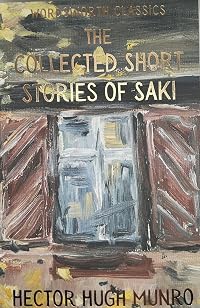
I re-read my book of Saki's short stories last month and was struck both by the similarities and the differences between the two books. They are both set in the same upper class milieu, where leisured young men worry about money and girls while they flit from house party to house party, interspersed with visits to their aunts. Saki and PGW both have a thing about aunts, who are a force to be placated and appeased. Although both books are very funny, there is a cruel underbelly to Saki's stories, while Wodehouse always leaves you feeling happy.
His language draws you right into the world of the Drones, with their perpetual money-troubles, aversion to doing an honest day's work and placatory relationships with the women in their who keep show more them short of cash and keep trying to find them jobs. The funniest moment is the last few sentences of "A Bit of Luck for Mabel". show less
His language draws you right into the world of the Drones, with their perpetual money-troubles, aversion to doing an honest day's work and placatory relationships with the women in their who keep show more them short of cash and keep trying to find them jobs. The funniest moment is the last few sentences of "A Bit of Luck for Mabel". show less
The short stories in this collection seem simple and lightweight, until you analyse them. They are wonderfully written, every word is the right word and characters are drawn in a single phrase. Despite this, each story seems to have been written in a single exuberant flow - nice trick if you can pull it off.
There are nine stories in my edition including four Bingo Little stories and three Ukridge stories.
Bingo Little
The four stories follow a similar pattern, Bingo Little gets into a scrape, usually trying to raise money for a bet. His plans to hide this from Mrs Bingo Little result in him making the situation worse. And then fortune smiles on him and the day is (improbably) saved. All of the plots are complete tosh, but the stories are show more full of great lines.
From 'All's well with Bingo'
Bingo on being told that he won't be getting any cash for his Monte Carlo trip;
"Bingo gulped like an ostrich swallowing a brass door knob"
Pure Beano/Dandy imagery, for me.
From 'Bingo and the Peke Crisis'
As a teenager I spent hours trying to get the first paragraphs of stories right - I never thought of starting a story like this:
"A Bean was showing his sore leg to some Eggs and Piefaces in the smoking-room of the Drones Club, when a Crumpet came in. Having first paused at the bar to order an Annie's Night Out, he made his way to the group"
Brilliant.
Anselm gets his Chance
This has a classic Wodehouse plot. Boy loves girl, girl loves boy, guardian to be approached, but boy has no prospects, stolen valuables, thwarted attempt to raise the cash. Eventually guardian repents, cash arrives too, and all live happily ever after.
The story is from the Mr Mulliner series. These are recounted by Mr Mulliner in the bar of the Angler's Rest. His audience consists of Miss Postlethwaite, the barmaid, and the regulars. From time to time they interrupt Mr Mulliner's flow and are referred to only by their tipple, such as a 'Sherry and Angostura' or a 'Small Bass', same device, I suppose, as the Eggs, Beans and Piefaces.
I enjoyed it, but not so much as the other stories, it read a little like a template for a Wodehouse short story.
Romance at Droitgate Spa
Here is a simple synopsis:
1. Man wants to marry unsuitable girl but has no control over his fortune
2. Man's uncle, a snob, refuses to release said fortune
3. Girl masquerades as a nurse from good family and endears herself to Uncle
4. Girl's ex lover arrives and exposes girls background
5. Girl's uncle is sprung on the group by ex-lover to prove poor background
6. Uncle and uncle hit it off, ex-lover thwarted and all live happily ever after.
And that's it...
...except it isn't.
When the British talk about comedy they often refer to an author, or a television series, being ground breaking. Every generation considers the ground to have only been broken once, and by the ground-breaker of their generation (Monty Python for me). The more I read and watch the more I am convinced that there is an unbroken tradition of British comedy, a thread running from Lewis Carroll to The Office.
The plot of this short story may be simple but Wodehouse places it in a universe set at 90 degrees to reality.
The 'hero' is Freddie Fitch-Fitch. His uncle and guardian, a crashing snob, is Major-General Sir Aylmer Bastable. This man is unhappy because, in the world he now inhabits (at Droitgate Spa), status is entirely determined by the seriousness and rarity of your illness; "he found himself cold-shouldered by the men who mattered and thrust back on the society of the asthma patients and the fellows with slight liver trouble" On one occasion the old man complains, after being cut, "Thinks he's everybody just because he's got telangiectasis"
The day is saved when the old man discovers that Annabel Purvis's, common, lower class, Uncle Joe is the famously ill Joseph Boffin; 'Started as a child with Congenital Pyloric Hypertrophy of the Stomach and never looked back'. A family connection with Mr Boffin will restore Sir Aylmer's social standing and he happily approves the match.
It is odd to have a world where the class system has been replaced by a world where the exact same snobberies apply to illness, but Wodehouse has added a still more surreal touch in Mortimer Rackstraw. He is Annabel's ex-lover and makes his living as conjurer, The Great Boloni. He appears as the standard spurned lover, but always performing his act.
In one dramatic scene he pushes Annabel aside to confront the group "His face was cold, hard and remorseless. With one hand he was juggling with two billiard balls and a bouquet of roses" He also has the last scene in the story, having lost the girl "he took flags of all nations from Annabel's back hair and, with a despairing gesture, strode from the room."
As I was reading this story, all I could think was that this would be a classic Monty Python sketch, circa the Spanish Inquisition period, except that it was written thirty years earlier - extraordinary.
Ukridge
There are three Ukridge stories in this collection, I enjoyed them, which is fortunate, as I also have the book 'Ukridge', with another 10 Ukridge short stories - I've just promoted it five places in my unread pile.
Stanley Featherstonehaugh Ukridge is a conman, a chancer and a petty thief in the eyes of everyone but himself. My favourite scene in the book is the one, in 'Ukridge and the Old Stepper', where Ukridge is trying to express his outrage at the conman like behaviour of his Step-step Uncle, to a man whose suit he has just 'stolen'.
I've written far too much already, but I have one Ukridge quote from 'Ukridge and the Old Stepper', Ukridge has given Myrtle a present and recounts 'Myrtle was all over the sundial'. This seems to be, in essence, the American "I'm all over it", which has recently replaced, "I'll get right on it". Where has this phrase been hiding for the last 65 years?
Rating
I enjoyed the book and it has kindled my interest in short stories. I'll give it 4 stars.
G
I'd just like to take my leave as The Great Boloni (who, in my minds eye, is played by Terry Jones), after swearing revenge on Freddie:
'He took up his top hat, which in his emotion he had allowed to fall to the ground, brushed it on his coat-sleeve, extracted from it a cage of love birds and strode out.
A moment later, he returned, bowed a few times to right and left and was gone. show less
There are nine stories in my edition including four Bingo Little stories and three Ukridge stories.
Bingo Little
The four stories follow a similar pattern, Bingo Little gets into a scrape, usually trying to raise money for a bet. His plans to hide this from Mrs Bingo Little result in him making the situation worse. And then fortune smiles on him and the day is (improbably) saved. All of the plots are complete tosh, but the stories are show more full of great lines.
From 'All's well with Bingo'
Bingo on being told that he won't be getting any cash for his Monte Carlo trip;
"Bingo gulped like an ostrich swallowing a brass door knob"
Pure Beano/Dandy imagery, for me.
From 'Bingo and the Peke Crisis'
As a teenager I spent hours trying to get the first paragraphs of stories right - I never thought of starting a story like this:
"A Bean was showing his sore leg to some Eggs and Piefaces in the smoking-room of the Drones Club, when a Crumpet came in. Having first paused at the bar to order an Annie's Night Out, he made his way to the group"
Brilliant.
Anselm gets his Chance
This has a classic Wodehouse plot. Boy loves girl, girl loves boy, guardian to be approached, but boy has no prospects, stolen valuables, thwarted attempt to raise the cash. Eventually guardian repents, cash arrives too, and all live happily ever after.
The story is from the Mr Mulliner series. These are recounted by Mr Mulliner in the bar of the Angler's Rest. His audience consists of Miss Postlethwaite, the barmaid, and the regulars. From time to time they interrupt Mr Mulliner's flow and are referred to only by their tipple, such as a 'Sherry and Angostura' or a 'Small Bass', same device, I suppose, as the Eggs, Beans and Piefaces.
I enjoyed it, but not so much as the other stories, it read a little like a template for a Wodehouse short story.
Romance at Droitgate Spa
Here is a simple synopsis:
1. Man wants to marry unsuitable girl but has no control over his fortune
2. Man's uncle, a snob, refuses to release said fortune
3. Girl masquerades as a nurse from good family and endears herself to Uncle
4. Girl's ex lover arrives and exposes girls background
5. Girl's uncle is sprung on the group by ex-lover to prove poor background
6. Uncle and uncle hit it off, ex-lover thwarted and all live happily ever after.
And that's it...
...except it isn't.
When the British talk about comedy they often refer to an author, or a television series, being ground breaking. Every generation considers the ground to have only been broken once, and by the ground-breaker of their generation (Monty Python for me). The more I read and watch the more I am convinced that there is an unbroken tradition of British comedy, a thread running from Lewis Carroll to The Office.
The plot of this short story may be simple but Wodehouse places it in a universe set at 90 degrees to reality.
The 'hero' is Freddie Fitch-Fitch. His uncle and guardian, a crashing snob, is Major-General Sir Aylmer Bastable. This man is unhappy because, in the world he now inhabits (at Droitgate Spa), status is entirely determined by the seriousness and rarity of your illness; "he found himself cold-shouldered by the men who mattered and thrust back on the society of the asthma patients and the fellows with slight liver trouble" On one occasion the old man complains, after being cut, "Thinks he's everybody just because he's got telangiectasis"
The day is saved when the old man discovers that Annabel Purvis's, common, lower class, Uncle Joe is the famously ill Joseph Boffin; 'Started as a child with Congenital Pyloric Hypertrophy of the Stomach and never looked back'. A family connection with Mr Boffin will restore Sir Aylmer's social standing and he happily approves the match.
It is odd to have a world where the class system has been replaced by a world where the exact same snobberies apply to illness, but Wodehouse has added a still more surreal touch in Mortimer Rackstraw. He is Annabel's ex-lover and makes his living as conjurer, The Great Boloni. He appears as the standard spurned lover, but always performing his act.
In one dramatic scene he pushes Annabel aside to confront the group "His face was cold, hard and remorseless. With one hand he was juggling with two billiard balls and a bouquet of roses" He also has the last scene in the story, having lost the girl "he took flags of all nations from Annabel's back hair and, with a despairing gesture, strode from the room."
As I was reading this story, all I could think was that this would be a classic Monty Python sketch, circa the Spanish Inquisition period, except that it was written thirty years earlier - extraordinary.
Ukridge
There are three Ukridge stories in this collection, I enjoyed them, which is fortunate, as I also have the book 'Ukridge', with another 10 Ukridge short stories - I've just promoted it five places in my unread pile.
Stanley Featherstonehaugh Ukridge is a conman, a chancer and a petty thief in the eyes of everyone but himself. My favourite scene in the book is the one, in 'Ukridge and the Old Stepper', where Ukridge is trying to express his outrage at the conman like behaviour of his Step-step Uncle, to a man whose suit he has just 'stolen'.
I've written far too much already, but I have one Ukridge quote from 'Ukridge and the Old Stepper', Ukridge has given Myrtle a present and recounts 'Myrtle was all over the sundial'. This seems to be, in essence, the American "I'm all over it", which has recently replaced, "I'll get right on it". Where has this phrase been hiding for the last 65 years?
Rating
I enjoyed the book and it has kindled my interest in short stories. I'll give it 4 stars.
G
I'd just like to take my leave as The Great Boloni (who, in my minds eye, is played by Terry Jones), after swearing revenge on Freddie:
'He took up his top hat, which in his emotion he had allowed to fall to the ground, brushed it on his coat-sleeve, extracted from it a cage of love birds and strode out.
A moment later, he returned, bowed a few times to right and left and was gone. show less
Listened to this in the car, a series of short stories. They feature Bingo Little, who is a Drones Ckub colleague of Bertie Wooster, but these aren't Jeeves & Wooster stories. They are narrated by an unnamed fellow member of the club. To be honest, I thought these the weakest of the lot. The Mr Mulliner story was good (I like the way the listeners in the pub are identified by their drinks, not by mane), as were the 3 Ukridge stories. These last 3 were probably the most successful, in terms of story and the narrrator, they seemed to mesh well together. It's the usual story, not enough money and loosing the girl features heavily. Nothing to get too serious about, they're lighthearted fun.
I enjoyed all the short stories in this collection, especially the first four, which follow Bingo Little.
We have some entertaining tales here, with lots of fun and frolics. A running theme through all the stories is money - or rather the lack of it and the need to get, which leads to many a funny moment.
We have some entertaining tales here, with lots of fun and frolics. A running theme through all the stories is money - or rather the lack of it and the need to get, which leads to many a funny moment.
Don't get me wrong; I love PG Wodehouse. However, in short story form and without Jeeves, it develops a feeling of sameness that makes it hard to keep plowing through. I chuckled a decent bit, so I'm happy.
I have to admit to not being particularly fond of this book. I adore the Psmith and Jeeves series and so picked up this collection of mostly Bingo Little stories with anticipation.
Unfortunately Mr Little does not possess the same depth of character as Jeeves. Although obsessed with gambling and a deep love for his wife, these are really Bingos only idosyncrasies. The stories are repetitive and all revolve around discharging gaming depths before his wife comes home.
It did make me giggle a few times, but I think I'll stick to Wodehouse's other series in the future!
Unfortunately Mr Little does not possess the same depth of character as Jeeves. Although obsessed with gambling and a deep love for his wife, these are really Bingos only idosyncrasies. The stories are repetitive and all revolve around discharging gaming depths before his wife comes home.
It did make me giggle a few times, but I think I'll stick to Wodehouse's other series in the future!
Members
- Recently Added By
Lists

Books Read in 2017
4,249 works; 129 members

A Smorgasbord of Culinary Fiction
221 works; 94 members
Author Information

657+ Works 110,781 Members
P. G. Wodehouse was born in Guildford, United Kingdom on October 15, 1881. After completing school, he spent two years as a banker at the Hong Kong and Shanghai Bank in London and then took a job as a sports reporter and columnist for the Globe newspaper. His first novel, The Pothunters, was published in 1902. He wrote over 100 novels and short show more story collections during his lifetime including A Perfect Uncle, Love Among the Chickens, The Swoop, P. Smith in the City, Meet Mr. Milliner, Doctor Sally, Quick Service, The Old Reliable, Uneasy Money, A Damsel in Distress, Jill the Reckless, The Adventures of Sally, A Pelican at Blandings, The Girl in Blue, and Aunts Aren't Gentlemen. His most famous characters, Bertie Wooster and his manservant, Jeeves, appeared in books such as Much Obliged, Jeeves. He also wrote lyrics for musical comedies and worked as screenwriter in Hollywood in the 1930s. In 1939, he bought a villa in Le Touquet on the coast of France. He remained there when World War II started in 1939. The following year, the Germans appropriated the villa, confiscated property, and arrested him. He was detained in various German camps for almost one year before being released in 1941. He went to Berlin and spoke of his experience in five radio talks to be broadcast to America and England. The talks themselves were completely innocuous, but he was charged with treason in England. He was cleared, but settled permanently in the United States. He became a citizen in 1955. He was made a Knight Commander of the Order of the British Empire in 1975. He died from a heart attack after a long illness on February 14, 1975 at the age of 93. (Bowker Author Biography) show less
Some Editions
Series

Drones Club
1 works (short stories)

Golf stories, or The Oldest Member
3 works (US ed., short story)

Ukridge
7 works (short stories)

Mr. Mulliner
3 works (Short stories — one short story)
Belongs to Publisher Series
Work Relationships
Common Knowledge
- Canonical title
- Eggs, Beans, and Crumpets
- Original title
- Eggs, Beans, and Crumpets
- Original publication date
- 1940; 1925
- People/Characters
- Bingo Little; Stanley Featherstonehaugh Ukridge; Rosie M. Banks; Oofy Prosser; Mr Mulliner; Anselm Mulliner
- Important places
- England, UK
- First words
- A Bean and a Crumpet were in the smoking-room of the Drones Club having a quick one before lunch, when an Egg who had been seated at the writing-table in the corner rose and approached them.
'How many "r's" in "intolerable... (show all)"?' he asked. - Last words
- (Click to show. Warning: May contain spoilers.)And even supposing he really has got money now. How did he get it? That is the question. I shall make inquiries, and if I find that someone has pinched the Albert Memorial I shall know what to think.
- Disambiguation notice
- The UK and US editions of this book have different contents, although they use the same title. Good luck to anyone who wants to try separating them. See: ... (show all)umpets" rel="nofollow" target="_new">Eggs, Beans and Crumpets in Wikipedia for guidance.
Classifications
Statistics
- Members
- 545
- Popularity
- 54,673
- Reviews
- 13
- Rating
- (3.99)
- Languages
- English, Hungarian, Italian
- Media
- Paper, Audiobook, Ebook
- ISBNs
- 18
- ASINs
- 16