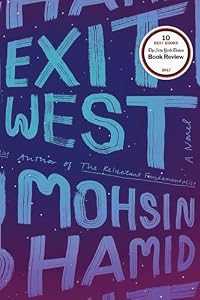
Exit West
by Mohsin Hamid
On This Page
Description
In a country teetering on the brink of civil war, two young people meet -- sensual, fiercely independent Nadia and gentle, restrained Saeed. They embark on a furtive love affair, and are soon cloistered in a premature intimacy by the unrest roiling their city. When it explodes, turning familiar streets into a patchwork of checkpoints and bomb blasts, they begin to hear whispers about doors -- doors that can whisk people far away, if perilously and for a price. As the violence escalates, show more Nadia and Saeed decide that they no longer have a choice. Leaving their homeland and their old lives behind, they find a door and step through. Exit West follows the couple as they emerge into an alien and uncertain future, struggling to hold on to each other, to their past, to the very sense of who they are. show lessTags
Recommendations






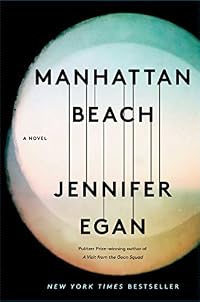


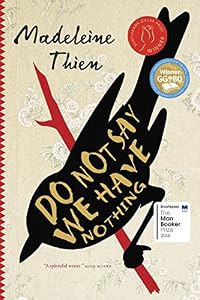
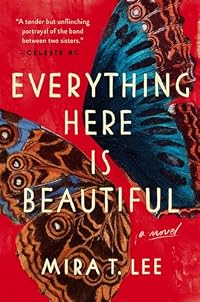
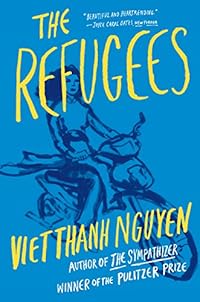





Member Recommendations

Member Reviews
This is a dream-like book that blends realism and fantasy in a magical way that makes it all seem possible. Early in the book the narrator observes that "one moment we are pottering about our errands as usual and the next we are dying." (p 4)
The narrator tells of a young couple who manage to meet and kindle a love that transports them through life and time to a place where they can live as each chooses in spite of the vicissitudes of the world around them.
In an unnamed city on the brink of civil war, Saeed and Nadia meet while taking an adult education course. The following day, Saeed can’t stop thinking about her while he whiles away his time at a local advertising firm.
Before continuing the story of Saeed and Nadia the narrative show more cuts to a vignette of a white woman sleeping in her bedroom in Australia. As she dozes, a dark-skinned man slowly emerges from the darkness of her closet, a darkness that is blacker and more absolute than the rest of the lightless room. After he emerges from this mysterious door, the man walks quietly through the bedroom before slipping out the open window. This seemingly unrelated incident will prove a portent of events later in the lives of Saeed and Nadia.
The narrative shifts back to Saeed and Nadia and as it continues, shifts back and forth between them. Saeed lives at home with his parents in a small apartment that used to be quite elegant but is now somewhat tired, a “crowded and commercial” neighborhood having grown up around it. Nadia grew up in a deeply religious household, but she never felt drawn to this kind of faith. When she decided to move out on her own even though she wasn’t married, her parents and sister were incensed, and because she was unwilling to compromise, their relationship was destroyed.
As Saeed and Nadia’s begin a modern sort of courtship, the city plunges inexorably into turmoil, as militant radicals overtake the neighborhoods, killing bystanders and government officials in order to establish dominance. Nonetheless, Saeed and Nadia manage to live somewhat normal lives. One night, they sit on Nadia’s balcony and eat magic mushrooms before drawing close and becoming physically intimate for the first time. This intimacy continues in subsequent meetings, but Saeed stops Nadia each time before they have sex, telling her—to her disappointment—that he wants to wait until marriage.
Before long, the government shuts off all cellphone service in an attempt to make it harder for the militant radicals to control the city. As a result, Nadia and Saeed are cut off from one another, unable to communicate until Saeed finally shows up at Nadia’s house. Not long thereafter, Saeed’s mother is hit by a stray bullet that kills her. When Nadia sees how distraught Saeed and his father are after the funeral, she decides to move in with them. Tensions escalate quickly in the city, and Saeed, Nadia, and Saeed’s father find themselves unable to lead the lives they once enjoyed.
Also, about this time, rumors start circulating about black doors that can transport people from one place to another, taking them far away. Apparently, these doors simply appear in the place of regular doors, and many of the city’s inhabitants actively seek them out as a way of escaping the violent radicals. In spite of the danger of using these doors to leave Nadia and Saeed eventually do so. Their experiences in Greece, London, and northern California comprise the remainder of the story.
Each of the episodes are presented very realistically with their lives buffeted by competing claims of both the need to maintain a daily life and the emotions of their personal relationship. Their story is told in a way that gradually builds the reader's interest up to the last page of the novel. I found myself agreeing with the narrator that "We are all migrants through time." (p 209) The fantastic element allowed one to meditate on the migration of people throughout the world and what it means to leave your family behind and join a new community of people - both natives and others. show less
The narrator tells of a young couple who manage to meet and kindle a love that transports them through life and time to a place where they can live as each chooses in spite of the vicissitudes of the world around them.
In an unnamed city on the brink of civil war, Saeed and Nadia meet while taking an adult education course. The following day, Saeed can’t stop thinking about her while he whiles away his time at a local advertising firm.
Before continuing the story of Saeed and Nadia the narrative show more cuts to a vignette of a white woman sleeping in her bedroom in Australia. As she dozes, a dark-skinned man slowly emerges from the darkness of her closet, a darkness that is blacker and more absolute than the rest of the lightless room. After he emerges from this mysterious door, the man walks quietly through the bedroom before slipping out the open window. This seemingly unrelated incident will prove a portent of events later in the lives of Saeed and Nadia.
The narrative shifts back to Saeed and Nadia and as it continues, shifts back and forth between them. Saeed lives at home with his parents in a small apartment that used to be quite elegant but is now somewhat tired, a “crowded and commercial” neighborhood having grown up around it. Nadia grew up in a deeply religious household, but she never felt drawn to this kind of faith. When she decided to move out on her own even though she wasn’t married, her parents and sister were incensed, and because she was unwilling to compromise, their relationship was destroyed.
As Saeed and Nadia’s begin a modern sort of courtship, the city plunges inexorably into turmoil, as militant radicals overtake the neighborhoods, killing bystanders and government officials in order to establish dominance. Nonetheless, Saeed and Nadia manage to live somewhat normal lives. One night, they sit on Nadia’s balcony and eat magic mushrooms before drawing close and becoming physically intimate for the first time. This intimacy continues in subsequent meetings, but Saeed stops Nadia each time before they have sex, telling her—to her disappointment—that he wants to wait until marriage.
Before long, the government shuts off all cellphone service in an attempt to make it harder for the militant radicals to control the city. As a result, Nadia and Saeed are cut off from one another, unable to communicate until Saeed finally shows up at Nadia’s house. Not long thereafter, Saeed’s mother is hit by a stray bullet that kills her. When Nadia sees how distraught Saeed and his father are after the funeral, she decides to move in with them. Tensions escalate quickly in the city, and Saeed, Nadia, and Saeed’s father find themselves unable to lead the lives they once enjoyed.
Also, about this time, rumors start circulating about black doors that can transport people from one place to another, taking them far away. Apparently, these doors simply appear in the place of regular doors, and many of the city’s inhabitants actively seek them out as a way of escaping the violent radicals. In spite of the danger of using these doors to leave Nadia and Saeed eventually do so. Their experiences in Greece, London, and northern California comprise the remainder of the story.
Each of the episodes are presented very realistically with their lives buffeted by competing claims of both the need to maintain a daily life and the emotions of their personal relationship. Their story is told in a way that gradually builds the reader's interest up to the last page of the novel. I found myself agreeing with the narrator that "We are all migrants through time." (p 209) The fantastic element allowed one to meditate on the migration of people throughout the world and what it means to leave your family behind and join a new community of people - both natives and others. show less
How will the developed nations react to the increasing pressures of immigration as war, climate change or lack of resources force more people to seek new homes? What will happen to the concept of national borders and what adjustments will be required by both immigrants and "nativists"? These issues and much more will linger in your mind after reading Exit West, a novel of aching beauty. Hamid keeps the tone light and thoughtful, rather than focusing on grim details as we move between countries with Nadia and Saeed. The magical construct of doors that provide nearly instantaneous passage to a new location allows the author to focus on how the characters evolve in each situation. Coming from vastly different family situations, Nadia and show more Saeed face the pressures of changing circumstances in different ways, but their relationship remains one of loyalty and respect. This beautifully written book will leave me reflecting on many things and I am look forward to discussing it with others. show less
I'm not usually a fan of magical realism, but I find this romance and examination of the global refugee crisis quite haunting and thought provoking. This could easily have been a Stephen King style epic apocalyptic thriller, but I like the bittersweet optimism Hamid brings to his little fable.
Exit West is the story of two Muslim lovers, Saeed and Nadia, refugees from a city torn by civil war. Saeed is a conservative Muslim, whereas Nadia is more worldly and liberal. The two meet, fall in love and end up living together under Saeed's father's roof in an arrangement that, while innocent, would attract serious punishment from the fundamentalists. At the urging of Saeed's father, the two escape.
Hamid's twist in this novel is that refugees can escape from their plight via portals that open up and allow them to go instantly to other places, without knowing what they will encounter there. Perhaps this is just a narrative device allowing him to skip accounts of perilous sea voyages and so on, but he does not really try to explain or show more justify the existence of these portals; they just are. I thought this weakened the book because, while authors can include pretty much anything in the worlds they invent, it is better if there is some rhyme or reason behind major plot devices such as this.
Hamid follows the two lovers on their journey as refugees and maps the pressures and changes in their relationship as this journey goes on. Once they are extracted from their home city via the portal they land in various places where their treatment can be quite different. Hamid places them in a refugee camp, in urban squats and in a purpose-built city, reflecting the various ways that refugees tend to be managed in the real world, and examines how these lives affect the people forced into them. Perhaps a key difference from reality is that Saeed and Nadia, due to Hamid's invented portals, have a lot more control over their fate than the millions currently languishing around the world with no hope at all. show less
Hamid's twist in this novel is that refugees can escape from their plight via portals that open up and allow them to go instantly to other places, without knowing what they will encounter there. Perhaps this is just a narrative device allowing him to skip accounts of perilous sea voyages and so on, but he does not really try to explain or show more justify the existence of these portals; they just are. I thought this weakened the book because, while authors can include pretty much anything in the worlds they invent, it is better if there is some rhyme or reason behind major plot devices such as this.
Hamid follows the two lovers on their journey as refugees and maps the pressures and changes in their relationship as this journey goes on. Once they are extracted from their home city via the portal they land in various places where their treatment can be quite different. Hamid places them in a refugee camp, in urban squats and in a purpose-built city, reflecting the various ways that refugees tend to be managed in the real world, and examines how these lives affect the people forced into them. Perhaps a key difference from reality is that Saeed and Nadia, due to Hamid's invented portals, have a lot more control over their fate than the millions currently languishing around the world with no hope at all. show less
Saeed and Nadia meet and fall in love. But they live in a city where militants are taking over, and soon the two decide they must leave, going through one of the doors to, hopefully, a better life. In each place they journey, they find themselves with fellow refugees and migrants, dealing with the attitudes of the "natives" in the places they arrive. Each door is a chance - will they end up someplace better? And as they change, react, and carve out lives for themselves, their relationship morphs along with them.
Through his story, Hamid challenges the reader to think about the arbitrary boundaries we make between countries, between "us" and "them". The form of their travel from place to place, going through doors and just ending up in show more another country, reminded me a little of the magical realism aspect of The Underground Railroad. I enjoyed the spare prose and grappling with the situations in which Saeed and Nadia find themselves as they try to make a place for themselves in the world. show less
Through his story, Hamid challenges the reader to think about the arbitrary boundaries we make between countries, between "us" and "them". The form of their travel from place to place, going through doors and just ending up in show more another country, reminded me a little of the magical realism aspect of The Underground Railroad. I enjoyed the spare prose and grappling with the situations in which Saeed and Nadia find themselves as they try to make a place for themselves in the world. show less
There's something about Mohsin Hamid's prose which I find to carry such a calm, and this book is no different. The story of Saeed and Nadia's relationship, from its beginning on through their escape from their war-torn country and coming to settle into spaces elsewhere, is a languid and gorgeous exploration of what it means to grow together and grow apart against trauma, conflict, and the passage of time. And while Hamid doesn't often go into the details of the trauma, he presents their world in such a way that we understand its harshness through the prism of the news we see every day now, particularly in relation to Gaza, which brings additional depth without dwelling in the details that would refocus the book into something else show more entirely.
I've seen some reviews complaining about the element of magical realism, but I'll be honest: I see it as a touch of genius. It allows us to see the emotions and difficulties and uncertainties of a traumatized population and sudden migrations without getting bogged down in the details of border passages that would/could change from border to border, moment to moment. Readers can't argue, 'It's not like that, really' instead of allowing themselves to be adjust to the emotions and accept the difficulties. Because of how Hamid has styled the book, it's not the logistics that matter--it's the people, and the lives they're attempting to live.
I admit that the ending of the book, for me, felt somewhat rushed, but that doesn't take away from the gorgeous book Hamid has written or from the emotions and journeys depicted here. This is a book to dwell in emotionally and then share, translating what it means and portrays onto the world we're attempting to survive as a global community.
Absolutely recommended. show less
I've seen some reviews complaining about the element of magical realism, but I'll be honest: I see it as a touch of genius. It allows us to see the emotions and difficulties and uncertainties of a traumatized population and sudden migrations without getting bogged down in the details of border passages that would/could change from border to border, moment to moment. Readers can't argue, 'It's not like that, really' instead of allowing themselves to be adjust to the emotions and accept the difficulties. Because of how Hamid has styled the book, it's not the logistics that matter--it's the people, and the lives they're attempting to live.
I admit that the ending of the book, for me, felt somewhat rushed, but that doesn't take away from the gorgeous book Hamid has written or from the emotions and journeys depicted here. This is a book to dwell in emotionally and then share, translating what it means and portrays onto the world we're attempting to survive as a global community.
Absolutely recommended. show less
In an unnamed middle eastern country, two young people, Nadia and Saeed, meet and begin to fall in love as their country is torn apart by violence and dictatorship. As the situation grows untenable, Nadia and Saeed decide to take the plunge and flee their country through one of the magical doors that have appeared across the world allowing people to traverse thousands of miles in a moment without knowing where they will end up.
I wasn't sure what to expect from this book but I ended up loving it. Hamid's prose is gorgeous and poetic and Nadia and Saeed's story is passionate, heartbreaking, and realistic. I can see the magical realism not working for some, but I'm a fan. 4.5 stars.
I wasn't sure what to expect from this book but I ended up loving it. Hamid's prose is gorgeous and poetic and Nadia and Saeed's story is passionate, heartbreaking, and realistic. I can see the magical realism not working for some, but I'm a fan. 4.5 stars.
Members
- Recently Added By
Published Reviews
ThingScore 75
Sortida a Occident, de Mohsin Hamid, comença sent una història d’amor íntima i emocionant i acaba sent una profecia novel·lada sobre el futur que, globalment, ens espera. En Saeed i la Nadia són dos joves que viuen en un país del qual no se’ns diu el nom però que per les seves característiques -és musulmà i està governat per un règim autoritari contra el qual se subleven show more milícies integristes- resulta familiar. L’amor entre en Saeed, retret i conservador, i la Nadia, valenta i independent, creix a mesura que el seu país s’esllavissa per l’abisme de la guerra, cosa que els obliga a fugir. És en aquest punt que Hamid es treu de la màniga un cop d’efecte argumental que desplaça les coordenades de gènere de la novel·la. Resulta que, arreu del planeta, han començat a aparèixer portes secretes i especials que transporten qui les travessa a un altre indret del globus. La introducció d’un element tan explícitament fantasiós fa que, després de creure durant tot el terç inicial que ens trobàvem davant d’un relat realista (si bé l’autor va preparant el que vindrà mitjançant unes escenes breus i estranyes), de sobte ens descobrim abocats a una mena de faula futurològica. show less
added by bugaderes39
Exit West is animated – confused, some may think – by this constant motion between genre, between psychological and political space, and between a recent past, an intensified present and a near future. It’s a motion that mirrors that of a planet where millions are trying to slip away “from once fertile plains cracking with dryness, from seaside villages gasping beneath tidal surges, show more from overcrowded cities and murderous battlefields”. show less
added by VivienneR
Lists

2018 Tournament of Books
18 works; 12 members

Best Contemporary Literary Fiction (Around the Last 30 Years)
388 works; 124 members

Recommend the 20 best books you've read in the last five years
2,168 works; 601 members

Best of World Literature
431 works; 51 members

Top Five Books of 2017
757 works; 230 members

Magic Realism
371 works; 51 members
Top Five Books of 2018
802 works; 265 members

Books recommended by Barack Obama
295 works; 28 members
Booker Prize
491 works; 62 members

2018 Hugo Eligible Novels
170 works; 16 members

The Immigrant's Stories
74 works; 18 members

Man Booker Prize Longlist 2017
13 works; 4 members

Best of 2017
12 works; 2 members

Kirkus Starred Fiction Reviews of Books Published in 2017
412 works; 7 members

Top 10 Favourite Books of the 2010s
10 works; 2 members

Books Read in 2017
4,249 works; 129 members
2018 Notable Books for Adults
26 works; 4 members

Goodreads Choice Awards 2017
20 works; 2 members

LGBTQ+ Speculative Fiction
818 works; 51 members

Asia
178 works; 7 members

Contemporary Fiction
109 works; 7 members

Speculative Fiction from around the World
610 works; 17 members

Top 50 Favourite Books
50 works; 2 members

Indie Next Picks
196 works; 4 members

Powell's 50 Books for 50 Years
50 works; 4 members

Netflix and Reads
18 works; 1 member

Review 2
36 works; 1 member

Reading Glasses Podcast
410 works; 3 members
Barack Obama's Favorite Books of 2017
12 works; 1 member
Books Read in 2018
4,360 works; 110 members

BBC World Book Club
261 works; 5 members

.
184 works; 1 member
NYT 100 best books of 21st C
100 works; 31 members

Books Read in 2026
1,702 works; 62 members

Book Riot Read Harder 2026
80 works; 1 member

To read
61 works; 1 member

Arab and Arab Diaspora Literature We Recommend
112 works; 53 members
Books Set in Pakistan
3 works; 2 members

Global Reads: Books Set in South Asia
30 works; 3 members

Brooklyn Public Library Literary Prize 2017
16 works; 1 member

TBR - Older Books
92 works; 1 member

To Read
37 works; 1 member

Diverse Reading Challenge 2020
31 works; 1 member
Library List - Pulitzer Adjacent
39 works; 1 member
Author Information

13+ Works 13,064 Members
Mohsin Hamid grew up in Lahore, attended Princeton University and Harvard Law School and worked for several years as a management consultant in New York. His first novel, Moth Smoke, was published in ten languages, won a Betty Trask Award, and was a finalist for the PEN/Hemingway Award. His essays and journalism have appeared in Time, the New York show more Times and the Guardian, among others. His latest novel is The Reluctant Fundamentalist (2007) published by Penguin. He will be featured at the Ubud Writers and Readers Festival 2015 program. He is the author of Exit West, which in 2018, won the inaugural Aspen Words Literary Prize. (Bowker Author Biography) show less
All Editions
Some Editions
Awards and Honors
Awards
Distinctions
Amazon.com Best Books (Top 20 – 2017)
The Guardian Book of the Day (2017-03-02)
Notable Lists
Series
Belongs to Publisher Series
Antípoda (23)
Otavan kirjasto (268)
Common Knowledge
- Canonical title
- Exit West
- Original title
- Exit West
- Original publication date
- 2017
- People/Characters
- Nadia; Saeed
- Important places
- Pakistan; London, England, UK; Mykonos, Cyclades Islands, Greece; California, USA
- Dedication
- For Naved and Nasim
- First words
- In a city swollen by refugees but still mostly at peace, or at least not yet openly at war, a young man met a young woman in a classroom and did not speak to her.
- Quotations
- ‘I can understand it,’ she said. ‘Imagine if you lived here. And millions of people from all over the world suddenly arrived.’
’Millions arrived in our country,’ Saeed replied. ‘When there were wars nearby.â... (show all)€™
‘That was different. Our country was poor. We didn’t feel we had as much to lose.’
Without borders nations appeared to be becoming somewhat illusory, and people were questioning what role they had to play.
But that is the way of things, for when we migrate, we murder from our lives those we leave behind.
Loss unites humanity, unites every human being, the temporary nature of our being-ness, and our shared sorrow, the heartache we each carry and yet too often refuse to acknowledge in one another.
We are all migrants through time. - Last words
- (Click to show. Warning: May contain spoilers.)He nodded and said if she had an evening free he would take her, it was a sight worth seeing in this life, and she shut her eyes and said she would like that very much, and they rose and embraced and parted and did not know, then, if that evening would ever come.
- Blurbers*
- Chabon, Michael; Desai, Kiran
- Original language
- English
- Canonical DDC/MDS
- 813.54
- Canonical LCC
- PR9900
*Some information comes from Common Knowledge in other languages. Click "Edit" for more information.
Classifications
Statistics
- Members
- 4,452
- Popularity
- 3,309
- Reviews
- 251
- Rating
- (3.80)
- Languages
- 13 — Catalan, Chinese, Czech, Danish, Dutch, English, Finnish, German, Italian, Spanish, Swedish, Turkish, Portuguese (Portugal)
- Media
- Paper, Audiobook, Ebook
- ISBNs
- 47
- ASINs
- 9