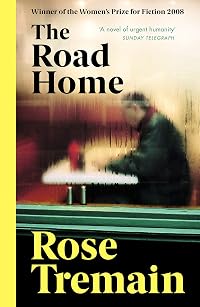
The Road Home
by Rose Tremain
On This Page
Description
A middle-aged migrant from Eastern Europe moves to London in search of work after losing his wife and job. Lev's London is awash with money, celebrity, and complacency.Tags
Recommendations









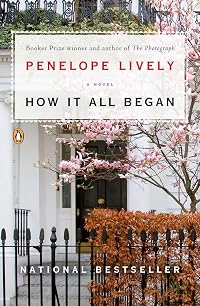
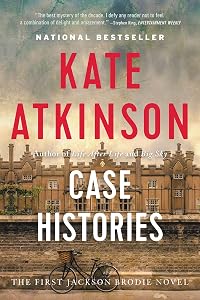


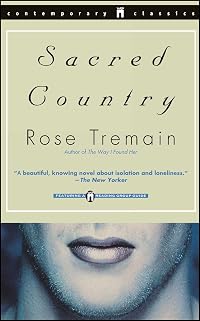

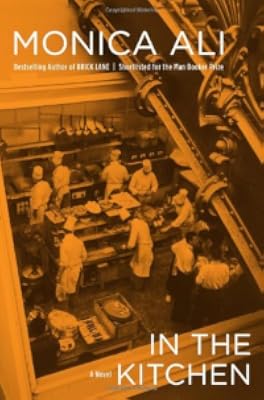













Member Recommendations
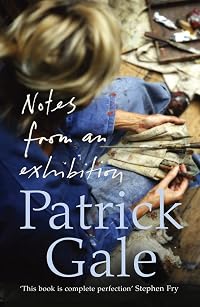
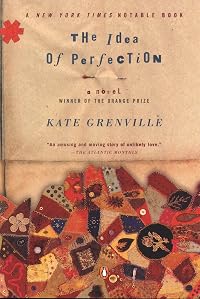
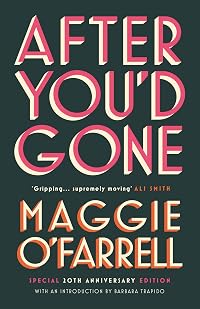
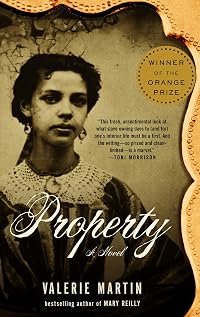
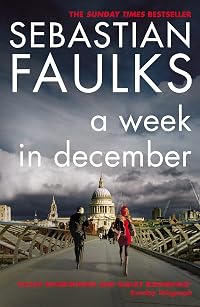
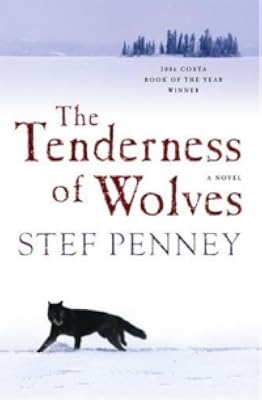
bergs47 Immigration and assimilation in England,from the view of the immigrant although one is from easter Europe and the other from asia
40


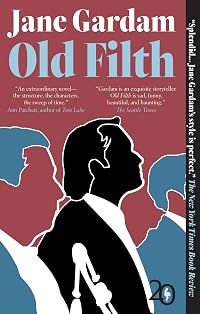
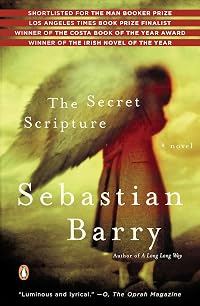
PilgrimJess Another book about starting anew after a traumatic experience.
Member Reviews
First, let me start by saying that this book was a gift from Paul, so thank you Paul for your generosity and also for helping me to discover a new author. I really liked this story and think it is one that I will revisit.
The main character here is Lev, a widower in his forties trying to raise a young daughter and take care of his mother. The sawmill in his village has closed down, and there is no more work for him. He is also still grieving the loss of his wife, so Lev is a bit closed down himself. We are not told what country he is from, but the references make it feel like Poland or perhaps Russia. When we meet Lev, he is on his way to London to look for work. He hopes to find a job, but this is much more difficult than he had show more thought. It is not just that he doesn't speak the language well, it's that everything works so differently and things cost much more than he had anticipated. His story is a familiar one except that Tremain's writing elevates the ordinariness of Lev's journey - it feels real, and the characters feel real, which is what I loved about this book.
I also loved how Lev wanted to move forward but couldn't resist looking back. That's how the heart works - we grieve for what we have lost, for what we can no longer have, and if left unchecked, it can threaten our forward momentum. The book beautifully captures Lev's aloneness - he is surrounded by people, but they are not his people. And Lev is fully human - he is resilient and hard-working, willing to learn and approachable, but often lets his anger get the best of him. He is both selfish and generous. Thoughtful and thoughtless. Like most of us, he is deeply flawed. So we are shown both his beauty and his ugliness. There were times when I wanted to wring his neck or, at the very least, smack him around a bit, but for the most part I genuinely liked him. And I enjoyed his journey.
My only complaint would be that the ending here seemed too abrupt. I felt cheated, and I wanted more. I don't need for things to be neat and tidy, but I like when they feel finished. And that unfinished feeling here is what had me deducting half a star from the rating. Other than that, the book is lovely.
"Lev could see that darkness was falling outside the window and he thought how, in his village, darkness had always arrived in precisely the same way, from the same direction, above the same trees, whether early or late, whether in summer, winter, or spring, for the whole of his life. This darkness - particular to that place, Auror - was how, in Lev's heart, darkness would always fall." show less
The main character here is Lev, a widower in his forties trying to raise a young daughter and take care of his mother. The sawmill in his village has closed down, and there is no more work for him. He is also still grieving the loss of his wife, so Lev is a bit closed down himself. We are not told what country he is from, but the references make it feel like Poland or perhaps Russia. When we meet Lev, he is on his way to London to look for work. He hopes to find a job, but this is much more difficult than he had show more thought. It is not just that he doesn't speak the language well, it's that everything works so differently and things cost much more than he had anticipated. His story is a familiar one except that Tremain's writing elevates the ordinariness of Lev's journey - it feels real, and the characters feel real, which is what I loved about this book.
I also loved how Lev wanted to move forward but couldn't resist looking back. That's how the heart works - we grieve for what we have lost, for what we can no longer have, and if left unchecked, it can threaten our forward momentum. The book beautifully captures Lev's aloneness - he is surrounded by people, but they are not his people. And Lev is fully human - he is resilient and hard-working, willing to learn and approachable, but often lets his anger get the best of him. He is both selfish and generous. Thoughtful and thoughtless. Like most of us, he is deeply flawed. So we are shown both his beauty and his ugliness. There were times when I wanted to wring his neck or, at the very least, smack him around a bit, but for the most part I genuinely liked him. And I enjoyed his journey.
My only complaint would be that the ending here seemed too abrupt. I felt cheated, and I wanted more. I don't need for things to be neat and tidy, but I like when they feel finished. And that unfinished feeling here is what had me deducting half a star from the rating. Other than that, the book is lovely.
"Lev could see that darkness was falling outside the window and he thought how, in his village, darkness had always arrived in precisely the same way, from the same direction, above the same trees, whether early or late, whether in summer, winter, or spring, for the whole of his life. This darkness - particular to that place, Auror - was how, in Lev's heart, darkness would always fall." show less
Impossible not to get attached to the protagonist, Lev, who leaves his hometown, young daughter and mother in his East European village where no work is to be found since the local mill has closed down to make his way to London and hopes for prosperity of some form. He finds work in the restaurant business and having made a new friend and a new lover in this big city, dreams up ways to save his loved ones back home. I was worried I wouldn't fall in love with Tremain's contemporary novels the way I've passionately loved her historical fiction (most especially Restoration and Merivel), but needn't have worried: she is a master of prose and has such a deep and special understanding of humanity and its many frailties, that whatever time show more period she chooses to write about ends up making for timeless stories somehow. 4.5 stars. I would have given it the full 5, only I do strongly favour historical fiction for taking me outside our current world.
Should give a special mention to Steven Pacey, who narrates the audio version. His reading was beautifully modulated and he successfully rendered a range of accents and gave each character a marked and fitting personality. Really wonderful when voice narration adds so much to the reading experience. show less
Should give a special mention to Steven Pacey, who narrates the audio version. His reading was beautifully modulated and he successfully rendered a range of accents and gave each character a marked and fitting personality. Really wonderful when voice narration adds so much to the reading experience. show less
“When you’re old nobody touches you nobody listens to you—not in this bloody country.so that’s what I do. I touch and I listen.”
This novel tells the story of Lev who leaves his home country and like so many others is heading west. His wife, Marina, has died of leukaemia, his five-year-old daughter, Maya, is living with her grandmother and 42-year-old Lev, a former lumberyard worker is travelling to London to find work.
Lev arrives in a dusty, midsummer city full of hope but things, however, do not start well. He suddenly realises that the money that he had saved to live off until he found work is nowhere near enough. In fact his first night in the city, spent in an Earl's Court B&B costs him what he had expected to last him a show more week. The next day he gets a 'job' delivering leaflets for a kebab shop, for which he's paid 2p a leaflet and sleeps on the street
Lev is rescued from the streets by Lydia, the woman whom Lev had sat beside on the long bus journey across Europe. She finds him somewhere to live and a job as a kitchen porter and bit by bit, Lev gets himself on his feet so beginning a sometimes comic, often painful, journey through London. Through Lev's eyes, we see London as the incomer views it and it is not an attractive sight, its inhabitants obsessed by status and success. As Lev's Irish landlord Christy says, with some prescience: 'Life's a feckin' football match to the Brits now. They didn't used to be like this, but now they are. If you can't get your ball in the back of the net, you're no one.'
Despite slowly improving circumstances, and the fact that he is now able to send money home, Lev's conscience tugs at him: his daughter, who has lost her mother, is now worried that her father, too, will never return. Lev has, ironically, inflicted an experience of terrible loss on his small daughter. All too slowly, he becomes aware of this dilemma and, as he wrestles with it, as the novel approaches its climax.
Despite the fact that Lev is an immigrant with the added issues about language, I don't feel that this book is necessarily about immigration but could rather apply to anyone who moves to a strange city in search of work and improved opportunity. The book is thematically rich, dealing with loss and separation, mourning and melancholia, and what might underlie the ostensibly altruistic act of moving to another country to earn money for one's family. The themes have been well thought out and the writing has a beautiful precision about it, sometimes sad but often up-lifting. show less
This novel tells the story of Lev who leaves his home country and like so many others is heading west. His wife, Marina, has died of leukaemia, his five-year-old daughter, Maya, is living with her grandmother and 42-year-old Lev, a former lumberyard worker is travelling to London to find work.
Lev arrives in a dusty, midsummer city full of hope but things, however, do not start well. He suddenly realises that the money that he had saved to live off until he found work is nowhere near enough. In fact his first night in the city, spent in an Earl's Court B&B costs him what he had expected to last him a show more week. The next day he gets a 'job' delivering leaflets for a kebab shop, for which he's paid 2p a leaflet and sleeps on the street
Lev is rescued from the streets by Lydia, the woman whom Lev had sat beside on the long bus journey across Europe. She finds him somewhere to live and a job as a kitchen porter and bit by bit, Lev gets himself on his feet so beginning a sometimes comic, often painful, journey through London. Through Lev's eyes, we see London as the incomer views it and it is not an attractive sight, its inhabitants obsessed by status and success. As Lev's Irish landlord Christy says, with some prescience: 'Life's a feckin' football match to the Brits now. They didn't used to be like this, but now they are. If you can't get your ball in the back of the net, you're no one.'
Despite slowly improving circumstances, and the fact that he is now able to send money home, Lev's conscience tugs at him: his daughter, who has lost her mother, is now worried that her father, too, will never return. Lev has, ironically, inflicted an experience of terrible loss on his small daughter. All too slowly, he becomes aware of this dilemma and, as he wrestles with it, as the novel approaches its climax.
Despite the fact that Lev is an immigrant with the added issues about language, I don't feel that this book is necessarily about immigration but could rather apply to anyone who moves to a strange city in search of work and improved opportunity. The book is thematically rich, dealing with loss and separation, mourning and melancholia, and what might underlie the ostensibly altruistic act of moving to another country to earn money for one's family. The themes have been well thought out and the writing has a beautiful precision about it, sometimes sad but often up-lifting. show less
The Road Home was an absolute joy to read. The protagonist, Lev, is so well drawn by Tremain that he became alive for me, as well as the other characters in the book, specifically his best friend Rudy. You really feel for Lev as he is vulnerable, sensitive, kind, yet Tremain also has the courage to make him flawed, making him a much more well-rounded character. I highly recommend this book if you are looking for an educational, insightful and heartwarming story.
We meet Lev on bus, leaving his small Russian town to find work in London. A graying maybe 40-yr-old man, a compulsive smoker, he's leaving town because he's out of work (his lumber yard "ran out of trees") and nearly out of money. He's left his young daughter in care of his mother. He speaks only the barest English, he has no skills and he doesn't know anyone in London. It takes maybe 10 pages pages before he gets lost in a daydream. These daydreams of his past, typically of his deceased wife, are a continual occurrence. They are moving, and slowly they reveal his history. The mixture of these memories with his immigrant story is a powerful effect.
In some ways Lev is a study of the immigrant stream in London. Already a broken person, show more he wanders hopelessly, can't afford a place to sleep or find job. He doesn't have plan. He is naive, culturally blown away, intimidated. And, he doesn't help himself by doing about everything wrong at the worst times. Yet, what is unique about Lev is his charm, his calm patience, even in the face disaster and especially his stories. As we shake our head at his terrible behavior, his self-destructive flings, and his pursuit of seemingly unreachable goals, he still charms us and carries us away with him on his daydreams.
Through Lev's story, we meet an assortment of wonderfully drawn characters (in both the present and the past) giving us a cross-section through Russian and England. Rose Tremain simply tells good stories; and she creates and develops such memorable characters. Everyone we meet has something to offer us, some kind of insight into yet another cultural aspect or another style of personality. This is a nice book to get lost in. show less
In some ways Lev is a study of the immigrant stream in London. Already a broken person, show more he wanders hopelessly, can't afford a place to sleep or find job. He doesn't have plan. He is naive, culturally blown away, intimidated. And, he doesn't help himself by doing about everything wrong at the worst times. Yet, what is unique about Lev is his charm, his calm patience, even in the face disaster and especially his stories. As we shake our head at his terrible behavior, his self-destructive flings, and his pursuit of seemingly unreachable goals, he still charms us and carries us away with him on his daydreams.
Through Lev's story, we meet an assortment of wonderfully drawn characters (in both the present and the past) giving us a cross-section through Russian and England. Rose Tremain simply tells good stories; and she creates and develops such memorable characters. Everyone we meet has something to offer us, some kind of insight into yet another cultural aspect or another style of personality. This is a nice book to get lost in. show less
This lovely book was a gift from a friend and it was spot on for me. I loved Lev, the protagonist who travels from his post-Communism Eastern European home to London to find work. It's the current day and Lev, whose wife died of Leukemia at age 36 (high incidence of this in their community -- go figure) and whose mother and 5-year-old daughter he leaves behind, meets Lydia on the long bus ride to London. Lydia becomes a touchstone and the holder of optimism for Lev, who is desperate to make his way in the world and to provide for his family. Some of the funnier scenes involve Lev's memories of adventures with his pal, Rudi, back in Auror, the hometown that is eventually doomed to modern progress. In any case, along the way Lev faces the show more brutal realities of life in a capitalist country and he encounters people whose kindness, humor, and resilience provide the meaning. Midway through the novel, the reader is provided with a detour into Lev's greedy and lustful wrestling match with despair. Neither compassionate nor condemnatory, the narrative simply allows us to view this facet of Lev's character. He is human and he is male, and at this point in his life he is lonely and riddled with need and self-doubt. Still, he seems to have a kernel of determination that cannot be extinguished.
Relentlessly optimistic, this is still no fairy tale. It's a delightful exploration of the immigrant experience, the meeting of cultures, and the persistence of hope and meaning in the face of their partners, despair and capricious fate. Filled with interesting and memorable characters, its deceptive complexity makes it a novel worth reading. Highly recommended and with thanks to Paul for the introduction. show less
Relentlessly optimistic, this is still no fairy tale. It's a delightful exploration of the immigrant experience, the meeting of cultures, and the persistence of hope and meaning in the face of their partners, despair and capricious fate. Filled with interesting and memorable characters, its deceptive complexity makes it a novel worth reading. Highly recommended and with thanks to Paul for the introduction. show less
At the start of The Road Home, Lev has boarded a bus from his Eastern European village where the main employer has closed down. With the expansion of the EU, he is travelling to the UK ("I am legal" is one of the English phrases he has committed to memory) in order to earn money for his mother and his daughter (his wife has recently died of leukaemia). In London, he encounters much that is unfamiliar, but also begins to build friendships, particularly with Lydia, a compatriot he met on the bus, and his Irish landlord Christy, whose ex-wife is preventing him having access to their child.
The touching relationship between these two lonely men, both missing their daughters but wishing to do the best by them, is one of the highlights of the show more book (at least, of the part I managed to read). There's also a nice thread about language and jargon - Lev has had English lessons before coming to the UK but is baffled by the language of job advertisements and room-for-rent notices, of self-improving business-speak, of the posh restaurant where he gets a job in the kitchen.
But.
This book was highly praised for giving humanity to the anonymous figure of the immigrant. Christy, too, could be another negative stereotype, the deadbeat dad (before his wife left him he was having trouble finding work, and drinking heavily). They are portrayed very sensitively. But for me, this was totally undermined by the fact that the book didn't bother giving humanity to the vast mass of the English working-class (who are all fat, drunken, incomprehensible and greasy-faced). There are several asides which sound to me much more like a middle-class Englishwoman's reaction to modern Britain than that of a working-class Eastern European man. Most of the speech of the British characters is really tin-eared - which grates even more in comparison to, say, the well-written conversations between Christy and Lev. And it seemed to me there was a lot of lazy stereotyping going on. You can see that from the fact that Christy's ex-wife is now shacked up with an estate agent - easily one of the top five most hated professions in Britain. Oh well, then, we just know we can hate him. Wouldn't it have been more subtle if we could have had sympathy for Christy's wife as well? If she had been someone who left him because she couldn't stand the fact that he kept coming home incoherent and throwing up on the hall carpet, but ended up with someone who loved her and was able to care for her and her child? I don't think that would necessarily have made Christy's character any less sympathetic.
I know a lot of people have rated this book very highly, and I really, really, really did try. I kept picking it up for another go, but inevitably, after a really moving piece, I would come to something which made me roll my eyes and grind my teeth, and, y'know, that's not really what I look for in my reading. So, onto the 'abandoned' pile it goes. show less
The touching relationship between these two lonely men, both missing their daughters but wishing to do the best by them, is one of the highlights of the show more book (at least, of the part I managed to read). There's also a nice thread about language and jargon - Lev has had English lessons before coming to the UK but is baffled by the language of job advertisements and room-for-rent notices, of self-improving business-speak, of the posh restaurant where he gets a job in the kitchen.
But.
This book was highly praised for giving humanity to the anonymous figure of the immigrant. Christy, too, could be another negative stereotype, the deadbeat dad (before his wife left him he was having trouble finding work, and drinking heavily). They are portrayed very sensitively. But for me, this was totally undermined by the fact that the book didn't bother giving humanity to the vast mass of the English working-class (who are all fat, drunken, incomprehensible and greasy-faced). There are several asides which sound to me much more like a middle-class Englishwoman's reaction to modern Britain than that of a working-class Eastern European man. Most of the speech of the British characters is really tin-eared - which grates even more in comparison to, say, the well-written conversations between Christy and Lev. And it seemed to me there was a lot of lazy stereotyping going on. You can see that from the fact that Christy's ex-wife is now shacked up with an estate agent - easily one of the top five most hated professions in Britain. Oh well, then, we just know we can hate him. Wouldn't it have been more subtle if we could have had sympathy for Christy's wife as well? If she had been someone who left him because she couldn't stand the fact that he kept coming home incoherent and throwing up on the hall carpet, but ended up with someone who loved her and was able to care for her and her child? I don't think that would necessarily have made Christy's character any less sympathetic.
I know a lot of people have rated this book very highly, and I really, really, really did try. I kept picking it up for another go, but inevitably, after a really moving piece, I would come to something which made me roll my eyes and grind my teeth, and, y'know, that's not really what I look for in my reading. So, onto the 'abandoned' pile it goes. show less
Members
- Recently Added By
Lists

Favourite Women's Prize for Fiction, Orange & Bailey's Prize contenders
132 works; 52 members

Top Five Books of 2013
1,562 works; 715 members

Best Books Set in London
157 works; 42 members

Best winner of the Orange Broadband Prize for Fiction
13 works; 6 members
Women's Prize for Fiction
29 works; 5 members

I Could Live There
185 works; 12 members

Books Read in 2019
4,052 works; 110 members
Author Information

38+ Works 10,036 Members
Rose Tremain was born in London, England on August 2, 1943. She has written several novels including The Way I Found Her, Merivel: A Man of His Time, and The American Lover. Restoration was adapted into a movie in 1995 and a stage production in 2009. She has won numerous awards including the James Tait Memorial Prize and the Prix Femina Etranger show more for Sacred Country, the Whitbread Novel of the Year Award for Music and Silence, and the Orange Prize for Fiction in 2008 for The Road Home. She was made a CBE in 2007. (Bowker Author Biography) show less
Some Editions
Awards and Honors
Awards
Series
Belongs to Publisher Series
insel taschenbuch (4037)
Common Knowledge
- Canonical title*
- De weg naar huis
- Original title
- The road home
- Original publication date
- 2007
- People/Characters
- Lev; Lydia; Rudi; Lora; Ina; Christy Slane (show all 8); Sophie; G.K. Ashe
- Important places
- London, England, UK; Eastern Europe; Auror
- Epigraph
- "How can we live, without our lives?"
John Steinbeck: The Grapes of Wrath - Dedication
- For Brenda and David Reid,
with fondest love - First words
- On the coach, Lev chose a seat near the back and he sat huddled against the window, staring out at the land he was leaving: at the fields of sunflowers scorched by the dry wind, at the pig farms, at the quarries and rivers an... (show all)d at the wild garlic growing green at the edge of the road.
- Quotations
- "My God," said Christy. "The things man dreams up! It could make you horribly afraid."
"To put polenta on an expensive menu is a mendacious and decadent act."
"Freedom is speed. Freedom is horsepower and torque. Freedom is four wheels under your arse." - Last words
- (Click to show. Warning: May contain spoilers.)"Something wild and beautiful and full of woe."
- Blurbers
- Brownrigg, Sylvia; Clanchy, Kate; Tonkin, Boyd; Moore, Caroline; Clarke, Alex; Greenlaw, Lavinia
- Original language
- English
*Some information comes from Common Knowledge in other languages. Click "Edit" for more information.
Classifications
Statistics
- Members
- 1,534
- Popularity
- 14,972
- Reviews
- 88
- Rating
- (3.94)
- Languages
- 6 — Chinese, Dutch, English, French, German, Italian
- Media
- Paper, Audiobook, Ebook
- ISBNs
- 33
- ASINs
- 12