
Ordinary Thunderstorms
by William Boyd
On This Page
Description
Adam Kindred is in London for a job interview and looking at a bright future. Then he has a chance meeting in a restaurant that results in a series of actions that cost him his family, his money, his very identity. Utterly alone, Adam joins London's underground society of dispossessed and tries to figure out what happened to his life.Tags
Recommendations













Member Recommendations
lizchris Alternative view of living in London
Member Reviews
Boyd is a favorite and this one is an exciting _Wrong Man_-like thriller set in London. A large pharmaceutical company is the lurking malevolence chasing our leading man along with the police. The Thames River and some of London’s darker denizens add verisimilitude to this adventure that is set off by a random chance encounter. Who are we (and what do we become) when we are forced give up modern life’s high-tech luxuries and live off the grid? Cinematic to the max and yet thought provoking.
Ordinary thunderstorms can sometimes turn into violent and destructive super-cell storms. William Boyd runs with this metaphor in "Ordinary Thunderstorms," his thinking-man's thriller from 2010.
Adam Kindred, a climatologist in London for a job interview, has a casual restaurant conversation with another scientist, a drug researcher. When Philip Wang departs he leaves behind a file, which Adam finds. It has Wang's address and phone number on it, so Adams calls him and offers to drop the file off at his place. This minor inconvenience is the ordinary thunderstorm.
When he arrives at the flat he finds the door open and Wang with a knife in his chest. He pulls out the knife, Wang dies and just like that Adam finds himself the chief suspect show more in a murder case, his fingerprints on the murder weapon and his name on the visitor register. But this is now a super-cell thunderstorm, and Adam's even greater danger is that Wang's killer, an ex-soldier called Jonjo, is hiding in the flat and, because of that file, wants to kill Adam, too.
Boyd keeps up the tension in the novel's first few pages, but after that those who make a steady diet of thrillers, with their constant action and murders every other chapter, may get bored with "Ordinary Thunderstorms," for the center of this storm is prolonged lull, though hardly an uninteresting one for more discerning readers. The author takes us into the London underground, not the subway system but rather the shadowy world into which countless people disappear each year.
Adam finds it amazingly easy to disappear from view, even in a city that has cameras everywhere. He supports himself by begging in the street, avoids using his real name or his credit cards, grows a beard and, for a time, sleeps outside. Gradually he forms a new identity, gets a job as a hospital porter and begins to probe the mystery of what got Philip Wang murdered.
Some of this may strain belief, as when Adam starts dating a police officer and she falls in love with him without bothering to probe his past even a little bit. Still it is fascinating stuff. The novel ends with the suggestion that, while this particular storm may be over, another one may be just over the horizon. show less
Adam Kindred, a climatologist in London for a job interview, has a casual restaurant conversation with another scientist, a drug researcher. When Philip Wang departs he leaves behind a file, which Adam finds. It has Wang's address and phone number on it, so Adams calls him and offers to drop the file off at his place. This minor inconvenience is the ordinary thunderstorm.
When he arrives at the flat he finds the door open and Wang with a knife in his chest. He pulls out the knife, Wang dies and just like that Adam finds himself the chief suspect show more in a murder case, his fingerprints on the murder weapon and his name on the visitor register. But this is now a super-cell thunderstorm, and Adam's even greater danger is that Wang's killer, an ex-soldier called Jonjo, is hiding in the flat and, because of that file, wants to kill Adam, too.
Boyd keeps up the tension in the novel's first few pages, but after that those who make a steady diet of thrillers, with their constant action and murders every other chapter, may get bored with "Ordinary Thunderstorms," for the center of this storm is prolonged lull, though hardly an uninteresting one for more discerning readers. The author takes us into the London underground, not the subway system but rather the shadowy world into which countless people disappear each year.
Adam finds it amazingly easy to disappear from view, even in a city that has cameras everywhere. He supports himself by begging in the street, avoids using his real name or his credit cards, grows a beard and, for a time, sleeps outside. Gradually he forms a new identity, gets a job as a hospital porter and begins to probe the mystery of what got Philip Wang murdered.
Some of this may strain belief, as when Adam starts dating a police officer and she falls in love with him without bothering to probe his past even a little bit. Still it is fascinating stuff. The novel ends with the suggestion that, while this particular storm may be over, another one may be just over the horizon. show less
Have you ever wanted to slip under the radar and disappear from your present life? Adam Kindred is forced to do so in this fast-moving story of a man hunted throughout London by the police and hired guns for a murder he didn't commit. He develops elaborate ruses and skills to survive, trying to solve the crime involving CEOs of huge pharmaceutical companies while exploring options open to the homeless and the forgotten. Boyd's writing skills elevate the book above standard thriller fare and made me reach immediately for another of his titles, [b:Restless|72148|Restless|William Boyd|http://photo.goodreads.com/books/1170800234s/72148.jpg|865487].
This book took me out of my comfort zone. I liked this story, although the writing style did not appeal to me overly.
The story relies on the naivety of Adam Kindred not going to the police immediately about Philip Wang’s murder and then digging himself into bigger and bigger holes.
The timeline felt believable and the characters were well-drawn. I particularly liked Mhouse and got a sense of someone living hand-to-mouth, under the radar as best she could, providing for her son (although I worried she was going to kill him with the cocktail of drugs she was regularly feeding him), and being caught up with the likes of Mohammed & Mr Quality which was dragging her down. However, there is something good about Mhouse too. Her connection to show more the Church of John Christ where they feed the starving and accept everyone who walks through the door without question, suggests she has a caring side. It seemed odd that Mhouse would rob Adam Kindred and then direct him to her church, but perhaps that is the behaviour of someone desperate and under the wrong influences fighting her natural inclination to help.
I was surprised when Adam Kindred could so easily resort to murder to dispose of his blackmailer by throwing him off Chelsea Bridge, and letting the tide carry him to his death. Kindred was obviously backed so far into a corner that he had no other way out.
Kindred does this after disposing of his friend Vladimir’s body following a drug overdose. It felt as though Kindred was finding he was remorselessly able to things he would never even have contemplated previously. Before his death, Vladimir had assumed the identity of Primo Belem, which Adam then adopts, along with Vladimir's flat and new job as a porter. This job allows him to move around the hospital unnoticed, and uncover the motive for silencing Dr Wang.
The Church of John Christ is an odd one too. I wasn’t sure if it was a place where the vulnerable were indoctrinated, dressed up as a charity soup kitchen, or whether there was some financial scam going on in the background.
When Mhouse's son Ly-on was in the children’s home run by the Church of John Christ, the idea that anyone could take a child out for a day for a payment appalled me. While the organisation would know 'John 1603', they had no idea who he really was or his connection to Ly-on beyond being a friend of Ly-on’s mother.
I felt the ending left us guessing as to what might happen next as there are lots of threads not neatly tied off, which I rather enjoyed. show less
The story relies on the naivety of Adam Kindred not going to the police immediately about Philip Wang’s murder and then digging himself into bigger and bigger holes.
The timeline felt believable and the characters were well-drawn. I particularly liked Mhouse and got a sense of someone living hand-to-mouth, under the radar as best she could, providing for her son (although I worried she was going to kill him with the cocktail of drugs she was regularly feeding him), and being caught up with the likes of Mohammed & Mr Quality which was dragging her down. However, there is something good about Mhouse too. Her connection to show more the Church of John Christ where they feed the starving and accept everyone who walks through the door without question, suggests she has a caring side. It seemed odd that Mhouse would rob Adam Kindred and then direct him to her church, but perhaps that is the behaviour of someone desperate and under the wrong influences fighting her natural inclination to help.
I was surprised when Adam Kindred could so easily resort to murder to dispose of his blackmailer by throwing him off Chelsea Bridge, and letting the tide carry him to his death. Kindred was obviously backed so far into a corner that he had no other way out.
Kindred does this after disposing of his friend Vladimir’s body following a drug overdose. It felt as though Kindred was finding he was remorselessly able to things he would never even have contemplated previously. Before his death, Vladimir had assumed the identity of Primo Belem, which Adam then adopts, along with Vladimir's flat and new job as a porter. This job allows him to move around the hospital unnoticed, and uncover the motive for silencing Dr Wang.
The Church of John Christ is an odd one too. I wasn’t sure if it was a place where the vulnerable were indoctrinated, dressed up as a charity soup kitchen, or whether there was some financial scam going on in the background.
When Mhouse's son Ly-on was in the children’s home run by the Church of John Christ, the idea that anyone could take a child out for a day for a payment appalled me. While the organisation would know 'John 1603', they had no idea who he really was or his connection to Ly-on beyond being a friend of Ly-on’s mother.
I felt the ending left us guessing as to what might happen next as there are lots of threads not neatly tied off, which I rather enjoyed. show less
Have you ever wanted to slip under the radar and disappear from your present life? Adam Kindred is forced to do so in this fast-moving story of a man hunted throughout London by the police and hired guns for a murder he didn't commit. He develops elaborate ruses and skills to survive, trying to solve the crime involving CEOs of huge pharmaceutical companies while exploring options open to the homeless and the forgotten. Boyd's writing skills elevate the book above standard thriller fare and made me reach immediately for another of his titles, [b:Restless|72148|Restless|William Boyd|http://photo.goodreads.com/books/1170800234s/72148.jpg|865487].
Six-word review: Inventive thriller explores questions of identity.
Extended review:
Getting by outside the system, living an undocumented life in the Information Age, is a theme that has interested me since long before the advent of the Internet. From time to time I've even considered the idea attractive and read with a tinge of envy about those who have done it, or nearly done it. So I was immediately intrigued by the premise of this novel: an innocent man, framed by circumstances, is believed to have committed a murder and goes underground to evade not only the police but the real killers.
Adam Kindred has come to London to begin a new life following a major setback in the personal and professional spheres. The new life he gets is not show more the one he sought. Instead, a chance encounter puts him in possession of a file containing information that will fatally compromise a hugely profitable pharmaceutical empire, putting his life in jeopardy with its hired thugs, while police pursue him as the suspect. How can he survive, alone, friendless, without resources, while powerful interests are determined to suppress what he knows?
You know a novel has me in its grip when I bring it out of the bedroom. An hour's bedtime reading per night wasn't enough for this thriller: I just had to see what happened next, so I spent several hours on the sofa with it two days running, preempting my current living room reading.
Now, I won't deny that this book has a number of apparent flaws, the main one being overindulgence in the development of an extensive network of secondary characters. In several cases their stories are more in the nature of digressions than they are essential to furthering plot or characterization; for example, I see no relevance in the dialogue between a prostitute and her customer about whether to take a vacation together, and not much in the details of how a young woman keeps her little boy drowsy and tractable or a business executive ruminates on his underwear. Yet I'm happy to overlook such arguably loose elements of structure because those asides are interesting. Likewise, Boyd's vision of how his protagonist adapts to his circumstances and builds relationships that affect his future course may have more than a little of the implausible about it, but as (presumably) speculative fiction it is highly entertaining. To the extent that his depiction of the forces of menace might be realistic, I'm duly chilled by the thought that anyone I care about might ever have to disappear deliberately.
In fact, I was somewhat surprised by my own inclination to be forgiving toward mistakes of the very sort that I tend to judge harshly in other works; for instance, failure to distinguish between "infer" and "imply"; some evident confusion about commas; a misrendering of "biceps" as "bicep" (coincidentally noted in Dark Fire, reviewed here just a few days ago, and not with any leniency); and a misuse of rebound where he plainly meant redound ("its success would rebound hugely in his and Calenture-Deutz's favour" - page 302). What this point suggests to me is that my degree of impatience with defects depends significantly on my overall pleasure or displeasure with the book and not the other way around.
One of the aspects of this novel that pleased me, and this may just be a matter of my peculiar taste, is the odd and even borderline bizarre names that he gives to his characters. Here's a sampling:
Ingram Fryzer
Mhouse and Ly-on
Jonjo Case
Yemi Thompson-Gbeho
Primo Belem
Extraordinary names such as these draw attention to themselves. Indeed, the name of the focal character caught my eye almost at once: Adam Kindred, Adam-father-of-us-all Kindred-related. This name tags him as a candidate for Everyman. Is there something allegorical about this novel? Certainly there is something fantastic about it, something that invites us to look beyond literal meanings and ask what the author is really doing.
In this connection we can't overlook the opening. The first two paragraphs address the reader directly, the first words being "Let us start with the river"--the river, a fertile metaphor as old as literature. After the establishment shot, the second paragraph zooms the lens: "There he is--look--" and a voice-over foreshadows the volcanic upheaval that is about to occur in the young man's life. And then the author abandons this cinematic conceit, but not before we've heard an echo of an ancient literary tradition, of Greek drama, of Shakespeare, of "Listen, my children, and you shall hear," and even of the familiar storyteller's voice in an older generation of modern fiction that predates MFA programs and writers' workshop cautions against "author intrusion."
Thus alerted by two prominent markers, I soon found a third signpost in the name of the drug at the root of the conflict into which Adam has been drawn: Zembla-4. This is an overt allusion to Nabokov's Pale Fire, a 1962 poem-cum-novel* whose focal character is, or believes he is, or appears to be, an exiled king living in disguise under the name Charles Kinbote. Zembla is the name of his troubled homeland. The resemblance of Kindred to Kinbote, both characters living under assumed identities and in fear for their lives, can hardly be coincidental.
Are these references intended simply as an homage to Nabokov, complete with a minor but pivotal character named Vladimir, or do they signify something more?
When Jonjo Case sits down to a newspaper puzzle involving anagrams, I suddenly remembered that anagramming was a favorite game of Nabokov's and that he often used such sly verbal devices to conceal clues to hidden meanings and connections in his novels. Immediately I set about anagramming all those weird character names, using the help of an online tool to make a thorough job of it. I didn't fail to include Rita Nashe, a normal enough name but with an unnecessary e that might be there to fill out another word with rearranged letters. I came up with nothing. Perhaps Boyd is just playing with his story and with us, dropping these tidbits because he can, but I suspect that I have missed other dimensions.
I'm unable to answer my own questions. Like the novel itself, I'm leaving some loose ends, threads that may tie up in the future--what will happen when Rita learns more? whom will the river bring back, and what will happen when it does? who, after all, is Adam Everyman? and what will surface as I reflect further on this uncommon narrative? Perhaps the questions are the point.
So--I brought the book out of the bedroom to read it faster. I looked kindly upon the flaws. I pondered its subtleties. And then I made haste to acquire the author's next title, Waiting for Sunrise. That's how you know it was a winner with me.
-----
*Review of Pale Fire:
http://www.librarything.com/work/7714/reviews/80056936
show less
Extended review:
Getting by outside the system, living an undocumented life in the Information Age, is a theme that has interested me since long before the advent of the Internet. From time to time I've even considered the idea attractive and read with a tinge of envy about those who have done it, or nearly done it. So I was immediately intrigued by the premise of this novel: an innocent man, framed by circumstances, is believed to have committed a murder and goes underground to evade not only the police but the real killers.
Adam Kindred has come to London to begin a new life following a major setback in the personal and professional spheres. The new life he gets is not show more the one he sought. Instead, a chance encounter puts him in possession of a file containing information that will fatally compromise a hugely profitable pharmaceutical empire, putting his life in jeopardy with its hired thugs, while police pursue him as the suspect. How can he survive, alone, friendless, without resources, while powerful interests are determined to suppress what he knows?
You know a novel has me in its grip when I bring it out of the bedroom. An hour's bedtime reading per night wasn't enough for this thriller: I just had to see what happened next, so I spent several hours on the sofa with it two days running, preempting my current living room reading.
Now, I won't deny that this book has a number of apparent flaws, the main one being overindulgence in the development of an extensive network of secondary characters. In several cases their stories are more in the nature of digressions than they are essential to furthering plot or characterization; for example, I see no relevance in the dialogue between a prostitute and her customer about whether to take a vacation together, and not much in the details of how a young woman keeps her little boy drowsy and tractable or a business executive ruminates on his underwear. Yet I'm happy to overlook such arguably loose elements of structure because those asides are interesting. Likewise, Boyd's vision of how his protagonist adapts to his circumstances and builds relationships that affect his future course may have more than a little of the implausible about it, but as (presumably) speculative fiction it is highly entertaining. To the extent that his depiction of the forces of menace might be realistic, I'm duly chilled by the thought that anyone I care about might ever have to disappear deliberately.
In fact, I was somewhat surprised by my own inclination to be forgiving toward mistakes of the very sort that I tend to judge harshly in other works; for instance, failure to distinguish between "infer" and "imply"; some evident confusion about commas; a misrendering of "biceps" as "bicep" (coincidentally noted in Dark Fire, reviewed here just a few days ago, and not with any leniency); and a misuse of rebound where he plainly meant redound ("its success would rebound hugely in his and Calenture-Deutz's favour" - page 302). What this point suggests to me is that my degree of impatience with defects depends significantly on my overall pleasure or displeasure with the book and not the other way around.
One of the aspects of this novel that pleased me, and this may just be a matter of my peculiar taste, is the odd and even borderline bizarre names that he gives to his characters. Here's a sampling:
Ingram Fryzer
Mhouse and Ly-on
Jonjo Case
Yemi Thompson-Gbeho
Primo Belem
Extraordinary names such as these draw attention to themselves. Indeed, the name of the focal character caught my eye almost at once: Adam Kindred, Adam-father-of-us-all Kindred-related. This name tags him as a candidate for Everyman. Is there something allegorical about this novel? Certainly there is something fantastic about it, something that invites us to look beyond literal meanings and ask what the author is really doing.
In this connection we can't overlook the opening. The first two paragraphs address the reader directly, the first words being "Let us start with the river"--the river, a fertile metaphor as old as literature. After the establishment shot, the second paragraph zooms the lens: "There he is--look--" and a voice-over foreshadows the volcanic upheaval that is about to occur in the young man's life. And then the author abandons this cinematic conceit, but not before we've heard an echo of an ancient literary tradition, of Greek drama, of Shakespeare, of "Listen, my children, and you shall hear," and even of the familiar storyteller's voice in an older generation of modern fiction that predates MFA programs and writers' workshop cautions against "author intrusion."
Thus alerted by two prominent markers, I soon found a third signpost in the name of the drug at the root of the conflict into which Adam has been drawn: Zembla-4. This is an overt allusion to Nabokov's Pale Fire, a 1962 poem-cum-novel* whose focal character is, or believes he is, or appears to be, an exiled king living in disguise under the name Charles Kinbote. Zembla is the name of his troubled homeland. The resemblance of Kindred to Kinbote, both characters living under assumed identities and in fear for their lives, can hardly be coincidental.
Are these references intended simply as an homage to Nabokov, complete with a minor but pivotal character named Vladimir, or do they signify something more?
When Jonjo Case sits down to a newspaper puzzle involving anagrams, I suddenly remembered that anagramming was a favorite game of Nabokov's and that he often used such sly verbal devices to conceal clues to hidden meanings and connections in his novels. Immediately I set about anagramming all those weird character names, using the help of an online tool to make a thorough job of it. I didn't fail to include Rita Nashe, a normal enough name but with an unnecessary e that might be there to fill out another word with rearranged letters. I came up with nothing. Perhaps Boyd is just playing with his story and with us, dropping these tidbits because he can, but I suspect that I have missed other dimensions.
I'm unable to answer my own questions. Like the novel itself, I'm leaving some loose ends, threads that may tie up in the future--what will happen when Rita learns more? whom will the river bring back, and what will happen when it does? who, after all, is Adam Everyman? and what will surface as I reflect further on this uncommon narrative? Perhaps the questions are the point.
So--I brought the book out of the bedroom to read it faster. I looked kindly upon the flaws. I pondered its subtleties. And then I made haste to acquire the author's next title, Waiting for Sunrise. That's how you know it was a winner with me.
-----
*Review of Pale Fire:
http://www.librarything.com/work/7714/reviews/80056936
show less
[Ordinary Thunderstorms] - William Boyd
The most famous acropachydermic was the poet W H Auden. Acropachyderma is a clubbing of the fingers, deformation of the long bones, and thickening of the skin of the scalp, face and extremeties. W H Auden died in 1973, but in the late 1960's he seemed to be almost a permanent fixture on late night intellectual programmes on the BBC. I often wondered about his incredibly wrinkled facial features: the wrinkles looked incredibly deep; I imagined they might have been caused by cigarette smoke, he always seemed to have a lighted cigarette on the go, or perhaps he had spent an ordinate amount of time on fishing boats, but no William Boyd tells us in Ordinary Thunderstorms it was acropachyderma, which was show more by far the most interesting thing in his 2009 novel Ordinary Thunderstorms.
Adam Kindred returns to England from America after a messy divorce. After a job interview he casually meets a man in a restaurant and they chat. The man leaves without his plastic folder and Adam decides to return it to him as he lives nearby. Adam arrives at his house to find the door open and the man lying in bed with a knife in his chest. Adam rushes over to help and the man tells him to pull out the knife. Meanwhile an intruder hiding on the balcony slips out through the front door. The man dies and Adam is left with the knife in his hands and covered in blood, he panics and rushes out of the apartment. From this moment on Adam's life is in turmoil, the dead man was a scientist, working for a pharmaceutical company, which is about to reveal a new wonder drug. Adam does not report the murder to the police, but has left enough evidence in the apartment to make him a murder suspect. A hit man is also trying to track him down. Adam takes to the streets living amongst the down and outs and then plays cat and mouse with the police and the hit man while trying to prove his innocence. Adam lurches from one adventure to another while a series of improbable coincidences keeps the story moving along.
Boyd is a good story teller and writes well enough, he can do humour and adventure and can lead his characters into tense situations. Of course its all baloney, and if two of the three female characters are whores (the other is a police woman) and expendable and the rich white male characters are cheating each other over in the big Pharma company and the man with acropachyderma gets murdered; well its all to be expected in such a novel. It mostly works itself out in the end, but although it is entertaining I did not put the book down with any feeling of satisfaction at the conclusion. Not quite storytelling by numbers, but close enough. This was one of the unread books on my shelves, it is now in the charity book box. 3 stars. show less
Members
- Recently Added By
Published Reviews
ThingScore 50
That's what I thought when I finished it. I thought, "It's not the way a thriller writer would do it." But I thought fair dos, he's trying to do something different. It's not something that I would necessarily criticise him for.
added by whiteriot
This is an uneven novel. Yet Boyd’s restless inventiveness sustained me throughout and the ending proved satisfying, not least because Boyd doesn’t resolve the plot fully. He lets some stories flow beyond the last page, like the Thames.
added by Shortride
Lists

Best Books Set in London
157 works; 40 members

Books Read in 2016
4,666 works; 199 members
Author Information

78+ Works 20,468 Members
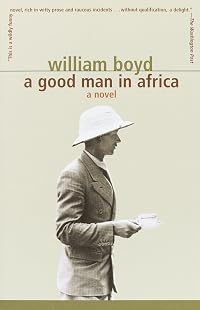
William Boyd is a writer who was born in Ghana on March 7, 1952. He was educated at Gordonstoun school; and then the University of Nice, France, the University of Glasgow, and finally Jesus College, Oxford. Between 1980 and 1983 he was a lecturer in English at St Hilda's College, Oxford, and it was while he was there that his first novel, A Good show more Man in Africa (1981), was published. He was appointed Commander of the Order of the British Empire in 2005. Boyd was selected in 1983 as one of the 20 "Best of Young British Novelists" in a promotion run by Granta magazine and the Book Marketing Council. His novels include: A Good Man in Africa, for which he won the Whitbread Book award and Somerset Maugham Award in 1981; An Ice-Cream War, which won the John Llewellyn Rhys Prize and was nominated for the Booker Prize for Fiction in 1982; Brazzaville Beach, published in 1991, and Any Human Heart, which was long-listed for the Booker Prize in 2002. Restless, the tale of a young woman who discovers that her mother had been recruited as a spy during World War II, was published in 2006 and won the Novel Award in the 2006 Costa Book Awards. Boyd published Waiting for Sunrise: A Novel in early 2012. In 2015 his title, Sweet Caress: The Many Lives of Clay, Amory made the new Zealand Best Seller List. (Bowker Author Biography) show less
Some Editions
Awards and Honors
Awards
Notable Lists
Whitcoulls Top 100 Books (27 – 2010)
Series
Belongs to Publisher Series
bloomsbury taschenbuch (0701)
Common Knowledge
- Canonical title
- Ordinary Thunderstorms
- Original title
- Ordinary Thunderstorms
- Original publication date
- 2009
- People/Characters
- Adam Kindred; Ingram Fryzer; Fortunatus Fryzer; Mhouse; Ly-on; Mr. Quality (show all 12); Philip Wang; Burton Keegan; Alfredo Rilke; Jonjo Case; Rita Nashe; Ivo, Lord Redcastle
- Important places
- London, England, UK
- Related movies
- Ordinary Thunderstorms (2010 | IMDb)
- Epigraph
- Ordinary thunderstorms have the capacity to transform themselves into multi-cell storms of ever growing complexity. Such multi-cell storms display a marked increase in severity and their lifetime can be extended by a factor ... (show all)of ten or more. The grandfather of all thunderstorms, however, is the super-cell thunderstorm. It should be noted that even ordinary thunderstorms are capable of mutating into super-cell storms. These storms subside very slowly.
--Storm Dynamics and Hail Cascades
by L. D. Sax and W. S. Dutton - Dedication
- For Susan
- First words
- Let us start with the river - all things begin with the river and we shall probably end there, no doubt - but let's wait and see how we go.
- Last words
- (Click to show. Warning: May contain spoilers.)There was always that, Adam supposed, that and the sunshine and the blue sea beyond.
Classifications
Statistics
- Members
- 1,404
- Popularity
- 16,878
- Reviews
- 80
- Rating
- (3.51)
- Languages
- 8 — Danish, Dutch, English, Estonian, French, German, Italian, Spanish
- Media
- Paper, Audiobook, Ebook
- ISBNs
- 40
- ASINs
- 21