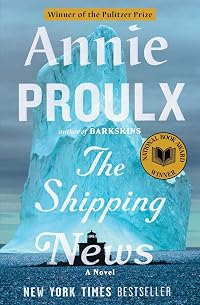
The Shipping News
by Annie Proulx
On This Page
Description
Winner of the Pulitzer Prize, Annie Proulx's The Shipping News is a vigorous, darkly comic, and at times magical portrait of the contemporary North American family. Quoyle, a third-rate newspaper hack, with a "head shaped like a Crenshaw, no neck, reddish hair…features as bunched as kissed fingertips," is wrenched violently out of his workaday life when his two-timing wife meets her just desserts. An aunt convinces Quoyle and his two emotionally disturbed daughters to return with her to show more the starkly beautiful coastal landscape of their ancestral home in Newfoundland. Here, on desolate Quoyle's Point, in a house empty except for a few mementos of the family's unsavory past, the battered members of three generations try to cobble up new lives. Newfoundland is a country of coast and cove where the mercury rarely rises above seventy degrees, the local culinary delicacy is cod cheeks, and it's easier to travel by boat and snowmobile than on anything with wheels. In this harsh place of cruel storms, a collapsing fishery, and chronic unemployment, the aunt sets up as a yacht upholsterer in nearby Killick-Claw, and Quoyle finds a job reporting the shipping news for the local weekly, the Gammy Bird (a paper that specializes in sexual-abuse stories and grisly photos of car accidents). As the long winter closes its jaws of ice, each of the Quoyles confronts private demons, reels from catastrophe to minor triumph-in the company of the obsequious Mavis Bangs; Diddy Shovel the strongman; drowned Herald Prowse; cane-twirling Beety; Nutbeem, who steals foreign news from the radio; a demented cousin the aunt refuses to recognize; the much-zippered Alvin Yark; silent Wavey; and old Billy Pretty, with his bag of secrets. By the time of the spring storms Quoyle has learned how to gut cod, to escape from a pickle jar, and to tie a true lover's knot. show lessTags
Recommendations






















Member Recommendations

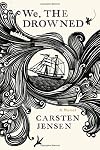
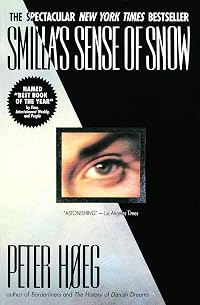
Jannes Proulx focuses on one particular and personal fate, Jensen writes about a whole town in the voice of a vague, collective "we". The former places her story in modern-day Newfoundland, the later in 19th and early 20th century Denmark.
What they have in common is the ever-present sea, its influence and demands, and how the people that relies on if for sustenance has learned to accept its whims and live with the consequences of a life at sea.
01

Member Reviews
This is the strange story of Quoyle, an insecure misfit who falls madly in love with a woman who doesn't really care about him at all. They have two children before she leaves him, and then dies in a car crash with her lover. Quoyle and the children move with his aunt to a remote coastal community in Newfoundland, where he bumbles his way into competence, self-confidence, and love.
Proulx's writing is amazing. I probably wouldn't have found this story very compelling, except that the writing is so good that it's hard to put this down. The book has a lot of quirky characters, who Proulx vividly draws with just a few sparse strokes. The coastal Newfoundland town, with it's harsh landscape and unforgiving weather, is just as much a show more character as any of the people in the book.
It's also refreshing to read a highly acclaimed feel-good book. It seems like all of the prizewinning literature is really depressing, but this book is ultimately gentle and sweet, despite the harsh landscape. show less
Proulx's writing is amazing. I probably wouldn't have found this story very compelling, except that the writing is so good that it's hard to put this down. The book has a lot of quirky characters, who Proulx vividly draws with just a few sparse strokes. The coastal Newfoundland town, with it's harsh landscape and unforgiving weather, is just as much a show more character as any of the people in the book.
It's also refreshing to read a highly acclaimed feel-good book. It seems like all of the prizewinning literature is really depressing, but this book is ultimately gentle and sweet, despite the harsh landscape. show less
After the death of his wife and near-loss of his two daughters, Quoyle moves his family in with his aunt in Newfoundland to make a new life.
About three-quarters of the way through this novel, I found myself silently pleading with the author not to let anything bad happen to the characters I had come to know. That’s when I realized that I had also come to care about these characters and their lives.
The main character is Quoyle, a big, introverted man who is self-consciously aware of all his faults and failings, and who stumbles his way through life without planning or design. He becomes a newspaperman by happenstance, then falls into a lopsided marriage with a philandering woman who dies in a car accident while in the act of leaving show more him for another man — but not before she gives him two daughters, whom he loves almost painfully. After his wife’s death, Quoyle allows his only relative, whom he refers to as “the aunt,” to persuade him to move to their long-abandoned family home in Newfoundland.
Newfoundland comes across as a bleak, godforsaken place, where drowning accidents and child abuse are commonplace. Storms, winter, unemployment and deep-fried foods plague the people who live there. The house they return to is without electricity or bathrooms, literally bolted to the bare rock. But despite himself, Quoyle makes a home in Newfoundland, and begins to build a life. He lands a job on the local newspaper reporting the shipping news, makes friends and even meets a woman. Through his eyes, we see the good-hearted side of Newfoundland, as well as all the depressing aspects of life there.
Proulx tells her story of a quiet man rebuilding his life with warmth and good humor. One particular scene, of a raucous, drunken party in the trailer of Quoyle’s colleague, made me grimace and laugh out loud at the same time. Even though Proulx never writes a complete sentence when a fragment will do (which I found a little annoying), this novel gathered me in and made me care. By the end, I was heartily rooting for Quoyle to find the happiness he didn’t think he deserved. show less
About three-quarters of the way through this novel, I found myself silently pleading with the author not to let anything bad happen to the characters I had come to know. That’s when I realized that I had also come to care about these characters and their lives.
The main character is Quoyle, a big, introverted man who is self-consciously aware of all his faults and failings, and who stumbles his way through life without planning or design. He becomes a newspaperman by happenstance, then falls into a lopsided marriage with a philandering woman who dies in a car accident while in the act of leaving show more him for another man — but not before she gives him two daughters, whom he loves almost painfully. After his wife’s death, Quoyle allows his only relative, whom he refers to as “the aunt,” to persuade him to move to their long-abandoned family home in Newfoundland.
Newfoundland comes across as a bleak, godforsaken place, where drowning accidents and child abuse are commonplace. Storms, winter, unemployment and deep-fried foods plague the people who live there. The house they return to is without electricity or bathrooms, literally bolted to the bare rock. But despite himself, Quoyle makes a home in Newfoundland, and begins to build a life. He lands a job on the local newspaper reporting the shipping news, makes friends and even meets a woman. Through his eyes, we see the good-hearted side of Newfoundland, as well as all the depressing aspects of life there.
Proulx tells her story of a quiet man rebuilding his life with warmth and good humor. One particular scene, of a raucous, drunken party in the trailer of Quoyle’s colleague, made me grimace and laugh out loud at the same time. Even though Proulx never writes a complete sentence when a fragment will do (which I found a little annoying), this novel gathered me in and made me care. By the end, I was heartily rooting for Quoyle to find the happiness he didn’t think he deserved. show less
This is my first Proulx, so I didn't know if the unusual writing style is typical, or specially chosen for this particular story. I hope it's the latter, as it works very well.
Update: I've now read the collection, Close Range: Brokeback Mountain and Other stories, which I reviewed HERE. Those stories use similar language, but somewhat toned down.
It covers a couple of years (plus some backstory) in the life of thirty-something Quoyle: a big, lonely, awkward and unattractive man, always having or doing the wrong thing. He is a not very successful journalist in New York, who ends up moving, with his young daughters (Bunny and Sunshine) and aunt, to a small, somewhat inbred, community in Newfoundland where the aunt and his late father grew show more up. Somehow Proulx keeps the reader on the fence: he isn't especially lovable, and yet he elicits more sympathy than mockery in this reader.
I think one weakness is that the mother of the girls is too horrible, and the manner of her departure from their lives stretched my credulity somewhat.
LANGUAGE
The narrative style is the first thing to hit. It is very distinctive, continues throughout the book, and could be infuriating, though I didn't find it so. It is telegraphic and observational, reflecting Quoyle's job. There are staccato sentence fragments, and some overworked analogies, some of which are wonderfully vivid, and a few of which are laughably awful. Grammar sticklers may struggle to enjoy this book, but it's their loss - context is all, and in this context, I think it works.
If I were as clever and witty as some of my GR friends (you know who you are), I would have written this review in the style of the book.
Anyway, some typical examples:
This is the entire opening paragraph of a chapter:
"The aunt in her woolen coat when Quoyle came into the motel room. Tin profile with a glass eye. A bundle on the floor under the window. Wrapped in a bed sheet, tied with net twine."
Another whole paragraph:
"Near the window a man listened to a radio. His buttery hair swept behind ears. Eyes pinched close, a mustache. A packet of imported dates on his desk. He stood up to shake Quoyle's hand. Gangled. Plaid bow tie and ratty pullover. The British accent strained through his splayed nose."
Analogies:
* "eyes the color of plastic"
* "the sullen bay rubbed with thumbs of fog"
* "On the horizon icebergs like white prisons. The immense blue fabric of the sea, rumpled and creased."
* "parenthesis around her mouth set like clamps. Impossible to know if she was listening to Nutbeem or flying over the Himalayas"
* "In a way he could not explain she seized his attention; because she seemed sprung from wet stones, the stench of fish and tide."
* "eyes like a thorn bush, stabbing everything at once"
* The ghost of his wife, "Petal's essence riding under his skin like an injected vaccine against the plague of love"
* "Fingernails like the bowls of souvenir spoons." (That's the whole sentence.)
THE TOWN AND COMMUNITY
Aspects of the town and its characters remind me of David Lynch's 1980s TV series "Twin Peaks": strange characters, often with impairments of mind, body or emotions, slightly strange names, odd superstitions, and dark secrets (murder, incest, rape, insurance fraud).
The town of Killick Claw isn't prosperous, and the environment is still harsh, but it's better than when the aunt grew up there: "The forces of fate weakened by unemployment insurance, a flaring hope in offshore oil money."
The Gammy Bird is the local paper, and it's like no other: lots of adverts (many of them fake), deliberate typos and Malapropisms, libelous gossip (including a regular catalogue of sex abuse cases!), shipping news and "we run a front-page photo of a car wreck every week, whether we have a wreck or not". Poor Quoyle is bemused and has the uneasy and familiar feeling "of standing on a playground watching others play games whose rules he didn't know".
THEMES
Knots are the most obvious one. Each chapter opens with a quotation pertinent to what it contains, and many are from Ashley Book of Knots, which Proulx found second-hand, and gave her the inspiration and structure she sought. Knots feature in the plot metaphorically (in terms of being bound or adrift), in a more literal and superstitious sense. Rope can be wound and knotted to make good a wound or separation. We also learn that Quoyle's name means "coil of rope", and I suppose he is pretty tightly coiled for the first half of the book.
Shipping is obvious, too, not just from the title, but because Quoyle ends up writing the eponymous shipping news in the local paper, in a community where everyone needs a boat. Most of the introductory quotes that are not from Ashley Book of Knots are from a Mariner's Dictionary. I confess there were times when the quantity and level of detail slightly exceeded my interest, but I'm glad I stuck with it.
The book is riddled with pain, rejection, estrangement and mentions of abusive relationships (never graphic); many are haunted by ghosts of past events and relationships gone wrong. But although it is sometimes bleak, it is rarely depressing, and sometimes it's funny. Even close and fond relationships often have an element of awkwardness and distance; for instance, Quoyle always refers to "the aunt", rather than "my aunt". Even after living with her for a while, "It came to him he knew nearly nothing of the aunt's life. And hadn't missed the knowledge."
Ultimately, it's at least as much about (re)birth and healing as death and doom. One character slowly realises it may be possible to recover from a broken relationship: "was love then like a bag of assorted sweets passed around from which one might choose more than once?"
OTHER MISCELLANEOUS QUOTATIONS
* "a failure of normal appearance" - if you can't even achieve that, what hope is there?
* "believed in silent suffering, didn't see that it goaded"
* In a shop, "the man's fingers dropped cold dimes"
* "fog shuddered against their faces"
* "the house was garlanded with wind"
* In such a harsh environment, "The wood, hardened by time and corroding weather, clenched the nails fast"
* "a few torn pieces of early morning cloud the shape and color of salmon fillets" (I think I'd prefer that one without the fish)
* "the woman in the perpetual freeze of sorrow, afloat on the rise and fall of tattered billows"
* a babysitter "doing overtime in a trance of electronic color and simulated life, smoking cigarettes and not wondering. The floor around her strewn with hairless dolls."
From The Ashley Book of Knots:
"To prevent slipping, a knot depends on friction, and to provide friction there must be pressure of some sort." show less
Update: I've now read the collection, Close Range: Brokeback Mountain and Other stories, which I reviewed HERE. Those stories use similar language, but somewhat toned down.
It covers a couple of years (plus some backstory) in the life of thirty-something Quoyle: a big, lonely, awkward and unattractive man, always having or doing the wrong thing. He is a not very successful journalist in New York, who ends up moving, with his young daughters (Bunny and Sunshine) and aunt, to a small, somewhat inbred, community in Newfoundland where the aunt and his late father grew show more up. Somehow Proulx keeps the reader on the fence: he isn't especially lovable, and yet he elicits more sympathy than mockery in this reader.
I think one weakness is that the mother of the girls is too horrible, and the manner of her departure from their lives stretched my credulity somewhat.
LANGUAGE
The narrative style is the first thing to hit. It is very distinctive, continues throughout the book, and could be infuriating, though I didn't find it so. It is telegraphic and observational, reflecting Quoyle's job. There are staccato sentence fragments, and some overworked analogies, some of which are wonderfully vivid, and a few of which are laughably awful. Grammar sticklers may struggle to enjoy this book, but it's their loss - context is all, and in this context, I think it works.
If I were as clever and witty as some of my GR friends (you know who you are), I would have written this review in the style of the book.
Anyway, some typical examples:
This is the entire opening paragraph of a chapter:
"The aunt in her woolen coat when Quoyle came into the motel room. Tin profile with a glass eye. A bundle on the floor under the window. Wrapped in a bed sheet, tied with net twine."
Another whole paragraph:
"Near the window a man listened to a radio. His buttery hair swept behind ears. Eyes pinched close, a mustache. A packet of imported dates on his desk. He stood up to shake Quoyle's hand. Gangled. Plaid bow tie and ratty pullover. The British accent strained through his splayed nose."
Analogies:
* "eyes the color of plastic"
* "the sullen bay rubbed with thumbs of fog"
* "On the horizon icebergs like white prisons. The immense blue fabric of the sea, rumpled and creased."
* "parenthesis around her mouth set like clamps. Impossible to know if she was listening to Nutbeem or flying over the Himalayas"
* "In a way he could not explain she seized his attention; because she seemed sprung from wet stones, the stench of fish and tide."
* "eyes like a thorn bush, stabbing everything at once"
* The ghost of his wife, "Petal's essence riding under his skin like an injected vaccine against the plague of love"
* "Fingernails like the bowls of souvenir spoons." (That's the whole sentence.)
THE TOWN AND COMMUNITY
Aspects of the town and its characters remind me of David Lynch's 1980s TV series "Twin Peaks": strange characters, often with impairments of mind, body or emotions, slightly strange names, odd superstitions, and dark secrets (murder, incest, rape, insurance fraud).
The town of Killick Claw isn't prosperous, and the environment is still harsh, but it's better than when the aunt grew up there: "The forces of fate weakened by unemployment insurance, a flaring hope in offshore oil money."
The Gammy Bird is the local paper, and it's like no other: lots of adverts (many of them fake), deliberate typos and Malapropisms, libelous gossip (including a regular catalogue of sex abuse cases!), shipping news and "we run a front-page photo of a car wreck every week, whether we have a wreck or not". Poor Quoyle is bemused and has the uneasy and familiar feeling "of standing on a playground watching others play games whose rules he didn't know".
THEMES
Knots are the most obvious one. Each chapter opens with a quotation pertinent to what it contains, and many are from Ashley Book of Knots, which Proulx found second-hand, and gave her the inspiration and structure she sought. Knots feature in the plot metaphorically (in terms of being bound or adrift), in a more literal and superstitious sense. Rope can be wound and knotted to make good a wound or separation. We also learn that Quoyle's name means "coil of rope", and I suppose he is pretty tightly coiled for the first half of the book.
Shipping is obvious, too, not just from the title, but because Quoyle ends up writing the eponymous shipping news in the local paper, in a community where everyone needs a boat. Most of the introductory quotes that are not from Ashley Book of Knots are from a Mariner's Dictionary. I confess there were times when the quantity and level of detail slightly exceeded my interest, but I'm glad I stuck with it.
The book is riddled with pain, rejection, estrangement and mentions of abusive relationships (never graphic); many are haunted by ghosts of past events and relationships gone wrong. But although it is sometimes bleak, it is rarely depressing, and sometimes it's funny. Even close and fond relationships often have an element of awkwardness and distance; for instance, Quoyle always refers to "the aunt", rather than "my aunt". Even after living with her for a while, "It came to him he knew nearly nothing of the aunt's life. And hadn't missed the knowledge."
Ultimately, it's at least as much about (re)birth and healing as death and doom. One character slowly realises it may be possible to recover from a broken relationship: "was love then like a bag of assorted sweets passed around from which one might choose more than once?"
OTHER MISCELLANEOUS QUOTATIONS
* "a failure of normal appearance" - if you can't even achieve that, what hope is there?
* "believed in silent suffering, didn't see that it goaded"
* In a shop, "the man's fingers dropped cold dimes"
* "fog shuddered against their faces"
* "the house was garlanded with wind"
* In such a harsh environment, "The wood, hardened by time and corroding weather, clenched the nails fast"
* "a few torn pieces of early morning cloud the shape and color of salmon fillets" (I think I'd prefer that one without the fish)
* "the woman in the perpetual freeze of sorrow, afloat on the rise and fall of tattered billows"
* a babysitter "doing overtime in a trance of electronic color and simulated life, smoking cigarettes and not wondering. The floor around her strewn with hairless dolls."
From The Ashley Book of Knots:
"To prevent slipping, a knot depends on friction, and to provide friction there must be pressure of some sort." show less
What's It About?
Quoyle, a third-rate newspaper hack, with a “head shaped like a crenshaw, no neck, reddish hair...features as bunched as kissed fingertips,” is wrenched violently out of his workaday life when his two-timing wife meets her just desserts. An aunt convinces Quoyle and his two emotionally disturbed daughters to return with her to the starkly beautiful coastal landscape of their ancestral home in Newfoundland. Here, on desolate Quoyle’s Point, in a house empty except for a few mementos of the family’s unsavory past, the battered members of three generations try to cobble up new lives.
What Did I Think?
I didn't really care for the characters at all. They can best be described as quirky, flawed, and at bottom of the show more "food chain" when it comes to human beings. After a time they do begin to grow on you. This is not a fast read by any means and some of the boating terms completely went over my head. In spite of that I found myself wanting to know how Quoyle would deal with the next challenge life tossed him. What I did immensely enjoy was the author's details of the landscape and the character of the people that inhabited it....something I generally don't pay a great deal of attention to. Anyone looking for just excitement in a book will probably want to skip this one show less
Quoyle, a third-rate newspaper hack, with a “head shaped like a crenshaw, no neck, reddish hair...features as bunched as kissed fingertips,” is wrenched violently out of his workaday life when his two-timing wife meets her just desserts. An aunt convinces Quoyle and his two emotionally disturbed daughters to return with her to the starkly beautiful coastal landscape of their ancestral home in Newfoundland. Here, on desolate Quoyle’s Point, in a house empty except for a few mementos of the family’s unsavory past, the battered members of three generations try to cobble up new lives.
What Did I Think?
I didn't really care for the characters at all. They can best be described as quirky, flawed, and at bottom of the show more "food chain" when it comes to human beings. After a time they do begin to grow on you. This is not a fast read by any means and some of the boating terms completely went over my head. In spite of that I found myself wanting to know how Quoyle would deal with the next challenge life tossed him. What I did immensely enjoy was the author's details of the landscape and the character of the people that inhabited it....something I generally don't pay a great deal of attention to. Anyone looking for just excitement in a book will probably want to skip this one show less
Quoyle is a fat, hulking lump of a man with an odd-shaped head, a chin so large it more or less deforms his face, and a personality to match the disaster of his appearance.
This, then, is one of the protagonists of The Shipping News.
At 36, after his philandering wife Ruby has died in an automobile accident with her current lover, Quoyle’s aunt persuades him to take his two young daughters sunshine and Bunny and move with her back to the family’s origin, Newfoundland, Canada. After an epic journey in survival, Quoyle and his family arrive in Killick-Claw at the family home—a broken-down wreck of a house that will shelter them but just barely; it needs massive repairs. Quoyle snags a job as a newspaper reporter for the local weekly, show more the Gammy Bird. He has two main responsibilities: dredging up stories and photos of bloody auto wrecks for the front page, and getting the list of ships in port from the harbormaster—in other words, reporting the shipping news.
An odd duck himself, Quoyle fits surprisingly well into what is a non-conformist community. His seemingly boring job at The Gammy Bird presents him with an unanticipated opportunity for real creative journalism, which he eagerly pursues. He strikes up unlikely friendships with his coworkers and neighbors. An attractive but reserved widow confuses Quoyle who does not understand, given his single experience, that love is not synonymous with pain. These, then, are the elements of the novel which does not “go” anywhere, really, once Quoyle, his closeted lesbian aunt (whose name we never find out), and his two daughters reach Newfoundland.
From this beginning, Proulx has crafted an unusual novel in which the second protagonist is Newfoundland itself—or rather, its way of life as evidenced through the beliefs, speech, actions, and cuisine of as iconoclastic a bunch of characters as you are likely to meet. Proulx uses language to terrific effect, incorporating idiomatic words and phrases that are usually—but definitely not always—revealed in meaning through the context (sooner or later). Clearly she found the cuisine of Newfoundland fascinating if weird and maybe even slightly repellent, just by the way she inserts local dishes into scenes. For example, breakfast “oatmeal with a side dish of bologna” in the Bawks Nest (and what is a bawk?—we never find out).
“Now who’s having the scallops,” said the waitress holding a white plate heaped with pallid clumps, a mound of rice, a slice of bleached bead.
“That was my idea,’ said the aunt, frowning at her pale food, whispering to Quoyle. “Should have gone to Skipper Will’s for squidburgers.”
This is not the stuff of which tourist guides are made. While there are other examples, my favorite revolting meal remains the oatmeal with a side of bologna. Or maybe fried eggs being smashed into fish hash. Hard to pick my favorite virtual nausea.
One of the wilder aspects of The Shipping News is the reporting done in the Gammy Bird. Its readers evidently are riveted by the weekly accounts of rape, child molestation, and other sexual exploits. There are so many—7-10 per week—that at times it seems as if 50% of the male population of that part of Newfoundland is actively engaged in sexual deviancy for the delight and delectation of the other 50% and the entire female population.
Another way in which Proulx uses language is in short, choppy sentences with oddly jarring juxtaposition of adjectives and nouns. It is extremely effective descriptively, giving startling images, at times, of the harsh landscape. Her use of language takes some adjustment on the part of the reader, but once you become accustomed to the rhythm or lack of it and the unusual thrown-together sentences, it becomes addictive.
Even the names have this jarring quality: Al Catalog, Ed Punch, Billy Pretty, Jack Buggit, Tert Card, Nutbeen and Quoyle himself. They stop you as you read, hold you up, startle you at first, until like the prose itself, they become part of the odd, jarring, harsh landscape of Newfoundland.
Adding to the pleasure of the book are the chapter headings, almost all of which are taken from the Ashley Book of Knots, published in 1944. The diagrams are clever, and you practically itch to get a piece of rope in your hands and try the mesh knot, the mooring hitch, and others. I’m proud to say that I now know the difference between the clove hitch ands two half hitches, and what a bight is.
Quoyle and the unfolding of his personality is a marvelously touching story that is told without a whiff of sentiment. In fact, that can be said of the whole book, and I think is Proulx’s view of Newfoundland and everyone in it, and is a large part of the genius of the book. Because make no mistake, this is a modern American masterpiece. show less
This, then, is one of the protagonists of The Shipping News.
At 36, after his philandering wife Ruby has died in an automobile accident with her current lover, Quoyle’s aunt persuades him to take his two young daughters sunshine and Bunny and move with her back to the family’s origin, Newfoundland, Canada. After an epic journey in survival, Quoyle and his family arrive in Killick-Claw at the family home—a broken-down wreck of a house that will shelter them but just barely; it needs massive repairs. Quoyle snags a job as a newspaper reporter for the local weekly, show more the Gammy Bird. He has two main responsibilities: dredging up stories and photos of bloody auto wrecks for the front page, and getting the list of ships in port from the harbormaster—in other words, reporting the shipping news.
An odd duck himself, Quoyle fits surprisingly well into what is a non-conformist community. His seemingly boring job at The Gammy Bird presents him with an unanticipated opportunity for real creative journalism, which he eagerly pursues. He strikes up unlikely friendships with his coworkers and neighbors. An attractive but reserved widow confuses Quoyle who does not understand, given his single experience, that love is not synonymous with pain. These, then, are the elements of the novel which does not “go” anywhere, really, once Quoyle, his closeted lesbian aunt (whose name we never find out), and his two daughters reach Newfoundland.
From this beginning, Proulx has crafted an unusual novel in which the second protagonist is Newfoundland itself—or rather, its way of life as evidenced through the beliefs, speech, actions, and cuisine of as iconoclastic a bunch of characters as you are likely to meet. Proulx uses language to terrific effect, incorporating idiomatic words and phrases that are usually—but definitely not always—revealed in meaning through the context (sooner or later). Clearly she found the cuisine of Newfoundland fascinating if weird and maybe even slightly repellent, just by the way she inserts local dishes into scenes. For example, breakfast “oatmeal with a side dish of bologna” in the Bawks Nest (and what is a bawk?—we never find out).
“Now who’s having the scallops,” said the waitress holding a white plate heaped with pallid clumps, a mound of rice, a slice of bleached bead.
“That was my idea,’ said the aunt, frowning at her pale food, whispering to Quoyle. “Should have gone to Skipper Will’s for squidburgers.”
This is not the stuff of which tourist guides are made. While there are other examples, my favorite revolting meal remains the oatmeal with a side of bologna. Or maybe fried eggs being smashed into fish hash. Hard to pick my favorite virtual nausea.
One of the wilder aspects of The Shipping News is the reporting done in the Gammy Bird. Its readers evidently are riveted by the weekly accounts of rape, child molestation, and other sexual exploits. There are so many—7-10 per week—that at times it seems as if 50% of the male population of that part of Newfoundland is actively engaged in sexual deviancy for the delight and delectation of the other 50% and the entire female population.
Another way in which Proulx uses language is in short, choppy sentences with oddly jarring juxtaposition of adjectives and nouns. It is extremely effective descriptively, giving startling images, at times, of the harsh landscape. Her use of language takes some adjustment on the part of the reader, but once you become accustomed to the rhythm or lack of it and the unusual thrown-together sentences, it becomes addictive.
Even the names have this jarring quality: Al Catalog, Ed Punch, Billy Pretty, Jack Buggit, Tert Card, Nutbeen and Quoyle himself. They stop you as you read, hold you up, startle you at first, until like the prose itself, they become part of the odd, jarring, harsh landscape of Newfoundland.
Adding to the pleasure of the book are the chapter headings, almost all of which are taken from the Ashley Book of Knots, published in 1944. The diagrams are clever, and you practically itch to get a piece of rope in your hands and try the mesh knot, the mooring hitch, and others. I’m proud to say that I now know the difference between the clove hitch ands two half hitches, and what a bight is.
Quoyle and the unfolding of his personality is a marvelously touching story that is told without a whiff of sentiment. In fact, that can be said of the whole book, and I think is Proulx’s view of Newfoundland and everyone in it, and is a large part of the genius of the book. Because make no mistake, this is a modern American masterpiece. show less
I loved this quirky novel of imperfect people making a place for themselves in an inhospitable place. Full of endearing characters that never really feel inauthentic, the dark humor throughout prevents it from being completely bleak. Quoyle is a wonderfully awkward anti-hero whose love for his children and growing sense of himself and his own possibilities adds a real warmth to the story.
When Quoyle's awful wife is killed in a car accident, he makes a sudden decision to move from New York to Newfoundland with his aunt and two young daughters. Working at a small town newspaper, Quoyle becomes immersed in the oddities of life on the Rock and the idiosyncracies of the people who call it home.
This book was a rough start for me. The writing style did not pull me in at all as Proulx writes the novel of Quoyle's life using the sentence structure that makes up newspaper articles. Streams of short sentences interspersed with endless lists. And Quoyle himself was a protagonist that it took ages to warm to. But in the end the book dug into me and held on; caught me with sad and funny anecdotes of the characters that make up the show more small town in Newfoundland that Proulx creates. A slower read that could easily be dipped in and out of, it may leave deeper impressions in my memory than I would have originally anticipated. show less
This book was a rough start for me. The writing style did not pull me in at all as Proulx writes the novel of Quoyle's life using the sentence structure that makes up newspaper articles. Streams of short sentences interspersed with endless lists. And Quoyle himself was a protagonist that it took ages to warm to. But in the end the book dug into me and held on; caught me with sad and funny anecdotes of the characters that make up the show more small town in Newfoundland that Proulx creates. A slower read that could easily be dipped in and out of, it may leave deeper impressions in my memory than I would have originally anticipated. show less
Members
- Recently Added By
Published Reviews
ThingScore 75
It has been – astonishingly – fifteen years since I read the novel but its memory is undimmed, its glorious set pieces still vivid before my eyes.
added by Shortride
In E. Annie Proulx's vigorous, quirky novel "The Shipping News," set in present-day Newfoundland, there are indeed a lot of drownings. The main characters are plagued by dangerous undercurrents, both in the physical world and in their own minds. But the local color, ribaldry and uncanny sorts of redemption of Ms. Proulx's third book of fiction keep the reader from slipping under, into the murk show more of loss. show less
added by Shortride
Proulx pumps up this low-key material with a splash of local color (old salts in the newsroom), a pinch of melodrama (headless corpse washes ashore), and a rattle of skeletons (Quoyle's father sexually abused sister Agnis). Proulx does okay by Newfoundland (though she won't help tourism any), but Quoyle, the poor turkey, is a fatal self- inflicted wound.
added by Richardrobert
Lists

The Guardian's 1000 Novels Everyone Must Read
1,005 works; 548 members

1001 Books You Must Read Before You Die
1,448 works; 1,134 members

Pulitzer Prize Winners for Fiction
102 works; 54 members

Best Contemporary Literary Fiction (Around the Last 30 Years)
388 works; 124 members

Read the book and saw the movie
1,170 works; 195 members
BBC Big Read
191 works; 46 members

Recommend the 20 best books you've read in the last five years
2,168 works; 606 members

Top Five Books of 2013
1,562 works; 721 members
20th Century Literature
1,161 works; 54 members

Female Author
1,234 works; 64 members

Books Set in Canada
80 works; 16 members
Best Family Stories
241 works; 22 members

Favorite Literary Love Stories
182 works; 101 members
BBC's 100 Novels That Shaped Our World
100 works; 22 members

Novels from The Guardian's Great American Novelist Tournament
148 works; 24 members

Sense of place
156 works; 13 members
Favourite Books
1,819 works; 316 members

National Book Award - Fiction
78 works; 10 members

Winter Books
127 works; 17 members

Must-Read Maine
146 works; 91 members

Pulitzer Prize-Winning Books
42 works; 10 members

Canon de la narrativa universal del siglo XX
254 works; 6 members

Unread books
1,063 works; 83 members

Nineties
43 works; 10 members
LibraryThingers' 1001 Books You Must Read Before You Die
442 works; 30 members

50 Books from the Past 50 Years
50 works; 8 members
BBC Radio 4 Bookclub
341 works; 13 members

1990s
309 works; 17 members

Houses and Buildings as Characters in Fiction
182 works; 29 members

A Novel Cure
742 works; 23 members
Best of American Literature
146 works; 9 members

Blue Pyramid 1,276 Best Books of All Time
1,248 works; 32 members
1,001 BYMRBYD Concensus
723 works; 27 members
The American Experience
173 works; 18 members

Fiction For Men
142 works; 11 members

Books Set on Islands
190 works; 24 members
Books tagged favorites
390 works; 29 members
TML 200 Best Books 1950-1999
202 works; 10 members

Dysfunctional Families
133 works; 7 members

Contemporary Fiction
109 works; 7 members
Best Domestic Fiction
77 works; 6 members
Shannon's Read-Alikes List
71 works; 8 members
Novels featuring Fathers
56 works; 7 members
Five star books
1,767 works; 110 members

Books Set in Canada
57 works; 10 members
Books Set in Small Towns and Villages
278 works; 16 members
Best Books of the 20th Century
193 works; 5 members

Books Read in 2015
3,299 works; 129 members

Most Popular Books Tagged Canada
34 works; 1 member

Books About Older People
50 works; 11 members

Books Read in 2008
335 works; 8 members

Books Read in 2022
5,226 works; 115 members

Favorite Books from the 1990s
32 works; 3 members
American Lit for Eng 11 Research Project
368 works; 6 members

LIT - Il Bookclub Della McMusa
51 works; 1 member

The Atlantic's The Great American Novel
136 works; 12 members

World Book Club (BBC World Service)
212 works; 1 member

The Modern Library (The Two Hundred Best Novels....
202 works; 1 member

Books Read in 2025
4,129 works; 98 members

Retrospective of 20th- and 21st-century literature
154 works; 1 member
Canon de la narrativa universal del s. XX (cicutadry)
499 works; 3 members

Books We Love to Reread
688 works; 296 members
Stephen King's 'On Writing' reading list
95 works; 4 members

Books Read in 2024
4,727 works; 128 members
BBC World Book Club
265 works; 5 members

Canada
42 works; 3 members
Canadian Historical Fiction 🇨🇦
157 works; 8 members

Books You Couldn't Finish
202 works; 32 members

AP Lit
363 works; 6 members
National Book Award winners
65 works; 11 members

Women Writers
16 works; 2 members
Safe as Houses
10 works; 2 members

Books Read in 2011
684 works; 19 members
Books Tagged Small Town
58 works; 1 member

Tagged by Tim or Meh!
91 works; 9 members

Best of World Literature
435 works; 52 members
Author Information

44+ Works 35,258 Members
Edna Annie Proulx was born in Norwich, Connecticut on August 22, 1935. She graduated from the University of Vermont in 1969 and earned an M. A. from Sir George Williams University in Montreal in 1973. She was a journalist, wrote nonfiction articles for numerous publications, and was the author of several "how-to" books before beginning to write show more fiction in her 50s. She became the first woman to win the prestigious PEN/Faulkner Award for Fiction, for her debut novel Postcards. Her novel The Shipping News won the Pulitzer Prize for Fiction and the National Book Award in 1994. Accordion Crimes, published in 1996, won the Dos Passos Prize for literature. She also won the O. Henry prize for the year's best short story twice; in 1998 for Brokeback Mountain and in 1999 for The Mud Below. She has written more than 50 articles and stories for periodicals and edited Best American Short Stories of 1997. (Bowker Author Biography) show less
Some Editions
Awards and Honors
Awards
Distinctions
Notable Lists
BBC's Big Read (164)
Whitcoulls Top 100 Books (93 – 2008)
The Great American Novels (1993)
Series
Belongs to Publisher Series
Work Relationships
Is contained in
Has the adaptation
Has as a reference guide/companion
Has as a student's study guide
Common Knowledge
- Canonical title
- The Shipping News
- Original title
- The Shipping News
- Original publication date
- 1993
- People/Characters
- Quoyle; Partridge; Ed Punch; Al Catalog; Billy Pretty; Tert Card (show all 19); Bunny; Jack Buggit; Beaufield Nutbeem; Wavey Prouse; Petal Bear; Agnis Hamm; Mercalia; Warren, the dog; Sunshine; Herry Prouse; Dennis Buggit; Bayonet Melville; Silver Melville
- Important places
- Mockingburg, New York, USA; Killick-Claw, Newfoundland, Canada; Flour Sack cove; Omaloon Bay; Quoyle's Point; Newfoundland, Canada (show all 7); Newfoundland and Labrador, Canada
- Related movies
- The Shipping News (2001 | IMDb)
- Epigraph
- "In a knot of eight crossings, which is about the average-size knit. there are 256 different 'over-and-under' arrangements possible. . . Make only one change in this 'over and under' sequence and either an entirely differ... (show all)ent knot is made or no knot at all may result."
THE ASHLEY BOOK OF KNOTS
Quoyle: A coil of rope
"A Flemish flake is a spiral coil of one layer only. It is made on deck so that it may be walked on if necessary."
THE ASHLEY BOOK OF KNOTS
In the old days a love-sick sailor might send the object of his affections a length of fishline loosely tied in a true-lover's knot. If the knot as sent back as it came the relationship was static. If the knot returned h... (show all)ome snugly drawn up the passion was reciprocated. But if the knot was capsized - tacit advice to ship out.
"The strangle knot will hold a coil well . . . It is first tied loosely and then worked snug."
THE ASHLEY BOOK OF KNOTS
"Cast Away, to be forced from a ship by a disaster."
THE MARINER'S DICTIONARY
"A Rolling Hitch will suffice to tie a broom that has no grove, provided the surface is not to slick."
THE ASHLEY BOOK OF KNOTS
Oh make 'er fast and stow yer gear,
Leave 'er Johnny, leave 'er!
An' tie 'er up to the bloomin' pier,
It's time for we to leave 'er!
OLD SONG
The common eider is called "gamy bird" in Newfoundland for its habit of gathering in flocks for sociable quacking sessions. The name is related to the days of sail, when two ships falling in with each other at sea would b... (show all)ath their yards and shout the news. The ship to windward would back her main yards and the one to leeward her foreyars for close maneuvering. This was gamming.
"On shipboard the knot is seldom called for, but in small boats, especially open boat that are easily capsized, the necessity frequently arises for instant casting off, and the SLIPPERY HITCH is found indispensable."
THE ASHLEY BOOK OF KNOTS
"The merit of the hitch is that, when snugly applied, it will not slip down the post. Anyone who has found himself at full tide, after a hard day's fishing, with his painter fast to a stake four or five feet below high hi... (show all)gh-water mark, will be inspired to learn this knot."
THE ASHLEY BOOK OF KNOTS
"Voyage, an outward and homeward passage; although the passage from one port to another is often referred to in insurance polices as voyage."
THE MARINER'S DICTIONARY
In the nineteenth century jewelers made keepsake ornaments from hair of the dead, knotting long single hairs into arabesqued roses, initials, singing birds, butterflies.<
"To prevent slipping, a knot depends on friction, and to provide friction there must be pressure of some sort. This pressure and the place within the knot where it occurs is called the nip. The security of a kot s... (show all)eems to depend solely on its nip."
THE ASHLEY BOOK OF KNOTS
"A cringle will make an excellent emergency handle for a suitcase."
THE ASHLEY BOOK OF KNOTS
In Wyoming, they name girls Skye. In Newfoundland it's Wavey.
The knots of the upholsterer are the half-hitch, the slip-knot, the double half-hitch, and the tuft knot.
"The housewife's needs are multifarious but most of her requirements are not peculiar and most of what she requires is to be found in the general classifications."
THE ASHLEY BOOK OF KNOTS
"Ship's Cousin, a favored person aboard ship. . ."
THE MARINER'S DICTIONARY
"The lobster bouy hitch . . . was particularly good to tie to timber."
THE ASHLEY BOOK OF KNOTS
"The Russian Escape. A prisoner . . . secured to his guard . . . In his efforts to escape he rubs his hands together until the heels of his hands pinch a bight of the rope. It is then an easy matter to roll the bight dow... (show all)n as far as the roots of the fingers where it can be grasped with the finger tips of one hand and slipped over the fingers of the other hand. The prisoner then pulls away and the . . . rope slips over the back of his hand and under the hand cuff lashing."
THE ASHLEY BOOK OF KNOTS
"The Pirate and the Jolly Boat.
A pirate having more prisoners than he has room for, tows one boatload astern.
All knives are taken away, and the boat made fast with the bight of a doubled line. The after end of the... (show all) line is ring hitched to astern ringbolt. CLOVE HITCHES are put around each thwart, and the line is rove through the bow ringbolt and brought to deck. They are told to escape if they can.
How do they escape?"
THE ASHLEY BOOK OF KNOTS
"Fog . . . The warm water of the Gulf Stream penetrating high latitudes is productive of fog, especially in the vicinity of the Grand Banks where the cold water of the Labrador Current makes the contrast in the temperature... (show all)s of adjacent waters most striking."
THE MARINER'S DICTIONARY
"The mesh knot is the ordinary way of tying the SHEET BEND when it is made ith a netting needle."
THE ASHLEY BOOK OF KNOTS
"The mysterious power that is supposed to reside in knots . . . can be injurious as well as beneficial."
QUIPUS AND WITCHES' KNOTS
"The difference between the CLOVE HITCH and TWO HALF HITCHES is exceedingly vague in the minds of many, the reason being that two have the same knot form but one is tied around another object, the other around its own stan... (show all)ding part."
THE ASHLEY BOOK OF KNOTS
"If there is a vibration from the outside that tilts all your pictures askew, hang them from a single wire which passes through both screw eyes and makes fast to two picture hooks."
THE ASHLEY BOOK OF KNOTS
"Deadman - An 'Irish pennant,' a loose end hanging about the sails or rigging."
THE MARINER'S DICTIONARY
"Galley news, unfounded rumors circulated about a vessel."
THE MARINER'S DICTIONARY
To rescue someone who has fallen through the ice, the fingers of the rescuer's hand and the victim's hand are bent together in an opposing grip.
"Fingernails should first be close-pared."
THE ASHLEY BOOK ... (show all)OF KNOTS
"The bight of a rope . . . has two meanings in knotting. First, it may be any central part of a rope, as distance from the ends ad standing part. Second, it is a curve or arc in a rope no narrower than a semicircle. Thi... (show all)s corresponds to the topographical meaning of the word, a bight being an indentation in a coast so wide that it may be sailed out of, on one tack, in any wind."
THE ASHLEY BOOK OF KNOTS
"A sailor has little opportunity at sea to replace an article that is lost overboard, so knotted lanyards are attached to everything movable that is carried aloft: marlingspikes and fids, paint cans and slush buckets, penc... (show all)ils, eyeglasses, hats, snuffboxes, jackknives, tobacco and monkey pouches, amulets, bosuns' whistles, watches, binoculars, pipes and keys are all made fast around the neck, shoulder, or wrist, or else are attached to a buttonhole, belt or suspender."
THE ASHLEY BOOK OF KNOTS
"To untangle a snarl, loosen all jams or knots and open a hole through the mass at the point where the longest end leaves the snarl. Then proceed to roll or wind the end out through the center exactly as a stocking is rol... (show all)led. Keep the snarl open and loose all times and do not pull on the end; permit it to unfold itself."
THE ASHLEY BOOK OF KNOTS
"Magic nets, snares, and knots have been, and in some instances probably still are, used as lethal weapons."
QUIPUS AND WITCHES' KNOTS
Sailors once wore their hair in queues worked two ways; laid up into rattails, or platted n four-strand square stinnets. The final touch called for a pickled eelskin chosen from the brine cask. The sailor carefully rolle... (show all)d the eelskin back (as a condom is rolled), then worked it up over his queue and seized it. For dress occasions he finished it off ith a red ribbon tied in a bow.
"Days Work, consists, at least, of the dead reckoning from noon to noon, morning and afternoon time sights for longitude and a meridian altitude for latitude."
THE MARINER'S DICTIONARY
Straightjacket: A coat of strong material, as canvas, binding the body closely for restraining the violently insane or delirious, violent criminals, etc. Some confine the arms to the body, others have long sleeves, withou... (show all)t openings, which may be knotted together.
"The slingstone hitch. . . is used in anchoring lobster pots. It may e tied either in the bight or in the end. Pull the ends strongly, and the turns in the standing part are spilled into the loops."
THE ASHLEY... (show all) BOOK OF KNOTS
"A leash for a large dog of rawhid belt lacing. Taper and skive four thongs, form a loop with the small end of the longest strand, and sieze all strands together. Lay up a FOUR-STRAND SQUARE SINNET. Surmount it w... (show all)ith a large BUTTON KNOT. Cover the seizing with a leather shoestring TURK'S HEAD."
THE ASHLEY BOOK OF KNOTS
There are still old knots that are unrecorded, and so long as there are new purposes for rope there will always be new knots to discover."
THE ASHLEY BOOK OF KNOTS - Dedication
- For Jon, Gillis and Morgan
- First words
- Here is an account of a few years in the life of Quoyle, born in Brooklyn and raised in a shuffle of dreary upstate towns.
- Quotations
- Walking keeps you smart.
fried bologna isn't bad.
Desire reversed to detestation like a rubber glove turned inside out.
We run a car wreck photo every week, whether we have a car wreck or not. That's our golden rule.
In Wyoming they name girls Skye, in Newfoundland it's Wavey.
He struggled to deaden his feelings, to behave well. A test of love. The sharper the pain, the greater the proof.
Well, I was a sucker, I believed him. I went along with everything the first ten years or so. Sure, I wanted them things, too, the electricity and roads, telephone, radio. Sure I wanted health care, mail service, good educ... (show all)ation for me kids. Some of it come in. But not the jobs. And the fishing’s went down, down, down, forty years sliding away into nothing, the goddamn Canada government giving fishing rights to every country on the face of the earth, but regulating us out of business. The damn foreign trawlers.
There was never a one from Gaze Island that voted for confederation with Canada! My father would of wore a black armband on Confederation Day. If he’d lived that long.
…what of Petal’s essence riding under his skin like an injected vaccine against the plague of love?
How short the days were getting. He looked at this watch, astonished how the months had fallen out of it.
Everybody that went away suffered a broken heart. “I’m coming back some day,” they all wrote. But never did. The old life was too small to fit anymore.
For Archie was an expert at dividing the affairs of life into men’s business and women’s business. An empty cupboard and a full plate were the man’s business, a full cupboard and an empty plate the concern of the woman... (show all). - Last words
- (Click to show. Warning: May contain spoilers.)And it may be that love sometimes occurs without pain or misery.
- Blurbers
- Jones, Stephen; Allen, Bruce; Spafford, Roz; Glover, Douglas; Norman, Howard; Paley, Grace (show all 9); Scofield, Sandra; Gerrard, Nicci; Gwynn, Sandra
- Original language
- English
- Canonical DDC/MDS
- 813.54
- Canonical LCC
- PS3566.R697
Classifications
Statistics
- Members
- 14,369
- Popularity
- 513
- Reviews
- 276
- Rating
- (3.87)
- Languages
- 16 — Chinese, Danish, Dutch, English, Estonian, Finnish, French, German, Icelandic, Italian, Korean, Norwegian (Bokmål), Polish, Portuguese, Spanish, Swedish
- Media
- Paper, Audiobook, Ebook
- ISBNs
- 101
- ASINs
- 50