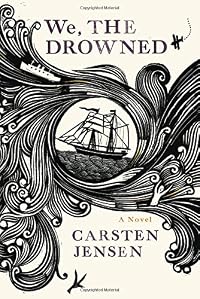
We, the Drowned
by Carsten Jensen
On This Page
Description
Follows a century in the port town of Marstal on an island off the coast of Denmark, whose citizens' lives are indelibly shaped by forces ranging from wars and shipwrecks to taboo survival practices and forbidden passions.Tags
Recommendations









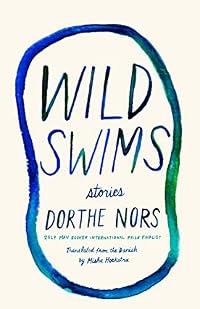
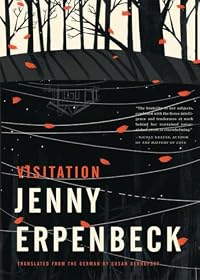
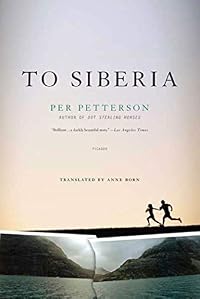
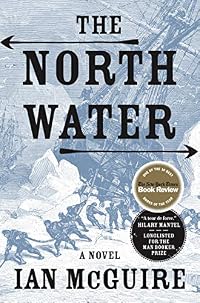









Member Recommendations
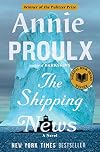
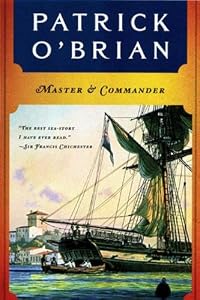
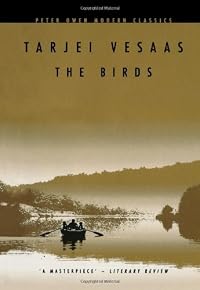
Jannes Proulx focuses on one particular and personal fate, Jensen writes about a whole town in the voice of a vague, collective "we". The former places her story in modern-day Newfoundland, the later in 19th and early 20th century Denmark.
What they have in common is the ever-present sea, its influence and demands, and how the people that relies on if for sustenance has learned to accept its whims and live with the consequences of a life at sea.
20
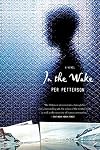
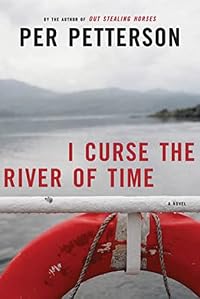
Limelite Norwegian writer; tragedy at sea but psychodrama, not saga. While an internal novel without the brutality of war, the atmosphere of Scandinavian love-hate relationship with cold seas is here.
Member Reviews
What an incredible book. Horrifying and hopeful in equal measure. It is a fiction, but it is born out of fact. Jensen has researched the history of Danish shipping town Marstal and woven a beautiful tale of all that is good and bad in humanity. I didn't think I was going to enjoy it at first. The opening chapter seemed flippant. However, once more characters were introduced and Jensen's almost Conradian understanding of humanity took hold, I was completely gripped. It is a tale spanning 100 years of a town's history, and a story of how people deal with their moments of ugliness through fellowship. I loved it.
I went into my reading of We, the Drowned with certain expectations. Not only was I anticipating an epic, gorgeously written story, but I was expecting a journey on the seas with one character to all ends of the earth. I don't know where I picked up this impression that We, the Drowned was largely about Albert, who searches the world for his lost father—even the novel's blurb alludes to a story much larger than Laurids and Albert—but that was what I expected nonetheless.
Because it wasn't what I wanted, I was disappointed in We, the Drowned. Now how petty is that? At least I'm honest. The story I wanted was nearly seven-hundred pages of a son searching for his father. There would be wonderful character building and a quest that would show more captivate me until its resolution. Also, there would be monsters and flying ships and unexplained occurrences because not only was I confused about the plot, but somehow I had it in mind that this was heavy in magical realism. Hmmmm. Expectations be damned. Let's just throw my expectations out and start over.
We, the Drowned is structured more like a novel in stories than a traditional novel. There's the episode of Laurids who nearly dies in battle, but miraculously survives unscathed. There is the story of his son, Albert, and his upbringing without a father who mysteriously disappeared. Then there is Albert's adventurous journey on the sea in search for his father. And then there are five hundred more pages. What I thought was the entire subject of the book is resolved in under two hundred pages. There's much more to this book than Laurids and even Albert. Each subsequent story is loosely tied into the stories that preceded it, but they span time and the globe. The thread that unites these stories have more to do with the town of Marstal and the oceans than they do with a singular event or character.
With its fragmented nature, We, the Drowned fails to be the huge epic I imagined, but that does not mean it doesn't succeed in other ways. Jensen's novel utilizes place and object how I expected it to use character and story. Not only are all these tales connected to Marstal, a town which inhabits the story as much as its characters inhabit it, but they're connected to the sea and the professional of seafaring. These are more vital to the story than any character. Once one has forgotten the names of Laurids and Albert, Klara, Knud Erik, Sophie, Herman, one still will recall the name of Marstal. They'll remember the journeys even if they've forgotten which crew sailed on them. And they'll recall the objects—the shrunken head, the boots, the vision of a bird—that outlast all but terrain itself.
It is the vivid settings and strange objects that truly occupy We, the Drowned and take the reader on an adventure. This isn't the timeless quest of a man looking for a father, it is the story of a town that strives to survive and a professional that is as old as time itself. show less
Because it wasn't what I wanted, I was disappointed in We, the Drowned. Now how petty is that? At least I'm honest. The story I wanted was nearly seven-hundred pages of a son searching for his father. There would be wonderful character building and a quest that would show more captivate me until its resolution. Also, there would be monsters and flying ships and unexplained occurrences because not only was I confused about the plot, but somehow I had it in mind that this was heavy in magical realism. Hmmmm. Expectations be damned. Let's just throw my expectations out and start over.
We, the Drowned is structured more like a novel in stories than a traditional novel. There's the episode of Laurids who nearly dies in battle, but miraculously survives unscathed. There is the story of his son, Albert, and his upbringing without a father who mysteriously disappeared. Then there is Albert's adventurous journey on the sea in search for his father. And then there are five hundred more pages. What I thought was the entire subject of the book is resolved in under two hundred pages. There's much more to this book than Laurids and even Albert. Each subsequent story is loosely tied into the stories that preceded it, but they span time and the globe. The thread that unites these stories have more to do with the town of Marstal and the oceans than they do with a singular event or character.
With its fragmented nature, We, the Drowned fails to be the huge epic I imagined, but that does not mean it doesn't succeed in other ways. Jensen's novel utilizes place and object how I expected it to use character and story. Not only are all these tales connected to Marstal, a town which inhabits the story as much as its characters inhabit it, but they're connected to the sea and the professional of seafaring. These are more vital to the story than any character. Once one has forgotten the names of Laurids and Albert, Klara, Knud Erik, Sophie, Herman, one still will recall the name of Marstal. They'll remember the journeys even if they've forgotten which crew sailed on them. And they'll recall the objects—the shrunken head, the boots, the vision of a bird—that outlast all but terrain itself.
It is the vivid settings and strange objects that truly occupy We, the Drowned and take the reader on an adventure. This isn't the timeless quest of a man looking for a father, it is the story of a town that strives to survive and a professional that is as old as time itself. show less
This epic, multigenerational novel is about the Danish seaside town of Marstal and spans a century of adventure. The men of Marstal are sailors and as such, many of them drown or disappear. The women of Marstal are left behind to live their lives the best they can in the absence of men. Taking place from the 1840s through WWII, there is a war for each generation. In between there are many seafaring adventures, some love, and some murders.
It's written masterfully - Jensen keeps track of a huge cast of characters and gives them all an individual personality. Lives connect in sometimes unexpected ways and the generations do as well. There's also a really clever use of "we" as narrator - the people of the town, telling their own story in show more the plural.
But somehow, I was still bored for large chunks of this. I loved the beginning and I was moved by the very end. But there were a couple hundred pages in the middle where I felt the book really dragged. I wasn't that interested in the characters and the situations weren't enough to keep my interest.
I think this is a great book, I just think it wasn't quite for me. I appreciated things about it, but couldn't help wishing it would end. I think it's a book that most people should give a try, but I am evidence that even a good book doesn't work for every reader. show less
It's written masterfully - Jensen keeps track of a huge cast of characters and gives them all an individual personality. Lives connect in sometimes unexpected ways and the generations do as well. There's also a really clever use of "we" as narrator - the people of the town, telling their own story in show more the plural.
But somehow, I was still bored for large chunks of this. I loved the beginning and I was moved by the very end. But there were a couple hundred pages in the middle where I felt the book really dragged. I wasn't that interested in the characters and the situations weren't enough to keep my interest.
I think this is a great book, I just think it wasn't quite for me. I appreciated things about it, but couldn't help wishing it would end. I think it's a book that most people should give a try, but I am evidence that even a good book doesn't work for every reader. show less
It's worth noting, in the first place, how I found this book. A year or two ago, I was looking around my favourite bookshop, telling myself to buy something I wouldn't normally buy. 'We, the Drowned' jumped out at me when I walked past it, and it's not hard to see why -- look at that cover! I bought it and, typically, it had been sitting on my bookshelf collecting dust until about a month ago, when I finally decided to conquer it.
'We, the Drowned' is set in Marstal, a small town in Denmark with a centuries long history of seafaring. It spans about 100 years, from the middle of the nineteenth century to the end of World War II. It can be hard for the first few hundred pages to decipher what exactly the book is about, but it became clear show more to me that this was less the story of a few individuals in a small Danish town, and more the story of Denmark as a whole and the way it has been shaped by European history.
This book spends roughly half its time at sea and half its time in Marstal. When at sea, it's very much your typical seafaring adventure, and the tales of corrupt sailors, dangerous storms and incredible lands would be enough to excite anyone. Back home in Marstal, we see a lot of character development take place, and we also see the conflicts between tradition and modernity, and between the men who are desperate to sail and the women who are terrified to lose them.
Manhood is a central theme in 'We, the Drowned', and this is reflected very well in Jensen's writing style, which is dry and succinct, and translates incredibly well into English. This style is something really remarkable about the book, as it perfectly conveys the mentalities of the main characters. However, it does have some limitations: the female characters in the book can seem at times awkward and unrealistic, and their dialogue is often rather stilted. Compared to the heroes of the novel, Jensen seems to have difficulty making the women of the book likable or even particularly interesting.
On the whole, though, this is a very good book. At nearly 700 pages, it's an investment, but it is an enjoyable and rewarding novel that is held together by prose that is itself full of character. Definitely a great start to my year in terms of reading! show less
'We, the Drowned' is set in Marstal, a small town in Denmark with a centuries long history of seafaring. It spans about 100 years, from the middle of the nineteenth century to the end of World War II. It can be hard for the first few hundred pages to decipher what exactly the book is about, but it became clear show more to me that this was less the story of a few individuals in a small Danish town, and more the story of Denmark as a whole and the way it has been shaped by European history.
This book spends roughly half its time at sea and half its time in Marstal. When at sea, it's very much your typical seafaring adventure, and the tales of corrupt sailors, dangerous storms and incredible lands would be enough to excite anyone. Back home in Marstal, we see a lot of character development take place, and we also see the conflicts between tradition and modernity, and between the men who are desperate to sail and the women who are terrified to lose them.
Manhood is a central theme in 'We, the Drowned', and this is reflected very well in Jensen's writing style, which is dry and succinct, and translates incredibly well into English. This style is something really remarkable about the book, as it perfectly conveys the mentalities of the main characters. However, it does have some limitations: the female characters in the book can seem at times awkward and unrealistic, and their dialogue is often rather stilted. Compared to the heroes of the novel, Jensen seems to have difficulty making the women of the book likable or even particularly interesting.
On the whole, though, this is a very good book. At nearly 700 pages, it's an investment, but it is an enjoyable and rewarding novel that is held together by prose that is itself full of character. Definitely a great start to my year in terms of reading! show less
We'll never be a family, Albert thought. We're just the wreckage of other families.
What a stunning, heartbreaking, life-affirming, devastating work. We, The Drowned covers 100 years in the life of a Danish town, Marstal, through the sailors and soldiers and their families. Jensen's prose is vivid and poetic, rarely as "simple" as the misguided reviews on the back of the cover say (even if they mean well by it), and always insightful. His characters walk the tightrope of magic realism without ever crossing over into that genre. He renders the complex relationship all lifelong coast-dwellers have with the ocean, immaculately clear.
This book is a very dense tome. At 700 pages, it uses every one of those pages to tease out heavy strands of show more story and character, so it's definitely not a light read. But We, the Drowned is an immensely rewarding one. There are grand set-pieces - the dehydrated butterflies spring to mind, or the early, strangely optimistic tales of a POW camp - but these are contrasted with simple character tales that elevate the mundane drama above the global events occurring around the characters.
For me, a few of the character revelations toward the end felt a tad obvious - the lead female character develops a highly unpleasant but completely understandable goal, and her late realisation of what she's been doing with her life feels a little forced - but the sheer force of Jensen's skill overwhelms any qualms. A beauty of a book, and a beast of a book, too. show less
What a stunning, heartbreaking, life-affirming, devastating work. We, The Drowned covers 100 years in the life of a Danish town, Marstal, through the sailors and soldiers and their families. Jensen's prose is vivid and poetic, rarely as "simple" as the misguided reviews on the back of the cover say (even if they mean well by it), and always insightful. His characters walk the tightrope of magic realism without ever crossing over into that genre. He renders the complex relationship all lifelong coast-dwellers have with the ocean, immaculately clear.
This book is a very dense tome. At 700 pages, it uses every one of those pages to tease out heavy strands of show more story and character, so it's definitely not a light read. But We, the Drowned is an immensely rewarding one. There are grand set-pieces - the dehydrated butterflies spring to mind, or the early, strangely optimistic tales of a POW camp - but these are contrasted with simple character tales that elevate the mundane drama above the global events occurring around the characters.
For me, a few of the character revelations toward the end felt a tad obvious - the lead female character develops a highly unpleasant but completely understandable goal, and her late realisation of what she's been doing with her life feels a little forced - but the sheer force of Jensen's skill overwhelms any qualms. A beauty of a book, and a beast of a book, too. show less
Call us Ishmael.
It takes almost 100 pages until I'm struck by this strange, recurring "we." After all, it's not as if the narrator takes up a lot of room in Carsten Jensen's 700-page novel; for the most part, We, The Drowned is narrated in the same way as many other novels with no clear protagonist, some sort of omnicient storyteller who never gets personal, never says "I" or reveals his or her name. It's just that the reader is occasionally reminded that this story, the history of the little Danish town of Marstal, where every man is a sailor and every woman is left waiting on shore, is narrated by this "we." "We" saw the cocky sailor Laurids Madsen go to war with the Germans in 1848, survive the destruction of the Danish navy by a show more miracle worthy of a Salman Rushdie character and return home a changed person. "We" saw his son Albert, like a modern Telemachos, try to fill his disappeared father's boots, help build the last sailing merchant fleet that took the town's men all over the world, only to return home to find out that the u-boats of WW1 weren't nearly as big a threat as steam and diesel. "We" saw his adopted son Knud Erik and his mother take the step into the modern world and humanity's great suicide from 1939 to 1945. It's this ghostly choir of unnamed men (and occasional women), "we" who saw the birth of a modern world, a modern land - from the sea.
We, The Drowned spans a century, with scores of characters, echoing Homer, Melville, Lindgren, Kipling, Márquez and Grass in one great sailor's pidgin of influences. As the years pass, the great ideas and seamen pass along the horizon, from Cook to the Tirpitz, from 19th century optimism to 20th century mass-production of death, but the focus is always on the ones manning the oars. It's a simple, but incredibly effective trick; use the standard sailor's stories that anyone from a country with a coast will be familiar with, and then have the sailing routes connect the dots. There are boys' adventures to keep you reading, pirates and convoys and impossible love stories; but the sailors from the insignificant little town sail across waves of larger stories, larger philosophies shifting underneath them; visit the whole world, see it all happen, tie the world together, make it bigger and smaller at the same time, and always returning back home. The focus is on half a dozen people, but in the background there's always this echo of "we", everyone.
You can find weak points in We, The Drowned. Over 700 pages there's room for the occasional lull, very little room for women, etc. But somehow, it's the kind of novel where the weak points only emphasize how great the rest of it is, how solid a novel it is. Carsten Jensen sends his constantly ruminating Marstalians out on that ship that we're all on, where both navigare and legere necesse est. show less
It takes almost 100 pages until I'm struck by this strange, recurring "we." After all, it's not as if the narrator takes up a lot of room in Carsten Jensen's 700-page novel; for the most part, We, The Drowned is narrated in the same way as many other novels with no clear protagonist, some sort of omnicient storyteller who never gets personal, never says "I" or reveals his or her name. It's just that the reader is occasionally reminded that this story, the history of the little Danish town of Marstal, where every man is a sailor and every woman is left waiting on shore, is narrated by this "we." "We" saw the cocky sailor Laurids Madsen go to war with the Germans in 1848, survive the destruction of the Danish navy by a show more miracle worthy of a Salman Rushdie character and return home a changed person. "We" saw his son Albert, like a modern Telemachos, try to fill his disappeared father's boots, help build the last sailing merchant fleet that took the town's men all over the world, only to return home to find out that the u-boats of WW1 weren't nearly as big a threat as steam and diesel. "We" saw his adopted son Knud Erik and his mother take the step into the modern world and humanity's great suicide from 1939 to 1945. It's this ghostly choir of unnamed men (and occasional women), "we" who saw the birth of a modern world, a modern land - from the sea.
We, The Drowned spans a century, with scores of characters, echoing Homer, Melville, Lindgren, Kipling, Márquez and Grass in one great sailor's pidgin of influences. As the years pass, the great ideas and seamen pass along the horizon, from Cook to the Tirpitz, from 19th century optimism to 20th century mass-production of death, but the focus is always on the ones manning the oars. It's a simple, but incredibly effective trick; use the standard sailor's stories that anyone from a country with a coast will be familiar with, and then have the sailing routes connect the dots. There are boys' adventures to keep you reading, pirates and convoys and impossible love stories; but the sailors from the insignificant little town sail across waves of larger stories, larger philosophies shifting underneath them; visit the whole world, see it all happen, tie the world together, make it bigger and smaller at the same time, and always returning back home. The focus is on half a dozen people, but in the background there's always this echo of "we", everyone.
You can find weak points in We, The Drowned. Over 700 pages there's room for the occasional lull, very little room for women, etc. But somehow, it's the kind of novel where the weak points only emphasize how great the rest of it is, how solid a novel it is. Carsten Jensen sends his constantly ruminating Marstalians out on that ship that we're all on, where both navigare and legere necesse est. show less
This book spans a century in the lives of the men and women of Marstal, Denmark, a town shaped by the sea. The men go off to sea, to return intermittently or never, while the women continue with their lives at home. We hear of adventures in the South Pacific, squabbles between little boys' gangs, heroism in the World Wars, the perils of life on the North Atlantic, and much more. It's a book I wanted to race through, but I kept putting it down so that it wouldn't have to end. The translation is smooth and the book is structured to make it very easy to read in snippets if you so desire. It was by turns amusing, heartbreaking and shocking, and the narrative device of first person plural was used just often enough to be effective without show more overstaying its welcome.
Recommended for those who like fictional twists on the historical record or possibly the novels of Alistair MacLean (for the WW2 stories especially), and for those who love stories of the sea. This is one I hope to return to someday. show less
Recommended for those who like fictional twists on the historical record or possibly the novels of Alistair MacLean (for the WW2 stories especially), and for those who love stories of the sea. This is one I hope to return to someday. show less
Members
- Recently Added By
Published Reviews
ThingScore 88
When was the last time you relished sitting down with a 678-page Danish novel? "We, the Drowned" might just be too much book to tote to the beach next summer, but it's powerful reading for a long winter's night. For many nights, in fact.
added by GCPLreader
"Wir Ertrunkenen" schöpft aus der langen Liste berühmter Seefahrer- und Meeresromane, wir erkennen Elemente aus Herman Melvilles "Moby Dick", aus Stevensons und Joseph Conrads Romanen, stilistisch erinnert er zuweilen an Frank Schätzings "Der Schwarm". Der Roman erfüllt jeden Jungentraum von Abenteuern aus echtem Seemannsgarn, er bietet exotische Länder, Kannibalen und Schrumpfköpfe, show more Schiffskatastrophen und Kriegsgräuel, prügelnde Lehrer aus Zeiten, die keiner mehr kennt, eine verwirrende erste Liebe und ein unverhofftes Wiedersehen und nicht zuletzt die Hassliebe einer verbitterten Mutter - daheim herrscht die Melodramatik, auf See die reinste Action. Da Carsten Jensen ein ungemein gewiefter Autor ist und die Kunst des dramatischen Pathos beherrscht, das dem Leser den Atem verschlägt, ist dieses Buch in all seiner Schönheit und all seinem Kitsch der Inbegriff eines Schmökers, es ist der Schmöker dieses Herbstes. show less
added by ljessen
Seagoing legends of Scandinavia ...The translation is, in the main, finely wrought, preserving both the elegiac lyricism and straightforward, sometimes violent energies of the book. I do wish, however, that American translators (or their publishers) were not so anxious about idioms. To have a young Danish sailor, in 1845, refer to “freezing my butt off” bounces this reader out of a show more believable book....That said, Jensen’s talent as a storyteller shines through. We, the Drowned is a huge achievement. A first novel, it’s such a large book that I hope the author has more to say. Whatever may follow, I am grateful, engaged and moved by what he has said here. show less
added by vancouverdeb
Lists

water on the brain: maritime fiction
74 works; 18 members

Recommend the 20 best books you've read in the last five years
2,168 works; 606 members

Childhood: Books for or about children in different cultures around the wor
345 works; 18 members

Novels of Great Adventures
34 works; 5 members

Havet
13 works; 1 member

History in the long view
55 works; 3 members

"We" narration
49 works; 2 members

The Hive Recommends
62 works; 2 members

Ten Books About Disasters at Sea
10 works; 2 members
Author Information

25 Works 2,302 Members
Born in 1952, Carsten Jensen made his name as a columnist and literary critic for a Copenhagen daily newspaper. During the 1990s he had several major press assignments around the world, including Yugoslavia and several cities in Asia. The author of six collections of essays and two novels, Jensen lives in Copenhagen
Some Editions
Awards and Honors
Awards
Notable Lists
Series
Belongs to Publisher Series
btb (74108)
Common Knowledge
- Canonical title
- We, the Drowned
- Original title
- Vi, de druknede
- Original publication date
- 2006
- People/Characters*
- Laurids Madsen; Isager; Albert Madsen
- Important places
- Marstal, Denmark; Denmark
- Important events
- World War I (1914 | 1918); World War II (1939 | 1945)
- Dedication
- For Lizzie, the love of my life
- First words
- Many years ago there lived a man called Laurids Madsen, who went up to Heaven and came down again, thanks to his boots.
- Last words
- (Click to show. Warning: May contain spoilers.)But tonight we danced with the drowned. And they were us.
- Blurbers
- O'Connor, Joseph
- Original language
- Danish
*Some information comes from Common Knowledge in other languages. Click "Edit" for more information.
Classifications
- Genres
- Fiction and Literature, General Fiction, Historical Fiction
- DDC/MDS
- 839.81374 — Literature & rhetoric German & related literatures Other Germanic literatures Danish and Norwegian literatures Danish Danish fiction 1900–2000 Late 20th century 1945–2000
- LCC
- PT8176.2 .E44 .V513 — Language and Literature German, Dutch and Scandinavian literatures Danish literature Individual authors or works 1961-2000
- BISAC
Statistics
- Members
- 1,703
- Popularity
- 12,964
- Reviews
- 55
- Rating
- (4.13)
- Languages
- 14 — Danish, Dutch, English, Finnish, French, German, Italian, Norwegian (Bokmål), Norwegian, Polish, Portuguese, Russian, Spanish, Swedish
- Media
- Paper, Audiobook, Ebook
- ISBNs
- 50
- ASINs
- 12