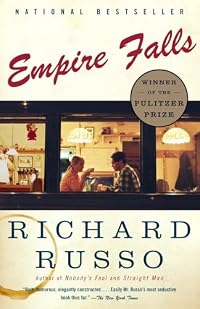
Empire Falls
by Richard Russo
On This Page
Description
Miles Roby has been slinging burgers at the Empire Grill for 20 years, a job that cost him his college education and much of his self-respect. What keeps him there? It could be his bright, sensitive daughter Tick, who needs all his help surviving the local high school. Or maybe it's Janine, Miles' soon-to-be ex-wife, who's taken up with a noxiously vain health-club proprietor. Or perhaps it's the imperious Francine Whiting, who owns everything in town-and seems to believe that "everything" show more includes Miles himself. In Empire Falls Richard Russo delves deep into the blue-collar heart of America ... show lessTags
Recommendations





Member Recommendations
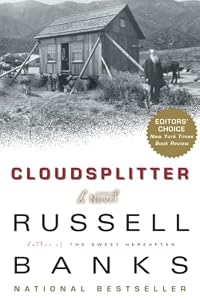
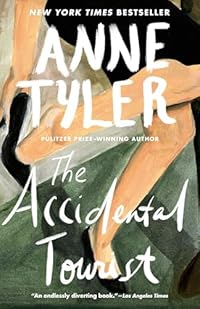
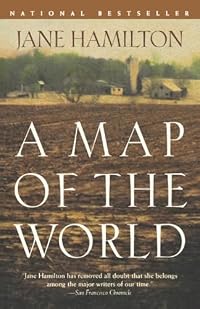
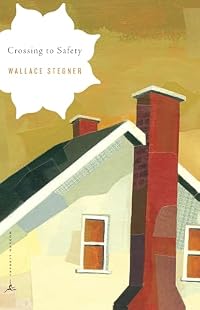
browner56 Although separated by half a century and half the country, Thalia, Texas and Empire Falls, Maine could be the same dreary and decaying small town.
20
Member Reviews
The Parable of the Prodigal Son tells of an impetuous and extravagant young man who, after running off from home and squandering his considerable inheritance, is welcomed back with open arms by his rejoicing father. Unfortunately, there is no such redemption for Miles Roby, the protagonist of Richard Russo’s affecting novel Empire Falls, whose mother Grace carefully plots for him to leave home for college as a way of escaping a dead-end existence in Empire Falls, Maine, the small, suffocating mill town in which they live. When Grace’s illness forces Miles to drop out of school and return to Empire Falls, it is very much against her will and creates a rift in their relationship that lasts until the day she dies. Twenty years later, show more Miles is indeed trapped in the same decaying environment, running a diner for the scheming town matriarch while trying to raise a precocious teenage daughter without much help from a self-absorbed ex-wife and an itinerant rogue of a father.
That may not sound like the plot of a particularly uplifting tale, but for this capable writer it provides the source material for a hilarious and deeply insightful book. As anyone who has read his work before can attest, Russo has a great affection for his characters—and there are a lot of characters worked into the 500 pages of this novel—as well as a wonderful talent for creating realistic dialogue. The story moves along at its own well-measured pace and manages to invest the reader in what happens to the people of Empire Falls without ever lapsing into a cloying sense of sentimentality. To be sure, drawing sympathetic portraits of the denizens of a down-and-out industrial city in the northeastern part of the United States is ground the author has tilled successfully in the past (e.g., The Risk Pool, Nobody’s Fool). Still, Russo is just so good at what he does that, for me, the stories never seem repetitive or forced. In fact, while he won a well-deserved Pulitzer Prize for this one, that award really could have gone to any of three or four of his other novels instead. Russo truly is among the very best novelists we have. show less
That may not sound like the plot of a particularly uplifting tale, but for this capable writer it provides the source material for a hilarious and deeply insightful book. As anyone who has read his work before can attest, Russo has a great affection for his characters—and there are a lot of characters worked into the 500 pages of this novel—as well as a wonderful talent for creating realistic dialogue. The story moves along at its own well-measured pace and manages to invest the reader in what happens to the people of Empire Falls without ever lapsing into a cloying sense of sentimentality. To be sure, drawing sympathetic portraits of the denizens of a down-and-out industrial city in the northeastern part of the United States is ground the author has tilled successfully in the past (e.g., The Risk Pool, Nobody’s Fool). Still, Russo is just so good at what he does that, for me, the stories never seem repetitive or forced. In fact, while he won a well-deserved Pulitzer Prize for this one, that award really could have gone to any of three or four of his other novels instead. Russo truly is among the very best novelists we have. show less
Love this:
Just because things happen slow doesn't mean you'll be ready for them. If they happened fast, you'd be alert for all kinds of suddenness, aware that speed was trump. "Slow" works in an altogether different principle, on the deceptive impression that there's plenty of time to prepare, which conceals the central fact, that no matter how slow things go, you'll always be slower.
The whole book really captures this sense of time getting away from you, the possibility of eroding away agency over one's own life with the sense that things need to be accomplished and if only they were something would be solved. But it's the process, not the destination, that makes a life, isn't it?
Just because things happen slow doesn't mean you'll be ready for them. If they happened fast, you'd be alert for all kinds of suddenness, aware that speed was trump. "Slow" works in an altogether different principle, on the deceptive impression that there's plenty of time to prepare, which conceals the central fact, that no matter how slow things go, you'll always be slower.
The whole book really captures this sense of time getting away from you, the possibility of eroding away agency over one's own life with the sense that things need to be accomplished and if only they were something would be solved. But it's the process, not the destination, that makes a life, isn't it?
(50) This is a novel that has been basically number one on all 'list of recommended books' for me by every algorithm out there. Just seeing it pop all the time made me resist reading it, but finally just grabbed it from one of those free pop-up little libraries on the side of the road, and here we are. A story of an everyman in a small town in Maine just after the the millennium; written contemporaneously (i.e. before ubiquitous cell phones, the 24 hour news cycle, and social media) Miles Roby leaves college in his senior year and returns to Empire Falls to be with his dying mother - 20 years later, he is still flipping burgers at the local grill -- even though her last wish was for him to break free. This is about the ties that bind, show more the secret disappointments and grudges we all nurse that even subconsciously drive our decisions. Max Roby, the drunk nee'r do well father was clearly the best character and his dialogue was a ironic and bitterly funny thread that held the novel together. I read this greedily and the characters leapt off the page. I respect the Pulitzer though am surprised that a novel with this degree of sentimentality would win the prize. It was a tad melodramatic.
The characterizations and sense of place were fantastic. The dramatic tension was quite good and several scenes were pitch perfect - could you not just feel the tension in the bleachers of that football game? I did not love the ending - in some ways it was quite dragged out and in others unfinished. It would have been nice to know what would become of the town and its eating establishments. The question that is posed at the beginning - 'Hey Miles, is the old lady gonna leave it all to you in her will?" - could have been the closing line as well.
On the whole I really enjoyed it and I will right away find the HBO series. I am late to the party but the formula was right regarding this being a book I would like. Highly recommended for lovers of thick family sagas centering on a strong sense of place - "We were the Mulvaney's" by JCO; "The Brother's K," by James David Duncan, the TV show "Friday Night Lights" come to mind. show less
The characterizations and sense of place were fantastic. The dramatic tension was quite good and several scenes were pitch perfect - could you not just feel the tension in the bleachers of that football game? I did not love the ending - in some ways it was quite dragged out and in others unfinished. It would have been nice to know what would become of the town and its eating establishments. The question that is posed at the beginning - 'Hey Miles, is the old lady gonna leave it all to you in her will?" - could have been the closing line as well.
On the whole I really enjoyed it and I will right away find the HBO series. I am late to the party but the formula was right regarding this being a book I would like. Highly recommended for lovers of thick family sagas centering on a strong sense of place - "We were the Mulvaney's" by JCO; "The Brother's K," by James David Duncan, the TV show "Friday Night Lights" come to mind. show less
Some stories, once told, become an indelible part of the landscape. That town has always been there. Those people have always lived there. Such is the case with Empire Falls, a small, dying mill town in Maine. Empire Falls is peopled with a broad cast of characters whose lives all touch each other in some way, but mainly it is the story of Miles Roby, who runs the Empire Grill, and Francine Whiting, who owns most of the town and also Miles, and how that came to be. There is so much going on here, and the story takes its time to unfold its secrets, bringing the reader on a leisurely stroll through the lives of Empire Falls's inhabitants until they become as familiar as our own neighbors. Quite often, this book is laugh-out-loud funny, show more and in a few places, it's unspeakably horrible. But mostly it's a clear-headed and largely affectionate view of small-town American life and people who are largely doing the best they can with the little they've been given to work with. This book fully absorbed me while I was reading it, and now I'm feeling melancholy that it's all over. show less
...diverting one's attention from the past was not the same as envisioning and embarking upon a future. On the other hand, if the past were razed, the slate wiped clean, maybe fewer people would confuse it with the future, and that at least would be something.
Empire Falls is a small town in Maine, and Miles Roby is a small town guy who once dreamed of being something more than a short-order cook running the town matriarch’s diner. How he ended up in this dead-end job and how his past controls his future are at the base of this complex tale of regret and revenge, and while dreams of deliverance from a predictable life might be enough to make a good tale, that is only the tip of the iceberg for Richard Russo.
One thing Russo does very show more well is create characters. He gives us Miles, a sweet-tempered guy who is just lacks the excitement to stir the hearts of most of the women in his life; Mrs. Whiting, the power-crazed matriarch who made me think, oddly enough, of Mrs. Haversham, controlling and dictating from her petty little throne; Max, Miles whacky father who is a study in never letting feelings get in the way of what you want; and Tick, Miles daughter who is fighting her own way through the angst of adolescence. There are myriad other characters, who are just as real and concrete as these, and at least two who are ghosts from the past but seem to be driving the future.
This book is complex and forces you to ask a lot of painful questions. How much of our lives are dictated to us by things we don’t understand or know but fail to comprehend the meaning of? How much of what we see as our “fate” is really a result of our own choices? How much is required of us to atone for a wrong we have done? Why do we choose the easy path instead of pursuing our heart’s desire, and when we do can anyone else be truly blamed for that? What do we owe to one another? And, finally, Where is God in all of this?
It pleased him to imagine God as someone like his mother, someone beleaguered by too many responsibilities, too dog-tired to monitor an energetic boy every minute of the day, but who, out of love and fear for his safety, checked in on him whenever she could. Was this so crazy? Surely God must have other projects besides Man just as parents had responsibilities other than raising their children?
The Pulitzer Committee got this one right. I had only read one other Russo before this, [b:That Old Cape Magic|6303733|That Old Cape Magic|Richard Russo|https://images.gr-assets.com/books/1320442735s/6303733.jpg|6488344], and found it interesting but not smashing. I’m glad I wasn’t put off from reading more, because this would have been a terrible read to have missed. show less
Empire Falls is a small town in Maine, and Miles Roby is a small town guy who once dreamed of being something more than a short-order cook running the town matriarch’s diner. How he ended up in this dead-end job and how his past controls his future are at the base of this complex tale of regret and revenge, and while dreams of deliverance from a predictable life might be enough to make a good tale, that is only the tip of the iceberg for Richard Russo.
One thing Russo does very show more well is create characters. He gives us Miles, a sweet-tempered guy who is just lacks the excitement to stir the hearts of most of the women in his life; Mrs. Whiting, the power-crazed matriarch who made me think, oddly enough, of Mrs. Haversham, controlling and dictating from her petty little throne; Max, Miles whacky father who is a study in never letting feelings get in the way of what you want; and Tick, Miles daughter who is fighting her own way through the angst of adolescence. There are myriad other characters, who are just as real and concrete as these, and at least two who are ghosts from the past but seem to be driving the future.
This book is complex and forces you to ask a lot of painful questions. How much of our lives are dictated to us by things we don’t understand or know but fail to comprehend the meaning of? How much of what we see as our “fate” is really a result of our own choices? How much is required of us to atone for a wrong we have done? Why do we choose the easy path instead of pursuing our heart’s desire, and when we do can anyone else be truly blamed for that? What do we owe to one another? And, finally, Where is God in all of this?
It pleased him to imagine God as someone like his mother, someone beleaguered by too many responsibilities, too dog-tired to monitor an energetic boy every minute of the day, but who, out of love and fear for his safety, checked in on him whenever she could. Was this so crazy? Surely God must have other projects besides Man just as parents had responsibilities other than raising their children?
The Pulitzer Committee got this one right. I had only read one other Russo before this, [b:That Old Cape Magic|6303733|That Old Cape Magic|Richard Russo|https://images.gr-assets.com/books/1320442735s/6303733.jpg|6488344], and found it interesting but not smashing. I’m glad I wasn’t put off from reading more, because this would have been a terrible read to have missed. show less
Now and then, you find a book that manages to enthrall you so deeply that you simply know you will return to it over and over again, perhaps to embrace the writing style, perhaps to meet these characters again or perhaps to simply let yourself be immersed by the wonderful atmosphere of that specific book.
Empire Falls is such a book. I loved every single page of this novel, even though I know there are readers who would rip this book apart, saying things like "nothing ever happens" or "where is the plot?" If you actually plan to read this novel, you have to be prepared to find a book which focuses on character development more than anything else. Richard Russo, the author of this Pulitzer Prize-winning novel, concentrates mainly on the show more huge cast of characters he introduces and develops throughout these 500 pages, as well as building an atmosphere that will make you feel as if you have relocated to Empire Falls, Maine, this curious little town with its huge story.
It is difficult to explain the events in "Empire Falls", considering the huge amount of characters involved in this novel. We accompany our main character, Miles Roby, on an insightful journey through his life, but Russo also constantly delves into the minds of different characters by changing the point of view to another character. All the different narrative arcs find their centerpiece in Miles Roby, a middle-aged, divorced father who runs the Empire Grill, a greasy spoon diner. We meet his ex-wife Janine Roby, who has developed a rather selfish attitude since her divorce and whose main concerns are now her weight and her social status. Their smart daughter Tick is confronted with her own problems in school, where she meets John Voss, her awkward, introverted classmate. We meet Miles' younger brother David, a chief cook and former alcoholic; as well as their difficult father Max and their late mother Grace through a number of flashbacks; we meet Janine's arrogant fiancé Walt Comeau, police officer Jimmy Minty who holds a grudge against Miles, his son Zack who has once been involved with Tick; and of course Francine Whiting, the widow of the wealthiest man of Empire Falls who now owns half of the town - and particularly Miles.
Richard Russo introduces us to an enormous amount of other characters as well, making it appear that it is rather easy to lose track of who is actually who and which character has which characteristics. However, Russo always manages to introduce his characters in a very memorable way, with every single minor character contributing an important part to the story line. No person is introduced without a reason, and they are all developed in a very balanced way: Goodhearted Miles Roby also has his dark sides, but antagonists such as Zack and Jimmy Minty or Walt Comeau never appear as stereotypical villains. Russo spends a lot of time on creating realistic characters, and he does more than just succeed: He creates characters you are unlikely to ever forget.
For me personally, Russo's prose was thoughtful and memorable, but he also found the perfect balance between humor and seriousness. At times, you will not be able to stop laughing thanks to Russo's subtle humor. At other times, you will start wondering about subjects you never thought even existed. Even now, after having finished this book, I can open it on a random page and find a new aspect to think about. Of course it is possible to detect a plot in this novel, but it's not the most important thing; in its essence, "Empire Falls" can be called a social study, exploring a small town to its very core and delving deep into everyone's secrets without causing their stories to feel far-fetched or excessively melodramatic. All of these characters might well be your neighbors, that's how realistically Russo portrays them. He ultimately builds up to a thrilling climax, which leads everything to a satisfying ending which stays close to the core of the characters and the town.
Many relationships in this novel are defined by either resentment or kindness, but all of these relationships find themselves tested in the course of the book. Each character has to explore themes such as responsibility or, most importantly, humanity, which is essentially what the book is about in my opinion. What makes us human? What defines humanity? Can we call ourselves human in spite of all our sins?
The blurb of the edition I own describes the novel with "characters who will disarm you, a plot with as many twists and falls as the Knox River [the river which flows through Empire Falls] itself, and an ending that will make the hairs stand up on the back of your neck." I couldn't agree more. Even when I put this book aside, I could never resist returning to it in my thoughts. And let's take a moment to appreciate that beautiful cover (at least in the edition which I have linked my review to).
I should mention that perhaps I should hate this book rather than loving it; after all, I have not been able to motivate myself to read anything for about five weeks after finishing "Empire Falls" - I simply couldn't imagine to find something similarly good again. But this was only my personal experience, so if you intend to read this novel, don't get your expectations too high. Russo's prose is so simple and yet beautiful that I was constantly tempted to reread chapters immediately. In addition, Russo tends to create complex sentences and releases a lot of information embedded into his sentences upon his readers, which is why you will have to read every chapter very carefully in order to understand the characters' conflicts and the background stories.
I can honestly say that Russo's novel changed my life to some extent (eben though I recognize how dramatic that sounds). His prose provides constant food for thoughts, he makes you overthink your own values and standards by pushing you towards questions like, "What would I do if I was in the same situation as this character?"
Many other reviewers have already praised this novel, so I don't think I was able to add anything else to what they already wrote, but I certainly hope that Richard Russo will continue to receive attention for the masterful novel he created. Though it should be mentioned that if you usually only read fantasy, sci-fi, thrillers or romance novels, you may not enjoy this very much.
For readers of literary/adult/realistic fiction (or however this genre may be called), I'd call this novel a safe bet. You won't be disappointed.
* * * * * * *
If you are still interested, I am going to provide you with some further information on the TV mini-series which was closely adapted from Russo's novel in 2005.
The show is capable of portraying a very similar atmosphere to the one depicted in the novel. The series shines with a stellar cast: Ed Harris, Helen Hunt, Paul Newman, Philip Seymour Hoffman, Robin Wright, Joanne Woodward, Kate Burton, William Fichtner and Aidan Quinn. Over the course of 200 minutes, the series depicts every major event from the novel in a very similar fashion, and finds the correct balance between its own choices and the book's defaults. There is not much wrong with this series, except perhaps that - just like the novel itself - I did not want it to end once I started watching it.
You are immediately swept into the atmosphere of the story, and fabulous actors allow to instantly make all of these characters appear interesting. Paul Newman puts all his acting weight into his performance as Max Roby, a role very different from his iconic roles such as Butch Cassidy, Henry Gondorff or Cold Hand Luke. Ed Harris shines as Miles Roby, a role in which he is finally allowed to play more than just the antagonist (though Harris never fails to do so in a convincing manner) or the minor character his roles are often treated as in many movies. Robin Wright gracefully makes the role of Grace her own, though she still only presents us with small nuances of what she is actually capable of. Those three actors stood out in the most memorable way for me personally, but in the end, there was not a single performance which disappointed me.
Ultimately, I'd highly recommend watching this series ... if you have read the book. The series works well on its own, but it works even better after having read the book before. show less
Empire Falls is such a book. I loved every single page of this novel, even though I know there are readers who would rip this book apart, saying things like "nothing ever happens" or "where is the plot?" If you actually plan to read this novel, you have to be prepared to find a book which focuses on character development more than anything else. Richard Russo, the author of this Pulitzer Prize-winning novel, concentrates mainly on the show more huge cast of characters he introduces and develops throughout these 500 pages, as well as building an atmosphere that will make you feel as if you have relocated to Empire Falls, Maine, this curious little town with its huge story.
It is difficult to explain the events in "Empire Falls", considering the huge amount of characters involved in this novel. We accompany our main character, Miles Roby, on an insightful journey through his life, but Russo also constantly delves into the minds of different characters by changing the point of view to another character. All the different narrative arcs find their centerpiece in Miles Roby, a middle-aged, divorced father who runs the Empire Grill, a greasy spoon diner. We meet his ex-wife Janine Roby, who has developed a rather selfish attitude since her divorce and whose main concerns are now her weight and her social status. Their smart daughter Tick is confronted with her own problems in school, where she meets John Voss, her awkward, introverted classmate. We meet Miles' younger brother David, a chief cook and former alcoholic; as well as their difficult father Max and their late mother Grace through a number of flashbacks; we meet Janine's arrogant fiancé Walt Comeau, police officer Jimmy Minty who holds a grudge against Miles, his son Zack who has once been involved with Tick; and of course Francine Whiting, the widow of the wealthiest man of Empire Falls who now owns half of the town - and particularly Miles.
Richard Russo introduces us to an enormous amount of other characters as well, making it appear that it is rather easy to lose track of who is actually who and which character has which characteristics. However, Russo always manages to introduce his characters in a very memorable way, with every single minor character contributing an important part to the story line. No person is introduced without a reason, and they are all developed in a very balanced way: Goodhearted Miles Roby also has his dark sides, but antagonists such as Zack and Jimmy Minty or Walt Comeau never appear as stereotypical villains. Russo spends a lot of time on creating realistic characters, and he does more than just succeed: He creates characters you are unlikely to ever forget.
“After all, what was the whole wide world but a place for people to yearn for their heart's impossible desires, for those desires to become entrenched in defiance of logic, plausibility, and even the passage of time, as eternal as polished marble. ”
For me personally, Russo's prose was thoughtful and memorable, but he also found the perfect balance between humor and seriousness. At times, you will not be able to stop laughing thanks to Russo's subtle humor. At other times, you will start wondering about subjects you never thought even existed. Even now, after having finished this book, I can open it on a random page and find a new aspect to think about. Of course it is possible to detect a plot in this novel, but it's not the most important thing; in its essence, "Empire Falls" can be called a social study, exploring a small town to its very core and delving deep into everyone's secrets without causing their stories to feel far-fetched or excessively melodramatic. All of these characters might well be your neighbors, that's how realistically Russo portrays them. He ultimately builds up to a thrilling climax, which leads everything to a satisfying ending which stays close to the core of the characters and the town.
Many relationships in this novel are defined by either resentment or kindness, but all of these relationships find themselves tested in the course of the book. Each character has to explore themes such as responsibility or, most importantly, humanity, which is essentially what the book is about in my opinion. What makes us human? What defines humanity? Can we call ourselves human in spite of all our sins?
The blurb of the edition I own describes the novel with "characters who will disarm you, a plot with as many twists and falls as the Knox River [the river which flows through Empire Falls] itself, and an ending that will make the hairs stand up on the back of your neck." I couldn't agree more. Even when I put this book aside, I could never resist returning to it in my thoughts. And let's take a moment to appreciate that beautiful cover (at least in the edition which I have linked my review to).
I should mention that perhaps I should hate this book rather than loving it; after all, I have not been able to motivate myself to read anything for about five weeks after finishing "Empire Falls" - I simply couldn't imagine to find something similarly good again. But this was only my personal experience, so if you intend to read this novel, don't get your expectations too high. Russo's prose is so simple and yet beautiful that I was constantly tempted to reread chapters immediately. In addition, Russo tends to create complex sentences and releases a lot of information embedded into his sentences upon his readers, which is why you will have to read every chapter very carefully in order to understand the characters' conflicts and the background stories.
“And there comes a time in your life when you realize that if you don't take the opportunity to be happy, you may never get another chance again.”
I can honestly say that Russo's novel changed my life to some extent (eben though I recognize how dramatic that sounds). His prose provides constant food for thoughts, he makes you overthink your own values and standards by pushing you towards questions like, "What would I do if I was in the same situation as this character?"
Many other reviewers have already praised this novel, so I don't think I was able to add anything else to what they already wrote, but I certainly hope that Richard Russo will continue to receive attention for the masterful novel he created. Though it should be mentioned that if you usually only read fantasy, sci-fi, thrillers or romance novels, you may not enjoy this very much.
For readers of literary/adult/realistic fiction (or however this genre may be called), I'd call this novel a safe bet. You won't be disappointed.
* * * * * * *
If you are still interested, I am going to provide you with some further information on the TV mini-series which was closely adapted from Russo's novel in 2005.
The show is capable of portraying a very similar atmosphere to the one depicted in the novel. The series shines with a stellar cast: Ed Harris, Helen Hunt, Paul Newman, Philip Seymour Hoffman, Robin Wright, Joanne Woodward, Kate Burton, William Fichtner and Aidan Quinn. Over the course of 200 minutes, the series depicts every major event from the novel in a very similar fashion, and finds the correct balance between its own choices and the book's defaults. There is not much wrong with this series, except perhaps that - just like the novel itself - I did not want it to end once I started watching it.
You are immediately swept into the atmosphere of the story, and fabulous actors allow to instantly make all of these characters appear interesting. Paul Newman puts all his acting weight into his performance as Max Roby, a role very different from his iconic roles such as Butch Cassidy, Henry Gondorff or Cold Hand Luke. Ed Harris shines as Miles Roby, a role in which he is finally allowed to play more than just the antagonist (though Harris never fails to do so in a convincing manner) or the minor character his roles are often treated as in many movies. Robin Wright gracefully makes the role of Grace her own, though she still only presents us with small nuances of what she is actually capable of. Those three actors stood out in the most memorable way for me personally, but in the end, there was not a single performance which disappointed me.
Ultimately, I'd highly recommend watching this series ... if you have read the book. The series works well on its own, but it works even better after having read the book before. show less
Winner of the Pulitzer Prize for Fiction in 2002, this book got off to a slow start for me. However, as the story continued, I found that I could not put it down.
Set in a depressed area, where textile manufacturing was once king, the town is now a shell of what it used to be, with one matriarch running the show, and not always benevolently. The protagonist, Miles, is a very likable guy, even if he's a little bit of a milquetoast. His father is hella irritating until the end, his ex-wife is irritating until the end, and the other supporting characters are the same: very real, flawed, and yet exceptional at the same time.
I loved the flow of the story. This is a depiction of real life. Miles' mother wants so much more for her son, and show more yet there is something about Empire Falls that draws him back. She herself has suffered a lost love, before she even had it. In turn, he wants so much for his daughter, and yet ... will she escape her hometown? Miles, too, suffers from the cruelest kind of love: unrequited. What exactly is the hold old Mrs. Whiting has on everyone? Does she have any other emotion rather than vengeance?
A lovely story of middle-America, with characters who are so real that you can pinpoint them in your own family. A wonderful, wonderful recommendation. show less
Set in a depressed area, where textile manufacturing was once king, the town is now a shell of what it used to be, with one matriarch running the show, and not always benevolently. The protagonist, Miles, is a very likable guy, even if he's a little bit of a milquetoast. His father is hella irritating until the end, his ex-wife is irritating until the end, and the other supporting characters are the same: very real, flawed, and yet exceptional at the same time.
I loved the flow of the story. This is a depiction of real life. Miles' mother wants so much more for her son, and show more yet there is something about Empire Falls that draws him back. She herself has suffered a lost love, before she even had it. In turn, he wants so much for his daughter, and yet ... will she escape her hometown? Miles, too, suffers from the cruelest kind of love: unrequited. What exactly is the hold old Mrs. Whiting has on everyone? Does she have any other emotion rather than vengeance?
A lovely story of middle-America, with characters who are so real that you can pinpoint them in your own family. A wonderful, wonderful recommendation. show less
Members
- Recently Added By
Published Reviews
ThingScore 88
Russo's command of his story is unerring, but his manner is so unassuming that his mastery is easy to miss. He satisfies every expectation without lapsing into predictability, and the last section of the book explodes with surprises that also seem, in retrospect, like inevitabilities. As the pace quickens and the disparate threads of the narrative draw tighter, you find yourself torn between show more the desire to rush ahead and the impulse to slow down.
Empire Falls, situated at a fictitious and unlovely bend of the Knox River, is the kind of place tourists from Boston or New York speed through en route to the mini-Martha's Vineyards of the Maine coast, perhaps stopping for lunch at a place like the Empire Grill and eavesdropping on the taciturn, wisecracking regulars. By the end of this novel, you'll know the town's geography like a native, and its tattered landmarks -- the Empire Grill, the old Whiting shirt factory, the architectural folly C. B. Whiting built across the river -- will be as vivid and as charged with metaphor as Salem's house of seven gables or the mansions of East Egg. You will also have had the good fortune to tour this unremarkable geography in the company of an amiable, witty raconteur who knows all the gossip and the local history as well as some pretty good jokes. Only after you've bought him a beer, shaken his hand and said goodbye will it occur to you that he's also one of the best novelists around. show less
Empire Falls, situated at a fictitious and unlovely bend of the Knox River, is the kind of place tourists from Boston or New York speed through en route to the mini-Martha's Vineyards of the Maine coast, perhaps stopping for lunch at a place like the Empire Grill and eavesdropping on the taciturn, wisecracking regulars. By the end of this novel, you'll know the town's geography like a native, and its tattered landmarks -- the Empire Grill, the old Whiting shirt factory, the architectural folly C. B. Whiting built across the river -- will be as vivid and as charged with metaphor as Salem's house of seven gables or the mansions of East Egg. You will also have had the good fortune to tour this unremarkable geography in the company of an amiable, witty raconteur who knows all the gossip and the local history as well as some pretty good jokes. Only after you've bought him a beer, shaken his hand and said goodbye will it occur to you that he's also one of the best novelists around. show less
added by WiJiWiJi
Russo's command of his story is unerring, but his manner is so unassuming that his mastery is easy to miss. He satisfies every expectation without lapsing into predictability, and the last section of the book explodes with surprises that also seem, in retrospect, like inevitabilities. As the pace quickens and the disparate threads of the narrative draw tighter, you find yourself torn between show more the desire to rush ahead and the impulse to slow down. show less
added by Nickelini
Lists

Pulitzer Prize Winners for Fiction
102 works; 54 members

Read the book and saw the movie
1,170 works; 195 members
Literature About Social Class
134 works; 19 members
Best Family Stories
241 works; 22 members

Best Contemporary Literary Fiction (Around the Last 30 Years)
388 works; 124 members

Must-Read Maine
146 works; 91 members
Favourite Books
1,817 works; 316 members

Best Workplace Fiction
47 works; 18 members

New England Books
101 works; 10 members

Top Five Books of 2022
736 works; 272 members

Pulitzer Prize-Winning Books
42 works; 9 members

Books Featured on Gilmore Girls
307 works; 21 members

Pleasant Surprises: Books That Exceeded Our Expectations
418 works; 143 members

Unread books
1,063 works; 87 members

One Book, Many Authors
441 works; 40 members

2000s (the decade, not the century)
184 works; 11 members

Contemporary Fiction
109 works; 7 members

Blue Pyramid 1,276 Best Books of All Time
1,248 works; 32 members

Fiction about the Working Class
74 works; 10 members

NPRs audience picks: 100 best beach reads
105 works; 12 members

Allie's Favourite 150 Books
145 works; 3 members

2000s decade
85 works; 7 members

Rory Gilmore Book Club
193 works; 5 members

New Authors to Read
21 works; 3 members

Books Read in 2014
2,341 works; 89 members

Books tagged favorites
390 works; 30 members

Books Featured on Readers' Review of the Diane Rehm Show
161 works; 8 members

Best Domestic Fiction
77 works; 6 members
Novels featuring Fathers
56 works; 7 members
Literary Travelogue of the United States Challenge
133 works; 6 members
Books Set in Small Towns and Villages
278 works; 16 members
USA Road Trip
50 works; 3 members
Five star books
1,755 works; 108 members

Books Set in Maine
42 works; 6 members

Books To Get From The Library
115 works; 5 members

Willoyd's Tour of the USA
25 works; 1 member

Favourite Books by Male Authors
29 works; 2 members

What are your favourite books?
121 works; 11 members

Books Read in 2016
4,666 works; 197 members

Books Read in 2022
5,164 works; 113 members

Books Read in 2020
4,379 works; 123 members

Books Read in 2004
197 works; 7 members

My favourite books
96 works; 3 members

Favourite Books
50 works; 1 member

American Lit for Eng 11 Research Project
368 works; 6 members

The Complete Rory Gilmore Reading List
506 works; 5 members

Flashbacks
11 works; 1 member

.
184 works; 1 member
To Read
617 works; 7 members

Books Set in Restaurants
10 works; 2 members
Top Book of the Year - 2000s
10 works; 1 member

Books Read in 2024
4,623 works; 126 members

Rory Gilmore Challenge 101-200
33 works; 1 member

Books Read in 2002
195 works; 8 members
Author Information

36+ Works 29,048 Members
Richard Russo was born in Johnstown, New York on July 15, 1949. He received a Bachelor's degree, a Master of Fine Arts degree, and a Doctor of Philosophy degree from the University of Arizona. He taught at numerous colleges including Southern Illinois University Carbondale and Colby College. He has written numerous books including Mokawk, The Risk show more Pool, Straight Man, Bridge of Sighs, and That Old Cape Magic, as well as a short story collection, The Whore's Child. His novel Empire Falls won the 2002 Pulitzer Prize for Fiction and Nobody's Fool was made into a movie starring Paul Newman, Bruce Willis and Melanie Griffith. His memoir was entitled Elsewhere. He also co-wrote the 1998 film Twilight with director Robert Benton and the teleplay for the HBO adaptation of Empire Falls. (Bowker Author Biography) Richard Russo lives in coastal Maine with his wife & two daughters. (Publisher Fact Sheets) show less
Some Editions
Awards and Honors
Awards
Distinctions
Work Relationships
Is contained in
Inspired
Has as a commentary on the text
Has as a student's study guide
Common Knowledge
- Canonical title*
- Empire Falls
- Original title
- Empire Falls
- Original publication date
- 2001 (1e édition originale américaine) (1e édition originale américaine); 2002-09-04 (1e traduction et édition française, Quai Voltaire) (1e traduction et édition française, Quai Voltaire)
- People/Characters
- Miles Roby; Max Roby; Christina Roby; Janine Roby; Walt Comeau; Francine Whiting (show all 10); Cindy Whiting; John Voss; Jimmy Minty; CB Whiting
- Important places
- Dukes County, Massachusetts, USA; Empire Falls, Maine, USA; Maine, USA; Martha's Vineyard, Massachusetts, USA; Massachusetts, USA; West Central Pennsylvania University
- Related movies
- Empire Falls (2005 | IMDb)
- Dedication
- For Robert Benton
- First words
- Compared to the Whiting mansion in town, the house Charles Beaumont Whiting built a decade after his return to Maine was modest.
- Quotations
- Some sins trail their own penance.
- Last words
- (Click to show. Warning: May contain spoilers.)Bumping, nudging, seeking, until finally a small section of the structure gave way and they were gone.
- Original language
- English
- Canonical DDC/MDS
- 813.54
- Canonical LCC
- PS3568.U812
*Some information comes from Common Knowledge in other languages. Click "Edit" for more information.
Classifications
Statistics
- Members
- 9,247
- Popularity
- 1,135
- Reviews
- 191
- Rating
- (3.95)
- Languages
- 12 — Czech, Danish, Dutch, English, Estonian, French, German, Italian, Polish, Portuguese, Croatian, Spanish
- Media
- Paper, Audiobook, Ebook
- ISBNs
- 39
- ASINs
- 21