On This Page
Description
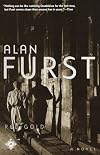
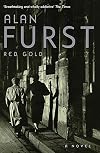
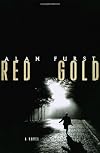
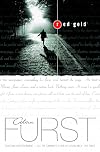
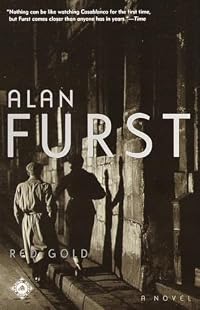
“Nothing can be like watching Casablanca for the first time, but Furst comes closer than anyone has in years.”—TimeAutumn 1941: In a shabby hotel off the place Clichy, the course of the war is about to change. German tanks are rolling toward Moscow. Stalin has issued a decree: All partisan operatives are to strike behind enemy lines—from Kiev to Brittany. Set in the back streets of Paris and deep in occupied France, Red Gold moves with quiet menace as predators from the dark edge show more of war—arms dealers, lawyers, spies, and assassins—emerge from the shadows of the Parisian underworld. In their midst is Jean Casson, once a well-to-do film producer, now a target of the Gestapo living on a few francs a day. As the occupation tightens, Casson is drawn into an ill-fated mission: running guns to combat units of the French Communist Party. Reprisals are brutal. At last the real resistance has begun. Red Gold masterfully re-creates the shadow world of French resistance in the darkest days of World War II. show less
Tags
Recommendations








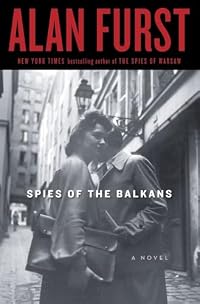


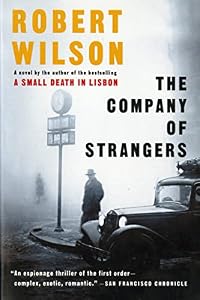
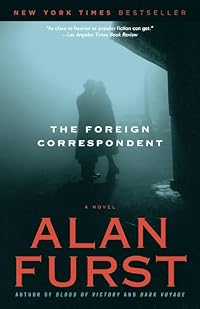
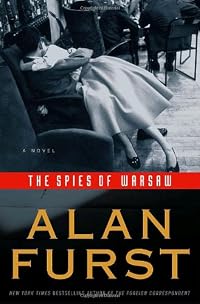





Member Reviews
It’s Paris, 1941, the city is under the thumb of the Germans, and Jean-Claude Casson, is using a false identity to move around the city that he loves. When last heard from in The World At Night, Jean-Claude made the fateful decision of not escaping to England. Now he floats around Paris, avoiding places he once went and people he once knew, knowing it is just a matter of time before something gives him away and the Germans take him. Not looking to be a patriot, only hoping to survive but instead, patriotism finds him.
Alan Furst has the ability to bring immediate atmosphere to his stories. In Red Gold, we are sneaking around Paris, clandestinely meeting with Resistance members, ex-military people, communists and Jews, all working show more separately but all against the Germans. Jean-Claude’s mission is to approach the communists, to get them to work with De Gaulle’s Resistance.
This was a great sequel to [The World At Night]. Many praises for his ability to bring Paris, 1941 to life, from working class people, girls of the night, fugitives, collaborators, Jews and Communists, loyalties that shift in the wind, horrific and violent reprisals, acts of heroism that will never be recognized all bended together to give us a very good look at what the war was like for both this city and country. My only quibble with this book would be his abrupt ending, it certainly left me wanting more. A great read. show less
Alan Furst has the ability to bring immediate atmosphere to his stories. In Red Gold, we are sneaking around Paris, clandestinely meeting with Resistance members, ex-military people, communists and Jews, all working show more separately but all against the Germans. Jean-Claude’s mission is to approach the communists, to get them to work with De Gaulle’s Resistance.
This was a great sequel to [The World At Night]. Many praises for his ability to bring Paris, 1941 to life, from working class people, girls of the night, fugitives, collaborators, Jews and Communists, loyalties that shift in the wind, horrific and violent reprisals, acts of heroism that will never be recognized all bended together to give us a very good look at what the war was like for both this city and country. My only quibble with this book would be his abrupt ending, it certainly left me wanting more. A great read. show less
The fifth-published Alan Furst novel (whose loosely connected novels are all set before and during WWII) and a direct sequel to the fourth (The World At Night), Red Gold is mainly the story of an erstwhile producer of French gangster movies, Jean Casson, as he mourns the termination of his affair from the previous book with an actress named Citrine, eludes the Nazi Occupational Authority, and sporadically participates in various acts of resistance against the Nazis, aiding both the (now underground) intelligence agency of the Fourth Republic and the French Communists.
While Casson remains an engaging character, the point of view shifts just a bit too often for the reader to be completely invested in his fortunes.
As always in Furst, the show more atmosphere is paramount, and top-notch, and the attention to detail both convincing and compelling; far and away the most interesting aspects of the book for me, however, were the historical minutae: there were no less than fifteen different resistance groups more or less actively working against the Nazis in France by 1941 (a fact which brought to mind DeGaulle's comment about the number of France's cheeses), but the main ones -- DeGaulle's London-based group (which had the BBC as the world's most effective mouthpiece) and the French Communists -- didn't utilize their resources as much as they could have, because they were both expecting the Nazis to be chased out of Paris in a couple of years once the Americans landed, and, once the U.S. declared war on Germany, they both became primarily interested in who would seize power after the Nazis left. Now there's some realpolitik at which even Henry Kissinger might blush.
Furst's novels, in short, can say things that most history books can't (or won't), and should be highly esteemed if only for that reason. show less
While Casson remains an engaging character, the point of view shifts just a bit too often for the reader to be completely invested in his fortunes.
As always in Furst, the show more atmosphere is paramount, and top-notch, and the attention to detail both convincing and compelling; far and away the most interesting aspects of the book for me, however, were the historical minutae: there were no less than fifteen different resistance groups more or less actively working against the Nazis in France by 1941 (a fact which brought to mind DeGaulle's comment about the number of France's cheeses), but the main ones -- DeGaulle's London-based group (which had the BBC as the world's most effective mouthpiece) and the French Communists -- didn't utilize their resources as much as they could have, because they were both expecting the Nazis to be chased out of Paris in a couple of years once the Americans landed, and, once the U.S. declared war on Germany, they both became primarily interested in who would seize power after the Nazis left. Now there's some realpolitik at which even Henry Kissinger might blush.
Furst's novels, in short, can say things that most history books can't (or won't), and should be highly esteemed if only for that reason. show less
Alan Furst is known for his meticulous research into the first years of World War II from the European perspective, mostly focused on the events that occurred in France. In this book, set in 1941-42, during the days of the French Resistance, Jean Casson, a French filmmaker, has been forced to live under an assumed name, unable to make a livelihood, barely able to afford his hotel room and enough food to survive day to day. The Germans have occupied France, and Paris has become a dangerous place for Casson, who had done some intelligence-related work in the past and is trying to stay out of the Gestapo’s hands. Desperate, he’s enlisted to help run arms to French Communists trying to drive out the Germans.
As with the other books show more I’ve read by Furst, this reads like a series of events in the life of the protagonist, starting with a pivotal moment, and ending at another, leaving the reader to imagine what comes next, even if the main character would continue to survive his next, unwritten adventure. What makes this book, as well as his others, so good, is how well he evokes time and place and puts the reader into the head of the characters, bringing to life their goals, fears, hopes, and quiet desperation. show less
As with the other books show more I’ve read by Furst, this reads like a series of events in the life of the protagonist, starting with a pivotal moment, and ending at another, leaving the reader to imagine what comes next, even if the main character would continue to survive his next, unwritten adventure. What makes this book, as well as his others, so good, is how well he evokes time and place and puts the reader into the head of the characters, bringing to life their goals, fears, hopes, and quiet desperation. show less
In Red Gold, Furst sketches an account of life among partisans, each skeptical if not outright suspicious of one another. It's soon clear the resistance is anything but monolithic: it's a nest of international intrigue, collaborators and national partisans cheek-by-jowl with communists and anarchists of every stripe. In all this, Furst never loses a feel for the lives of all manner of French citizens, whether Parisian sophisticate or Marseilles dock worker.
Furst again works in references to films, usually those allegedly produced by Casson prior to the outbreak of hostilities in Europe.
//
synopsis | Perhaps six months after Jean Casson jumps from a ship taking him to Britain, he's eking out a living under a false name and facing show more discovery by the Gestapo or death from starvation. His desperation leads eventually to contact with his old commanding officer, now part of the Vichy resistance, competing with de Gaulle's London-based resistance and itself desperate. Casson agrees to serve as liaison between the DR (the pre-Vichy intelligence service) and a loose network of French and non-French communist cells. It's soon clear the stories of Red Gold are no longer true, if they ever were, and efforts to mount effective operations against the Nazis grow increasingly daring and long on odds. show less
Furst again works in references to films, usually those allegedly produced by Casson prior to the outbreak of hostilities in Europe.
//
synopsis | Perhaps six months after Jean Casson jumps from a ship taking him to Britain, he's eking out a living under a false name and facing show more discovery by the Gestapo or death from starvation. His desperation leads eventually to contact with his old commanding officer, now part of the Vichy resistance, competing with de Gaulle's London-based resistance and itself desperate. Casson agrees to serve as liaison between the DR (the pre-Vichy intelligence service) and a loose network of French and non-French communist cells. It's soon clear the stories of Red Gold are no longer true, if they ever were, and efforts to mount effective operations against the Nazis grow increasingly daring and long on odds. show less
Alan Furst's series is about normal, everyday people stuck in the middle of Hell, when Europe goes to war. Some of them survive, some don't. Some find a way to work in the resistance, some try to escape, some help with that.
He presents the situation, not idealized with brave, beautiful people who are incredible spies, but instead as people who barely manage to find ways to survive, and do what little they can to help the cause of defeating Hitler. Fear is always present and one never knows who is knocking on your door, or who will be knocking it down.
He presents the situation, not idealized with brave, beautiful people who are incredible spies, but instead as people who barely manage to find ways to survive, and do what little they can to help the cause of defeating Hitler. Fear is always present and one never knows who is knocking on your door, or who will be knocking it down.
Night Soldiers was better, but not by a lot. Furst sometimes suffers from a poverty of purposeful action in his novels, but not in this one. And his style is always top-notch.
Furst continues the character of Jean Casson (from The World at Night) in Paris and in Vichy France. The book's title refers to the misbegotten notion that Communists would have lots of money - thus Red Gold. Casson, as is Furst's wont, is an honest, decent, almost ordinary guy living on the edge of existence who falls into espionage work.
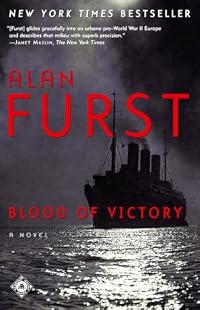
Unlike some of Furst's more recent works (Kingdom of Shadows and Blood of Victory), this work has a fairly linear plot line. Casson is recruited by anti-German Vichy intelligence officers to make contact with the Communist resistance. Dangerous work indeed.
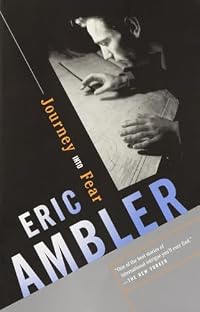
The plot is stronger, but the 'atmosphere' is not as palpable. Still, Alan Furst is a more than worthy successor to Eric Ambler and Graham Greene. show more
Highly recommended for fans of the spy genre or fine writing anywhere show less
Unlike some of Furst's more recent works (Kingdom of Shadows and Blood of Victory), this work has a fairly linear plot line. Casson is recruited by anti-German Vichy intelligence officers to make contact with the Communist resistance. Dangerous work indeed.
The plot is stronger, but the 'atmosphere' is not as palpable. Still, Alan Furst is a more than worthy successor to Eric Ambler and Graham Greene. show more
Highly recommended for fans of the spy genre or fine writing anywhere show less
Members
- Recently Added By
Lists

Books Read in 2023
5,547 works; 145 members
Author Information

26+ Works 16,472 Members
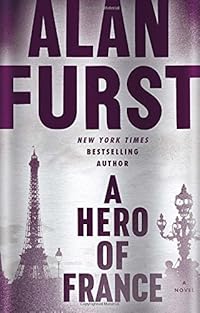
Furst received a B.A. from Oberlin College in 1962 and an M.A. from Penn State in 1967. Before becoming a full-time novelist, Furst worked in advertising and wrote magazine articles, most notably for Esquire, and as a columnist for the International Herald Tribune His early novels (1976-1983) achieved limited success. However, the 1988 publication show more of Night Soldiers inspired by a 1984 trip to Eastern Europe on assignment for Esquire revitalized his career. It was the first of his highly original novels about espionage in Europe before and during the Second World War. Born in New York on February 20, 1941, he lived for long periods in France, especially Paris where he was awarded a Fulbright teaching fellowship. In 2011, the Tulsa Library Trust in Tulsa, Oklahoma selected Furst to receive its Helmerich Award, a literary prize given annually to honor a distinguished author's body of work He also made The New York Times Best Seller List in 2012 with his title The Mission to Paris and Midnight in Europe in 2014. Furst again made the New York Times Bestseller in 2016 with his novel a Hero of France. (Publisher Provided) Alan Furst is an American author of spy novels. He was born in New York City on February 20, 1941, and was raised on the Upper West Side of Manhattan. Furst received a B.A. from Oberlin College in 1962 and an M.A. from Penn State in 1967. His novels are set just prior to and during the Second World War. Titles include: Night Soldiers, Kingdom of Shadows (which won the 2001 Hammett Prize), Blood of Victory, Spies of the Balkans and Mission to Paris. In 2011, the Tulsa Library Trust in Tulsa, Oklahoma, selected Furst to receive its Helmerich Award, a literary prize given annually to honor a distinguished author's body of work. Furst made The New York Times Best Seller List in 2012 with his title The Mission to Paris and Midnight in Europe in 2014. Furst again made the New York Times Bestseller in 2016 with his novel A Hero of France. (Bowker Author Biography) show less

Alan Furst is a LibraryThing Author, an author who lists their personal library on LibraryThing.
Some Editions
Series


Common Knowledge
- Canonical title
- Red Gold
- Original title
- Red Gold
- Original publication date
- 1999
- People/Characters
- Jean Claude Casson (alias Jean Louis Marin); Captain Degrave (Service des Renseignements operative: Vichy); Helene Schreiber; Marie Claire Casson (Casson's ex-wife); Lazenac (Port de la Chappelle thief); Raton (Port de la Chappelle thief) (show all 33); Victor (Port de la Chappelle thief); Madame Fitou (Casson's former landlady); Ivanic (FTP saboteur); Serra (FTP saboteur); Weiss (Service B liaison officer / Franc-Tiereurs et Partisan saboteur); Monsieur and Madame Kerner (Casson's minders); Maurice Renan (FTP saboteur); Isidor Szapera (FTP saboteur, Perezov Unit Commander); Eva Perlemere (Perezov Unit saboteur); Leon Szapera (Isidor's cousin, Perezov Unit saboteur); Natan Kohn (Perezov Unit saboteur); Charne (makeup artist); Alexander Kovar (anarchist militant); Laurette (Helene's friend); Narcise Somet (FTP saboteur); Lila Brasova (NKVD political commisar to the FTP); Juron (NKVD officer); Colonel Vassily Antipin (NKVD officer); Dr Vadine (dentist); SS-Unterscharffuehrer Otto Albers (Gestapo corporal); Brico (FTP saboteur); Capt Vasilis (smuggler); Georges Soutane (Vasilis's lawyer); Natalie (Helene's friend); Madame Oris (Helene's supervisor); Victorine (Helene's co-worker); Sylvie (FTP wireless liaison)
- Important places
- Paris, Île-de-France, France; Brasserie Heininger, Paris, France; Marseille, Bouches-du-Rhône, Provence-Alpes-Côte d'Azur, France
- Important events
- World War II (1939 | 1945); World War II, German Occupation of France (1940 | 1944)
- First words
- Casson woke in a room in a cheap hotel and smoked his last cigarette.
- Quotations
- The rain had started again, it was a different city when it rained. They walked to the Metro. That day, Gestapo troops had begun to burn the synagogues of Paris; brown smoke drifted across the gray afternoon, sometimes visibl... (show all)e above the rooftops. [41]
"Society must have laws," his lawyer friend Arnaud used to say, "and society must have convenient means to evade them." [46]
"I've read it can be sixty below zero in December."
"And colder. The Wehrmacht will have to heat their machine-guns barrels over a fire before they can use them." Kovar smiled. "Only the Russians could get themselves into ... (show all)a position, in 1941, where sabers and horses really matter."
"How do you know all this?" Casson asked.
"Oh, it's talk," Kovar said. "But it's good talk." [81]
The inspector returned to his desk, took the piece of paper from Casson, leaned forward, and said, "Some personal advice. You should keep in mind that these people in Vichy have to walk a certain line. What they are doing wit... (show all)h you is all well and good, I don't know that it matters, but it might. However, the rest of the time, they are part of the government. Which means doing what Petain and Laval and their friends think they ought to be doing -- working against the enemies of France. That's a big category, a lot fits in it. If the war ended tomorrow, and Britain won, they'd say, 'Look what we did, we were on the right side.' On the other hand, if the war ends tomorrow and Germany wins, God forbid, they could say the same thing."
"All right," Casson said after a moment. "I understand."
"I hope you do. Maybe you don't like it, but that's the way life is. Not that we're any better. When the Germans took over, the prefecture went back to work, just like it always had. The files were all in place, and if a call came and somebody said, 'Send over Pierre's dossier' in a German accent, there went Pierre. Comprends?"
"Yes."
Still a patriot?"
"Trying," Casson said.
The inspector smiled. [108]
"We have a lot to offer, Casson. Help with field operations, intelligence -- but they have to ask. From the first contact we felt that no matter how hard we've fought against each other in the past, we now have a common enemy... (show all), so it's time for us to be allies."
"War changes everything."
Weiss smiled. "It should, logically it should. But the world doesn't run on logic, it runs on the seven deadly sins and the weather. Even so, we have to try to do what we can." [195] - Last words
- (Click to show. Warning: May contain spoilers.)He woke early the next morning and opened the window, watching the night fade from the Paris sky. The rain had stopped, a few black puddles in the cobbled square, and the air smelled like spring. He heard someone in the corridor, then a light knock at the door.
"Yes?" he said.
Classifications
- Genres
- Fiction and Literature, General Fiction, Historical Fiction, Mystery
- DDC/MDS
- 813.54 — Literature & rhetoric American literature in English American fiction in English 1900-1999 1945-1999
- LCC
- PS3556 .U76 .R43 — Language and Literature American literature American literature Individual authors 1961-
- BISAC
Statistics
- Members
- 877
- Popularity
- 30,775
- Reviews
- 13
- Rating
- (3.83)
- Languages
- English
- Media
- Paper, Audiobook, Ebook
- ISBNs
- 19
- ASINs
- 5