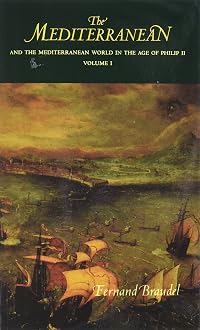
The Mediterranean and the Mediterranean World in the Age of Philip II, Vol. 1
by Fernand Braudel
O Mediterrâneo (Collections and Selections — 1), The Mediterranean and the Mediterranean World in the Age of Philip II (1)
On This Page
Description
Geographical, environmental, and economic study of the Mediterranean lands with emphasis on period 1550-1600 A.D.Tags
Recommendations
















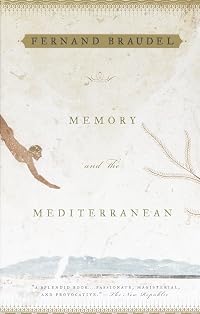
















Member Recommendations
Member Reviews
From tucked away mountain hamlets to bustling commercial bazaars, from humble mules pulling carts in the Spanish countryside to the billowing sails of galleons arriving at the docks of Venice, the first volume of Fernand Braudel's The Mediterranean and the Mediterranean World in the Age of Philip II takes the reader on a sweeping tour of the Mediterranean during the latter half of the 16th century, a tour encompassing everything from physical geography to rural agriculture to the intricacies of state finance in a work of historical scholarship remarkable both for its vast scope and precise detail. Braudel's account is not one of wars fought and treaties signed but of fields ploughed and goods exchanged, concerned not with dynastic lines show more and papal decrees but with uncovering the basic structures and patterns underpinning life in the 16th century Mediterranean world. This is history from the ground up, and by exploring overlooked questions and elucidating obscure but vital themes it succeeds in revealing the merits of reversing the traditional focus on political events in favor of a subtler view which emphasizes long-term social and economic change.
Before filling in this portrait of the Mediterranean, Braudel begins by defining the parameters of his study, the geographical and temporal constraints within which he will focus his work. In answering the question “what is the Mediterranean?” he displays a keen awareness of the different lenses with which one can view the region – for the geographer the Mediterranean may reach from “the northern limit of the olive tree to the northern limit of the palm tree,” while for one who examines the trade links of the sea the Mediterranean may stretch much further, into the cold forests of Northern Europe and through the vast emptiness of the Sahara. Thus to Braudel the Mediterranean is a world of many faces, a region which one can break down into smaller portions and subsections or extend far beyond its traditional limits. Not one to shirk an academic challenge, Braudel attempts to accommodate and balance all of these perspectives. As for chronological constraints, Braudel uses the reign of Philip II not as a strict limit to his narrative but rather as a center upon which he gradually focuses over the course of the book; in his analysis of the role of the environment in part one he often references information from the late 15th to the early 17th century, but by the end of his examination of the regional economy in part two he has focused his attention more narrowly on the period from 1556 to 1598. Thus when establishing boundaries for his research Braudel demonstrates an awareness of the strictures an excessively limited focus would place on his account of long-term historical forces while managing to avoid producing a narrative so wide-ranging as to lose its cohesion.
In organizing the first volume of his work Braudel exhibits the same careful and measured attitude with which he approaches the problem of defining the limits of his discussion. His narrative progresses gradually but inexorably forward, interested not in the chronological progression of events but rather in the patterns and structures of life in the Mediterranean. To facilitate his analysis, Braudel chooses to begin with the “permanent, slow-moving, or recurrent features of Mediterranean life” (pg. 353), moving towards discussing more transient and rapidly changing historical rhythms over the course of the book. Part one, which occupies roughly the first half of his narrative, is concerned primarily with the relationship between man and his environment, encompassing fields generally considered beyond the purview of the historian, such as geography, climate, and biology, to arrive at an understanding of where men lived and how they lived there. In part two, what Braudel calls a “social history,” he explores in great detail the economy of the Mediterranean, a field which allows him to narrow his focus to within the fifty year period from which he derives the title of his book. In this gradual focusing of his lens we see the carefully crafted nature of the study, the way in which the parameters of research established in the first pages complement the way in which Braudel organizes his work as a progression from broad to narrow themes, mirrored by the slow narrowing of the time period studied.
Of course, even the most well-organized and carefully structured book requires detailed and painstaking scholarship to justify reading. Fortunately for the reader the data and analysis contained within is simultaneously abundant, well-chosen, and tightly integrated. Braudel possesses many of the traits most important in a historian, including a deeply inquisitive nature (he appears to have ransacked every archive in the Mediterranean during his research), an almost maniacal attention to detail, and a healthy attitude of suspicion towards primary source material. This is the work of a master scholar. Using hundreds of primary and secondary sources, everything from government budget records to listings of ships cargoes to Genoese bankers books alongside academic studies written not only by historians but by geographers, geologists, and economists, Braudel makes no statement not founded upon detailed, in-depth research. In those places where he mistrusts his data or where he finds the extant records inadequate, such as during his attempt to reconstruct the basic boundaries of the Mediterranean economy during the 16th century, he does not shy away from informing the reader, demonstrating an evenhandedness which only serves to further demonstrate his intellectual honesty and passion for accurate research.
Putting his research to work, Braudel succeeds in his attempt to produce a portrait of the Mediterranean at once wide-ranging and thorough through his ability to tie facts, figures, and historical minutiae to the broad economic and social themes which run through the course of the book, a connecting of details to generalities so artfully done that it belies the difficulty of convincingly relating the two. Indeed the casual brilliance with which Braudel uses information, such as the difference in price changes over time in the cities of Strasbourg and Valencia or the locations of palm groves in the Sahara, to derive deep insight into the nature of rising prices in 16th century Europe or the way in which men mastered their environment is nothing less than extraordinary. In some cases the sheer quantity and variety of data he brings before the reader seems overwhelming; luckily for those not acclimated to masses of quantitative data Braudel employs graphs, charts, and illustrations (over sixty in total) throughout the text to great effect, thereby simplifying and streamlining his details to ensure greater understanding. Here is a scholar concerned not only with accumulating facts upon which to base his theories, but with communicating these facts clearly and effectively to readers, allowing them to closely observe the process by which he reached his conclusions. Assisted by a prose style at once erudite and supremely readable, Braudel largely succeeds in this endeavor, and The Mediterranean and the Mediterranean World in the Age of Philip II combines effectively both scholarship and readability, a rare achievement for an academic work, particularly one of such ambition.
Ultimately, the lasting impact of the first volume of Braudel's twelve-hundred plus page masterwork is to force a reassessment of the lens through which we study history. By exploring in great depth relationships often overlooked by historians, particularly the role of geography and the environment in determining historical patterns, Braudel demonstrates the importance of an awareness not only of political events but of less obvious but often more far-reaching themes. He writes on page 101 that “history usually only concerns itself with the crises and high points of these slow movements. In fact, these points are only reached after immense preparation and are followed by interminable consequences.” If most historians usually occupy themselves with these “crises and high points,” the volcanic explosions which flash briefly but brightly throughout history, then Braudel chooses a different route, analyzing the long-term processes, the churning and bubbling historical changes which slowly heat-up and erupt in the great events of the past, and by doing so he demonstrates the importance of slow, almost imperceptible transformations in determining the path taken by time. That he does this in a work of exemplary scholarship and well-organized and well-crafted prose only further underlines the greatness of his accomplishment. show less
Before filling in this portrait of the Mediterranean, Braudel begins by defining the parameters of his study, the geographical and temporal constraints within which he will focus his work. In answering the question “what is the Mediterranean?” he displays a keen awareness of the different lenses with which one can view the region – for the geographer the Mediterranean may reach from “the northern limit of the olive tree to the northern limit of the palm tree,” while for one who examines the trade links of the sea the Mediterranean may stretch much further, into the cold forests of Northern Europe and through the vast emptiness of the Sahara. Thus to Braudel the Mediterranean is a world of many faces, a region which one can break down into smaller portions and subsections or extend far beyond its traditional limits. Not one to shirk an academic challenge, Braudel attempts to accommodate and balance all of these perspectives. As for chronological constraints, Braudel uses the reign of Philip II not as a strict limit to his narrative but rather as a center upon which he gradually focuses over the course of the book; in his analysis of the role of the environment in part one he often references information from the late 15th to the early 17th century, but by the end of his examination of the regional economy in part two he has focused his attention more narrowly on the period from 1556 to 1598. Thus when establishing boundaries for his research Braudel demonstrates an awareness of the strictures an excessively limited focus would place on his account of long-term historical forces while managing to avoid producing a narrative so wide-ranging as to lose its cohesion.
In organizing the first volume of his work Braudel exhibits the same careful and measured attitude with which he approaches the problem of defining the limits of his discussion. His narrative progresses gradually but inexorably forward, interested not in the chronological progression of events but rather in the patterns and structures of life in the Mediterranean. To facilitate his analysis, Braudel chooses to begin with the “permanent, slow-moving, or recurrent features of Mediterranean life” (pg. 353), moving towards discussing more transient and rapidly changing historical rhythms over the course of the book. Part one, which occupies roughly the first half of his narrative, is concerned primarily with the relationship between man and his environment, encompassing fields generally considered beyond the purview of the historian, such as geography, climate, and biology, to arrive at an understanding of where men lived and how they lived there. In part two, what Braudel calls a “social history,” he explores in great detail the economy of the Mediterranean, a field which allows him to narrow his focus to within the fifty year period from which he derives the title of his book. In this gradual focusing of his lens we see the carefully crafted nature of the study, the way in which the parameters of research established in the first pages complement the way in which Braudel organizes his work as a progression from broad to narrow themes, mirrored by the slow narrowing of the time period studied.
Of course, even the most well-organized and carefully structured book requires detailed and painstaking scholarship to justify reading. Fortunately for the reader the data and analysis contained within is simultaneously abundant, well-chosen, and tightly integrated. Braudel possesses many of the traits most important in a historian, including a deeply inquisitive nature (he appears to have ransacked every archive in the Mediterranean during his research), an almost maniacal attention to detail, and a healthy attitude of suspicion towards primary source material. This is the work of a master scholar. Using hundreds of primary and secondary sources, everything from government budget records to listings of ships cargoes to Genoese bankers books alongside academic studies written not only by historians but by geographers, geologists, and economists, Braudel makes no statement not founded upon detailed, in-depth research. In those places where he mistrusts his data or where he finds the extant records inadequate, such as during his attempt to reconstruct the basic boundaries of the Mediterranean economy during the 16th century, he does not shy away from informing the reader, demonstrating an evenhandedness which only serves to further demonstrate his intellectual honesty and passion for accurate research.
Putting his research to work, Braudel succeeds in his attempt to produce a portrait of the Mediterranean at once wide-ranging and thorough through his ability to tie facts, figures, and historical minutiae to the broad economic and social themes which run through the course of the book, a connecting of details to generalities so artfully done that it belies the difficulty of convincingly relating the two. Indeed the casual brilliance with which Braudel uses information, such as the difference in price changes over time in the cities of Strasbourg and Valencia or the locations of palm groves in the Sahara, to derive deep insight into the nature of rising prices in 16th century Europe or the way in which men mastered their environment is nothing less than extraordinary. In some cases the sheer quantity and variety of data he brings before the reader seems overwhelming; luckily for those not acclimated to masses of quantitative data Braudel employs graphs, charts, and illustrations (over sixty in total) throughout the text to great effect, thereby simplifying and streamlining his details to ensure greater understanding. Here is a scholar concerned not only with accumulating facts upon which to base his theories, but with communicating these facts clearly and effectively to readers, allowing them to closely observe the process by which he reached his conclusions. Assisted by a prose style at once erudite and supremely readable, Braudel largely succeeds in this endeavor, and The Mediterranean and the Mediterranean World in the Age of Philip II combines effectively both scholarship and readability, a rare achievement for an academic work, particularly one of such ambition.
Ultimately, the lasting impact of the first volume of Braudel's twelve-hundred plus page masterwork is to force a reassessment of the lens through which we study history. By exploring in great depth relationships often overlooked by historians, particularly the role of geography and the environment in determining historical patterns, Braudel demonstrates the importance of an awareness not only of political events but of less obvious but often more far-reaching themes. He writes on page 101 that “history usually only concerns itself with the crises and high points of these slow movements. In fact, these points are only reached after immense preparation and are followed by interminable consequences.” If most historians usually occupy themselves with these “crises and high points,” the volcanic explosions which flash briefly but brightly throughout history, then Braudel chooses a different route, analyzing the long-term processes, the churning and bubbling historical changes which slowly heat-up and erupt in the great events of the past, and by doing so he demonstrates the importance of slow, almost imperceptible transformations in determining the path taken by time. That he does this in a work of exemplary scholarship and well-organized and well-crafted prose only further underlines the greatness of his accomplishment. show less
The period the title'd suggest covers more or less half, maybe three quarters, of a century, but Braudel is known for what was dubbed the 'longue durée' philosophy of history. What that means in practice is that, as far as Braudel's concerned, the history of the sixteenth century necessarily begins with the geological formation of the Mediterranean and accumulates from there. Its sheer exhaustiveness and the fact that the first volume concentrates mainly on economics will probably put most people off, but, regardless of its narrow appeal, it's an incredible piece of work. The sheer density of research in its 700 small-print pages makes it feel like a digest of every academic work ever written on the subject. The downside is that the show more kind of endless fascination with the mechanics of history that it takes to produce a book like this means you'll become far more informed on stuff like grain price fluctuations that any non-specialist ever needs to be. You'll have to decide for yourself if its worth it - one of the greatest books I couldn't recommend in good faith to anyone. show less
I've given this one star rating not because of content, but because of the writing style. I simply got tired of wading through the verbiage. Now, I have taken into account the fact that the book is a translation from the French. Here are my complaints: long, complex sentences with embedded asides and rabbit chasing; a "full of himself" narrative voice that assumes he is always right; providing lots of facts, but no coherent narrative -- at least, none that I could discern. It seemed I was getting his cognitive dump about everything he knows about the subject, complete with scholarly contention and debate. If I were a professional historian, this would be a must read, but I would scan it for what I might need at the moment. I quit show more reading, something I rarely do after I've started a book.
The one thing I did like about the book was that the publisher used footnotes rather than endnotes. But I was at a loss to discern why some information was in the main text and other was in the footnotes.
It's too bad, too, for his subject is of great interest. show less
The one thing I did like about the book was that the publisher used footnotes rather than endnotes. But I was at a loss to discern why some information was in the main text and other was in the footnotes.
It's too bad, too, for his subject is of great interest. show less
A classic (which obviously I never had time to read when I was actually at university). Nor have I read the first volume. Precisely because of its "total" approach to history probably not one for newcomers to the period.
The first section on economic and social background in Braudel's long 16th Century is interesting but extremely slow. The second half of the book, a tale of conventional history, is far more compelling as it charts the Ottoman and Hapsburg struggle for the Mediterranean, and the relative importance of that struggle among the many other ssues they had to contend with. Even this part of the text is history by detail, but the image of the seemingly divided cultures of the Mediterranean, with in fact many commonalities is a show more fascinating way to look at a fascinating period.
Not an easy read however. show less
The first section on economic and social background in Braudel's long 16th Century is interesting but extremely slow. The second half of the book, a tale of conventional history, is far more compelling as it charts the Ottoman and Hapsburg struggle for the Mediterranean, and the relative importance of that struggle among the many other ssues they had to contend with. Even this part of the text is history by detail, but the image of the seemingly divided cultures of the Mediterranean, with in fact many commonalities is a show more fascinating way to look at a fascinating period.
Not an easy read however. show less
Braudel is really excited. Mostly about the Mediterranean.
paperback
Members
- Recently Added By
Lists

501 Must-Read Books
529 works; 72 members

r/History Recommended Reading List
603 works; 12 members

r/AskHistorians' Recommended Books
1,068 works; 18 members
Author Information

180+ Works 11,152 Members
Fernan Braudel was the author of several acclaimed histories, including "A History of Civilizations", "On History", "The Structures of Everyday Life", & "The Wheels of Commerce". He died in 1985. (Bowker Author Biography) Fernand Braudel, 1902 - 1986 French historian Fernand Braudel was born in 1902. He studied under Lucien Febvre and was a show more founder of the Annales School of Historiography. He went to Brazil in 1935 as one of the young French scholars who founded the University of Sao Paulo. He was a German prisoner of war during World War II. After the war, he was a professor at the College de France in Paris from 1949-1972, editor of the journal Annales, a founder of the Maison des Sciences de l'Homme in 1963, and president of the VIth Section of the Ecole des Hautes Etudes from 1952-1956. While Braudel was a prisoner of war, he wrote "The Mediterranean and the Mediterranean World in the Age of Philippe II" (1949). The book shows the environment in which the peoples of the Mediterranean Basin used to live, from the mountains and plains, the sea and rivers to the roads and towns. He combines the rhythm of "geographic time" with the rapid rhythm of "individual time" and the movement of the people and their ideas. The subject matter of history changes because the time frame of history changes. The short-lived dramatic moments are replaced by the lengthy rhythms of material life. Braudel studied the history of the development of capitalism, the flows of communication and the money it induces, the shift in borders it results in and even the changes in the structure of the State it determines. Braudel's other works are "Ecrits sur l'histoire" (Writings on History, 1969), "La Dynamique du capitalisme" (Dynamics of Capitalism, 1985), and "Identity of France" (1986). The Fernand Braudel Institute of World Economics was created in 1987 by a group of economists, businessmen, journalists and civil servants that were concerned with the process of economic and social disintegration caused by decades of chronic inflation. (Bowker Author Biography) show less
Some Editions
Series

O Mediterrâneo
2 works (Collections and Selections — 1)

The Mediterranean and the Mediterranean World in the Age of Philip II
3 works (1)
Belongs to Publisher Series
Work Relationships
Common Knowledge
- Canonical title*
- Civilta e imperi del Mediterraneo nell'eta di Filippo, v. 2.1
- Original title
- La Méditerranée et le monde méditerranéen à l'époque de Philippe II. INTEGRAL. Tome 1/3 : La part du milieu
- Original publication date
- 1985
- People/Characters
- Philip II, King of Spain
- Important places
- Mediterranean Sea; Istanbul, Turkey; Rome, Italy
- Important events*
- Medelhavet
- Disambiguation notice
- Volume 1 of three. Do not combine with entire work or Volume 1 of two.
*Some information comes from Common Knowledge in other languages. Click "Edit" for more information.
Classifications
- Genres
- History, Nonfiction, General Nonfiction
- DDC/MDS
- 909.0982205 — History & geography History World history Other Geographic Classifications Other Classifications Ocean And Sea Basins Mediterranean
- LCC
- DE80 .B7713 — History of Europe, Asia, Africa and Oceania Greco-Roman World History of the Greco-Roman world History
- BISAC
Statistics
- Members
- 955
- Popularity
- 27,895
- Reviews
- 7
- Rating
- (4.15)
- Languages
- 6 — Dutch, English, French, Italian, Portuguese, Spanish
- Media
- Paper, Ebook
- ISBNs
- 16
- ASINs
- 11