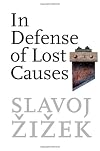
In Defense of Lost Causes
by Slavoj Žižek
On This Page
Description
Is global emancipation a lost cause? Are universal values outdated relics of an earlier age? In the postmodern world, ideologies of all kinds have been cast in doubt. In this combative new work, renowned theorist Slavoj Žižek takes on the reigning postmodern agenda with a manifesto for several 'lost causes'.Tags
Recommendations











































Member Reviews
“Ideology is strong exactly because it is no longer experienced as ideology… we feel free because we lack the very language to articulate our unfreedom.”
In Defense of Lost causes is a difficult and disparate book. Wait, strike that, it is a rolling expanse of intriguing philosophical situations.Žižek isn't playing a long game as much as gesticulating at a number of possibilities while distinguishing between the smooth and the striated. Such appears to be part and parcel for his oversized Ideas books. In Defense isn't an act of revisionism. Instead it is a backward glance. The book strains from History's burden at time at when "torture was normalized, presented as something acceptable." It is such and adjustment in ethics which show more prompts this tally of revolution's failures, perhaps to discern a footpath to avoid our present dread. Switching gears from Heidegger and the Nazis to Foucault and the Iranian Revolution, the author arrives at a rationale for how Stalinism saved the world. Without smiling, the case is made that Lenninst/Trotskyite either/or would've led to a dehumanized mechanistic Soviet reality. It was Stalin in the form of the Dictatorship of the Proletariat and the purges which restored a human element to the Soviet Union. If the Show Trials didn't require confessions and thus maintain a collective empathy/complicity of citizenship then fast forwarding to the Cuban Missile Crisis any negotiation with the Americans would've been impossible. That's quite a bite to chew upon. That said, it does engender thought and a generous begging of questions. The book ends with a nod to the concept of divine violence and its allowances. This is hardly convincing in an airtight manner but it does provoke. show less
In Defense of Lost causes is a difficult and disparate book. Wait, strike that, it is a rolling expanse of intriguing philosophical situations.Žižek isn't playing a long game as much as gesticulating at a number of possibilities while distinguishing between the smooth and the striated. Such appears to be part and parcel for his oversized Ideas books. In Defense isn't an act of revisionism. Instead it is a backward glance. The book strains from History's burden at time at when "torture was normalized, presented as something acceptable." It is such and adjustment in ethics which show more prompts this tally of revolution's failures, perhaps to discern a footpath to avoid our present dread. Switching gears from Heidegger and the Nazis to Foucault and the Iranian Revolution, the author arrives at a rationale for how Stalinism saved the world. Without smiling, the case is made that Lenninst/Trotskyite either/or would've led to a dehumanized mechanistic Soviet reality. It was Stalin in the form of the Dictatorship of the Proletariat and the purges which restored a human element to the Soviet Union. If the Show Trials didn't require confessions and thus maintain a collective empathy/complicity of citizenship then fast forwarding to the Cuban Missile Crisis any negotiation with the Americans would've been impossible. That's quite a bite to chew upon. That said, it does engender thought and a generous begging of questions. The book ends with a nod to the concept of divine violence and its allowances. This is hardly convincing in an airtight manner but it does provoke. show less
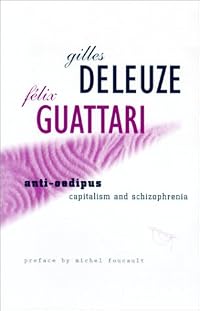
If ever there was a great example of Deleuze and Guattari's conception of postmodernism as a rhizome, this is it. Ostensibly, the book aims to show how "lost causes" like Nazism, Leninism, Stalinism, and so on provided positive elements in the revolutions of history. Žižek blends high and low cultures effortlessly to create a confusing patchwork where everyone from fundamentalists to liberals are both right and wrong in everything they say and do--hence, the rhizomatic conception of our postmodern age, wherein there is no center. If, like me, you've heard of Žižek and perhaps seen the documentary on Netflix (THE PERVERT'S GUIDE TO IDEOLOGY) and are looking to understand him further, this is probably not the place the start. Still, I show more will say that I took away a few nice little quotes, although a handful aren't original to Žižek. For e.g. "An enemy is someone whose story we have not heard." show less
Well. This is definitely something.
Zizek is one of the more baffling modern philosophers I've read. It's tough to follow his mental gymnastics. I find myself agreeing totally with him, and then blanching at what he says next. Some of his topics are utterly bizarre - an attempted defense of STALINISM? Seriously? I can't imagine the double-think possible there, if I didn't read it with my own eyes.
Zizek is hardly coherent. But he is confounding and challenging, and damn if he isn't interesting, though.
Zizek is one of the more baffling modern philosophers I've read. It's tough to follow his mental gymnastics. I find myself agreeing totally with him, and then blanching at what he says next. Some of his topics are utterly bizarre - an attempted defense of STALINISM? Seriously? I can't imagine the double-think possible there, if I didn't read it with my own eyes.
Zizek is hardly coherent. But he is confounding and challenging, and damn if he isn't interesting, though.
One of the chunkier works Zizek has produced, but well worth the effort of reading it. A intense political exploration that stands against most of the values we hold so dear today via Kafka, Spielberg, Mel Gibson, Agamben, Laclau and Mouffe, Badiou, Lenin, Hitler, Heidegger and Deep Impact. Always thought provoking, always interesting, always alarming.
I think the time has come to give up on 'In Defense of Lost Causes'. Having worked my way through [b:Living in the End Times|7324538|Living in the End Times|Slavoj Žižek|https://images.gr-assets.com/books/1310044208s/7324538.jpg|8913774] and [b:Trouble in Paradise: From the End of History to the End of Capitalism|23265831|Trouble in Paradise From the End of History to the End of Capitalism|Slavoj Žižek|https://images.gr-assets.com/books/1411500347s/23265831.jpg|42806779], that's more than enough Žižek for the moment. Instead I will read less obscurantist books of theory and make do with smaller doses of Žižek, for example this Guardian piece in which he claims Donald Trump is really a centrist liberal.
As to why I read 120-odd show more pages then gave up on it for three years, I borrowed it from the local library and delved that far before it was due back. Then the library retired its copy so I couldn't borrow it again. I suspect this was because the cover was damaged, the hardback binding coming away from the pages. It looked an awful lot like someone had thrown the book forcefully at a wall. Not me, I hasten to add, as I would never do that. But anyone who has read one of Žižek's books can surely understand the impulse. show less
As to why I read 120-odd show more pages then gave up on it for three years, I borrowed it from the local library and delved that far before it was due back. Then the library retired its copy so I couldn't borrow it again. I suspect this was because the cover was damaged, the hardback binding coming away from the pages. It looked an awful lot like someone had thrown the book forcefully at a wall. Not me, I hasten to add, as I would never do that. But anyone who has read one of Žižek's books can surely understand the impulse. show less
Ratings
Members
- Recently Added By
Author Information

323+ Works 17,958 Members
Slavoj Zizek is a Hegelian philosopher, Lacanian psychoanalyst, and political activist. He is international director of the Birkbeck Institute for the Humanities, and Global Distinguished Professor of German at New York University. He is the author of numerous books on dialectical materialism, as well as critique of ideology and art, including show more Event, and Trouble in Paradise, both published by Melville House. show less
Awards and Honors
Distinctions
Series
Belongs to Publisher Series
Work Relationships
Common Knowledge
- Canonical title*
- In difesa delle cause perse: materiali per la rivoluzione globale
- Original title
- In Defense of Lost Causes
- Original publication date
- 2008
- Disambiguation notice
- Auf verlorenem Posten (Suhrkamp) and Die bösen Geister des himmlischen Bereichs: Der linke Kampf um das 21. Jahrhundert are both partial editions (teilausgabe) of In Defense of Lost Causes. They ... (show all)should not be combined with each other nor with the full work.
*Some information comes from Common Knowledge in other languages. Click "Edit" for more information.
Classifications
- Genres
- Philosophy, Nonfiction, Politics and Government, General Nonfiction, Literature Studies and Criticism
- DDC/MDS
- 199.4973 — Philosophy and Psychology Modern western philosophy Philosophy in other geographic areas Europe Other European Countries Bulgaria and former Yugoslavia (Bosnia and Herzegovina ∙ Croatia ∙ Kosovo ∙ Montenegro ∙ Macedonia ∙ Serbia ∙ Slovenia) Slovenia
- LCC
- B831.2 .Z59 — Philosophy, Psychology and Religion Philosophy (General) By period Modern Special topics and schools of philosophy
- BISAC
Statistics
- Members
- 568
- Popularity
- 51,771
- Reviews
- 5
- Rating
- (3.77)
- Languages
- 7 — English, French, Italian, Polish, Portuguese, Spanish, Turkish
- Media
- Paper, Ebook
- ISBNs
- 14
- ASINs
- 4