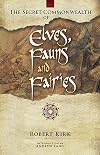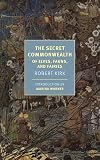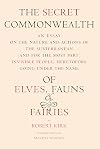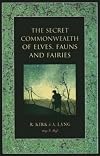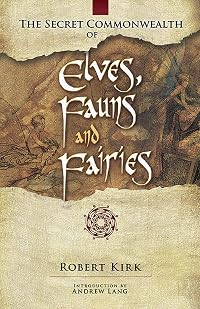
The Secret Commonwealth of Elves, Fauns, and Fairies
by Robert Kirk
On This Page
Description
In the late seventeenth century, a Scottish minister went looking for supernatural creatures of "a middle nature betwixt man and angel." Robert Kirk roamed the Highlands, talking to his parishioners and other country folk about their encounters with fairies, wraiths, elves, doppelgangers, and other agents of the spirit world. Magic was a part of everyday life for Kirk and his fellow Highlanders, and this remarkable book offers rare glimpses into their enchanted realm. Left in manuscript form show more upon the author's death in 1692, this volume was first published in 1815 at the behest of Sir Walter Scott. In 1893, the distinguished folklorist Andrew Lang re-edited the work. Lang's introduction to Kirk's extraordinary blend of science, religion, and superstition is included in this edition. For many years, The Secret Commonwealth was hard to find-available, if at all, only in scholarly editions. Academicians as well as lovers of myths and legends will prize this authoritative but inexpensive edition. show lessTags
Recommendations











Member Recommendations
Member Reviews
One of the most unique books I've read in quite some time is The Secret Commonwealth, a singular treatise written by Scotch minister Robert Kirk (~1644-1692) around 1691. This essay existed only in manuscript until it was published with the support of Sir Walter Scott in 1815 as
An essay of the nature and actions of the subterranean (and for the most part,) invisible people, heretofoir going under the name of elves, faunes, and fairies, or the lyke among the low-country Scots, as they are described by those who have the second sight, and now to occasion further inquiry, collected and compared, by a circumspect inquirer residing among the Scottish-Irish in Scotland. Another edition appeared in 1893 as The Secret Commonwealth of Elves, show more Fauns, and Fairies; this version included an introduction and notes by Andrew Lang (and is available digitally here).
A new edition, produced by the New York Review of Books, was published in 2007 with an introduction by Marina Warner. Warner marvels at the work and its creator, noting that Kirk's "ministry, his learning, and his temperament bore him on the current in a different direction from most of his contemporaries: towards a benign and tolerant delight in the breadth of human understanding, imaginings, and possibility. Here was a minister of the Kirk who threw his arms wide to enfold the beliefs of his parishioners, who collected the lore of the people, who was fascinated by their concept of faery. He did not hold with stringent diagnoses of heresy or with rooting it out, but treated popular custom and opinion - and superstition - as worthy of intellectual interest and genuine respect" (pp. ix-x).
Indeed, Kirk's little book (it runs to about seventy pages) is a compilation of local Scots folklore regarding the society of faery. The subtitle to Kirk's manuscript reads "A Treatise displaying the chief curiosities among the people of Scotland as they are in use to this day; being for the most part singular to that nation; a subject not heretofore discoursed of by any of our writers; done for the satisfaction of his friends by a modest inquirer, living among the Scottish-Irish." It is very difficult to tell in what capacity Kirk is passing along these "curiosities," but whether he viewed himself as anthropological reporter, faery evangelist or something else entirely, Kirk's essay is a remarkable scholarly treatment of faery and its inhabitants.
The fairies (which Kirk says are also called siths or sluagh maithe - Gaelic for 'good people') "are said to be of a middle nature betwixt man and angel ... of intelligent studious spirits, and light, changeable bodies (like those called astral) somewhat of the nature of a condensed cloud and best seen in twilight." Some, called brownies, "enter houses after all are at rest and set the kitchens in order, cleansing all the vessels." They live normally in underground cavities, moving every quarter-year to new dwellings. "They are distributed in tribes and orders and have children, nurses, marriages, deaths and burials in appearance even as we," Kirk writes, "(unless they do so for a mock-show or to prognosticate some such thing to be among us)."
Kirk goes on to describe various customs and habits of the fairies: "Their apparel and speech is like that of the people and country under which they live ... they speak but little and and that by way of whistling - clear, not rough." He reports that they live "much longer than we yet die at last, ... 'tis one of their tenets that nothing perisheth, but (as the Sun and year) everything goes in a circle ... and is renewed and refreshed in its revolutions ..." Kirk continues "They are said to have aristocratical rulers and laws, but no discernible religion, love or devotion towards God ... they disappear whenever they hear his name invoked ..."
Some human men (and only rarely women, Kirk suggests) are invested with what Kirk terms "second sight" - the ability to see the fairies. These folk dislike traveling when the fairies shift houses, and report seeing them often at funeral banquets and having great supernatural battles with fairy warriors. Kirk offers many of their remedies for fairy mischief, and recounts tales of "women yet alive who tell they were taken away when in child-bed to nurse fairy children." He also reports the many differing views these men offer about the very nature of the fairy people: are they "departed souls attending awhile in this inferior state," or "only exuvious fumes of the man approaching death, exhaled and congealed into a various likeness"? Or are they instead, as "not a few avouch," "a numerous people by themselves, having their own politics"?
Kirk is careful to distinguish those with second sight from witches, noting "this sight falling to some persons by accident and it being connatural to others from their birth, the derivation of it cannot always be wicked." Pressed to explain the diminishing number of fairy sightings in his own day, Kirk explained that as religion generally and Christianity particularly became more common, our subterranean neighbors began to keep more to themselves ... this is why, he suggests, they have been so rarely in evidence recently.
Kirk devotes the middle portion of his essay to accounts of seers and their predictions, then offers a lengthy justification "to show that [such activity] is not unsuitable to reason nor the Holy Scriptures." He concludes this section this way: "Therefore every age hath some secret left for its discovery, and who knows but this intercourse betwixt the two kinds of rational inhabitants of the same earth may be not only believed shortly but as freely entertained and as well known as now the art of navigation, printing, gunning, riding on saddles with stirrups, and the discoveries of microscopes which were sometimes as great a wonder and as hard to be believed." Who knows indeed.
For fans of the fictions of Susanna Clarke, Neil Gaiman and other writers of modern fairy tales, Robert Kirk's Secret Commonwealth will surely not disappoint.
http://philobiblos.blogspot.com/2008/02/book-review-secret-commonwealth.html show less
An essay of the nature and actions of the subterranean (and for the most part,) invisible people, heretofoir going under the name of elves, faunes, and fairies, or the lyke among the low-country Scots, as they are described by those who have the second sight, and now to occasion further inquiry, collected and compared, by a circumspect inquirer residing among the Scottish-Irish in Scotland. Another edition appeared in 1893 as The Secret Commonwealth of Elves, show more Fauns, and Fairies; this version included an introduction and notes by Andrew Lang (and is available digitally here).
A new edition, produced by the New York Review of Books, was published in 2007 with an introduction by Marina Warner. Warner marvels at the work and its creator, noting that Kirk's "ministry, his learning, and his temperament bore him on the current in a different direction from most of his contemporaries: towards a benign and tolerant delight in the breadth of human understanding, imaginings, and possibility. Here was a minister of the Kirk who threw his arms wide to enfold the beliefs of his parishioners, who collected the lore of the people, who was fascinated by their concept of faery. He did not hold with stringent diagnoses of heresy or with rooting it out, but treated popular custom and opinion - and superstition - as worthy of intellectual interest and genuine respect" (pp. ix-x).
Indeed, Kirk's little book (it runs to about seventy pages) is a compilation of local Scots folklore regarding the society of faery. The subtitle to Kirk's manuscript reads "A Treatise displaying the chief curiosities among the people of Scotland as they are in use to this day; being for the most part singular to that nation; a subject not heretofore discoursed of by any of our writers; done for the satisfaction of his friends by a modest inquirer, living among the Scottish-Irish." It is very difficult to tell in what capacity Kirk is passing along these "curiosities," but whether he viewed himself as anthropological reporter, faery evangelist or something else entirely, Kirk's essay is a remarkable scholarly treatment of faery and its inhabitants.
The fairies (which Kirk says are also called siths or sluagh maithe - Gaelic for 'good people') "are said to be of a middle nature betwixt man and angel ... of intelligent studious spirits, and light, changeable bodies (like those called astral) somewhat of the nature of a condensed cloud and best seen in twilight." Some, called brownies, "enter houses after all are at rest and set the kitchens in order, cleansing all the vessels." They live normally in underground cavities, moving every quarter-year to new dwellings. "They are distributed in tribes and orders and have children, nurses, marriages, deaths and burials in appearance even as we," Kirk writes, "(unless they do so for a mock-show or to prognosticate some such thing to be among us)."
Kirk goes on to describe various customs and habits of the fairies: "Their apparel and speech is like that of the people and country under which they live ... they speak but little and and that by way of whistling - clear, not rough." He reports that they live "much longer than we yet die at last, ... 'tis one of their tenets that nothing perisheth, but (as the Sun and year) everything goes in a circle ... and is renewed and refreshed in its revolutions ..." Kirk continues "They are said to have aristocratical rulers and laws, but no discernible religion, love or devotion towards God ... they disappear whenever they hear his name invoked ..."
Some human men (and only rarely women, Kirk suggests) are invested with what Kirk terms "second sight" - the ability to see the fairies. These folk dislike traveling when the fairies shift houses, and report seeing them often at funeral banquets and having great supernatural battles with fairy warriors. Kirk offers many of their remedies for fairy mischief, and recounts tales of "women yet alive who tell they were taken away when in child-bed to nurse fairy children." He also reports the many differing views these men offer about the very nature of the fairy people: are they "departed souls attending awhile in this inferior state," or "only exuvious fumes of the man approaching death, exhaled and congealed into a various likeness"? Or are they instead, as "not a few avouch," "a numerous people by themselves, having their own politics"?
Kirk is careful to distinguish those with second sight from witches, noting "this sight falling to some persons by accident and it being connatural to others from their birth, the derivation of it cannot always be wicked." Pressed to explain the diminishing number of fairy sightings in his own day, Kirk explained that as religion generally and Christianity particularly became more common, our subterranean neighbors began to keep more to themselves ... this is why, he suggests, they have been so rarely in evidence recently.
Kirk devotes the middle portion of his essay to accounts of seers and their predictions, then offers a lengthy justification "to show that [such activity] is not unsuitable to reason nor the Holy Scriptures." He concludes this section this way: "Therefore every age hath some secret left for its discovery, and who knows but this intercourse betwixt the two kinds of rational inhabitants of the same earth may be not only believed shortly but as freely entertained and as well known as now the art of navigation, printing, gunning, riding on saddles with stirrups, and the discoveries of microscopes which were sometimes as great a wonder and as hard to be believed." Who knows indeed.
For fans of the fictions of Susanna Clarke, Neil Gaiman and other writers of modern fairy tales, Robert Kirk's Secret Commonwealth will surely not disappoint.
http://philobiblos.blogspot.com/2008/02/book-review-secret-commonwealth.html show less
an interesting mix of religion and folklore. short but pretty dense considering the dictionary and appendix at the end.
I very much liked it. I bet there's a copy in the library of Hurtfew Abbey.
LA COMUNIDAD SECRETA DE LOS ELFOS,
LOS FAUNOS Y LAS HADAS
A finales del siglo XVII, un sacerdote escocés salió en busca de criaturas sobrenaturales de "naturaleza media entre el hombre y el ángel". Robert Kirk vagaba por las Tierras Altas, hablando con sus feligreses y otros campesinos sobre sus encuentros con hadas, espectros, elfos, faunos y otros seres del mundo espiritual. La magia formaba parte de la vida cotidiana de Kirk y sus compañeros montañeses, y este excepcional libro ofrece una visión poco común de su reino encantado. Pasado un tiempo tras la muerte del autor (1692), el manuscrito fue publicado por primera vez en 1815 a instancias de sir Walter Scott. En 1893, el distinguido folclorista Andrew Lang reeditó la obra show more junto con una introducción suya. Durante muchos años, La comunidad secreta fue difícil de encontrar. Tanto los eruditos como los amantes de los mitos y las leyendas apreciarán esta nueva edición. "Kirk es un plato magnífico que se puede presentar ante cualquier estudiante del folclore o de la psicología popular". Suplemento literario de The Times. show less
LOS FAUNOS Y LAS HADAS
A finales del siglo XVII, un sacerdote escocés salió en busca de criaturas sobrenaturales de "naturaleza media entre el hombre y el ángel". Robert Kirk vagaba por las Tierras Altas, hablando con sus feligreses y otros campesinos sobre sus encuentros con hadas, espectros, elfos, faunos y otros seres del mundo espiritual. La magia formaba parte de la vida cotidiana de Kirk y sus compañeros montañeses, y este excepcional libro ofrece una visión poco común de su reino encantado. Pasado un tiempo tras la muerte del autor (1692), el manuscrito fue publicado por primera vez en 1815 a instancias de sir Walter Scott. En 1893, el distinguido folclorista Andrew Lang reeditó la obra show more junto con una introducción suya. Durante muchos años, La comunidad secreta fue difícil de encontrar. Tanto los eruditos como los amantes de los mitos y las leyendas apreciarán esta nueva edición. "Kirk es un plato magnífico que se puede presentar ante cualquier estudiante del folclore o de la psicología popular". Suplemento literario de The Times. show less
Sep 5, 2024Spanish
Ratings
Members
- Recently Added By
Lists

Recommended Faerie books
67 works; 22 members
Talk Discussions
Past Discussions
Secret Commonwealth by Mr Robert Kirk – OLD STILE PRESS LIMITED EDITION 2005 in Fine Press Forum (November 2022)
Author Information
2+ Works 668 Members
Some Editions
Series
Belongs to Publisher Series
Common Knowledge
- Canonical title
- The Secret Commonwealth of Elves, Fauns, and Fairies
- Original publication date
- 1691 (ms.) (ms.); 1815 (first printing) (first printing); 1893 (edition with commentary by Andrew Lang) (edition with commentary by Andrew Lang)
- Dedication
- In Memory Of
THE REV. ROBERT KIRK
Who went to his own herd, and entered into
the land of the people of peae,
in the year of grace sixteen
hundred and ninety-two,
and of his age,
fifty-two. - First words
- INTRODUCTION
I. The History of the Book and Author.
The bibliography of the following little tract is extremely obscure.
CHAPTER I.
of the subterranean inhabitants.
These Siths, or Fairies, they call Sleagh Maith, or the Good People, it would seem, to prevent the Dint of their ill Attempts, (for the Irish use to bless all th... (show all)ey fear Harme of;) and are said to be of a midle Nature betuixt Man and Angel, as were Dæmons thought to be of old; of intelligent studious Spirits, and light changable Bodies, (lyke those called Astral,) somewhat of the nature of a condensed Cloud, and best seen in Twilight. - Last words
- (Click to show. Warning: May contain spoilers.)ANSWER. The Goodness of the Lyfe, and Designs of the ancient Prophets and Seers, was one of the best Prooffs of their Mission.
Classifications
Statistics
- Members
- 585
- Popularity
- 50,252
- Reviews
- 4
- Rating
- (3.65)
- Languages
- English, Italian, Spanish
- Media
- Paper, Ebook
- ISBNs
- 31
- ASINs
- 9