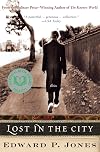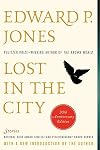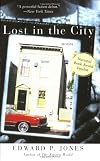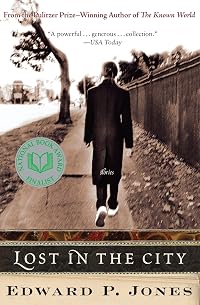
Lost in the City
by Edward P. Jones
On This Page
Description
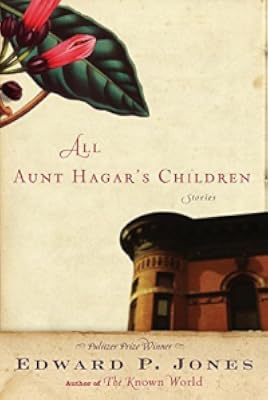
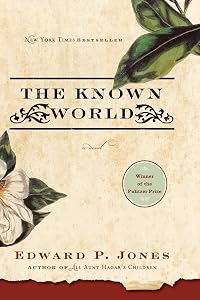
"Original and arresting….[Jones's] stories will touch chords of empathy and recognition in all readers." -Washington Post "These 14 stories of African-American life…affirm humanity as only good literature can." -Los Angeles Times A magnificent collection of short fiction focusing on the lives of African-American men and women in Washington, D.C., Lost in the City is the book that first brought author Edward P. Jones to national attention. Winner of the Pulitzer Prize, the National Book show more Critics Circle Award, and numerous other honors for his novel The Known World, Jones made his literary debut with these powerful tales of ordinary people who live in the shadows in this metropolis of great monuments and rich history. Lost in the City received the Pen/Hemingway Award for Best First Fiction and was a National Book Award Finalist. This beautiful 20th Anniversary Edition features a new introduction by the author, and is a wonderful companion piece to Jones's masterful novel and his second acclaimed collection of stories, All Aunt Hagar's Children. show lessTags
Recommendations




Member Reviews
These stories were hard for me to read because they hardly seem like fiction. Almost every character seemed like a person I've met, and every one seemed real. This is heavy and complicated stuff, the way that people's lives are destroyed or made unbearably difficult by circumstances beyond their control and, sometimes, confounded by their own choices. Even when good things happen, there's an undercurrent of pain, in the racism and oppression that infiltrates the lives of every character, no matter how educated or successful by conventional measures.
7. Lost in the City : Stories by Edward P. Jones
published: 1992
format: 268 page paperback
acquired: from Borders in 2005
read: Jan 28 - Feb 5
rating: 4½
"...he was left with the ever-increasing vastness of the small apartment..."
Struggling just to get myself sitting and reading and actually blocking out the world a bit, and I picked this up to see if it would help. The collection of stories was the right kind of halfway step. Those ten, twenty, thirty minutes of focus were well rewarded, even if they came here in there, in a spotty way, between long draws on fb and the news and dwelling about where our world is headed—still obsessed.
Jones is special, and one-off personality with a wonderfully one-off take on his stories and their show more perspectives. You almost don't notice it. Each of these stories take place in Washington, D.C., that other Washington, D.C. Every character is black, each has roots in the south, either by birth or one generation removed, and each has been in D.C. for the majority or the entirety of their lives. The general poverty, limited opportunity, the divide from the white world are all taken for granted, accepted. It's an odd thing how few of these characters rebel, they live and breath this world as if there is no other.
I'm hard pressed to place what it is that makes these stories work. I mean, of course they're interesting and have an odd assortment of characters, orphans, drug dealers, shop owners, suspect parents, convoluted relationship, escape artists of all sorts—getting lost in the city being a goal more than a problem. But, there is something else here that makes these stories work beyond their often terrific opening paragraphs, and despite their anticlimactic and unsatisfying endings. Published in 1992, written, apparently, throughout the 80's, and about characters often from the 1960's, there are a mixture of eras captured in tone, and atmosphere, and none of them our right now. But I enjoyed pretty much every one of these.
"About four that afternoon the thunder and lightning began again. The four women seated about Carmona Boone's efficiency apartment grew still and spoke in whispers, when they spoke at all: They were each of them no longer young, and they had all been raised to believe that weather was—aside from answered prayers—the closest thing to the voice of God. And so each in her way listened."
Recommended.
2017
https://www.librarything.com/topic/244568#5925787 show less
published: 1992
format: 268 page paperback
acquired: from Borders in 2005
read: Jan 28 - Feb 5
rating: 4½
"...he was left with the ever-increasing vastness of the small apartment..."
Struggling just to get myself sitting and reading and actually blocking out the world a bit, and I picked this up to see if it would help. The collection of stories was the right kind of halfway step. Those ten, twenty, thirty minutes of focus were well rewarded, even if they came here in there, in a spotty way, between long draws on fb and the news and dwelling about where our world is headed—still obsessed.
Jones is special, and one-off personality with a wonderfully one-off take on his stories and their show more perspectives. You almost don't notice it. Each of these stories take place in Washington, D.C., that other Washington, D.C. Every character is black, each has roots in the south, either by birth or one generation removed, and each has been in D.C. for the majority or the entirety of their lives. The general poverty, limited opportunity, the divide from the white world are all taken for granted, accepted. It's an odd thing how few of these characters rebel, they live and breath this world as if there is no other.
I'm hard pressed to place what it is that makes these stories work. I mean, of course they're interesting and have an odd assortment of characters, orphans, drug dealers, shop owners, suspect parents, convoluted relationship, escape artists of all sorts—getting lost in the city being a goal more than a problem. But, there is something else here that makes these stories work beyond their often terrific opening paragraphs, and despite their anticlimactic and unsatisfying endings. Published in 1992, written, apparently, throughout the 80's, and about characters often from the 1960's, there are a mixture of eras captured in tone, and atmosphere, and none of them our right now. But I enjoyed pretty much every one of these.
"About four that afternoon the thunder and lightning began again. The four women seated about Carmona Boone's efficiency apartment grew still and spoke in whispers, when they spoke at all: They were each of them no longer young, and they had all been raised to believe that weather was—aside from answered prayers—the closest thing to the voice of God. And so each in her way listened."
Recommended.
2017
https://www.librarything.com/topic/244568#5925787 show less
This book caught me a bit by surprise. First, it gets promoted as a collection of stories about black Washington, DC. It is that, but, especially in the early stories, it is very subtle about making that an obvious part of the setting. This is no Manchild in the Promised Land, oozing with black urban milieu. A Beltway resident may catch some of the street references, but the rest of us will not see any typical DC tourist locations. These are regular folks living "regular" black urban lives. Secondly, the author is quite restrained in his narratives. There are no linguistic gymnastics embellishing what is happening. He describes people and situations very clearly, letting "behavior speak louder than words." Finally, and it took me a show more while, but I found the stories quite female-centric, coming from a male author, as they do. All but a small number of the stories center on female characters, and even the ones that concentrate on a male character, have extremely important connections with key female roles. The author is obviously very in tune with the central role that women play in the urban black community. He doesn't criticize. He doesn't praise. His women -- and in some cases, young girls -- are nuanced personalities holding the community together in the only ways they know. Sadly, if this collection was about white soccer moms in the suburbs, it would be an easy best seller, but it's not. It's about people lost in the city and lost in American society. show less
Lost in the City (1992) - a collection of short stories - is Edward P. Jones' first book, followed by the Pulitzer Price winning novel The Known World (2003), and All Aunt Hagar's Children (2006), a second collection of short stories. Both Lost and Aunt Hagar are about blacks in Washington, DC where Jones grew up in the neighborhoods he writes about. His stories are like mini novels with lush detail, multiple fully evolved characters and densely colloquial prose.
The stories have a common theme surrounding an old colloquial saying "Don't get lost in the city". The word "lost" means having no direction, aimless, with no intention, and the stories are about people in that sort of state of mind, simply doing time with no direction home. It show more also means alienation, being lost is the opposite of family and compassion, the stories involve broken and dysfunctional families, coldness. Charles Dickens wrote about London and the poor of the 19th century, but his stories were the opposite of Jones. Instead of that "coming home to family" Christmas time spirit of Dickens, Jones invokes coldness, alienation, purposelessness. I hesitate to call Jones "anthropological" because it is also very aesthetically pleasing, but like Balzac did for Paris in the early 19th century and Dickens for London, Jones invokes the spirit of a time and place that, while not full of good feelings and happy endings, does speak truthfully. The last story of the book, "Marie", ends with an old woman listening to an audio oral-history and I think Jones is telling the reader how he sees his own work, a history of a people and place.
My favorite story is in the middle of the book, "The Store", it is the most uplifting and optimistic surrounded by stories of tragedy and sadness. It is about a poor boy done good by hard work and honesty. Other stories I thought were excellent include "The Sunday Following Mother's Day" about a husband who kills his wife for no reason, and the resulting years of failed relationships with his son and daughter. It's epic scope crosses generations of multiple people, but it is also grassroots, concerning people who are invisible to society. "His Mother's House" is about a street drug dealer and his relations with his family, it helped me better understand how families (mothers, fathers, sons) and the drug culture can intermingle ."A New Man" is a heartbreaking story of a 15 year-old girl who runs away from home and is never heard from again. Overall I think the stories in Aunt Hagar are better - more fully realized, longer - however these are still excellent, Jones is one of my favorite authors.
Truman Capote in his masterpiece In Cold Blood (1960) has the following quote (an actual quote from a sister to her brother who is in jail) which I think sums up Jones' stories:
"Your confinement is nothing to be proud of.. You are a human being with a free will. Which puts you above the animal level. But if you live your life without feeling and compassion for your fellowman - you are as an animal - "an eye for eye, a tooth for a tooth" & happiness & peace of mind is not attained by living thus."
--Review by Stephen Balbach, via CoolReading (c) 2008 cc-by-nd show less
The stories have a common theme surrounding an old colloquial saying "Don't get lost in the city". The word "lost" means having no direction, aimless, with no intention, and the stories are about people in that sort of state of mind, simply doing time with no direction home. It show more also means alienation, being lost is the opposite of family and compassion, the stories involve broken and dysfunctional families, coldness. Charles Dickens wrote about London and the poor of the 19th century, but his stories were the opposite of Jones. Instead of that "coming home to family" Christmas time spirit of Dickens, Jones invokes coldness, alienation, purposelessness. I hesitate to call Jones "anthropological" because it is also very aesthetically pleasing, but like Balzac did for Paris in the early 19th century and Dickens for London, Jones invokes the spirit of a time and place that, while not full of good feelings and happy endings, does speak truthfully. The last story of the book, "Marie", ends with an old woman listening to an audio oral-history and I think Jones is telling the reader how he sees his own work, a history of a people and place.
My favorite story is in the middle of the book, "The Store", it is the most uplifting and optimistic surrounded by stories of tragedy and sadness. It is about a poor boy done good by hard work and honesty. Other stories I thought were excellent include "The Sunday Following Mother's Day" about a husband who kills his wife for no reason, and the resulting years of failed relationships with his son and daughter. It's epic scope crosses generations of multiple people, but it is also grassroots, concerning people who are invisible to society. "His Mother's House" is about a street drug dealer and his relations with his family, it helped me better understand how families (mothers, fathers, sons) and the drug culture can intermingle ."A New Man" is a heartbreaking story of a 15 year-old girl who runs away from home and is never heard from again. Overall I think the stories in Aunt Hagar are better - more fully realized, longer - however these are still excellent, Jones is one of my favorite authors.
Truman Capote in his masterpiece In Cold Blood (1960) has the following quote (an actual quote from a sister to her brother who is in jail) which I think sums up Jones' stories:
"Your confinement is nothing to be proud of.. You are a human being with a free will. Which puts you above the animal level. But if you live your life without feeling and compassion for your fellowman - you are as an animal - "an eye for eye, a tooth for a tooth" & happiness & peace of mind is not attained by living thus."
--Review by Stephen Balbach, via CoolReading (c) 2008 cc-by-nd show less
Very good collection. I can't wait to have some time to finish reading it. Strong voices, strong characterization, a variety of thoughts and feelings. I'm glad Jones is not just another flavor of the minute. I'll happily read more of his work.
The characters in this book are very accessible and well defined. The white gaze is not present, and the subject of race is a constant identifier. It is easy to see the difficulties many of these characters face and the adaptations necessary for them to make. All of these stories took place in Washington, D.C. or nearby, a city the author knows well.Most of Jones' characters are parts of communities that are there to help and to look out for each other.
Lost in the City by Edward P. Jones is just an excellent collection of short stories set in Washington DC during the 50's to 70's. The characters are black, many elderly. Jones captures a mood and situation brilliantly. The stories reverberate with humanity struggling with the effort of making sense of life.
Members
- Recently Added By
Lists

Books Set in Washington DC
34 works; 7 members

National Book Award Finalists - Fiction
377 works; 12 members
Author Information

13+ Works 9,400 Members
Awards and Honors
Awards
Work Relationships
Common Knowledge
- Original publication date
- 1992
- First words
- Her father would say years later that she had dreamed that part of it, that she had never gone out through the kitchen window at two or three in the morning to visit the birds.
- Last words
- (Click to show. Warning: May contain spoilers.)He dropped the records one at a time: "It Takes an Irishman to Make Love." "I'm Gonna Pin a Medal on the Girl I Left Behind." "Ragtime Soldier Man." "Whose Little Heart Are You Breaking Now." "The Syncopated Walk."
- Original language
- English
Classifications
Statistics
- Members
- 765
- Popularity
- 36,575
- Reviews
- 12
- Rating
- (4.02)
- Languages
- English, French, German
- Media
- Paper, Audiobook, Ebook
- ISBNs
- 16
- ASINs
- 5