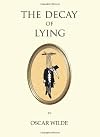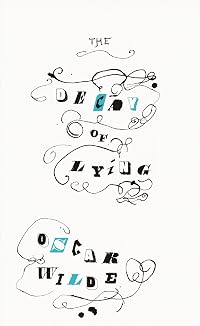
The Decay of Lying and Other Essays
by Oscar Wilde 
On This Page
Description
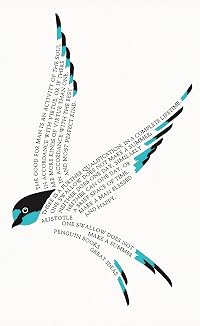
'Life imitates Art far more than Art imitates Life' The Decay of Lying includes two of Wilde's most comprehensive - and witty - explorations of his aesthetic philosphy- 'The Decay of Lying' and 'The Critic as Artist'. GREAT IDEAS. Throughout history, some books have changed the world. They have transformed the way we see ourselves - and each other. They have inspired debate, dissent, war and revolution. They have enlightened, outraged, provoked and comforted. They have enriched lives - and show more destroyed them. Now Penguin brings you the works of the great thinkers, pioneers, radicals and visionaries whose ideas shook civilization and helped make us who we are. show lessTags
Recommendations








Member Reviews
This faggut is a poet preacher prophet! One who spits on you and makes you love to hate to love to hate it.
Oscar Wilde's essay first published in 1889 in the British monthly, Nineteenth Century, has two important implications for the current political moment, which are not what I find most interesting about this dialogue/essay, and in which case I will discuss those first.
1. Wilde (through Vivian) argues that it is not Art that imitates Life, but Life that imitates Art. Importantly, Life includes Nature in this argument. Wilde writes that as "Art is more varied, Nature will, no doubt, be more varied also," in a section in which Vivian (mostly) asserts with his whole chest that it was not until the Impressionist painters that London show more became a city known for its fog. This made me think about what Wilde would do with post-modernism, and today's art, coming after post-modernism. Without sounding like a climate catastrophe denier, is the seemingly exponential growth in form, media, and content for modern art responsible for the chaos of the Natural world? Our art became too exploitative of the resources, the resources then turned and reflected the Art which showed a pillaged Earth.
2. This dialogue is about lying. It is basically a Make Lying Great Again manifesto. Wilde focuses primarily on the lies of myth and the grandiosity of art. However, when he does turn explicitly to politics, it is Cyril who interjects Vivian to suggest that politicians keep lying relevant. Asserting that Truth is a burden to the artist, and that lying should return to fashion in art, would not one reasonably suppose, under Wilde's own logic, that the people (Life) would lie, imitating the Style as much as they do the Content of what Vivian would call high art? This is a pretty hefty philosophical debate that I do not know enough to weigh in on but it has obvious connections to Trump, fascism, colonial capitalism, and carceral logic which I will not belabor here.
I read this because Karen Tongson mentions it in her book Why Karen Carpenter Matters. What I found most interesting, in relation to my thesis research (yes, I got from Joni Mitchell to truth before I even started my Joni biographies...) is the following passage: "Nor could anything be less impressive than the unfortunate hero gravely heralding a dawn that rose long ago, and so completely missing its true significance that he proposes to carry on the business of the old firm under the new name."
Great! This Is Exactly What I Fear Writing Fifty Pages About My Reading Of Joni Mitchell as a trans person will do. I must not upset Cyril and Vivian. I think I will end up using this in my thesis, so it is not a loss on that front. That also means I do not want to share too much of my thoughts on this for now.
Anyway, I'd join Wilde's cult and I'm mad about it. show less
Oscar Wilde's essay first published in 1889 in the British monthly, Nineteenth Century, has two important implications for the current political moment, which are not what I find most interesting about this dialogue/essay, and in which case I will discuss those first.
1. Wilde (through Vivian) argues that it is not Art that imitates Life, but Life that imitates Art. Importantly, Life includes Nature in this argument. Wilde writes that as "Art is more varied, Nature will, no doubt, be more varied also," in a section in which Vivian (mostly) asserts with his whole chest that it was not until the Impressionist painters that London show more became a city known for its fog. This made me think about what Wilde would do with post-modernism, and today's art, coming after post-modernism. Without sounding like a climate catastrophe denier, is the seemingly exponential growth in form, media, and content for modern art responsible for the chaos of the Natural world? Our art became too exploitative of the resources, the resources then turned and reflected the Art which showed a pillaged Earth.
2. This dialogue is about lying. It is basically a Make Lying Great Again manifesto. Wilde focuses primarily on the lies of myth and the grandiosity of art. However, when he does turn explicitly to politics, it is Cyril who interjects Vivian to suggest that politicians keep lying relevant. Asserting that Truth is a burden to the artist, and that lying should return to fashion in art, would not one reasonably suppose, under Wilde's own logic, that the people (Life) would lie, imitating the Style as much as they do the Content of what Vivian would call high art? This is a pretty hefty philosophical debate that I do not know enough to weigh in on but it has obvious connections to Trump, fascism, colonial capitalism, and carceral logic which I will not belabor here.
I read this because Karen Tongson mentions it in her book Why Karen Carpenter Matters. What I found most interesting, in relation to my thesis research (yes, I got from Joni Mitchell to truth before I even started my Joni biographies...) is the following passage: "Nor could anything be less impressive than the unfortunate hero gravely heralding a dawn that rose long ago, and so completely missing its true significance that he proposes to carry on the business of the old firm under the new name."
Great! This Is Exactly What I Fear Writing Fifty Pages About My Reading Of Joni Mitchell as a trans person will do. I must not upset Cyril and Vivian. I think I will end up using this in my thesis, so it is not a loss on that front. That also means I do not want to share too much of my thoughts on this for now.
Anyway, I'd join Wilde's cult and I'm mad about it. show less
I call BS!
Ratings
Members
- Recently Added By
Lists

Reading LIst
648 works; 1 member
Author Information

1,763+ Works 120,942 Members
Flamboyant man-about-town, Oscar Wilde had a reputation that preceded him, especially in his early career. He was born to a middle-class Irish family (his father was a surgeon) and was trained as a scholarship boy at Trinity College, Dublin. He subsequently won a scholarship to Magdalen College, Oxford, where he was heavily influenced by John show more Ruskin and Walter Pater, whose aestheticism was taken to its radical extreme in Wilde's work. By 1879 he was already known as a wit and a dandy; soon after, in fact, he was satirized in Gilbert and Sullivan's Patience. Largely on the strength of his public persona, Wilde undertook a lecture tour to the United States in 1882, where he saw his play Vera open---unsuccessfully---in New York. His first published volume, Poems, which met with some degree of approbation, appeared at this time. In 1884 he married Constance Lloyd, the daughter of an Irish lawyer, and within two years they had two sons. During this period he wrote, among others, The Picture of Dorian Gray (1891), his only novel, which scandalized many readers and was widely denounced as immoral. Wilde simultaneously dismissed and encouraged such criticism with his statement in the preface, "There is no such thing as a moral or an immoral book. Books are well written or badly written. That is all." In 1891 Wilde published A House of Pomegranates, a collection of fantasy tales, and in 1892 gained commercial and critical success with his play, Lady Windermere's Fan He followed this comedy with A Woman of No Importance (1893), An Ideal Husband (1895), and his most famous play, The Importance of Being Earnest (1895). During this period he also wrote Salome, in French, but was unable to obtain a license for it in England. Performed in Paris in 1896, the play was translated and published in England in 1894 by Lord Alfred Douglas and was illustrated by Aubrey Beardsley. Lord Alfred was the son of the Marquess of Queensbury, who objected to his son's spending so much time with Wilde because of Wilde's flamboyant behavior and homosexual relationships. In 1895, after being publicly insulted by the marquess, Wilde brought an unsuccessful slander suit against the peer. The result of his inability to prove slander was his own trial on charges of sodomy, of which he was found guilty and sentenced to two years of hard labor. During his time in prison, he wrote a scathing rebuke to Lord Alfred, published in 1905 as De Profundis. In it he argues that his conduct was a result of his standing "in symbolic relations to the art and culture" of his time. After his release, Wilde left England for Paris, where he wrote what may be his most famous poem, The Ballad of Reading Gaol (1898), drawn from his prison experiences. Among his other notable writing is The Soul of Man under Socialism (1891), which argues for individualism and freedom of artistic expression. There has been a revived interest in Wilde's work; among the best recent volumes are Richard Ellmann's, Oscar Wilde and Regenia Gagnier's Idylls of the Marketplace , two works that vary widely in their critical assumptions and approach to Wilde but that offer rich insights into his complex character. (Bowker Author Biography) show less
Oscar Wilde has a Legacy Library. Legacy libraries are the personal libraries of famous readers, entered by LibraryThing members from the Legacy Libraries group.
All Editions
Some Editions
Series
Belongs to Publisher Series
Work Relationships
Is contained in
Common Knowledge
- Canonical title
- The Decay of Lying and Other Essays
- Original publication date
- 1891
- People/Characters
- Oscar Wilde
- First words
- AN OBSERVATION
A dialogue.
Persons: Cyril and Vivian.
Scene: the library of a country house in Nottinghamshire. - Last words
- (Click to show. Warning: May contain spoilers.)Come! I am tired of thought.
- Original language
- English
Classifications
Statistics
- Members
- 195
- Popularity
- 167,857
- Reviews
- 2
- Rating
- (3.95)
- Languages
- 9 — Catalan, English, Finnish, French, German, Italian, Norwegian (Bokmål), Spanish, Turkish
- Media
- Paper, Ebook
- ISBNs
- 25
- ASINs
- 6