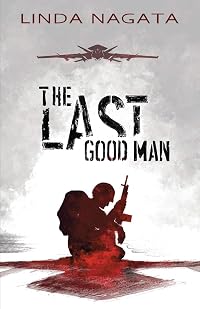
The Last Good Man
by Linda Nagata 
On This Page
Description
Army veteran True Brighton left the service when the development of robotic helicopters made her training as a pilot obsolete. Now she works at Requisite Operations, a private military company established by friend and former Special Ops soldier Lincoln Han. ReqOp has embraced the new technologies. Robotics, big data, and artificial intelligence are all tools used to augment the skills of veteran warfighters-for-hire. But the tragedy of war is still measured in human casualties, and when show more True makes a chance discovery during a rescue mission, old wounds are ripped open. She's left questioning what she knows of the past, and resolves to pursue the truth, whatever the cost. show lessTags
Recommendations












Member Reviews
"The Last Good Man" is a Compelling immersive tale of a near-future Military Contractor seeking the truth about her son's brutal execution.
I wasn't sure this would be my kind of book. Set in the near future, it tells the story of a woman soldier working for a Private Military Contractor (PMC) licensed by the US government, who finds something she doesn't like while on a hostage rescue mission.
I see PMCs as a scourge on the earth and the US's tendency to use force in countries it's not at war with as criminal, so I doubted I'd be sympathetic but I was curious, so I gave it a try.
Three hours into this fourteen hours long audiobook, I was hooked. The first mission was still in progress and I still didn't know what the bad thing was show more that our soldier was going to discover but instead of finding myself tapping my fingers in impatience at the pace, I was enjoying myself. I found it unexpectedly compelling to get a blow by blow account of the planning and execution of the mission. it felt real. It was tense without being melodramatic.
One of the things that kept me reading was the credible but very scary biomimetic robotics being used. This is not far out tech. Many of the physical characteristics are already available and the AI and Swarm technologies are catching up fast. When they become available for real, they will transform warfare, and terrorism and private armies and organised crime.
I also liked the thoughtful way in which the role of PMCs was talked through. The dangers of having a private military capability that makes money from was but has no incentive to bring or keep the peace were given ait time, as was the impact of a boundaryless war: the ability to pursue a conflict globally, based on infrastructure capability rather than national sovereignty.
The most surprising thing for me was that the book managed to be character-driven. The soldier, Tru Brighton, ends up on a very personal quest for the truth around the public and barbaric execution of her soldier son eight years earlier. This worked partly because Tru is likeable as a mature soldier and as a mother and partly because her quest is not for comfort or even for revenge but just to know the truth.
There's a reasonably complicated plot that kept me invested all the way through without making me feel I was being teased in the way some smug bet-you-didn't-see-that-coming thrillers do. It allowed some great action scenes and a constantly shifting perspective on the truth as new facts came to light.
I listened to the audiobook version and was impressed by how well Liisa Ivary delivered the story. She has tremendous range in both pace and characterisation.
show less
I wasn't sure this would be my kind of book. Set in the near future, it tells the story of a woman soldier working for a Private Military Contractor (PMC) licensed by the US government, who finds something she doesn't like while on a hostage rescue mission.
I see PMCs as a scourge on the earth and the US's tendency to use force in countries it's not at war with as criminal, so I doubted I'd be sympathetic but I was curious, so I gave it a try.
Three hours into this fourteen hours long audiobook, I was hooked. The first mission was still in progress and I still didn't know what the bad thing was show more that our soldier was going to discover but instead of finding myself tapping my fingers in impatience at the pace, I was enjoying myself. I found it unexpectedly compelling to get a blow by blow account of the planning and execution of the mission. it felt real. It was tense without being melodramatic.
One of the things that kept me reading was the credible but very scary biomimetic robotics being used. This is not far out tech. Many of the physical characteristics are already available and the AI and Swarm technologies are catching up fast. When they become available for real, they will transform warfare, and terrorism and private armies and organised crime.
I also liked the thoughtful way in which the role of PMCs was talked through. The dangers of having a private military capability that makes money from was but has no incentive to bring or keep the peace were given ait time, as was the impact of a boundaryless war: the ability to pursue a conflict globally, based on infrastructure capability rather than national sovereignty.
The most surprising thing for me was that the book managed to be character-driven. The soldier, Tru Brighton, ends up on a very personal quest for the truth around the public and barbaric execution of her soldier son eight years earlier. This worked partly because Tru is likeable as a mature soldier and as a mother and partly because her quest is not for comfort or even for revenge but just to know the truth.
There's a reasonably complicated plot that kept me invested all the way through without making me feel I was being teased in the way some smug bet-you-didn't-see-that-coming thrillers do. It allowed some great action scenes and a constantly shifting perspective on the truth as new facts came to light.
I listened to the audiobook version and was impressed by how well Liisa Ivary delivered the story. She has tremendous range in both pace and characterisation.
show less
Wow! I'm not sure where I learned about this book but I wish I did because I would like to keep it as a reference for the future. This was a fast-paced thriller with a philosophical discussion of the future of war that isn't just tossed in but is part of the fabric of the book. True Brighton was a career soldier for the US and she flew helicopters as her job. Then the job of flying was given over to artificial intelligence (AI) and True was out of work. Four years before this book starts she became part of a private military corporation (PMC) Requisite Operations was started by her friend Lincoln Han after he was severely injured in action as a Special Ops soldier. Almost everyone who works for ReqOps is a veteran. They have embraced show more using AI in their operations but they still field real people on the ground. ReqOps is approached by the father of a young doctor who was kidnapped by a Muslim warlord. He wants the company to extricate his daughter because the government will not negotiate with terrorists. Lincoln puts together a team to go to the middle east as soon as they pinpoint the daughter's location. The recovery is even more difficult than usual because there are four additional hostages in the location. True is on the mission and she is the person who brings the additional hostages out. One of them, Miles Dushane, is a former soldier who was working as a journalist when he was kidnapped. Although he never met True before the night he was rescued he knows of her because eight years ago her son, Diego, was captured, tortured on camera and killed by terrorists in Borneo after he went with his crew of Special Ops soldiers on a US government mission. When he tells True that the man who captured him was an American with a tattoo on his arm reading "Diego Delgado, The Last Good Man" True starts to question the official story that every person on that crew was killed. She has to find that man and question him. Every step of the way artificial intelligence is showcased as being helpful and even essential in fighting terrorists and waging war. Will there come a time when no humans actually step onto a battlefield except for civilians caught in the cross-fire? The author puts the question this way at page 459: When autonomous fighters command the air space, self-driving tanks control the ground, and agile robotic vehicles scout and secure cramped urban areas, what need will there be for soldiers on the front lines? And on the next page her character, Lincoln, reflects: Autonomous warfare will not be bloodless. War by machine proxy is still war, with the sacrifice pushed out of sight, the burden unloaded on distant people. The repercussions, inevitable...The tragedy of the world is that for all the clever minds and brave hearts that have ever been, no one has figured out yet how to forge a lasting peace. At a time when North Korea is threatening to bomb far away targets with missiles with nuclear warheads this was a particularly appropriate read. Beyond that it was engaging and thought-provoking with a strong woman character who is of a certain age. (49). Highly recommended. show less
Nagata, Linda. The Last Good Man. Mythic Island Press, 2017.
I was not as big a fan of Linda Nagata’s Red series as most fans of military SF, but in The Last Good Man, Nagata has put all the elements of near-future warfare in a tight, fast-paced, and nuanced package. The story focuses on the efforts of True Brighton and her team of mercenaries to capture a former colleague who seems to have gone rogue. True is a fully developed character who asks herself all the right questions about the ethics of her profession, but these ruminations never slow the action. In Nagata’s vision of the future, warfare has become one more venue for private enterprise. Corporations and three-letter government agencies hire private companies to achieve show more limited military goals. They use a chilling array of drones, remote targeting, surveillance devices, 3D printed weapons, and big-data research tools to track and take down their targets. Unfortunately, these tools are also available to their opponents, and some of them are as lethal on the home front as the battlefield. 4 stars. show less
I was not as big a fan of Linda Nagata’s Red series as most fans of military SF, but in The Last Good Man, Nagata has put all the elements of near-future warfare in a tight, fast-paced, and nuanced package. The story focuses on the efforts of True Brighton and her team of mercenaries to capture a former colleague who seems to have gone rogue. True is a fully developed character who asks herself all the right questions about the ethics of her profession, but these ruminations never slow the action. In Nagata’s vision of the future, warfare has become one more venue for private enterprise. Corporations and three-letter government agencies hire private companies to achieve show more limited military goals. They use a chilling array of drones, remote targeting, surveillance devices, 3D printed weapons, and big-data research tools to track and take down their targets. Unfortunately, these tools are also available to their opponents, and some of them are as lethal on the home front as the battlefield. 4 stars. show less
Although I’d been aware of Linda Nagata for a long time, I hadn’t read any of her work until the recent Red Trilogy. The Red Trilogy is simultaneously a thoughtful exploration of the impact of technology advances on soldiers and warfare as well as a rollicking near-future sci-fi adventure. The Last Good Man continues the exploration of “future war”, elevating the thrill ride aspect and downplaying the philosophical exploration. If you’re interested in a near-future Sci Fi book exploring what happens when machines fight our wars for us, The Last Good Man is for you.
True Brighton is a retired Army vet who is now Director of Operations for Requisite Operations, a private military contractor in Seattle— just don’t call them show more mercenaries, as they like to point out! As The Last Good Man opens, Requisite is being hired to recover a potential client’s daughter from an Islamic terrorist/gangster organization. True — a near-middle aged woman — will shortly be leading a recovery mission in the Middle East, one that features a dizzying array of near-future warfare artifacts. Synthetic Digital Assistants, Drones, Robotics, Biomimetics (robots that mimic biological life forms - insects, birds, snakes..), TINSLs (Team Integrated Speech Link). While True is fully committed to Requisite and this message, she’s haunted by the brutal death of her son at the hands of a different terrorist group. When the rescue mission uncovers a potential link to her son’s death, she breaks ranks to find answers, and things rapidly spiral out of control.
True is fascinating character. A female combat leader, her character differs in perspective from many military sci/fi protagonists. As a middle aged warrior, she remembers the time before AI and augmented warfare, and is starting to see the end of that life for herself. As a semi-retired person, I loved this particular quote from True, it resonated for me personally:
“Yes, I know what ‘retired’ means. It means I get to choose my own missions”.
The first few chapters of The Last Good Man moved a little slowly for me — there was a bit too much setup, explanations, and a blizzard of acronyms and technical descriptions of things. Someone more geeky than myself might find that really interesting, but I wanted to get to it! But soon we’re in action in the Middle East and things are moving along.
True is on the trail of Shaw, who she thinks has information related to her son’s death. I found the Shaw character also very interesting, and wanted more of him. When he got to telling True the story she came for, the room I was in vanished and I was completely transported to the jungle where Shaw, Diego and others were mounting an expedition.
… We were twenty meters above a tangled regrowth forest — all bamboo and spindly trees — weedy shit that had popped up after the old forest was logged out. Under the rotor wash it looked like a seething, rain-blurred, bottomless chaos. The rain was coming down like nails. A gust hit us and rocked the ship. Diego’s hand tightened on my shoulder. He wanted to make sure I didn’t go over the edge before we had a rope…
..into the rainy jungle, with no visibility, laser range finders flashing through the darkness, killer drones nearly wiping out the good guys. From that scene until the end of the book, I was hooked and story accelerated right to the end.
The Last Good Man is much more of a thriller than The Red. In The Red, the AI is effectively a full-fledged character — albeit essentially offscreen (no pun intended!) — leading to some very thought provoking situations. In The Last Good Man, the tech is mostly backdrop for the characters, their conflicts, their time in life. I’m always a sucker for middle aged characters figuring out what comes next for them, and that question echoes through the end of The Last Good Man. If there’s a philosophical underpinning to The Last Good Man, it might be “what happens to us when machines fight our wars?”. I would have enjoyed a bit more exploration of that question, but the book is awesome without it. If a near-future sci-fi thriller with a soul interests you, you’ll enjoy The Last Good Man.
(disclosure: I received a free review copy of The Last Good Man from the author in exchange for a fair review). show less
True Brighton is a retired Army vet who is now Director of Operations for Requisite Operations, a private military contractor in Seattle— just don’t call them show more mercenaries, as they like to point out! As The Last Good Man opens, Requisite is being hired to recover a potential client’s daughter from an Islamic terrorist/gangster organization. True — a near-middle aged woman — will shortly be leading a recovery mission in the Middle East, one that features a dizzying array of near-future warfare artifacts. Synthetic Digital Assistants, Drones, Robotics, Biomimetics (robots that mimic biological life forms - insects, birds, snakes..), TINSLs (Team Integrated Speech Link). While True is fully committed to Requisite and this message, she’s haunted by the brutal death of her son at the hands of a different terrorist group. When the rescue mission uncovers a potential link to her son’s death, she breaks ranks to find answers, and things rapidly spiral out of control.
True is fascinating character. A female combat leader, her character differs in perspective from many military sci/fi protagonists. As a middle aged warrior, she remembers the time before AI and augmented warfare, and is starting to see the end of that life for herself. As a semi-retired person, I loved this particular quote from True, it resonated for me personally:
“Yes, I know what ‘retired’ means. It means I get to choose my own missions”.
The first few chapters of The Last Good Man moved a little slowly for me — there was a bit too much setup, explanations, and a blizzard of acronyms and technical descriptions of things. Someone more geeky than myself might find that really interesting, but I wanted to get to it! But soon we’re in action in the Middle East and things are moving along.
True is on the trail of Shaw, who she thinks has information related to her son’s death. I found the Shaw character also very interesting, and wanted more of him. When he got to telling True the story she came for, the room I was in vanished and I was completely transported to the jungle where Shaw, Diego and others were mounting an expedition.
… We were twenty meters above a tangled regrowth forest — all bamboo and spindly trees — weedy shit that had popped up after the old forest was logged out. Under the rotor wash it looked like a seething, rain-blurred, bottomless chaos. The rain was coming down like nails. A gust hit us and rocked the ship. Diego’s hand tightened on my shoulder. He wanted to make sure I didn’t go over the edge before we had a rope…
..into the rainy jungle, with no visibility, laser range finders flashing through the darkness, killer drones nearly wiping out the good guys. From that scene until the end of the book, I was hooked and story accelerated right to the end.
The Last Good Man is much more of a thriller than The Red. In The Red, the AI is effectively a full-fledged character — albeit essentially offscreen (no pun intended!) — leading to some very thought provoking situations. In The Last Good Man, the tech is mostly backdrop for the characters, their conflicts, their time in life. I’m always a sucker for middle aged characters figuring out what comes next for them, and that question echoes through the end of The Last Good Man. If there’s a philosophical underpinning to The Last Good Man, it might be “what happens to us when machines fight our wars?”. I would have enjoyed a bit more exploration of that question, but the book is awesome without it. If a near-future sci-fi thriller with a soul interests you, you’ll enjoy The Last Good Man.
(disclosure: I received a free review copy of The Last Good Man from the author in exchange for a fair review). show less
In The Last Good Man, Linda Nagata used a brisk and bracing writing style to immerse us into the lives of private military contractors, in the near future. The team, basically moral individuals, work in conjunction with individually guided, robotic weapons and surveillance equipment. If Katheryn Bigelow, the director of Zero Dark Thirty, wrote a speculative fiction novel, it might be something like this. Wasting no words, the story stays right on track, concentrating on army veteran True Brighton as she and her teammates undertake a dangerous mission, which wakes old wounds.
For True, painful memories of her son’s death resurface, while her boss, Lincoln, must come to terms with a past decision he made for the greater good of the show more unit. True’s anguish and her questions about “right action” are absorbing and affecting. On another level, the story works as speculative fiction, inviting us to consider a future where AI combat replaces human soldiering more and more. The point of direct AI involvement is to spare the lives of soldiers, but as the novel shows, that goal isn’t always as simple as it sounds. show less
For True, painful memories of her son’s death resurface, while her boss, Lincoln, must come to terms with a past decision he made for the greater good of the show more unit. True’s anguish and her questions about “right action” are absorbing and affecting. On another level, the story works as speculative fiction, inviting us to consider a future where AI combat replaces human soldiering more and more. The point of direct AI involvement is to spare the lives of soldiers, but as the novel shows, that goal isn’t always as simple as it sounds. show less
I had this one on TBR list for a while. I have to admit that it was not exactly what I was expecting, but in the end it was a solid book.
So...... lets start with what author manages to describe very well. That is lethality of the robotic and remote weapon systems. Author manages to show the sheer level of destruction these new systems bring in, and how they can make even non-state actors (such as PMCs) as deadly as their state supported counterparts. All of things described here - of course not with such high artificial IQs but nevertheless - are very much part of reality on battlefield in Eastern Europe (and as time moves on, on battlefields all around the world). So this part, technology, use, countermeasures ..... all are very show more realistic. Idea that runs through the entire book is how AI and robots will replace people on the battlefield. If anything, latest developments have proven that people will remain on the battlefield but everything will be tightly integrated, thus more lethal and with faster reaction. It is especially the latter where people are required - for actual thinking and not just reacting.
As for PMCs author gives a very interesting overview of the industry - alliances, agreements, those who execute direct action and those providing services or logistics. Very interesting and, again, not that far from the truth. Scenes involving the (semi)autonomous drones were truly great. Of course book was written during the War on terror era, today things are much more different, when it comes to deploy and operations. It is far more deadlier and riskier for everyone involved.
I have to admit I am little bit over with the presentation of US troops/veterans as God-given defenders of all that is good on this planet. Level of self-righteousness is little bit over the top. From military professionals that have lived through stuff, characters in this book did, I would expect healthy dose of cynicism. I don't know, they are all super spies/soldiers/technicians, too much cliche for me. And again this all takes place not too far in the future (say like Polity or some cyberpunk novels) but very near future. I mean, I understand our protagonists need to be good guys, but not everyone is expected to be Captain America.
Part that I found weird were character names. I mean main character is named True. You might ask is that true, I would say yes, it is true, True is truly the true name of character True. I guess if character was a man then expected name would be Earnest? But this has like old sound to it, right?
Other thing that I had issues with is that female cast (our hero included) who wield highly destructive weapons, go into combat and excel in it, fly military planes or program and develop drones, decide the outcome of the battle - they are upset because if they do not dress professionally (I am not sure what is casual these days, pajamas?) and dont take care of themselves they will be looked down upon ..... say what? All female cast is high level, even on board of some powerful military industry, they are all geniuses (as I said, this cliche where good guys are so smart it is strange how baddies ever do anything, really got boring for me lately, it is present everywhere - from books to TV and cinema) but they are so insecure that they feel obliged to take care of hair because they need to be [to paraphrase] eye candy to be accepted? Again, what? So if one looks good (which is blessing, trust me), it is required to put disclaimer because ones years of combat service or scientific research (reason why they work where they work) is just a side show? Again, what? If this was anything but deadly business of PMCs I would say OK (rolling my eyes probably) - but in this profession? This is so out of character it is incredible. Again, this is not a big deal but this poked me in the eye with such vigor I could not forget it.
Story is concentrated on Middle East and Northern Africa - again for obvious reasons, since War on Terror was still highlight of military activity when book was published. Some parts take place in US and Far East but these are more parts of the story where details of the plots get fleshed out. At some points narrative is slightly wooden (as I said they are Captain America's, there is no tension, no possibility of wrong decision) but it is always to the point, without unnecessary words or story plot complications.
Overall very interesting story, very interesting characters and technology details. It does fall into category of action, but of the smart flavor - there are multiple twists, nothing is straightforward., there are risks and costs (deaths). But it is not RED (with all of the ambiguity of world in conflict in that story), it is simpler story approach.
If you like good techno-thriller, set in the near future, concentrated on the shadowy world of PMCs and mercenaries, look no further, you will like this one. show less
So...... lets start with what author manages to describe very well. That is lethality of the robotic and remote weapon systems. Author manages to show the sheer level of destruction these new systems bring in, and how they can make even non-state actors (such as PMCs) as deadly as their state supported counterparts. All of things described here - of course not with such high artificial IQs but nevertheless - are very much part of reality on battlefield in Eastern Europe (and as time moves on, on battlefields all around the world). So this part, technology, use, countermeasures ..... all are very show more realistic. Idea that runs through the entire book is how AI and robots will replace people on the battlefield. If anything, latest developments have proven that people will remain on the battlefield but everything will be tightly integrated, thus more lethal and with faster reaction. It is especially the latter where people are required - for actual thinking and not just reacting.
As for PMCs author gives a very interesting overview of the industry - alliances, agreements, those who execute direct action and those providing services or logistics. Very interesting and, again, not that far from the truth. Scenes involving the (semi)autonomous drones were truly great. Of course book was written during the War on terror era, today things are much more different, when it comes to deploy and operations. It is far more deadlier and riskier for everyone involved.
I have to admit I am little bit over with the presentation of US troops/veterans as God-given defenders of all that is good on this planet. Level of self-righteousness is little bit over the top. From military professionals that have lived through stuff, characters in this book did, I would expect healthy dose of cynicism. I don't know, they are all super spies/soldiers/technicians, too much cliche for me. And again this all takes place not too far in the future (say like Polity or some cyberpunk novels) but very near future. I mean, I understand our protagonists need to be good guys, but not everyone is expected to be Captain America.
Part that I found weird were character names. I mean main character is named True. You might ask is that true, I would say yes, it is true, True is truly the true name of character True. I guess if character was a man then expected name would be Earnest? But this has like old sound to it, right?
Other thing that I had issues with is that female cast (our hero included) who wield highly destructive weapons, go into combat and excel in it, fly military planes or program and develop drones, decide the outcome of the battle - they are upset because if they do not dress professionally (I am not sure what is casual these days, pajamas?) and dont take care of themselves they will be looked down upon ..... say what? All female cast is high level, even on board of some powerful military industry, they are all geniuses (as I said, this cliche where good guys are so smart it is strange how baddies ever do anything, really got boring for me lately, it is present everywhere - from books to TV and cinema) but they are so insecure that they feel obliged to take care of hair because they need to be [to paraphrase] eye candy to be accepted? Again, what? So if one looks good (which is blessing, trust me), it is required to put disclaimer because ones years of combat service or scientific research (reason why they work where they work) is just a side show? Again, what? If this was anything but deadly business of PMCs I would say OK (rolling my eyes probably) - but in this profession? This is so out of character it is incredible. Again, this is not a big deal but this poked me in the eye with such vigor I could not forget it.
Story is concentrated on Middle East and Northern Africa - again for obvious reasons, since War on Terror was still highlight of military activity when book was published. Some parts take place in US and Far East but these are more parts of the story where details of the plots get fleshed out. At some points narrative is slightly wooden (as I said they are Captain America's, there is no tension, no possibility of wrong decision) but it is always to the point, without unnecessary words or story plot complications.
Overall very interesting story, very interesting characters and technology details. It does fall into category of action, but of the smart flavor - there are multiple twists, nothing is straightforward., there are risks and costs (deaths). But it is not RED (with all of the ambiguity of world in conflict in that story), it is simpler story approach.
If you like good techno-thriller, set in the near future, concentrated on the shadowy world of PMCs and mercenaries, look no further, you will like this one. show less
Short version: a nail-biting action thriller. Read it if you want thriller, but not to experience anything new in female characterization or military sci-fi.
"If Daniel could offer her comfort, if there was something he could say that would ease the horror of what was done and smooth the scars that mark her life, True would refuse to hear it. For eight years she's rejected all such words. She does not need comfort. She needs her scars. But she keeps these thoughts to herself."
Sidebar
A lesson in feminism: First wave: women recognizing equal rights, working to legalize equality and recognizing issues around homosexuality. Second wave: the consciousness-raising wave, particularly applied to sexuality and reproductive rights. Third wave: show more feminism that is more inclusive, that recognizes issues of people of color, ability issues and issues of gender identity.
******
Unfortunately for me, The Last Good Man is planted firmly in the second wave with it's 'big idea' being a middle-aged woman in a genre male role. I read thriller/military dramas here and there, but haven't been in the genre mood for a bit. I picked this one up on the strength of Nagata's discussion of the book on Scalzi's The Big Idea (here) and the 4.33 rating among friends. I'm not immune to the power of a good action-military movie, so I was intrigued by the idea of bringing an older woman into the setting.
Alas, though extremely readable, for me it did not push any conceptual boundaries. There's really only one woman in the action part of the team, True Brighton (naming done with tongue-in-cheek? Not sure) and once the leading mission is completed, the main plot centers on her identity as a mother. I find myself curious what the story would have been like with a male lead obsessed with his dead son. In the course of the story, True's identity as a mother is involved in making connections and justification for her actions. The two other important women are technical geniuses, the old 'women-in-the-lab,' ala NCIS and Criminal Minds. Gender identity, when discussed, is made clear that it falls along normative lines only (Nagata mentions one woman on the team as sleeping with a male team member in the past. No other male team members' sexual relationships are mentioned). Only two relationships are discussed, True's and the leader, Lincoln (!). We get a brief mention of Lincoln realizing he's the one-woman type and trying to restore his relationship with his estranged wife. True's is slightly less traditional, with her husband, Alex, is ex-military and currently a paramedic, following her around the country for her job, and him waiting at home for her return. That's about as boundary-pushing as it gets.
There's also some talk about whether the human element is going to be phased out of conflict and replaced with smart drones with rapidly programmable algorithms and the like. Again, not a revolutionary concept; every technical advance has had similar questions as we increase the physical distance between the people fighting.
Despite a nominal lead who is forty-nine and female, it failed to demonstrate any conceptual innovation for me. Nagata reports New York publishers didn't know what to make of it. Her interpretation was that part of that was due to the atypical heroine. Perhaps. Maybe the other part of it is that it isn't enough of any particular thing to strongly target genre. Likely too military traditional to appeal to sci-fi fans, such as those of [a:Kameron Hurley|4369922|Kameron Hurley|https://images.gr-assets.com/authors/1446651591p2/4369922.jpg]'s Bel Dame series, and perhaps the mildly futuristic sci-fi angle too challenging for those that like their military thrillers grounded in the current time. I could understand the marketing challenge.
Still, it's gripping with above average writing for the genre. Read it for the military-type thriller and not for the gender challenges.
Three-and-a-half-military-stars show less
"If Daniel could offer her comfort, if there was something he could say that would ease the horror of what was done and smooth the scars that mark her life, True would refuse to hear it. For eight years she's rejected all such words. She does not need comfort. She needs her scars. But she keeps these thoughts to herself."
Sidebar
A lesson in feminism: First wave: women recognizing equal rights, working to legalize equality and recognizing issues around homosexuality. Second wave: the consciousness-raising wave, particularly applied to sexuality and reproductive rights. Third wave: show more feminism that is more inclusive, that recognizes issues of people of color, ability issues and issues of gender identity.
******
Unfortunately for me, The Last Good Man is planted firmly in the second wave with it's 'big idea' being a middle-aged woman in a genre male role. I read thriller/military dramas here and there, but haven't been in the genre mood for a bit. I picked this one up on the strength of Nagata's discussion of the book on Scalzi's The Big Idea (here) and the 4.33 rating among friends. I'm not immune to the power of a good action-military movie, so I was intrigued by the idea of bringing an older woman into the setting.
Alas, though extremely readable, for me it did not push any conceptual boundaries. There's really only one woman in the action part of the team, True Brighton (naming done with tongue-in-cheek? Not sure) and once the leading mission is completed, the main plot centers on her identity as a mother. I find myself curious what the story would have been like with a male lead obsessed with his dead son. In the course of the story, True's identity as a mother is involved in making connections and justification for her actions. The two other important women are technical geniuses, the old 'women-in-the-lab,' ala NCIS and Criminal Minds. Gender identity, when discussed, is made clear that it falls along normative lines only (Nagata mentions one woman on the team as sleeping with a male team member in the past. No other male team members' sexual relationships are mentioned). Only two relationships are discussed, True's and the leader, Lincoln (!). We get a brief mention of Lincoln realizing he's the one-woman type and trying to restore his relationship with his estranged wife. True's is slightly less traditional, with her husband, Alex, is ex-military and currently a paramedic, following her around the country for her job, and him waiting at home for her return. That's about as boundary-pushing as it gets.
There's also some talk about whether the human element is going to be phased out of conflict and replaced with smart drones with rapidly programmable algorithms and the like. Again, not a revolutionary concept; every technical advance has had similar questions as we increase the physical distance between the people fighting.
Despite a nominal lead who is forty-nine and female, it failed to demonstrate any conceptual innovation for me. Nagata reports New York publishers didn't know what to make of it. Her interpretation was that part of that was due to the atypical heroine. Perhaps. Maybe the other part of it is that it isn't enough of any particular thing to strongly target genre. Likely too military traditional to appeal to sci-fi fans, such as those of [a:Kameron Hurley|4369922|Kameron Hurley|https://images.gr-assets.com/authors/1446651591p2/4369922.jpg]'s Bel Dame series, and perhaps the mildly futuristic sci-fi angle too challenging for those that like their military thrillers grounded in the current time. I could understand the marketing challenge.
Still, it's gripping with above average writing for the genre. Read it for the military-type thriller and not for the gender challenges.
Three-and-a-half-military-stars show less
Members
- Recently Added By
Lists

2018 Hugo Eligible Novels
170 works; 16 members

2017 Locus recommended reading list SciFi
28 works; 2 members
Author Information

43+ Works 3,277 Members
Linda Nagata is a LibraryThing Author, an author who lists their personal library on LibraryThing.
Common Knowledge
- Canonical title
- The Last Good Man
- Alternate titles
- The Last Good Man (by Linda Nagata) (by Linda Nagata)
- Original publication date
- 2017
- People/Characters
- True Brighton; Lincoln Han
- Important places
- Requisite Operations
Classifications
Statistics
- Members
- 126
- Popularity
- 260,028
- Reviews
- 12
- Rating
- (3.72)
- Languages
- English
- Media
- Paper, Ebook
- ISBNs
- 2
- ASINs
- 1