Pictures from an Institution
by Randall Jarrell
On This Page
Description
Beneath the unassuming surface of a progressive women's college lurks a world of intellectual pride and pomposity awaiting devastation by the pens of two brilliant and appalling wits. Randall Jarrell's classic novel was originally published to overwhelming critical acclaim in 1954, forging a new standard for campus satire-and instantly yielding comparisons to Dorothy Parker's razor-sharp barbs. Like his fictional nemesis, Jarrell cuts through the earnest conversations at Benton show more College-mischievously, but with mischief nowhere more wicked than when crusading against the vitriolic heroine herself. "A most literate account of a group of most literate people by a writer of power. . . . A delight of true understanding."-Wallace Stevens "I'm greatly impressed by the real fun, the incisive satire, the closeness of observation, and in the end by a kind of sympathy and human warmth. It's a remarkable book."-Robert Penn Warren "Move over Dorothy Parker. Pictures . . . is less a novel than a series of poisonous portraits, set pieces, and endlessly quotable put-downs. Read it less for plot than sharp satire, Jarrell's forte."-Mary Welp "One of the wittiest books of modern times."-New York Times "[T]he father of the modern campus novel, and the wittiest of them all. Extraordinary to think that 'political correctness' was so deliciously dissected 50 years ago."-Noel Malcolm, Sunday Telegraph "A sustained exhibition of wit in the great tradition. . . . Immensely and very devastatingly shrewd."-Edmund Fuller, Saturday Review "[A] work of fiction, and a dizzying and brilliant work of social and literary criticism. Not only 'a unique and serious joke-book,' as Lowell called it, but also a meditation made up of epigrams."-Michael Wood. show lessTags
Recommendations


















Member Recommendations

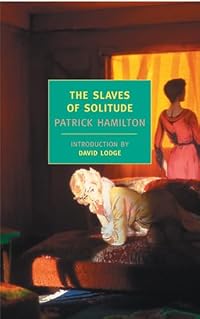
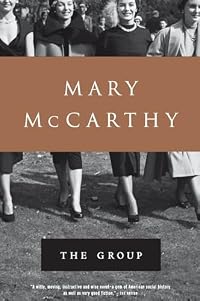
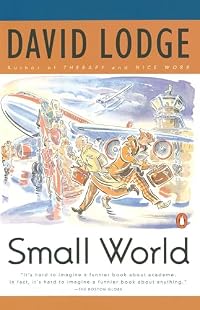
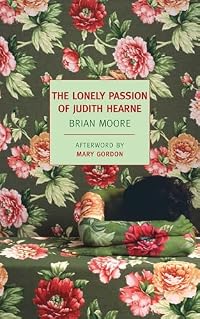
bluepiano Another enjoyable account from the 1950s of doings and misdoings at an American university. (McCarthy is said to have been the original of one of Jarrell's characters, in fact.)
20
Member Reviews
Dwight Robbins, the trendy young president of Benton College, has hired Gertrude Johnson, “the brightest of our younger novelists,” to teach creative writing, and before the end of the academic year he is regretting it. Evidently, she is going to spear the entire faculty of the staidly “progressive” women’s college — which has long flown under everyone’s radar with its discrete reputation for educational methods that get good results out of even the dimmest daughters of the wealthy — in her next novel. And there’s not much anyone can do about it.
The distinguished poet Randall Jarrell’s only work of prose fiction was clearly inspired by the year he spent teaching at Sarah Lawrence College in New York after the end of show more his military service in World War II, and some of the characters are obviously at least loosely based on real people (Robbins has similarities to progressive educationalist Harold Taylor, and Gertrude is said to have been partly based on Mary McCarthy, who taught at Sarah Lawrence the same year as Jarrell), but it doesn’t quite manage to be the bitter satire the set-up would lead us to expect. Jarrell was just too nice a person to write satire: his real affection for the college and all the people in the book, even the slightly soulless Gertrude, constantly shines through the surface of the jokes.
The book might have appeared in the same year as Kingsley Amis’s campus novel Lucky Jim, but it has far more in common with the genteel and slightly ponderous style of Max Beerbohm’s Zuleika Dobson, written forty years earlier. A very pleasant experience, but reading it feels oddly like attending a tea-party with a delightful elderly maiden aunt… show less
The distinguished poet Randall Jarrell’s only work of prose fiction was clearly inspired by the year he spent teaching at Sarah Lawrence College in New York after the end of show more his military service in World War II, and some of the characters are obviously at least loosely based on real people (Robbins has similarities to progressive educationalist Harold Taylor, and Gertrude is said to have been partly based on Mary McCarthy, who taught at Sarah Lawrence the same year as Jarrell), but it doesn’t quite manage to be the bitter satire the set-up would lead us to expect. Jarrell was just too nice a person to write satire: his real affection for the college and all the people in the book, even the slightly soulless Gertrude, constantly shines through the surface of the jokes.
The book might have appeared in the same year as Kingsley Amis’s campus novel Lucky Jim, but it has far more in common with the genteel and slightly ponderous style of Max Beerbohm’s Zuleika Dobson, written forty years earlier. A very pleasant experience, but reading it feels oddly like attending a tea-party with a delightful elderly maiden aunt… show less
Let’s see if I have this straight. Mary McCarthy spent a year teaching creative writing at Sarah Lawrence College in the late 1940s. In 1952, she published The Groves of Academe, which some credit as being the first faculty novel. In the years since, the shelf devoted to that inbred genre stretches into the next valley. Ms. McCarthy has a lot to answer for.
It happens that the poet Randall Jarrell taught at Sarah Lawrence that same year. Two years after McCarthy’s book appeared, Jarrell published this satire about a novelist of repute who spends a year teaching at a progressive women’s college and uses that year to gather material for a savage novel.
I haven’t read Groves, but I’m sure Jarrell’s book is funnier. I haven’t show more guffawed while reading so often since the last Mark Twain I read. I don’t know if McCarthy ever spoke to Jarrell again. In addition to being a good writer, she seems to have been a top-notch feuder.
Jarrell’s telling jabs at the foibles of institutions of higher learning balance between merciless and affectionate. Many are the observations of his own alter ego, the narrator, but the most telling blows are landed by the novelist, Gertrude. In singing the praises of Benton College to the Committee on Aims, she declaims: “Beautiful spot! So young, so lovely! So unravaged by the fierce intellectual life of our century, so serene!” (p. 211).
In one of my favorite scenes, Gertrude dissects a visiting lecturer at the reception in the home of the college’s president. The lecturer, Daudier (pronounced Dod-yer), seems to be an amalgam of Clifton Fadiman and Mortimer Adler. This scene comes near the end of the book, just as I was beginning to wonder whether Jarrell’s love of paradox didn’t border on the perverse (“you had to hear it not to believe it” - p. 25). The book is witty and insightful from beginning to end. show less
It happens that the poet Randall Jarrell taught at Sarah Lawrence that same year. Two years after McCarthy’s book appeared, Jarrell published this satire about a novelist of repute who spends a year teaching at a progressive women’s college and uses that year to gather material for a savage novel.
I haven’t read Groves, but I’m sure Jarrell’s book is funnier. I haven’t show more guffawed while reading so often since the last Mark Twain I read. I don’t know if McCarthy ever spoke to Jarrell again. In addition to being a good writer, she seems to have been a top-notch feuder.
Jarrell’s telling jabs at the foibles of institutions of higher learning balance between merciless and affectionate. Many are the observations of his own alter ego, the narrator, but the most telling blows are landed by the novelist, Gertrude. In singing the praises of Benton College to the Committee on Aims, she declaims: “Beautiful spot! So young, so lovely! So unravaged by the fierce intellectual life of our century, so serene!” (p. 211).
In one of my favorite scenes, Gertrude dissects a visiting lecturer at the reception in the home of the college’s president. The lecturer, Daudier (pronounced Dod-yer), seems to be an amalgam of Clifton Fadiman and Mortimer Adler. This scene comes near the end of the book, just as I was beginning to wonder whether Jarrell’s love of paradox didn’t border on the perverse (“you had to hear it not to believe it” - p. 25). The book is witty and insightful from beginning to end. show less
I read this years ago. It is still funny, although it has aged a bit. The novel is about a progressive liberal arts college, ca. 1948, called Benton. Jarrell modeled it on Sarah Lawrence, where he taught for a time in the late 1940s. It is a wonderful sendup of the oddities of such a place, told largely through sketches of various faculty members and their families, with oddball students wandering through. Some are said to be modeled on Jarrell's colleagues at the school: the novelist Gertrude Johnson on Mary McCarthy, Irene Rosenbaum on Hannah Arendt.
The book is peppered with literary and biblical allusions and quotations, which are almost never identified. Wordsworth, Keats, Auden, Jarrell's own works, and others pop up. These show more include one of the more withering adaptations of Shakespeare:
In another place he alludes to Auden's own judgement of "September 1, 1939:"
Jarrell and Auden moved in the same circles, so he likely had it directly from the author. In any case, Jarrell assumes a high level of education and culture, as he defined them.
Much of the satire is biting, but always tempered by an affection for his victims.
A few more quotes:
The tone can be almost wistful, somewhat elegiac at times. At the end of the novel the unnamed narrator, a poet and almost certainly intended to be identified with Jarrell himself, is leaving Benton for another school. He cleans out his office and wanders the campus:
The book is peppered with literary and biblical allusions and quotations, which are almost never identified. Wordsworth, Keats, Auden, Jarrell's own works, and others pop up. These show more include one of the more withering adaptations of Shakespeare:
Age could not wither nor custom stale her infinite monotony: in fact, neither age nor custom could do anything (as they said, their voices rising) with the American novelist Gertude Johnson.
In another place he alludes to Auden's own judgement of "September 1, 1939:"
Flo Whittaker had once gently reproved Dr, Rosenbaum for his attitude towards politics. She had done so by quoting to him, in tones that rather made for righteousness, a line of poetry she had often seen quoted in this connection: "We must love one another or die." Dr. Rosenbaum replied: "We must love one another and die."
Jarrell and Auden moved in the same circles, so he likely had it directly from the author. In any case, Jarrell assumes a high level of education and culture, as he defined them.
Much of the satire is biting, but always tempered by an affection for his victims.
A few more quotes:
Half the campus was designed by Bottom the Weaver, half by Ludwig Mies van der Rohe; Benton had been endowed with one to begin with, and had smiled and sweated and spoken for the other.
Jeremy Bentham's stuffed body would not have been ill at ease in their house.
He had not evolved to the stage of moral development at which hypocrisy was possible.
Her point of view about student work was that of a social worker teaching finger-painting to children or the insane.
The tone can be almost wistful, somewhat elegiac at times. At the end of the novel the unnamed narrator, a poet and almost certainly intended to be identified with Jarrell himself, is leaving Benton for another school. He cleans out his office and wanders the campus:
As I walked back through Benton to my office, I hardly looked at Benton. I felt that I had misjudged Benton, somehow ... and yet I didn't fell repentant, only confused and willingly confused; and I was willing for Benton in its turn to misjudge me. I signed with it then a separate peace. There was no need for us to judge each other, we said, we knew each other too well; we knew each other by heart. Then we yawned and turned sleepily from each other, and sank back into sleep.show less
I wish he'd written more than one novel. Jarrall is of course most famous for 'The Death of the Ball Turret Gunner,' which was, along with 'The Hollow Men,' one of the poems responsible for getting me into literature 25 years ago, when I was 12 or 13.
Too busy to say much right now: this is a superior, perhaps one of the best, of the academic fiction I've read, although I have to admit that I don't read much of it: too self-indulgent. It's as good as Pnin, better in many ways than Possession, and leaves crap like David Lodge or Francine Prose in the crapdust. And, unlike Amis's Lucky Jim, Jarrall's satire often discovers things to like in academia. With that in mind, this excerpt from the summary is pretty hamfisted: "Pictures from an show more Institution is a superb series of poisonous portraits, set pieces, and endlessly quotable put-downs. One reads it less for plot than sharp satire, of which Jarrell is the master." No, actually, it's a lot more than that, and that's obvious, again, if you compare it to Lucky Jim: but that would require, oh, knowing anything about the genre before writing the blurb. Now, as for the purportedly savage caricature of Mary McCarthy: sort of. But one has to observe just how brilliant the Gertrude character is: she's mean, but there's no character more witty or feared in the novel, and it's never said that Gertrude's a bad writer. If someone savagely portrayed me this way, I'd have his babies.
So, if you don't like an academic novel that's light on plot, one whose prose is a set of poetic maxims strung together, then read Jane Smiley's Moo. Otherwise, read this. Now. show less
Too busy to say much right now: this is a superior, perhaps one of the best, of the academic fiction I've read, although I have to admit that I don't read much of it: too self-indulgent. It's as good as Pnin, better in many ways than Possession, and leaves crap like David Lodge or Francine Prose in the crapdust. And, unlike Amis's Lucky Jim, Jarrall's satire often discovers things to like in academia. With that in mind, this excerpt from the summary is pretty hamfisted: "Pictures from an show more Institution is a superb series of poisonous portraits, set pieces, and endlessly quotable put-downs. One reads it less for plot than sharp satire, of which Jarrell is the master." No, actually, it's a lot more than that, and that's obvious, again, if you compare it to Lucky Jim: but that would require, oh, knowing anything about the genre before writing the blurb. Now, as for the purportedly savage caricature of Mary McCarthy: sort of. But one has to observe just how brilliant the Gertrude character is: she's mean, but there's no character more witty or feared in the novel, and it's never said that Gertrude's a bad writer. If someone savagely portrayed me this way, I'd have his babies.
So, if you don't like an academic novel that's light on plot, one whose prose is a set of poetic maxims strung together, then read Jane Smiley's Moo. Otherwise, read this. Now. show less
Continuously, and sometimes excruciatingly caustic and funny at the expense of expensive American girls' colleges and their staff. Almost every page has a memorable quote - of the President, an ex-Olympic diver, "He expressed grief in its instant, or powdered form"; of the house in which the Rosenbaum's lived "It was the child Cecil B. de Mille's idea of The House that Saladin Built" - I could go on for almost ever. It is Jarrell having fun and revelling in what he did best, and it shows.
This may be the most consistently witty book ever written. There may be a sentence that couldn't be extracted and framed, but you would have to hunt for it.
The usual disclaimer about resemblances to actual people and places is attached, but is even less credible than usual. A little online research reveals that the college is Sarah Lawrence, and the villain -- or so it is asserted -- is the novelist Mary McCarthy.
The usual disclaimer about resemblances to actual people and places is attached, but is even less credible than usual. A little online research reveals that the college is Sarah Lawrence, and the villain -- or so it is asserted -- is the novelist Mary McCarthy.
This book had flashes of clever writing, but much more that was obscure and pointless. Perhaps prose by a poet tends toward taking risks of metaphor and expression that work in the more spare poetic medium, but fail in a prose narrative. There was an underlying snarky tone, in which nearly every character is faulted as pathetic, or mindlessly selfish and provincial, that made it further unsatisfying.
Members
- Recently Added By
Published Reviews
ThingScore 100
On the jacket of Randall Jarrell's first novel, "Pictures From an Institution," are printed no less than eleven extravagant tributes from other literary intellectuals of varying degrees of fame. Such a bombardment of advance praise makes wonderfully eloquent advertising copy. It may even awe timid readers into such humility that they won't dare admit to a dissenting opinion. On the other hand, show more it might antagonize them into surly skepticism. Can any novel be that good? No, no novel can and Mr. Jarrell's isn't. In fact, it isn't really a novel at all. "Pictures From an Institution" doesn't need to be a novel for the sufficient reason that it is one of the wittiest books of modern times. show less
added by TheoClarke
Lists

The Guardian's 1000 Novels Everyone Must Read
1,005 works; 546 members

Best Campus Novels
99 works; 18 members

stories at work
43 works; 7 members

Read This Next
120 works; 3 members

National Book Award Finalists - Fiction
377 works; 11 members

Michael Dirda's 100 Best Comic Novels
100 works; 1 member
Author Information

40+ Works 5,035 Members
Randall Jarrell was born in Nashville, Tennessee on May 6, 1914. He earned a bachelor's and master's degrees from Vanderbilt University. His first book of poetry, Blood from a Stranger, was published in 1942. During World War II, he served with the Army Air Force as a control tower operator. His other books of poetry include Little Friend, Little show more Friend; Losses; and The Lost World. He won the National Book Award in 1961 for The Woman at the Washington Zoo. In addition to writing poetry, he reviewed it during a brief period spent as poetry editor for The Nation. Poetry and the Age and A Sad Heart at the Supermarket are collections of his essays as a poetry critic. His teaching career included stints at Kenyon College, the University of Texas, Sarah Lawrence College, the University of Illinois, and the University of North Carolina/Greensboro. He also was the 11th Consultant in Poetry to the Library of Congress, a position that now bears the title Poet Laureate. He was hit by a car in Chapel Hill, North Carolina and died in October 14, 1965 at the age of 51. (Bowker Author Biography) Randall Jarrell (1914-65) was a prolific poet, critic, and translator. His Complete Poems are available from FSG. (Publisher Provided) show less
Some Editions
Awards and Honors
Awards
Distinctions
Series
Belongs to Publisher Series
Common Knowledge
- Canonical title
- Pictures from an Institution
- Original publication date
- 1954
- Dedication
- To Mary and Hannah
- First words
- Half the campus was designed by Bottom the Weaver, half by Ludwig Mies van der Rorhe; Benton had been endowed with one to begin with, and had smiled and sweated and spoken for the other.
- Quotations
- Gertrude's bark was her bite; and many a bite has lain awake all night longing to be Gertrude's bark.
She was, surely, the least sexual of beings; when cabbages are embarrassed about the facts of life, they tell their little cabbages that they found them under Mrs. Whittaker.
[Of two musical pieces:] They're both essentially experiences in pure duration.
As a writer Gertrude had one fault more radical than all the rest: she did not know--or rather, did not believe--what it was like to be a human being. She was one, intermittently, but while she wasn't she did not remember wha... (show all)t it had felt like to be one; and her worse self distrusted her better too thoroughly to give it much share, ever, in what she said or wrote. - Last words
- (Click to show. Warning: May contain spoilers.)She answered, "Of course I can. I'll be right over."
Classifications
Statistics
- Members
- 519
- Popularity
- 57,373
- Reviews
- 10
- Rating
- (3.58)
- Languages
- English
- Media
- Paper, Ebook
- ISBNs
- 9
- ASINs
- 11