
Adam Mars-Jones
Author of The Darker Proof: Stories from a Crisis
About the Author
Works by Adam Mars-Jones
Associated Works
Tagged
Common Knowledge
- Birthdate
- 1954-10-26
- Gender
- male
- Education
- Westminster School, London
University of Cambridge (Trinity Hall)
University of Virginia - Occupations
- professor (University of Virginia ∙ Creative Writing)
film critic - Awards and honors
- Granta's Best of Young British Novelists (1983)
Granta's Best of Young British Novelists (1993) - Agent
- PFD, Drury House
- Short biography
- Writer and critic Adam Mars-Jones was born in London in 1954. Educated at Westminster School and Trinity Hall, Cambridge, he studied and then taught Creative Writing at the University of Virginia. He was film critic for The Independent between 1986 and 1997 and for The Times between 1998 and 2000.
- Nationality
- UK
- Birthplace
- London, England, UK
- Places of residence
- London, England, UK
Virginia, USA - Associated Place (for map)
- UK
Members
Reviews
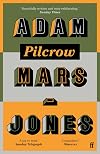
I loved the first 2/3 of this book, in which John narrates his life story from toddler-hood until about age 13/14. The last third of the book dragged for me a bit, perhaps because I felt that many of the episodes were repetitious, and perhaps because my personal reading preferences do not include the subject of a young boy's first sexual experiences (homosexual in this case).
John's narrative voice is delightful, and his story is for the most part humorous, made all the more so by the fact show more that he is paralyzed. He was struck at an early age by a joint disease initially diagnosed as a form of rheumatoid arthritis, for which the doctor prescribed complete bed rest and immobility. (Ever try to keep a 3-year old still? John's mother does a valiant job of keeping him quiet and amused.) Several years later, the correct diagnosis of Still's Disease is made. The treatment for Still's Disease is the exact opposite of immobility--the patient should move as much as possible to keep the joints lubricated. As John states, "I had done nothing of the sort. I had been lying down on the job, and bed rest had let the disease's effects run riot through my body. Still's disease had taken away my power of movement without meeting even token resistance."
This book is in no way a downer, however, nor could it even be classified into the "disease of the week" genre. John is able to make even descriptions of his wallpaper amusing, and keeps us interested in reading about even the most trivial events in his life:
"By now it was a big thing if two wet leaves of different colours, one red, one yellow, happened to be plastered against the window....It was headline news if Dad hung up his trousers in the bedroom upstairs without taking the change out of his pockets, so that the coins rained down on the floorboards."
The characters around him are vivid and humorously real. On his mother:
"Mum hoarded the recipes from magazines, but was afraid to try them until she had scanned subsequent issues in search of corrections and misprints. She had once been tempted by a recipe for home-salted beef, only to read in a later issue that the amount of saltpetre had been overstated by a factor of ten, making it potentially toxic. We might all have been killed by a typographical error--except that I wouldn't have touched it. I alone would have been left alive to charge "Woman's Own" with manslaughter by misprint."
John's mother and her mother ("Granny") have certain unresolved issues:
"Granny was always a vivid figure to me, though not in the oppressive way she was to Mum. I stood up to her sometimes. I knew no better....I remember Granny squashing Mum flat one day just by rearranging the washing while she was out."
Granny's household was one in which, "there might as well have been a motto in cross-stitch over the fireplace, reading HOUSEWORK IS A SERIOUS ENTERPRISE, and a companion piece on the opposite wall declaring ANY FOOL CAN MIND A CHILD."
Granny's advice to John:
"What she did when she couldn't sleep, she said, and what I should do also, was to imagine herself being inside one of the cells {of a honeycomb} with a little brush, a brush as soft as a whisper. Only when my brush had done its work and the little chamber was perfectly clean and shining should I move onto the next chamber with the whispering brush. In this way the mind might be calmed and sleep invited. I liked the idea of polyhedral infinity, my mind as the empire of cells needing proper maintenance."
John's Dad to some extent was a man of the 1950's, perhaps disappointed not to have a son to do sports with, and to some extent jealous of the attention John received from his mother. "Dad always said I could wrap Mum around my little finger, which was a delicious image. I pictured a mother shrunken, made pliable, a plasticene woman I could wear like a toy ring or a sticking plaster." Yet his Dad is the one who believes John can have a "normal" future. When John said he might want to be an actor when he grows up and his mother throws cold water on that idea--
"Be realistic--what part could he play?
"'Well,' said Dad, 'he could be an old lady sitting in an upright wing chair in the corner.'
"'But what sort of role is that?' she pleaded.
"'Oh I would say that it's quite a good one!' he shot back. 'For one thing, he could direct operations like a general in battle....'"
John's world expands when he is sent to the Canadian Red Cross Memorial Hospital, run by an expert in Still's Disease, although in those days, John says, "being an expert in Still's Disease didn't actually mean you knew very much." The doctor is also an expert in childhood leukemia, and half the patients are leukemia patients. Many of the children aren't quite sure which they are, knowing only that the leukemia patients usually die. The ward's bullies led by Wendy (who spoils "Peter Pan" forever for John) use this uncertainty to keep the other children under their thumbs. The treatment for the Still's Disease children consists of physical therapy by sadistic technicians. "Walking was an absolute passion and obsession of the establishment... Not to walk qualified as...a moral defect, but was no good telling that to my joints." Still, John keeps the story of his life in the hospital interesting and funny.
After several years at the hospital, John is sent to The Vulcan School for Disabled and Intelligent Boys. Its headmaster had been crippled in the war, and John says, "I was alerted to his disabled status, which was presented as a wonderful treat for me, as if he had let his legs be smashed by a tank just to make me feel at home."
It is at the Vulcan School that John begins puberty and his focus shifts to sexual fantasies about the various school masters on whom he develops crushes, as well as his plotting and maneuvering for some sort of sexual encounter with one of the boys to whom he is attracted. Admittedly, John's narrative tone continues to be engaging, light-hearted and self-deprecating. His descriptions of the travails of two boys with immobile joints, who have finally managed to find themselves alone and without supervision, trying to attain some sort of sexual touching can be amusing. However, I didn't enjoy this part of the book as much as I did the story of John's more innocent years.
The book ends with John's decision to leave Vulcan and attend a traditional boarding school. Pilcrow is the first of an intended trilogy. The second volume has been published, and I will probably read it at some point. The third volume is not yet published. show less
John's narrative voice is delightful, and his story is for the most part humorous, made all the more so by the fact show more that he is paralyzed. He was struck at an early age by a joint disease initially diagnosed as a form of rheumatoid arthritis, for which the doctor prescribed complete bed rest and immobility. (Ever try to keep a 3-year old still? John's mother does a valiant job of keeping him quiet and amused.) Several years later, the correct diagnosis of Still's Disease is made. The treatment for Still's Disease is the exact opposite of immobility--the patient should move as much as possible to keep the joints lubricated. As John states, "I had done nothing of the sort. I had been lying down on the job, and bed rest had let the disease's effects run riot through my body. Still's disease had taken away my power of movement without meeting even token resistance."
This book is in no way a downer, however, nor could it even be classified into the "disease of the week" genre. John is able to make even descriptions of his wallpaper amusing, and keeps us interested in reading about even the most trivial events in his life:
"By now it was a big thing if two wet leaves of different colours, one red, one yellow, happened to be plastered against the window....It was headline news if Dad hung up his trousers in the bedroom upstairs without taking the change out of his pockets, so that the coins rained down on the floorboards."
The characters around him are vivid and humorously real. On his mother:
"Mum hoarded the recipes from magazines, but was afraid to try them until she had scanned subsequent issues in search of corrections and misprints. She had once been tempted by a recipe for home-salted beef, only to read in a later issue that the amount of saltpetre had been overstated by a factor of ten, making it potentially toxic. We might all have been killed by a typographical error--except that I wouldn't have touched it. I alone would have been left alive to charge "Woman's Own" with manslaughter by misprint."
John's mother and her mother ("Granny") have certain unresolved issues:
"Granny was always a vivid figure to me, though not in the oppressive way she was to Mum. I stood up to her sometimes. I knew no better....I remember Granny squashing Mum flat one day just by rearranging the washing while she was out."
Granny's household was one in which, "there might as well have been a motto in cross-stitch over the fireplace, reading HOUSEWORK IS A SERIOUS ENTERPRISE, and a companion piece on the opposite wall declaring ANY FOOL CAN MIND A CHILD."
Granny's advice to John:
"What she did when she couldn't sleep, she said, and what I should do also, was to imagine herself being inside one of the cells {of a honeycomb} with a little brush, a brush as soft as a whisper. Only when my brush had done its work and the little chamber was perfectly clean and shining should I move onto the next chamber with the whispering brush. In this way the mind might be calmed and sleep invited. I liked the idea of polyhedral infinity, my mind as the empire of cells needing proper maintenance."
John's Dad to some extent was a man of the 1950's, perhaps disappointed not to have a son to do sports with, and to some extent jealous of the attention John received from his mother. "Dad always said I could wrap Mum around my little finger, which was a delicious image. I pictured a mother shrunken, made pliable, a plasticene woman I could wear like a toy ring or a sticking plaster." Yet his Dad is the one who believes John can have a "normal" future. When John said he might want to be an actor when he grows up and his mother throws cold water on that idea--
"Be realistic--what part could he play?
"'Well,' said Dad, 'he could be an old lady sitting in an upright wing chair in the corner.'
"'But what sort of role is that?' she pleaded.
"'Oh I would say that it's quite a good one!' he shot back. 'For one thing, he could direct operations like a general in battle....'"
John's world expands when he is sent to the Canadian Red Cross Memorial Hospital, run by an expert in Still's Disease, although in those days, John says, "being an expert in Still's Disease didn't actually mean you knew very much." The doctor is also an expert in childhood leukemia, and half the patients are leukemia patients. Many of the children aren't quite sure which they are, knowing only that the leukemia patients usually die. The ward's bullies led by Wendy (who spoils "Peter Pan" forever for John) use this uncertainty to keep the other children under their thumbs. The treatment for the Still's Disease children consists of physical therapy by sadistic technicians. "Walking was an absolute passion and obsession of the establishment... Not to walk qualified as...a moral defect, but was no good telling that to my joints." Still, John keeps the story of his life in the hospital interesting and funny.
After several years at the hospital, John is sent to The Vulcan School for Disabled and Intelligent Boys. Its headmaster had been crippled in the war, and John says, "I was alerted to his disabled status, which was presented as a wonderful treat for me, as if he had let his legs be smashed by a tank just to make me feel at home."
It is at the Vulcan School that John begins puberty and his focus shifts to sexual fantasies about the various school masters on whom he develops crushes, as well as his plotting and maneuvering for some sort of sexual encounter with one of the boys to whom he is attracted. Admittedly, John's narrative tone continues to be engaging, light-hearted and self-deprecating. His descriptions of the travails of two boys with immobile joints, who have finally managed to find themselves alone and without supervision, trying to attain some sort of sexual touching can be amusing. However, I didn't enjoy this part of the book as much as I did the story of John's more innocent years.
The book ends with John's decision to leave Vulcan and attend a traditional boarding school. Pilcrow is the first of an intended trilogy. The second volume has been published, and I will probably read it at some point. The third volume is not yet published. show less
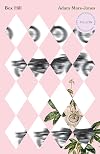
It may not have taken me very long to read this novella by Adam Mars-Jones, but I can guarantee you it will be on my mind for a very long time. The story has left me with mixed emotions - often opposites, and I'm feeling certain that my review won't really do this book justice.
This book begins in 1975 in England... on Colin's 18th birthday. He literally stumbles across a man's boots at Box Hill. That man is Ray and immediately something sparks between them. Colin hasn't thought much prior to show more that very moment about his sexual orientation or kinks... and he realizes in moments that the is gay and a definite bottom. That's just the beginning of the epic tale of Colin and Ray.
There's a lot packed into this novella and I think that is the same for Ray and Colin's relationship. I don't even know how to describe it. Is it love? Is it a partnership? Is it an understanding? What. happens between these two men isn't even always consensual and yet, Colin seems content in a way that he wasn't before he met Ray. At times, the things that Colin accepts as his fate prompted a visceral reaction from me. I was shocked that his self-esteem would let him believe that he was destined for nothing more than what was offered. I suppose that's what makes this novella spectacular. As much as I wanted more for Colin, that was under my own interpretation... Colin is definitely finding out about himself even if he's unable to find out much about Ray.
The description of the book almost reads as though Colin stumbles upon a lovely summer affair but the relationship between these two men is far from that. A perfect storm of low self-esteem and a powerful, domineering top results in Colin being a slave to Ray's wants and needs. It's fine for him, in spite of the fact that he refers to their first evening together as a "rape".
The most remarkable thing about this novella is that I enjoyed it despite some of the situations that Colin found himself in. There were definitely things that made me uncomfortable but Colin is decidedly likable. I will definitely be looking for more by Adam Mars-Jones. Beautiful writing, provocative and intelligent.
-=-=-=-
I will post this review to my blog on August 1, 2020 show less
This book begins in 1975 in England... on Colin's 18th birthday. He literally stumbles across a man's boots at Box Hill. That man is Ray and immediately something sparks between them. Colin hasn't thought much prior to show more that very moment about his sexual orientation or kinks... and he realizes in moments that the is gay and a definite bottom. That's just the beginning of the epic tale of Colin and Ray.
There's a lot packed into this novella and I think that is the same for Ray and Colin's relationship. I don't even know how to describe it. Is it love? Is it a partnership? Is it an understanding? What. happens between these two men isn't even always consensual and yet, Colin seems content in a way that he wasn't before he met Ray. At times, the things that Colin accepts as his fate prompted a visceral reaction from me. I was shocked that his self-esteem would let him believe that he was destined for nothing more than what was offered. I suppose that's what makes this novella spectacular. As much as I wanted more for Colin, that was under my own interpretation... Colin is definitely finding out about himself even if he's unable to find out much about Ray.
The description of the book almost reads as though Colin stumbles upon a lovely summer affair but the relationship between these two men is far from that. A perfect storm of low self-esteem and a powerful, domineering top results in Colin being a slave to Ray's wants and needs. It's fine for him, in spite of the fact that he refers to their first evening together as a "rape".
The most remarkable thing about this novella is that I enjoyed it despite some of the situations that Colin found himself in. There were definitely things that made me uncomfortable but Colin is decidedly likable. I will definitely be looking for more by Adam Mars-Jones. Beautiful writing, provocative and intelligent.
-=-=-=-
I will post this review to my blog on August 1, 2020 show less

This book was described to me at one point as an act of ventriloquism — and now having finished it, I can’t help but agree. Mars-Jones has a real knack for inhabiting fully his characters, giving them a richness of life and language not normally afforded to literary fiction. Often I find in capital-L Literary works, people can speak with odd diction, tending towards vague aphorism or poignancy, with authors unwilling or unable to try to capture the more naturalistic cadences of the way show more we speak with one another. Batlava Lake eschews this in favour of a candid, personable verisimilitude which makes every turn of the page a deeper insight into this lively, entertaining narrative. show less

Box Hill is a short novel, reflecting on a relationship long in the past but still very meaningful to the narrator Colin. I’d hesitate to call this a love story because it isn’t an equal relationship but it is a story about relationships of unequal standing.
It’s Colin’s eighteenth birthday as the book opens, and he’s gone to Box Hill to check out the bikes. A spot for bikers to congregate, Colin knows that it’s not really his place (being overweight and only in possession of a show more cheap leather jacket and restrained flares) but he fantasises about the leathers and the bikes. He’s wandering when he trips over a man, Ray. Ray is a biker from top to toe in leathers and a motorbike he takes intricate care for. Ray wakes up and propositions Colin, and they move in together that evening. From the very first evening, the reader gets the idea that this isn’t a normal relationship. Ray dominates Colin to the point of rape, yet Colin is transfixed by Ray and deeply in love. Ray is controlling, discarding Colin’s toiletries and never giving Colin a key to the flat (despite living together for six years). Colin is there as Ray’s trophy, a thing, to share with the other bikers. He’s an object and reflecting on this time, Colin realises that this relationship has dominated his future ones. How does it end? I won’t spoil it, but there is no closure which gives reason for Colin returning to his relationship with Ray over and over again.
The story is told by Colin in the first person, so the reader doesn’t ever get to know Ray’s feelings or intent. Colin clearly has insecurities about his looks and intelligence and repeatedly tells the reader how grateful he is for Ray. Unfortunately, that’s another reason for poor Colin to cop the physical and mental abuse from Ray. An interesting parallel to Colin and Ray’s relationship is that of Colin’s parents. His father becomes incredibly clingy and worried without his wife, to the point where she can’t leave the room without telling him where she’s going. Another form of abuse or dementia? It’s interesting that both Colin and his mum are used by others for security and sex.
Mars-Jones writes Colin incredibly well, to the point where it feels like reading an autobiography. It’s honest and unflinching, no matter what the topic. I raced through this.
Thank you to Scribe for the copy of this book. My review is honest.
http://samstillreading.wordpress.com show less
It’s Colin’s eighteenth birthday as the book opens, and he’s gone to Box Hill to check out the bikes. A spot for bikers to congregate, Colin knows that it’s not really his place (being overweight and only in possession of a show more cheap leather jacket and restrained flares) but he fantasises about the leathers and the bikes. He’s wandering when he trips over a man, Ray. Ray is a biker from top to toe in leathers and a motorbike he takes intricate care for. Ray wakes up and propositions Colin, and they move in together that evening. From the very first evening, the reader gets the idea that this isn’t a normal relationship. Ray dominates Colin to the point of rape, yet Colin is transfixed by Ray and deeply in love. Ray is controlling, discarding Colin’s toiletries and never giving Colin a key to the flat (despite living together for six years). Colin is there as Ray’s trophy, a thing, to share with the other bikers. He’s an object and reflecting on this time, Colin realises that this relationship has dominated his future ones. How does it end? I won’t spoil it, but there is no closure which gives reason for Colin returning to his relationship with Ray over and over again.
The story is told by Colin in the first person, so the reader doesn’t ever get to know Ray’s feelings or intent. Colin clearly has insecurities about his looks and intelligence and repeatedly tells the reader how grateful he is for Ray. Unfortunately, that’s another reason for poor Colin to cop the physical and mental abuse from Ray. An interesting parallel to Colin and Ray’s relationship is that of Colin’s parents. His father becomes incredibly clingy and worried without his wife, to the point where she can’t leave the room without telling him where she’s going. Another form of abuse or dementia? It’s interesting that both Colin and his mum are used by others for security and sex.
Mars-Jones writes Colin incredibly well, to the point where it feels like reading an autobiography. It’s honest and unflinching, no matter what the topic. I raced through this.
Thank you to Scribe for the copy of this book. My review is honest.
http://samstillreading.wordpress.com show less
Awards


You May Also Like


Associated Authors
Statistics
- Works
- 20
- Also by
- 18
- Members
- 1,130
- Popularity
- #22,721
- Rating
- 3.7
- Reviews
- 23
- ISBNs
- 60
- Languages
- 6
- Favorited
- 1