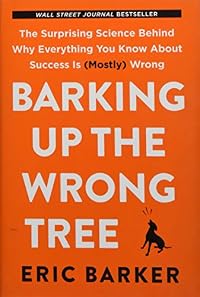
Barking Up the Wrong Tree: The Surprising Science Behind Why Everything You Know About Success Is (Mostly) Wrong
by Eric Barker
On This Page
Description
Much of the advice we've been told about achievement is logical, earnest…and downright wrong. In Barking Up the Wrong Tree, Eric Barker reveals the extraordinary science behind what actually determines success and most importantly, how anyone can achieve it. You'll learn: - Why valedictorians rarely become millionaires, and how your biggest weakness might actually be your greatest strength - Whether nice guys finish last and why the best lessons about cooperation come from gang members, show more pirates, and serial killers- Why trying to increase confidence fails and how Buddhist philosophy holds a superior solution - The secret ingredient to "grit" that Navy SEALs and disaster survivors leverage to keep going - How to find work-life balance using the strategy of Genghis Khan, the errors of Albert Einstein, and a little lesson from Spider-Man. By looking at what separates the extremely successful from the rest of us, we learn what we can do to be more like them-and find out in some cases why it's good that we aren't. Barking Up the Wrong Tree draws on startling statistics and surprising anecdotes to help you understand what works and what doesn't so you can stop guessing at success and start living the life you want. show lessTags
Recommendations
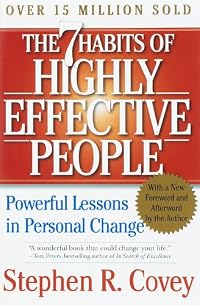
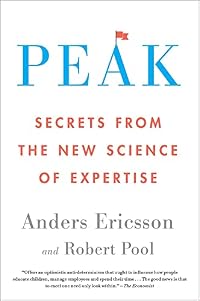
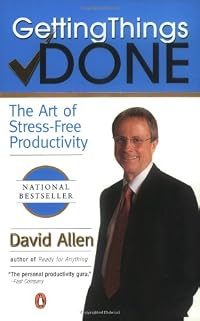
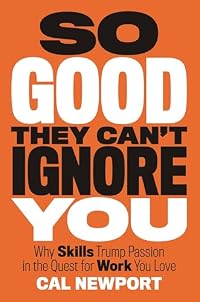

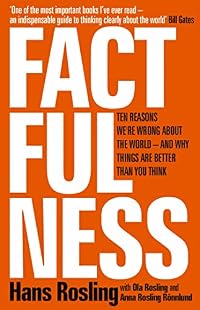
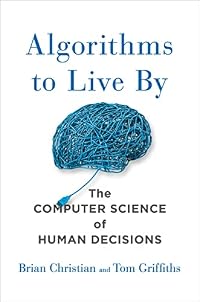
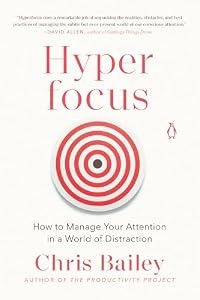
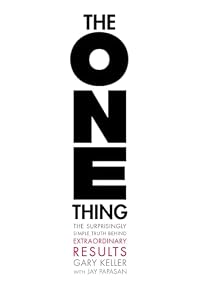

Member Recommendations
proximity1 Similarly focused. These books and their readers deserve each other.
Member Reviews
So...very...breezy! Blogger Eric Barker knows how to end a section with a cliffhanger, and if the next section doesn't completely satisfy, the next cliffhanger is often coming soon. Substitute the word "teaser" for "cliffhanger" if it works better for you. The point is that Barker knows how to keep you reading, even when you weren't satisfied by what you just read.
I wasn't satisfied because essential to Barker's method is the tossing of factoids that may or may not be true. My suspicions were irrevocably aroused on page 27, when he claimed that David Geffen sued Neil Young because Young's album Trans was "too country." Too country? Trans was entirely constructed with synthesizers and electronica, and on several songs, the humanity of show more Young's voice was lost as they were played through a vocodor. Earlier Young albums with a country flavor like Harvest and Comes a Time were among his biggest sellers, so it makes no sense for Geffen to complain about Trans—Young's least country album to that point—being "too country." Precisely the opposite was the case.
Barker summarizes this anecdote by saying that Young "was sued for being himself." Barker apparently adapted the phrase of a writer for Rolling Stone, Don McLeese, who wrote "Neil Young is the only artist in the history of modern recording to be sued for refusing to be himself." Barker inverted it to say that he was sued for being himself, and then he supported his anecdote with a statement that was on the face of it the opposite of the truth.
What makes this especially disturbing is that every page of Barker's book is sprinkled heavily with quotes and factoids to support his argument (or, as in the case of the Neil Young anecdote, to pique the reader's interest: after rereading the section, I can't figure out what it has to do with any bigger point of Barker's). None of these quotes and factoids are footnoted, so it's difficult to look them up to confirm or refute them. (To Barker's credit, there is an extensive bibliography, but connecting its entries to his anecdotes is a hit-or-miss endeavor.)
For me, this situation is a dealbreaker that broke my trust. All this said, Barker's book (Barking Up......get it?) may be valuable to some as a provocation to thinking differently about success. Many of his suggestions and examples do indeed run counter to conventional wisdom, and I'm all for that. I even think many of them are probably true. show less
I wasn't satisfied because essential to Barker's method is the tossing of factoids that may or may not be true. My suspicions were irrevocably aroused on page 27, when he claimed that David Geffen sued Neil Young because Young's album Trans was "too country." Too country? Trans was entirely constructed with synthesizers and electronica, and on several songs, the humanity of show more Young's voice was lost as they were played through a vocodor. Earlier Young albums with a country flavor like Harvest and Comes a Time were among his biggest sellers, so it makes no sense for Geffen to complain about Trans—Young's least country album to that point—being "too country." Precisely the opposite was the case.
Barker summarizes this anecdote by saying that Young "was sued for being himself." Barker apparently adapted the phrase of a writer for Rolling Stone, Don McLeese, who wrote "Neil Young is the only artist in the history of modern recording to be sued for refusing to be himself." Barker inverted it to say that he was sued for being himself, and then he supported his anecdote with a statement that was on the face of it the opposite of the truth.
What makes this especially disturbing is that every page of Barker's book is sprinkled heavily with quotes and factoids to support his argument (or, as in the case of the Neil Young anecdote, to pique the reader's interest: after rereading the section, I can't figure out what it has to do with any bigger point of Barker's). None of these quotes and factoids are footnoted, so it's difficult to look them up to confirm or refute them. (To Barker's credit, there is an extensive bibliography, but connecting its entries to his anecdotes is a hit-or-miss endeavor.)
For me, this situation is a dealbreaker that broke my trust. All this said, Barker's book (Barking Up......get it?) may be valuable to some as a provocation to thinking differently about success. Many of his suggestions and examples do indeed run counter to conventional wisdom, and I'm all for that. I even think many of them are probably true. show less
This is a fascinating, expertly written, and thoroughly satisfying read.
Barker writes like he is sitting with you at a table with a beer in his hand telling you engaging stories. Each of the stories are centered around popular thoughts, ideas, and beliefs and what he is saying is shaking many of them apart but in a way that causes you to be completely open to it. Then, just when you think "what am I supposed to do with this?" He offers some helpful suggestions for making application.
You are sitting across from him, beer in your hand, hanging on every word and then you walk away from the conversation realizing that your life is better, or at least it can be, if you apply the practical wisdom you gained by the encounter. And you walk away show more wishing the conversation wasn't over. show less
Barker writes like he is sitting with you at a table with a beer in his hand telling you engaging stories. Each of the stories are centered around popular thoughts, ideas, and beliefs and what he is saying is shaking many of them apart but in a way that causes you to be completely open to it. Then, just when you think "what am I supposed to do with this?" He offers some helpful suggestions for making application.
You are sitting across from him, beer in your hand, hanging on every word and then you walk away from the conversation realizing that your life is better, or at least it can be, if you apply the practical wisdom you gained by the encounter. And you walk away show more wishing the conversation wasn't over. show less
My initial reaction to this book was not good. I I'm not a fan of the trend among business writers to pad 20 pages of good ideas with 200 more of disconnected examples. Who ever taught today's writers to tell stories needs to add a chapter about when to stop.
Barker redeems himself with a really strong synthesis of some terrific ideas and models for crafting a successful and meaningful life and career. Well done.
Barker redeems himself with a really strong synthesis of some terrific ideas and models for crafting a successful and meaningful life and career. Well done.
Very readable and entertaining book about success, but a bit lacking in rigor and organization. The author engagingly tells lots of stories, but they come straight from other people's books or research. He occasionally interjects his own experiences in a humorous way. There are lots of good things here. If only for saying that The Secret (by Rhonda Byrne) doesn't work, he earns my respect. But the long chapters ramble on too long and the takeaways at the end of each chapter go on too long as well. In presenting both sides of each picture, for example the benefits of self confidence as well as its pitfalls, the book often leaves the reader a bit confused by the end of the chapter. I suggest you take your own notes and make your own show more success cheat sheet to refer to afterwards.
One fact check: Siula Grande is not even close to being the highest mountain in the Southern Hemisphere! show less
One fact check: Siula Grande is not even close to being the highest mountain in the Southern Hemisphere! show less
A great arsenal of anecdotes and case studies. Often stretches to show the middle way between extremes or the other side of the coin, but overall an enjoyable read.
The first thing that attracted my attention about this book was the title. Idioms are so much fun when turned on their head. The second thing is that science and common knowledge are so different in many ways. Remember your grandmother telling you not to sit in a draft, you will get sick. So this book was a must read.
Well it does cover some interesting things. Time management, leisure and work balance, working smarter not harder, are all covered. While the book is aimed more at executives, many will find some good advice in here. Yes, working mom's and stay-at-home mom's will also find some great ways to balance their lives as well.
As a parent I am able to apply some ideas to how to raise my kids. I know a book about success is not show more about parenting, but with two older teens entering adulthoood it has given me some perspective. The conclusion has some workbook activities that I will be trying out on myself, and encouraging my university student to do the same.
So, yep I liked this book and do recommend it. show less
Well it does cover some interesting things. Time management, leisure and work balance, working smarter not harder, are all covered. While the book is aimed more at executives, many will find some good advice in here. Yes, working mom's and stay-at-home mom's will also find some great ways to balance their lives as well.
As a parent I am able to apply some ideas to how to raise my kids. I know a book about success is not show more about parenting, but with two older teens entering adulthoood it has given me some perspective. The conclusion has some workbook activities that I will be trying out on myself, and encouraging my university student to do the same.
So, yep I liked this book and do recommend it. show less
I did not succeed at loving the book, but the first half was interesting. After that it sort of fell off for me.
Members
- Recently Added By
Lists

The Joe Rogan Experience Library
254 works; 3 members

Books & Films Referenced by Cal Newport's Deep Work
43 works; 1 member
Author Information
3 Works 693 Members
Eric Barker's humorous, practical blog, Barking Up the Wrong Tree, presents science-based answers and expert insight on how to be awesome at life. His work has been mentioned in the New York Times, The Wall Street Journal, TIME magazine, and Business Insider, and he has given talks at MIT, Yale, Google, NASDAQ, and the Olympic Training Center.
Some Editions
Awards and Honors
Awards
Common Knowledge
- Original publication date
- 2017-05-16
Classifications
Statistics
- Members
- 585
- Popularity
- 49,995
- Reviews
- 16
- Rating
- (4.08)
- Languages
- English, Indonesian, Portuguese, Romanian
- Media
- Paper, Audiobook, Ebook
- ISBNs
- 17
- ASINs
- 3