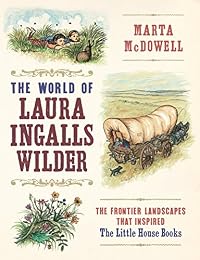
The World of Laura Ingalls Wilder: The Frontier Landscapes that Inspired the Little House Books
by Marta McDowell
On This Page
Description
"This lushly illustrated book from bestselling author Marta McDowell examines Laura Ingalls Wilder's relationship to the landscape and illuminates how it inspired the beloved Little House Books" --Tags
Recommendations


















Member Reviews
I'm predisposed to love anything Little House-related and this book is no exception. It takes a look at the series through a natural lens, focusing on the flora and fauna that Laura described in the books, and taking a closer look at their history and how accurate Laura's memories were. (Side note, she was pretty accurate.) It also talks about the gardens and prairie grasses and trees and birds mentioned in the books, and some that weren't mentioned but were a part of Laura and Almanzo's later life at Rocky Ridge Farm. It also includes tons of illustrations, maps and photographs, which I loved poring over as I read. This one's a keeper.
 This review was written for LibraryThing Early Reviewers.
I received this book through the LibraryThing Early Reviewers Program.
This book is a fascinating work of scholarship that focuses on a unique angle of Laura Ingalls Wilder's life: that of the flora and fauna described in her books and other personal writing. She had a wonderful knack for describing settings, making them come to life through her words, and this book takes that further by adding historical context and fantastically detailed descriptions and photographs.
McDowell goes through each Little House book and expands on Laura's descriptions, and fills in some blanks as well, such as going to places like Burr Oak, Iowa, which was not included in the fictionalized accounts. The book-by-book breakdown is thoroughly enjoyable, but show more the back of the book contains another treasure trove of information: a sort of tour guide of what you will find when you visit each of Laura's home sites today, and a detailed table of all plants mentioned across Laura's writing with full citations. Seriously, that alone is a jaw-dropping piece of work. The book will even tell you where to order vintage seeds so you can grow many of the plants yourself.
If you love the Little House books and want a different insight into that period of history in the upper Midwest, this book should be on your shelf. I also highly recommend this to any writers working in that area and period. I certainly will be keeping this on my shelf for future reference. show less
This book is a fascinating work of scholarship that focuses on a unique angle of Laura Ingalls Wilder's life: that of the flora and fauna described in her books and other personal writing. She had a wonderful knack for describing settings, making them come to life through her words, and this book takes that further by adding historical context and fantastically detailed descriptions and photographs.
McDowell goes through each Little House book and expands on Laura's descriptions, and fills in some blanks as well, such as going to places like Burr Oak, Iowa, which was not included in the fictionalized accounts. The book-by-book breakdown is thoroughly enjoyable, but show more the back of the book contains another treasure trove of information: a sort of tour guide of what you will find when you visit each of Laura's home sites today, and a detailed table of all plants mentioned across Laura's writing with full citations. Seriously, that alone is a jaw-dropping piece of work. The book will even tell you where to order vintage seeds so you can grow many of the plants yourself.
If you love the Little House books and want a different insight into that period of history in the upper Midwest, this book should be on your shelf. I also highly recommend this to any writers working in that area and period. I certainly will be keeping this on my shelf for future reference. show less
This review was written for LibraryThing Early Reviewers.Book received from NetGalley.
I think I woke my husband up with my squealing like a fangirl when I saw that I was approved for this book. I have loved Laura Ingalls Wilder's books for years and am always thrilled when something new comes out about her, though much of it is about things I have already learned about her. I grew up reading the "Little House" books, especially with my family coming from one of Missouri's neighbors. Laura was definitely one of their better-known daughters though her life took her through many states and territories in the US. Since this year is the 150th anniversary of her birth and with the success of "Pioneer Girl", I was hoping for some new non-fiction books to be released. I believe that this one is a show more great addition to the library. It focuses on the botany, biology, geography, and geology of the areas the Ingalls and Wilder families lived, focusing mainly on Laura. This would be a great book for the older children who want to know more about what the prairies that Laura lived on were like, and the adults that still wonder what a chokecherry is or why in the world Ma thought that watermelons gave you malaria. I loved the illustrations and photos in the book, especially the illustrations of the prairie plants that Laura described in her books. It's going to be a long wait until this comes out in September so I can add it to my shelves. show less
I think I woke my husband up with my squealing like a fangirl when I saw that I was approved for this book. I have loved Laura Ingalls Wilder's books for years and am always thrilled when something new comes out about her, though much of it is about things I have already learned about her. I grew up reading the "Little House" books, especially with my family coming from one of Missouri's neighbors. Laura was definitely one of their better-known daughters though her life took her through many states and territories in the US. Since this year is the 150th anniversary of her birth and with the success of "Pioneer Girl", I was hoping for some new non-fiction books to be released. I believe that this one is a show more great addition to the library. It focuses on the botany, biology, geography, and geology of the areas the Ingalls and Wilder families lived, focusing mainly on Laura. This would be a great book for the older children who want to know more about what the prairies that Laura lived on were like, and the adults that still wonder what a chokecherry is or why in the world Ma thought that watermelons gave you malaria. I loved the illustrations and photos in the book, especially the illustrations of the prairie plants that Laura described in her books. It's going to be a long wait until this comes out in September so I can add it to my shelves. show less
With simple prose and lovely pictures, author Marta McDowell takes the reader through the ecology, botany, and agriculture that formed the life of Laura Ingalls Wilder. From the sloughs of South Dakota to the apple orchard of Missouri, McDowell shows us the world Laura saw and loved. Laura loved farm life – planting, growing, raising chickens, harvest. She found great beauty and peace in the slow cycle of seasons. McDowell does an excellent job of comparing Laura’s real life to her books, and showing the reader where real life made the books richer and fuller. She also focuses heavily on the farm Laura and Almanzo create in the Ozarks, and uses detailed record kept by the Wilder’s to demonstrate their love of the earth and all show more growing things.
As a want-to-be Gardener and an avid Laura Ingalls Wilder fan, I found this book a delightful read. It intrigued me to read about her life, her garden, her farm, and the things she loved – what flowers and plants and vegetables she grew. I highly recommend as a must for any Wilder-lovers library and an enjoyable read for any historical gardener. show less
As a want-to-be Gardener and an avid Laura Ingalls Wilder fan, I found this book a delightful read. It intrigued me to read about her life, her garden, her farm, and the things she loved – what flowers and plants and vegetables she grew. I highly recommend as a must for any Wilder-lovers library and an enjoyable read for any historical gardener. show less
This review was written for LibraryThing Early Reviewers.I remember these books fondly from my childhood, and had never thought much about why I loved them so much. This book talks about Wilder’s connection to the natural world, and how she’d portrayed it in her books. This was definitely one of the things I remember so well from those books – the incredible sense of place she conveys throughout them. I’ve never been to a prairie – but I feel like I’ve experienced it through her eyes in her books.
McDowell breaks down the different landscapes covered in the family’s travels, and even certain intervals in the real Ingalls family life that didn’t make it into the more fictionalized version of their life in the book series. (If you want to see the difference – I highly show more recommend the annotated Pioneer Girl.) She talks about the actual plants and animals Wilder may have encountered, and gives ideas for doing a modern day pilgrimage to those sites. (You can visit the historic sites, but accurate representations of the landscapes are harder to find.) It’s a great book – very interesting for fans of the Little House series, but would be an interesting read for anyone interested in that time period, and the areas covered. show less
McDowell breaks down the different landscapes covered in the family’s travels, and even certain intervals in the real Ingalls family life that didn’t make it into the more fictionalized version of their life in the book series. (If you want to see the difference – I highly show more recommend the annotated Pioneer Girl.) She talks about the actual plants and animals Wilder may have encountered, and gives ideas for doing a modern day pilgrimage to those sites. (You can visit the historic sites, but accurate representations of the landscapes are harder to find.) It’s a great book – very interesting for fans of the Little House series, but would be an interesting read for anyone interested in that time period, and the areas covered. show less
This review was written for LibraryThing Early Reviewers.I have had a love of all things Laura Ingalls Wilder for years. While in teaching college I created a whole unit on her, her life and books. I moved and a hurricane flooded my house. Everything was in my bottom file drawer and was ruined. I was so heartbroken. When I saw this book I had to have it. The book is full of just about anything and everything you would want to know about her. There is a lot of history of that time period. There are pictures for you to peruse. Growing up on a farm in Indiana I think helped me connect with her. The book has a section about what plants she grew. Read the book and see what it was like for Laura and her family; as well as her married life. It has reignited a spark that tells me I need to reread show more these books and share them with my students once again. show less
This is terrific supplementary reading for Little House fans. McDowell covers the entire timeline that readers of the original series will be familiar with -- Laura's childhood and growing up -- and also stretches out in both directions, into what is known about Charles and Caroline, as well as a great deal of information on Laura's later life and daughter, Rose Wilder Lane. The family photographs scattered throughout are preceless, as it the attention to detail.
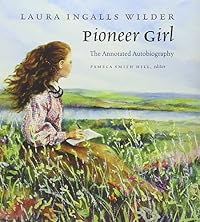
I had a high amount of hope for and interest in "Pioneer Girl", the annotated autobiography released in 2014. While that volume is surely impressive in scholarly breadth and depth, I found it a little inaccessible. McDowell's book is anything but that. It reaches out to readers show more and fans of the books and gives them all the bits they enjoyed in even greater detail -- Ma's larder, the wildflowers Laura often sopke of, Almanzo's new harvester. It explains the history of homesteading and delves into Pa's wandering spirit just as frankly as it discusses Laura and Manly's difficulties on the farm. Definitely a recommended read for any fan of Laura Ingalls Wilder. show less
I had a high amount of hope for and interest in "Pioneer Girl", the annotated autobiography released in 2014. While that volume is surely impressive in scholarly breadth and depth, I found it a little inaccessible. McDowell's book is anything but that. It reaches out to readers show more and fans of the books and gives them all the bits they enjoyed in even greater detail -- Ma's larder, the wildflowers Laura often sopke of, Almanzo's new harvester. It explains the history of homesteading and delves into Pa's wandering spirit just as frankly as it discusses Laura and Manly's difficulties on the farm. Definitely a recommended read for any fan of Laura Ingalls Wilder. show less
This review was written for LibraryThing Early Reviewers.Members
- Recently Added By
Author Information

11+ Works 1,062 Members
Common Knowledge
- Canonical title
- The World of Laura Ingalls Wilder; The World of Laura Ingalls Wilder: The Frontier Landscapes that Inspired the Little House Books
- Alternate titles
- The World of Laura Ingalls Wilder: The Frontier Landscapes that Inspired the Little House Books
- Original publication date
- 2017
- Important places
- Minnesota, USA; Missouri, USA; Kansas, USA; Wisconsin, USA; Dakota Territory, USA
- Epigraph
- It is a beautiful world.
--These Happy Golden Years
The voices of nature do no speak so plainly to us as we grow older, but I think it is because, in our busy lives, we neglect her until we grow out of sympathy. Our ears and eyes grow dull and beauties are lost to us that we ... (show all)should still enjoy.
--Missouri Ruralist - Dedication
- For Kay and Pat who remember, and to Ginger and Lucia who will.
- First words
- Preface: Some decades ago when I fit the criteria of Young Adult reader, I was Laura Ingalls. That is, when I wasn't Nancy Drew or, somewhat later, a foot-stamping Scarlett O'Hara.
- Last words
- (Click to show. Warning: May contain spoilers.)Laura knew the value of clubs for learning and getting to know like-minded people.
Classifications
Statistics
- Members
- 246
- Popularity
- 131,344
- Reviews
- 20
- Rating
- (4.46)
- Languages
- English
- Media
- Paper, Audiobook, Ebook
- ISBNs
- 5
- ASINs
- 2