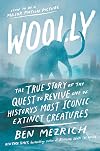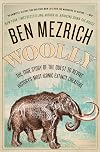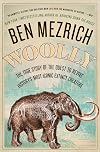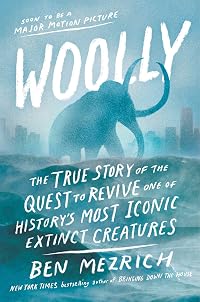
Woolly: The True Story of the Quest to Revive One of History's Most Iconic Extinct Creatures
by Ben Mezrich
On This Page
Description
The bestselling author of The Accidental Billionaires and The 37th Parallel tells the fascinating Jurassic Park-like story of the genetic restoration of an extinct species—the woolly mammoth. "Paced like a thriller...Woolly reanimates history and breathes new life into the narrative of nature" (NPR).With his "unparalleled" (Booklist, starred review) writing, Ben Mezrich takes us on an exhilarating and true adventure story from the icy terrain of Siberia to the cutting-edge genetic labs show more of Harvard University. A group of scientists work to make fantasy reality by splicing DNA from frozen woolly mammoth into the DNA of a modern elephant. Will they be able to turn the hybrid cells into a functional embryo and potentially bring the extinct creatures to our modern world?
Along with this team of brilliant scientists, a millionaire plans to build the world's first Pleistocene Park and populate a huge tract of the Siberian tundra with ancient herbivores as a hedge against an environmental ticking time bomb that is hidden deep within the permafrost. More than a story of genetics, this is a thriller illuminating the real-life race against global warming, of the incredible power of modern technology, of the brave fossil hunters who battle polar bears and extreme weather conditions, and the ethical quandary of cloning extinct animals. This "rollercoaster quest for the past and future" (Christian Science Monitor) asks us if we can right the wrongs of our ancestors who hunted the woolly mammoth to extinction and at what cost? show less
Tags
Recommendations
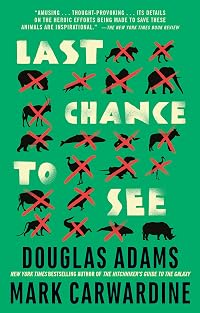
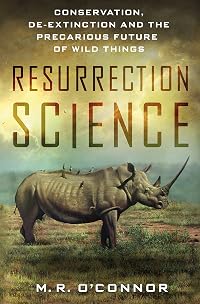



Member Recommendations
Member Reviews
YES. That is literally what I have written first in my notes for today's book review. Woolly: The True Story of the Quest to Revive One of History's Most Iconic Extinct Creatures by Ben Mezrich is the perfect mixture of technical science and literary narrative. This book tells the story of Dr. George Church and the Revivalists (a group under his tutelage) who are trying to do what has been thought impossible: Bring back the woolly mammoth from extinction. (I have to wonder if the author received a financial backing from this group because if he didn't then he certainly deserves one. He's a major fanboy.) Mezrich covers not only their attempts at this breakthrough in science but also their competition from Seoul which owns the market on show more DNA cloning. The company in Seoul believes it is possible to find a complete DNA strand while Church's group thinks that the DNA will be too degraded. They're working from pieces of DNA and splicing together traits unique to woolly mammoths with the hope that a viable fetus can be carried by an Asian elephant. A scientific group dedicated to the reversal of extinction of local flora and fauna in Siberia has begun work on Pleistocene Park which is most likely going to be a functioning reality but will take several years. This is where the woolly mammoths (who wouldn't be technically true mammoths) will reside. The controversy and hubris of scientists (especially geneticists who write DNA/RNA) is extensively discussed and is fascinating to me (and I'd imagine to most laymen). However, this isn't only about the woolly mammoth. It's also an in-depth biography of George Church and how he came to be one of the leading figures in genetics. Total 10/10. show less
I have three issues with this book
(1) In any discussion that involves genetic engineering there always comes a point when I think ‘just because we can do something should we?’ This book has that point.
(2) One of the scientist’s central to this story uses the phrase that “science fiction becomes fact when you remove the fiction.” Unfortunately the author seems to have taken the opposite approach in making this a narrative-nonfiction account by adding so much speculative dialog and imagined scenes to the facts it is sometimes hard to discern what actually happened and what is wishful thinking.
(3) This book was written too early. As this project is still ongoing there’s no real sense of a climatic conclusion, it just sort of show more fades out.
Having said all that it is a compellingly written, engaging, and thought provoking account of a fascinating project that raises all sorts of questions and discussion points. show less
(1) In any discussion that involves genetic engineering there always comes a point when I think ‘just because we can do something should we?’ This book has that point.
(2) One of the scientist’s central to this story uses the phrase that “science fiction becomes fact when you remove the fiction.” Unfortunately the author seems to have taken the opposite approach in making this a narrative-nonfiction account by adding so much speculative dialog and imagined scenes to the facts it is sometimes hard to discern what actually happened and what is wishful thinking.
(3) This book was written too early. As this project is still ongoing there’s no real sense of a climatic conclusion, it just sort of show more fades out.
Having said all that it is a compellingly written, engaging, and thought provoking account of a fascinating project that raises all sorts of questions and discussion points. show less
Woolly: The True Story of the De-Extinction of One of History’s Most Iconic Creatures by Ben Mezrich is the story of Dr. Church and his colleague's advancements in genome engineering. Mezrich graduated magna cum laude with a degree in Social Studies from Harvard University in 1991. Some of his books have been written under the pseudonym, Holden Scott. He is best known for Bringing Down the House: The Inside Story of Six MIT Students Who Took Vegas for Millions and The Accidental Billionaires: The Founding Of Facebook, A Tale of Sex, Money, Genius, and Betrayal.
I probably would not have picked this book up if I had known it was narrative fiction. The book is written in novel form and the reader is left to believe or not believe what is show more written. There is a small section of cited works but nothing is footnoted. Optionally there the reader could look up each bit of questionable information and fact check on their own. That is what I did and what I looked up did check out. This was mostly limited to events and people in the book and not conversation and smaller details.
George M. Church is the leader of the project that is working on brings back the wooly mammoth. The book traces his life from childhood to the present with all the ups and downs of a normal life. Both his accomplishments and his failures make him the person who he is today and a person willing to take a chance on projects and people. He is also very well respected in the scientific community. Instead of operating in secret, Church chooses to share information. This also allows him to collect on favors. Several of his students are also portrayed in the book and details of their varied backgrounds.
One of the more interesting aspects of the book is work being done in Siberia on permafrost. A part of northern Russia (and Canada) contain a permanently frozen layer of earth. It was once thought that if the permafrost thawed it would be suitable for farming. The current findings, however, seem to show the opposite. If the earth warms up enough to thaw the permafrost, the release of methane from the thawing permafrost would be catastrophic. The permafrost would release up to twice as much carbon dioxide and methane that is currently in the atmosphere. This ties into the Wooly Mammoth's planned de-extinction.
Mezrich writes an interesting thriller which would fit in well with the much mentioned Michael Creighton or another novelist of that genre. It would seem hard to make DNA and genome engineering exciting for the non-scientific reader but Woolly reads like a thriller. There is even two chapter that takes place in the future that lends to the thought this is a work of fiction. With that exception of the previous point, all the information appears to be legitimate. An interesting and thought provoking read on the advancement of science.
Available July 4, 2017 show less
I probably would not have picked this book up if I had known it was narrative fiction. The book is written in novel form and the reader is left to believe or not believe what is show more written. There is a small section of cited works but nothing is footnoted. Optionally there the reader could look up each bit of questionable information and fact check on their own. That is what I did and what I looked up did check out. This was mostly limited to events and people in the book and not conversation and smaller details.
George M. Church is the leader of the project that is working on brings back the wooly mammoth. The book traces his life from childhood to the present with all the ups and downs of a normal life. Both his accomplishments and his failures make him the person who he is today and a person willing to take a chance on projects and people. He is also very well respected in the scientific community. Instead of operating in secret, Church chooses to share information. This also allows him to collect on favors. Several of his students are also portrayed in the book and details of their varied backgrounds.
One of the more interesting aspects of the book is work being done in Siberia on permafrost. A part of northern Russia (and Canada) contain a permanently frozen layer of earth. It was once thought that if the permafrost thawed it would be suitable for farming. The current findings, however, seem to show the opposite. If the earth warms up enough to thaw the permafrost, the release of methane from the thawing permafrost would be catastrophic. The permafrost would release up to twice as much carbon dioxide and methane that is currently in the atmosphere. This ties into the Wooly Mammoth's planned de-extinction.
Mezrich writes an interesting thriller which would fit in well with the much mentioned Michael Creighton or another novelist of that genre. It would seem hard to make DNA and genome engineering exciting for the non-scientific reader but Woolly reads like a thriller. There is even two chapter that takes place in the future that lends to the thought this is a work of fiction. With that exception of the previous point, all the information appears to be legitimate. An interesting and thought provoking read on the advancement of science.
Available July 4, 2017 show less
Mezrich picks interesting topics, I will concede that. Readers may already have heard some years ago that a Harvard lab was working on de-extinction of the Woolly Mammoth. Mezrich brings us up to date on this project; indeed, the first and last chapters in this “nonfiction” are set in the future.
If you are familiar with Mezrich’s writing, the author weights the concept of narrative nonfiction heavily on the narrative and fiction sides, ostensibly to stoke momentum and get folks interested. The only problem is that his very good instincts about what is intrinsically an interesting story fights with his method. Sometimes the reader has to thrash through pages of invented dialogue to reach a critical conclusion, a real buzz killer if show more there ever was one.
But this story works on many levels, and while we are following his careful step-by-step thrust with one eye, our mind is busy on the operations of a lab and the implications of the study for medicine, for wildlife, for every aspect of our visible and invisible world. Mezrich eventually addresses many of these key issues in the text, usually making the science sound responsible and considered.
I started to grow more uncomfortable towards the end of the book, when we are reminded that the science has progressed so far so fast that genomic modifications have escaped the lab environment and can be undertaken in a made-over garage for relatively small costs, and that billionaires of every stripe are lining up to make their money count for something big.
The real excitement of this story is in our imaginations, and what the skills and knowledge of present-day scientists can allow us to imagine. Mezrich places us in fund-raising meetings with billionaires, allowing the most humble among us to enjoy the same stories and sense of excitement that fuels movers and shakers. If the glamour of the whole thing begins to seem suspect at some point, I think you’ve caught my sense of unease.
Mezrich shares the history of the project, including the work by Nikita Zimov in Northern Siberia, determining that woolly mammoths seemed to have played a role in preserving the permafrost levels of the tundra, by upturning the soil and exposing lower layers to the freezing temperatures. His father, Sergey Zimov, apparently theorized that reestablishing animal herds that roamed Siberia earlier in human history might play a role in keeping escaping carbon and methane, now sequestered in permafrost, from accelerating the speed at which the earth warms.
The fact that woolly mammoth remains are discovered regularly now in thawing and melting ice and snow of the north is something I had not known. The ancient ivory from the tusks is not protected and is therefore an important source of income for hunters, sold in lieu of protected elephant tusks, for the same reasons, to the same buyers.
The scientists involved in the story at one of the Church labs at Harvard are fascinating individuals in their own right, each with a backstory that only fuels our interest. The project has been going on long enough now that the twenty-something personnel involved at the beginning of the project are turning it over to others, younger ones still, to ensure continuity of skills on such a forward-looking project. The whole concept and execution of the mammoth idea is sufficiently…mammoth…and complex enough to make readers feel as though they have been subtly changed by the experience.
(view spoiler)
Due out July 4th. show less
If you are familiar with Mezrich’s writing, the author weights the concept of narrative nonfiction heavily on the narrative and fiction sides, ostensibly to stoke momentum and get folks interested. The only problem is that his very good instincts about what is intrinsically an interesting story fights with his method. Sometimes the reader has to thrash through pages of invented dialogue to reach a critical conclusion, a real buzz killer if show more there ever was one.
But this story works on many levels, and while we are following his careful step-by-step thrust with one eye, our mind is busy on the operations of a lab and the implications of the study for medicine, for wildlife, for every aspect of our visible and invisible world. Mezrich eventually addresses many of these key issues in the text, usually making the science sound responsible and considered.
I started to grow more uncomfortable towards the end of the book, when we are reminded that the science has progressed so far so fast that genomic modifications have escaped the lab environment and can be undertaken in a made-over garage for relatively small costs, and that billionaires of every stripe are lining up to make their money count for something big.
The real excitement of this story is in our imaginations, and what the skills and knowledge of present-day scientists can allow us to imagine. Mezrich places us in fund-raising meetings with billionaires, allowing the most humble among us to enjoy the same stories and sense of excitement that fuels movers and shakers. If the glamour of the whole thing begins to seem suspect at some point, I think you’ve caught my sense of unease.
Mezrich shares the history of the project, including the work by Nikita Zimov in Northern Siberia, determining that woolly mammoths seemed to have played a role in preserving the permafrost levels of the tundra, by upturning the soil and exposing lower layers to the freezing temperatures. His father, Sergey Zimov, apparently theorized that reestablishing animal herds that roamed Siberia earlier in human history might play a role in keeping escaping carbon and methane, now sequestered in permafrost, from accelerating the speed at which the earth warms.
The fact that woolly mammoth remains are discovered regularly now in thawing and melting ice and snow of the north is something I had not known. The ancient ivory from the tusks is not protected and is therefore an important source of income for hunters, sold in lieu of protected elephant tusks, for the same reasons, to the same buyers.
The scientists involved in the story at one of the Church labs at Harvard are fascinating individuals in their own right, each with a backstory that only fuels our interest. The project has been going on long enough now that the twenty-something personnel involved at the beginning of the project are turning it over to others, younger ones still, to ensure continuity of skills on such a forward-looking project. The whole concept and execution of the mammoth idea is sufficiently…mammoth…and complex enough to make readers feel as though they have been subtly changed by the experience.
(view spoiler)
Due out July 4th. show less
This book is about the current effort spearheaded by George Church and Stewart Brand to bring the woolly mammoth back from extinction. This is partly a crazy "we'll do it because w can" idea, but there is also an ecological advantage: putting heavy grazing animals like mammoths on the permafrost will lower the temperature of the permafrost, thus locking in all of the carbon currently sequestered in the permafrost and preventing a major acceleration of climate change.
This book has some interesting information in it, but unfortunately the whole thing would have worked better as a long-form essay in the Atlantic instead of taking up an entire book. It's like Metzger couldn't decide if he wanted to write fiction or non-fiction, so he wrote show more his non-fiction in a fictionish format. The chapters jump around in time and place, and the book devotes a lot of time to the childhoods of the scientists involved and random scenes in the frozen tundra that don't actually add anything useful. show less
This book has some interesting information in it, but unfortunately the whole thing would have worked better as a long-form essay in the Atlantic instead of taking up an entire book. It's like Metzger couldn't decide if he wanted to write fiction or non-fiction, so he wrote show more his non-fiction in a fictionish format. The chapters jump around in time and place, and the book devotes a lot of time to the childhoods of the scientists involved and random scenes in the frozen tundra that don't actually add anything useful. show less
This book at heart is a biography of George M. Church, a Professor of Genetics at Harvard Medical School, who was a key part of the Human Genome Project. The every curious and somewhat eccentric Church is currently working on a project to clone and de-extinct the wooly mammoth. Besides being awesome, there's good reason to do this as the effect megafauna have on their habit can actually combat climate change by helping to lock in the permafrost. Mezrich details Church's childhood and rise to prominence in scientific research. A long section of the book details his romance with molecular biologist Ting Wu and how their marriage caused a Harvard administrator to discriminate against her getting a tenured position (its odd after this story show more that Ting doesn't play much of a role in the rest of the book). The bulk of the book focuses on the effort to create a mammoth, which seems oddly possible and unlikely at the same time. There arehumorous stories like the one where one of Church's team attempting to get an elephant placenta in order to find elephant stem cells. Unrelated to Church's story there's a Russian scientist seeking mammoth remains in the Siberian tundra and a Korean scientist seeking redemption who are also interested in cloning a mammoth.All in all, this book is incomplete, because mammoths have not been successfully cloned and it may be decades, if ever, before it happens. The science of genetics and the biology of mammoths - and there surviving relatives, the elephants - are all very interesting. Did you know that elephants don't get cancer? But it feels like Mezrich is adding lots of details to the narrative to fill it out and give it some drama that's just not there. show less
I heard Ari Shapiro say recently that many nonfiction books would be just as good as longform articles (paraphrasing). I agreed, and this is a great example. Something like 15% of this is information I wanted to know. Overall the book is too much narrative, not enough science.
Members
- Recently Added By
Author Information

45+ Works 8,763 Members
Ben Mezrich was born in 1969 and received a degree in social studies from Harvard University in 1991. He originally wrote fiction, occasionally under the pseudonym Holden Scott, before switching to nonfiction. His nonfiction works include Ugly Americans, Busting Vegas, Rigged, and Sex on the Moon: The Amazing Story Behind the Most Audacious Heist show more in History. Two of his books were made into films. In 2008, Bringing Down the House: The Inside Story of Six M.I.T. Students Who Took Vegas for Millions was made into the film 21 and in 2010, The Accidental Billionaires: The Founding of Facebook, a Tale of Sex, Money, Genius, and Betrayal was made into the film Social Network. He appeared on Court TV in the series High Stakes with Ben Mezrich and has hosted the World Series of Blackjack. (Bowker Author Biography) show less
Common Knowledge
- Original publication date
- 2017
- Dedication
- To Asher and Arya, who will grow up in a world filled with Woolly Mammoths
- First words
- Woolly is a dramatic narrative account based on numerous interviews, multiple first-person sources, and hundreds of pages of articles. In some instances, settings have been changed, and certain descriptions and characters ha... (show all)ve been altered to protect privacy. I employ the technique of re-created dialogue, based on the recollection of participants who were there, various diaries and files, and newspaper accounts doing my best to communicate the substance of theses conversations, especially in scenes taking place years ago.
--Author's Note
Classifications
Statistics
- Members
- 243
- Popularity
- 133,683
- Reviews
- 17
- Rating
- (3.16)
- Languages
- Chinese, English
- Media
- Paper, Audiobook, Ebook
- ISBNs
- 12
- ASINs
- 2