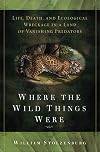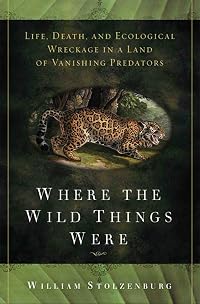
Where the Wild Things Were: Life, Death, and Ecological Wreckage in a Land of Vanishing Predators
by William Stolzenburg
On This Page
Description
A provocative look at how the disappearance of the world's great predators has upset the delicate balance of the environment, and what their disappearance portends for the future, by an acclaimed science journalist.Tags
Recommendations

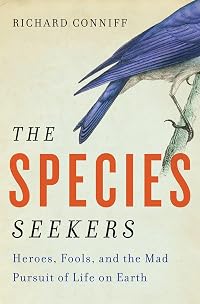
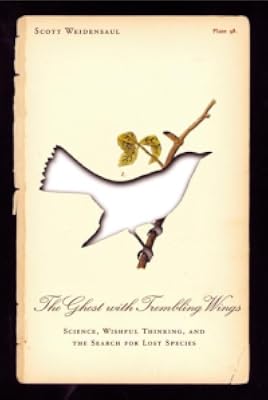
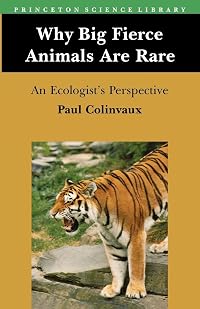



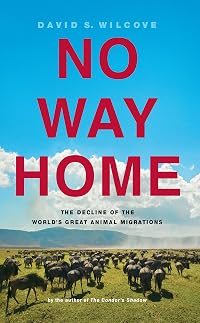
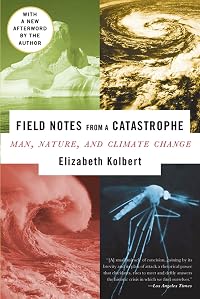
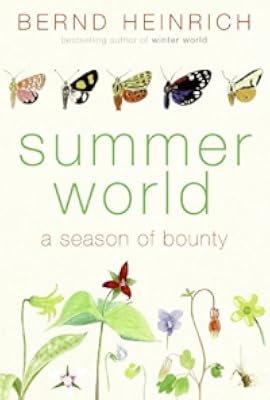
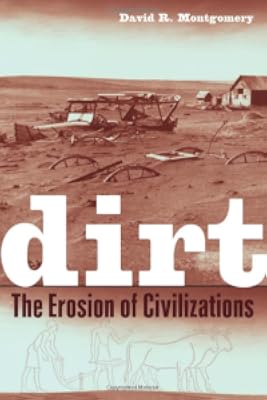


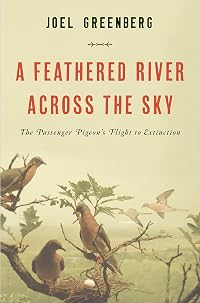
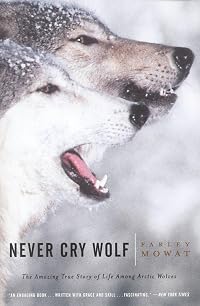

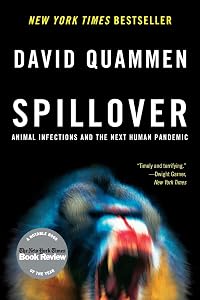
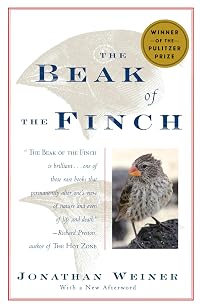
Member Recommendations
lorax Ideally you'd read Where the Wild Things Were first, but in either order they complement each other very well.
Also recommended by VisibleGhost
114
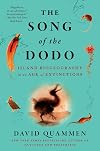
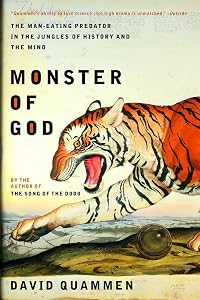
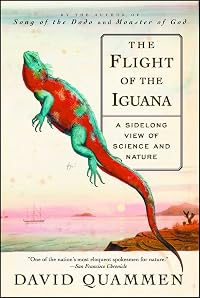
tootstorm Some of the same scientists, much of the same ground in biogeography, but in a much denser sense. Read WTWTW, and if yr interest feels a perk by the concepts of keystone spp. and further biogeo, move on to this more encompassing (if slightly outdated), more mind-blowing Quammen.

Member Reviews
I probably refer to, and recommend this book more, than any other I have ever read, I think. It is that powerful and moving. Essentially it makes the case, using case studies of otters in the Pacific Northwest, wolves in Yellowstone National Park, and orcas in oceans around the world, for why ecosystems need apex predators to not only thrive, but to even survive. That is such a simplified, watered-down summary for what is really an elegant and, to me, quite moving treatise....some might think a tome on ecology would be a dry and slow-moving work, but this book is anything but! There are enough real-world examples to keep it interesting, and the author draws parallels with our human world in such a way that kept me turning the pages well show more past my bedtime. It is an almost heart-breakingly elegant outcry to support all of our large predators, wherever we may find them - before it becomes too late, and we suffer the impact of their loss in ways we didn't even know were possible. show less
 This review was written for LibraryThing Early Reviewers.
This intriguing book tells the story of what happens to ecosystems deprived of their natural predators.
One of the most bizarre case studies was in Venezuela, on an island that had been artificially created when a large dam was completed. The island was too small to sustain a population of predators, so over time they all disappeared. Lago Guri ended up becoming the rain forest from hell - complete with poisonous plants, tree-killing vines, and a population of sociopathic monkeys living in trees nearly stripped bare by ants. Apparently that's what happens in a world without jaguars and armadillos.
I can definitely say that after reading this book I will never see carnivores in quite the same way again.
One of the most bizarre case studies was in Venezuela, on an island that had been artificially created when a large dam was completed. The island was too small to sustain a population of predators, so over time they all disappeared. Lago Guri ended up becoming the rain forest from hell - complete with poisonous plants, tree-killing vines, and a population of sociopathic monkeys living in trees nearly stripped bare by ants. Apparently that's what happens in a world without jaguars and armadillos.
I can definitely say that after reading this book I will never see carnivores in quite the same way again.
This intriguing book tells the story of what happens to ecosystems deprived of their natural predators.
One of the most bizarre case studies was in Venezuela, on an island that had been artificially created when a large dam was completed. The island was too small to sustain a population of predators, so over time they all disappeared. Lago Guri ended up becoming the rain forest from hell - complete with poisonous plants, tree-killing vines, and a population of sociopathic monkeys living in trees nearly stripped bare by ants. Apparently that's what happens in a world without jaguars and armadillos.
I can definitely say that after reading this book I will never see carnivores in quite the same way again.
One of the most bizarre case studies was in Venezuela, on an island that had been artificially created when a large dam was completed. The island was too small to sustain a population of predators, so over time they all disappeared. Lago Guri ended up becoming the rain forest from hell - complete with poisonous plants, tree-killing vines, and a population of sociopathic monkeys living in trees nearly stripped bare by ants. Apparently that's what happens in a world without jaguars and armadillos.
I can definitely say that after reading this book I will never see carnivores in quite the same way again.
Where the Wild Things Were: Life, Death, and Ecological Wreckage in a Land of Vanishing Predators by William Stolzenburg
This book expands on a passage from another of William Stolzenburg's books, Heart of a Lion: A Lone Cat's Walk Across America which reads:
"The murmur had been gathering from field sites and conference halls, formally surfacing in academic journals and publicized in mainstream media. Researchers from around the world were returning with disquieting reports of forests dying, coral reefs collapsing, pests and plagues irrupting. Beyond the bulldozers and the polluters and the usual cast of suspects, a more insidious factor had entered the equation. It was becoming ever more apparent that the extermination of the earth’s show more apex predators— the lions and wolves of the land, the great sharks and big fish of the sea, all so vehemently swept aside in humanity’s global swarming— had triggered a cascade of ecological consequences. Where the predators no longer hunted, their prey had run amok, amassing at freakish densities, crowding out competing species, denuding landscapes and seascapes as they went."
What this thorough, sound, and articulate book convincingly conveys to me with its extensive hard science is:
The food web that sustains physical life can be seen as a pyramid. This pyramid "is a narrowing progression in this community of life, founded on a broad, numerous base of plants and photosynthetic plankton—harvesters of the sun’s energy, primary producers of food. From there it steps up to a substantially more narrow layer of herbivorous animals cropping their share from below, and so on up to yet a smaller tier of carnivores feeding on the plant-eaters. Perched loftily at the apex are the biggest, rarest, topmost predators, those capable of eating all, and typically eaten by none."** A tenet of ecology, the fragile balances among the diversity of life forms are the adaptive niches each evolved in, with natural restraints such as trophic levels, habitat, and reproduction rates, with keystone species/predators being the glue. As the author succinctly put it, "the finely and tenuously balanced skills of predator and prey, teetering so delicately on environmental fulcrums."**
The term 'keystone' species originated from ecological studies that "Pisaster had proved that certain predators, by their mere presence, could bolster the diversity of life. But just as easily, once removed, that benevolent hand could be replaced by a phantom fist, knocking species off the planetary rock, as it were, overhauling the living landscape to simpler, cruder states."**
In the detail of this book you will hopefully gain a better understanding of the extent of the current human effect in trophic cascades. In our progress to becoming a figurative alpha being, decimating keystone species/predators, our species is destabilizing the tenuously balanced biodiversity of the natural world web of life. In constructing a food web to our narrow-minded convenience and liking, not taking into account the necessary abundance of biodiversity and keystone species/predators of the natural world we evolved with, we are accelerating ecosystem collapses and in turn evolutionary adaptive processes to our peril. In thus we are inadvertently promoting populations of ecosystem crippling, disease spreading vermin by decimating the trophic levels of predators that kept them in check, and are setting the stage for our own diminishment. Reading this book can help you understand how and how quickly we are altering the environment essential to our being. We've fallen into one of the natural world traps that deals with the excesses of weedy species.
"The most dangerous experiment is already underway. The future most to be feared is the one now dictated by the status quo. In vanquishing our most fearsome beasts from the modern world, we have released worse monsters from the compound. They come in disarmingly meek and insidious forms, in chewing plagues of hoofed beasts and sweeping hordes of rats and cats and second-order predators. They come in the form of denuded seascapes and barren forests, ruled by jellyfish and urchins, killer deer and sociopathic monkeys. They come as haunting demons of the human mind. In conquering the fearsome beasts, the conquerors had unwittingly orphaned themselves." **
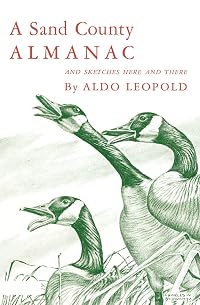
Sadly, what comes to mind is Aldo Leopold's oft quoted remark, "An ecologist is the doctor who sees the marks of death in a community that believes itself well and does not want to be told otherwise." Yet, with our evolved genetic makeup and subjective umwelt, how can we on the whole be any wiser than our cousins?
Like humans, "A bird never doubts its place at the center of the universe."***
** Quoted from the book "Where the Wild Things Were"
*** Quoted from the book "Prodigal Summer" show less
This book expands on a passage from another of William Stolzenburg's books, Heart of a Lion: A Lone Cat's Walk Across America which reads:
"The murmur had been gathering from field sites and conference halls, formally surfacing in academic journals and publicized in mainstream media. Researchers from around the world were returning with disquieting reports of forests dying, coral reefs collapsing, pests and plagues irrupting. Beyond the bulldozers and the polluters and the usual cast of suspects, a more insidious factor had entered the equation. It was becoming ever more apparent that the extermination of the earth’s show more apex predators— the lions and wolves of the land, the great sharks and big fish of the sea, all so vehemently swept aside in humanity’s global swarming— had triggered a cascade of ecological consequences. Where the predators no longer hunted, their prey had run amok, amassing at freakish densities, crowding out competing species, denuding landscapes and seascapes as they went."
What this thorough, sound, and articulate book convincingly conveys to me with its extensive hard science is:
The food web that sustains physical life can be seen as a pyramid. This pyramid "is a narrowing progression in this community of life, founded on a broad, numerous base of plants and photosynthetic plankton—harvesters of the sun’s energy, primary producers of food. From there it steps up to a substantially more narrow layer of herbivorous animals cropping their share from below, and so on up to yet a smaller tier of carnivores feeding on the plant-eaters. Perched loftily at the apex are the biggest, rarest, topmost predators, those capable of eating all, and typically eaten by none."** A tenet of ecology, the fragile balances among the diversity of life forms are the adaptive niches each evolved in, with natural restraints such as trophic levels, habitat, and reproduction rates, with keystone species/predators being the glue. As the author succinctly put it, "the finely and tenuously balanced skills of predator and prey, teetering so delicately on environmental fulcrums."**
The term 'keystone' species originated from ecological studies that "Pisaster had proved that certain predators, by their mere presence, could bolster the diversity of life. But just as easily, once removed, that benevolent hand could be replaced by a phantom fist, knocking species off the planetary rock, as it were, overhauling the living landscape to simpler, cruder states."**
In the detail of this book you will hopefully gain a better understanding of the extent of the current human effect in trophic cascades. In our progress to becoming a figurative alpha being, decimating keystone species/predators, our species is destabilizing the tenuously balanced biodiversity of the natural world web of life. In constructing a food web to our narrow-minded convenience and liking, not taking into account the necessary abundance of biodiversity and keystone species/predators of the natural world we evolved with, we are accelerating ecosystem collapses and in turn evolutionary adaptive processes to our peril. In thus we are inadvertently promoting populations of ecosystem crippling, disease spreading vermin by decimating the trophic levels of predators that kept them in check, and are setting the stage for our own diminishment. Reading this book can help you understand how and how quickly we are altering the environment essential to our being. We've fallen into one of the natural world traps that deals with the excesses of weedy species.
"The most dangerous experiment is already underway. The future most to be feared is the one now dictated by the status quo. In vanquishing our most fearsome beasts from the modern world, we have released worse monsters from the compound. They come in disarmingly meek and insidious forms, in chewing plagues of hoofed beasts and sweeping hordes of rats and cats and second-order predators. They come in the form of denuded seascapes and barren forests, ruled by jellyfish and urchins, killer deer and sociopathic monkeys. They come as haunting demons of the human mind. In conquering the fearsome beasts, the conquerors had unwittingly orphaned themselves." **
Sadly, what comes to mind is Aldo Leopold's oft quoted remark, "An ecologist is the doctor who sees the marks of death in a community that believes itself well and does not want to be told otherwise." Yet, with our evolved genetic makeup and subjective umwelt, how can we on the whole be any wiser than our cousins?
Like humans, "A bird never doubts its place at the center of the universe."***
** Quoted from the book "Where the Wild Things Were"
*** Quoted from the book "Prodigal Summer" show less
This is an informative, interesting, and disturbing account of the ecological impact of predator elimination. The author points out that some environmental problems commonly blamed on climate change may actually be the result of the loss of major predators in ecosystems. A particular point I found of concern is that what we today perceive to be wilderness is in truth an anemic vestige of once healthy ecosystems. Our standard for what we consider wild is sinking with potentially devastating consequences. This book provides a perspective on ecological issues not commonly covered in the popular press. I highly recommend you read this book if you care about the future of this planet.
This review was written for LibraryThing Early Reviewers.Written with the prose of a novelist and the detail of a naturalist, this is the sort of book that gets non-scientists to care about ecology. The writing is so fluid and florid that it's hard to stop reading, and yet this is not fiction. As a science junky, I already knew I was interested in what Stolzenburg had to say, but I was incredibly surprised to see just how interestingly he said it.
Highly recommended, particularly for folks who aren't already invested in the movement to recognize and restore ecological balance for the sake of humanity as much as the rest of the ecosystem.
Highly recommended, particularly for folks who aren't already invested in the movement to recognize and restore ecological balance for the sake of humanity as much as the rest of the ecosystem.
This review was written for LibraryThing Early Reviewers.Where the Wild Things Were is an examination of the concept of predators as keystone species -- that ecosystems are ultimately kept in balance not from the bottom up, by limited food supply, but from the top down, by the actions of predators. Depending on the ecosystem in question, the top predator may be a starfish or a tiger, but in either case they are important far out of proportion to their numbers. The most famous example of the keystone species, which Stolzenburg discusses early in the book, may be the sea otter. One of the favorite foods of the sea otter is the sea urchin, which eats kelp and which few other animals will eat. Eliminate the sea otters, and a thriving kelp forest with dozens of species of fish and invertebrates, show more which in turn support fish-eaters like dolphins, seals, and sharks, is converted to an "urchin barrens" where spiny sea urchins roam a seafloor almost entirely denuded of kelp and its attendant species.
Starting with controlled experiments (a researcher repeatedly removing starfish from one tidepool and not another, and observing the resulting conversion of a thriving miniature ecosystem to a monoculture desert of mollusks in the starfish-free pool) and moving to discussion of half a dozen different ecosystems deprived of predators, Stolzenburg demonstrates the necessity of predators to maintaining healthy ecology. The main influence of predation, he argues, is not to reduce the numbers of prey, but to change the behavior of prey species -- elk in Yellowstone in the absence of wolves become bolder, grazing in stream bottoms where they would be vulnerable and moving around less than they otherwise would. This also provides a compelling counterargument to the suggestion of human hunters as a replacement for top predators -- few human hunters would be willing to target weak and sick animals over trophy males, or to spread their efforts out year-round rather than going out with friends during a brief hunting season.
This was a fascinating and well-targeted read; while Stolzenburg never talks down to his audience, he doesn't assume familiarity with the ecological concepts he discusses, either in general or in detail. While I was familiar with the basic outline of some of his examples -- the return of wolves in Yellowstone National Park facilitating a return of aspens, sea otters as a keystone species off the northwest coast of the US and Canada -- I was never bored by his explorations of these issues.
One potential disappointment is that, other than some very general discussion toward the end, the examples explored in this book are entirely North American. Part of that is certainly the limited experiences of the author, but certainly the rest of the world has also suffered from the loss of large predators. Europe may have lost its bears and wolves too long ago to have good records of what things were like before, but parts of Asia and Africa have seen ranges of predators shrink dramatically in the recent past -- have any studies been done there? And how has the Australian landscape changed with the destruction of the Tasmanian tiger? Despite these omissions I would unhesitatingly recommend this book to anyone with an interest in ecology, and especially to those with the naive view that individual animals, rather than ecosystems, should be the focus of protection. show less
Starting with controlled experiments (a researcher repeatedly removing starfish from one tidepool and not another, and observing the resulting conversion of a thriving miniature ecosystem to a monoculture desert of mollusks in the starfish-free pool) and moving to discussion of half a dozen different ecosystems deprived of predators, Stolzenburg demonstrates the necessity of predators to maintaining healthy ecology. The main influence of predation, he argues, is not to reduce the numbers of prey, but to change the behavior of prey species -- elk in Yellowstone in the absence of wolves become bolder, grazing in stream bottoms where they would be vulnerable and moving around less than they otherwise would. This also provides a compelling counterargument to the suggestion of human hunters as a replacement for top predators -- few human hunters would be willing to target weak and sick animals over trophy males, or to spread their efforts out year-round rather than going out with friends during a brief hunting season.
This was a fascinating and well-targeted read; while Stolzenburg never talks down to his audience, he doesn't assume familiarity with the ecological concepts he discusses, either in general or in detail. While I was familiar with the basic outline of some of his examples -- the return of wolves in Yellowstone National Park facilitating a return of aspens, sea otters as a keystone species off the northwest coast of the US and Canada -- I was never bored by his explorations of these issues.
One potential disappointment is that, other than some very general discussion toward the end, the examples explored in this book are entirely North American. Part of that is certainly the limited experiences of the author, but certainly the rest of the world has also suffered from the loss of large predators. Europe may have lost its bears and wolves too long ago to have good records of what things were like before, but parts of Asia and Africa have seen ranges of predators shrink dramatically in the recent past -- have any studies been done there? And how has the Australian landscape changed with the destruction of the Tasmanian tiger? Despite these omissions I would unhesitatingly recommend this book to anyone with an interest in ecology, and especially to those with the naive view that individual animals, rather than ecosystems, should be the focus of protection. show less
This review was written for LibraryThing Early Reviewers.Members
- Recently Added By
Lists

Best Science Books for Non-Scientists
113 works; 57 members

Recommended Nature Writing
346 works; 180 members

BingoDOG - Animals in Adult Nonfiction
41 works; 7 members

Non-Fiction Worth Reading
1,015 works; 255 members

Environmental History
46 works; 8 members

Bloomsbury Publishing
37 works; 2 members

Favorite Animal Non-Fiction
293 works; 144 members
Author Information

3 Works 458 Members
William Stolzenburg writes about the science and spirit of saving wild creatures. He has written hundreds of magazine articles and was a 2010 Alicia Patterson Journalism Fellow. He is also the author of the book Where the Wild Things Were, and the Screenwriter of the documentary Lords of Nature: Life in a Land of Great Predators. He lives in show more Shepherdstown, West Virginia, and Fairfax, Virginia. show less
Common Knowledge
- Canonical title
- Where the Wild Things Were: Life, Death, and Ecological Wreckage in a Land of Vanishing Predators
- Original publication date
- 2008
- People/Characters
- Robert T. Paine; Charles Sutherland Elton; Geerat Vermeij; James A. Estes; John Palmisano; Alan Springer (show all 7); John Terborgh
- Important places
- Yellowstone National Park, USA; Mukkaw Bay, Washington, USA; Aleutian Islands, Alaska, USA
- Important events
- Reintroduction of Wolves into Yellowstone National Park (1995)
- Dedication
- To Mom and Dad
- First words
- On the northernmost tip of Washington's Olympic Peninsula, in a wild and lonely little crescent of shore called Mukkaw Bay, ocean meets land in a crash of wind and wave against craggy rock, geysers of salt spray erupting into... (show all) brooding skies.
- Last words
- (Click to show. Warning: May contain spoilers.)And I can only believe, from somewhere deeper than any logic center of the brain, that a life of incomprehensible loneliness awaits a world where the wild things were, but are never to be again.
- Blurbers
- McKibben, Bill; Schaller, George B.
- Original language
- English
Classifications
Statistics
- Members
- 313
- Popularity
- 101,972
- Reviews
- 31
- Rating
- (4.44)
- Languages
- English
- Media
- Paper, Ebook
- ISBNs
- 3
- ASINs
- 4