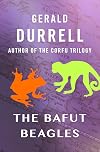
The Bafut Beagles
by Gerald Durrell
On This Page
Description
Travel to the wilds of Cameroon with the conservationist whose work inspired Masterpiece production The Durrells in Corfu on public television. In 1949, Gerald Durrell embarks with fellow zoologist Kenneth Smith on an expedition to collect rare animals in the British Cameroons in West Central Africa. There, he meets the Nero-like local ruler, the Fon of Bafut, who likes a man who can hold his liquor—will Durrell be able to get on his good side? In this unique memoir, set off on a journey show more with the famed British naturalist's group of hunters and his pack of motley hunting dogs as they encounter an array of exotic creatures, including flying mice, booming squirrels, a frog with a mysterious coat of hair, and teacup-size monkeys; and witness the joys and problems of collecting, keeping, and transporting wild animals from Africa to England. This ebook features an illustrated biography of Gerald Durrell including rare photos from the author's estate. Biography & Autobiography. Nonfiction. Nature. show lessTags
Recommendations






















Member Reviews
The Bafut Beagles, like other installments of Durrell's endeavors in animal conservation, is filled with wonderful anecdotes of the animals he captures and his experiences with the local people. His sense of humor when describing some of the mishaps he has with the people and animals is laugh-out-loud funny, and his sense of wonder at the awe-inspiring scenery is extremely evocative. Unfortunately, I did not find this book to be quite as enjoyable as others of his that I have read, and my reaction boils down to two things: a heavy hand with pidgin English, which made my head hurt whenever I had to translate large sections, and the slight note of condescension I detected whenever Durrell spoke about the locals, although he did show more occasionally praise them.
Even though I did have trouble with those two things I mentioned, I still enjoyed the book-- especially since I'd just returned from a trip to a local zoo where I'd seen three or four species of animals that the author talked about in the book. I look forward to reading more of Durrell's work in animal conservation. show less
Even though I did have trouble with those two things I mentioned, I still enjoyed the book-- especially since I'd just returned from a trip to a local zoo where I'd seen three or four species of animals that the author talked about in the book. I look forward to reading more of Durrell's work in animal conservation. show less
In this delightful book Durrell describes a trip he made to the Cameroons -probably in the late forties- to collect wild animals to take back to England (for a zoo or his own collection I am not sure). He plunges straight into the story without much introduction or explanation, but happily I have read enough of his other books that I recognized the context immediately. Having gained the support of the local headsman, the Fon, via copious drinking bouts and gathered a group of eager hunters and mongrel dogs (the "beagles" of title) he avidly gathers up as many animal "specimens" as possible. This is done by paying nice sums to local people for what they bring him, as well as going out on his own hunting forays. Several times he ran into show more difficulties convincing the people that an animal he knew of actually existed, as they had never seen one, or that an animal could be safely approached and caught, as they thought some innocent creatures deadly. I really enjoyed the story, the straightforward humor and the descriptions of the wildlife. Some species I had never heard of, or didn't recognize right away because the name Durrell used for them was unfamiliar. Definitely the most curious creature in the book was the hairy frog (also known as the horror frog)! Also described are several kinds of monkeys, flying mice, bush pigs, the golden cat, rock hyrax, numerous excitable squirrels, cane rats, snakes and many many others.
At first I found reading the book a bit awkward and uncomfortable, as he communicated with the natives in pidgin English and there are entire conversations written this way (reminiscent of certain parts of Peter Pan). It felt insulting, but there were a few times where moved by sudden excitement or indignation the author would burst out a sentence or two of grammatically correct English, which baffled his native hunting companions. So I guess the people actually spoke that way, and partly through the book I was able to accept this and just read it. The depictions of local customs and characters (especially the Fon himself) were really well-drawn and add a lot to the book.
more at the Dogear Diary show less
At first I found reading the book a bit awkward and uncomfortable, as he communicated with the natives in pidgin English and there are entire conversations written this way (reminiscent of certain parts of Peter Pan). It felt insulting, but there were a few times where moved by sudden excitement or indignation the author would burst out a sentence or two of grammatically correct English, which baffled his native hunting companions. So I guess the people actually spoke that way, and partly through the book I was able to accept this and just read it. The depictions of local customs and characters (especially the Fon himself) were really well-drawn and add a lot to the book.
more at the Dogear Diary show less
Gerald Durrell is all about the animals and the joy of his books is that he somehow manages to avoid the sort of sentimentality that usually makes me run a mile from such works. I can't even stomach Black Beauty but I can lap up the youngest Durrell brother morning, noon and night.
In The Bafut Beagles, Durrell gives his account of a collecting trip in the Cameroons (in the time when the country was split between French and the British control). The title is taken from the collective name Durrell christened the men and dogs that hunted for him. Unusually for Durrell, the real star of the book isn't one of the many engaging species that he finds, but the colourful Achirimbi II, the Fon (or king) of Bafut. The Fon, an Anglophile in a time show more of colonialism, welcomes Durrell and his team enthusiastically and helps him throughout the expedition in every way but one. The Fon likes a drink or four and he likes company. Many nights, Durrell was kept up late into the night drinking with his host and one gets a real sense of Durrell's almost permanent hangover. Fortunately for the convivial king, Durrell doesn't seem to mind one bit.
The people of Bafut have two languages, one of which is Cameroonian Pidgin English and this is the language used for dialogue throughout the book. It's easy enough to follow but there are times is gets a little wearying and one might wish that Durrell had avoided being quite so authentic.
So here's a tale of Brow-leaf Toads, who have the pained and reproachful look down pat, nannied affectionately by Pavlova, the Patas monkey; booming squirrels and flying mice; hyrax and hairy frogs and galagos and skinks and all other manner of beasties. There's much hilarity in the many attempts to capture them and the whole is underpinned by Durrell's casual style. It's not Durrell at his best, but the inclusion of the infectiously joyful Achirimbi makes it an enjoyable read. show less
In The Bafut Beagles, Durrell gives his account of a collecting trip in the Cameroons (in the time when the country was split between French and the British control). The title is taken from the collective name Durrell christened the men and dogs that hunted for him. Unusually for Durrell, the real star of the book isn't one of the many engaging species that he finds, but the colourful Achirimbi II, the Fon (or king) of Bafut. The Fon, an Anglophile in a time show more of colonialism, welcomes Durrell and his team enthusiastically and helps him throughout the expedition in every way but one. The Fon likes a drink or four and he likes company. Many nights, Durrell was kept up late into the night drinking with his host and one gets a real sense of Durrell's almost permanent hangover. Fortunately for the convivial king, Durrell doesn't seem to mind one bit.
The people of Bafut have two languages, one of which is Cameroonian Pidgin English and this is the language used for dialogue throughout the book. It's easy enough to follow but there are times is gets a little wearying and one might wish that Durrell had avoided being quite so authentic.
So here's a tale of Brow-leaf Toads, who have the pained and reproachful look down pat, nannied affectionately by Pavlova, the Patas monkey; booming squirrels and flying mice; hyrax and hairy frogs and galagos and skinks and all other manner of beasties. There's much hilarity in the many attempts to capture them and the whole is underpinned by Durrell's casual style. It's not Durrell at his best, but the inclusion of the infectiously joyful Achirimbi makes it an enjoyable read. show less
This is a memoir of the author's animal collecting trip in The Cameroons in 1949 for which no explanation was given. Durrell nicknamed the dogs belonging to the native men of Bafut who aided him "the Bafut beagles" a title the dog owners also assumed as it implied prestige and status. The Fon, the gin-loving Bafut chief, was described in Durrell's typically entertaining style.
Much of the dialogue is related in Pidgin English, which after a short time I skipped. And although not politically correct - in either the animal-collecting or attitudes - the story is filled with Durrell's humour and his love of all living creatures. His descriptions of animals are without equal. My favourite story was about the Brow-leaf Toads, who looked show more sneering and supercilious, "waddled with all the dignity of a couple of Lord Mayors" but were actually shy and easily embarrassed.
The book is sadly dated but the animal descriptions and stories are pure Durrell, for that reason alone I gave it 4 stars. show less
Much of the dialogue is related in Pidgin English, which after a short time I skipped. And although not politically correct - in either the animal-collecting or attitudes - the story is filled with Durrell's humour and his love of all living creatures. His descriptions of animals are without equal. My favourite story was about the Brow-leaf Toads, who looked show more sneering and supercilious, "waddled with all the dignity of a couple of Lord Mayors" but were actually shy and easily embarrassed.
The book is sadly dated but the animal descriptions and stories are pure Durrell, for that reason alone I gave it 4 stars. show less
This book is an account of naturalist/zookeeper Gerald Durrell’s trip to Cameroon to collect animal specimens. An official suggests that Bafut would be a good place to collect specimens, so Durrell contacts the Fon of Bafut, who proves to be an eager host. Durrell employs several local hunters who become known as the Bafut Beagles. Durrell and the Beagles hunt for several species on Durrell’s wishlist. Many of the locals also bring wildlife to sell to Durrell. By the end of his stay, he has dozens of specimens to transport back to England, including monkeys, large cats, rodents, and frogs, and snakes.
Durrell and the Africans converse in pidgin English, and the dialogue in the book uses pidgin. The book reflects the colonial era in show more which it was lived and written. 21st century readers will cringe when Durrell is addressed as Masa by his African colleagues. I can’t wholeheartedly recommend the book for this reason. show less
Durrell and the Africans converse in pidgin English, and the dialogue in the book uses pidgin. The book reflects the colonial era in show more which it was lived and written. 21st century readers will cringe when Durrell is addressed as Masa by his African colleagues. I can’t wholeheartedly recommend the book for this reason. show less
The details and concerns of an animal collecting trip into colonial Africa March 1949. There is no background to the trip, I can't remember Gerald's personal history well enough to know if he's collecting for other zoos or trying to build up his own at this point. The book opens with a rattley lorry descending down the Cameroon mountains into Mamfe and shortly after, on the recommendation of the District Office, into Bafut, where the local tribe chieftain the Fon, holds sway.
Durrell makes various forays into the forests and grasslands with his trusty native hunters - the Bafut Beagles, in search of Hiary frogs, Flying mice and other similarly charming and improbable creatures. The native villagers also bring in various animals that show more they've caught, Durrell pays them for the creatures and has to build cages, stop them escaping and persuede awkward creatures to eat. Divided into short chapters each features the capture and problems of one or two especially noteworthy creatures. All too soon the "list" is complete and Durrell has to return to base camp and then ship the precious collection back to England. I'm sure this part could fill an entire book on it's own and it's a shame it get's condensed into one chapter.
The chapters also capture the flavour of African life at the time, with pigin english as spoken by the natives. This is faithfully recorded and can be a bit tricky to decipher at times. the Fon is the absolute ruler and centre of attention, fortunetly Durrell quickly gets on his good side, not only by providing copious quantities of gin, but alsoby teaching him and his entourage to dance the Conga. Activites probably frowned upon nowadays but reflecting the nature of the relationship between white man and the natives in that part of the world at that time. It does read as an amazingly condescending attitude at times, although I'm sure that Durrell had nothing but good will towards them - especially after they treated his snakebite.
It is all lightly told, gently sketched anecdotes which capture the scenes wonderfully. Very easy reading but also charming and frequently very funny. show less
Durrell makes various forays into the forests and grasslands with his trusty native hunters - the Bafut Beagles, in search of Hiary frogs, Flying mice and other similarly charming and improbable creatures. The native villagers also bring in various animals that show more they've caught, Durrell pays them for the creatures and has to build cages, stop them escaping and persuede awkward creatures to eat. Divided into short chapters each features the capture and problems of one or two especially noteworthy creatures. All too soon the "list" is complete and Durrell has to return to base camp and then ship the precious collection back to England. I'm sure this part could fill an entire book on it's own and it's a shame it get's condensed into one chapter.
The chapters also capture the flavour of African life at the time, with pigin english as spoken by the natives. This is faithfully recorded and can be a bit tricky to decipher at times. the Fon is the absolute ruler and centre of attention, fortunetly Durrell quickly gets on his good side, not only by providing copious quantities of gin, but alsoby teaching him and his entourage to dance the Conga. Activites probably frowned upon nowadays but reflecting the nature of the relationship between white man and the natives in that part of the world at that time. It does read as an amazingly condescending attitude at times, although I'm sure that Durrell had nothing but good will towards them - especially after they treated his snakebite.
It is all lightly told, gently sketched anecdotes which capture the scenes wonderfully. Very easy reading but also charming and frequently very funny. show less
First published in 1949, this is an account of Durrell's animal collecting expedition in the mountains of the British Cameroons.
I studied "My Family and Other Animals" for my English Lit 'O' Level, and went on to borrow several of his other books from the library. So it's possible that I read this book when I was a teenager, but all the collecting expeditions have blurred into one in my memory, so I don't really remember whether I did or not. The way he talks about the animals is wonderful, as you get a good feel for their behaviour and calls as well as what they look like. Even the toads have personality! He also writes about his talks with the Fon of Bafut (the regional ruler) and local life and customs, and the book is illustrated show more with line drawings of animals, some of which are very amusing. I also love his descriptions of walking through the mountains around dawn, through the early morning mist and the play of light and weather over the mountains. show less
I studied "My Family and Other Animals" for my English Lit 'O' Level, and went on to borrow several of his other books from the library. So it's possible that I read this book when I was a teenager, but all the collecting expeditions have blurred into one in my memory, so I don't really remember whether I did or not. The way he talks about the animals is wonderful, as you get a good feel for their behaviour and calls as well as what they look like. Even the toads have personality! He also writes about his talks with the Fon of Bafut (the regional ruler) and local life and customs, and the book is illustrated show more with line drawings of animals, some of which are very amusing. I also love his descriptions of walking through the mountains around dawn, through the early morning mist and the play of light and weather over the mountains. show less
Members
- Recently Added By
Lists

BingoDOG - Animals in Adult Nonfiction
41 works; 7 members

Best Travel Writing - Non-Fiction
110 works; 6 members

Books about Animals
86 works; 4 members

Which Books Made You Laugh Out Loud (Literally)
23 works; 2 members

Books Set In Africa
81 works; 4 members

Books Read in 2017
4,249 works; 129 members

Animals in the Title
498 works; 11 members
Author Information

109+ Works 21,799 Members
Gerald Durrell was born on January 7, 1925 in Jamshedpur, India to British parents. After the death of his father in 1928, the family lived in England and Europe before settling in Corfu, where he spent much of his childhood. Educated by private tutors, he became interested in natural history and amassed a private collection of dozens of creatures show more from scorpions to owls. He went on numerous wildlife expeditions and founded the Jersey Zoological Park and the Jersey Wildlife Preservation Trust with the purpose of breeding endangered species. His first book, The Overloaded Ark, was published in 1953. He wrote 37 books during his lifetime including My Family and Other Animals, The Bafut Beagles, A Zoo in My Luggage, Rosy Is My Relative, and The Mockery Bird. He received the Order of the British Empire in 1982 and was featured in the United Nations' Roll of Honor for Environmental Achievement in 1988. He died from complications related to a liver transplant on January 30, 1995 at the age of 70. (Bowker Author Biography) show less
All Editions
Some Editions
Series
Belongs to Publisher Series
Work Relationships
Is contained in
The Overloaded Ark | Three Singles to Adventure | The Bafut Beagles | My Family and Other Animals | The Drunken Forest by Джеральд Даррелл
The Overloaded Ark | Catch Me a Colobus | The Bafut Beagles | Three Singles to Adventure by Джеральд Даррелл
The Bafut Beagles / The Drunken Forest / Encounters with Animals / Menagerie Manor / My Family and Other Animals / Three Singles to Adventure / The Whispering Land / A Zoo in My Luggage by Gerald Durrell
Common Knowledge
- Canonical title*
- Vit man jaga biff
- Original title
- The Bafut beagles
- Original publication date
- 1954
- People/Characters
- Gerald Durrell; The Fon of Bafut
- Important places
- Bafut, Cameroons
- Dedication
- For Kenneth Smith In memory of Fons, False Teeth, and Flying Mice
- First words
- The Cross River picks its way down from the mountains of the Cameroons, until it runs sprawling and glittering into the great bowl of forest land around Mamfe.
*Some information comes from Common Knowledge in other languages. Click "Edit" for more information.
Classifications
Statistics
- Members
- 754
- Popularity
- 37,311
- Reviews
- 14
- Rating
- (3.94)
- Languages
- 13 — Czech, Dutch, English, Estonian, Finnish, French, German, Hungarian, Italian, Lithuanian, Russian, Spanish, Swedish
- Media
- Paper, Audiobook, Ebook
- ISBNs
- 26
- ASINs
- 32