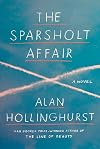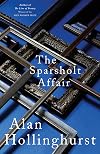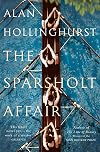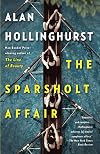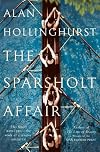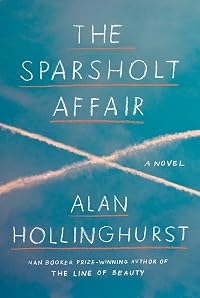
The Sparsholt Affair
by Alan Hollinghurst
On This Page
Description
"From the internationally acclaimed winner of the Man Booker Prize, a masterly new novel that spans seven transformative decades in England--from the 1940s to the present--as it plumbs the richly complex relationships of a remarkable family. In 1940, David Sparsholt arrives at Oxford to study engineering, though his sights are set on joining the Royal Air Force. Handsome, athletic, charismatic, he is unaware of his effect on others--especially on Evert Dax, the lonely son of a celebrated show more novelist who is destined to become a writer himself. With the world at war, and the Blitz raging in London, Oxford nevertheless exists at a strange remove: a place of fleeting beauty--and secret liaisons. A friendship develops between these two young men that will have unexpected consequences as the novel unfolds. Alan Hollinghurst's new novel explores the legacy of David Sparsholt across three generations, on friends and family alike; we experience through its characters changes in taste, morality, and private life in a sequence of vividly rendered episodes: a Sparsholt holiday in Cornwall; eccentric social gatherings at the Dax family home; the adventures of David's son Johnny, a painter in 1970s London; the push and pull in a group of friends brought together by art, literature, and love. And evoking the increasing openness of gay life, The Sparsholt Affair becomes a meditation on human transience, even as it poignantly expresses the longing for permanence and continuity"-- "A multi-generational story of fathers and sons during the second half of the twentieth century in England"-- show lessTags
Recommendations









Member Reviews
There is so much to like about Alan Hollinghurst novels. There’s the flawless prose, witty, crystal clear and wonderfully paced, with just enough detail to make each scene last just as long as it should. There’s the gay characters, who are fleshed out and complex and don’t spend a minute longer in the closet than they have to, which is such a breath of fresh air when so much gay literature is about the oppression of the closet or the torment of first emerging from it. There’s the sense of profundity given to ordinary moments, an ability to tell a bigger story just by describing a staircase or relating a conversation where what has not been said is more important than what has.
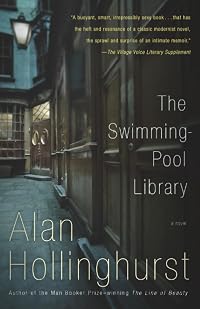
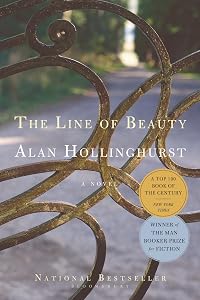
But what varies in Hollinghurst’s novels is the show more bigger stuff – plot and characterisation. In this I feel that The Sparsholt Affair falls a little bit short of his best stuff (The Line of Beauty and The Swimming Pool Library being the standouts in my recollection). Some of the characters weren’t that interesting and some of them were more interesting than I realised until near the end when they were retrospectively fleshed out. And the plot seems to meander in places – there are sections which don’t seem to tie in at all to the bigger themes of the book.
I suspect that Hollinghurst novels are a bit like Murakami novels and Austin Powers movies – you prefer the first one you encounter because they’re so stylistically distinct that the novel shock of pleasure can’t ever quite be recaptured. Having said that, the gorgeous prose and ability to tackle big emotions with refreshingly ordinary gay lives will keep me reading every book that he publishes. show less
But what varies in Hollinghurst’s novels is the show more bigger stuff – plot and characterisation. In this I feel that The Sparsholt Affair falls a little bit short of his best stuff (The Line of Beauty and The Swimming Pool Library being the standouts in my recollection). Some of the characters weren’t that interesting and some of them were more interesting than I realised until near the end when they were retrospectively fleshed out. And the plot seems to meander in places – there are sections which don’t seem to tie in at all to the bigger themes of the book.
I suspect that Hollinghurst novels are a bit like Murakami novels and Austin Powers movies – you prefer the first one you encounter because they’re so stylistically distinct that the novel shock of pleasure can’t ever quite be recaptured. Having said that, the gorgeous prose and ability to tackle big emotions with refreshingly ordinary gay lives will keep me reading every book that he publishes. show less
The members of a literary group, meeting in Freddie Green's rooms in Christ Church one day in 1940, catch sight of an unbelievably attractive young man exercising in a room opposite. He turns out to be David Sparsholt, marking time in Oxford until he is old enough to be called up into the RAF, and two members of the group set out in pursuit of him immediately. One of them gets David to pose for a picture, the other - if Freddie is to be believed - actually gets to have his evil way with him, which is surprising, as David has a bona fide girlfriend in tow...
Some 25 years later, the English newspapers are full of the latest gay sex scandal, the "Sparsholt Affair". Hollinghurst amuses himself by never quite telling us what this particular show more scandal was about. We know that there was an MP and a property developer involved, and that David Sparsholt went to prison, so we are obviously supposed to imagine it as a kind of composite of Montague, Profumo and Poulson. Part of the point seems to be that we are unlikely to remember any of those real scandals from the 50s and 60s more clearly than Hollinghurst's characters do - whenever Sparsholt's son, Johnny, our main viewpoint character for the last three-quarters of the book, introduces himself to someone, the name gets a flicker of recognition and "Wasn't that...?", but no-one really knows.
Just as he was in The stranger's child, Hollinghurst is spectacularly good at catching the tone of the periods in which the book is set (1940, the late-sixties/early seventies, the nineties and 2012, in this case) - so good in fact that we can't really see his technique working at all, and it doesn't feel like a historical novel, more like a collection of contemporary documents. He's obviously trying to get away from the very literary plot of his last book by making Johnny a visual artist who doesn't read much (he has dyslexia, but when he went to school "it was called being thick"). So instead of a novel populated by upper-class metropolitan poetry-queens we have a novel populated by upper-class metropolitan art-queens! But there's more to it than that, of course. It's also a book that explores how perceptions of gay sexuality have evolved over the years. There's a lot of beautiful detail along the way, and a running joke about how Johnny in the 2010s still has to keep painfully coming out of the closet as a vegetarian in every new social encounter, whilst no-one cares in the least whether or not he's gay any more. I know the feeling! But it's also demonstrating - with odd echoes of Armistead Maupin - how an LGBT family-saga is not a contradiction in terms.
An excellent novel. But so good technically that it's almost difficult to see what it's doing beyond creating illusion. show less
Some 25 years later, the English newspapers are full of the latest gay sex scandal, the "Sparsholt Affair". Hollinghurst amuses himself by never quite telling us what this particular show more scandal was about. We know that there was an MP and a property developer involved, and that David Sparsholt went to prison, so we are obviously supposed to imagine it as a kind of composite of Montague, Profumo and Poulson. Part of the point seems to be that we are unlikely to remember any of those real scandals from the 50s and 60s more clearly than Hollinghurst's characters do - whenever Sparsholt's son, Johnny, our main viewpoint character for the last three-quarters of the book, introduces himself to someone, the name gets a flicker of recognition and "Wasn't that...?", but no-one really knows.
Just as he was in The stranger's child, Hollinghurst is spectacularly good at catching the tone of the periods in which the book is set (1940, the late-sixties/early seventies, the nineties and 2012, in this case) - so good in fact that we can't really see his technique working at all, and it doesn't feel like a historical novel, more like a collection of contemporary documents. He's obviously trying to get away from the very literary plot of his last book by making Johnny a visual artist who doesn't read much (he has dyslexia, but when he went to school "it was called being thick"). So instead of a novel populated by upper-class metropolitan poetry-queens we have a novel populated by upper-class metropolitan art-queens! But there's more to it than that, of course. It's also a book that explores how perceptions of gay sexuality have evolved over the years. There's a lot of beautiful detail along the way, and a running joke about how Johnny in the 2010s still has to keep painfully coming out of the closet as a vegetarian in every new social encounter, whilst no-one cares in the least whether or not he's gay any more. I know the feeling! But it's also demonstrating - with odd echoes of Armistead Maupin - how an LGBT family-saga is not a contradiction in terms.
An excellent novel. But so good technically that it's almost difficult to see what it's doing beyond creating illusion. show less
13. Review - [The Sparsholt Affair] by [[Alan Hollinghurst]]
With [[Alan Hollinghurst]] novels you always know roughly what you'll get - a story revolving around gay men moving in wealthy upper class social circles in London, and absolutely fabulous writing.
This is the fourth Hollinghurst I've read now, and is up there as one of my favourites, possibly only beaten by [The Line of Beauty]. It's a modern family saga with the enigmatic David Sparsholt as the thread that links it all together, starting off at Oxford University in the early part of WWII and moving through the decades up to present day London. Although David Sparsholt is at the core of each of the five sections of the novel, at the same time he's merely an accessory to the show more plot. We're teased by Hollinghurst into wanting to delve more into his story, but he only allows us partial hints here and there, which somehow reflects the private mystery that is the man himself.
From the second section onwards, the novel unfolds from the perspective of his son Jonathan. I'd been hugely enjoying the first section set in 1940s Oxford, and would have been quite happily languished there for the remainder of the book. The move in the next section to the 1960s and the distancing of the main thrust of the story from David Sparsholt initially broke the spell for me a little as I'd been enjoying the period setting of the first section, but I took it for what it was and enjoyed Jonathan's moving through the decades as a painter in London who becomes connected with his father's old Oxford acquaintances.
[The Sparsholt Affair] is a great alternative modern day family saga, centred around the awkward father / son relationship between a gay man keeping up a life of heterosexual pretence - despite having been scandalously outed decades before - and his openly gay son. The two men are from very different eras with vastly differing acceptance of homosexuality, their shared sexuality the elephant of truth in the room that David Sparsholt can never acknowledge to allow their relationship to fully flourish.
All in all, another great Hollinghurst read. I still would have liked to have stayed more with David Sparsholt as the main character and to have become more fully immersed in his story, but this wasn't the point of the story that Hollinghurst wanted to tell. A fabulous writer, Hollinghurst captures acutely the mood of the moment across the ages, from the necessary subtleness of gay flirtations in the war era to the 'out and proud' modern day London gay scene.
4 stars - a wonderful writer who will always be one of my favourites. show less
I guess I prefer more conventionally plotted novels. The publisher's blurb on the copy I bought was, I feel, misleading in that it implied far more narrative unity than the novel actually delivers, and whoever wrote that copy did Hollinghurst no favors because it leads the reader into the story with expectations doomed to remain unfulfilled. It should be promoted as a collection of loosely related stories. With "The Stranger's Child," I assumed Hollinghurst was using a form that he felt his story required, but now he has repeated the structure in his follow-up, it seems more like a form he prefers, rather than a form that his material demands. At first it's kind of fun, starting each new section and trying to figure out how the new show more characters relate to the previous (or if they are the same people), but after a while that begins to feel a little coy.
In part three, the repeated descriptions of Johnny’s har were a little. odd. show less
In part three, the repeated descriptions of Johnny’s har were a little. odd. show less
It seems the general consensus, based on reviews of Hollinghurst’s new novel, is that he’s recycled the structure of his prior novel, The Stranger’s Child, and that the vast majority of critics feel that this structure worked better in that novel than it does here.
Having been a long-time fan of Hollinghurst, and having read his work in order, watching his prose develop and observing as his scope gets wider and wider, I beg to disagree. While I liked The Stranger’s Child, I felt that the shifting points-of-view and the fragments worked against that novel—largely because there was just too much plot. Here, though, in The Sparsholt Affair, plot is so secondary that the passing of time, the fragments, and the more figural show more narrative used to focus mostly on Johnny Sparsholt, the son of the infamous David Sparsholt of the titular affair, work in this novel’s favor. Because, in truth, the novel is not above the affair so much as it’s about its repercussions: familial, filial, across generations as society and culture change (specifically with regard to homosexuality), all spanning the literary and artistic worlds, peopled by figures whose work Hollinghurst describes in such detail—this novel, indeed, had some of the best writing about admiring paintings and about painting paintings that I’ve ever read—that you wish they were real so that you could read their books and view their works of art.
Although Hollinghurst said in interviews that the figural narrative he employed in The Line of Beauty, his best novel, was not one he would use again, he’s mostly done it here, and that’s what makes this novel work so well. Spanning the 1940s to the 2010s, The Sparsholt Affair owes as much to James for its astute comments on social class, understated and often unspoken sexual desire, and its use of ambiguity (especially in terms of conversations that are so insular it can often be hard to know to what’s being referred) as it does to Woolf’s Jacob’s Room. Just as Woolf hardly ever gives us Jacob on his own, preferring instead to give others’ portraits and memories of Jacob to give the reader an impression of him, so, too, does Hollinghurst not divulge the full content of the Sparsholt affair. While this may frustrate most readers—and, I would argue, this is where most readers’ discontent with this novel likely lies—this is not a novel about the affair itself, but about how cloaked and veiled such incidents have had to be throughout a century that first condemned homosexuality and then began, slowly, to become more accepting of it. Even Johnny Sparsholt, toward the end, in passages that are reminiscent of Hollinghurst’s The Spell, tries to immerse himself in the gay scene of the 2010s despite nearing the age of sixty: this is a novel about generation gaps and loneliness and mortality and feeling so isolated from one’s own sexuality due to social norms that the titular affair itself is but metonym that drives Hollinghurst’s examination of these themes forward.
I would highly recommend that those new to Hollinghurst do not start here. The Line of Beauty is perhaps the best starting point, despite most of his other novels paling in comparison to that gem of a book; The Swimming-Pool Library is another good starting point. Here, in The Sparsholt Affair, all of Hollinghurst’s previous novels and their concerns are present, which is perhaps why I appreciated it as much as I did: it’s both him looking back over the past century and him looking back over his past novels. To me, it reads like closure of a kind, and I know, without a doubt that we can continue to expect amazing things from Hollinghurst: the best living gay British author, hands down. show less
Having been a long-time fan of Hollinghurst, and having read his work in order, watching his prose develop and observing as his scope gets wider and wider, I beg to disagree. While I liked The Stranger’s Child, I felt that the shifting points-of-view and the fragments worked against that novel—largely because there was just too much plot. Here, though, in The Sparsholt Affair, plot is so secondary that the passing of time, the fragments, and the more figural show more narrative used to focus mostly on Johnny Sparsholt, the son of the infamous David Sparsholt of the titular affair, work in this novel’s favor. Because, in truth, the novel is not above the affair so much as it’s about its repercussions: familial, filial, across generations as society and culture change (specifically with regard to homosexuality), all spanning the literary and artistic worlds, peopled by figures whose work Hollinghurst describes in such detail—this novel, indeed, had some of the best writing about admiring paintings and about painting paintings that I’ve ever read—that you wish they were real so that you could read their books and view their works of art.
Although Hollinghurst said in interviews that the figural narrative he employed in The Line of Beauty, his best novel, was not one he would use again, he’s mostly done it here, and that’s what makes this novel work so well. Spanning the 1940s to the 2010s, The Sparsholt Affair owes as much to James for its astute comments on social class, understated and often unspoken sexual desire, and its use of ambiguity (especially in terms of conversations that are so insular it can often be hard to know to what’s being referred) as it does to Woolf’s Jacob’s Room. Just as Woolf hardly ever gives us Jacob on his own, preferring instead to give others’ portraits and memories of Jacob to give the reader an impression of him, so, too, does Hollinghurst not divulge the full content of the Sparsholt affair. While this may frustrate most readers—and, I would argue, this is where most readers’ discontent with this novel likely lies—this is not a novel about the affair itself, but about how cloaked and veiled such incidents have had to be throughout a century that first condemned homosexuality and then began, slowly, to become more accepting of it. Even Johnny Sparsholt, toward the end, in passages that are reminiscent of Hollinghurst’s The Spell, tries to immerse himself in the gay scene of the 2010s despite nearing the age of sixty: this is a novel about generation gaps and loneliness and mortality and feeling so isolated from one’s own sexuality due to social norms that the titular affair itself is but metonym that drives Hollinghurst’s examination of these themes forward.
I would highly recommend that those new to Hollinghurst do not start here. The Line of Beauty is perhaps the best starting point, despite most of his other novels paling in comparison to that gem of a book; The Swimming-Pool Library is another good starting point. Here, in The Sparsholt Affair, all of Hollinghurst’s previous novels and their concerns are present, which is perhaps why I appreciated it as much as I did: it’s both him looking back over the past century and him looking back over his past novels. To me, it reads like closure of a kind, and I know, without a doubt that we can continue to expect amazing things from Hollinghurst: the best living gay British author, hands down. show less
I rarely read reviews of novels that I know I will read eventually, but I wonder if in this case I might have been prepared and thus understood more what this book was about before diving into it. I'm not disappointed in the book--on the contrary, it's a lusciously-literary, Victorian-like gay novel, a mashup of Henry James and George Eliot in a way, minus, respectively, the one's psychological meanderings or the other's morality.
I was expecting something more concrete, around which the lives of the approximately 75 years of events unfold for David, Evert, Johnny, Ivan, Lucy, and a bevy of other characters, gay or otherwise, who appear throughout this novel. In Hollinghurst's last book, "The Stranger's Child," the story revolved around show more a poem and how it was recounted and reinterpreted over time, so here I kept looking for that linchpin, and it was only after the book was done that I realized it was there, but not in the form of a thing, but an action, an event. In a way, the success of the plot of "Sparsholt" is what is not there, and the beautifully lyrical writing that recounts how the characters act and react around this over the decades.
It is a slow novel and takes time to read and absorb, but you do get caught up in it and in the lives of the characters, to the point that you mourn those who pass on when you meet them again 20, 40, or more years later. The fact that the protagonist (if we can call him that), Johnny, is a portrait painter plays out beautifully as well, as an observer and participant in life (his life and others' lives). His awareness of beauty in art and nature and people only enhances the reader's respect for his personal anxieties. I recommend the book if one wants to absorb oneself in a contemporary novelist's poetic, paced writing.
Case in point: here is one of the exquisite passages to luxuriate in, on page 288 of the paperback edition. Johnny has taken in the street scene and Thames embankment in Chelsea London, then goes back to look at a painting by James McNeill Whistler on the wall: "Beyond the traffic, between the plane trees, lay the grey expanse of the river, the cold wellings and streakings of its currents. And on the other side, an odd ruinous nothing--which Whistler (when Johnny came back in and looked again) seemed already to have noted in the three brown brushstrokes whose mere accidents, the spread and flick of a loose hair, the ghost of a bubble, the sticky split second as the brush left the canvas, were also small miracles of observation, a wall, a roof, a chimney rising through the mist. Well, it was genius, and he smiled round at the women, who were looking at each other steadily through Fran's cigarette smoke." show less
I was expecting something more concrete, around which the lives of the approximately 75 years of events unfold for David, Evert, Johnny, Ivan, Lucy, and a bevy of other characters, gay or otherwise, who appear throughout this novel. In Hollinghurst's last book, "The Stranger's Child," the story revolved around show more a poem and how it was recounted and reinterpreted over time, so here I kept looking for that linchpin, and it was only after the book was done that I realized it was there, but not in the form of a thing, but an action, an event. In a way, the success of the plot of "Sparsholt" is what is not there, and the beautifully lyrical writing that recounts how the characters act and react around this over the decades.
It is a slow novel and takes time to read and absorb, but you do get caught up in it and in the lives of the characters, to the point that you mourn those who pass on when you meet them again 20, 40, or more years later. The fact that the protagonist (if we can call him that), Johnny, is a portrait painter plays out beautifully as well, as an observer and participant in life (his life and others' lives). His awareness of beauty in art and nature and people only enhances the reader's respect for his personal anxieties. I recommend the book if one wants to absorb oneself in a contemporary novelist's poetic, paced writing.
Case in point: here is one of the exquisite passages to luxuriate in, on page 288 of the paperback edition. Johnny has taken in the street scene and Thames embankment in Chelsea London, then goes back to look at a painting by James McNeill Whistler on the wall: "Beyond the traffic, between the plane trees, lay the grey expanse of the river, the cold wellings and streakings of its currents. And on the other side, an odd ruinous nothing--which Whistler (when Johnny came back in and looked again) seemed already to have noted in the three brown brushstrokes whose mere accidents, the spread and flick of a loose hair, the ghost of a bubble, the sticky split second as the brush left the canvas, were also small miracles of observation, a wall, a roof, a chimney rising through the mist. Well, it was genius, and he smiled round at the women, who were looking at each other steadily through Fran's cigarette smoke." show less
Begins like a Brideshead Revisited novel, then jumps through the decades. About a man, lusted over, and then his son finding his place as an artist and gay man. Shot through with desire and yearning. Hollinghurst is a master of nuance, capturing the uncertainties of what is left unsaid. And so ‘The Affair’ is never described but obliquely referenced, casting its scandalous shadow over two generations.
Members
- Recently Added By
Lists

Books Read in 2022
5,226 works; 115 members

Good LGBT fiction for LGBT folk and friends
553 works; 55 members

Kirkus Starred Fiction Reviews of Books Published in 2018
330 works; 3 members

Publishers Weekly Best Books of the Week / Starred Reviews 2018
78 works; 2 members

Amazon best fictional genre picks monthly for 2018
418 works; 9 members

Books Read in 2026
2,161 works; 70 members
Author Information

17+ Works 12,336 Members
Awards and Honors
Awards
Distinctions
Notable Lists
Common Knowledge
- Canonical title*
- De Sparsholt-affaire
- Original title
- The Sparsholt Affair
- Original publication date
- 2017-10-05
- People/Characters
- Evert Dax; David Sparsholt; Freddie Green; Johnny Sparsholt; Ivan Goyle; Lucy Skipton
- Important places
- Oxford, Oxfordshire, England, UK
- Important events
- World War II
- Dedication
- For Stephen Pickles
- First words
- The evening when we first heard Sparsholt’s name seems the best place to start this little memoir.
- Last words*
- (Click to show. Warning: May contain spoilers.)Hij ging weer naar het atelier, draaide de dopjes op de verftubes en tuurde met een vertrouwde hunkering en ontevredenheid naar het portret, naar de blauwgrijze ogen (eindelijk zag hij het) van haar dode opa, de bijgepunte lippen, nog vochtig en nader te perfectioneren.
- Blurbers
- Banville, John
- Original language
- English
*Some information comes from Common Knowledge in other languages. Click "Edit" for more information.
Classifications
Statistics
- Members
- 780
- Popularity
- 35,997
- Reviews
- 27
- Rating
- (3.70)
- Languages
- 9 — Czech, Dutch, English, French, German, Italian, Korean, Portuguese, Spanish
- Media
- Paper, Audiobook, Ebook
- ISBNs
- 36
- ASINs
- 7