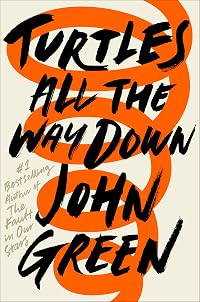
Turtles All the Way Down
by John Green 
On This Page
Description
FEATURED ON 60 MINUTES and FRESH AIR“So surprising and moving and true that I became completely unstrung.” – The New York Times
Named a best book of the year by: The New York Times, NPR, TIME, Wall Street Journal, Boston Globe, Entertainment Weekly, Southern Living, Publishers Weekly, BookPage, A.V. Club, Bustle, BuzzFeed, Vulture, and many more!
JOHN GREEN, the acclaimed author of Looking for Alaska and The Fault in Our Stars, returns with a story of shattering, show more unflinching clarity in this brilliant novel of love, resilience, and the power of lifelong friendship.
Aza Holmes never intended to pursue the disappearance of fugitive billionaire Russell Pickett, but there’s a hundred-thousand-dollar reward at stake and her Best and Most Fearless Friend, Daisy, is eager to investigate. So together, they navigate the short distance and broad divides that separate them from Pickett’s son Davis.
Aza is trying. She is trying to be a good daughter, a good friend, a good student, and maybe even a good detective, while also living within the ever-tightening spiral of her own thoughts. show less
Tags
Recommendations
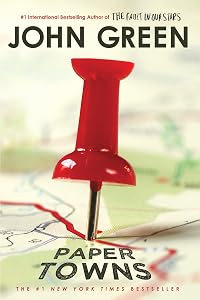
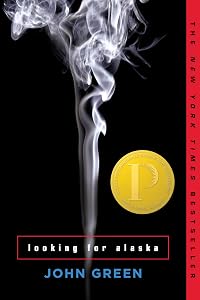

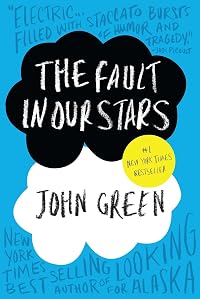
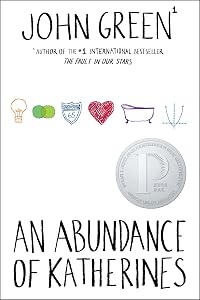


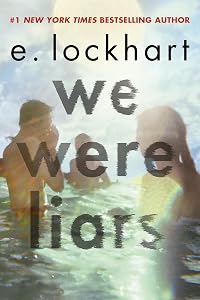
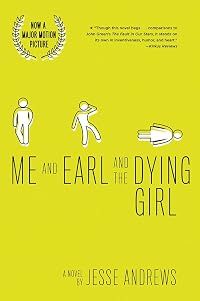
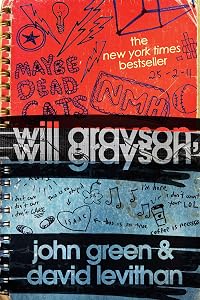
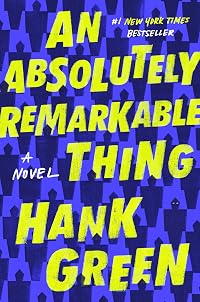

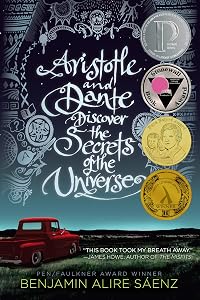

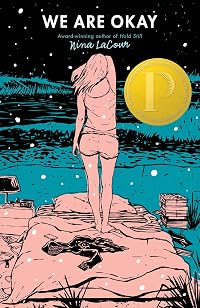
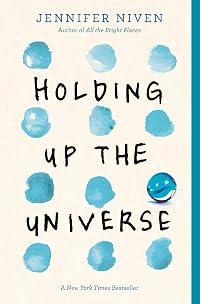
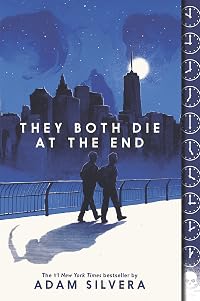
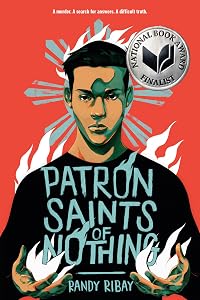


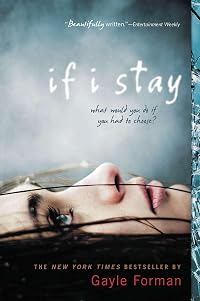
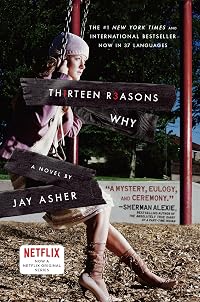
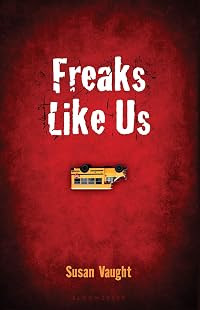



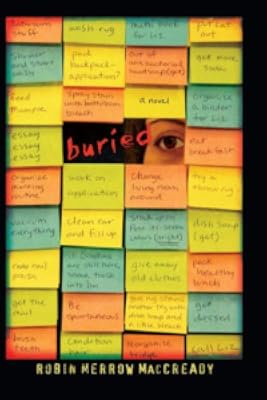
Member Recommendations
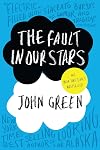
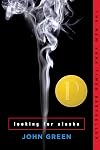
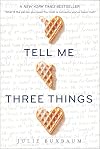
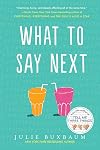
MarchingBandMan The other quasi-existentialist John Green book. Miles Halter deals with existentialism/nihilism in a different way than Aza Holmes, yet this earlier, rawer YA novel expounds on similar themes.
60
Member Reviews
This is another fabulous book from John Green. It is the story of a teenage girl struggling with anxiety/ OCD issues while trying to balance relationships and solve a mystery. The novel is at times heartbreaking and hilarious. Aza is a beautiful and flawed character that is incredibly believable and relatable. The descriptions of Aza's instrusive thoughts and compulsive actions are insightful and painful to read. "The ever-tightening spiral of her own thoughts" constricted my own heart and breath as I was reading about her suffering. Green's writing, per usual, is brilliant and made all the more powerful when combined with his intense personal experiences.
Aza Holmes and her friend Daisy Ramirez decide they want to get the $100,000 reward for giving information on the disappearance of a local billionaire to police. She becomes friendly with the man's son, Davis, whom she knew years ago from going to a camp for kids who had dealt with a death in the family ("Sad Camp"), and they start to become friendly. All of this is complicated by the fact that Aza's OCD and invasive thoughts are particularly difficult right now.
This is much more a story of friendship and first love (not, technically, a romance, I hasten to add) than it is a mystery. Though it starts with Aza and Daisy investigating, that becomes a subplot and the emphasis is more on the fact that, unlike some well-known detectives in show more popular culture, Aza's OCD is not a detective superpower but actually gets in the way of, well, everything. John Green himself has OCD, and the way he describes Aza's thought spirals and compulsions is extremely intense and at times hard to read. Aza is struggling to figure out who she is not just as a teenager but also as someone struggling with mental illness - who is she apart from her thoughts, that are sometimes destructive? And there are tensions in her friendship with Aza and her budding relationship with Davis. A realistic look at mental health, the struggle with something from which you never get "better", while still being hopeful. show less
This is much more a story of friendship and first love (not, technically, a romance, I hasten to add) than it is a mystery. Though it starts with Aza and Daisy investigating, that becomes a subplot and the emphasis is more on the fact that, unlike some well-known detectives in show more popular culture, Aza's OCD is not a detective superpower but actually gets in the way of, well, everything. John Green himself has OCD, and the way he describes Aza's thought spirals and compulsions is extremely intense and at times hard to read. Aza is struggling to figure out who she is not just as a teenager but also as someone struggling with mental illness - who is she apart from her thoughts, that are sometimes destructive? And there are tensions in her friendship with Aza and her budding relationship with Davis. A realistic look at mental health, the struggle with something from which you never get "better", while still being hopeful. show less
“And the thing is, when you lose someone, you realize you’ll eventually lose everyone.”
I highlighted this quote because as someone with bpd it really stuck out to me and it’s something that I have had breakdowns about.
“I’m sorry.”
“You say that a lot.”
“I feel it a lot.”
I’ve heard a lot of mixed reviews when it came to this book and I was so pleasantly surprised when I first began reading and realised how much of a cute and beautiful story it really is.
John Green has always had the ability to write characters that I can’t help but root for and fall in love with.
“But you give your thoughts too much power, Aza. Thoughts are only thoughts. They are not you. You do belong to yourself, even when your thoughts show more don’t.”
This is such great advice and it’s something my own therapist has said to me. I needed to highlight it because it’s a good reminder. I appreciate seeing a character who has the same thoughts and anxieties that a lot of people do in society. It makes me feel seen.
The characters were everything I wanted them to be and I can’t express how happy that makes me. All of them quickly became special to me. I’m starting to see that John Green is the common denominator when it comes to that.
I could say so much more about this book but I would be here forever so what I’m going to say is that I am so happy I finally took the time to read this book and I will definitely be revisiting it in the future. show less
I highlighted this quote because as someone with bpd it really stuck out to me and it’s something that I have had breakdowns about.
“I’m sorry.”
“You say that a lot.”
“I feel it a lot.”
I’ve heard a lot of mixed reviews when it came to this book and I was so pleasantly surprised when I first began reading and realised how much of a cute and beautiful story it really is.
John Green has always had the ability to write characters that I can’t help but root for and fall in love with.
“But you give your thoughts too much power, Aza. Thoughts are only thoughts. They are not you. You do belong to yourself, even when your thoughts show more don’t.”
This is such great advice and it’s something my own therapist has said to me. I needed to highlight it because it’s a good reminder. I appreciate seeing a character who has the same thoughts and anxieties that a lot of people do in society. It makes me feel seen.
The characters were everything I wanted them to be and I can’t express how happy that makes me. All of them quickly became special to me. I’m starting to see that John Green is the common denominator when it comes to that.
I could say so much more about this book but I would be here forever so what I’m going to say is that I am so happy I finally took the time to read this book and I will definitely be revisiting it in the future. show less
I know a couple of OCD sufferers and this book depicts very well how they and those around them struggle with the condition. I only wish Green had trusted in his ability to write an engaging character study of a person with OCD and had not inserted a half-hearted and half-baked storyline about a missing billionaire, his lizard and his sons. I assume that crap is intended to make the book more attractive for a movie option.
Turtles has the feel of older John Green books, with a new heart and relate-ability that I've found to be so lacking in the things I've been reading. I've found a part of myself in this book that I never expected to see so well represented in such a respectful and understanding way. Turtles All the Way Down will be the first book I point to when someone wants to know anything about me.
If you're expecting a TFiOS mark 2, you will be disappointed- this is John's return to his roots in the most glorious way.
If you're expecting a TFiOS mark 2, you will be disappointed- this is John's return to his roots in the most glorious way.
Almost against her will, Aza is dragged into the mystery of a missing billionaire, all while managing her anxiety and finding her way through the confusing territory of first love.
Well, first of all, it's John Green. So, if you have read and enjoyed more than one of his books, you'll probably want to read this one, too. I'm a fan, obviously -- but I also think that this one is perhaps Green's most honest work to date. One criticism that I've read of Green's work is that the characters don't speak like normal teens, but I didn't feel that that was the case in this book -- sure, they have the occasional esoteric discussion of human consciousness and great literature, but that didn't overwhelm the story for me, in this case. I also show more appreciate the way Green handles the main character's mental illness. Highly recommended. show less
Well, first of all, it's John Green. So, if you have read and enjoyed more than one of his books, you'll probably want to read this one, too. I'm a fan, obviously -- but I also think that this one is perhaps Green's most honest work to date. One criticism that I've read of Green's work is that the characters don't speak like normal teens, but I didn't feel that that was the case in this book -- sure, they have the occasional esoteric discussion of human consciousness and great literature, but that didn't overwhelm the story for me, in this case. I also show more appreciate the way Green handles the main character's mental illness. Highly recommended. show less
Re-read January 2018
*
Aza Holmes - Holmesy to her best friend, Daisy - has a mental illness, a version of OCD. More than most people, she lives in her own head, but she doesn't feel like she has control over her thoughts; she gets into obsessive thought-spirals, during which she withdraws from her surroundings, down into her worries, fears, and compulsions - only none of those are strong enough words to communicate her experience to others. Metaphor is the best she can offer, but even those fall far short.
The plot, such as it is, is rather simple: Daisy convinces Aza to reconnect with an old friend from "Sad Camp," Davis, so they can collect a reward for information on his recently disappeared billionaire father. But there's more sadness show more than mystery here: Davis knows his father was a criminal and a jerk, but his younger brother Noah still hopes his father will find a way to get in touch with them. Aza and Davis do rekindle their friendship, while Daisy finds romance with fellow high school student Mychal.
Climactic scenes are not related to plot, but to character: Aza going deep into a spiral; Aza and Daisy fighting; a car accident and a hospital stay (not a good place for Aza to be, considering her fear of bacteria), an underground art show. The people and the relationships are the heart of the book, and it's Aza and Daisy's friendship that is its core. The romances fizzle, but the friendship remains (even through to adulthood, as we find out in the last few pages, which have the flavor of an epilogue even if they aren't labeled as such).
John Green's hallmarks are all here: the fast-talking, articulate teens (who give more enthusiastic speeches about science and art and history than the average person), the realistic parent relationships (Aza's dad died, and her mom is a teacher at her school, so they see each other at school and at home), frequent literary quotations, the way that technology suffuses all the teens' relationships, from texting and FaceTime to blogs and fanfic and Wikipedia.
But Turtles All the Way Down is a deeper dive than, for example, An Abundance of Katherines. The characters face difficult issues, and not just about mental health, though that is at the center of the book. Both Davis and Aza have lost parents, and Davis faces the possibility of being orphaned as a teenager. There are also tensions around money and what it means to have too much or not enough.
High expectations for this book, and it met/exceeded them. The not-an-epilogue toward the end was especially touching; I teared up a little on the last page.
Quotes
It was odd, for me to be the calm one while feeling Daisy's nerves jangling. But the things that make other people nervous have never scared me...I didn't know precisely what I was afraid of, but it wasn't this. (27)
...she told me that beauty was mostly a matter of attention. (Davis's blog, 58)
"The greatest weapon against stress is our ability to choose one thought over another." -William James (58)
No one ever says good-bye unless they want to see you again. (Davis's blog, 59)
...there was something else I couldn't quite identify, some way-down fear that taking a pill to become myself was wrong. (70)
"And the thing is, when you lose someone, you realize you'll eventually lose everyone. (Davis in a text to Aza, 81)
I wanted to tell her that I was getting better, because that was supposed to be the narrative of illness: It was a hurdle you jumped over, or a battle you won. Illness is a story told in the past tense. (85)
"One of the challenges with pain - physical or psychic - is that we can really only approach it through metaphor. It can't be represented the way a table or a body can. In some ways, pain is the opposite of language...
And we're such language-based creatures that to some extent we cannot know what we cannot name. And so we assume it isn't real." (Dr. Karen Singh to Aza, 89)
"If you can't pick what you do or think about, then maybe you aren't really real, you know? Maybe I'm just a lie that I'm whispering to myself." (Aza to Davis, 105)
"I wish I understood it. Like, does it help to be reassuring or is it better to worry with you? Is there anything that makes it better?" (Daisy to Aza, 131)
I could feel the tension in the air, and I knew he was trying to figure out how to make me happy again. His brain was spinning right alongside mine. I couldn't make myself happy, but I could make people around me miserable. (157)
...trying to explain that there is something intensely weird and upsetting about the notion that you can only become yourself by ingesting a medication that changes your self. (164-165)
"But what I want to know is, is there a you independent of circumstances? Is there a way-down-deep me who is an actual, real person...Or am I only a set of circumstances?" (165)
Every loss is unprecedented. You don't ever know someone else's hurt, not really. (174)
"What I love about science is that as you learn, you don't really get answers. You just get better questions." (Malik to Aza, 177)
"Life is a series of choices between wonders." (Davis's blog, 188)
The past is a snare that has already caught you. (Davis's blog, 188)
My mother's footsteps
Were so quiet
I barely heard her leave.
(poem on Davis's blog, 189)
"It's so weird, to know you're crazy and not be able to do anything about it, you know? It's not like you believe yourself to be normal. You know there is a problem. But you can't figure a way through to fixing it." (Aza to Davis, 203)
Our hearts were broken in the same places. That's something like love, but maybe not quite the thing itself. (206)
Photographs are just light and time. (206)
The words used to describe it - despair, fear, anxiety, obsession - do so little to communicate it. Maybe we invented metaphor as a response to pan. Maybe we needed to give shape to the opaque, deep-down pain that evades both sense and senses. (231)
"I feel like a noose is tightening around me and I want out, but struggling only cinches the knot. The spiral just keeps tightening, you know?" (Aza to Dr. Singh, 235)
"But that's not the point of the story, Holmesy. The point of the story is they built the city anyway, you know? You work with what you have. They had this shit river, and they managed to build an okay city around it....You're not the river. You're the city." (Daisy to Aza, 243)
"I wish I understood it," she said.
"It's okay," I said. "Nobody gets anybody else, not really. We're all stuck inside ourselves." (Daisy and Aza, 244)
People always talk like there's a bright line between imagination and memory, but there isn't, at least not for me. I remember what I've imagined and imagine what I remember. (271) show less
*
Aza Holmes - Holmesy to her best friend, Daisy - has a mental illness, a version of OCD. More than most people, she lives in her own head, but she doesn't feel like she has control over her thoughts; she gets into obsessive thought-spirals, during which she withdraws from her surroundings, down into her worries, fears, and compulsions - only none of those are strong enough words to communicate her experience to others. Metaphor is the best she can offer, but even those fall far short.
The plot, such as it is, is rather simple: Daisy convinces Aza to reconnect with an old friend from "Sad Camp," Davis, so they can collect a reward for information on his recently disappeared billionaire father. But there's more sadness show more than mystery here: Davis knows his father was a criminal and a jerk, but his younger brother Noah still hopes his father will find a way to get in touch with them. Aza and Davis do rekindle their friendship, while Daisy finds romance with fellow high school student Mychal.
Climactic scenes are not related to plot, but to character: Aza going deep into a spiral; Aza and Daisy fighting; a car accident and a hospital stay (not a good place for Aza to be, considering her fear of bacteria), an underground art show. The people and the relationships are the heart of the book, and it's Aza and Daisy's friendship that is its core. The romances fizzle, but the friendship remains (even through to adulthood, as we find out in the last few pages, which have the flavor of an epilogue even if they aren't labeled as such).
John Green's hallmarks are all here: the fast-talking, articulate teens (who give more enthusiastic speeches about science and art and history than the average person), the realistic parent relationships (Aza's dad died, and her mom is a teacher at her school, so they see each other at school and at home), frequent literary quotations, the way that technology suffuses all the teens' relationships, from texting and FaceTime to blogs and fanfic and Wikipedia.
But Turtles All the Way Down is a deeper dive than, for example, An Abundance of Katherines. The characters face difficult issues, and not just about mental health, though that is at the center of the book. Both Davis and Aza have lost parents, and Davis faces the possibility of being orphaned as a teenager. There are also tensions around money and what it means to have too much or not enough.
High expectations for this book, and it met/exceeded them. The not-an-epilogue toward the end was especially touching; I teared up a little on the last page.
Quotes
It was odd, for me to be the calm one while feeling Daisy's nerves jangling. But the things that make other people nervous have never scared me...I didn't know precisely what I was afraid of, but it wasn't this. (27)
...she told me that beauty was mostly a matter of attention. (Davis's blog, 58)
"The greatest weapon against stress is our ability to choose one thought over another." -William James (58)
No one ever says good-bye unless they want to see you again. (Davis's blog, 59)
...there was something else I couldn't quite identify, some way-down fear that taking a pill to become myself was wrong. (70)
"And the thing is, when you lose someone, you realize you'll eventually lose everyone. (Davis in a text to Aza, 81)
I wanted to tell her that I was getting better, because that was supposed to be the narrative of illness: It was a hurdle you jumped over, or a battle you won. Illness is a story told in the past tense. (85)
"One of the challenges with pain - physical or psychic - is that we can really only approach it through metaphor. It can't be represented the way a table or a body can. In some ways, pain is the opposite of language...
And we're such language-based creatures that to some extent we cannot know what we cannot name. And so we assume it isn't real." (Dr. Karen Singh to Aza, 89)
"If you can't pick what you do or think about, then maybe you aren't really real, you know? Maybe I'm just a lie that I'm whispering to myself." (Aza to Davis, 105)
"I wish I understood it. Like, does it help to be reassuring or is it better to worry with you? Is there anything that makes it better?" (Daisy to Aza, 131)
I could feel the tension in the air, and I knew he was trying to figure out how to make me happy again. His brain was spinning right alongside mine. I couldn't make myself happy, but I could make people around me miserable. (157)
...trying to explain that there is something intensely weird and upsetting about the notion that you can only become yourself by ingesting a medication that changes your self. (164-165)
"But what I want to know is, is there a you independent of circumstances? Is there a way-down-deep me who is an actual, real person...Or am I only a set of circumstances?" (165)
Every loss is unprecedented. You don't ever know someone else's hurt, not really. (174)
"What I love about science is that as you learn, you don't really get answers. You just get better questions." (Malik to Aza, 177)
"Life is a series of choices between wonders." (Davis's blog, 188)
The past is a snare that has already caught you. (Davis's blog, 188)
My mother's footsteps
Were so quiet
I barely heard her leave.
(poem on Davis's blog, 189)
"It's so weird, to know you're crazy and not be able to do anything about it, you know? It's not like you believe yourself to be normal. You know there is a problem. But you can't figure a way through to fixing it." (Aza to Davis, 203)
Our hearts were broken in the same places. That's something like love, but maybe not quite the thing itself. (206)
Photographs are just light and time. (206)
The words used to describe it - despair, fear, anxiety, obsession - do so little to communicate it. Maybe we invented metaphor as a response to pan. Maybe we needed to give shape to the opaque, deep-down pain that evades both sense and senses. (231)
"I feel like a noose is tightening around me and I want out, but struggling only cinches the knot. The spiral just keeps tightening, you know?" (Aza to Dr. Singh, 235)
"But that's not the point of the story, Holmesy. The point of the story is they built the city anyway, you know? You work with what you have. They had this shit river, and they managed to build an okay city around it....You're not the river. You're the city." (Daisy to Aza, 243)
"I wish I understood it," she said.
"It's okay," I said. "Nobody gets anybody else, not really. We're all stuck inside ourselves." (Daisy and Aza, 244)
People always talk like there's a bright line between imagination and memory, but there isn't, at least not for me. I remember what I've imagined and imagine what I remember. (271) show less
Members
- Recently Added By
Lists

Recommend the 20 best books you've read in the last five years
2,168 works; 601 members

Female Protagonist
1,056 works; 57 members

The Books I Read in 2017
96 works; 1 member

Books Read in 2017
4,249 works; 129 members

Top Five Books of 2017
757 works; 231 members

Five star books
1,767 works; 110 members

Missing Person Books
31 works; 2 members

Books Read in 2018
4,360 works; 110 members

Netflix and Reads
18 works; 2 members

Books recommended by Calgary Public Library staff
1,588 works; 4 members

Books Read in 2024
4,623 works; 126 members

Little Library finds
87 works; 2 members

Penguin Random House
458 works; 4 members

The Five Books That Represent Us
391 works; 148 members
Author Information

30+ Works 115,850 Members
John Green was born in Indianapolis, Indiana on August 24, 1977. He graduated from Kenyon College in 2000 with a double major in English and religious studies. Before becoming a writer, he was a publishing assistant and production editor for Booklist, which is a book review journal. His first novel, Looking for Alaska, was published in 2005 and show more won the Michael L. Printz Award for excellence in Young Adult literature in 2006. His other works include An Abundance of Katherines, a 2007 Michael L. Printz Award Honor Book; Paper Towns, which won the 2009 Edgar Award for Best Young Adult Novel and the 2010 Corine Literature Prize; and The Fault in Our Stars, which was a New York Times Best Seller. He is also the co-author, with David Levithan, of Will Grayson, Will Grayson. Two of John Green's titles, The Fault in Our Stars and Paper Towns, have been made into major motion pictures. His title, An Abundance of Katherines, made the New York Times Best Seller List. Paper Towns made The New Zealand Best Seller List 2015. (Bowker Author Biography) show less
John Green is a LibraryThing Author, an author who lists their personal library on LibraryThing.
Some Editions
Awards and Honors
Awards
Distinctions
Amazon.com Best Books (Top 20 – 2017)
The Guardian Book of the Day (2017-10-10)
Notable Lists
Work Relationships
Is contained in
Has as a reference guide/companion
Has as a student's study guide
Common Knowledge
- Canonical title*
- Schlaft gut, ihr fiesen Gedanken
- Original title
- Turtles All the Way Down
- Original publication date
- 2017-10-10
- People/Characters
- Aza Holmes; Daisy Ramirez; Davis Pickett; Noah Pickett; Mychal Turner; Karen Singh (show all 8); Mrs. Holmes; Russell Davis Pickett
- Important places
- Indianapolis, Indiana, USA
- Epigraph
- Man can do what he wills, but he cannot will what he wills. -Arthur Schopenhauer
- Dedication
- To Henry and Alice
- First words
- At the time I first realized I might be fictional, my weekdays were spent at a publicly funded institution on the north side of Indianapolis called White River High School, where I was required to eat lunch at a particular ti... (show all)me -- between 12:37 P.M. and 1:14 P.M. -- by forces so much large than myself that I couldn't even begin to identify them.
- Quotations
- No one ever says goodbye unless they want to see you again.
But I was beginning to learn that your life is a story told about you, not one that you tell....You think you're the painter, but you're the canvas.
Your now is not your forever.
I thought about him asking me if I'd ever been in love. It's a weird phrase in English, in love, like it's a sea you drown in or a town you live in. You don't get to be in anything else---in friendship or in anger or in... (show all) hope. All you can be in is love.
Anybody can look at you. It’s quite rare to find someone who sees the same world you see. - Last words
- (Click to show. Warning: May contain spoilers.)You stare up at the same sky together, and after a while he says, I have to go, and you say, Good-bye, and he says, Good-bye, Aza, and no one ever says good-bye unless they want to see you again.
- Original language
- English
*Some information comes from Common Knowledge in other languages. Click "Edit" for more information.
Classifications
Statistics
- Members
- 9,201
- Popularity
- 1,158
- Reviews
- 274
- Rating
- (3.95)
- Languages
- 17 — Armenian, Czech, Danish, Dutch, English, Estonian, Finnish, French, German, Hungarian, Italian, Polish, Portuguese, Romanian, Spanish, Swedish, Turkish
- Media
- Paper, Audiobook, Ebook
- ISBNs
- 80
- ASINs
- 14