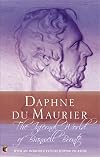
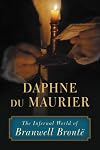
The Infernal World of Branwell Brontë
by Daphne du Maurier
On This Page
Description
As a bold and gifted child, Branwell Bronte's promise seemed boundless to the three adoring sisters over whom his rule was complete. But as an adult, the precocious flame of genius distorted and burned low. With neither the strength nor the resources to counter rejection, unable to sell his paintings or publish his books, Branwell became a spectre in the Bronte story, in pathetic contrast with the astonishing achievements of his sisters. Daphne du Maurier concentrates all her biographer's show more skill on the shadowy figure of Branwell Bronte, and no reader could fail to be intensely moved by Branwell's final retreat into laudanum, alcohol - and death show lessTags
Recommendations



















Member Reviews
An exercise for the reader who has a passing familiarity with both the life of Branwell Brontë and the writing of Daphne du Maurier: just imagine for a moment what you think a biography of Branwell Brontë written by Daphne du Maurier might be like. This book is pretty much exactly what you'd expect it to be: full of feeling, sometimes ridiculous and overreaching, morbid, with occasional lurid speculations and unexpected psychological conjectures. Still, for the right person there's something enjoyable about it.
She is comically hard on most of Branwell's writing, in a way that suggests that she takes his failure very personally: "fourth-rate stuff," "a Sunday School child of seven could have done better," "lame couplets," "interminable show more elegy," etc. It's a little much.
The best parts of the book are the details of the supposed conversation with George Searle Phillips indicating that Branwell knew Charlotte was the author of Jane Eyre, and Branwell's correspondence with sculptor Joseph Leyland.
It's hard to know what to think of Branwell: one one hand he was such a burden and a liar and a fuck-up. On the other hand, he really suffered, and it's hard not to sympathize with someone of whom greatness is expected, who has talent but not strength, whose dreams and ambitions are larger than his world. "I only know that it is time for me to be something when I am nothing."
One thing Daphne du Maurier and I agree about is that "Peaceful Death and Happy Life" is a powerful and awesome poem:
Why dost thou sorrow for the happy dead
For if their life be lost, their toils are o'er
And woe and want shall trouble them no more,
Nor ever slept they in an earthly bed
So sound as now they sleep while dreamless, laid
In the dark chambers of that unknown shore
Where Night and Silence seal each guarded door:
So turn from such as these thy drooping head
And mourn the 'dead alive' - whose spirit flies -
Whose life departs before his death has come -
Who finds no Heaven beyond Life's gloomy skies,
Who sees no Hope to brighten up that gloom;
Tis HE who feels the worm that never dies -
The REAL death and darkness of the tomb. show less
She is comically hard on most of Branwell's writing, in a way that suggests that she takes his failure very personally: "fourth-rate stuff," "a Sunday School child of seven could have done better," "lame couplets," "interminable show more elegy," etc. It's a little much.
The best parts of the book are the details of the supposed conversation with George Searle Phillips indicating that Branwell knew Charlotte was the author of Jane Eyre, and Branwell's correspondence with sculptor Joseph Leyland.
It's hard to know what to think of Branwell: one one hand he was such a burden and a liar and a fuck-up. On the other hand, he really suffered, and it's hard not to sympathize with someone of whom greatness is expected, who has talent but not strength, whose dreams and ambitions are larger than his world. "I only know that it is time for me to be something when I am nothing."
One thing Daphne du Maurier and I agree about is that "Peaceful Death and Happy Life" is a powerful and awesome poem:
Why dost thou sorrow for the happy dead
For if their life be lost, their toils are o'er
And woe and want shall trouble them no more,
Nor ever slept they in an earthly bed
So sound as now they sleep while dreamless, laid
In the dark chambers of that unknown shore
Where Night and Silence seal each guarded door:
So turn from such as these thy drooping head
And mourn the 'dead alive' - whose spirit flies -
Whose life departs before his death has come -
Who finds no Heaven beyond Life's gloomy skies,
Who sees no Hope to brighten up that gloom;
Tis HE who feels the worm that never dies -
The REAL death and darkness of the tomb. show less
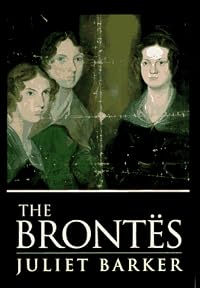
Having enjoyed some of the author's novels, I was intrigued to see what she would make of the character of the only male Bronte sibling. I have made allowances for the fact that this book was written a long time ago, ahead of the more modern scholarship such as the huge biography of the whole Bronte family written by Juliet Barker, which I read alongside this, but there are many weaknesses.
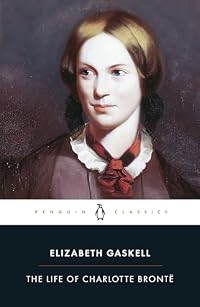
In places it is quite obvious that the novelist has taken over from the biographer, with scenes and dialogue constructed from surmise or outright fictionalising. In others, as Barker's book makes clear, du Maurier, like most of the biographers who followed Elizabeth Gaskell's "Life of Charlotte Bronte", takes its steer from that book on many aspects, show more although du Maurier doesn't quite turn the family's father, Patrick, into the monster portrayed by Gaskell.
Some of du Maurier's speculation reads oddly these days. Because it appears that the young son of his employer Mr Robinson remained behind with him while the rest of the family went to Scarborough and it is only after the son apparently arrived there that Mr Robinson wrote a letter sacking Branwell in very strong terms, she comes up with the theory that he must have tried to make paedophilic advances to the boy. This would be far more shocking than the reality - that Branwell had been either having an affair with his employer's wife or at least showing inappropriate attraction to her. du Maurier dismisses Branwell's own explanation to his family for why he has lost his job as tutor - an affair with Mrs Robinson - because she has a fixed idea that he was increasingly lost in an unreal melodramatic world based on his childhood writings, which rendered him unable to distinguish between real life and fiction and that, acting out the behaviour of his anti-hero Northangerland, he had molested the boy or exposed himself to him. Barker's book shows that the assumed date of the boy's arrival is based on a local newspaper column which often got dates wrong or missed people out, and that there is much better evidence showing that he accompanied his family and was not left behind. It also gives a lot of evidence to support Branwell's assertion, not least of which is that Mrs Robinson sent servants to make financial payments to Branwell to keep him away from her - to buy him off basically. Barker's book also makes it clear that he didn't take heavily to the bottle until after he was sacked and his unrealistic hopes to marry Mrs Robinson were finally dashed, so he was not blurring reality with fantasy under the influence of drink and drugs (laudanum) when still in the Robinsons' employ.
Interestingly du Maurier does cast doubt on whether Branwell was a thwarted genius and decides that most of his work wasn't very good, portraying him not exactly as overindulged - in a family which lived on the meagre salary of Patrick - but more as the little boy who dominated his sisters, had a big personality and was expected to be an artistic or literary success when in fact he lacked the talent of his sisters. It is interesting that, unlike them, he was never sent away to school even for a short period. It becomes increasingly clear that he lacked not only their talent but also their application and effort, preferring to live off his father, run up debts which he expected Patrick or his friends to pay, and retreat from his unrealistic ideas of fame and fortune into an alcohol and laudanum haze.
One assertion of du Maurier's which appears to be unique to her is her idea that Branwell must have been epileptic. And there are other points where the book has to be treated with caution. As Barker makes clear, the sections where Branwell carouses with Irish labourers whom she calls "boaties" while he is working away as a railway clerk is fictional and seems to have originated with du Maurier - there were no Irish people living in the locality at that period. She also has him living at a pub which did not actually exist at the time. These and other mistakes render the whole book more of a fictional account of the life rather than one on which to trust, although the extracts from Branwell's juvenilia and later poems are of interest. Given these major reservations, I can only award the book an OK 2 stars. show less
In places it is quite obvious that the novelist has taken over from the biographer, with scenes and dialogue constructed from surmise or outright fictionalising. In others, as Barker's book makes clear, du Maurier, like most of the biographers who followed Elizabeth Gaskell's "Life of Charlotte Bronte", takes its steer from that book on many aspects, show more although du Maurier doesn't quite turn the family's father, Patrick, into the monster portrayed by Gaskell.
Some of du Maurier's speculation reads oddly these days. Because it appears that the young son of his employer Mr Robinson remained behind with him while the rest of the family went to Scarborough and it is only after the son apparently arrived there that Mr Robinson wrote a letter sacking Branwell in very strong terms, she comes up with the theory that he must have tried to make paedophilic advances to the boy. This would be far more shocking than the reality - that Branwell had been either having an affair with his employer's wife or at least showing inappropriate attraction to her. du Maurier dismisses Branwell's own explanation to his family for why he has lost his job as tutor - an affair with Mrs Robinson - because she has a fixed idea that he was increasingly lost in an unreal melodramatic world based on his childhood writings, which rendered him unable to distinguish between real life and fiction and that, acting out the behaviour of his anti-hero Northangerland, he had molested the boy or exposed himself to him. Barker's book shows that the assumed date of the boy's arrival is based on a local newspaper column which often got dates wrong or missed people out, and that there is much better evidence showing that he accompanied his family and was not left behind. It also gives a lot of evidence to support Branwell's assertion, not least of which is that Mrs Robinson sent servants to make financial payments to Branwell to keep him away from her - to buy him off basically. Barker's book also makes it clear that he didn't take heavily to the bottle until after he was sacked and his unrealistic hopes to marry Mrs Robinson were finally dashed, so he was not blurring reality with fantasy under the influence of drink and drugs (laudanum) when still in the Robinsons' employ.
Interestingly du Maurier does cast doubt on whether Branwell was a thwarted genius and decides that most of his work wasn't very good, portraying him not exactly as overindulged - in a family which lived on the meagre salary of Patrick - but more as the little boy who dominated his sisters, had a big personality and was expected to be an artistic or literary success when in fact he lacked the talent of his sisters. It is interesting that, unlike them, he was never sent away to school even for a short period. It becomes increasingly clear that he lacked not only their talent but also their application and effort, preferring to live off his father, run up debts which he expected Patrick or his friends to pay, and retreat from his unrealistic ideas of fame and fortune into an alcohol and laudanum haze.
One assertion of du Maurier's which appears to be unique to her is her idea that Branwell must have been epileptic. And there are other points where the book has to be treated with caution. As Barker makes clear, the sections where Branwell carouses with Irish labourers whom she calls "boaties" while he is working away as a railway clerk is fictional and seems to have originated with du Maurier - there were no Irish people living in the locality at that period. She also has him living at a pub which did not actually exist at the time. These and other mistakes render the whole book more of a fictional account of the life rather than one on which to trust, although the extracts from Branwell's juvenilia and later poems are of interest. Given these major reservations, I can only award the book an OK 2 stars. show less
The Infernal World of Branwell Bronte is a brief biography of the least-known of the Bronte siblings: Charlotte, Emily, and Anne’s brother Branwell, believed by his sisters to be the most brilliant of all the siblings. Born the only boy in a family of girls, a lot was expected of Branwell; but tied down by his imagination, which he fueled into the fictional world of Angria, a lack of job prospects, a disastrous affair, and a drug addiction, he died at the young age of 31 and was eventually eclipsed by his sisters. Yet Branwell was a moderately good poet and artist.
In this short biography, Du Maurier draws from Branwell’s poems, prose, and letters to giver her reader more of an idea of what he was like. And yet, it’s hard to know, show more trapped as he was in his own “infernal world,” a phrase that Du Maurier uses way too many times in the book but which is as good as any to describe how much Branwell’s mind disturbed him. It’s hard to get a good idea of what any of the Bronte siblings was like, since they were so introverted, but Du Maurier does a good job here of painting a rough portrait. I liked the fact that she addressed the rumors that Branwell helped to author Wuthering Heights. Branwell was a highly imaginative and emotional person, and its possible that he might have contributed ideas for it.
I think, though, that there’s a lot of speculation, especially over what happened at Thorp Green with his dismissal from the Robinsons’ employ. Du Maurier hints at, but does not say explicitly or prove, inappropriate behavior on the part of Branwell towards the Robinsons’ son Edmond. But since Du Maurier only hints at it, the reader is left to come to her own conclusions about what she might have meant—a sexual relationship? Or did Branwell allow Edmund to see him under the influence of drugs? Despite the ambiguity of this point, I did like the way that she portrayed Emily Bronte, my favorite of the sisters—aloof, undemonstrative, often misunderstood by those who didn’t know her well. show less
In this short biography, Du Maurier draws from Branwell’s poems, prose, and letters to giver her reader more of an idea of what he was like. And yet, it’s hard to know, show more trapped as he was in his own “infernal world,” a phrase that Du Maurier uses way too many times in the book but which is as good as any to describe how much Branwell’s mind disturbed him. It’s hard to get a good idea of what any of the Bronte siblings was like, since they were so introverted, but Du Maurier does a good job here of painting a rough portrait. I liked the fact that she addressed the rumors that Branwell helped to author Wuthering Heights. Branwell was a highly imaginative and emotional person, and its possible that he might have contributed ideas for it.
I think, though, that there’s a lot of speculation, especially over what happened at Thorp Green with his dismissal from the Robinsons’ employ. Du Maurier hints at, but does not say explicitly or prove, inappropriate behavior on the part of Branwell towards the Robinsons’ son Edmond. But since Du Maurier only hints at it, the reader is left to come to her own conclusions about what she might have meant—a sexual relationship? Or did Branwell allow Edmund to see him under the influence of drugs? Despite the ambiguity of this point, I did like the way that she portrayed Emily Bronte, my favorite of the sisters—aloof, undemonstrative, often misunderstood by those who didn’t know her well. show less
Patrick Branwell Brontë was the only son of Rev. Patrick Brontë. When he was a small boy, his mother died, followed by his older sisters Elizabeth and Maria, leaving him with his father and his three sister—his older sister Charlotte and his two younger sisters, Emily and Anne. Together, the four surviving Brontë children, with Branwell as their leader, created a private fictional world that Branwell called Angria. The two eldest, Charlotte and Branwell, filled hundreds of pages with minute handwriting, telling stories of the often lawless and larger-than-life inhabitants of Angria. Branwell's father and sisters adored him, thought he was the most brilliant and creative member of the family, and expected great things of him. Alas, show more poor Branwell. He failed as an artist, failed as a poet, failed as a tutor, failed as a railway clerk, failed as a lover. And, as Daphne uu Maurier tells the story, each failure drove him further into the "infernal world" of his imagination and loosened his grip on reality. Failure also drove him to drink, and to laudanum, and undermined his health; late in life, he was subject to "fits" that may have been anything from delirium tremens to epilepsy. In the absence of much documentation, so much of Branwell's life is subject to conjecture, and du Maurier reconstructs that life with both a historian's care and a novelist's imagination. I found the book both gripping and sad. While his sisters were able to escape the childhood fantasies that made them lords and ladies of Angria, Branwell never did. He never harnessed his imagination to a more grown-up story like Jane Eyre or Agnes Grey. He did write poetry, most of which, as quoted by du Maurier, was pretty morose and morbid stuff, obsessed with death and loss.
I could sympathize, and even identify with Branwell Brontë, but in the end he seems to dissolve in his own self-pity and self-delusion. In her excellent introduction to the 2006 Virago Modern Classics reprint of Du Maurier's book (originally published in 1960), Justine Picardie writes: "To be truthful, although I would recommend her biography of him as essential reading to any du Maurier fan, it is not the easiest of her work—weighed down, occasionally, by her anxious diligence, and also by her own increasing exasperation with Branwell's failure to live up to his original promise." In the end, the story of how the amiable and gifted child declined into drunken disappointment seems less like high tragedy and more like a simple waste of a life. His talent and his strength of character didn't match his ambitions, and he wasn't willing to settle for an ordinary life that was never touched by greatness. But all the while, he was living in the same house with greatness. Were it not for his sisters, we would never have known a thing about this poor drunken failure and his dreams of greatness.
At the end of Branwell's life, all three of his sisters had published immortal novels, and tried to hide their success from a brother who did nothing but mope around the parsonage and run up debts at the local public houses. Branwell Brontë died in September 1848, at the age of 31. Emily died in December of the same year, and Anne in May of the next. Of Rev. Brontë's six children, that left only one, Charlotte. "Waking I think, sleeping I dream of them," she wrote. show less
I could sympathize, and even identify with Branwell Brontë, but in the end he seems to dissolve in his own self-pity and self-delusion. In her excellent introduction to the 2006 Virago Modern Classics reprint of Du Maurier's book (originally published in 1960), Justine Picardie writes: "To be truthful, although I would recommend her biography of him as essential reading to any du Maurier fan, it is not the easiest of her work—weighed down, occasionally, by her anxious diligence, and also by her own increasing exasperation with Branwell's failure to live up to his original promise." In the end, the story of how the amiable and gifted child declined into drunken disappointment seems less like high tragedy and more like a simple waste of a life. His talent and his strength of character didn't match his ambitions, and he wasn't willing to settle for an ordinary life that was never touched by greatness. But all the while, he was living in the same house with greatness. Were it not for his sisters, we would never have known a thing about this poor drunken failure and his dreams of greatness.
At the end of Branwell's life, all three of his sisters had published immortal novels, and tried to hide their success from a brother who did nothing but mope around the parsonage and run up debts at the local public houses. Branwell Brontë died in September 1848, at the age of 31. Emily died in December of the same year, and Anne in May of the next. Of Rev. Brontë's six children, that left only one, Charlotte. "Waking I think, sleeping I dream of them," she wrote. show less
I think I expected this to be a fairly straightforward biography of Patrick Branwell Bronte, brother to Anne, Charlotte, and Emily. However, it did not come off that way. I love Daphne du Maurier's writing in general, but this book was too flowery, too much conjecture, disjointed narratives, and very confusing to follow. If you know nothing about Branwell (like me), it's an interesting overview, but the writing went way over the top sometimes, and if I wanted to know more about him, I would have looked for a different book.
This novel gives us a glimpse into the life of Branwell Bronte the only brother of Charlotte, Emily and Anne Bronte, who is often considered to be the failure of the family and who died very young at the age of thirty, a death many have considered to be caused by his excessive use of alcohol and laudanum. I am a very big fan of Daphne du Maurier and reading her books is a treat and something I savor. Also, I was really looking forward to reading this book I, like many fans of the Bronte’s work including the novels they wrote as children have always been fascinated by their lives and the motivations behind their unique ability to create such wonderful thought provoking stories. In my opinion Branwell is one of the biggest mysteries in show more literary history because I feel like biographers side step him as being a failure to the family, the man whose potential was never achieved and I have always wondered if that is what he was really like. Since we will never know I was excited when I came across this novel by Daphne du Maurier and I was looking forward to reading her interpretations about Branwell’s life. I really enjoyed the writing in this book, as in all of Daphne du Maurier’s books it flows very well and takes on an almost poetic quality. It hardly reads as a biography and more like a novel or story. I have not read the other biographies that Daphne du Maurier wrote so I can’t comment on how this one compares with the others but I really enjoyed reading this. I found her ideas and interpretations of the time to be very unique to other biographies I read on the Brontes, and I enjoyed the way she uses some of Branwell’s poetry to enhance her ideas. I also enjoyed the introduction to this novel by Justine Picardie. I would suggest this book to anyone who is interested in reading about the Brontes as I thought it was a very excellent addition. show less
Ratings
Members
- Recently Added By
Published Reviews
ThingScore 75
Branwell's new analyst has looked deeply, and I think justly, into the hopes and fears and frustration of a tragic as well as complex character without whom the brains of the Brontë parsonage might not have worked so fast or reached so far. Moreover, Miss du Maurier has brought to the art of biography the narrative urgency which gives superb animation
to her story-telling.
to her story-telling.
added by NinieB
Lists

Bibliography for How to be a Heroine
148 works; 12 members

Favourite Virago Modern Classics
183 works; 38 members
Author Information

203+ Works 57,322 Members
Daphne Du Maurier was born in London on May 13, 1907 and educated in Paris. In 1932, she married Lieutenant-General Sir Frederick Browning. She began writing short stories of mystery and suspense for magazines in 1928, a collection of which appeared as The Apple Tree in 1952. Her first novel, The Loving Spirit, was published in 1931. Her tightly show more woven, highly suspenseful plots and her strong characters make her stories perfect for adaptation to film or television. Among her many novels that were made into successful films are Jamaica Inn (1936), Rebecca (1938), Frenchman's Creek (1941), Hungry Hill (1943), My Cousin Rachel (1952), and The Scapegoat (1957). Her short story, The Birds (1953), was brought to the screen by director Alfred Hitchcock in a treatment that has become a classic horror-suspense film. She died on April 19, 1989 at the age of 81. (Bowker Author Biography) show less
Series
Belongs to Publisher Series
Virago Modern Classics (524)
Work Relationships
Common Knowledge
- Canonical title
- The Infernal World of Branwell Brontë
- Original publication date
- 1960
- People/Characters
- Branwell Brontë
- Important places
- Haworth, Yorkshire, England, UK; Yorkshire, England, UK
- Epigraph
- I therefore purpose not, or dream,
Descanting on his fate,
To give a melancholy theme
A more enduring date:
But misery still delights to trace
Its'semblance in another's case.
No voice divine the storm ... (show all)allay'd,
No light propitious share;
When, snatched from all effectual aid,
We perished, each alone:
But I beneath a rougher sea,
And whelm'd in deeper gulphs than he.
William Cowper, The Castaway - Dedication
- To J. Alex Symington, compiler and editors of The Shakespeare Head Bronte, whose life-long interest in Patrick Bramwell Bronte stimulated my own, and encouraged me to undertake the present study.
- First words
- The Infernal World of Branwell Bronte has always been the least successful of Daphne du Marier's books in commercial terms; yet it remains as fascinating as the best of her work. -Foreword, Justine Picardie, 2005
When Ms. Gaskell published her life of Charlotte Bronte in 1857, she painted so vivid a picture of life at Haworth parsonage, and of the talented, short-lived family who dwelt within its walls, that every Bronte biography wri... (show all)tten since has been based upon it. -Preface
He died on Sunday morning, the 24th of September, 1848. He was thirty-one years old. He died in the room which he had shared with his father for so long, and in which, as a little boy, he had awakened to find the moon shining... (show all) through the curtainless windows and his father upon his knees, prayer. -Chapter 1 - Quotations
- ‘My unhappy brother never knew what his sisters had done in literature,' Charlotte told Mr Williams after Branwell's death, ‘he was not aware that they had ever published a line. We could not tell him of our efforts for f... (show all)ear of causing him too deep a pang of remorse for his own time misspent, and talents misapplied. Now he will never know.'
- Canonical DDC/MDS
- 823.8
- Canonical LCC
- PR4174.B2
Classifications
Statistics
- Members
- 387
- Popularity
- 80,444
- Reviews
- 6
- Rating
- (3.40)
- Languages
- English, French, German, Spanish
- Media
- Paper, Ebook
- ISBNs
- 13
- ASINs
- 22