On This Page
Description
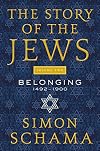
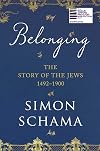
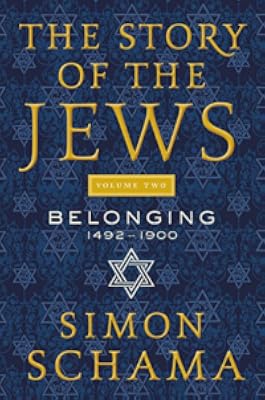
The second of a three volume cultural history that details the journey of the Jewish people from 1492 through the end of the nineteenth century, incorporating the stories of many who seldom figure in Jewish histories. Through Schama's passionate and intelligent telling, a story emerges of the Jewish people that feels as if it is the story of everyone, of humanity packed with detail. -- Adapted from book jacket.Tags
Recommendations




















Member Recommendations
Member Reviews
Something changed between when I read Vol 1 and now. This book is distinctly overegged, and while sweeping and comprehensive, still comes up as less than the sum of its parts. Schama structures the narrative roughly geographically and chronologically, beginning in Venice immediately after the expulsion of Jews from Spain and Portugal, and ending in Jerusalem with a diplomatic junket involving Zionist leader Theodor Herzl and Kaiser Wilhelm II. In between we visit most of Europe, the United States, and places as far afield as India and China.
Several themes reoccur. Good times turn to bad times, as rulers and populations repeatedly turn against Jews in their midst, ordering expulsions in the dead of winter and forced conversion. In show more almost all of Europe, Jews were barred from land ownership and craft guilds, and then punished for either being poor disease carriers, or becoming too suspiciously wealthy on commercial activity.
A second issue was one of community or integration. Jewish communities were often semi-autonomous from their Christian neighbors, accountable to their own laws and courts, with the caveat of being subject to gentile abuse with little recourse. Yet Jews often achieved some degree of integration with mainstream society. Amsterdam was tolerant enough to allow genuine pluralism, even in the 16th century. In England, once Jews were allowed to return after the restoration, some shaved their beards and baptized their children, becoming more or less indistinguishable from other English gentry. The story of Jewish boxer Daniel Mendoza is a rough and tumble counter to these smooth stories of integration.
Mystical redemption returns again and again. The Messiah is a recurrent theme in Jewish spiritual belief, and several people claimed to be the Messiah. In the 15th and 16th century, there were rumors of Jews at the ends of the Earth, the biblical Lost Tribes set to return as an army. In the 17th and 18, it was spiritual redemption through the Sabbateans (heretics), and the Hasids (more orthodox than thou). Internal Jewish belief was matched by a widespread Christian belief that mass conversion of the Jews, preferably by acclamation, but by force if necessary, would herald the Day of Judgment and the Kingdom of Christ.
The 19th century and the flourishing of the industrial revolution saw cultured, urbane Jews in France, Austria, and Germany, join their nations as engineers, artists, and bankers. Yet at the same time, antisemitism arose as a specific political ideology, which cast all the disruptions of modernity as the fault of conniving Jewish bankers and communist radicals, while also justifying nations rooted in racial and ethnic origins as unable to accommodate "rootless" Jewish communities.
Schama has an eye for the florid and unusual, tracing the dramatic histories of false prophets, wealthy 'court Jews' who were bankers to kings, and notable artists and the like. Yet I think the texture of everyday life isn't quite captured to the same extent as in the first book, which I missed. And Schama's innate Toryism comes through in weird ways, like overlooking the Jewish communities of the Muslim world almost entirely, merely taking a few pages to describe their systematic degradation, and then describing almost identical abuse dealt out by Christians as just part of life. Similarly, I don't think that Cossacks and pogroms need a historical reappraisal as 'not really that bad'.
Ultimately, Schama remains a charming and deeply knowledgeable writer, but this book was a slog for me. show less
Several themes reoccur. Good times turn to bad times, as rulers and populations repeatedly turn against Jews in their midst, ordering expulsions in the dead of winter and forced conversion. In show more almost all of Europe, Jews were barred from land ownership and craft guilds, and then punished for either being poor disease carriers, or becoming too suspiciously wealthy on commercial activity.
A second issue was one of community or integration. Jewish communities were often semi-autonomous from their Christian neighbors, accountable to their own laws and courts, with the caveat of being subject to gentile abuse with little recourse. Yet Jews often achieved some degree of integration with mainstream society. Amsterdam was tolerant enough to allow genuine pluralism, even in the 16th century. In England, once Jews were allowed to return after the restoration, some shaved their beards and baptized their children, becoming more or less indistinguishable from other English gentry. The story of Jewish boxer Daniel Mendoza is a rough and tumble counter to these smooth stories of integration.
Mystical redemption returns again and again. The Messiah is a recurrent theme in Jewish spiritual belief, and several people claimed to be the Messiah. In the 15th and 16th century, there were rumors of Jews at the ends of the Earth, the biblical Lost Tribes set to return as an army. In the 17th and 18, it was spiritual redemption through the Sabbateans (heretics), and the Hasids (more orthodox than thou). Internal Jewish belief was matched by a widespread Christian belief that mass conversion of the Jews, preferably by acclamation, but by force if necessary, would herald the Day of Judgment and the Kingdom of Christ.
The 19th century and the flourishing of the industrial revolution saw cultured, urbane Jews in France, Austria, and Germany, join their nations as engineers, artists, and bankers. Yet at the same time, antisemitism arose as a specific political ideology, which cast all the disruptions of modernity as the fault of conniving Jewish bankers and communist radicals, while also justifying nations rooted in racial and ethnic origins as unable to accommodate "rootless" Jewish communities.
Schama has an eye for the florid and unusual, tracing the dramatic histories of false prophets, wealthy 'court Jews' who were bankers to kings, and notable artists and the like. Yet I think the texture of everyday life isn't quite captured to the same extent as in the first book, which I missed. And Schama's innate Toryism comes through in weird ways, like overlooking the Jewish communities of the Muslim world almost entirely, merely taking a few pages to describe their systematic degradation, and then describing almost identical abuse dealt out by Christians as just part of life. Similarly, I don't think that Cossacks and pogroms need a historical reappraisal as 'not really that bad'.
Ultimately, Schama remains a charming and deeply knowledgeable writer, but this book was a slog for me. show less
Could perhaps be called "Stories of the Jews" rather than "The Story of...". Schama's approach is to tell a particular story and its context in vivid detail as always, in such a way that the moment or the era in Jewish history comes to life. for example, the Dreyfuss affair comes over superbly, told mainly from the point of view of Melies making the first ever docudrama and surrounding media storm, fake news, the lot. Sometimes the detail is a bit overdone (e.g. Herzl's sartorial obsessions) or the story is an odd choice ((e.g. not sure what the story of fighting Mendoza really illustrates). Nonetheless cumulatively we get the message. The suffering and persecution of the Jews has always been there; Hitler was just able to deploy modern show more organisation and technology to ramp up the numbers. some interesting patterns emerge: The Med was where Jews were able to get rich, with the Ottomans, the Venetians. The Ashkenazi mostly stayed poor until some began to emerge as HofJuden in the 18th century. The Jewish identity is many-layered and complex: for example, some of the fugitives from Spain went via Portugal, some converted or pretended to, some stayed over in Italy and absorbed Italian ways and language before arriving in Ottoman territory. Not all these strands got on together. But any and all could become subject to prejudice and persecution at the drop of a hat.
Schama narrates the first chapter of the Audible version. His nuance and enthusiasm is infectious and convincing. Pity he then hands the baton to another, who is OK, but lacks the heart. This is a personal story as much as a history book. A competent third party doesn't do it justice. show less
Schama narrates the first chapter of the Audible version. His nuance and enthusiasm is infectious and convincing. Pity he then hands the baton to another, who is OK, but lacks the heart. This is a personal story as much as a history book. A competent third party doesn't do it justice. show less
The second volume of the author's wide and detailed history of the Jews, his one covering the medieval to the modern periods up to the end of the 19th century. The history itself is a searing one, with a continual oppression and physical assault on the Jews and their settlements across the western and Muslim worlds. Unexpectedly, the Muslim states have proven to be less unrelenting in this than the more highly "civilised" Christian societies; these latter have held all Jews to be still answerable for the martyring of Jesus, and have fomented popular revulsion by repeating various calumnies, e.g. that Jews needed the blood of human sacrifices for their rituals. The present volume stops at the brink of a revival of a Jewish state in show more Palestine, and also does not cover the most horrifying of the atrocities against Jews, the Nazi genocide in mid-20th century. The account is all the more searing by eschewing any self-pity or emotionalism, reflecting the philosophical resignation to the will of God adopted historically by most of the Jews themselves. The author does not seem to be proferring any theories to explain this disproportionate propensity to violence and blood-lust in a civilisation based on a religion of forgiveness and compassion (Christianity), perhaps because of the tendency of many commentators to suggest deficiencies in the Judaic system and people themselves (which would amount to blaming the victim). Thus this volume at least does not seem to be offering us any guide to the future of the Jews, or to the directions in which the Abrahamic faiths (Judaism, Christianity and Islam) should develop in the future if these deep fractures in world civilisation are to be bridged.
Finally, a bit about the style: this is not a straight chronological narrative, but is more of a literary effort. The style is dense with unfamiliar Hebrew terms, names of persons and locations, and allusions to Biblical and classical sources. As such, it appears to presume a basic familiarity with these, perhaps not unreasonable among Westerners, but a bit of an obstacle to the average reader from other parts of the world. It is also a massive work, with perhaps more details than can be absorbed at a first reading. Much of the time, the average reader may not be very clear what the author is saying or implying. However, all this does not detract from the significance and weightiness of this book, which should probably be read by anyone willing to try and understand the world today. show less
Finally, a bit about the style: this is not a straight chronological narrative, but is more of a literary effort. The style is dense with unfamiliar Hebrew terms, names of persons and locations, and allusions to Biblical and classical sources. As such, it appears to presume a basic familiarity with these, perhaps not unreasonable among Westerners, but a bit of an obstacle to the average reader from other parts of the world. It is also a massive work, with perhaps more details than can be absorbed at a first reading. Much of the time, the average reader may not be very clear what the author is saying or implying. However, all this does not detract from the significance and weightiness of this book, which should probably be read by anyone willing to try and understand the world today. show less
This second volume of Simon Schama's history of the Jewish people begins in the ghettos of Venice where the Jews of the Iberian peninsula had ended up after being expelled. Those that had not escaped were forced to convert and even then were still persecuted. This search for safety and somewhere to live where they could carry on with their lives in peace had been a pressing concern; and as this book explains in some detail, the theme of moving, settling, suffering and moving again, would keep repeating for the next few hundred years.
The story that Schama tells is as epic in scope as it is global. We travel with him all around Europe, into the cold of Russia, across the Atlantic to the New World of America and venture into the show more privileged upper-class world of the English aristocracy. He tells of those that lost children as they were conscripted into the army, those that found peace before the winds of change in Europe blew through once again, those that suffered for their faith and those that fought back. Even though this is a sweeping history of a people, he concentrates on individuals and specific events to explain the wider history the Jews.
This is a huge book, at around 800 odd pages long and Schama goes into huge amounts of detail as he tells his stories of the Jewish people. Some of it is fascinating, but there were times when I felt like I was wading through it as he expanded on the minutia as the events unfolded. It is one that I feel some sort of accomplishment having read it now. show less
The story that Schama tells is as epic in scope as it is global. We travel with him all around Europe, into the cold of Russia, across the Atlantic to the New World of America and venture into the show more privileged upper-class world of the English aristocracy. He tells of those that lost children as they were conscripted into the army, those that found peace before the winds of change in Europe blew through once again, those that suffered for their faith and those that fought back. Even though this is a sweeping history of a people, he concentrates on individuals and specific events to explain the wider history the Jews.
This is a huge book, at around 800 odd pages long and Schama goes into huge amounts of detail as he tells his stories of the Jewish people. Some of it is fascinating, but there were times when I felt like I was wading through it as he expanded on the minutia as the events unfolded. It is one that I feel some sort of accomplishment having read it now. show less
This second volume (third not out yet) of the history is another tour de force in terms of its depth and detail. Taking us up to the moment when the modern Zionist project is articulated, it is a stark reminder (along with the first volume) of the long, dark history of anti-semitism. It also documents the long, bright history of achievements on the part of a diverse set of Jewish people across diverse nations and cultures. It will be interesting to see how Schama portrays the founding of Israel in the next volume. (Brian)
To write History as narrative isn't easy, is it?
Simon Schama writes it almost like a story...Telling stories, teaches history.
Here is a highly recommended book review from the New Yorker on March 19, 2018:
"Why Jewish History Is So Hard to Write
For Schama, Jewishness comprises anything Jews have done, in all the very different places and ways they have lived. The boxer Dan Mendoza was a Jew, and so was Esperanza Malchi, the confidante of a sixteenth-century royal consort in the Ottoman court—just as fully as canonical figures like Moses Maimonides, the medieval Jewish philosopher, or Theodor Herzl. Schama offers an appealingly democratic and humanistic approach to Jewish history. It is also a way of telling the story that focusses on show more the interactions of Jews with the non-Jewish cultures in which they lived. That is partly because of the nature of the surviving historical sources—Jews who became notable in the wider, Gentile world necessarily had an unusual degree of contact with that world—and partly because Schama is not very interested in religious practice and texts...
Perhaps for similar reasons, in the second volume of his epic, Schama devotes disproportionate attention to Jews living in Western Europe and the United States, who, in the early modern period, were mostly of Sephardic ancestry, and comparatively little to the Ashkenazi Jews of Eastern Europe. (The names of these two major branches of European Jewry come from the Hebrew names of their countries of origin: Ashkenaz was Germany, Sepharad was Spain.) Yet, by the nineteenth century, Eastern Europe was home to a large majority of the world’s Jews, who lived in a comprehensively Jewish society, in a way that the smaller communities of Venice or Amsterdam or Colonial America did not. The Eastern European experience fits less well into Schama’s picture of Jewish history, which emphasizes the ways Jews sought to belong—that is, to belong in Christian society. Of course, Schama uses the subtitle “Belonging” with full knowledge of its ambiguity, since it names a hope that was to be frustrated in most of Europe."
Source: https://www.newyorker.com/magazine/2018/03/26/why-jewish-history-is-so-hard-to-w... show less
Simon Schama writes it almost like a story...Telling stories, teaches history.
Here is a highly recommended book review from the New Yorker on March 19, 2018:
"Why Jewish History Is So Hard to Write
For Schama, Jewishness comprises anything Jews have done, in all the very different places and ways they have lived. The boxer Dan Mendoza was a Jew, and so was Esperanza Malchi, the confidante of a sixteenth-century royal consort in the Ottoman court—just as fully as canonical figures like Moses Maimonides, the medieval Jewish philosopher, or Theodor Herzl. Schama offers an appealingly democratic and humanistic approach to Jewish history. It is also a way of telling the story that focusses on show more the interactions of Jews with the non-Jewish cultures in which they lived. That is partly because of the nature of the surviving historical sources—Jews who became notable in the wider, Gentile world necessarily had an unusual degree of contact with that world—and partly because Schama is not very interested in religious practice and texts...
Perhaps for similar reasons, in the second volume of his epic, Schama devotes disproportionate attention to Jews living in Western Europe and the United States, who, in the early modern period, were mostly of Sephardic ancestry, and comparatively little to the Ashkenazi Jews of Eastern Europe. (The names of these two major branches of European Jewry come from the Hebrew names of their countries of origin: Ashkenaz was Germany, Sepharad was Spain.) Yet, by the nineteenth century, Eastern Europe was home to a large majority of the world’s Jews, who lived in a comprehensively Jewish society, in a way that the smaller communities of Venice or Amsterdam or Colonial America did not. The Eastern European experience fits less well into Schama’s picture of Jewish history, which emphasizes the ways Jews sought to belong—that is, to belong in Christian society. Of course, Schama uses the subtitle “Belonging” with full knowledge of its ambiguity, since it names a hope that was to be frustrated in most of Europe."
Source: https://www.newyorker.com/magazine/2018/03/26/why-jewish-history-is-so-hard-to-w... show less
Chapter 4 The Time of the Nightingale Ch 12 Poh-Lin Ch13 Americans Ch 13 Turning Point
Should I learn to photograph pages? $18:99 Apple’s “Books”
Amsterdam, Spinoza.
Should I learn to photograph pages? $18:99 Apple’s “Books”
Amsterdam, Spinoza.
Members
- Recently Added By
Lists

The Burned Letter Book List
56 works; 1 member
Author Information

70+ Works 19,203 Members
Simon Schama is an historian, educator, and writer. He was born in London, England on February 13, 1945. Schama earned a B.A. in history in 1966 from Cambridge University and later became a fellow of Christ College. Schama was a Fellow and Tutor in Modern History at Brasenose College, Oxford from 1976 to 1980. He also was an Erasmus Lecturer in show more the civilization of the Netherlands at Harvard University in 1978, and from 1980 to 1993 he was Professor of History and Mellon Professor of the Social Sciences and Senior Associate at the Center for European Studies. Schama has been the Old Dominion Professor of Humanities at Columbia University since 1993, teaching in the history, art history and archaeology departments. Schama's 1977 book, Patriots and Liberators: Revolution in the Netherlands, 1780-1813, received the Wolfson Prize for history and the Leo Gershoy Memorial Prize of the American History Association. Another book, Citizens: A Chronicle of the French Revolution, won the NCR Prize for Nonfiction. Schama also worked as an art critic for The New Yorker and has written historical and art documentaries for the BBC. In 2001 he received the CBE. In 2006 Schama earned the National Book Critics Circle Award for Nonfiction for Rough Crossings. His more recent works include A History of Britain and The Sory of the Jews, both written in multiple volumes. (Bowker Author Biography) Simon Schama is the author of The Embarrassment of Riches, Citizens, Landscape and Memory, and most recently, Rembrandt's Eyes. He is currently Old Dominion Professor of the Humanities at Columbia University. The second installment of his epic history of Britain is due to be published in April 2001. (Publisher Provided) show less
Some Editions
Awards and Honors
Awards
Distinctions
Series

Work Relationships
Is contained in
Reference guide/companion to
Common Knowledge
- Canonical title
- The Story of the Jews: Belonging, 1492–1900
- Original title
- The Story of the Jews, vol. II : Belonging. 1492-1900-
- Original publication date
- 2017
- People/Characters
- Theodor Herzl; Karl Marx; Spinoza, Baruch, 1623-1677; Lionel Rothschild; Rothschilds; Napoleon Bonaparte
- Important places
- Portugal; Spain; Russian Empire; Poland; Ottoman Empire; Palestine (show all 13); England, UK; Amsterdam, North Holland, Netherlands; Germany; Venice, Veneto, Italy; Italy; Russia; Malabar, India
- Important events
- Expulsion of the Jews from Spain; Dreyfus Affair; Russian Campaign, Napoleonic Wars; Settlement in Kochi
- Related movies
- The Story of the Jews (2013 | IMDb)
- Epigraph
- "Poem Without and End" by Yehuda Amichai
- Dedication
- Moses and Frankllin who also belong to this story
- First words
- Sometime, somewhere, between Africa and Hindustan, lay a river so Jewish it observed the Sabbath
- Quotations
- ...the lost tribes of Israel, the people who had been carried away by the conquering Assyrians in the eighth century BCE /
As far as brother [Holy Roman Emperor Charles V] and sister were concerned that's what the New Chri... (show all)stians were: Jews once, Jews now, Jews till they burned.../
Mendoza was pleased to have himself described as an honourable man since a strong element in his entire adventure was to show his countrymen that a Jew could be a "manly" Briton too.../The China-Kerala-Netherlands connection describes a triangle of toleration where Jews could make a home without the cycles of terror that dogged them in Christian Europe - Last words
- (Click to show. Warning: May contain spoilers.)Well it was hilly this Jeruscholajim. It was nothing really; Schnirer had said not to worry, so it was nothing. All would be well.
Classifications
- Genres
- History, Religion & Spirituality, Nonfiction, General Nonfiction
- DDC/MDS
- 909.04924 — History & geography History World history History with respect to ethnic and national groups Other Semites Jews, Hebrews, Israelis
- LCC
- DS117 .S395 — History of Europe, Asia, Africa and Oceania Asia History of Asia Israel (Palestine). The Jews History
- BISAC
Statistics
- Members
- 492
- Popularity
- 61,209
- Reviews
- 9
- Rating
- (4.07)
- Languages
- 5 — Dutch, English, Portuguese, Spanish, Turkish
- Media
- Paper, Audiobook, Ebook
- ISBNs
- 16
- ASINs
- 5