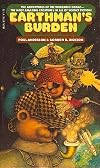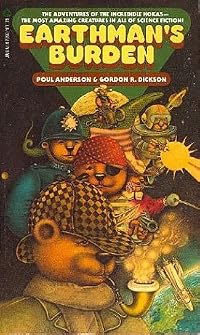
Earthman's Burden
by Poul Anderson (Author), Gordon R. Dickson (Author)
Hoka (Collection: 1, 2, 3, 4, 5, 7; Interludes 1-6)
On This Page
Description
It could almost have been Earth - or so thought Ensign Alexander Braithwaite Jones, who crash-landed on the planet Taka, 500 light-years from the Solar System. Then he met the Hokas, a race of teddy-bear-like aliens, with the astounding ability to transform outdated Earth stories into riotous real life adventures. From the guns and slang of an Old West saloon to a hair-raising drug bust in Victorian England led to the by a button-nosed, pipe-puffing Hokan Sherlock Holmes, the Hokas demand show more that Alex Jones live it all along with them. Suddenly his ordinary military career is changed into a crazy world of intergalactic adventure, as he tries, without much success, to bring his furry, alien charges along the road to civilization, sanity, and a m ore respectable social rating in the Interbeing League. show lessTags
Recommendations








Member Reviews
The clue is in the name - Hoka. This is in fact hokum - a humorous stringing together of a series of formulaic stories about a planet of 'teddy bear'-like creatures who are highly intelligent but lose themselves completely in what amount to earth-inspired role-playing games.
Yes, behind it is a satire of the Star Trek type (pre-Trekkie since the collection was published in 1957) of benign Federation-type Earthling imperialism and so, ultimately, of the actually existing United Nations and US of the day, but it is mostly just a rather amusing romp.
What is more interesting than the satire perhaps is that Anderson, the highly intelligent 'teddy bear' of post-war science fiction who was never averse to straddling the scifi/fantasy or any show more other divide for that matter, has anticipated RPG culture and the complete seriousness of its 'play'.
The binding framework is a young ensign whose success with handling the Hoka is the source of the satire as he gets into a series of colonial pickles that could be career-ending but actually keep moving him up the bureaucratic ladder because the Hoka flummox everyone else.
But the fun lies in the stories which do have some laugh-out loud moments as the Hoka pick up some bit of Earthling popular culture (as seen from the 1950s) and then create a complete world out of it which they then insist on acting out as if it was real.
Since earthling popular culture is itself wish-fulfilment fantasy (cowboys and injuns, the plots of the opera, 'space patrol', sherlock holmes, pirates and 'beau geste') something close to disaster nearly ensues rescued only at the last minute by the hero's ability to manipulate the game.
It is a fun and enjoyable book. It only fails to get a higher rating because it is not a coherent novel but just a series of similar adventures. My recommendation is that you read it but separate the stories out and enjoy them individually in sequence over a longer period of time.
If you only have time to read one story, read the one dedicated to the Hoka's discovery of 'Space Patrol', the 1950 kids' version discovered by the Hoka because they were only allowed to watch children's TV by the Earthling administration lest they start to make serious RPG mischief.
The unintended consequences of Earthling paternalism as Earth tries to build its 'colonies' into something like a Commonwealth (led by Earth, of course. The final official communique (no spoiler) at the end of the book suggests just how doomed the project is.
Needless to say, the Hoka do manage to make serious mischief regardless (in space as in every story). The hapless attempts of the hero Jones to manage the chaos only make things worse until some stroke of manipulative genius that requires in every story he enter into Hoka expectations.
In the 'space patrol' case, the Hoka almost cause and then end an intergalactic war without having any notion that their fantasy world has had any real universe consequences which rather strikes me as a good analogy for the conduct of international relations in any case.
It could be argued that, especially with the involvement of largely unaccountable psychological operations unit, the current Ukraine crisis is the result of our political elites being terribly serious RPG players not much different from the Hoka.
There is much amusement and satire to be had in these stories, not excluding the inevitable moment when Jones is forced to become Watson to a Hoka Sherlock Holmes or the quite hilarious application of the plot of 'Don Juan' to poor Ensign Jones' misunderstood love life.
Personally, I found the book fitted my own and many other's 'wish-fulfilment fantasy' (never to be achieved) - the prospect of being able to live like a 'teddy bear' Hoka (their appearance is part of the humour) in a viable RPG in which reality could be shunted entirely to one side.
From that point of view Anderson creative realisation is close to genius - taking the impulse towards fantasy away from specific narratives 'out there' in texts or films and bringing it into the world. Again, he is prescient since is the internet not bringing this closer to possibility?
It is the implementation that stops it from being one of the greats of fantasy (frankly, it is only pretending to be science fiction) because there is no development although Anderson writes exceptionally well and engagingly.
One amusing coincidence showing that God is perhaps a jester, Anderson's daughter is married to another science fiction ... Greg Bear!
As someone who really does not like his science fiction mucked up with comedy and is wary of too much of it in fantasy, this is one of the few works that have won me over to its possibilities. It has certainly encouraged me to read more Anderson, although not, I am afraid, more Hoka. show less
Yes, behind it is a satire of the Star Trek type (pre-Trekkie since the collection was published in 1957) of benign Federation-type Earthling imperialism and so, ultimately, of the actually existing United Nations and US of the day, but it is mostly just a rather amusing romp.
What is more interesting than the satire perhaps is that Anderson, the highly intelligent 'teddy bear' of post-war science fiction who was never averse to straddling the scifi/fantasy or any show more other divide for that matter, has anticipated RPG culture and the complete seriousness of its 'play'.
The binding framework is a young ensign whose success with handling the Hoka is the source of the satire as he gets into a series of colonial pickles that could be career-ending but actually keep moving him up the bureaucratic ladder because the Hoka flummox everyone else.
But the fun lies in the stories which do have some laugh-out loud moments as the Hoka pick up some bit of Earthling popular culture (as seen from the 1950s) and then create a complete world out of it which they then insist on acting out as if it was real.
Since earthling popular culture is itself wish-fulfilment fantasy (cowboys and injuns, the plots of the opera, 'space patrol', sherlock holmes, pirates and 'beau geste') something close to disaster nearly ensues rescued only at the last minute by the hero's ability to manipulate the game.
It is a fun and enjoyable book. It only fails to get a higher rating because it is not a coherent novel but just a series of similar adventures. My recommendation is that you read it but separate the stories out and enjoy them individually in sequence over a longer period of time.
If you only have time to read one story, read the one dedicated to the Hoka's discovery of 'Space Patrol', the 1950 kids' version discovered by the Hoka because they were only allowed to watch children's TV by the Earthling administration lest they start to make serious RPG mischief.
The unintended consequences of Earthling paternalism as Earth tries to build its 'colonies' into something like a Commonwealth (led by Earth, of course. The final official communique (no spoiler) at the end of the book suggests just how doomed the project is.
Needless to say, the Hoka do manage to make serious mischief regardless (in space as in every story). The hapless attempts of the hero Jones to manage the chaos only make things worse until some stroke of manipulative genius that requires in every story he enter into Hoka expectations.
In the 'space patrol' case, the Hoka almost cause and then end an intergalactic war without having any notion that their fantasy world has had any real universe consequences which rather strikes me as a good analogy for the conduct of international relations in any case.
It could be argued that, especially with the involvement of largely unaccountable psychological operations unit, the current Ukraine crisis is the result of our political elites being terribly serious RPG players not much different from the Hoka.
There is much amusement and satire to be had in these stories, not excluding the inevitable moment when Jones is forced to become Watson to a Hoka Sherlock Holmes or the quite hilarious application of the plot of 'Don Juan' to poor Ensign Jones' misunderstood love life.
Personally, I found the book fitted my own and many other's 'wish-fulfilment fantasy' (never to be achieved) - the prospect of being able to live like a 'teddy bear' Hoka (their appearance is part of the humour) in a viable RPG in which reality could be shunted entirely to one side.
From that point of view Anderson creative realisation is close to genius - taking the impulse towards fantasy away from specific narratives 'out there' in texts or films and bringing it into the world. Again, he is prescient since is the internet not bringing this closer to possibility?
It is the implementation that stops it from being one of the greats of fantasy (frankly, it is only pretending to be science fiction) because there is no development although Anderson writes exceptionally well and engagingly.
One amusing coincidence showing that God is perhaps a jester, Anderson's daughter is married to another science fiction ... Greg Bear!
As someone who really does not like his science fiction mucked up with comedy and is wary of too much of it in fantasy, this is one of the few works that have won me over to its possibilities. It has certainly encouraged me to read more Anderson, although not, I am afraid, more Hoka. show less
Reactions upon reading this book in 1990.
This is a fix-up of a rather funny set of stories (I don't know if I would say hilarious) that I strongly suspect were the basis for Star Trek's "A Piece of the Action". The cute, teddy bear Hokas are irrepressible and fun as they set out to harmlessly imitate -- to often humorously extreme lengths -- Earth cultures.
Dickson and Anderson use the series to parody the conventions of a variety of literary genres as well as opera. I particularly liked the pirate and French Foreign Legion stories. The series' only flaw -- and I did chuckle aloud at several points -- is that the stories are all a bit formulic: Alexander Jones gets involved with Hokas, gets drunk or knocked out, things get way out of show more control with the Hokas, and Jones lucks into or cleverly exploits the situation to accomplish his ends. show less
This is a fix-up of a rather funny set of stories (I don't know if I would say hilarious) that I strongly suspect were the basis for Star Trek's "A Piece of the Action". The cute, teddy bear Hokas are irrepressible and fun as they set out to harmlessly imitate -- to often humorously extreme lengths -- Earth cultures.
Dickson and Anderson use the series to parody the conventions of a variety of literary genres as well as opera. I particularly liked the pirate and French Foreign Legion stories. The series' only flaw -- and I did chuckle aloud at several points -- is that the stories are all a bit formulic: Alexander Jones gets involved with Hokas, gets drunk or knocked out, things get way out of show more control with the Hokas, and Jones lucks into or cleverly exploits the situation to accomplish his ends. show less
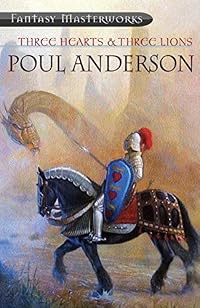
Aliens who look like sentient teddy bears mimic Victorian England as seen through the Sherlock Holmes stories. The cover depicts a Sherlock Bear riding a dragon/lizard thing. God I love nerds
The Hoka live on Toka. The Hoka are short, incredibly strong bear-like creatures who delight in re-enacting works of fiction. This volume contains five short stories wherein the Hoka take on the roles of: Cowboys, Space Patrolers, The French Foreign Legion, Renaissance-era Dons, and Sherlock Holmes era Londoners.
Some of the misadventures are pretty funny and there are definitely a couple of lines that I thought were quite clever, but more often than not, I would simply smile bemusedly at the situation.
Some of the misadventures are pretty funny and there are definitely a couple of lines that I thought were quite clever, but more often than not, I would simply smile bemusedly at the situation.
A fairly simple plot, enlivened by a cast of humorous characters. If you're unfamiliar with the series, it's a bunch of adventures amongst aliens who compulsively take on the personae of characters in human fiction. It's actually fairly well done and good for a laugh.
This is a series of short stories about the teddy-bear like (but immensely strong and incredibly imitative) Hokas, an alien people on an earth-like planet who adopt with great enthusiasm any culture derived from the popular fiction (and films) of visiting earthlings. The first human visit led them to adapt a wild west culture derived from their misunderstanding of western fiction, which worked well until their native enemies, the reptilian Slissi, also obtained humanstyle firearms. At this point a junior human space force ensign , Alexander Jones (in a rather British Empire style culture, supposedly derived from an earth culturally dominated by Australia and New Zealand) crashes his patrol vessel and finds himself in the midst of the show more Hoka-Slissi War, which the Hokas win with his rather clumsy help. Thereafter, he is accepted by both humans and Hokas as the official intermediary, and has t deal with Hoka interpretations of Napoleonic era naval war, Sherlock Holmes, space opera etc. show less
Nach wie vor die einzige komische SciFi, die dem Anhalter das Wasser reichen kann. Auch (oder erst recht) im englischen O-Ton.
Members
- Recently Added By
Lists

Blue Pyramid 1,276 Best Books of All Time
1,248 works; 32 members
Author Information

Poul Anderson, November 25, 1926 - July 31, 2001 Poul Anderson was born on November 25, 1926 in Bristol, Pennsylvania to parents Anton and Astrid. After his father's death, Poul's mother took them first to Denmark and then to Maryland and Minnesota. He earned his degree in Physics from the University of Minnesota, but chose instead to write show more stories for science fiction magazines, such as "Astounding." Anderson is considered a "hard science fiction" writer, meaning that his books have a basis in scientific fact. To attain this high level of scientific realism, Anderson spent many hours researching his topics with scientists and professors. He liked to write about individual liberty and free will, which was a well known theme in many of his books. He also liked to incorporate his love of Norse mythology into his stories, sometimes causing his modern day characters to find themselves in fantastical worlds, such as in "Three Hearts and Three Lions," published in 1961. Anderson has written over a hundred books, his last novel, "Genesis" won the John W. Campbell Award, one of the three major science fiction awards. He is a former president of the Science Fiction and Fantasy Writers of America and won three Nebula awards and nine Hugo Awards. In 1997, Anderson was named a Grandmaster by the Science Fiction and Fantasy Writers of America and was also inducted into the Science Fiction Fantasy Hall of Fame. Poul Anderson died on July 31, 2001 at the age of 74. (Bowker Author Biography) show less

A naturalized American who was born in Canada on November 1, 1923, Gordon Rupert Dickson is a popular science fiction writer. Dickson graduated from the University of Minnesota in 1948 and made his home in Minneapolis. Among his many novels, especially notable is Soldier, Ask Not, which won the Hugo Award in 1965. For many years, Dickson's most show more engrossing project was his Childe Cycle, a series of novels about humanity's evolutionary potential, which included a group of futuristic books that are popularly known as the Dorsai Cycle. Dickson also wrote hundreds of short stories and novelettes including Call Him Lord, for which he received a Nebula Award in 1966. (Bowker Author Biography) show less
Some Editions
Series

Belongs to Publisher Series
Moewig Science Fiction (3530)
Work Relationships
Contains
Is abridged in
Is expanded in
Common Knowledge
- Canonical title
- Earthman's Burden
- Original title
- Earthman's Burden
- Original publication date
- 1957-07 (collection) (collection); 1951 (The Sheriff of Canyon Gulch) (The Sheriff of Canyon Gulch); 1953 (In Hoka Signo Vinces) (In Hoka Signo Vinces); 1953 (The Adventures of the Misplaced Hound) (The Adventures of the Misplaced Hound); 1955 (Yo Ho Hoka) (Yo Ho Hoka); 1955 (The Tiddlywink Warriors) (The Tiddlywink Warriors) (show all 7); 1957 (Don Jones) (Don Jones)
- Original language
- English
Classifications
Statistics
- Members
- 401
- Popularity
- 77,326
- Reviews
- 8
- Rating
- (3.64)
- Languages
- English, German
- Media
- Paper, Ebook
- ISBNs
- 6
- ASINs
- 14