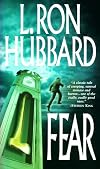
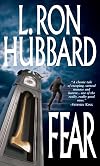
Fear
by L. Ron Hubbard
On This Page
Description
Professor James Lowry didn't believe in spirits, or witches, or demons. Not until a gentle spring evening when his hat disappeared, and suddenly he couldn't remember the last four hours of his life. Now, the quiet university town of Atworthy is changing - slightly at first, then faster and more frighteningly each time he tries to remember. Lowry is pursued by a dark, secret evil that is turning his whole world against him while it whispers a warning from the shadows: If you find your hat show more you'll find your four hours. If you find your four hours then you will die... show lessTags
Recommendations



















Member Reviews
L. Ron Hubbard - Fear
Before Scientology L. Ron Hubbard had a career as a pulp fiction writer and he covered many of the genres; science fiction, fantasy, adventure fiction, aviation, travel, mystery, western and romance. Fear is of novella length and has been labelled as a psychological thriller-horror story. Whatever label you may wish to ascribe, this 1951 publication is an excellent story.
Professor James Lowry an ethnologist has recently returned home following an expedition to the Yutacan. He takes up his post as a lecturer at his university, he is happily married to Mary and has a good friend on campus; fellow professor Tommy Williams. James Lowry has been diagnosed with malaria, but having a strong constitution he carries on much show more as normal. He has recently published an article in the local newspaper denouncing supposed supernatural events involving demons and ghosts as pure hokum. His article has caused a backlash and he visits Tommy Williams looking for some support, but finds his friend sceptical about the article. They agree to disagree and have a drink together. When Lowry arrives home he is palpably unwell and has become delusional. Mary looks after him, but James cannot account for 4 hours after he visited Tommy or the loss of his hat. He has a series of nightmares involving him searching his memory for his losses. He becomes progressively more unwell and starts to feel out of joint with the world around him.
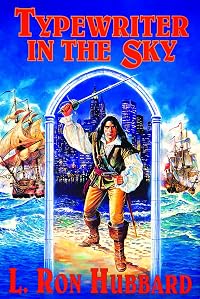
There are enough clues in the story for readers of current mystery thrillers to work out the twist at the end, but it is an entertaining read to get there. Hubbard was one of the better writers in the pulp fiction world and stories like Fear have been imitated many times since. It has been coupled with one of his earlier stories Typewriter in the Sky and together they make a 4 star read. show less
Before Scientology L. Ron Hubbard had a career as a pulp fiction writer and he covered many of the genres; science fiction, fantasy, adventure fiction, aviation, travel, mystery, western and romance. Fear is of novella length and has been labelled as a psychological thriller-horror story. Whatever label you may wish to ascribe, this 1951 publication is an excellent story.
Professor James Lowry an ethnologist has recently returned home following an expedition to the Yutacan. He takes up his post as a lecturer at his university, he is happily married to Mary and has a good friend on campus; fellow professor Tommy Williams. James Lowry has been diagnosed with malaria, but having a strong constitution he carries on much show more as normal. He has recently published an article in the local newspaper denouncing supposed supernatural events involving demons and ghosts as pure hokum. His article has caused a backlash and he visits Tommy Williams looking for some support, but finds his friend sceptical about the article. They agree to disagree and have a drink together. When Lowry arrives home he is palpably unwell and has become delusional. Mary looks after him, but James cannot account for 4 hours after he visited Tommy or the loss of his hat. He has a series of nightmares involving him searching his memory for his losses. He becomes progressively more unwell and starts to feel out of joint with the world around him.
There are enough clues in the story for readers of current mystery thrillers to work out the twist at the end, but it is an entertaining read to get there. Hubbard was one of the better writers in the pulp fiction world and stories like Fear have been imitated many times since. It has been coupled with one of his earlier stories Typewriter in the Sky and together they make a 4 star read. show less
Lavishly praised by great horror authors (Robert Bloch, Stephen King) and critics (Groff Conklin) alike, Fear failed to excite me. As a total stranger to Hubbard's fiction (though I had read his famous self-help tome Dianetics with an open mind), I approached the book with no prejudices and was, in fact, looking forward to an enjoyable experience on the basis of all the glowing reviews. Boy, was I disappointed.
The premise is workable, but it's essentially a short story premise; Hubbard padded the living shit out of Fear to stretch it to novel length. This was not an uncommon practice in the author's day, but here it hobbles the suspense he might have been able to maintain in a shorter format. The central character, a university show more professor who has just been fired, is unable to remember a four-hour period from the day his employment was terminated. This mystery could have been brought to a satisfactory resolution in the course of twenty-five or thirty pages, and in a story of that length, it would not have been necessary for Hubbard to venture too far afield from the initial premise. But the professor finds himself surrounded by whispering, mocking spirits, and when he is presented with a vast phantom staircase to descend in search of his hat (and the missing four hours), Fear suddenly ceases to be a half-hearted psychological horror novel and becomes a half-hearted fantasy quest novel. I abhor this kind of "anything goes" plotting; it's a momentum killer, and conveys the impression that the author's only goal was to fill up space on the page. (Which, in this case, was absolutely true.) When the denouement finally came, I was bored and no longer invested in the story.
I wasted my time on Fear. Don't waste yours. show less
The premise is workable, but it's essentially a short story premise; Hubbard padded the living shit out of Fear to stretch it to novel length. This was not an uncommon practice in the author's day, but here it hobbles the suspense he might have been able to maintain in a shorter format. The central character, a university show more professor who has just been fired, is unable to remember a four-hour period from the day his employment was terminated. This mystery could have been brought to a satisfactory resolution in the course of twenty-five or thirty pages, and in a story of that length, it would not have been necessary for Hubbard to venture too far afield from the initial premise. But the professor finds himself surrounded by whispering, mocking spirits, and when he is presented with a vast phantom staircase to descend in search of his hat (and the missing four hours), Fear suddenly ceases to be a half-hearted psychological horror novel and becomes a half-hearted fantasy quest novel. I abhor this kind of "anything goes" plotting; it's a momentum killer, and conveys the impression that the author's only goal was to fill up space on the page. (Which, in this case, was absolutely true.) When the denouement finally came, I was bored and no longer invested in the story.
I wasted my time on Fear. Don't waste yours. show less
I decided to give L. Ron Hubbard's Fear a second chance. I'd rated it at two stars from what I remembered of my original read years ago, but was discussing the book in a forum (where it was getting generally positive reviews) and figured maybe I had judged it too harshly in the past.
Well, I finished it a second time, but the book didn't deserve a second read. It just isn't good. And that's too bad, because the plot idea is a good one. Archeologist Jim Lowry loses his hat and his memory of the last four hours. He discovers (or should I say he 'just knows') that if he finds his hat he will find his four hours, but if he finds his four hours he will die. Time to buy a new hat, I say...
Unfortunately for that kernel of a terrific plot, Fear show more reads like it is the result of a jumble of ideas Ron had that he didn't bother linking into a cohesive tale. Events that happen in one chapter don't seem to have any sort of effect on what occurs in the next chapter. The story seems to just sort of randomly flow with very little rhyme or reason to it, one surreal event after another. Situations rise from out of nowhere. In a way, the book felt like what I imagine an extended acid trip would be like. That might be an accomplishment, but I don't think that is what L. Ron was setting out for.
The writing is not good. L. Ron just didn't seem to have much feeling for the atmosphere required to tell a scary story. Rather than imply things to get under the reader's skin the way the best horror can, he would just use short sentences (the verbal equivalent to a jump cut in a bad horror movie) like Two red eyes stared back! (He has an over-reliance on exclamation points! in his narrative as well.) Also, anything Lowry discovers through the course of the story is something that 'he just knows for some reason' rather than anything that the character sifts out from the events unfolding around him.
The stilted unbelievable characters act like nobody except people in bad pulp fiction or '50's sitcoms ever really acted. Jim Lowry and his wife of several years are portrayed as being desperately in love, yet they sleep in separate rooms. The characters don't have any depth or believability to them. I never cared about Lowry, his wife Mary or his beautiful (and this is emphasized repeatedly) friend Tommy (who, aside from being beautiful, is also a professor of psychology, though he councils Jim not to go ridiculing the idea of demons and devils. He is also a bachelor at forty who seems to have no interest in women. Maybe he should practice some self analysis? Now that might have been an interesting angle for the story to pursue). Since I never cared about the characters, I never had any apprehension as to what might happen to them.
The self serving foreword by L. Ron and fawning introduction from the 'editors' of the book don't help any. (Though I guess if I had a messiah and s/he wrote a book, I'd probably be apt to oversell it as well.) Also, L. Ron's foreword acts as a spoiler of sorts to the book. I understand he wanted to tell me what an original, creative genius he was, but he should have placed his little note of explanation after the story, not before.
I'd like to see some director take the basic setup of Fear and turn it into a movie. One of those movies where the title and general setup is the same but nothing else is. The core idea is a good one. The way it was executed in this book though, was bad. show less
Well, I finished it a second time, but the book didn't deserve a second read. It just isn't good. And that's too bad, because the plot idea is a good one. Archeologist Jim Lowry loses his hat and his memory of the last four hours. He discovers (or should I say he 'just knows') that if he finds his hat he will find his four hours, but if he finds his four hours he will die. Time to buy a new hat, I say...
Unfortunately for that kernel of a terrific plot, Fear show more reads like it is the result of a jumble of ideas Ron had that he didn't bother linking into a cohesive tale. Events that happen in one chapter don't seem to have any sort of effect on what occurs in the next chapter. The story seems to just sort of randomly flow with very little rhyme or reason to it, one surreal event after another. Situations rise from out of nowhere. In a way, the book felt like what I imagine an extended acid trip would be like. That might be an accomplishment, but I don't think that is what L. Ron was setting out for.
The writing is not good. L. Ron just didn't seem to have much feeling for the atmosphere required to tell a scary story. Rather than imply things to get under the reader's skin the way the best horror can, he would just use short sentences (the verbal equivalent to a jump cut in a bad horror movie) like Two red eyes stared back! (He has an over-reliance on exclamation points! in his narrative as well.) Also, anything Lowry discovers through the course of the story is something that 'he just knows for some reason' rather than anything that the character sifts out from the events unfolding around him.
The stilted unbelievable characters act like nobody except people in bad pulp fiction or '50's sitcoms ever really acted. Jim Lowry and his wife of several years are portrayed as being desperately in love, yet they sleep in separate rooms. The characters don't have any depth or believability to them. I never cared about Lowry, his wife Mary or his beautiful (and this is emphasized repeatedly) friend Tommy (who, aside from being beautiful, is also a professor of psychology, though he councils Jim not to go ridiculing the idea of demons and devils. He is also a bachelor at forty who seems to have no interest in women. Maybe he should practice some self analysis? Now that might have been an interesting angle for the story to pursue). Since I never cared about the characters, I never had any apprehension as to what might happen to them.
The self serving foreword by L. Ron and fawning introduction from the 'editors' of the book don't help any. (Though I guess if I had a messiah and s/he wrote a book, I'd probably be apt to oversell it as well.) Also, L. Ron's foreword acts as a spoiler of sorts to the book. I understand he wanted to tell me what an original, creative genius he was, but he should have placed his little note of explanation after the story, not before.
I'd like to see some director take the basic setup of Fear and turn it into a movie. One of those movies where the title and general setup is the same but nothing else is. The core idea is a good one. The way it was executed in this book though, was bad. show less
Professor James Lowry ei uskunud vaimudesse, nõidadesse ega deemonitesse. Seda kuni ühe ilusa kevadõhtuni, mil läks kaduma tema kaabu ning korraga ei suutnud ta meenutada viimast nelja tundi oma elust. Vaikne Antwothy kolledžilinn hakkab nüüd muutuma, algul pisut, siis aga iga kord, kui Lowry meenutada püüab üha kiiremini ja hirmuäratavamalt. Lowryt jälitavad mingid salapärased tumedad jõud, mis pööravad kogu maailma tema vastu, samal ajal pimedusest hoiatavalt sosistades: «kui sa leiad oma kaabu, leiad ka need neli tundi. Kui leiad oma neli tundi, siis sured»
Fear is one of those mind-twisting kinds of books I like so much. Here, L. Ron Hubbard tells us the story of a college professor's decent in to hell after writing an article decrying the belief in supernatural evil. It turns out that his article brought him to the attention of some evil beings who want to teach him differently. This is not, of course, a comfortable experience.
Hubbard's not one of my favorite writers, but Fear is quite good. His characters are interesting, and I really like the imagery he uses when he's leading us through the more surreal experiences. And his ending really stops the reader short and makes the whole book suddenly twist into something larger.
Hubbard's not one of my favorite writers, but Fear is quite good. His characters are interesting, and I really like the imagery he uses when he's leading us through the more surreal experiences. And his ending really stops the reader short and makes the whole book suddenly twist into something larger.
I started reading this just to try it and see what it was about. It was on the list for a Halloween group reading in which I was participating, but I planned to quickly abandon the book if I didn't like it.
I really didn't think that it would be my cup of tea. I didn't expect to like it, even though the dust jacket contained glowing recommendations from Stephen King, Ray Bradbury, and Isaac Asimov -- all favorite writers of mine.
The writing style seemed somehow odd to me, from the start. Other than the seemingly odd style (the nature of which I can't quite explain), the story seemed normal enough for the first chapter. Then it got really, really weird in a hurry. It was bizarre, it was unreal, it was madness . . .
I couldn't put it down; show more read straight through to the end, way past midnight.
I can't exactly say I enjoyed it, but I needed to see where the heck he was going with this crazy story. Then the ending really threw me for a loop, and I had to look back for a few minutes and try to re-think the story with the ending in mind.
A quick, suspenseful read with a killer of a surprise ending. show less
I really didn't think that it would be my cup of tea. I didn't expect to like it, even though the dust jacket contained glowing recommendations from Stephen King, Ray Bradbury, and Isaac Asimov -- all favorite writers of mine.
The writing style seemed somehow odd to me, from the start. Other than the seemingly odd style (the nature of which I can't quite explain), the story seemed normal enough for the first chapter. Then it got really, really weird in a hurry. It was bizarre, it was unreal, it was madness . . .
I couldn't put it down; show more read straight through to the end, way past midnight.
I can't exactly say I enjoyed it, but I needed to see where the heck he was going with this crazy story. Then the ending really threw me for a loop, and I had to look back for a few minutes and try to re-think the story with the ending in mind.
A quick, suspenseful read with a killer of a surprise ending. show less
Fear is such a subjective phenomenon. What frightens me is very different than what frightens my wife or some of my friends. Some are chilled by tales of the supernatural yet completely innured to the horrifying thiings happening in the real world around them.
L. Ron Hubbard's novel places the hero of the tale into a predicament where he can't tell whether the terrifying visions he is having are real or imagined. His rational mind dismisses what he sees as malaria produced hallucinations. But he is baffled by the real world evidence of the visions, such as the bruises and marks on his body, his torn clothing, and, most of all, his lost fedora. Hubbard clears things up with his twist ending. Or does he?
Reading this Hubbard was an show more experience quite distinct from reading [Battlefield Earth]. But both were surprising. In this horror yarn, Hubbard reads much like Robert Louis Stevenson or H. G. Wells. I may not read many of his other works, but this was worth the time.
Bottom Line: A sold psychological thriller, in the tradition of Dr. Jekyll and Mr. Hyde. show less
L. Ron Hubbard's novel places the hero of the tale into a predicament where he can't tell whether the terrifying visions he is having are real or imagined. His rational mind dismisses what he sees as malaria produced hallucinations. But he is baffled by the real world evidence of the visions, such as the bruises and marks on his body, his torn clothing, and, most of all, his lost fedora. Hubbard clears things up with his twist ending. Or does he?
Reading this Hubbard was an show more experience quite distinct from reading [Battlefield Earth]. But both were surprising. In this horror yarn, Hubbard reads much like Robert Louis Stevenson or H. G. Wells. I may not read many of his other works, but this was worth the time.
Bottom Line: A sold psychological thriller, in the tradition of Dr. Jekyll and Mr. Hyde. show less
Members
- Recently Added By
Lists

Cawthorn and Moorcock's Fantasy: The 100 Best Books
110 works; 7 members
Author Information

905+ Works 19,742 Members
L. Ron Hubbard was born in Tilden, Nebraska on March 13, 1911. He attended George Washington University and Princeton University. He began his career as a writer for pulp magazines and later as a science fiction writer. His science fiction works include the Buckskin Brigades, Final Blackout, Fear, The Kingslayer, and Black Towers to Danger. His show more book, Dianetics, was published in 1950. He spent the next 30 years devoting himself to the development of Dianetics and Scientology. In 1954, he founded the Church of Scientology. In the 1980s, he published his final fiction works Battlefield Earth and the Mission Earth series, which won the Cosmos 2000 Award from French readers and the Nova Science Fiction Award from Italy's Perseo Libri. He died on January 24, 1986. (Bowker Author Biography) show less
Some Editions
Awards and Honors
Series
Belongs to Publisher Series
Common Knowledge
- Canonical title*
- Skrekkens timer
- Original title
- Fear
- Original publication date
- 1940 (in July issue of Unknown magazine) (in July issue of Unknown magazine)
- People/Characters
- James Lowry; Mary Lowry; Tommy Williams; Jack Ketch; Sebastian; Billy Watkins
- Important places
- Atworthy
- First words
- Lurking, that lovely spring day, in the office of Dr. Chalmers, Atworthy College Medical Clinic, there might have been two small spirits of the air, pressed back into the dark shadow behind the door, avoiding as far as possib... (show all)le the warm sunlight which fell gently upon the rug.
- Last words
- (Click to show. Warning: May contain spoilers.)Of course, though, it was probably just the sigh of wind whistling below the cellar door.
- Blurbers
- King, Stephen; Bradbury, Ray; Asimov, Isaac
- Original language
- English
*Some information comes from Common Knowledge in other languages. Click "Edit" for more information.
Classifications
Statistics
- Members
- 450
- Popularity
- 67,816
- Reviews
- 23
- Rating
- (3.31)
- Languages
- 9 — English, Estonian, French, Hungarian, Indonesian, Italian, Norwegian, Spanish, Swedish
- Media
- Paper, Audiobook, Ebook
- ISBNs
- 26
- ASINs
- 9