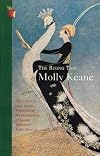
The Rising Tide
by M. J. Farrell
On This Page
Description
In 1900 Lady Charlotte French-McGrath is mistress of Garonlea, a huge gothic house in Ireland. She rules her household and her family -- husband Ambrose and children Muriel, Enid, Violet, Diana and Desmond -- with a rod of iron. Desmond's marriage to the beautiful, lively Cynthia and, several years later, the onset of the First World War are the two events which finally, and irrevocably, break Lady Charlotte's matriarchal hold. Cynthia enters the Jazz Age and on the surface her life passes show more in a whirl of fox-hunting, drinking and love-making. But the ghosts of Garonlea are only biding their time: they know the source of their power, a secret handed on from one generation to the next... show lessTags
Recommendations














Member Recommendations

Member Reviews
It’s been a slow reading (an virtually none blogging) week, this week for me, and The Rising Tide was the book which kept me company during what often felt like the longest week of the year.
I think one does kind of know what to expect from Molly Keane (often previously published as M J Farrell), who wrote about the world she knew so well. Large Irish country houses, complicated families, horsey types and Anglo-Irish aristocracy, she re-creates this world with breath-taking honesty, warts and all, there is a wonderful exactness in the daily minutiae of a world lost forever. Molly Keane explores the depths of human psychology – here, particularly in the character of Cynthia; Keane shows us the toll that life takes.
In The Rising Tide, show more Molly Keane contrasts brilliantly the Edwardian era with its strict rules of propriety, fussy clothing and the kind of rigid conventions that so often imprisoned unmarried women in dull lives at home, with the freer, party years of the 1920’s. The title reflects the rise of Cynthia, but also those tidal like waves of time, the years pass, and one generation is replaced by the next, the conflicts of one mirrored in the next – time after time.
“Lady Charlotte rang for her maid. She then washed her hands in buttermilk soap, folded the neck of her combinations down towards the top of her corsets (those corsets which propped so conscientiously the bosoms like vast half-filled hot water bottles) and thus prepared stood while her evening dress was put upon her and sat while her hair was fiddled and redone. Her hair was never washed but it did not smell of anything but hair. The switches and curls of false hair were drier and frizzier in texture than her own.”
The novel opens in 1900 at Garonlea, a large gothic style house in Ireland, the home of Lady Charlotte French-McGrath and her family. Wife to Ambrose, Lady Charlotte rules her family of four daughters and one son with a rod of iron. Little does Lady Charlotte know how close her carefully controlled world is to coming to its natural end; two events however several years apart, come to seal the fate of Garonlea and to some extent the people who live there. The first is her son Desmond’s marriage to the beautiful Cynthia, a woman to whom so many – like Diana, the youngest daughter – are irresistibly drawn – but who repels Lady Charlotte. The second is the First World War, a conflict that changes so much across Europe, bringing inevitably, loss to Garonlea.
In 1900 the future for Lady Charlotte’s daughters; Muriel, Enid, Violet and Diana seemed predictable, but Enid’s error leads to a hasty marriage, and after Violet’s marriage to a suitable but older man, Muriel and Diana remaining embarrassingly unmarried are left at the beck and call of their dictatorial mother, still treated like young girls well into their thirties. Diana is the rebellious one, she tries to challenge her mother’s exacting ways with little success, and she is captivated by Cynthia, and the changing world she seems to represent.
After Cynthia is left widowed with two children; Simon and Susan, Diana who has always been especially attached to Cynthia takes the opportunity to move into Rathglass, the house across the river where Cynthia had lived with Desmond after their marriage. To live peacefully at Rathglass is all Diana really wants, she accepts Cynthia as she is, protects her and in turn Diana enjoys Cynthia’s sympathy and understanding. It is Cynthia who is very much at the heart of this novel, her rise – and eventual decline what drives the narrative. Cynthia must battle her mother-in-law first, then later her own children, and the rapidly passing years, as she indulges in her passion for hunting, inherits Garonlea for her son, and works her way through a series of lovers. The family move back to Garonlea, and Cynthia sets about improving the old place, in readiness for her son’s coming of age.
“She did not love her children but she was determined not to be ashamed of them. You had to feel ashamed and embarrassed if your children did not take to blood sports, so they must be forced into them. It was right. It was only fair to them. You could not bring a boy up properly unless he rode and fished and shot. What sort of boy was he? What sort of friends would he have?”
Cynthia is a brilliantly drawn character, selfish, insatiable and a little unscrupulous, she drinks more and more, and refuses to either acknowledge or understand her children’s dislike of hunting – which is such an enormous part of her own life. Just as Lady Charlotte had once held sway over the family at Garonlea, so does Cynthia direct her children, in this case by insisting they hunt, refusing to see their obvious almost paralysing terror. Her relationship with Simon and Susan is not an especially good one. Cynthia loves her hunting, she loves being in control, being admired but she doesn’t really love her offspring.
The Rising Tide is really a very good novel, psychologically astute, the portraits painted of Cynthia and Lady Charlotte in particular are enthralling. Surely these must be characters taken from life? – and I can’t help but wonder who inspired their creation. show less
I think one does kind of know what to expect from Molly Keane (often previously published as M J Farrell), who wrote about the world she knew so well. Large Irish country houses, complicated families, horsey types and Anglo-Irish aristocracy, she re-creates this world with breath-taking honesty, warts and all, there is a wonderful exactness in the daily minutiae of a world lost forever. Molly Keane explores the depths of human psychology – here, particularly in the character of Cynthia; Keane shows us the toll that life takes.
In The Rising Tide, show more Molly Keane contrasts brilliantly the Edwardian era with its strict rules of propriety, fussy clothing and the kind of rigid conventions that so often imprisoned unmarried women in dull lives at home, with the freer, party years of the 1920’s. The title reflects the rise of Cynthia, but also those tidal like waves of time, the years pass, and one generation is replaced by the next, the conflicts of one mirrored in the next – time after time.
“Lady Charlotte rang for her maid. She then washed her hands in buttermilk soap, folded the neck of her combinations down towards the top of her corsets (those corsets which propped so conscientiously the bosoms like vast half-filled hot water bottles) and thus prepared stood while her evening dress was put upon her and sat while her hair was fiddled and redone. Her hair was never washed but it did not smell of anything but hair. The switches and curls of false hair were drier and frizzier in texture than her own.”
The novel opens in 1900 at Garonlea, a large gothic style house in Ireland, the home of Lady Charlotte French-McGrath and her family. Wife to Ambrose, Lady Charlotte rules her family of four daughters and one son with a rod of iron. Little does Lady Charlotte know how close her carefully controlled world is to coming to its natural end; two events however several years apart, come to seal the fate of Garonlea and to some extent the people who live there. The first is her son Desmond’s marriage to the beautiful Cynthia, a woman to whom so many – like Diana, the youngest daughter – are irresistibly drawn – but who repels Lady Charlotte. The second is the First World War, a conflict that changes so much across Europe, bringing inevitably, loss to Garonlea.
In 1900 the future for Lady Charlotte’s daughters; Muriel, Enid, Violet and Diana seemed predictable, but Enid’s error leads to a hasty marriage, and after Violet’s marriage to a suitable but older man, Muriel and Diana remaining embarrassingly unmarried are left at the beck and call of their dictatorial mother, still treated like young girls well into their thirties. Diana is the rebellious one, she tries to challenge her mother’s exacting ways with little success, and she is captivated by Cynthia, and the changing world she seems to represent.
After Cynthia is left widowed with two children; Simon and Susan, Diana who has always been especially attached to Cynthia takes the opportunity to move into Rathglass, the house across the river where Cynthia had lived with Desmond after their marriage. To live peacefully at Rathglass is all Diana really wants, she accepts Cynthia as she is, protects her and in turn Diana enjoys Cynthia’s sympathy and understanding. It is Cynthia who is very much at the heart of this novel, her rise – and eventual decline what drives the narrative. Cynthia must battle her mother-in-law first, then later her own children, and the rapidly passing years, as she indulges in her passion for hunting, inherits Garonlea for her son, and works her way through a series of lovers. The family move back to Garonlea, and Cynthia sets about improving the old place, in readiness for her son’s coming of age.
“She did not love her children but she was determined not to be ashamed of them. You had to feel ashamed and embarrassed if your children did not take to blood sports, so they must be forced into them. It was right. It was only fair to them. You could not bring a boy up properly unless he rode and fished and shot. What sort of boy was he? What sort of friends would he have?”
Cynthia is a brilliantly drawn character, selfish, insatiable and a little unscrupulous, she drinks more and more, and refuses to either acknowledge or understand her children’s dislike of hunting – which is such an enormous part of her own life. Just as Lady Charlotte had once held sway over the family at Garonlea, so does Cynthia direct her children, in this case by insisting they hunt, refusing to see their obvious almost paralysing terror. Her relationship with Simon and Susan is not an especially good one. Cynthia loves her hunting, she loves being in control, being admired but she doesn’t really love her offspring.
The Rising Tide is really a very good novel, psychologically astute, the portraits painted of Cynthia and Lady Charlotte in particular are enthralling. Surely these must be characters taken from life? – and I can’t help but wonder who inspired their creation. show less
In The Rising Tide, Molly Keane captures perfectly early twentieth-century Irish gentry: a social class in decline, although its members were certainly unaware of it. Lady Charlotte French-McGrath rules her family and their estate, Garonlea. She is a distant, cold woman: "mean, although not so mean as her husband whom she had taught to be mean." Lady Charlotte treated her daughters with disdain, wishing they would marry well but looking down on all aspiring suitors. As a result, eldest daughter Muriel never married. Enid married for love, but paid a high price. Beautiful Violet chose a man beneath her, but since "she was twenty-four and still unmarried the outlook seemed gloomy enough to justify the acceptance of the gentle show more ornithologist's slightly abstracted suit." And Diana attached herself to her brother's wife Cynthia, whom she adored.
Cynthia is a beautiful socialite whose life revolves around horses and the hunt. Everyone loves her, even Lady Charlotte. But when Cynthia comes into power at Garonlea, her darker side emerges. She is hard on her children, who fear the hunt much more than they enjoy it. She toys with people's emotions, and manipulates them to her advantage. She gets worse with age and with drink. As her children come of age, the power struggle begins again. Cynthia struggles to hold on to a certain lifestyle, even as the younger generation is looking for something very different.
The characters made this book. Lady Charlotte is really awful. Cynthia is simultaneously likeable and horrible, and her son Simon is a more sympathetic character, uncomfortable with the station he was born to. The loyal Diana is ever-present as Cynthia's doting conscience. And there are many others who revolve in and out of Cynthia's life, all drawn with Keane's trademark wit. While this isn't my favorite Molly Keane (that would be Good Behaviour), it was still an enjoyable satire. show less
Cynthia is a beautiful socialite whose life revolves around horses and the hunt. Everyone loves her, even Lady Charlotte. But when Cynthia comes into power at Garonlea, her darker side emerges. She is hard on her children, who fear the hunt much more than they enjoy it. She toys with people's emotions, and manipulates them to her advantage. She gets worse with age and with drink. As her children come of age, the power struggle begins again. Cynthia struggles to hold on to a certain lifestyle, even as the younger generation is looking for something very different.
The characters made this book. Lady Charlotte is really awful. Cynthia is simultaneously likeable and horrible, and her son Simon is a more sympathetic character, uncomfortable with the station he was born to. The loyal Diana is ever-present as Cynthia's doting conscience. And there are many others who revolve in and out of Cynthia's life, all drawn with Keane's trademark wit. While this isn't my favorite Molly Keane (that would be Good Behaviour), it was still an enjoyable satire. show less
I don't really want to "review" this - it's Molly Keane in the latter stages of her youthful writing, and so it's wonderful. All the elements are present: the grand house, the more or less dysfunctional family, a character who disrupts the even keel. The tide that rises is time, perhaps, or aging, or the tentacles of the past that never lose their hold.
I was struck while reading by the stupidity of the women. Every one of them was stupid and didn't know it, except perhaps, Diana the youngest daughter and Sue, daughter of the in-law and protagonist, Cynthia. I'd have thought that writing a whole book about stupid women would have been terribly difficult, especially if one hoped that people would read the thing to the end. Actually, the show more women were gallant in ways that more intelligent, gracious people couldn't imagine. I came away with a feeling of real life - how we make ourselves lives from the materials at hand and find ourselves able to live in some contentment with what we build. show less
I was struck while reading by the stupidity of the women. Every one of them was stupid and didn't know it, except perhaps, Diana the youngest daughter and Sue, daughter of the in-law and protagonist, Cynthia. I'd have thought that writing a whole book about stupid women would have been terribly difficult, especially if one hoped that people would read the thing to the end. Actually, the show more women were gallant in ways that more intelligent, gracious people couldn't imagine. I came away with a feeling of real life - how we make ourselves lives from the materials at hand and find ourselves able to live in some contentment with what we build. show less
M.J. Farrell (Molly Keane)’s depiction of an Irish estate in the first decades of the 20th century is excellent, well-written, involving and a good portrait of the changing times. The title refers to changing fortunes and fashions and the natural rise and fall of a number of characters that is the result of the unstoppable, dispassionate forward rush of time. The cold and controlling Lady Charlotte is contrasted to her daughter-in-law, Cynthia, whose rise is the main plot. Cynthia is the center of the book, at once appealing and fascinating and monstrously selfish. Farrell gets in the head of a number of her characters and her narration is distant and analytical as well gripping – the passions and misfortunes of the characters are show more clearly felt. The changing times move from a period where women had rigidly defined roles to a more open, but still treacherous, era. Excellent, highly recommended.
The main plot is taken up by Cynthia’s rise to power and her gradual decline in fortune but Lady Charlotte’s influence is felt throughout the book. It opens at the beginning of the 20th century, with Lady Charlotte firmly in control of the family estate, Garonlea. Garolea lurks as a charcter in the book – no one can escape its suffocating atmosphere though many try. Lady Charlotte is a principled, tightly controlled and dictatorial mother and wife who embodies repressed Edwardian views. She is often unsympathetic, but has her good qualities – she does genuinely think she does what is best for her children. She is also clearly able to see Cynthia’s bad qualities, which many others are blind to. Her four daughters are mostly unhappy under her reign – some escape to happy or unhappy marriages but the single daughters, Muriel and Diana, are left to suffer at home. Farrell is very effective in showing the stifling atmosphere in just a few quick scenes. Diana, the most rebellious, is the main narrator and her attraction to Cynthia is a defining point of her life. Desmond, the cheerful, easygoing only son, has had a better time of it as he is generally not at home and he marries Cynthia, an acceptable match and a woman that he genuinely loves. The conflicts between Cynthia and Lady Charlotte, Cynthia and Garonlea, Cynthia and despair, Cynthia and various lovers, Cynthia and her children and Cynthia and time take up the rest of the book.
In many ways, Lady Charlotte is compared unfavorably to Cynthia. Cynthia is gregarious, social and sympathetic, especially to Diana, who comes to Rathgrass, Cynthia and Desmond’s house, to escape the unhappiness at Garonlea. She represents a move away from the straitened Edwardian era what with her more liberated behavior – drinking, dancing, living a pleasant lifestyle instead of a rigidly adhering to duty. However, Farrell is merciless in her criticism of Cynthia – both in her perceptive analyses and the portrayal of Cynthia’s effect on others. At times, Cynthia’s good qualities are inseparable from her bad ones. For example, her true and lasting love of Desmond makes her judgmental towards other relationships and causes her to coldly hold herself apart from her supposed friends and even her children. In some ways, Cynthia triumphs over Lady Charlotte and Garonlea but by abandoning from the old principles of duty and obedience, and making her power based on her looks, her flirtatious inaccessibility and her ability to navigate the social world, she is left with much less during her decline. Lady Charlotte ruled with an iron fist until her end. Cynthia, in a different way, is also horribly cruel to her children. In a couple quick scenes, the author skillfully catches Lady Charlotte’s dictatorial cruelty at Garonlea as well as the nervous terror of Cynthia’s son and daughter. The conflict between generations is an important part of the book and it is effectively shown how difficult childhoods, and the restricted position of women, affect many of the characters throughout their lives. show less
The main plot is taken up by Cynthia’s rise to power and her gradual decline in fortune but Lady Charlotte’s influence is felt throughout the book. It opens at the beginning of the 20th century, with Lady Charlotte firmly in control of the family estate, Garonlea. Garolea lurks as a charcter in the book – no one can escape its suffocating atmosphere though many try. Lady Charlotte is a principled, tightly controlled and dictatorial mother and wife who embodies repressed Edwardian views. She is often unsympathetic, but has her good qualities – she does genuinely think she does what is best for her children. She is also clearly able to see Cynthia’s bad qualities, which many others are blind to. Her four daughters are mostly unhappy under her reign – some escape to happy or unhappy marriages but the single daughters, Muriel and Diana, are left to suffer at home. Farrell is very effective in showing the stifling atmosphere in just a few quick scenes. Diana, the most rebellious, is the main narrator and her attraction to Cynthia is a defining point of her life. Desmond, the cheerful, easygoing only son, has had a better time of it as he is generally not at home and he marries Cynthia, an acceptable match and a woman that he genuinely loves. The conflicts between Cynthia and Lady Charlotte, Cynthia and Garonlea, Cynthia and despair, Cynthia and various lovers, Cynthia and her children and Cynthia and time take up the rest of the book.
In many ways, Lady Charlotte is compared unfavorably to Cynthia. Cynthia is gregarious, social and sympathetic, especially to Diana, who comes to Rathgrass, Cynthia and Desmond’s house, to escape the unhappiness at Garonlea. She represents a move away from the straitened Edwardian era what with her more liberated behavior – drinking, dancing, living a pleasant lifestyle instead of a rigidly adhering to duty. However, Farrell is merciless in her criticism of Cynthia – both in her perceptive analyses and the portrayal of Cynthia’s effect on others. At times, Cynthia’s good qualities are inseparable from her bad ones. For example, her true and lasting love of Desmond makes her judgmental towards other relationships and causes her to coldly hold herself apart from her supposed friends and even her children. In some ways, Cynthia triumphs over Lady Charlotte and Garonlea but by abandoning from the old principles of duty and obedience, and making her power based on her looks, her flirtatious inaccessibility and her ability to navigate the social world, she is left with much less during her decline. Lady Charlotte ruled with an iron fist until her end. Cynthia, in a different way, is also horribly cruel to her children. In a couple quick scenes, the author skillfully catches Lady Charlotte’s dictatorial cruelty at Garonlea as well as the nervous terror of Cynthia’s son and daughter. The conflict between generations is an important part of the book and it is effectively shown how difficult childhoods, and the restricted position of women, affect many of the characters throughout their lives. show less
The Rising Tide is my first foray into reading Molly Keane’s novels. It’s the story of a family, the French-McGraths, who live in a crumbling, Gothic house in Ireland at the beginning of the 20th century. Garonlea is the home to Ambrose and lady Charlotte French-McGrath and their five children. When their son, Desmond, marries Cynthia, the French-McGraths’ lives are changed—sometimes for the better and sometimes for the worse.
I’ve never read anything by Molly Keane before, and I wonder why I’ve never heard of her before randomly buying this off of ebay a couple of months ago (strange how chance works). I loved the atmosphere of this book and the almost sinister atmosphere of the house (I have to love any book with a house show more like Garonlea in it).
What I love about the characters of this novel is that there are no extremes, but everyone is completely different: you have the sister who breaks away from the family (to a degree) by becoming pregnant, and the daughter who leaves home to live with her brother and sister in law. Lady Charlotte, although a tyrant, is not a caricature; and Cynthia, the life of the party, has a deeper side to her. The character I felt the most sorry for out of all of the family was Ambrose, the father, who suffers under the delusion that his wife is wonderful. I loved all of the characters, despite their flaws, and that to me is the sign of a great novel. I really cared about and wanted to get to more all of these people, even Cynthia with her drinking, partying, and men friends, and forcing her children to hunt although they’d rather be reading.
The theme of the passage of time is especially strong, leading to an interesting reflection on how much these characters change—or don’t—throughout this extremely well-written novel. Because the book takes place between the years of 1900 and the 1920s, when so much change took place in the world, this theme is particularly brought home to the reader. I’m off to look for more books by Molly Keane, as I absolutely fell in love with her writing style. show less
I’ve never read anything by Molly Keane before, and I wonder why I’ve never heard of her before randomly buying this off of ebay a couple of months ago (strange how chance works). I loved the atmosphere of this book and the almost sinister atmosphere of the house (I have to love any book with a house show more like Garonlea in it).
What I love about the characters of this novel is that there are no extremes, but everyone is completely different: you have the sister who breaks away from the family (to a degree) by becoming pregnant, and the daughter who leaves home to live with her brother and sister in law. Lady Charlotte, although a tyrant, is not a caricature; and Cynthia, the life of the party, has a deeper side to her. The character I felt the most sorry for out of all of the family was Ambrose, the father, who suffers under the delusion that his wife is wonderful. I loved all of the characters, despite their flaws, and that to me is the sign of a great novel. I really cared about and wanted to get to more all of these people, even Cynthia with her drinking, partying, and men friends, and forcing her children to hunt although they’d rather be reading.
The theme of the passage of time is especially strong, leading to an interesting reflection on how much these characters change—or don’t—throughout this extremely well-written novel. Because the book takes place between the years of 1900 and the 1920s, when so much change took place in the world, this theme is particularly brought home to the reader. I’m off to look for more books by Molly Keane, as I absolutely fell in love with her writing style. show less
I loved this book. In Rising Tide Keane creates women who are trapped like flies in amber. The reader sees their lives unfold, senses the hopelessness of their lives and hopes, somehow, that they can escape or, at least, find a semblance of peace.
There are three characters in this novel whose power controls everyone around them. The first, Lady French-McGrath, is the mistress of Garonlea and a most unpleasant creature. She is ramrod rigid and rules her husband and four daughters with an iron will. She wears her Edwardian virtue like unyielding metal cloak . She and her daughters, trussed up in their corsets and hobbled by the beautiful fashions of the day, are prisoners of their class. Ignorance is virtue and sex is not mentioned until show more the eve of the wedding where it is described in terms that make a bride physically ill. Lady F-McG keeps her eldest daughter as a companion who must serve "dearest mama's" every whim. Her two middle daughters make acceptable marriages by her standards, although one is cowed by guilt of a premarital sexual encounter and the other is a beautiful, lethargic and very dull lump. Only the last daughter, a virginal lesbian, manages to create a life filled with beauty. How Lady F-McG had a warm, loving and totally normal son is one of the mysteries of the book.
The second character who wields power is Cynthia, Lady F-McG's daughter-in-law. She is the flip side of the coin to Lady F-McG. Raised by her father in the horsey Irish society she is a beauty of classic proportions, sensual, demanding, and fascinating. She and her husband Desmond have a deep, sensual and real love and when he is killed during World War One her life falls apart. She turns to drink and lovers to bear the loss. Living in the dower house on the Garonlea estate, she throws endless parties, either ignores or terrorizes her children, flaunts her lovers, and upsets the social structure by queening it over her mother-in-law. She is the flawed heroine of the novel, but despite her promiscuity, alcoholism, and vanity Keane makes the reader sympathize with a woman trying desperately to hang on to her youth and find a semblance of the love she lost when her husband was killed.
The third and, in my opinion the creepiest character, is Simon, Cynthia's son. He and his younger sister have apparently hated their mother from childhood since she forced them to ride like adults in cross country hunts. They were terrified to the point of nausea. They grow up watching Cynthia run after lovers who become younger and younger while ignoring or belittling her own children. Simon and Sue, over whom he has an unwholesome control, are a twosome who wait patiently for their chance to degrade Cynthia and bring her down from her lofty throne.
As interesting as these people are, the lesser characters are the glue to this novel. The three sisters and their sad lives; I wanted to read more of them. The fourth sister Diana who loves Cynthia and her children and see the tragedy unfolding, powerless to prevent it. Lord F-McG, the weak husband who allows his wife free rein to abuse his daughters by rigidly enforcing the rules of Edwardian manners.
And, finally, Garonlea the manor house is a character much like Manderley or Robin Hill. In Lady French-McGrath's day it is a hellish place for her children, full of rules not to be broken and subjects never to be discussed.. Cynthia throws out everything ugly after Lady F-McG dies and turns it into a frantic party house; Simon, in a twisted vision, returns the house to its dismal Edwardian ideal only to have Cynthia rescue it one last time. Temporarily.... show less
There are three characters in this novel whose power controls everyone around them. The first, Lady French-McGrath, is the mistress of Garonlea and a most unpleasant creature. She is ramrod rigid and rules her husband and four daughters with an iron will. She wears her Edwardian virtue like unyielding metal cloak . She and her daughters, trussed up in their corsets and hobbled by the beautiful fashions of the day, are prisoners of their class. Ignorance is virtue and sex is not mentioned until show more the eve of the wedding where it is described in terms that make a bride physically ill. Lady F-McG keeps her eldest daughter as a companion who must serve "dearest mama's" every whim. Her two middle daughters make acceptable marriages by her standards, although one is cowed by guilt of a premarital sexual encounter and the other is a beautiful, lethargic and very dull lump. Only the last daughter, a virginal lesbian, manages to create a life filled with beauty. How Lady F-McG had a warm, loving and totally normal son is one of the mysteries of the book.
The second character who wields power is Cynthia, Lady F-McG's daughter-in-law. She is the flip side of the coin to Lady F-McG. Raised by her father in the horsey Irish society she is a beauty of classic proportions, sensual, demanding, and fascinating. She and her husband Desmond have a deep, sensual and real love and when he is killed during World War One her life falls apart. She turns to drink and lovers to bear the loss. Living in the dower house on the Garonlea estate, she throws endless parties, either ignores or terrorizes her children, flaunts her lovers, and upsets the social structure by queening it over her mother-in-law. She is the flawed heroine of the novel, but despite her promiscuity, alcoholism, and vanity Keane makes the reader sympathize with a woman trying desperately to hang on to her youth and find a semblance of the love she lost when her husband was killed.
The third and, in my opinion the creepiest character, is Simon, Cynthia's son. He and his younger sister have apparently hated their mother from childhood since she forced them to ride like adults in cross country hunts. They were terrified to the point of nausea. They grow up watching Cynthia run after lovers who become younger and younger while ignoring or belittling her own children. Simon and Sue, over whom he has an unwholesome control, are a twosome who wait patiently for their chance to degrade Cynthia and bring her down from her lofty throne.
As interesting as these people are, the lesser characters are the glue to this novel. The three sisters and their sad lives; I wanted to read more of them. The fourth sister Diana who loves Cynthia and her children and see the tragedy unfolding, powerless to prevent it. Lord F-McG, the weak husband who allows his wife free rein to abuse his daughters by rigidly enforcing the rules of Edwardian manners.
And, finally, Garonlea the manor house is a character much like Manderley or Robin Hill. In Lady French-McGrath's day it is a hellish place for her children, full of rules not to be broken and subjects never to be discussed.. Cynthia throws out everything ugly after Lady F-McG dies and turns it into a frantic party house; Simon, in a twisted vision, returns the house to its dismal Edwardian ideal only to have Cynthia rescue it one last time. Temporarily.... show less
This social commentary starts in 1900. Lady Charlotte McGrath is mistress of Garonlea, a huge gothic house in Ireland. Her husband Ambrose is devoted and afraid of her. She has four daughters and a son. Mousy Muriel who is loyal to a fault; poor Enid who is pushed to make a bad decision; beautiful Violet has all of the promising suitors; Diana who is terrified of her mother and of Garonlea; and Desmond the son who is his mother's favorite. Desmond brings home, Cynthia, his bride to be. There the story really takes off as Lady Charlotte and Cynthia begin their battle for rule of Garonlea, and the Great War changes everything.
First published in 1937, Virago published this edition in 1984.
Read March 2014
First published in 1937, Virago published this edition in 1984.
Read March 2014
Members
- Recently Added By
Author Information
7 Works 1,330 Members
Series
Belongs to Publisher Series
Virago Modern Classics (137)
Common Knowledge
- Canonical title
- The Rising Tide
- Original title
- The Rising Tide
- Original publication date
- 1937
- People/Characters
- Lady Charlotte French-McGrath; Cynthia; Desmond; Diana
- Important places
- Garonlea, County Wexford, Ireland (fictional); Rathglass, County Wexford, Ireland (fictional)
- First words
- What don't we know about the Early Nineteen Hundreds.
Molly Keane started to write in the 1920s, for "pin" money when she too was in her twenties, using the pseudonym M. J. Farrell which name she borrowed from an Irish public house as she clattered by on her Irish horse near her... (show all) Irish home in County Wexford after a hard day's hunting. (Introduction) - Quotations
- since she was twenty-four and still unmarried the outlook seemed gloomy enough to justify the acceptance of the gentle ornithologist's slightly abstracted suit.
She did not love her children but she was determined not to be ashamed of them. You had to feel ashamed and embarrassed if your children did not take to blood sports, so they must be forced into them. It was right. It was onl... (show all)y fair to them. You could not bring a boy up properly unless he rode and fished and shot. What sort of boy was he? What sort of friends would he have?
Lady Charlotte rang for her maid. She then washed her hands in buttermilk soap, folded the neck of her combinations down towards the top of her corsets (those corsets which propped so conscientiously the bosoms like vast half... (show all)-filled hot water bottles) and thus prepared stood while her evening dress was put upon her and sat while her hair was fiddled and redone. Her hair was never washed but it did not smell of anything but hair. The switches and curls of false hair were drier and frizzier in texture than her own. - Last words
- (Click to show. Warning: May contain spoilers.)As they say - "Time is a great Healer."
(Click to show. Warning: May contain spoilers.)In Molly Keane's books it lives on. (Introduction)
Classifications
Statistics
- Members
- 311
- Popularity
- 103,403
- Reviews
- 9
- Rating
- (3.77)
- Languages
- English, French
- Media
- Paper, Audiobook, Ebook
- ISBNs
- 7
- ASINs
- 9