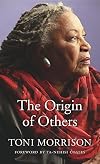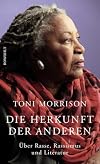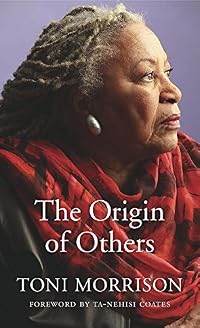
The Origin of Others
by Toni Morrison
On This Page
Description
America's foremost novelist reflects on the themes that preoccupy her work and increasingly dominate national and world politics: race, fear, borders, the mass movement of peoples, the desire for belonging. What is race and why does it matter? What motivates the human tendency to construct Others? Why does the presence of Others make us so afraid? Drawing on her Norton Lectures, Toni Morrison takes up these and other vital questions bearing on identity in The Origin of Others. In her search show more for answers, the novelist considers her own memories as well as history, politics, and especially literature. Harriet Beecher Stowe, Ernest Hemingway, William Faulkner, Flannery O'Connor, and Camara Laye are among the authors she examines. Readers of Morrison's fiction will welcome her discussions of some of her most celebrated books--Beloved, Paradise, and A Mercy. If we learn racism by example, then literature plays an important part in the history of race in America, both negatively and positively. Morrison writes about nineteenth-century literary efforts to romance slavery, contrasting them with the scientific racism of Samuel Cartwright and the banal diaries of the plantation overseer and slaveholder Thomas Thistlewood. She looks at configurations of blackness, notions of racial purity, and the ways in which literature employs skin color to reveal character or drive narrative. Expanding the scope of her concern, she also addresses globalization and the mass movement of peoples in this century. National Book Award winner Ta-Nehisi Coates provides a foreword to Morrison's most personal work of nonfiction to date. show lessTags
Recommendations


Member Reviews
These six lectures take the reader through coded language designed by the powers that be to differentiate between who belongs in the group and who does not. Morrison pulls from different stages of American history, from antebellum history to the most active periods of immigration in the late 19th and early 20th century to Jim Crow to our more recent history.
This exploration challenges a whitewashed view of not only history but a culture which is defined in the States more by color than by any real defining characteristics of culture such as the characteristics of a people – intellectual achievement, religion, food, customs and social patterns. In this limited definition becoming American means becoming white – an assimilation that show more the European immigrants of a century ago could achieve but persons of color, could not.
Perhaps what is most powerful is Morrison's discussion of the ways in which a nation's obsession with color has outweighed any insight into the culture or the characteristics of people. Immigrants, after so long, where not identified as Irish, as Italian, as Polish, or Russian, etc. after they became able to identify as white.
And Morrison illustrates this obsession through the nation's literature, the indoctrination of a racial power structure through the words of Flannery O'Connor, an illustration of stereotypes assigned by color in the memoirs of Mary Prince. The discussion illustrates that the stereotypes used to demean black Americans, words like 'savage' or 'animalistic' became embodied by the white slave-owners rather than the slaves. Yet the codified language became ingrained in white culture.
And more powerful is the discussion of a kind of moral relativity that places other considerations of right and wrong as secondary to color. The acceptance in Faulkner's Absalom, Absalom of incest when compared to the one drop rule, or in Morrison's own Beloved of killing one's children (to escape the pain of slavery) if it weakens the power of the Fugitive Slave Act, are vivid examples of the way in which color, either consciously or subconsciously, and the desire to maintain a color-based power structure have made other considerations of right and wrong secondary.
An important read. And a much-needed discussion for anyone that thought society had ever evolved to the point the problems of racism were in the past. And a much-needed starting point for self-examination for anyone who considers their self a human. show less
This exploration challenges a whitewashed view of not only history but a culture which is defined in the States more by color than by any real defining characteristics of culture such as the characteristics of a people – intellectual achievement, religion, food, customs and social patterns. In this limited definition becoming American means becoming white – an assimilation that show more the European immigrants of a century ago could achieve but persons of color, could not.
Perhaps what is most powerful is Morrison's discussion of the ways in which a nation's obsession with color has outweighed any insight into the culture or the characteristics of people. Immigrants, after so long, where not identified as Irish, as Italian, as Polish, or Russian, etc. after they became able to identify as white.
And Morrison illustrates this obsession through the nation's literature, the indoctrination of a racial power structure through the words of Flannery O'Connor, an illustration of stereotypes assigned by color in the memoirs of Mary Prince. The discussion illustrates that the stereotypes used to demean black Americans, words like 'savage' or 'animalistic' became embodied by the white slave-owners rather than the slaves. Yet the codified language became ingrained in white culture.
And more powerful is the discussion of a kind of moral relativity that places other considerations of right and wrong as secondary to color. The acceptance in Faulkner's Absalom, Absalom of incest when compared to the one drop rule, or in Morrison's own Beloved of killing one's children (to escape the pain of slavery) if it weakens the power of the Fugitive Slave Act, are vivid examples of the way in which color, either consciously or subconsciously, and the desire to maintain a color-based power structure have made other considerations of right and wrong secondary.
An important read. And a much-needed discussion for anyone that thought society had ever evolved to the point the problems of racism were in the past. And a much-needed starting point for self-examination for anyone who considers their self a human. show less
Don't let the physical smallness of the book deceive you into thinking that it is a quick read with little to offer. This is a transcribed lecture, dense with thoughtful meaning, given by Morrison dealing with racism and how to get beyond it. She starts with slavery; moves on to the 'color fetish'; adds the meaning of blackness; the uses of being the 'other'; to being a foreigner in ones own land or home. In her conclusion she discusses African writer Camara Laye's The Radience of the King and sites its ending 'Did you not know that I was waiting for you!' Both Laye and Morrison leave us with thoughts of 'authentic belonging, words welcoming him to the human race.' The direct yet nuanced insightful attack on the subject of racism and show more its spellbinding ending is most helpful for one's own improved understanding of self in this world.
Quotes: (page 29) “As fascinatingly repulsive as these incidents of violence are, to my mind the question that surfaces, one that is far more revealing than the severity of the punishment, is, who are these people? How hard they work to define the slave as inhuman, savage,when in fact the definition of inhuman describes overwhelmingly the punisher.”
(page 48-49) “The cultural mechanics of becoming American are clearly understood. A citizen of Italy or Russia immigrates to the United States. She keeps much or some of the language and customs of her home country. But if she wishes to be American-to be know as such and to actually belong-she must become something unimaginable in her home country: she must become white.”
(page 77-78) Cincinnati 1856 “'She said, that when the officers and slave-hunters came to the house in which they were concealed, she caught a shovel and struck two of her children on the head, and took a knife and cut the throat of the third, and tried to kill the other-that if they had given her the time she would have killed them all-that with regard to herself, she cared but little; but she was unwilling to have her children suffer as she had done.”
(page 91) “Narrative fiction provides a controlled wilderness, an opportunity to be and to become the Other. The stranger. With sympathy, clarity, and the risk of self-examination. In this iteration, for me the author, Beloved the girl, the haunter, is the ultimate Other. Clamoring, forever clamoring for a kiss.”
(page 94-95) “The establishment of military bases and the deployment of fresh military units feature prominently in legislative attempts to control the constant flow of people.
The spectacle of mass movement draws attention inevitably to the borders, the porous places, the vulnerable points where the concept of home is seen being menaced by foreigners. Much of the alarm hovering at the borders, the gates, is stoked, it seems to me by 1) both the threat and the promise of globalization; and 2) an uneasy relationship with our own foreignness, our own rapidly disintegrating sense of belonging.” show less
Quotes: (page 29) “As fascinatingly repulsive as these incidents of violence are, to my mind the question that surfaces, one that is far more revealing than the severity of the punishment, is, who are these people? How hard they work to define the slave as inhuman, savage,when in fact the definition of inhuman describes overwhelmingly the punisher.”
(page 48-49) “The cultural mechanics of becoming American are clearly understood. A citizen of Italy or Russia immigrates to the United States. She keeps much or some of the language and customs of her home country. But if she wishes to be American-to be know as such and to actually belong-she must become something unimaginable in her home country: she must become white.”
(page 77-78) Cincinnati 1856 “'She said, that when the officers and slave-hunters came to the house in which they were concealed, she caught a shovel and struck two of her children on the head, and took a knife and cut the throat of the third, and tried to kill the other-that if they had given her the time she would have killed them all-that with regard to herself, she cared but little; but she was unwilling to have her children suffer as she had done.”
(page 91) “Narrative fiction provides a controlled wilderness, an opportunity to be and to become the Other. The stranger. With sympathy, clarity, and the risk of self-examination. In this iteration, for me the author, Beloved the girl, the haunter, is the ultimate Other. Clamoring, forever clamoring for a kiss.”
(page 94-95) “The establishment of military bases and the deployment of fresh military units feature prominently in legislative attempts to control the constant flow of people.
The spectacle of mass movement draws attention inevitably to the borders, the porous places, the vulnerable points where the concept of home is seen being menaced by foreigners. Much of the alarm hovering at the borders, the gates, is stoked, it seems to me by 1) both the threat and the promise of globalization; and 2) an uneasy relationship with our own foreignness, our own rapidly disintegrating sense of belonging.” show less
This is a ridiculously short book. Thankfully, Toni Morrison's words are worth ten of most others.
Of the six (short) essays, four are excellent, with Being or Becoming the Stranger head and shoulders above the rest – although Narrating the Other is a close second, if you've read Beloved.
Being a white European, Morrison's deep insight as an African-American is always a raw, shuddering education. Where we meet is in the whole business of Othering, which she elucidates from a perspective I can't have, yet wholly share.
Years ago, this book would have enraged me; now, it's a clear explanation for what's going on around all of us every day.
Of the six (short) essays, four are excellent, with Being or Becoming the Stranger head and shoulders above the rest – although Narrating the Other is a close second, if you've read Beloved.
Being a white European, Morrison's deep insight as an African-American is always a raw, shuddering education. Where we meet is in the whole business of Othering, which she elucidates from a perspective I can't have, yet wholly share.
Years ago, this book would have enraged me; now, it's a clear explanation for what's going on around all of us every day.
Toni Morrison’s “The Origin of Others” encapsulates reflections on themes central to her literary career. In this collection of lectures, she confronts pressing issues like race, identity, and the notion of “Others.” Morrison weaves together her personal insights, historical narratives, and literary critiques, creating a thought-provoking discourse. Her discussions are not just abstract concepts; they relate to the current socio-political climate. This book engages with significant questions: What is race? Why does it provoke fear? What drives the impulse to categorize people as “Other”?
Wrrr. This is a series of essays developed from a series of lectures Morrison delivered at Harvard last year. *drums fingers* And Iiiii *glances around furtively* found it really underwhelming? I feel like I *have* to be missing something--I mean, it's *Toni Morrison*--but so many of the essays felt not cohesive. Most of them contained insightful statements about belonging in literature and/or interesting and enlightening and disturbing information about history, but I was left wondering what the conclusion was for most of them too. Possibly the lectures didn't translate well to essay form (I think most things designed to be spoken rather than read work better when they *are* spoken)? Possibly I didn't pay close enough attention? The show more book has been out for almost three weeks and it is very slim (people have had time, is what I'm saying), and there's almost no chatter about it--few reviews on LT, amazon, or Goodreads, and I don't find any professional reviews either. I'm perplexed. show less
Morrison presents this powerful look at how literature has helped and hindered our understanding of what it means to be and be seen as "white" or "not white" in America.
The book is pocket size and only a bit more than 100 pages, so we don't read everything discussed in her six lectures. Still, much is covered and I'm left with the feeling that nothing important is left out. She explains why and how she has written her important novels, gives examples from her life, discusses history and politics.
It's about slavery, immigration, globalization, the psychology and social meanings of blackness, foreignness, forced and voluntary movement from place to place in the past and especially now. A book every American should read.
The book is pocket size and only a bit more than 100 pages, so we don't read everything discussed in her six lectures. Still, much is covered and I'm left with the feeling that nothing important is left out. She explains why and how she has written her important novels, gives examples from her life, discusses history and politics.
It's about slavery, immigration, globalization, the psychology and social meanings of blackness, foreignness, forced and voluntary movement from place to place in the past and especially now. A book every American should read.
One of our greatest living writers talks bluntly about the themes she has worked on her entire life: how we divide humanity into Us and Them, whether racism, fear of foreigners, women, the Other.
I thought that at just over a hundred pages this would be a fairly quick read. But no. It's very densely written, digging thoughtfully into important subjects. Every sentence needs to be turned over and over in the mind to extract some juice. I'm going to have to read it again, I think.
I thought that at just over a hundred pages this would be a fairly quick read. But no. It's very densely written, digging thoughtfully into important subjects. Every sentence needs to be turned over and over in the mind to extract some juice. I'm going to have to read it again, I think.
Members
- Recently Added By
Lists

Mind Expanding Books by hackerkid
581 works; 8 members

Phi Beta Kappa reading list
260 works; 8 members
Author Information

103+ Works 79,815 Members
All Editions
Awards and Honors
Awards
Distinctions
Series
Belongs to Publisher Series
Charles Eliot Norton Lectures (2015-2016)
Keltainen kirjasto (513)
Common Knowledge
Classifications
Statistics
- Members
- 455
- Popularity
- 66,683
- Reviews
- 16
- Rating
- (3.98)
- Languages
- 9 — Catalan, English, Finnish, French, German, Italian, Portuguese, Spanish, Turkish
- Media
- Paper, Ebook
- ISBNs
- 17
- ASINs
- 2