The Ship
by C. S. Forester
On This Page
Description
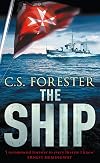
One vital convoy can break Mussolini's stranglehold on Malta - but it is intercepted in the Mediterranean by enemy warships . . . Five light British cruisers are left to beat back the armed might of the Italian battle fleet and C.S. Forester - creator of Horatio Hornblower - takes us aboard HMS Artemis as she steams into battle against overwhelming odds. We get inside the heads of Artemis's men, from the Captain on his bridge down to the lowest engine room rating, as they struggle over one show more long and terrifying afternoon to do their duty. C.S. Forester brilliantly recounts life aboard a British warship during some of the darkest days of the Second World War- capturing the urgency of the blazing guns, the thunderous rupturing of deck plates, the screams of pain and the shouts of triumph. show lessTags
Recommendations





















Member Reviews
Short but enjoyable, masterfully written, entirely character driven description of a brief encounter between the English convoy guard the light cruiser Artemis, and the Italian Navy, in the deciding battle of the fight for Malta in 1943.
Each short chapter is headed by a sentence from the captain's report of the incident e.g. 'the enemy was sighted' followed by a description of the persons involved, what they did and how they felt about it. From the Paymaster contemplating if it is safe to send lunch out, to the lookout at the masthead savoring the pickled onions, and including the captain's secretary musing on the women he left behind without missing any signal flags, every detail is lovingly recorded.
This unusual narrative style show more means that the plot doesn't proceed with any pace at all. I suspect in a longer book it would rapidly lose its allure. But in a short work of this nature it functions very well. The duties and responsibilities of every link in the chain are highlighted; the importance of a basic 'hostilities only' seaman doing his menial job well is clearly just as vital as the captain issuing the correct orders. And although mentioned in passing rather than in detail we look at the estimated '40 million' people (somewhat high I feel) involved in mining the ore, refining the steel, casting the shell, packing the explosive, and then in detail, lifting the shell from the magazine, through the loaders, sighters, spotters and finally the Gunnery officer responsible for crying 'shoot' as a shell is launched that turns the battle, saving the convoy, resupplying Malta, which causes Hitler to divert arms from Russia, leading to his eventual capitulation. This is a mighty consequence of Seaman Triggs remembering to take a fuse out of a tin.
The only real drawback is the continual use of Navy ranks without any explanation of where they stand in relation to each other. Is an Able Seaman above or below a Leading Seaman? It also highlights the surprising lack of technology in even the latest of the WWII ships. Order conveyed by flags, the reliance on manual sighting, spotting and range finding, the quivering of needles and dials, although I'm sure more reliable technologies were known by then.
A surprisingly un-harrowing account of the superiority of the British Navy, envy of the world.
............................................................................................................ show less
Each short chapter is headed by a sentence from the captain's report of the incident e.g. 'the enemy was sighted' followed by a description of the persons involved, what they did and how they felt about it. From the Paymaster contemplating if it is safe to send lunch out, to the lookout at the masthead savoring the pickled onions, and including the captain's secretary musing on the women he left behind without missing any signal flags, every detail is lovingly recorded.
This unusual narrative style show more means that the plot doesn't proceed with any pace at all. I suspect in a longer book it would rapidly lose its allure. But in a short work of this nature it functions very well. The duties and responsibilities of every link in the chain are highlighted; the importance of a basic 'hostilities only' seaman doing his menial job well is clearly just as vital as the captain issuing the correct orders. And although mentioned in passing rather than in detail we look at the estimated '40 million' people (somewhat high I feel) involved in mining the ore, refining the steel, casting the shell, packing the explosive, and then in detail, lifting the shell from the magazine, through the loaders, sighters, spotters and finally the Gunnery officer responsible for crying 'shoot' as a shell is launched that turns the battle, saving the convoy, resupplying Malta, which causes Hitler to divert arms from Russia, leading to his eventual capitulation. This is a mighty consequence of Seaman Triggs remembering to take a fuse out of a tin.
The only real drawback is the continual use of Navy ranks without any explanation of where they stand in relation to each other. Is an Able Seaman above or below a Leading Seaman? It also highlights the surprising lack of technology in even the latest of the WWII ships. Order conveyed by flags, the reliance on manual sighting, spotting and range finding, the quivering of needles and dials, although I'm sure more reliable technologies were known by then.
A surprisingly un-harrowing account of the superiority of the British Navy, envy of the world.
............................................................................................................ show less
I really appreciated the way Forester told this story of a light frigate on convoy duty in the Mediterranean during WW2. Many of the chapters were told from the point of view of a different perspective, ranging from the captain to ordinary seamen, engineers to gunners to lookouts.
A compelling narrative of one engagement at war, in one ship, where one shell turns the destiny of the war. Forester (as Monserrat in the Cruel Sea) writes about the terrible human cost and extraordinary (or very ordinary) heroism of keeping the supply lines open against heavy odds. The book depicts the machinery (human and mechanical) of war in loving, but dispassionate detail, allowing us to know the individual characters in passing as they perish or survive. It ends with a real sense of hope and optimism for the war and the future...
Brilliant depiction of what it is like to be on a warship under extreme peril from a human perspective
The clarity of the prose remains, and the eye of Forester, his skill at finding exactly the right point of View character for describing an historic moment, is perfect for this story, a fictionalization of an encounter between the Royal Navy and the royal Italian Navy in the Second Battle of Syrte. It really clothes the bare bones of any mechanical account.
Interesting in-depth read about the Mediterranean action of the British light cruiser ‘Artemis’. Good war fiction yarn. Tries to explain the lives of the people in the action on the British ship and weave them into the battle. Mostly works.
Competent realistic account of a British cruiser fighting Italian warships in the Mediterranean in World War II. Overall, it is all rigt, but I find it very sad because one of the sailors is a gifted but unpublished poet and he is killed and his poems lost.
Members
- Recently Added By
Lists

The Guardian's 1000 Novels Everyone Must Read
1,005 works; 549 members

Armed Services Editions
150 works; 1 member
Author Information

182+ Works 34,773 Members
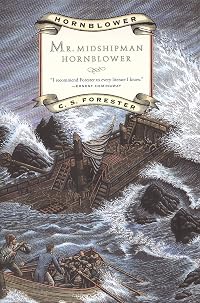
Born Cecil Louis Troughton Smith on August 27, 1899, in Cairo, Egypt, where his father was a government official, C. S. Forester grew up mainly in England. He was educated at Dulwich College, studying medicine briefly before decidint to become a writer. Forester moved to the United States before the start of World War II, and lived in Berkeley, show more California, until his death in 1966. Although Forester was a journalist, a novelist and a Hollywood scriptwriter, he is probably best known for his historical fiction, particularly the series of novels that feature Horatio Hornblower. The eleven-book series begins with Mr. Midshipmen Hornblower, in which the seventeen-year old Hornblower joins the British navy in 1793, just as the Napoleonic Wars are about to begin. Hornblower's continuing adventures, as well as his advancement to the highest ranks of the navy, are chronicled in further books, including Beat to Quarters, Flying Colours, Commodore Hornblower, Lord Hornblower, The Happy Return, and A Ship of the Line, for which Forester recived the James Tait Black Memorial Prize in 1939. Several of Forester's novels were made into films, most notably Payment Deferred (his first novel published in 1926), Eagle Squadron, The Commandos (the movie title was The Commandos Strike at Dawn), Captain Horatio Hornblower, Sink the Bismarck!, and The African Queen, starring Katharine Hepburn and Humphrey Bogart. Forester's nonfiction includes The Age of Fighting Sail: The Story of the Naval War of 1812, as well as biographies of Lord Nelson, Napoleon, Josephine, and King Louis XIV. He also wrote an autobiography, Long Before Forty. (Bowker Author Biography) show less
Some Editions
Awards and Honors
Distinctions
Notable Lists
Series
Belongs to Publisher Series
Zephyr Books (94)
Penguin Books (698)
Work Relationships
Is contained in
Has as a study
Has as a student's study guide
Common Knowledge
- Canonical title
- The Ship
- Original title
- The Ship
- Original publication date
- 1943
- Important places
- The Mediterranean
- Dedication
- with the deepest respect to the Officers and Ship's Company of H.M.S Penelope
- First words
- Paymaster Commander George Brown put his fountain pen back into his pocket, put on his cap and got up from the table where he had been ciphering.
- Last words
- (Click to show. Warning: May contain spoilers.)For that was the evening star shining out over the Mediterranean
Classifications
- Genres
- General Fiction, Fiction and Literature, Historical Fiction
- DDC/MDS
- 823.912 — Literature & rhetoric English & Old English literatures English fiction 1900- 1901-1999 1901-1945
- LCC
- PZ3 .F75956 — Language and Literature Fiction and juvenile belles lettres Fiction and juvenile belles lettres Fiction in English
- BISAC
Statistics
- Members
- 467
- Popularity
- 65,547
- Reviews
- 11
- Rating
- (3.92)
- Languages
- 7 — Czech, Danish, English, Italian, Portuguese (Brazil), Portuguese (Portugal), Swedish
- Media
- Paper, Audiobook, Ebook
- ISBNs
- 14
- ASINs
- 30