On This Page
Description
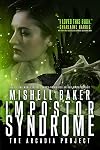
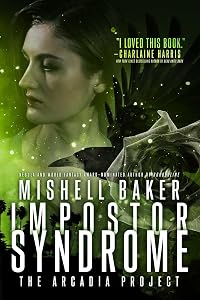
In the third book of the Nebula Award–nominated Arcadia Project series, which New York Times bestselling author Seanan McGuire called "exciting, inventive, and brilliantly plotted," Millie Roper has to pull off two impossible heists—with the fate of the worlds in the balance.Three months ago, a rift between agents in London and Los Angeles tore the Arcadia Project apart. With both fey Courts split down the middle—half supporting London, half LA—London is putting the pieces in place show more to quash the resistance. But due to an alarming backslide in her mental health, new LA agent Mille Roper is in no condition to fight.
When London's opening shot is to frame Millie's partner, Tjuan, for attempted homicide, Millie has no choice but to hide him and try to clear his name. Her investigation will take her across the pond to the heart of Arcadia at the mysterious and impenetrable White Rose palace. The key to Tjuan's freedom—and to the success of the revolution—is locked in a vault under the fey Queen's watchful eye. It's up to Millie to plan and lead a heist that will shape the future of two worlds—all while pretending that she knows exactly what she's doing... Mythology. Fantasy. Fiction. Mystery. show less
Tags
Recommendations














Member Reviews
There's a lot to love about this UF that refuses to bow down to the usual expectations.
But then, this series does follow a *certain* set of expectations. For one, it completely relies on all types of mental illness to drive character arcs. It's not just the MC who is bipolar, who had attempted suicide, lost her legs, and yet still manages to use her head and save the day as a productive (if often very destructive) employee in a Fae (be it Seele or Unseele court) world. Ahem. Excuse me. Worlds. This takes place in both the Fae lands and LA (with some travel around the world).
This has got to be the most wildly diverse novel I've ever read. Not only mental spectrums are accounted for, but sexual, social, and ideological. Everyone has a show more place and usually they all want to murder each other or are willing to do it in a more socially acceptable (if also very destructive) way. :)
In this novel, we have a great Heist fiction with a wildly diverse cast and I'm frankly amazed that any of these characters function well enough to cause the amount of damage they do. And that's not even accounting for the damage they *intended* to do.
I'm caught in admiration for this novel and the series while also being a bit flabbergasted at the same time. It has good writing and it's always pretty entertaining, but I don't want it to always be about the mental damage. Even that which makes this unique can be overdone.
Still, it straddles the line and succeeds for the majority for me. :) show less
But then, this series does follow a *certain* set of expectations. For one, it completely relies on all types of mental illness to drive character arcs. It's not just the MC who is bipolar, who had attempted suicide, lost her legs, and yet still manages to use her head and save the day as a productive (if often very destructive) employee in a Fae (be it Seele or Unseele court) world. Ahem. Excuse me. Worlds. This takes place in both the Fae lands and LA (with some travel around the world).
This has got to be the most wildly diverse novel I've ever read. Not only mental spectrums are accounted for, but sexual, social, and ideological. Everyone has a show more place and usually they all want to murder each other or are willing to do it in a more socially acceptable (if also very destructive) way. :)
In this novel, we have a great Heist fiction with a wildly diverse cast and I'm frankly amazed that any of these characters function well enough to cause the amount of damage they do. And that's not even accounting for the damage they *intended* to do.
I'm caught in admiration for this novel and the series while also being a bit flabbergasted at the same time. It has good writing and it's always pretty entertaining, but I don't want it to always be about the mental damage. Even that which makes this unique can be overdone.
Still, it straddles the line and succeeds for the majority for me. :) show less
The Arcadia Project trilogy has been one of my all time favorite urban fantasy series. I’m sad to see it come to a close, but I found Impostor Syndrome a more than satisfying conclusion.
Before diving into the review, I want to note that this is a sequel. Impostor Syndrome picks up directly where the cliffhanger ending of the second book left off, so be sure to read the series in order. If you’re new to the books, the first is Borderline, which I highly recommend.
After learning that spells are sentient (and enslaved) spirits and that the head of the Project handed a child over to be tortured, the LA branch of the Arcadia Project is in revolt. Someone, London HQ finds a way to frame Millie’s partner Tjuan for murder. They can’t show more think of any way to stave off the power of the London HQ but then Millie comes up with the idea of a heist that will take them from London to the palace of the Seelie Queen.
For me, the big draw of the Arcadia Project series is Millie herself. She’s got a unique voice and a strong personality. I think she’s also been growing a lot through the series. In Impostor Syndrome, she feels like she’s been having a backslide in her mental health, which is pretty true to life. Mental health improvement is rarely straightforward. Despite this, she’s got to be there for Tjuan and the everyone else effected by Dame Belinda’s tyrannical rule.
Since I first read Borderline, I’ve classified Millie as an antiheroine. There’s actually a pretty great part in Impostor Syndrome where she refers to herself as such, but this third book asks whether or not this assessment is accurate. Is Millie really an anti-heroine… or is she a true heroine? An antiheroine who decides to try and act like a heroine? With so many anti-heroic characters, they tend to stumble further down the moral event horizon. Millie’s going in the opposite direction, trying to do the right thing no matter how hard it may be.
My criticisms of Impostor Syndrome come down to quibbles. The pacing and plot structure probably could have been smoother. There was also a segment written in the style of a screenplay. While it made a certain amount of sense for the circumstances, I thought it went on a tad too long. Otherwise, I don’t have much to complain about.
I don’t know if this will be the ending that everyone wants. The plot arc is finished, but there’s plenty of tangles left to be unraveled. Such as it is with life. While some things didn’t end as I might have wished, I think the ending makes sense for the story Baker’s telling. On the whole, Impostor Syndrome is a satisfying conclusion.
I received an ARC in exchange for a free and honest review.
Review originally posted on The Illustrated Page. show less
Before diving into the review, I want to note that this is a sequel. Impostor Syndrome picks up directly where the cliffhanger ending of the second book left off, so be sure to read the series in order. If you’re new to the books, the first is Borderline, which I highly recommend.
After learning that spells are sentient (and enslaved) spirits and that the head of the Project handed a child over to be tortured, the LA branch of the Arcadia Project is in revolt. Someone, London HQ finds a way to frame Millie’s partner Tjuan for murder. They can’t show more think of any way to stave off the power of the London HQ but then Millie comes up with the idea of a heist that will take them from London to the palace of the Seelie Queen.
For me, the big draw of the Arcadia Project series is Millie herself. She’s got a unique voice and a strong personality. I think she’s also been growing a lot through the series. In Impostor Syndrome, she feels like she’s been having a backslide in her mental health, which is pretty true to life. Mental health improvement is rarely straightforward. Despite this, she’s got to be there for Tjuan and the everyone else effected by Dame Belinda’s tyrannical rule.
Since I first read Borderline, I’ve classified Millie as an antiheroine. There’s actually a pretty great part in Impostor Syndrome where she refers to herself as such, but this third book asks whether or not this assessment is accurate. Is Millie really an anti-heroine… or is she a true heroine? An antiheroine who decides to try and act like a heroine? With so many anti-heroic characters, they tend to stumble further down the moral event horizon. Millie’s going in the opposite direction, trying to do the right thing no matter how hard it may be.
My criticisms of Impostor Syndrome come down to quibbles. The pacing and plot structure probably could have been smoother. There was also a segment written in the style of a screenplay. While it made a certain amount of sense for the circumstances, I thought it went on a tad too long. Otherwise, I don’t have much to complain about.
I don’t know if this will be the ending that everyone wants. The plot arc is finished, but there’s plenty of tangles left to be unraveled. Such as it is with life. While some things didn’t end as I might have wished, I think the ending makes sense for the story Baker’s telling. On the whole, Impostor Syndrome is a satisfying conclusion.
I received an ARC in exchange for a free and honest review.
Review originally posted on The Illustrated Page. show less
Another great book, highly enjoyed. But the main action sequence was written as a movie script? Complete with cues? It didn't work for me and was awful to sit through. But the cast continues to be comfortably diverse, and gave me a new idea. Which is that the fae manage their immortality through stories, and attempt to end their lives at the "best" moment for their stories. Which I find interesting. Great series, it could end here, but I hope it doesn't
Millie is now planning a rebellion against the Arcadia Project, in order to overturn the system that’s enslaved spirits to do magic since the Project began. She’s also trying to deal with her reciprocated crush on her boss Caryl, whose emotional support dragon only sometimes deals with her emotions for her, and accept a new member of the team who also has BPD and thus works very badly with Millie. Various Seelie and Unseelie types complicate the situation further. It’s a good conclusion to this part of the arc (if there’s more to come).
Third (and likely final) book in the Arcadia Series, Impostor Syndrome lends closure to the story of Millie, a human agent with Borderline Personality interfacing with the world of Faerie. I seriously loved this book. No character is predictable, but all are believable.
IMPOSTER SYNDROME by Mishell Baker. The Accords are in jeopardy! The unity of the Arcadia Project is broken as the USA defies the UK’s authority and somehow Millie Roper is at the center of it! A satisfying end to several storylines but I hope not the end for this series!
Ratings
Members
- Recently Added By
Lists

LGBTQ+ Speculative Fiction
821 works; 51 members

Reading Glasses Podcast
410 works; 3 members

GraceCollection TBR/To Buy List
106 works; 1 member
Author Information

4+ Works 927 Members
Some Editions
Awards and Honors
Awards
Series

Work Relationships
Is contained in
Common Knowledge
- Canonical title
- Impostor Syndrome
- Original title
- Impostor Syndrome
- Original publication date
- 2018-03-13
- Important places
- Los Angeles Metropolitan Area, California, USA
- Dedication
- For Wren Wallis
my Echo - Publisher's editor
- Wolfe, Navah
- Blurbers
- Harris, Charlaine
Classifications
Statistics
- Members
- 118
- Popularity
- 276,178
- Reviews
- 6
- Rating
- (3.87)
- Languages
- English
- Media
- Paper, Audiobook, Ebook
- ISBNs
- 6
- ASINs
- 3