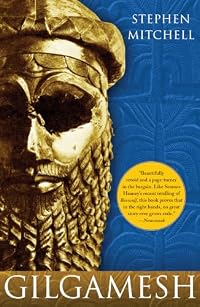
Gilgamesh: A New English Version
by Stephen Mitchell
On This Page
Description
This brilliant new treatment of the oldest epic in the world is a literary event. Esteemed translator and best-selling author Stephen Mitchell breathes life into a 3,700-year-old classic, delivering a lithe and muscular rendering that shows how startlingly alive Gilgamesh is, how filled with intelligence and beauty. It is the story of literature's first hero, an historical king of Uruk in Babylonia, and his journey of self-discovery. Along the way, Gilgamesh discovers that friendship can show more bring peace to a whole city and that wisdom can be found only when the quest for it is abandoned. show lessTags
Recommendations


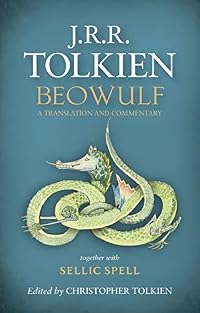
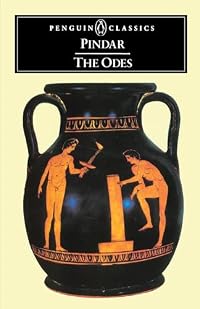
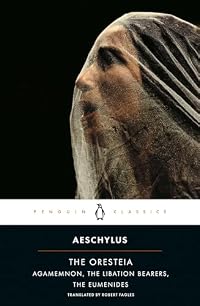

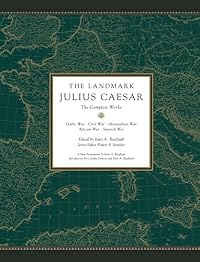
Member Recommendations
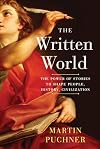
M_Clark Puchner's book is a tour through world literature and how it changed over the years. His story begins with Gilgamesh.

themulhern "The Luck of Nineveh" tells the very detailed story of the discovery of Ashurbanipal's edition of Gilgamesh. "Gilgamesh" is a synthesis of translations and an essay on the history of the various editions of Gilgamesh.
Member Reviews
Sex! Wrestling! Monsters! Beer! Boats! Walls! Seriously, if Gilgamesh was written today it'd probably be serialised in Playboy.
This is The Oldest Surviving Piece Of Literature In The World, a unique title shared with only a half dozen or so other pieces of writing. Still, most of these other early texts sound pretty dry compared to Gilgamesh, so it's likely to remain the oldest work I ever read. But how do you go about rating something first written over four and a half thousand years ago and then revised into its modern form a mere three and a half thousand years ago? Obviously one can't rate it as if it were a modern work, right?
Wrong, Mr Rhetorical Question! Much like [b:The Tale of Genji|7042|The Tale of Genji|Murasaki show more Shikibu|http://d.gr-assets.com/books/1309376788s/7042.jpg|2212225], Gilgamesh is both fascinating as an insight into history and a rip-snorting tale in its own right. But caveat lector: the poem was written over a protracted period of time. Think GRR Martin is taking a while to finish A Song of Ice and Fire? Be glad he's not from Mesopotamia, those chaps knew how to draw things out. Tablets containing pieces of this epic started being discovered in the mid-nineteenth century, dating from around 2000 BC. Since then many more tablets have been found containing ever more lines and ever more variations, these fragments being written (or maybe hewn) over a span of more than a millennium.
What this means in practice is that there is no single canonical version of the poem. It's more like Blade Runner with its nineteen different cuts. Worse, while some parts of the poem are not only intact but extant in more than one different version, many other parts are either partially missing or just flat out not there. And even when a line is “partially missing”, we're not talking easy gaps to fill in, like:The missing words are obviously “muscular structure”. The poem doesn't rhyme. No, partially missing would be more like
So for some sections of the poem which exist in their totality, the translator has to pick which version to use. And for the quarter of the poem which isn't there he has to either leave whopping great blanks or fill in the gaps using some inspired guesswork.
Enter Stephen Mitchell. He knows neither Akkadian nor Sumerian so freely admits this isn't a translation of The Epic of Gilgamesh, it's a remix. He has taken several literal translations of all the known tablets containing any part of the poem, and used them to craft a complete work. Lines are added, subtracted, moved around, and freely changed to make a readable and enjoyable tale while maintaining the work's essential qualities. It's all nice and transparent too, the endnotes provide a line-by-line breakdown of the poem, explaining the source of each line and any changes he has made to the text, usually giving the literal translation too. The endnotes aren't marked in the text itself, which would normally be a nuisance, but in this case the eleven chapters that make up the poem are all short enough to allow the reader to simply devour each chapter in turn before skipping to the end and perusing the endnotes.
There's not a whole lot to say against this rendering. I suppose if you don't like reading about sex, wrestling, monsters, beer, boats, or, God forbid, walls, then there may be aspects of the poem you dislike. But then again, what kind of crazy person doesn't like reading about walls? show less
This is The Oldest Surviving Piece Of Literature In The World, a unique title shared with only a half dozen or so other pieces of writing. Still, most of these other early texts sound pretty dry compared to Gilgamesh, so it's likely to remain the oldest work I ever read. But how do you go about rating something first written over four and a half thousand years ago and then revised into its modern form a mere three and a half thousand years ago? Obviously one can't rate it as if it were a modern work, right?
Wrong, Mr Rhetorical Question! Much like [b:The Tale of Genji|7042|The Tale of Genji|Murasaki show more Shikibu|http://d.gr-assets.com/books/1309376788s/7042.jpg|2212225], Gilgamesh is both fascinating as an insight into history and a rip-snorting tale in its own right. But caveat lector: the poem was written over a protracted period of time. Think GRR Martin is taking a while to finish A Song of Ice and Fire? Be glad he's not from Mesopotamia, those chaps knew how to draw things out. Tablets containing pieces of this epic started being discovered in the mid-nineteenth century, dating from around 2000 BC. Since then many more tablets have been found containing ever more lines and ever more variations, these fragments being written (or maybe hewn) over a span of more than a millennium.
What this means in practice is that there is no single canonical version of the poem. It's more like Blade Runner with its nineteen different cuts. Worse, while some parts of the poem are not only intact but extant in more than one different version, many other parts are either partially missing or just flat out not there. And even when a line is “partially missing”, we're not talking easy gaps to fill in, like:
“‘Oh!’ said Gilgamesh giving his lips a lick
‘Why Endiku my friend, you have a magnificent [missing].’”
“[Missing] his [missing]
‘Why [missing] have a [missing].’”
So for some sections of the poem which exist in their totality, the translator has to pick which version to use. And for the quarter of the poem which isn't there he has to either leave whopping great blanks or fill in the gaps using some inspired guesswork.
Enter Stephen Mitchell. He knows neither Akkadian nor Sumerian so freely admits this isn't a translation of The Epic of Gilgamesh, it's a remix. He has taken several literal translations of all the known tablets containing any part of the poem, and used them to craft a complete work. Lines are added, subtracted, moved around, and freely changed to make a readable and enjoyable tale while maintaining the work's essential qualities. It's all nice and transparent too, the endnotes provide a line-by-line breakdown of the poem, explaining the source of each line and any changes he has made to the text, usually giving the literal translation too. The endnotes aren't marked in the text itself, which would normally be a nuisance, but in this case the eleven chapters that make up the poem are all short enough to allow the reader to simply devour each chapter in turn before skipping to the end and perusing the endnotes.
There's not a whole lot to say against this rendering. I suppose if you don't like reading about sex, wrestling, monsters, beer, boats, or, God forbid, walls, then there may be aspects of the poem you dislike. But then again, what kind of crazy person doesn't like reading about walls? show less
A new version of a very, very, very old story. And, as the author is scrupulous about pointing out, it is a new version, not a new translation, as it is based not on the original, but on a number of earlier literal translations into English. So, more a literary work than a scholarly one, but it's clearly that Mitchell has done a lot of research, and he includes extensive endnotes about his choices and what he based them on, and historical context, and so on. He does take some editorial liberties, which he also carefully documents, but the overall impression is that he's being much more faithful to the source material than not. Certainly, he's not remotely attempting to rewrite the story into something new or "modern."
The style is show more extremely readable poetry with a clean and natural rhythm, and it conveys the story very well. It does so for the characters, too, and all the various different aspects of Gilgamesh come through very strongly. He is simultaneously a larger-than life figure of legend, a thoroughly human man whose love and grief are realistic and deeply moving, and also just kind of a terrible person. That's more complex characterization than some 21st century authors ever manage, honestly.
And, y'know, it is a pretty good story. I mean, there are reasons people still like it all these thousands of years later.
Mitchell, by the way, also includes about sixty pages his own analysis of and thoughts on the epic. These are fairly interesting, but leave me wondering, for the umpteenth time, why oh why editions of "literary classics" always include this stuff in the introduction and not after the text where it clearly and obviously belongs. show less
The style is show more extremely readable poetry with a clean and natural rhythm, and it conveys the story very well. It does so for the characters, too, and all the various different aspects of Gilgamesh come through very strongly. He is simultaneously a larger-than life figure of legend, a thoroughly human man whose love and grief are realistic and deeply moving, and also just kind of a terrible person. That's more complex characterization than some 21st century authors ever manage, honestly.
And, y'know, it is a pretty good story. I mean, there are reasons people still like it all these thousands of years later.
Mitchell, by the way, also includes about sixty pages his own analysis of and thoughts on the epic. These are fairly interesting, but leave me wondering, for the umpteenth time, why oh why editions of "literary classics" always include this stuff in the introduction and not after the text where it clearly and obviously belongs. show less
"In Iraq...where Gilgamesh was written -- the oldest story in the world, a thousand years older than the Iliad or the Bible."
A multi-layered examination of the duality in the human experience: good/ evil, hero/ villain, etc. There's certainly relevance with current events -- maybe that's why it's stood the test of time -- because we continue to face equally epic quests in our journey to become better humans...
I put off reading this classic, considered by many an essential read, because, well, tales told in verse intimidate me. Sometimes they leave me scratching my head, clearly not smart enough to "get" their meaning. Glad I finally went for it with Gilgamesh! Thankfully, Mitchell's translation/ adaptation is easily accessible. And I show more found the introduction particularly helpful.
In the end, I just felt really sad for Enkidu *and* Humbaba. Perhaps I'll have a different takeaway on subsequent reads. show less
A multi-layered examination of the duality in the human experience: good/ evil, hero/ villain, etc. There's certainly relevance with current events -- maybe that's why it's stood the test of time -- because we continue to face equally epic quests in our journey to become better humans...
I put off reading this classic, considered by many an essential read, because, well, tales told in verse intimidate me. Sometimes they leave me scratching my head, clearly not smart enough to "get" their meaning. Glad I finally went for it with Gilgamesh! Thankfully, Mitchell's translation/ adaptation is easily accessible. And I show more found the introduction particularly helpful.
In the end, I just felt really sad for Enkidu *and* Humbaba. Perhaps I'll have a different takeaway on subsequent reads. show less
This is not a translation but an adaptation of other English translations filtered through Stephen Mitchell's meager talent. It is not taken directly from the Akkadian and thus is like a copy of a copy, and a bad one at that. He's also mashed together multiple versions from different times and places.
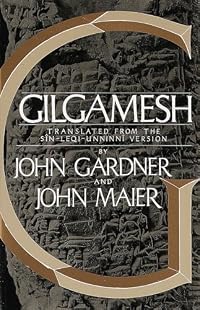
The Gilgamesh tablets can't really be translated literally into a readable modern vernacular, which leaves more than the usual amount of power in the hands of the translator. Stephen Mitchell is not the person to trust with that kind of power. You know you're in Mitchell's hypersexualized, revisionist world when the word "penis" pops into the text out of nowhere, and it goes downhill from there. Yes, there are frank sexual elements in the show more original, which a mature translator would allow to speak for themselves rather than drawing out subtexts and elaborations purely to titilate a modern audience. Gardner/Maier, for example, certainly didn't shy away from crude language (eg, Tablet 1. Column 4), but it was based on sound textual analysis. Mitchell just makes stuff up. And if you thought Mitchell could restrain himself from making Gilgamesh and Enkidu gay lovers, then you don't know Mitchell.
This is Akkadian for Idiots, a middlebrow piece of hackery in which an overrated writer lifts his leg on one of the towering monuments of civilization. I'm taking the time to unload on this trash because I see that the ALA declared it the "new standard" for classroom use, which tells you all you need to know about ALA recommendations. Having Gilgamesh filtered through the mind of Mitchell for generations of students is a fate worse than the flood.
Stick with with Foster, George, or Gardner/Maier. show less
The Gilgamesh tablets can't really be translated literally into a readable modern vernacular, which leaves more than the usual amount of power in the hands of the translator. Stephen Mitchell is not the person to trust with that kind of power. You know you're in Mitchell's hypersexualized, revisionist world when the word "penis" pops into the text out of nowhere, and it goes downhill from there. Yes, there are frank sexual elements in the show more original, which a mature translator would allow to speak for themselves rather than drawing out subtexts and elaborations purely to titilate a modern audience. Gardner/Maier, for example, certainly didn't shy away from crude language (eg, Tablet 1. Column 4), but it was based on sound textual analysis. Mitchell just makes stuff up. And if you thought Mitchell could restrain himself from making Gilgamesh and Enkidu gay lovers, then you don't know Mitchell.
This is Akkadian for Idiots, a middlebrow piece of hackery in which an overrated writer lifts his leg on one of the towering monuments of civilization. I'm taking the time to unload on this trash because I see that the ALA declared it the "new standard" for classroom use, which tells you all you need to know about ALA recommendations. Having Gilgamesh filtered through the mind of Mitchell for generations of students is a fate worse than the flood.
Stick with with Foster, George, or Gardner/Maier. show less
I've read Gilgamesh a couple of times and while I like and appreciate the story, much of the time it's rough going based on the choices made by the translator. In this version -- not a translation -- Mitchell has read the available great translations and produced a text which is accessible and beautiful. And I'm not using that word loosely. There are sections of this story that moved me to tears.
Written c. 2100 BCE, The Epic of Gilgamesh is the oldest surviving literature in the world. It tells the story of a king of Sumer, who is part human, part god, and the mightiest king and warrior in the world. His power, predictably, corrupts him and the gods, who want to chastise him, create his opposite number, a wild man named Enkidu who is show more equal to the king, and who becomes his better half (and you can take this any way you choose because the homo-erotic elements are pretty clear.) They go on adventures together, and Gilgamesh becomes a better man, though Enkidu, becomes a worse one in the process. Gilgamesh loses his friend and goes on a quest to find the secret of immortality.
In the end, this is a hero's journey, different in some ways from the standard model, yet still a classic quest, in this case for wisdom. The king who returns from his quest is a good man and a good king, no longer using his power for selfish reasons.
Mitchell's version is gorgeous, prose with the rhythm of poetry, giving the story such power that, as I said above, it moved me to tears. The mourning of Gilgamesh for Enkidu wasn't just a man mourning the loss of a friend, it was the embodiment of mourning, a gnawing sense of how hollow life becomes when we lose those we love. I am so glad I found this audiobook because hearing Guildall reading Mitchell's words was a revelation.
I want more. show less
Written c. 2100 BCE, The Epic of Gilgamesh is the oldest surviving literature in the world. It tells the story of a king of Sumer, who is part human, part god, and the mightiest king and warrior in the world. His power, predictably, corrupts him and the gods, who want to chastise him, create his opposite number, a wild man named Enkidu who is show more equal to the king, and who becomes his better half (and you can take this any way you choose because the homo-erotic elements are pretty clear.) They go on adventures together, and Gilgamesh becomes a better man, though Enkidu, becomes a worse one in the process. Gilgamesh loses his friend and goes on a quest to find the secret of immortality.
In the end, this is a hero's journey, different in some ways from the standard model, yet still a classic quest, in this case for wisdom. The king who returns from his quest is a good man and a good king, no longer using his power for selfish reasons.
Mitchell's version is gorgeous, prose with the rhythm of poetry, giving the story such power that, as I said above, it moved me to tears. The mourning of Gilgamesh for Enkidu wasn't just a man mourning the loss of a friend, it was the embodiment of mourning, a gnawing sense of how hollow life becomes when we lose those we love. I am so glad I found this audiobook because hearing Guildall reading Mitchell's words was a revelation.
I want more. show less
Not a translation, strictly speaking, as Mitchell has used other (very relevant) sources to fill in some gaps and in some cases expand the poem just a bit, resulting in a completely readable, thoroughly satisfying version of this most ancient of tales. The first part of the book is basically Mitchell's summary of the poem, with some of its best passages included. Then comes the poem itself, so it feels almost like you're reading it twice. In this case, though, it is so well done, and the introduction is so good that I don't feel like it consitutes a spoiler. Or perhaps he assumes everyone has already read another version? The last part of the book is a long series of footnotes, a few of them informational, but mostly giving the literal show more translation of the fragmentary text that underlies Mitchell's more polished version.
As for the story itself, it pre-dates the Bible by hundreds of years and was a prime inspiration for the story of the Great Flood--not an alternate version of the same story, as Christian scholars chose to interpret it. We've been better off if this were the ONLY version! Highly recommended! show less
As for the story itself, it pre-dates the Bible by hundreds of years and was a prime inspiration for the story of the Great Flood--not an alternate version of the same story, as Christian scholars chose to interpret it. We've been better off if this were the ONLY version! Highly recommended! show less
By far the best of the four Gilgamesh translations I've read is the 2006 version by Stephen Mitchell. Besides being the oldest surviving world of world literature (perhaps 5,000 years old), Gilgamesh is a profound same-sex - male/male - love story, and an epic adventure. There's even a surprise "cameo" by Noah, of Ark fame, here called Utnapishtim, about a thousand years before his appearance in the Hebrew bible (Old Testament). In one sense, Gilgamesh's story is about how a man overcomes toxic masculinity and becomes a good, loving human being and ultimately an enlightened ruler. Also contains the first - and maybe still the best - 'meet cute,' with Gilgamesh wrestling non-stop for 24 hours with the "brute" he'll come to love with all show more his newly-emerging heart. If you're interested in the historical continuity of narrative form, compare Gilgamesh to Joseph Campbell's Hero with a Thousand Faces. Read this Stephen Mitchell translation, with its textual accuracy and red-blooded passion. Yalie friends: I tagged this entry with #yale because Stephen Mitchell studied there in the early 1970s; as he writes, "was born in Brooklyn in 1943, educated at Amherst, the Sorbonne, and Yale, and de-educated through intensive Zen practice." show less
Members
- Recently Added By
Lists

Books Read in 2010
631 works; 11 members
Author Information

33+ Works 9,176 Members
Poet and writer Stephen Mitchell attended Amherst College, the Sorbonne, and Yale University. He has been training in Zen mediation for more than 25 years. His book, Real Power, uses ancient wisdom to study power, the key to business. Mitchell also translated the Tao Te Ching. (Bowker Author Biography)
Some Editions
Work Relationships
Is an adaptation of
Common Knowledge
- Canonical title
- Gilgamesh: A New English Version
- Original publication date
- ca 2100 BC; 2004
- People/Characters
- Gilgamesh
- Important places
- Uruk, Mesopotamia; sometimes called Erech
- Important events
- The Flood (Genesis 6-9)
- Original language
- Akkadian
- Disambiguation notice
- This work is a 'version' of the Gilgamesh epic, not a scholarly translation. As it is an adaptation, please do not combine with the main work, The Epic of Gilgamesh.
Classifications
- Genres
- Poetry, Fiction and Literature
- DDC/MDS
- 892.1 — Literature & rhetoric Asian Literature Afro-Asiatic literatures Akkadia, Babylon, Mesopotamia, and Sumer
- LCC
- PJ3771 .G5 .E5 — Language and Literature Oriental languages and literatures Oriental philology and literature Assyriology. Akkadian Literature. Inscriptions
- BISAC
Statistics
- Members
- 2,203
- Popularity
- 9,138
- Reviews
- 63
- Rating
- (4.02)
- Languages
- English, French, German, Spanish
- Media
- Paper, Audiobook, Ebook
- ISBNs
- 16
- UPCs
- 1
- ASINs
- 8