On This Page
Description
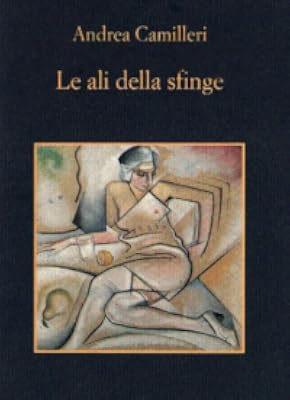
"Things are not going well for Inspector Salvo Montalbano. His relationship with Livia is once again on the rocks, and, acutely aware of his age, he is beginning to grow weary of the endless violence he encounters. Then a young woman is found dead, her face half shot off, and there is no hint of her identity except a tattoo of a sphinx moth. The tattoo links her to three similarly marked girls, all victims of the underworld sex trade, who have been rescued from the Mafia night-club circuit show more by a prominent Catholic charity. The problem is that Montalbano's inquiries elicit an outcry from the Church--and the three other girls are all missing"--Publisher's description. show lessTags
Recommendations









Member Reviews
Like his lady love, Livia, I've taken a fairly lengthy break from Inspector Montalbano, but unlike her, I had a great time with this reunion. This is one of the most entertaining entries in the series, from a standpoint of humor, and I thought the working-it-all-out part was done better than sometimes as well. Montalbano has to solve the murder of a young woman shot in the face, and dumped naked in a garbage pit, her only identifying mark a Sphinx moth tattooed on her shoulder blade. He discovers that several lovely young Russian women have recently been "imported" to the region by an association purportedly trying to save them from prostitution, and all of them had the same tattoo. A few red herrings (but not enough other fresh show more fish---too little cuisine featured in this one), and a faked kidnapping complicate his life, while he worries about whether to "have it out" with Livia and try to salvage their relationship. (As usual, I'm not at all sure she's worth the trouble, but it's not my call.) show less
With Montalbano's bitterness about his ever-increasing age, I have to admit that I've found the last two books in this series not as enjoyable as the rest. I'm from the school that believes getting older is better than its many alternatives, and it's best to put up and shut up. Montalbano did not attend the same school. Fortunately, he spends very little time grousing about the inevitable in this installment, so my enjoyment factor shot back up to its usual level.
Another element that can adversely affect my enjoyment is Montalbano's relationship with Livia. Too often, their squabbling has appeared to be squabbling for its own sake, but in The Wings of the Sphinx, their disagreements show that they both realize that they are at a very show more serious crossroads in their relationship.
One of the things I enjoy most about Camilleri's series is the economy of his writing. He packs food, travel, musings about life, death, aging, the government, as well as humor and an intriguing murder investigation into fewer pages than many writers today. His economy of style doesn't sacrifice plot or character either. And I can't say enough about Stephen Sartarelli's translation. It's clear and engaging yet still gives English readers the flavor of Sicilian speech. He also includes notes in the back that can enlighten us about various items mentioned in the story. (But it's possible to ignore them and not lose anything in the reading.)
The Wings of the Sphinx is another strong book in one of my favorite series. I look forward to more. show less
Another element that can adversely affect my enjoyment is Montalbano's relationship with Livia. Too often, their squabbling has appeared to be squabbling for its own sake, but in The Wings of the Sphinx, their disagreements show that they both realize that they are at a very show more serious crossroads in their relationship.
One of the things I enjoy most about Camilleri's series is the economy of his writing. He packs food, travel, musings about life, death, aging, the government, as well as humor and an intriguing murder investigation into fewer pages than many writers today. His economy of style doesn't sacrifice plot or character either. And I can't say enough about Stephen Sartarelli's translation. It's clear and engaging yet still gives English readers the flavor of Sicilian speech. He also includes notes in the back that can enlighten us about various items mentioned in the story. (But it's possible to ignore them and not lose anything in the reading.)
The Wings of the Sphinx is another strong book in one of my favorite series. I look forward to more. show less
When a young woman's body is found in a rubbish dump Inspector Silvio Montalbano and his team are at first baffled. Her face has been severely damaged so the only identifying feature they have to go on is a tattoo of what appears to be a butterfly on her shoulder and Montalbano uses his friends in the local media to publicise this and try to drum up some information. Eventually the team is led to a charitable organisation in which things are not always what they appear to be.
I read my first Camilleri novel only last year and while I liked it, I did not fall in love with its protagonist as so many other readers have done. However on my second meeting with this character and his environment I am well and truly smitten. This is, quite show more simply, a delightfully concise book full of humour and warmth and I revelled in its myriad of little joys that felt like they were hidden just for me.
Montalbano is once again worried about his advancing years but whereas this annoyed me a little in the previous book here I found it amusing and at times even poignant. The depiction of two Montalbanos inside his head who argue with each other about his motivations and behaviour is priceless (and relief-inducing because it's nice to know I'm not the only one who hears such voices). He is also experiencing some difficulties with his long-time love interest Livia but he doesn't let this get in the way of his investigating. Well not much anyway. In the end he wades through all these personal problems, stands up to the ever-present political and business interests who try to influence his work and even untangles all the wrongly transcribed messages from his devoted but fairly useless desk sergeant Catarella to solve the crime with intelligence and a dash of panache.
Much of the enjoyment in the book stems from the word play and language games with which the book is littered; a testament both to Camilleri and his translator Stephen Sartarelli. I cannot think of any aspect of translation that would be more difficult to get right than the range of both obvious and subtle humour on display here. But the book is not all laughter and lightness; alongside the almost slapstick moments such as a police department which can't afford petrol for its cars there are touching elements too like Montalbano's growing intolerance for the death he is confronted with in his work and on his television screen.
I read this book in not much more than a single sitting and enjoyed every minute of it. The implausible but nevertheless compelling set pieces, the seriousness with which Montalbano treats lunch and the brilliant depiction of local life and customs are a welcome treat. In the middle of a cold and gloomy winter you can't ask for much more than a book which puts a smile on your face for several days. show less
I read my first Camilleri novel only last year and while I liked it, I did not fall in love with its protagonist as so many other readers have done. However on my second meeting with this character and his environment I am well and truly smitten. This is, quite show more simply, a delightfully concise book full of humour and warmth and I revelled in its myriad of little joys that felt like they were hidden just for me.
Montalbano is once again worried about his advancing years but whereas this annoyed me a little in the previous book here I found it amusing and at times even poignant. The depiction of two Montalbanos inside his head who argue with each other about his motivations and behaviour is priceless (and relief-inducing because it's nice to know I'm not the only one who hears such voices). He is also experiencing some difficulties with his long-time love interest Livia but he doesn't let this get in the way of his investigating. Well not much anyway. In the end he wades through all these personal problems, stands up to the ever-present political and business interests who try to influence his work and even untangles all the wrongly transcribed messages from his devoted but fairly useless desk sergeant Catarella to solve the crime with intelligence and a dash of panache.
Much of the enjoyment in the book stems from the word play and language games with which the book is littered; a testament both to Camilleri and his translator Stephen Sartarelli. I cannot think of any aspect of translation that would be more difficult to get right than the range of both obvious and subtle humour on display here. But the book is not all laughter and lightness; alongside the almost slapstick moments such as a police department which can't afford petrol for its cars there are touching elements too like Montalbano's growing intolerance for the death he is confronted with in his work and on his television screen.
I read this book in not much more than a single sitting and enjoyed every minute of it. The implausible but nevertheless compelling set pieces, the seriousness with which Montalbano treats lunch and the brilliant depiction of local life and customs are a welcome treat. In the middle of a cold and gloomy winter you can't ask for much more than a book which puts a smile on your face for several days. show less
Montalbano is feeling his age. He is 56, beginning to ponder his own mortality, experiencing some minor physical reminders of the need to slow down, questioning his long-term relationship and failure to seal the commitment with Livia, and now must solve the murder of a young girl whose only identifying mark is a butterfly tattooed on her left shoulder. When he learns the mark is not a butterfly but a specific type of moth, he is able to trace the young lady to a mysterious and secretive organization connected with the Catholic Church. Here is where Montalbano shines. He is not afraid to take on those in power, even when told to back down by his superiors. This one isn't as light as some of the others, but it's a well-plotted mystery show more with many complex characters holding it together. show less
Montalbano and Livia are having distance relationship problems as usual, but it's getting worse. He's disillusioned with his job. The body of a young woman is recovered from the trash dump. Half her face has been blown off. She has one distinguishing feature--a butterfly-like tattoo--which may help identify her. The team has a feeling she may be an immigrant. When the body fails to match that of any known missing person, they begin investigating immigrants who may have arrived illegally. The butterfly-like moth tattoo is a clue and he uncovers other women with the same tattoo--four including the deceased woman--but they are all missing as well. It takes some careful police work and missed meetings with Livia to uncover the perpetrator. show more I listened to the audio book. Not the best in the series, but probably not the worst either. show less
Oh good old Inspector Montalbano. Just the man for a good old holiday read. Irascible, greedy, but highly intelliigent and with a great team of side-kicks: fellow-detective Mimi, consciencious gopher Fazio, Montalbano's adventures are real page-turners. This time we have the murder of an Eastern European girl, a kidnapping that wasn't a kidnapping, and a shady lot of successful businessmen masquerading as devout and caring Catholics. A good yarn, but one which Montalbano's long-suffering girlfriend Livia does not seem to appreciate....
Just goes to show that policework is little changed regardless of country. And SOME policemen are too creative by half! This is a good thing!
Inspector Montalbano works for a jurisdiction in Sicily and knows how to sidestep both his superior and nearby jurisdictions. He also knows how to script and act (with the able assist of his fellows) to get to the bottom of things. And those fellows! Each is useful in his own way, including the one who is comic relief by way of indecipherable handwriting and total mangling of names.
The initial crime is murder, but there are many more woven into this tale. Like Colombo, all is solved in the end, except, perhaps, in his personal life. The laughs are low key, but still make for laugh-out-loud moments. show more The publisher's summary will give an overview without spoilers. I plan to begin with #1 and devour this whole series!
Many thanks to Stephen Sartarelli for making this book and series available to English speakers!
I like the the way Grover Gardner interprets the characters. Italian speakers may not approve of a Brooklyn accent for one of the police, but it provides North Americans with added fun. show less
Inspector Montalbano works for a jurisdiction in Sicily and knows how to sidestep both his superior and nearby jurisdictions. He also knows how to script and act (with the able assist of his fellows) to get to the bottom of things. And those fellows! Each is useful in his own way, including the one who is comic relief by way of indecipherable handwriting and total mangling of names.
The initial crime is murder, but there are many more woven into this tale. Like Colombo, all is solved in the end, except, perhaps, in his personal life. The laughs are low key, but still make for laugh-out-loud moments. show more The publisher's summary will give an overview without spoilers. I plan to begin with #1 and devour this whole series!
Many thanks to Stephen Sartarelli for making this book and series available to English speakers!
I like the the way Grover Gardner interprets the characters. Italian speakers may not approve of a Brooklyn accent for one of the police, but it provides North Americans with added fun. show less
Members
- Recently Added By
Lists

Italian Literature
558 works; 43 members
Author Information

426+ Works 42,068 Members
Andrea Camilleri lives in Italy. Andrea Camilleri was born in Porto Empedocle, Sicily on September 6, 1925. He began his studies at Faculty of Literature in 1944 but never finished. He started to publish poems and short stories. He studied stage and film direction at the Silvio D'Amico Academy of Dramatic Arts from 1948 to 1950 and soon began work show more as a director and screen writer. Andrea Camilleri worked on several TV productions such as Inspector Maigret wirh Gino Cervi. In 1971 he returned to the Academy of Dramatic Arts holding the chair of Movie Direction and keeping it for 20 years. In 1978 he wrote his first novel - The Way Things Go which was followed by A Thread of Smoke in 1980. In 1992 he published The Hunting Season which turned out to be a best seller. In 1994 Andrea Camilleri published the first in a long series of novels - The Shape of Water which features the character Inspector Montalbano - a ficticious Sicilian detective in the police force of Vigata, an imaginary Sicilian town. The TV adaption of this book took off in popularity and Andrea Camilleri's home town was renamed Porto Empedocle Vigata. In 1998 he won the Nino Mortoglio International Book Award. He received an honorary degree from the University of Pisa in 2005. Camilleri has worked as a television and theater director, as well as a screenwriter. In 1978 he wrote his first novel, Il Corso delle Cose. The Montalbano series, featuring the Sicilian detective Inspector Montalbano, is Camilleri's most famous work of fiction, and it has been adapted into a television series. Camilleri had written a few historical novels when, in 1994, he wrote The Shape of Water, the first book starring a Sicilian detective based in the fictional town of Vigata. Camilleri won the Nino Martoglio International Book Award in 1998. He is considered to be one of Italy's greatest contemporary writers. Andrea Camilleri passed away on July 17, 2019 at the age of 93. (Bowker Author Biography) show less
Some Editions
Awards and Honors
Series

Belongs to Publisher Series
Work Relationships
Is contained in
Common Knowledge
- Canonical title
- The Wings of the Sphinx
- Original title
- Le ali della sfinge
- Original publication date
- 2006-11-09
- People/Characters
- Salvo Montalbano; Mimi Augello; Fazio; Catarella; Livia
- Important places
- Vigàta, Sicilia, Italia
- First words
- Whatever happened to those early mornings when, upon awakening, for no reason, he would feel a sort of current of pure happiness running through him?
- Last words
- (Click to show. Warning: May contain spoilers.)And so began a great big squabble, just like old times.
Classifications
- Genres
- Fiction and Literature, Mystery
- DDC/MDS
- 853.914 — Literature & rhetoric Italian, Romanian & related literatures Italian fiction 1900- 20th Century 1945-1999
- LCC
- PQ4863 .A3894 .A65 — Language and Literature French, Italian, Spanish and Portuguese literatures Italian literature Individual authors, 1961-2000
- BISAC
Statistics
- Members
- 1,063
- Popularity
- 24,250
- Reviews
- 45
- Rating
- (3.67)
- Languages
- 9 — Catalan, Dutch, English, French, German, Greek, Italian, Polish, Spanish
- Media
- Paper, Audiobook, Ebook
- ISBNs
- 42
- ASINs
- 15