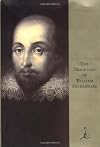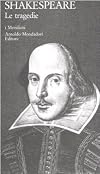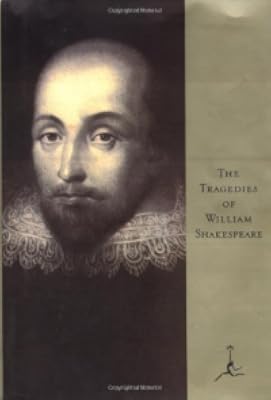
The Tragedies
by William Shakespeare
Teatro completo di William Shakespeare [Mondadori] (Collections and Selections — 4)
On This Page
Description
A collection containing Antony & Cleopatra, Coriolanus, Cymbeline, Julius Caesar, King Lear, Macbeth, Othello, Romeo and Juliet, The Life of Timon of Athens, The tragedy of Titus Andronicus, and The History of Troilus and Cressida.Tags
Recommendations














Member Reviews
This is an assemblage of the Bard's tragedies, convenient and collected. I do not like that there are no notes or comments whatsoever. Their absence does make the book smaller and more physically managable. But I miss the annotation which makes Shakespeare a richer experience.
M100 General Works
Currently in King Lear...
ROMEU E JULIETA
MACBETH
HAMLET, PRÍNCIPE DA DINAMARCA
OTELO, O MOURO DE VENEZA
MACBETH
HAMLET, PRÍNCIPE DA DINAMARCA
OTELO, O MOURO DE VENEZA
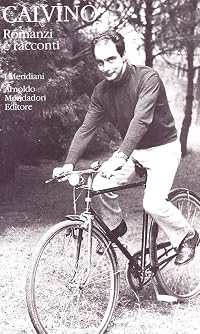
Il teatro non è mai stato una delle mie letture preferite. Un testo scritto esplicitamente per la recitazione risulta a volte poco coinvolgente quando viene letto, dato che l’azione e la riflessione vengono sempre ‘coperte’ dal dialogo. Inoltre, le rappresentazioni già viste delle stesse opere finiscono per incidere sull’immaginario del lettore ben più di quanto faccia un film tratto da un romanzo. Però, a furia di rimandare,, al Bardo non si poteva più dire di no e, neanche a dirlo, ne valeva ampiamente la pena. Il volume – un Meridiano comprato in offerta in edicola a 2,90 – contiene quattro tragedie: “Romeo e Giulietta”, “Otello”, “Re Lear” e “Macbeth”: oltre mille pagine, con testo a fronte, di show more passione e di morte che avvincono dalla prima all’ultima riga. Non scopro certo io la grande capacità dell’autore di scandagliare l’animo umano e di costruire storie profondamente rivelatrici pur rispettando l’esigenza di tener desto l’interesse dello spettatore, impresa che ai suoi tempi era anche più difficile di ora. Delle quattro, “Re Lear” pare essere quella che più patisce la pagina scritta – forse per i numerosi personaggi, forse per la varietà della ambientazioni – mentre la mia preferenza va ad “Otello”: innanzitutto per la figura di Iago e poi per l’incredibile potenza dell’ultimo atto. Come avrebbe detto un altro poeta non da poco: se non piangi, di che pianger suoli? show less
Oct 8, 2014Italian
Members
- Recently Added By
Lists

Philip Ward's Lifetime Reading Plan
592 works; 22 members

CCE 100 Great Books List
145 works; 8 members

Literary Works Read in College
316 works; 15 members
Author Information

6,179+ Works 444,373 Members
William Shakespeare, 1564 - 1616 Although there are many myths and mysteries surrounding William Shakespeare, a great deal is actually known about his life. He was born in Stratford-Upon-Avon, son of John Shakespeare, a prosperous merchant and local politician and Mary Arden, who had the wealth to send their oldest son to Stratford Grammar School. show more At 18, Shakespeare married Anne Hathaway, the 27-year-old daughter of a local farmer, and they had their first daughter six months later. He probably developed an interest in theatre by watching plays performed by traveling players in Stratford while still in his youth. Some time before 1592, he left his family to take up residence in London, where he began acting and writing plays and poetry. By 1594 Shakespeare had become a member and part owner of an acting company called The Lord Chamberlain's Men, where he soon became the company's principal playwright. His plays enjoyed great popularity and high critical acclaim in the newly built Globe Theatre. It was through his popularity that the troupe gained the attention of the new king, James I, who appointed them the King's Players in 1603. Before retiring to Stratford in 1613, after the Globe burned down, he wrote more than three dozen plays (that we are sure of) and more than 150 sonnets. He was celebrated by Ben Jonson, one of the leading playwrights of the day, as a writer who would be "not for an age, but for all time," a prediction that has proved to be true. Today, Shakespeare towers over all other English writers and has few rivals in any language. His genius and creativity continue to astound scholars, and his plays continue to delight audiences. Many have served as the basis for operas, ballets, musical compositions, and films. While Jonson and other writers labored over their plays, Shakespeare seems to have had the ability to turn out work of exceptionally high caliber at an amazing speed. At the height of his career, he wrote an average of two plays a year as well as dozens of poems, songs, and possibly even verses for tombstones and heraldic shields, all while he continued to act in the plays performed by the Lord Chamberlain's Men. This staggering output is even more impressive when one considers its variety. Except for the English history plays, he never wrote the same kind of play twice. He seems to have had a good deal of fun in trying his hand at every kind of play. Shakespeare wrote 154 sonnets, all published on 1609, most of which were dedicated to his patron Henry Wriothsley, The Earl of Southhampton. He also wrote 13 comedies, 13 histories, 6 tragedies, and 4 tragecomedies. He died at Stratford-upon-Avon April 23, 1616, and was buried two days later on the grounds of Holy Trinity Church in Stratford. His cause of death was unknown, but it is surmised that he knew he was dying. (Bowker Author Biography) show less
Some Editions
Awards and Honors
Awards
Notable Lists
Series

Belongs to Publisher Series
Work Relationships
Contains
Common Knowledge
- Canonical title
- The Tragedies
- Alternate titles*
- Romeo e Giulietta; Otello; Re Lear; Macbeth
- First words
- SATURNINUS: Noble patricians, patrons of my right, / Defend the justice of my cause with arms.
Hamlet: Bernardo: Who's there?
Macbeth: Witch 1: When shall we three meet again in thunder, lightning, or in rain?
Othello: Roderigo: Tush, never tell me; I take it much unkindly that thou, Iago, who hast had my purse a... (show all)s if the strings were thine, shouldst know of this,--
King Lear: Earl of Kent: I thought the king had more affected the Duke of Albany than Cornwall. - Last words
- (Click to show. Warning: May contain spoilers.)[AUFIDIUS:] Assist.
(Click to show. Warning: May contain spoilers.)Hamlet: Fortinbras: Go, bid the soldiers shoot.
Macbeth: Malcolm: So, thanks to all at once and to each, whom we invite to see us crown'd at Scone.
Othello: Lodovico: Myself will straight aboard, and to the state this heavy act with heavy heart relate.
King Lear: Edgar: The oldest hath borne most: we that are young shall never see so much, nor live so long. - Original language*
- English
- Disambiguation notice
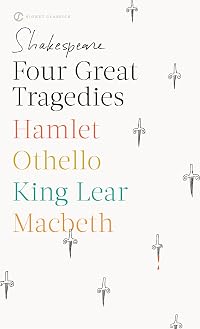
- This edition contains Romeo and Juliet, Othello, King Lear and Macbeth. Please do not combine with editions that contain other plays.
*Some information comes from Common Knowledge in other languages. Click "Edit" for more information.
Classifications
Statistics
- Members
- 944
- Popularity
- 28,294
- Reviews
- 14
- Rating
- (4.48)
- Languages
- 10 — Dutch, English, Finnish, French, German, Italian, Polish, Portuguese, Spanish, Swedish
- Media
- Paper, Ebook
- ISBNs
- 53
- ASINs
- 49