On This Page
Description
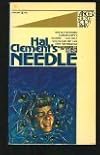
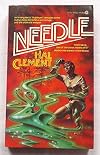
A manhunt within a man. The hunter from space's depths chose Robert Kinncaid as his "host" and invaded his body, controlled his thoughts, and began the search. The Quarry was lurking in another human being somewhere. It was like searching for a needle in a haystack- a needle that carried death and destruction.Tags
Recommendations
















Member Reviews
I picked this up (along with the sequel) in the Gateway SF sale last year, having had these in paperback for many years. Clement was noted for writing SF that was completely hard science-based and firmly rooted in the plausible. This book (and the sequel) are unusual in that they are set on Earth and are near future rather than an alien world and far future. It was originally published in 1950 and reads very much like it’s set in that era.
Both an alien hunter and the criminal of his species that it is pursuing crash land on Earth. The story is written from the viewpoint of the alien and details his effort to survive and to fulfil his mission despite being marooned with none of his advanced technology.
The twist is that the alien show more species are protoplasmic lumps that spend most of their time in symbiosis with other species, generally (but not invariably) intelligent. The Hunter enters into symbiosis with a 15-year old boy, Robert Kinnaird, whose parents live on a tropical island producing bio-oils.
While a great read, there are a number of problems:
1. No female characters. The only females mentioned are Bob’s mother, the sisters of another character, and the nurse at Bob’s boarding school back in the US.
2. Technology is rooted in the 1950s, so slide rules not calculators. However, the bio-oil is produced by specially-bred bacteria.
3. Although there is a school on the island, Bob attends boarding school. It’s possible this is to do with Bob’s father being in a senior role on the island.
Recommended, but with reservations. (Please also see the review on the sequel - Through the Eye of a Needle.) show less
Both an alien hunter and the criminal of his species that it is pursuing crash land on Earth. The story is written from the viewpoint of the alien and details his effort to survive and to fulfil his mission despite being marooned with none of his advanced technology.
The twist is that the alien show more species are protoplasmic lumps that spend most of their time in symbiosis with other species, generally (but not invariably) intelligent. The Hunter enters into symbiosis with a 15-year old boy, Robert Kinnaird, whose parents live on a tropical island producing bio-oils.
While a great read, there are a number of problems:
1. No female characters. The only females mentioned are Bob’s mother, the sisters of another character, and the nurse at Bob’s boarding school back in the US.
2. Technology is rooted in the 1950s, so slide rules not calculators. However, the bio-oil is produced by specially-bred bacteria.
3. Although there is a school on the island, Bob attends boarding school. It’s possible this is to do with Bob’s father being in a senior role on the island.
Recommended, but with reservations. (Please also see the review on the sequel - Through the Eye of a Needle.) show less
Clement’s later novels included females because people had pointed out to him that his novels had no females in them. To be fair, his work is not ardently sexist; it was just often focused on a group of scientists going to an alien planet to study the aliens ... and at the time Clement was writing, "group of scientists" largely meant "group of male scientists". There are female characters in “Iceworld”, and also in “Needle”, but those are set on Earth (with the aliens visiting us), where a complete absence of female characters would be a bit glaring. I think 'Needle' would be an interesting book to make a film from ... and (spoiler alert) given that the aliens are just amorphous blobs that live inside the body of a human host, show more it wouldn't be that expensive to make. If it had been the point of the book, a space-mission with fewer than 40% female crew would have been a different story and, concomitantly, much longer if added to the voyage to Mesklin. The humans are there as a backdrop for the Mesklinites and have to be as schematic as they are to fit the word-count. A space-mission with a few women would have been a good premise for a story (see the cover-story for that first issue of 'Universe' I mentioned in a post a while back) but akin to something like a woman accompanying Shackleton to the Pole. Who knows how many stories like that were spiked because of John W. Campbell's notoriously prissy secretary?
On the other hand, "Through the Eye of the Needle" is, if anything, more filmic than the first book. Well, the hero of “Needle” had a mother, though she only got a bit part.
But this wasn't unique to Clement. Eric Frank Russell was much the same, though in racial matters he was quite advanced. In Arthur C. Clarke's “Earthlight” the hero's wife is mentioned a few times, but never appears on stage. It was much the same with Verne and Wells, where Weena in “The Time Machine” is the only female character I can think of.
NB: I always enjoyed the SF of Hal Clement. Then someone pointed out to me - after I had read a few of his novels without noticing it - that his novels contained no female characters at all. Untrue. 'Noise' and 'Still River' off the top of my head. And the male pronouns applied to Barlennon and 'his' crew by Lackland/the narrator might not apply. I wonder why “Mission of Gravity” hasn't been optioned by Pixar. Admittedly Barlennon's a bit like Mr. Krabs from 'Spongebob' but maybe a character who communicates with farts is a bit advanced for Disney's shareholders.
SF = Speculative Fiction. show less
On the other hand, "Through the Eye of the Needle" is, if anything, more filmic than the first book. Well, the hero of “Needle” had a mother, though she only got a bit part.
But this wasn't unique to Clement. Eric Frank Russell was much the same, though in racial matters he was quite advanced. In Arthur C. Clarke's “Earthlight” the hero's wife is mentioned a few times, but never appears on stage. It was much the same with Verne and Wells, where Weena in “The Time Machine” is the only female character I can think of.
NB: I always enjoyed the SF of Hal Clement. Then someone pointed out to me - after I had read a few of his novels without noticing it - that his novels contained no female characters at all. Untrue. 'Noise' and 'Still River' off the top of my head. And the male pronouns applied to Barlennon and 'his' crew by Lackland/the narrator might not apply. I wonder why “Mission of Gravity” hasn't been optioned by Pixar. Admittedly Barlennon's a bit like Mr. Krabs from 'Spongebob' but maybe a character who communicates with farts is a bit advanced for Disney's shareholders.
SF = Speculative Fiction. show less
The Hunter, a 4 lb blob of jelly, is pursuing a criminal fugitive when the space capsules that carry them crash off the coast of a small Pacific island, population in the low 100s. With its symbiotic host killed in the crash, the Hunter finds a new home in the body of teenager Bob, who is napping on the beach with his friends, relaxing before a plane trip across ocean and continent to boarding school. The Hunter can’t complete its job away from the island, so establishes communication by manipulating muscles and nerves, which Bob feels as symptoms of mysterious illness. The school doctor sends him home. Together the pair search for the fugitive, who is almost certainly in the body of another islander, possibly one of Bob’s friends. show more The Hunter is composed of small cells evolved from a virus, and resides between the larger cells of its host, able to sense and heal damage under the primary rule: do not harm the host. The fugitive is a similar organism who operates by different rules. Most of the action revolves around Bob and his friends, who roam the island by bicycle and boat, more freely that might feel comfortable to the modern parent. This is the 1940s. Dad is an engineer in the island economy, constructing the culture tanks where germs consume garbage to produce oil. Mom makes sandwiches on the periphery. It’s squeaky clean, with nice polite helpful people, and no seriously ominous tone because it’s never quite clear what the consequences might be if the fugitive is allowed to persist. Dialogue is stilted; the Hunter is grammatically formal, Bob not much less so, even among friends. Diagrams could be drawn from the descriptions, measurements included (the island shape and arrangement of natural and manufactured features, a wound precisely oriented and located in bone and muscle), which is rather sweet and geeky but sometimes tedious. Clues are dropped, the island doctor is enlisted (patient confidentiality seems not to be a thing), observations are made. The search is more methodical than exciting. And yet, the earnest cooperation of host and symbiote is appealing. I wished for success, and I’m curious to read the sequel, written nearly 30 years later.
(read 1 Jan 2013) show less
(read 1 Jan 2013) show less
Not what I expected. I expected intricate descriptions (from the aliens’ point of view) of chases through the fleshy corridors of the human body. Instead I got a rather (at least in terms of style and tone) conventional mystery but a satisfying one. I liked Clement’s breaking of the usual parasite-mind control plot and the fact that neither alien had that much physical power (though a fair amount of invulnerability). The problems of interspecies communication were well done. The novel had a pleasant wry humor about it though the dialogue was sometimes stilted. Clement managed to very well (and very concisely) portray the disgust that Hunter feels toward killer. I would have liked to know what Hunter and Rob did (presumbably that show more will be covered in the sequel). show less
Reading this oldie but goodie again after many years, what struck me most was that Clement depicted a group of 15 year old boys interested in nature, swimming, construction--everything but girls! A measure I think of how our culture has changed. This is that rare thing, a science fiction mystery.
One of the first completely non-anthropomorphic (and yet engagingly human) aliens in science fiction. A bit dated in terms of human society, but still a fun read of a detective story where neither the detective nor his quarry are human.
This is one of the first scifi books I read. I enjoyed it immensely then. I also read it to my sibs, who have mentioned it to me as adults . . .remembering it and being frightened and intrigued. Of course, this book is also part of the reason for one of them's irrational fear of jelly fish.
Members
- Recently Added By
Lists

The 5 Parsec Shelf
50 works; 7 members

Favorite Science Fiction
456 works; 218 members
Author Information

97+ Works 6,400 Members
Some Editions
Series

Belongs to Publisher Series
Work Relationships
Is contained in
Common Knowledge
- Canonical title
- Needle
- Original title
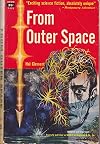
- From Outer Space
- Original publication date
- 1950
- First words
- Even on the earth shadows are frequently good places to hide.
- Last words
- (Click to show. Warning: May contain spoilers.)"If you can't do that, start toughening up that protective net of yours under my skin; I can tell you where it'll be needed most!"
Classifications
Statistics
- Members
- 502
- Popularity
- 60,133
- Reviews
- 10
- Rating
- (3.63)
- Languages
- English, German, Italian
- Media
- Paper, Audiobook, Ebook
- ISBNs
- 6
- UPCs
- 1
- ASINs
- 27