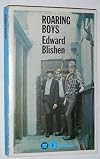
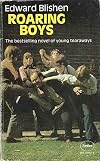
Roaring Boys
by Edward Blishen
On This Page
Tags
Recommendations
Member Recommendations
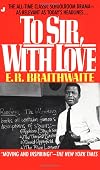


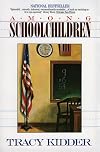
nessreader Blishen is immediately post WW2; Kidder is late 20th century. Blishen is UK inner-city; Kidder is US. Blishen is novelised autobiography; Kidder is writing about a stranger to him. Both deal with teaching deprived children, and both are clearly Capra fans.
Member Reviews
A semi-novelised autobiography about becoming a teacher in innercity London on demobilisation, just after WW2, when London was a patchwork of bomb sites and everything was very grey and hierarchical. The narrator is liberal and anxious and presents himself as an incipient doormat. Also it was the first year of his marriage, but that is in the background. It's largely about finding his feet as a teacher and learning to find a balance in controlling the classrooms. Interesting as a period piece. Blishen was a voice in the children's book establishment through till the late 80s.
Ratings
Members
- Recently Added By
Published Reviews
He then moved to a secondary modern school in Holloway Road, north London, where he wrote his first and best-known book, Roaring Boys (1955), suitably subtitled "A Schoolmaster's Agony". Blishen portrays himself as a martyr rather than the boastful messiah of other autobiographical classroom accounts published around that time. But behind the initial panic he never lost sight of the essential show more good- humour of the young tearaways he was in charge of. Gradually teacher and taught came to an accommodation satisfying to both. His account of those years is still the best book ever about life in the classroom. Lessons that did not work are described with a rueful honesty that makes descriptions of the more successful times to come all the more convincing.
It is appalling that young teachers can no longer buy and learn from Roaring Boys or its sequel This Right Soft Lot (1969) - both out of print; books whose fans stretched from Kingsley Amis to Neil Kinnock. These works are too precious to lose to the bleak operation of market forces; a case for some judicious spending of Arts Council literature funds if there ever was one. show less
It is appalling that young teachers can no longer buy and learn from Roaring Boys or its sequel This Right Soft Lot (1969) - both out of print; books whose fans stretched from Kingsley Amis to Neil Kinnock. These works are too precious to lose to the bleak operation of market forces; a case for some judicious spending of Arts Council literature funds if there ever was one. show less
added by KayCliff
Author Information
44+ Works 1,524 Members
Edward Blishen was born on April 29, 1920. He was an English author and broadcaster. He may be known best for the first of two children's novels based on Greek mythology, written with Leon Garfield, and illustrated by Charles Keeping. For The God Beneath the Sea, Blishen and Garfield won the 1970 Carnegie Medal from the Library Association, show more recognizing the year's best children's book in England. Blishen was born in Hertfordshire, England. He died on December 13, 1996. (Bowker Author Biography) show less
Common Knowledge
- First words
- I came to Stonehill Street in the middle of an autumn term.
- Quotations
- Rigby, of course, was a ‘juvenile delinquent’. The phrase was never far away from the Stonehill Street staff-room. To me it seems one of those phrases that, solidifying, becoming over-ready pieces of jargon, tend to destr... (show all)oy our sensitiveness to the facts they are meant to describe.
With my own class I felt an ease that demonstrated, I think, the degree to which many of these boys needed in their lives a stable adult figure.... I was not allowed to be a pedagogue. I was a perambulating encyclopaedia, an ... (show all)audience for jokes, a confidant, and ultimately an odd person who attached too much importance to merely academic matters.... Certainly one couldn't be a teacher unless one was a number of less portentous things besides.
"We'll write a play, sir," said Pratt. "What will it be about?" "The death of Julius Caesar, sir. Only not like the film. Better, sir."
The result of their work was Julius Caesar as the boys would like it to be when, earli... (show all)er in the year, the whole school sat through the film at the local cinema.... Then they had been decidedly restless, finding it all terribly slow, wondering why simple everyday acts of stabbing had to be embroidered with so much discussion.... Caesar died and so did everybody else but Pratt ... taking his stand by each of the corpses in turn, tapping them condescendingly on the head with his sword and saying, "This man was good," or "This man was a bighead", in baffled parody of Shakespeare's funeral speeches. - Last words
- (Click to show. Warning: May contain spoilers.)"I always used to say RUDDY arithmetic."
Classifications
Statistics
- Members
- 15
- Popularity
- 1,597,149
- Reviews
- 1
- Rating
- (3.63)
- Languages
- English
- Media
- Paper
- ISBNs
- 3
- ASINs
- 3