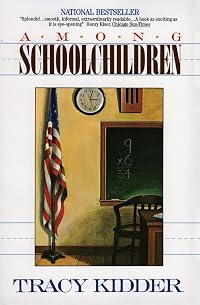
Among Schoolchildren
by Tracy Kidder
On This Page
Description
Mrs. Zajac is feisty, funny, and tough. She likes to call herself an "old-lady schoolteacher." (She is thirty-four.) Around Kelly School, she is famous for her discipline: "She is mean, bro," says one of her students. But children love her. And so will the reader of this extraordinarily moving book by the author of House and The Soul of a New Machine. Mrs. Zajac spends her working life "among schoolchildren." To some it might seem a small world, a world of spelling and recess and endless show more papers to correct. But we soon realize that Mrs. Zajac's classroom is big enough to house much of human nature. Her little room contains a distillate of some of the worst social problems of our time. Some of the children's young lives seem already stunted by physical and emotional deprivation. And some are full of precarious promise. As we come to know these children, we long for their salvation - and we come to understand, as if for the first time, the difference that a good teacher can make in a child's life, and in our society. Among Schoolchildren provides the most realistic account of American education ever written - on every page we encounter the precisely rendered truth for which Tracy Kidder is famous. But this is more than a book about education. It is about one woman's indomitability, about the joy of acting out of conscience and love. At bottom, its subject is nothing less than the struggle between good and evil. In Among Schoolchildren Tracy Kidder has written his most emotionally powerful, most memorable work. show lessTags
Recommendations



















Member Recommendations

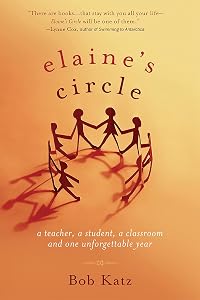
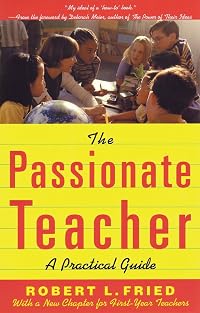
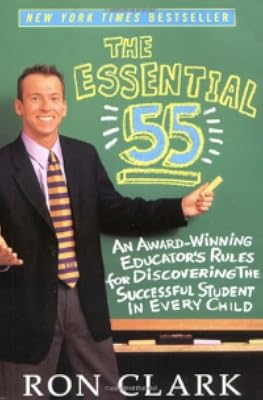
nessreader Blishen is immediately post WW2; Kidder is late 20th century. Blishen is UK inner-city; Kidder is US. Blishen is novelised autobiography; Kidder is writing about a stranger to him. Both deal with teaching deprived children, and both are clearly Capra fans.
Member Reviews
In his book Among Schoolchildren, Pulitzer Prize winner (for Soul of a New Machine) author Tracy Kidder manages once again to invisibly enter the lives of a community, this time a fifth grade class in the industrial city of Holyoke in western Massachusetts. The class is a mix of Irish, like 34 year old teacher Chris Zajac, Polish, like her husband, and many Puerto Rican children. In this 1990 book that feels like it was written yesterday, we spend a year with the class, and an eye-opening year it is. Kidder takes us into the community and the homes of Chris Zajac and some of her students. But the book mainly centers around the drama in her classroom. She has troubled children from troubled backgrounds, and has to balance the attention show more she gives them with the attention others in the class deserve. TV is a problem because of the sleep it steals; many of her sleep-deprived students struggle to pay attention. Parental involvement is both critical and scarce. The easiest predictor of classroom success is where at least one parent is helping, regardless of economic background.
"Mrs. Zajac" is known by the children both for being "mean" and also for being an excellent, desired teacher. Her "meanness" is fair, and directed only to their getting their work done and improving over the year. She tries to make a difference in all their lives, from the most troubled to the rare prize student. "Chris decided she hadn't understood the full extent of Judith's gifts. The girl had a huge English vocabulary and her parents didn't even speak the language. For Chris, there was no question now. This was the brightest child she had ever tried to teach."
At stupidly low pay ("America has never really tried to make teaching an attractive lifetime occupation"), Chris is heroic in her efforts to reach her kids. She sees the absurdity of some of what they are asked to do. "Put twenty or more children of roughly the same age in a little room, confine them to desks, make them wait in lines, make them behave. It is as if a secret committee, now lost to history, had made a study of children and, having figured out what the greatest number were least disposed to do, declared that all of them should do it." Nonetheless, she works hard to draw out their best effort, making them repeat sub-par homework, and resorting to various punishments for those who refuse to do the work, including a trip to the principal when necessary. Meanwhile she is cajoling them, joking with them, and trying every trick she can think of to get them to learn and improve. At one point she tells the class, "I corrected those papers last night. Mrs. Zajac almost took the gas pipe."
Her remarkable skill becomes clear when her bright and personable teacher's assistant, from a nearby college, temporarily takes over and struggles mightily to keep the kids in order, much less teach them. A science fair amplifies the differences between those kids whose parents help and those who experience only absence and disregard at home. One troubled boy sobs alone in an empty classroom and won't join in, because the bulb in his electricity project has broken and there's no one to help him. Chris at first thinks he has ducked work again, and then realizes the true story. She quickly brings him to join with the others and he recovers. She finds it all unfair for those lacking parental help, and vows to convince the principal to change it.
A reader is struck by the sheer challenge of maintaining order, and then of bringing kids with diverse inner lives from diverse backgrounds into an appreciation of learning, She has several students who expect little or nothing of themselves in a classroom. "A good teacher can give a child at least a chance to feel, 'She thinks I'm worth something. Maybe I am.' . . . It {is} easy to imagine unseen webs of malevolent conspiracy in the world . . . But there is also an innocence that conspires to hold humanity together, and it is made of people who can never fully know the good that they have done." This is a fascinating ride with a talented teacher doing such good, managing in large part to overcome the effects from outside the school, over which she has at best little control.
Edit | More show less
"Mrs. Zajac" is known by the children both for being "mean" and also for being an excellent, desired teacher. Her "meanness" is fair, and directed only to their getting their work done and improving over the year. She tries to make a difference in all their lives, from the most troubled to the rare prize student. "Chris decided she hadn't understood the full extent of Judith's gifts. The girl had a huge English vocabulary and her parents didn't even speak the language. For Chris, there was no question now. This was the brightest child she had ever tried to teach."
At stupidly low pay ("America has never really tried to make teaching an attractive lifetime occupation"), Chris is heroic in her efforts to reach her kids. She sees the absurdity of some of what they are asked to do. "Put twenty or more children of roughly the same age in a little room, confine them to desks, make them wait in lines, make them behave. It is as if a secret committee, now lost to history, had made a study of children and, having figured out what the greatest number were least disposed to do, declared that all of them should do it." Nonetheless, she works hard to draw out their best effort, making them repeat sub-par homework, and resorting to various punishments for those who refuse to do the work, including a trip to the principal when necessary. Meanwhile she is cajoling them, joking with them, and trying every trick she can think of to get them to learn and improve. At one point she tells the class, "I corrected those papers last night. Mrs. Zajac almost took the gas pipe."
Her remarkable skill becomes clear when her bright and personable teacher's assistant, from a nearby college, temporarily takes over and struggles mightily to keep the kids in order, much less teach them. A science fair amplifies the differences between those kids whose parents help and those who experience only absence and disregard at home. One troubled boy sobs alone in an empty classroom and won't join in, because the bulb in his electricity project has broken and there's no one to help him. Chris at first thinks he has ducked work again, and then realizes the true story. She quickly brings him to join with the others and he recovers. She finds it all unfair for those lacking parental help, and vows to convince the principal to change it.
A reader is struck by the sheer challenge of maintaining order, and then of bringing kids with diverse inner lives from diverse backgrounds into an appreciation of learning, She has several students who expect little or nothing of themselves in a classroom. "A good teacher can give a child at least a chance to feel, 'She thinks I'm worth something. Maybe I am.' . . . It {is} easy to imagine unseen webs of malevolent conspiracy in the world . . . But there is also an innocence that conspires to hold humanity together, and it is made of people who can never fully know the good that they have done." This is a fascinating ride with a talented teacher doing such good, managing in large part to overcome the effects from outside the school, over which she has at best little control.
Edit | More show less
Near the end of a year, a teacher can’t help facing the fact that there’s a lot she hoped to do and hasn’t done, and now probably never will. It is like growing old, but for teachers old age arrives every year.
I pulled this out after Kidder passed away in March. Like his [Old Friends] (which was set in a nursing home), it’s a year-long documentary, this one with him embedded in a late-1980s fifth-grade, lower-income, public-school classroom in a declining Massachusetts industrial town. His main focus is the teacher and her students in the classroom, but he also examines the context -- home life, public education and public policy. Here again, he’s open-eyed and compassionate and always backstage.
I pulled this out after Kidder passed away in March. Like his [Old Friends] (which was set in a nursing home), it’s a year-long documentary, this one with him embedded in a late-1980s fifth-grade, lower-income, public-school classroom in a declining Massachusetts industrial town. His main focus is the teacher and her students in the classroom, but he also examines the context -- home life, public education and public policy. Here again, he’s open-eyed and compassionate and always backstage.
I’ve read several Tracy Kidder books over the years starting with his Pulitzer winner “Soul of a New Machine.” In fact, that’s why I read this book. I’m a retired teacher who spent 40 years in the high school classroom, and I don’t normally read books on education now that my career is over, but since Kidder wrote it, I made an exception. I knew that the book would be dated and it really is. For example, there is no mention of technology since there was little in schools back in the late ‘80s. Some things, however, never change. Great teachers like Chris Zajac are great teachers whether it’s 1989 or 2021. Kidder does such of good job of being the quintessential fly on the wall. He obviously met with Chris’ students’ show more parents either at the same time she did or separately on his own. He even went to Puerto Rico to better understand Chris’ Puerto Rican students. Now, that’s research. I enjoyed the book and would recommend it for any teacher looking for a model of a true master teacher. show less
A very sympathetic look at an elementary teacher’s year, with asides relating her experiences to the development of education in the US. While Kidder doesn’t touch on some of the more radical critiques, the difficulties and absurdities of our educational system come as no surprise to anyone who has been paying attention to the news. Holyoke, MA is not unique in its poverty-stricken neighborhoods, where children’s exposure to violence and neglect outside of school affects their ability to focus and learn, and the best efforts of teachers are often hampered by disruptive students. The majority of the book reads like a novel, as Mrs. Zajac interacts with her students. There is one quote that I want to keep from this book, referring show more to good teachers who may sometimes despair of the effectiveness of their work but relevant to all who try to improve society: “Many people find it easy to imagine unseen webs of malevolent conspiracy in the world, and they are not always wrong. But there is also an innocence that conspires to hold humanity together, and it is made of people who can never fully know the good that they have done.” show less
I love Tracy Kidder's way of sharing a subject. With this book, much like his "House," he enters into the setting so thoroughly that he apparently becomes a piece of the furniture, or at least a piece of artwork on longterm loan. He helps the reader understand the reality of teaching a diverse classroom in a ramshackled part of an industrial town that is not aging well. We get the highs and the lows as Kidder shadows veteran teacher Kris Zajak and her class of 5th graders. I don't think my explanation does Kidders work justice - daily life made as interesting as a novel. I highly recommend.
Bookcrossing: http://www.bookcrossing.com/journal/5457126/
Bookcrossing: http://www.bookcrossing.com/journal/5457126/
This is the nonfiction account of one year in a fifth grade classroom. The author chronicles Chris Zajac’s classroom from the beginning of the fall term until the end of the school year the following summer. Kidder writes of the problem children, those who rise above, those with difficult parents, etc.
Chris Zajac is a dedicated educator, a disciplinarian, a dream maker and a frustrated employee. She is not a miracle worker, but she is devoted to her students. The troubled students make it hard on everyone in the whole class and their presence is so draining on the teacher. Zajac and the other teachers in the school struggle between trying to reach those students and knowing that they are making it harder for the other students to show more learn.
One thing I really learned from this book is that being a teacher is a hard and thankless job. There are too many students, not enough teachers, not enough time in the day, etc. A teacher’s job is never really done. At the end of the say they still have to grade papers and work on lesson plans. Even when that’s done, good teachers are often still worrying about their students. I don’t have the patience for such a difficult job, but I have endless admiration for those who do.
BOTTOM LINE: If you’ve ever wondered what the life of a teacher might be like, this is the perfect way to find out. It’s a hard life, one that’s not often rewarding in the short term. Kidder’s profile is well done and I will definitely be checking out more of his work.
“She couldn't sort out her thoughts until she had turned them loose into the air.”
“You got to be realistic. If you want to dream, okay. If it comes true, it comes true. Beautiful. But tomorrow you got to go to work. That’s reality.”
“Some kids don’t know they want to learn until you put it in their heads that they do.”
“Many people find it easy to imagine unseen webs of malevolent conspiracy in the world, and they are not always wrong. But there is also an innocence that conspires to hold humanity together, and it is made of people who can never fully know the good that they have done.” show less
Chris Zajac is a dedicated educator, a disciplinarian, a dream maker and a frustrated employee. She is not a miracle worker, but she is devoted to her students. The troubled students make it hard on everyone in the whole class and their presence is so draining on the teacher. Zajac and the other teachers in the school struggle between trying to reach those students and knowing that they are making it harder for the other students to show more learn.
One thing I really learned from this book is that being a teacher is a hard and thankless job. There are too many students, not enough teachers, not enough time in the day, etc. A teacher’s job is never really done. At the end of the say they still have to grade papers and work on lesson plans. Even when that’s done, good teachers are often still worrying about their students. I don’t have the patience for such a difficult job, but I have endless admiration for those who do.
BOTTOM LINE: If you’ve ever wondered what the life of a teacher might be like, this is the perfect way to find out. It’s a hard life, one that’s not often rewarding in the short term. Kidder’s profile is well done and I will definitely be checking out more of his work.
“She couldn't sort out her thoughts until she had turned them loose into the air.”
“You got to be realistic. If you want to dream, okay. If it comes true, it comes true. Beautiful. But tomorrow you got to go to work. That’s reality.”
“Some kids don’t know they want to learn until you put it in their heads that they do.”
“Many people find it easy to imagine unseen webs of malevolent conspiracy in the world, and they are not always wrong. But there is also an innocence that conspires to hold humanity together, and it is made of people who can never fully know the good that they have done.” show less
Tracy Kidder's book follows Chris Zajac, a fifth grade teacher in a poor, racially-mixed school, through a school year. The story is pleasant but, after reading his Mountains Beyond Mountains, I was expecting a bit more.
The whole thing felt a bit flat—there were a lot of events but the author did not manage to make the people particularly real. We hear Mrs. Zajac's epigrams repeated endlessly, but we don't really get to know much about her as a person. What glimpses the author does provide into her character seem a trifle too saintly.
I didn't mind reading it but I wouldn't bother to recommend this.
The whole thing felt a bit flat—there were a lot of events but the author did not manage to make the people particularly real. We hear Mrs. Zajac's epigrams repeated endlessly, but we don't really get to know much about her as a person. What glimpses the author does provide into her character seem a trifle too saintly.
I didn't mind reading it but I wouldn't bother to recommend this.
Members
- Recently Added By
Lists

to get
244 works; 2 members
Author Information

14+ Works 14,883 Members
Tracy Kidder was educated at the University of Iowa and Harvard University. He served in the US Army in Vietnam. Kidder has garnered numerous literary awards including the Pulitzer Prize in General Non-Fiction and the National Book Award for General Nonfiction both in 1982. He has also been honored with the Robert F. Kennedy Book Award, 1990 and show more the Christopher Award, 1990. His publications include numerous nonfiction articles and short fiction for The Atlantic and other periodicals. Non-Fiction books include The Road to Yuba City, Doubleday, 1974; The Soul of a New Machine, Atlantic Monthly-Little Brown, 1981 for which he won a Pulitzer and a National Book Award; House, Houghton Mifflin, 1985; Old Friends, Houghton Mifflin, 1993; Home Town, Random House, 1999; Mountains Beyond Mountains, Random House, 2003; My Detachment, Random House, 2005; Strength in What Remains, Random House, 2009. (Bowker Author Biography) show less
Some Editions
Awards and Honors
Work Relationships
Is abridged in
Common Knowledge
- People/Characters
- Mrs. Zajac
- Important places
- Holyoke, Massachusetts, USA
- Dedication
- For Reine Marie Melanie Kidder, Syosset High School English Department, 1960-1981
- First words
- Mrs. Zajac wasn't born yesterday. She knows you didn't do your best work on this paper, Clarence.
- Quotations
- “Many people find it easy to imagine unseen webs of malevolent conspiracy in the world, and they are not always wrong. But there is also an innocence that conspires to hold humanity together, and it is made of people who c... (show all)an never fully know the good that they have done.”
Near the end of a year, a teacher can't help facing the fact that there's a lot she hoped to do and hasn't done, and now probably never will. It is like growing old, but for teachers old age arrives every year. - Last words
- (Click to show. Warning: May contain spoilers.)Again this year, some had needed more help than she could provide. There were many problems that she hadn't solved. But it wasn't for lack of trying. She hadn't given up. She had run out of time.
Classifications
- Genre
- Nonfiction
- DDC/MDS
- 372.11020973 — Society, government, & culture Education Primary education (Elementary education) Organization and activities in primary education Kindergarten teachers
- LCC
- LB1776 .K48 — Education Theory and practice of education Theory and practice of education Education and training of teachers and Professional aspects of teaching and school
- BISAC
Statistics
- Members
- 1,030
- Popularity
- 25,134
- Reviews
- 14
- Rating
- (3.81)
- Languages
- Dutch, English, Italian
- Media
- Paper, Audiobook, Ebook
- ISBNs
- 18
- ASINs
- 12