
Lisa Delpit
Author of Other People's Children: Cultural Conflict in the Classroom
About the Author
Lisa Delpit is an African American and a lifelong teacher who promotes the idea of having "visions of success for poor children and children of color." Her 1995 book, Other People's Children: Cultural Conflict in the Classroom, discusses how to better train teachers by using nine specific factors, show more among them understanding the brilliance of the children, recognizing and building on the children's strengths, using familiar metaphors and experiences from the children's world, and nurturing a sense of connection to a greater community, of which they are a part. Delpit's father owned a restaurant and her mother taught high school. Her parents set an example by providing free meals for local elementary school children who could not afford to buy lunch. This fostered in Delpit a commitment to helping others. Delpit was one of the first African Americans to attend desegregated Catholic schools in Louisiana. She also attended Antioch College in Ohio and Harvard University. She has worked at the University of Alaska, Morgan State University's Urban Institute for Urban Research, and Georgia State University, holding the Benjamin E. Mays Chair of Urban Educational Leadership. Delpit received a MacArthur Award for Outstanding Contribution to Education from the Harvard Graduate School of Education in 1993. (Bowker Author Biography) show less
Works by Lisa Delpit
"Multiplication Is for White People": Raising Expectations for Other Peoples Children (2012) 164 copies, 6 reviews
The Real Ebonics Debate : Power, Language, and the Education of African-American Children (1998) — Editor — 72 copies, 1 review
Quality Education as a Constitutional Right: Creating a Grassroots Movement to Transform Public Schools (2010) — Editor; Contributor — 22 copies
Tagged
Common Knowledge
- Birthdate
- 1952-05-23
- Gender
- female
- Education
- Antioch College (BS/Education)
Harvard Graduate School of Education (PhD/Curriculum, Instruction, and Research) - Awards and honors
- MacArthur Fellowship (1990)
- Nationality
- USA
- Birthplace
- Baton Rouge, Louisiana, USA
- Places of residence
- Baton Rouge, Louisiana, USA
- Associated Place (for map)
- Baton Rouge, Louisiana, USA
Members
Reviews
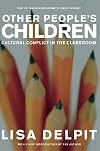
Despite our superficial multiculturalism, there is a dominant culture in our society - upper middle class, of European descent, and educated beyond high school, this is the ruling class of the United States.
This culture has some characteristics - an academic vocabulary, a form of social interaction, that guarantees an advantage in our school system.
There are children who are not raised in this dominant culture, Lisa Delpit's "Other People's Children" wrestles with how to educate them. show more Progressive teachers do not want to under mine the culture of the home by indoctrinating them in the dominant white culture. This means they will lack entry to the economic opportunity of dominant white culture.
Delpit is idealistic in thinking that teachers can negotiate this area between cultures to teach students the power of code switching. Her caveat is that having more teachers of color in schools makes this more likely to happen. show less
This culture has some characteristics - an academic vocabulary, a form of social interaction, that guarantees an advantage in our school system.
There are children who are not raised in this dominant culture, Lisa Delpit's "Other People's Children" wrestles with how to educate them. show more Progressive teachers do not want to under mine the culture of the home by indoctrinating them in the dominant white culture. This means they will lack entry to the economic opportunity of dominant white culture.
Delpit is idealistic in thinking that teachers can negotiate this area between cultures to teach students the power of code switching. Her caveat is that having more teachers of color in schools makes this more likely to happen. show less
"Multiplication Is for White People": Raising Expectations for Other People’s Children by Lisa Delpit
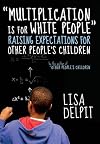
MacArthur Fellow and education professor Lisa Delpit (author of the seminal book Other People’s Children: Cultural Conflicts in the Classroom) takes on the “pedagogy of poverty” in this exploration of why education is still failing poor students of color. She charges that in spite of the fact that America has a black president,
“…we are far from a color-blind society, that African Americans are still devalued, stigmatized, and made invisible.”
In particular, she points to show more “microaggressions,” the term coined by Harvard researcher Chester Pierce, which refers to:
“Brief and commonplace daily verbal, behavioral, or environmental indignities, whether intentional or unintentional, that communicate hostile, derogatory, or negative racial slights and insults toward people of color.”
As Pierce observed, any one of these may not be of great consequence, but when added together over time create a deadly psychological assault.
Delpit provides numerous examples of children of color (including her own daughter) being discounted, discredited, and stereotyped in the classroom.
The author reminds us that research shows there is no achievement gap at birth. But as minority children endure year after year of this treatment, they begin to “disidentify” with school and education and may either protest by acting out, or withdraw by disengaging. As Delpit writes, “Disidentified students become aliens in the academic world.”
Part of the problem is that different socioeconomic classes and different ethnicities have quite different ways of expressing themselves and of learning. When white teachers encounter these differences in children of color, they very often infer the child is learning impaired or disruptive or incapable of learning, when this may not be the case at all. Most critically, the students and their innate capabilities (or lack thereof) are blamed for failures in achievement rather than a deficiency in the teachers.
Interestingly, Delpit reports that one unexpected and deleterious effect of the Brown v. Board of Education decision (desegregating the schools) was that a large number of black teachers and administrators lost their jobs and were replaced by whites (at the insistence of white parents). These new educators were not necessarily better qualified than those they replaced. But even many well-meaning and qualified white teachers went into these newly integrated classrooms with a view of themselves as the white “saviors” of the black children. There were two other bad results as well: one was that black students were less likely to see people “who looked like them” in positions of authority. Perhaps more importantly, these white teachers and principals had little understanding of the cultures and styles of learning of their students.
As a result, behaviors that may be overlooked in whites are disparaged and punished in blacks. (A study released in March 2014 by the Department of Education found that while black children represent 18 percent of preschool enrollment they make up 48 percent of preschool children who receive more than one out-of-school suspension.) Is it a matter of black students just being not as well behaved? Data is only beginning to be analyzed, but anecdotal evidence at least, as reported in "The Washington Post," suggests this is not the case.
What happens to those students who have become alienated from education? As one educator said, “the disenfranchised will either implode and destroy themselves or explode in our own front yards and most assured destroy us.” Do we really want to abandon all these children and create dangerous and expensive social problems rather than encouraging every child to reach his or her potential and contribute to society in a positive way? What must be done to change this pattern?
Delpit admits there are things educators cannot change, such as the level of poverty in a community, but asserts that blaming poverty is just an excuse for poor teaching. She identifies many examples of programs in blighted areas that experienced success when children were treated as if they could and would succeed. She proposes a formula for fostering excellence in urban classrooms that includes recognizing the inherent brilliance of poor, urban children and teaching them more content, not less; demanding critical thinking; providing children with emotional ego strength; and honoring and respecting the children’s home cultures, inter alia.
Unfortunately, recent education “reforms” with their emphasis on worksheets and test preparation make instituting these practices difficult. Even charter schools have started to weed their student populations in favor of less challenging students whose scores will generate more funding.
We must not give up, though, she urges. What is at stake is too important. It is only by continuing to push open dialogue on these issues (as she does with her books) that educators can honor their sacred trust to “fill our students’ hearts and minds with the potential for envisioning a future better than we ourselves can even imagine.” And that means filling all our students’ hearts and minds.
Discussion: Obviously the quality of American education is suffering in all socioeconomic groups. (See for example this article by Elizabeth Green, “Why Do Americans Stink at Math?”, an except from a new book on problems with teaching.) But middle and upper class white children, as members of the social majority, have opportunities and resources not available to poor children of color. Moreover, they have a more immediate acceptance and sense of comfort by how they are treated, which enables them to maintain a positive attitude and the expectation of success. This optimistic frame of mind is easier to maintain when one is not beaten down at every corner. Simply stated, those who think people of color are “oversensitive” have never gone through life as a person of color.
Evaluation: Anyone concerned about the quality of American education and the future of American society will find this book illuminating, as will anyone who contends that we in America have come to “the end of racism.” show less
“…we are far from a color-blind society, that African Americans are still devalued, stigmatized, and made invisible.”
In particular, she points to show more “microaggressions,” the term coined by Harvard researcher Chester Pierce, which refers to:
“Brief and commonplace daily verbal, behavioral, or environmental indignities, whether intentional or unintentional, that communicate hostile, derogatory, or negative racial slights and insults toward people of color.”
As Pierce observed, any one of these may not be of great consequence, but when added together over time create a deadly psychological assault.
Delpit provides numerous examples of children of color (including her own daughter) being discounted, discredited, and stereotyped in the classroom.
The author reminds us that research shows there is no achievement gap at birth. But as minority children endure year after year of this treatment, they begin to “disidentify” with school and education and may either protest by acting out, or withdraw by disengaging. As Delpit writes, “Disidentified students become aliens in the academic world.”
Part of the problem is that different socioeconomic classes and different ethnicities have quite different ways of expressing themselves and of learning. When white teachers encounter these differences in children of color, they very often infer the child is learning impaired or disruptive or incapable of learning, when this may not be the case at all. Most critically, the students and their innate capabilities (or lack thereof) are blamed for failures in achievement rather than a deficiency in the teachers.
Interestingly, Delpit reports that one unexpected and deleterious effect of the Brown v. Board of Education decision (desegregating the schools) was that a large number of black teachers and administrators lost their jobs and were replaced by whites (at the insistence of white parents). These new educators were not necessarily better qualified than those they replaced. But even many well-meaning and qualified white teachers went into these newly integrated classrooms with a view of themselves as the white “saviors” of the black children. There were two other bad results as well: one was that black students were less likely to see people “who looked like them” in positions of authority. Perhaps more importantly, these white teachers and principals had little understanding of the cultures and styles of learning of their students.
As a result, behaviors that may be overlooked in whites are disparaged and punished in blacks. (A study released in March 2014 by the Department of Education found that while black children represent 18 percent of preschool enrollment they make up 48 percent of preschool children who receive more than one out-of-school suspension.) Is it a matter of black students just being not as well behaved? Data is only beginning to be analyzed, but anecdotal evidence at least, as reported in "The Washington Post," suggests this is not the case.
What happens to those students who have become alienated from education? As one educator said, “the disenfranchised will either implode and destroy themselves or explode in our own front yards and most assured destroy us.” Do we really want to abandon all these children and create dangerous and expensive social problems rather than encouraging every child to reach his or her potential and contribute to society in a positive way? What must be done to change this pattern?
Delpit admits there are things educators cannot change, such as the level of poverty in a community, but asserts that blaming poverty is just an excuse for poor teaching. She identifies many examples of programs in blighted areas that experienced success when children were treated as if they could and would succeed. She proposes a formula for fostering excellence in urban classrooms that includes recognizing the inherent brilliance of poor, urban children and teaching them more content, not less; demanding critical thinking; providing children with emotional ego strength; and honoring and respecting the children’s home cultures, inter alia.
Unfortunately, recent education “reforms” with their emphasis on worksheets and test preparation make instituting these practices difficult. Even charter schools have started to weed their student populations in favor of less challenging students whose scores will generate more funding.
We must not give up, though, she urges. What is at stake is too important. It is only by continuing to push open dialogue on these issues (as she does with her books) that educators can honor their sacred trust to “fill our students’ hearts and minds with the potential for envisioning a future better than we ourselves can even imagine.” And that means filling all our students’ hearts and minds.
Discussion: Obviously the quality of American education is suffering in all socioeconomic groups. (See for example this article by Elizabeth Green, “Why Do Americans Stink at Math?”, an except from a new book on problems with teaching.) But middle and upper class white children, as members of the social majority, have opportunities and resources not available to poor children of color. Moreover, they have a more immediate acceptance and sense of comfort by how they are treated, which enables them to maintain a positive attitude and the expectation of success. This optimistic frame of mind is easier to maintain when one is not beaten down at every corner. Simply stated, those who think people of color are “oversensitive” have never gone through life as a person of color.
Evaluation: Anyone concerned about the quality of American education and the future of American society will find this book illuminating, as will anyone who contends that we in America have come to “the end of racism.” show less
This book is pretty much considered the vade mecum for “culturally responsive instruction,” i.e., teaching successfully across varied cultural and linguistic contexts.
Delpit addresses how best to handle not only the multitude of races and ethnicities in our increasingly diverse country, but also how to counteract “the great putrid underbelly of racism and classism in our nation...”
In her introduction to the updated 2006 edition of this book, she bemoans the way we have given up show more “the rich meaningful education of our children” in favor of decontextualized, fact-laden drills designed for the passing of tests, now necessary to ensure the continuation of funding. What about, she asks, the development of human beings? What about ensuring that those without power have a chance to succeed in society in spite of racism, privilege, and rules for success based on the culture of the upper and middle classes?
Delpit provides numerous anecdotes of teachers who consider children from less privileged homes to be dumb or disruptive when they are only displaying different styles of interacting and relating to material. Also, these kids may not have acquired the same language skills at home as did students from higher socioeconomic levels. These students then get ignored or reviled; disciplined; and shunted into losing tracks without ever having a fair chance.
What’s the answer? Delpit deplores the tendency for educators, even those who are purportedly “liberal,” to think they should decide the best way to teach “other people’s children.” Parents and educators of color are rarely consulted, and usually ignored if they do try to offer advice. She compares this situation to colonialism, and I don’t think she is unjustified.
She proposes that “we must open ourselves to learn from others with whom we may share little understanding” about what these students need. Teacher assessment should take into account that different methods may be optimal for such students. [As just one example, she sites studies showing that African-American children from low socioeconomic groups are more influenced by the need for connection than for achievement. They also respond differently to how explicit teacher directives are, and how much teachers do or do not sound like authority figures with whom they will feel comfortable. This means that different styles and incentives need to be used for these children than with kids coming from middle and upper class homes.]
Principals and teachers both need to be as conversant in the norms of the community they are teaching, as they expect the students to be in theirs. It goes without saying that encouraging more teaching candidates from the same communities would be strongly beneficial. This isn’t as easy as it sounds, however, because, as Delpit reports, many teachers of color feel disrespect from white faculty members, and they are often socially ostracized as well.
Delpit strongly believes that underprivileged students must learn how to succeed in the dominant society and become familiar with its modes of discourse, albeit without an insistence that they abandon their culture or their “primary” discourses. We all have heard stories of individuals who choose to reject the dominant discourse because it would identify them as toadies and would lower, rather than raise, their prestige among their peer groups. She cites bell hooks, who writes of “the need for African-American students to have access to many voices.” But how do teachers convince the students of this?
First, Delpit writes, teachers should acknowledge and validate the student’s primary mode of discourse: “The point must not be to eliminate student’s home languages, but rather to add other voices and discourses to their repertoires.”
Second, teachers need to acknowledge the peer pressures on students not to talk, think, or act in the same way as dominant socioeconomic groups, by teaching students about those of their own groups who have used these tools to achieve greatness and end oppression.
And finally, teachers must be open about “the unfair ‘discourse-stacking’ that our society engages in.” She advocates that teachers have open discussions with students about the criteria mandatory to succeed in this society, and how successful participation in society can provide opportunities for changing the way it operates.
Evaluation: This is an excellent and inspiring book. Lately, all the emphasis on “no child left behind” has turned the public’s focus to numbers and percentages rather than quality, substance, and the future utility of such school experiences. In contrast, this book examines the content of teaching today. In particular, Delpit looks at the effects of the distribution of social and economic power in education (and in society generally), and how important it is for teachers to “cross borders” in order to validate young people of all races and social classes; to help them develop the skills to think critically about the preconceptions, engrained power structures, and cultural manipulation all around them; and to ensure that young people have options to succeed in society rather than just giving up on anyone who is “different”; such children then believe they have no alternatives but failure, despair, or even violence. show less
Delpit addresses how best to handle not only the multitude of races and ethnicities in our increasingly diverse country, but also how to counteract “the great putrid underbelly of racism and classism in our nation...”
In her introduction to the updated 2006 edition of this book, she bemoans the way we have given up show more “the rich meaningful education of our children” in favor of decontextualized, fact-laden drills designed for the passing of tests, now necessary to ensure the continuation of funding. What about, she asks, the development of human beings? What about ensuring that those without power have a chance to succeed in society in spite of racism, privilege, and rules for success based on the culture of the upper and middle classes?
Delpit provides numerous anecdotes of teachers who consider children from less privileged homes to be dumb or disruptive when they are only displaying different styles of interacting and relating to material. Also, these kids may not have acquired the same language skills at home as did students from higher socioeconomic levels. These students then get ignored or reviled; disciplined; and shunted into losing tracks without ever having a fair chance.
What’s the answer? Delpit deplores the tendency for educators, even those who are purportedly “liberal,” to think they should decide the best way to teach “other people’s children.” Parents and educators of color are rarely consulted, and usually ignored if they do try to offer advice. She compares this situation to colonialism, and I don’t think she is unjustified.
She proposes that “we must open ourselves to learn from others with whom we may share little understanding” about what these students need. Teacher assessment should take into account that different methods may be optimal for such students. [As just one example, she sites studies showing that African-American children from low socioeconomic groups are more influenced by the need for connection than for achievement. They also respond differently to how explicit teacher directives are, and how much teachers do or do not sound like authority figures with whom they will feel comfortable. This means that different styles and incentives need to be used for these children than with kids coming from middle and upper class homes.]
Principals and teachers both need to be as conversant in the norms of the community they are teaching, as they expect the students to be in theirs. It goes without saying that encouraging more teaching candidates from the same communities would be strongly beneficial. This isn’t as easy as it sounds, however, because, as Delpit reports, many teachers of color feel disrespect from white faculty members, and they are often socially ostracized as well.
Delpit strongly believes that underprivileged students must learn how to succeed in the dominant society and become familiar with its modes of discourse, albeit without an insistence that they abandon their culture or their “primary” discourses. We all have heard stories of individuals who choose to reject the dominant discourse because it would identify them as toadies and would lower, rather than raise, their prestige among their peer groups. She cites bell hooks, who writes of “the need for African-American students to have access to many voices.” But how do teachers convince the students of this?
First, Delpit writes, teachers should acknowledge and validate the student’s primary mode of discourse: “The point must not be to eliminate student’s home languages, but rather to add other voices and discourses to their repertoires.”
Second, teachers need to acknowledge the peer pressures on students not to talk, think, or act in the same way as dominant socioeconomic groups, by teaching students about those of their own groups who have used these tools to achieve greatness and end oppression.
And finally, teachers must be open about “the unfair ‘discourse-stacking’ that our society engages in.” She advocates that teachers have open discussions with students about the criteria mandatory to succeed in this society, and how successful participation in society can provide opportunities for changing the way it operates.
Evaluation: This is an excellent and inspiring book. Lately, all the emphasis on “no child left behind” has turned the public’s focus to numbers and percentages rather than quality, substance, and the future utility of such school experiences. In contrast, this book examines the content of teaching today. In particular, Delpit looks at the effects of the distribution of social and economic power in education (and in society generally), and how important it is for teachers to “cross borders” in order to validate young people of all races and social classes; to help them develop the skills to think critically about the preconceptions, engrained power structures, and cultural manipulation all around them; and to ensure that young people have options to succeed in society rather than just giving up on anyone who is “different”; such children then believe they have no alternatives but failure, despair, or even violence. show less
"Multiplication Is for White People": Raising Expectations for Other Peoples Children by Lisa Delpit
Lisa Delpit has written another powerful book, and in fact, I believe that this most recent work delivers more than [b:Other People's Children: Cultural Conflict in the Classroom|65326|Other People's Children Cultural Conflict in the Classroom|Lisa Delpit|http://d.gr-assets.com/books/1328751519s/65326.jpg|63376], as her analysis and outlook have deepened and become more rounded. With a focus particularly trained on improving the education provided to African American students (and exposing show more the many ways in which the current educational system not only fails but tragically harms these students), Delpit points us in the direction of many changes that are tractable--if we choose to make them. Not only that, but many, if not all, of Delpit's critiques and suggestions really cross all boundaries of race, ethnicity and class. Honoring all people (read "students), their cultures and what they know when they walk into school at any grade, is important regardless, even if it is even more important for students that have been so discriminated against throughout history. One critique I would offer, similar in nature to what I felt after reading other work by Delpit, is that she tends towards reductionism in discussing "white" people or European American people. The social construct of "whiteness" is definitely a powerful force that needs to be recognized and dealt with, but it is not a simple thing in and of itself, despite it's dominance. Low-income and poor "white" people have tragedies and struggles too; those considered "white" now were not considered "white" decades ago. A discussion of the construction of these categories and how they serve the dominant culture, but don't always reflect the people onto whom they are inscribed would have strengthened this book. Still, I believe all people engaged in anyway in the project to provide a meaningful education to the children of this country should read this book. show less
Lists
Awards

You May Also Like


Associated Authors
Statistics
- Works
- 12
- Members
- 1,185
- Popularity
- #21,689
- Rating
- 4.1
- Reviews
- 13
- ISBNs
- 28
- Favorited
- 2