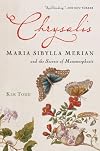
Chrysalis: Maria Sibylla Merian and the Secrets of Metamorphosis
by Kim Todd
On This Page
Description
Before Darwin, before Audubon, there was Merian. An artist turned naturalist, known for her botanical illustrations, she was born just sixteen years after Galileo proclaimed that the earth orbited the sun. But at the age of fifty she sailed from Europe to the New World on a solo scientific expedition to study insect metamorphosis--an unheard-of journey for any naturalist at that time, much less a woman. When she returned she produced a book that secured her reputation, only to have it show more savaged in the nineteenth century by scientists who disdained the work of "amateurs." This book takes us from golden-age Amsterdam to the Surinam tropics to modern laboratories where Merian's insights fuel a new branch of biology. Author Todd brings to life a seventeenth-century woman whose boldness and vision would still be exceptional today.--From publisher description. show lessTags
Recommendations
















Member Reviews
Earlier in the year I read a nonfiction book about butterflies that referenced Maria Sibylla Merian, and I immediately knew I wanted to know more detail about this 17th century woman's life. Kim Todd's biography of Merian is fantastic - delving into what is known of Merian's life and solidly placing her in context of the world and times she lived in. It's also a beautiful book that includes Merian's artwork throughout.
Merian was a German woman whose father was a printer. From early in childhood she was involved in printing and engraving, which set the stage for her forays into portraying the life cycles of the caterpillars she was obsessed with. She published 3 books with colored plates depicting the life cycle of butterflies, based on show more her detailed and laborious work studying the insects. As an adult, Merian was part of a Labadist movement - a religious sect that encouraged a direct connection of each person with the Bible and God and tried to remove the distractions of possessions. The Labadists had connections with a colony in Surinam in South America and at the grand age of 52, Merian decided to make a trip there with her daughter to study the insects and animals of the region. While she was there, she ran up against many problems, one being the sheer volume of insects. Also, it was dangerous to spend time in the rain forest collecting and observing. There was also the excessive heat, enslaved people in revolt, and disease to contend with. Nonetheless, she collected many specimens, created many notebooks and journals of observations and studies, and spent time with the native people learning from them what they already knew of the wildlife of the region. After two years she returned to Europe and put together another book, based on her studies in Surinam.
Merian was a trail blazer in the idea of studying insects in their own environments and following one insect through its life cycle. Her exquisite art work generally shows all stages of the insect's life. She'll draw the plant it feeds on, show the caterpillar munching away, include the pupa, larvae, and emerged butterfly as well. This was not something that others in the field were doing. In the last chapters, Todd explores why Merian's work has been discounted and overlooked and how that is beginning to change.
I really enjoyed this biography and high recommend it. show less
Merian was a German woman whose father was a printer. From early in childhood she was involved in printing and engraving, which set the stage for her forays into portraying the life cycles of the caterpillars she was obsessed with. She published 3 books with colored plates depicting the life cycle of butterflies, based on show more her detailed and laborious work studying the insects. As an adult, Merian was part of a Labadist movement - a religious sect that encouraged a direct connection of each person with the Bible and God and tried to remove the distractions of possessions. The Labadists had connections with a colony in Surinam in South America and at the grand age of 52, Merian decided to make a trip there with her daughter to study the insects and animals of the region. While she was there, she ran up against many problems, one being the sheer volume of insects. Also, it was dangerous to spend time in the rain forest collecting and observing. There was also the excessive heat, enslaved people in revolt, and disease to contend with. Nonetheless, she collected many specimens, created many notebooks and journals of observations and studies, and spent time with the native people learning from them what they already knew of the wildlife of the region. After two years she returned to Europe and put together another book, based on her studies in Surinam.
Merian was a trail blazer in the idea of studying insects in their own environments and following one insect through its life cycle. Her exquisite art work generally shows all stages of the insect's life. She'll draw the plant it feeds on, show the caterpillar munching away, include the pupa, larvae, and emerged butterfly as well. This was not something that others in the field were doing. In the last chapters, Todd explores why Merian's work has been discounted and overlooked and how that is beginning to change.
I really enjoyed this biography and high recommend it. show less
Years ago, I bought a copy of this book for my insect-obsessed sister, then promptly forgot all about it. Then, recently, I heard about Maria Sibylla Merian again and decided i needed to know more about her. I ended up rediscovering this book and putting it on my library hold list. It's actually part of what inspired my new Women in Science phase -- after that I looked up several other biographies of female scientists and added them to my to-read list as well.
Merian's topic was metamorphosis, at a time when spontaneous generation was just starting to be disproven. In fact, Merian's work contributed to the refutations in a significant way. She was interested in metamorphosis in general, but in caterpillars in particular. Her medium was show more watercolor. (At a time when she was actually barred from painting in oils by artists guilds because she was a woman.) She raised hundreds of caterpillars, hoping to watch and document their transformations. Friends brought and sent her caterpillars. She sought permission to explore nearby gardens in the hopes of finding new caterpillars. She kept careful notes of dates, observations, sketches. And then she published. Books of watercolors with caterpillar/pupa/moth or butterfly on the same page. Perhaps more importantly, on their host plant. At first, she represents this work lightly -- telling stories designed to amuse of she and her friends in their fine dresses on country strolls, scrambling after insects. Suggesting her watercolors be used as inspirational patterns for embroidery. But she must have taken her work more seriously as time went on, because at the turn of the 18th century, she and her daughter sailed to Surinam to document metamorphosis there, quite possibly the first cross-Atlantic expedition for purely scientific reasons.
I could go on and on and on, but I'm going to try to rein it in. Things I want to particularly note: Merian was a contemporary of Leeuwenhoek! I think right now I am in love with turn of the 18th century Amsterdam. The hobbyist scientists. The salons full of new ideas. The crazy collections of artifacts and the birth of museums. Also, a chapter in the end about her enduring influence discusses how her work was held to some higher standard: she was dismissed entirely for decades because she was wrong about a few things, despite the significance of her gaffes being largely in line with those of her contemporaries. (Always my favorite example: Leeuwenhoek was sure that the entire germ for a new being came from the sperm. The egg was just a house to be filled.)
Also, I need to acknowledge that the author admits a dearth of primary sources about Merian's inner world. Very well recorded is what she saw, what she painted. But very little record remains of what she felt. About anything, ever. Todd is pretty transparent about this, and I thought she did an admirable job of both filling in the blanks and also directly stating what she is basing these speculations on as she makes them.
Recommended to those interested in insects, women in science and/or art, ecology, or turn of the 18th century worldviews. show less
Merian's topic was metamorphosis, at a time when spontaneous generation was just starting to be disproven. In fact, Merian's work contributed to the refutations in a significant way. She was interested in metamorphosis in general, but in caterpillars in particular. Her medium was show more watercolor. (At a time when she was actually barred from painting in oils by artists guilds because she was a woman.) She raised hundreds of caterpillars, hoping to watch and document their transformations. Friends brought and sent her caterpillars. She sought permission to explore nearby gardens in the hopes of finding new caterpillars. She kept careful notes of dates, observations, sketches. And then she published. Books of watercolors with caterpillar/pupa/moth or butterfly on the same page. Perhaps more importantly, on their host plant. At first, she represents this work lightly -- telling stories designed to amuse of she and her friends in their fine dresses on country strolls, scrambling after insects. Suggesting her watercolors be used as inspirational patterns for embroidery. But she must have taken her work more seriously as time went on, because at the turn of the 18th century, she and her daughter sailed to Surinam to document metamorphosis there, quite possibly the first cross-Atlantic expedition for purely scientific reasons.
I could go on and on and on, but I'm going to try to rein it in. Things I want to particularly note: Merian was a contemporary of Leeuwenhoek! I think right now I am in love with turn of the 18th century Amsterdam. The hobbyist scientists. The salons full of new ideas. The crazy collections of artifacts and the birth of museums. Also, a chapter in the end about her enduring influence discusses how her work was held to some higher standard: she was dismissed entirely for decades because she was wrong about a few things, despite the significance of her gaffes being largely in line with those of her contemporaries. (Always my favorite example: Leeuwenhoek was sure that the entire germ for a new being came from the sperm. The egg was just a house to be filled.)
Also, I need to acknowledge that the author admits a dearth of primary sources about Merian's inner world. Very well recorded is what she saw, what she painted. But very little record remains of what she felt. About anything, ever. Todd is pretty transparent about this, and I thought she did an admirable job of both filling in the blanks and also directly stating what she is basing these speculations on as she makes them.
Recommended to those interested in insects, women in science and/or art, ecology, or turn of the 18th century worldviews. show less
A fascinating and compelling book about a pioneering entomologist, Chrysalis combines the best aspects of biography, history, travel log, and science into a single gripping story. Maria Sibylla Merian was a woman far ahead of her time, an insect enthusiast who studied the process of metamorphosis when most people thought insects were spawned spontaneously and a skilled artist who insisted on sketching her highly detailed portraits from life in a period when outlandish and exaggerated drawings were popular. In addition to her incredibly full and adventurous life this book also includes the fall from popularity to obscurity Maria's reputation and work suffered after her death. Discussing why Maria was dismissed and ridiculed as a foolish show more old lady after her death for making claims that she witnessed and were later corroborated by other scientists is a crucial and fascinating part of her story and the author takes great pains to emphasize that. This is an enjoyable book for science lovers in general or entomologists in particular, for fans of history books or biographies or anyone interested in interesting individuals that history has largely forgotten. show less
Although there isn’t too much known about Merian, naturalist and artist of the late 1600s, Todd does a good job at filling in the spaces. The biographer doesn’t merely focus on Merian’s life (interesting that she escaped her husband by going into a religious commune–divorce was not the thing to do back then–even though there was evidence that Merian wasn’t that religious). There’s also the context of the times to consider: the concept of metamorphosis–which had intrigued Merian her entire life–was closely tied to debunking some of the scientific theories of the day like preformation and spontaneous generation. Too bad the stuffy (ahem, male) scientists after her derided her for being commercialist (well, she had to show more sell off some of her scientific specimens to get food on the table) and fanciful (actually, a lot of her sketchbooks were “modified” by future artists who thought the new pictures would sell better). Really interesting reading on both scientific and feminist standpoints–highly recommended. show less
An excellent read. Ticked a lot of boxes - history, science, women, art, travel, religion - yet managed to pull it all together. I'm not sure that all the speculation about what Maria Merian might have seen or thought was really necessary... it might be fun to write a book about a contemporary scientist from 300 years in the future and fill it full of such speculation, but I think it would sound unnecessary and trite. Here it was saved by being 300 years in the past and based on good research. And the idea of an extraordinary woman living alongside so many other extraordinary women of the time was exactly what came across to me before reaching that very conclusion written in the last chapter.
I really enjoyed this biography of 17th c. artist & naturalist Maria Sibylla Merian. The combination of her fascinating story & Todd's elegant prose makes for a great reading experience. I saw a copy of Merian's "Metamorphosis of the insects of Surinam" among the rare manuscripts on display at the Huntington Library in San Marino in May. Her detailed drawings are amazing. In 1699 Merian set off from Amsterdam with her daughter Dorothea to travel to the Dutch colony of Surinam, where they stayed for 2 years while Maria studied & drew life in the tropical forest. She was one of the first European naturalists to recognize that life was different in the canopy than on the ground, & that it was important to study, for example, "what a show more caterpillar ate and what might eat it, the relationship of an organism to its environment" instead of just marking one species off from another. She thought in terms of ecology more than a century and a half before German zoologist Ernst Haeckel coined the term "oecologie" in 1866. This link, thanks to another Goodreads reviewer, provides several good examples of Merian's art: http://www.getty.edu/art/exhibitions/merian/ show less
I had not heard about Maria Sybilla Merian until a friend told me she was reading about her in a book club. I was intrigued and rightly so. This biography is the fascinating story about a seventeenth century daughter of a publisher in Frankfurt learned art techniques in her father's shop and used them to record her observations of insects and plants in Germany, the Netherlands, and Suriname. During her life time, all science was still heavily influenced by religious attitudes, superstitions, awkward conclusions and personal prejudices. Also women did not really have a place in science, since universities did not admit women.
I enjoyed reading this combination of natural and cultural history. The book was well researched and clearly show more written. My main objection was that there was sometimes too much detail. The chapter about how Merian's work got criticized, distorted, sold after her death made me fall asleep. Stuff like that belongs in footnotes or an appendix.
Some reviewers objected to the author's assumptions of what Maria Sybilla may have thought. That did not bother me. I liked it as an illustration of the period. Overall I am lad I read this book. I learned a lot from it. show less
I enjoyed reading this combination of natural and cultural history. The book was well researched and clearly show more written. My main objection was that there was sometimes too much detail. The chapter about how Merian's work got criticized, distorted, sold after her death made me fall asleep. Stuff like that belongs in footnotes or an appendix.
Some reviewers objected to the author's assumptions of what Maria Sybilla may have thought. That did not bother me. I liked it as an illustration of the period. Overall I am lad I read this book. I learned a lot from it. show less
Members
- Recently Added By
Lists

Best Biographies of Notable Women
277 works; 101 members
Author Information

5+ Works 510 Members
A former newspaper reporter, Kim Todd holds a B.A. from Yale University & an M.F.A. from the University of Montana. She lives in Missoula, Montana. (Bowker Author Biography)
Awards and Honors
Awards
Common Knowledge
- Important places*
- Suriname
*Some information comes from Common Knowledge in other languages. Click "Edit" for more information.
Classifications
Statistics
- Members
- 251
- Popularity
- 128,984
- Reviews
- 14
- Rating
- (4.12)
- Languages
- English
- Media
- Paper, Audiobook, Ebook
- ISBNs
- 7
- ASINs
- 4