
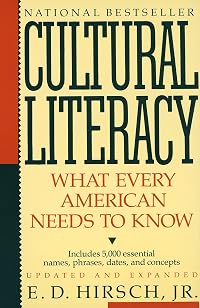
Cultural Literacy: What Every American Needs to Know
by E.D. Hirsch Jr., E. D. Hirsch
On This Page
Description
In this forceful manifesto, Hirsch argues that children in the U.S. are being deprived of the basic knowledge that would enable them to function in contemporary society. Includes 5,000 essential facts to know.Tags
Recommendations

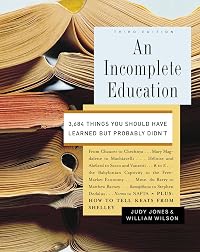
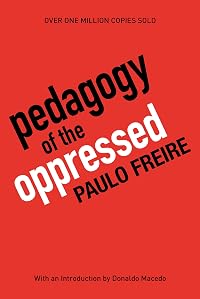

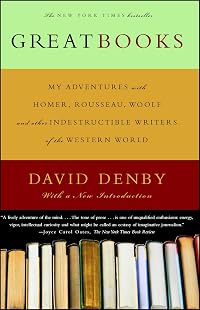
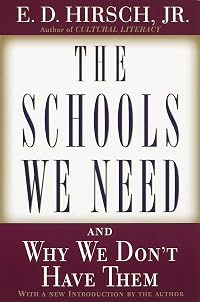









Member Recommendations
Member Reviews
This book is more notable, in my opinion, for all the many omissions than for what it does include. The sections on history are especially lacking. There are actually not entries for slavery (although the slave trade gets a mention), pogroms, or genocide, for example. “Literature in English” is another section that doesn’t do justice to actual literature in English, especially with respect to children’s literature. Dr. Seuss actually has an entry, but where is Maurice Sendak, Margaret Wise Brown, C.S. Lewis, or Ludwig Bemelmans, to name a very few of the excluded?
Other sections, which include the Bible, Mythology and Folklore, World Literature, Fine Arts, Geography, and sciences, inter alia, are similarly lacking. With show more resources on the World Wide Web at our disposal, I really don’t see a reason to have this book. show less
Other sections, which include the Bible, Mythology and Folklore, World Literature, Fine Arts, Geography, and sciences, inter alia, are similarly lacking. With show more resources on the World Wide Web at our disposal, I really don’t see a reason to have this book. show less
This was my first look at educational theory- and while I have doubts about Hirsch's proposed system, I found this book interesting. This book's greatest appeal is its effort to "demystify" literacy, and thus, make it accessible to every American- regardless of social rank. This book tries to remove the ambiguity of what makes a citizen adequately educated. Hirsch believes the end goal of cultural literacy is merely to foster efficient communication within a nation. But, honestly- not being able to quote Shakespeare is hardly Babel tower II. I really enjoyed the sections on memory, chunking, and reading speed/comprehension. And while I found this book interesting, I hope that the overall worth of an education is more than a checklist of show more haphazard facts. show less
I'm going to read this out of curiosity; I remember learning about this in high school and I agreed with the premise then. I realized that I'd never have understood Z if I never knew X. I believe that a lack of knowledge of some very basic things does keep our children from understanding most satire even when they are developmentally ready to handle it, and I see that their reading comprehension suffers tremendously when they don't have the prior knowledge necessary to make meaning to texts that are written by educated adults who assume kids these days are learning what they did at the same age.
One of the most memorable books I have ever read and absolutely essential. Hirsch identified the fact that American education began to slide and he noticed that kids were not learning the foundational knowledge that would make them successful in American life. American education has slid since then as many critics misunderstood his goals. Critics considered his summary of literacy as an attack on kids who had not mastered foundational knowledge since they believed in the `I'm OK, you're OK' school of thought. The U.S. has fallen behind many other countries and Hirsch documented how Americans could master the key knowledge they needed to know in order to have a claim to literacy. As the years have unfolded Hirsch has been proven correct show more as other countries performed what American teachers and adminisrs did not insist on and the kids did not learn.
"Although nationalism may be regrettable in some of its world wide political effects, a mastery of national culture is essential to mastery of the standard language in every modern nation. This point is important for educational policy, because educators often stress the virtues of multicultural education. Such study is indeed valuable in itself; it inculcates tolerance and provides a perspective on our own traditions and values. But however laudable it is, it should not be the primary focus of national education. It should not be allowed to supplant or interfere with our schools' responsibility to ensure our children's mastery of American literate culture. The acculturative responsibility of the schools is primary and fundamental. To teach the ways of one's own community has always been and still remains the essence of the education of our children who enter neither a narrow tribal culture nor a transcendent world culture but a national literate culture. For profound historical reasons, this is the way of the modern world. It will not change soon, and it will certainly not be changed by educational policy alone" (p. 18). show less
"Although nationalism may be regrettable in some of its world wide political effects, a mastery of national culture is essential to mastery of the standard language in every modern nation. This point is important for educational policy, because educators often stress the virtues of multicultural education. Such study is indeed valuable in itself; it inculcates tolerance and provides a perspective on our own traditions and values. But however laudable it is, it should not be the primary focus of national education. It should not be allowed to supplant or interfere with our schools' responsibility to ensure our children's mastery of American literate culture. The acculturative responsibility of the schools is primary and fundamental. To teach the ways of one's own community has always been and still remains the essence of the education of our children who enter neither a narrow tribal culture nor a transcendent world culture but a national literate culture. For profound historical reasons, this is the way of the modern world. It will not change soon, and it will certainly not be changed by educational policy alone" (p. 18). show less
An interesting book that illuminates all that is brought to bear upon the act of reading, comprehension, and, and interpretation.
It also brings to point the importance of a unifying language and shared cultural values and understanding.
The premises of a shared cultural literacy were even then idealistic in the 1980s and seemingly more so in the 21st century, but I think the underlying point about advantages of cultural literacy are still valid even if implementation may not be possible or desirable depending on who you ask.
It also brings to point the importance of a unifying language and shared cultural values and understanding.
The premises of a shared cultural literacy were even then idealistic in the 1980s and seemingly more so in the 21st century, but I think the underlying point about advantages of cultural literacy are still valid even if implementation may not be possible or desirable depending on who you ask.
This book should be utilized as a basis to restructure the curriculum of education at the elementary and middle school level within the US. It is clear that in general Americans lack the necessary knowledge to understand discourse on serious subjects in an easy manner.
Very helpful in focusing one's efforts for and filling in the gaps in self-education. Also a nice supplement for home schooling.
Members
- Recently Added By
Lists

Read For Your Life
157 works; 1 member

My Favorite Books
26 works; 1 member
Author Information

63+ Works 10,946 Members
Hirsch is a conservative critic best known for his repudiation of critical approaches to literature (chiefly poststructuralism and New Criticism) that assume that the author's intentions do not determine readings. He argues that any such methodology is guilty of "the organic fallacy," the belief that the text leads a life of its own. For Hirsch, show more the author's authority is the key to literary interpretation: The critic's job is to reproduce textual meaning by recovering the author's consciousness, which guarantees the validity of an interpretation. In his two most important books, Validity in Interpretation (1967) and its sequel, The Aims of Interpretation (1976), Hirsch warns against the "critical anarchy" that follows from the "cognitive atheism" of both relativism and subjectivism. For him, these result from a corollary of the organic fallacy, the thesis that meaning is ultimately indeterminate because it changes over time or with the differing interests and values of different readers. According to Hirsch, meaning does not change; only value or significance does, as readers relate a text's fixed meaning to their cultures. If there is more than one valid interpretation of a text, it is because literature may be reduced to more than one "intrinsic genre" or meaning type---the particular set of conventions governing ways of seeing and of making meaning at the time the author was writing. Many critics suggest that the intentions Hirsch recovers in intrinsic genres are really his own, rather than those of the author, because no one, including Hirsch, can escape his or her historically conditioned frame of reference when developing interpretations of literature. Hirsch's recent books, including Cultural Literacy (1987), are seen as proof of those flaws by those who are troubled by the history and values of the dominant culture that Hirsch insists is the only culture. Hirsch argues that "common knowledge" is being denied minority students and others by feminists and other "radicals" who have undermined the authority of its great texts. (Bowker Author Biography) show less
33 Works 3,893 Members
All Editions
Awards and Honors
Distinctions
Common Knowledge
- Epigraph
- Rousseau points out the facility with which children lend themselves to our false methods: . . . "The apparent ease with which children learn is their ruin." -- John Dewey
- Dedication
- To the memory of my father
- First words
- To be culturally literate is to possess the basic information needed to thrive in the modern world.
- Last words
- (Click to show. Warning: May contain spoilers.)I hope that in our future debates about the extensive curriculum, the participants will keep clearly in view the high stakes involved in their deliberation: breaking the cycle of illiteracy for deprived children; raising the living standard of families who have been illiterate; making our country more competitive in international markets; achieving greater social justice; enabling all citizens to participate in the political process; bringing us closer to the Ciceronian ideal of universal public discourse -- in short, achieving fundamental goals of the Founders at the birth of the republic.
- Canonical DDC/MDS
- 370.19; 306.430973
- Canonical LCC
- LB45
Classifications
Statistics
- Members
- 1,886
- Popularity
- 11,279
- Reviews
- 13
- Rating
- (3.56)
- Languages
- English, German
- Media
- Paper, Audiobook, Ebook
- ISBNs
- 16
- ASINs
- 10
