On This Page
Description
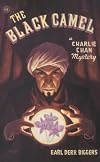
"Death is the black camel that kneels unbidden at every gate." This is what Charlie Chan tells the guests of the unfortunate Shelah Fane, a glamorous Hollywood movie star who has been murdered while on location beach side in Honolulu. Here the detective confronts his most perplexing case of his long and illustrious career. Chan is aided by a mysterious fortune teller named Tarneverro the Great. It appears that Miss Fane had summoned Tarneverro to Honolulu as she strongly believes in his show more mystical powers. A number of bystanders do not have alibis in this case, and it takes every bit of Chan's considerable powers to untangle this intricate web of deception and murder. show lessTags
Recommendations









Member Reviews
It's a shame that Earl Derr Biggers only wrote six of these jewels. They hold up well and are very entertaining. The Black Camel is no exception. A clever plot, a clever detective and way too many suspects in the death of a Hollywood starlet who is passing her prime. The solution wasn't telegraphed, but it also wasn't hidden. Charlie Chan is smart, humble, droll and pretty dang funny. What's not to like?
Honolulu Homicide
The Black Camel is Earl Derr Biggers 4th Charlie Chan Mystery, and for me keeps pace with the previous three installments in being a very entertaining who-dun-it crime novel. Inspector Charlie Chan finally returns to his own home stomping grounds after solving the previous murders in San Francisco. The setting of palm trees and white sandy beaches in the Black Camel, fully gives the reader a tropical and lush backdrop and a vivid picture of Hawaii in the late 1920s.
This story involves two murders. One of a Hollywood actor in the past, and the current killing of a beloved actress as the book opens. Within the first chapter gorgeous actress Shela Fane is about to make a grand entrance at a dinner party she is hosting at show more her rented Waikiki beach house, and is brutally murdered in the garden pavilion just minutes before dinner is served. A knife through her heart sends shocking screams through the night, interupting the sounds of the crashing waves on the moonlit sands nearby. All invited guests and servants are under suspicion and of course it is up to Charlie to interrogate the cast of characters, unravel the clues, and deduce who the villain is and how it relates to the murder in the past. An Ex-husband, a mysterious fortune teller, a comical beach bum, and many other friends within Shela’s film world, all are suspect and have reasons of their own for wanting her demise.
Although I didn’t enjoy this episode as much as the previous three stories, it is still a very enjoyable read. I have recently found Earl Derr Biggers and have admired his writing style. For the period of time he was writing in, these crime novels are complex and are nicely condensed with a perfect blend of just the right amount of dialog and descriptive text, without an abundance of added filler and fluff to fill out the pages. The stories are perhaps a bit formulaic but the mysteries are so engaging you don't recognize any predictability or plot outline. One can't help but totally fall in love with Charlie Chan's character, a detective mastermind with a talent for seeing the unseen, while at the same time, endearing the characters within to his warmth, charm and sarcastic humor. A roaring twenties version of Columbo, Charlie Chan’s delightful and cunning persona will have modern day readers scooping up all six books and wishing there had been more. show less
The Black Camel is Earl Derr Biggers 4th Charlie Chan Mystery, and for me keeps pace with the previous three installments in being a very entertaining who-dun-it crime novel. Inspector Charlie Chan finally returns to his own home stomping grounds after solving the previous murders in San Francisco. The setting of palm trees and white sandy beaches in the Black Camel, fully gives the reader a tropical and lush backdrop and a vivid picture of Hawaii in the late 1920s.
This story involves two murders. One of a Hollywood actor in the past, and the current killing of a beloved actress as the book opens. Within the first chapter gorgeous actress Shela Fane is about to make a grand entrance at a dinner party she is hosting at show more her rented Waikiki beach house, and is brutally murdered in the garden pavilion just minutes before dinner is served. A knife through her heart sends shocking screams through the night, interupting the sounds of the crashing waves on the moonlit sands nearby. All invited guests and servants are under suspicion and of course it is up to Charlie to interrogate the cast of characters, unravel the clues, and deduce who the villain is and how it relates to the murder in the past. An Ex-husband, a mysterious fortune teller, a comical beach bum, and many other friends within Shela’s film world, all are suspect and have reasons of their own for wanting her demise.
Although I didn’t enjoy this episode as much as the previous three stories, it is still a very enjoyable read. I have recently found Earl Derr Biggers and have admired his writing style. For the period of time he was writing in, these crime novels are complex and are nicely condensed with a perfect blend of just the right amount of dialog and descriptive text, without an abundance of added filler and fluff to fill out the pages. The stories are perhaps a bit formulaic but the mysteries are so engaging you don't recognize any predictability or plot outline. One can't help but totally fall in love with Charlie Chan's character, a detective mastermind with a talent for seeing the unseen, while at the same time, endearing the characters within to his warmth, charm and sarcastic humor. A roaring twenties version of Columbo, Charlie Chan’s delightful and cunning persona will have modern day readers scooping up all six books and wishing there had been more. show less
Promoted from Sergeant to Inspector, Charles is now in charge. And that is true on a number of levels. First and foremost, Charlie stands completely alone in solving this case. Gone are the help of past novels, the society men, the reporters, the district attorneys. In fact, the people supposed to help in this novel do anything but. Biggers has brought Charlie Chan into full maturity in The Black Camel. His character, too, has changed. He is more grizzled and tough. This is a detective who actually shoves people around when he feels it necessary. Looking back on the Charlie of the first novel, he is almost obsequious in comparison. This Charlie Chan is even closer to the hard-boiled detective than in the last book, Behind That show more Curtain.
The same goes for the setting. Chan is once again in Honolulu, after trips to Southern California in book two and San Francisco in book three, but this is not the same Honolulu of the opening novel. Not only is the story spread out, from bungalows on the beach to grand hotels and police offices, but it also ventures into the city's slums. The passage that describes the trip into this place, in fact, is told in hard-boiled prose, while Charlie seems tougher and the locales resembles something from a film noir movie.
This is a superior piece of detective fiction. And one more thing: the mystery itself is the best yet. In each successive book, in fact, the complexity and surprise accompanying the solving of the crime becomes more intense. The solution to the case shocked me. I had it figured out--all wrongly. Well done, Earl Derr Biggers. Now, for book number five.
*A note on the 1931 film version. Of the first five Charlie Chan films, only The Black Camel remains. The others have been lost. A pity, because the film is largely faithful to the book but for a slight twist at the end involving Jessop and Smith. The film was made the same year as Universal's classic, Dracula. That is worth pointing out because both Bela Lugosi (Dracula) and Dwight Frye (Renfield) also appear in The Black Camel. Frye appears as Jessop and Lugosi as Tarneverro, with Lugosi's part much more active and talkative than in Dracula. Also notable is the mobility of the camera early in the film and, later, the downright Expressionistic scenes of horror mystery with Tarneverro's crystal ball and as Chan begins to uncover the murder. Similar, too, is the presence of Chan's understudy, a Japanese detective in training made out to be a comic fool. Yes, there is a racial hierarchy in both the novel and film, with the Chinese above the Japanese, something made all the more clear in the novel when Chan travels into the Honolulu slums. show less
The same goes for the setting. Chan is once again in Honolulu, after trips to Southern California in book two and San Francisco in book three, but this is not the same Honolulu of the opening novel. Not only is the story spread out, from bungalows on the beach to grand hotels and police offices, but it also ventures into the city's slums. The passage that describes the trip into this place, in fact, is told in hard-boiled prose, while Charlie seems tougher and the locales resembles something from a film noir movie.
This is a superior piece of detective fiction. And one more thing: the mystery itself is the best yet. In each successive book, in fact, the complexity and surprise accompanying the solving of the crime becomes more intense. The solution to the case shocked me. I had it figured out--all wrongly. Well done, Earl Derr Biggers. Now, for book number five.
*A note on the 1931 film version. Of the first five Charlie Chan films, only The Black Camel remains. The others have been lost. A pity, because the film is largely faithful to the book but for a slight twist at the end involving Jessop and Smith. The film was made the same year as Universal's classic, Dracula. That is worth pointing out because both Bela Lugosi (Dracula) and Dwight Frye (Renfield) also appear in The Black Camel. Frye appears as Jessop and Lugosi as Tarneverro, with Lugosi's part much more active and talkative than in Dracula. Also notable is the mobility of the camera early in the film and, later, the downright Expressionistic scenes of horror mystery with Tarneverro's crystal ball and as Chan begins to uncover the murder. Similar, too, is the presence of Chan's understudy, a Japanese detective in training made out to be a comic fool. Yes, there is a racial hierarchy in both the novel and film, with the Chinese above the Japanese, something made all the more clear in the novel when Chan travels into the Honolulu slums. show less
In his fourth adventure, Charlie is back in Hawaii, albeit still dealing with California types. This time, he must investigate the murder of a hugely famous Hollywood actress. She had been filming in Tahiti, or some such place, and was going to finish up the final scenes in Hawaii. She had just arrived, was setting up a household on the beach, and had gathered a bunch of friends for a dinner party. She didn't make her expected grand entrance into the party, she was found stabbed to death in a pavilion across the beach from her house.
There are lots of possible culprits, including the man who wanted to marry the actress, her psychic advisor (whom she had just called to Hawaii to help her decide to accept the marriage proposal), some of show more her film buddies, a local tycoon married to a former Hollywood actress friend, the very proper British butler, and so forth. The psychic advisor, in particular, appears to be trying to help Chan all the while also trying to derail Chan's investigation. One can never figure out if he's a good guy, despite being a charlatan, or a not-so-good guy, in keeping with his being a charlatan (all self-styled psychics are charlatans by definition). Whatever, Charlie figures it all out in the end.
Interestingly, given that the book came out in 1929, this woman's being a hugely successful Hollywood star meant that the was a star of silent films, maybe like Clara Bow or Theda Bara, the first sounded feature-length film having only just come out in late 1928.
I don't know if I'm just getting used to Charlie, or if things really have changed by the fourth book. It seems to me, however, that Charlie's bizarre grammatical constructions are toned down in this book from those in the earlier books. I think, perhaps, Charlie is taxed with a greater share of the dialog this time around, and that writing all that tortured syntax just got too tough for Biggers. Whatever, it's still a good enough book. Well worth the download from our friends at Roy Glashan's Library. show less
There are lots of possible culprits, including the man who wanted to marry the actress, her psychic advisor (whom she had just called to Hawaii to help her decide to accept the marriage proposal), some of show more her film buddies, a local tycoon married to a former Hollywood actress friend, the very proper British butler, and so forth. The psychic advisor, in particular, appears to be trying to help Chan all the while also trying to derail Chan's investigation. One can never figure out if he's a good guy, despite being a charlatan, or a not-so-good guy, in keeping with his being a charlatan (all self-styled psychics are charlatans by definition). Whatever, Charlie figures it all out in the end.
Interestingly, given that the book came out in 1929, this woman's being a hugely successful Hollywood star meant that the was a star of silent films, maybe like Clara Bow or Theda Bara, the first sounded feature-length film having only just come out in late 1928.
I don't know if I'm just getting used to Charlie, or if things really have changed by the fourth book. It seems to me, however, that Charlie's bizarre grammatical constructions are toned down in this book from those in the earlier books. I think, perhaps, Charlie is taxed with a greater share of the dialog this time around, and that writing all that tortured syntax just got too tough for Biggers. Whatever, it's still a good enough book. Well worth the download from our friends at Roy Glashan's Library. show less
I have read three books in this series "Charlie Chan" and I have to admit to a little bit of an addiction developing. With each book my initial thoughts are that the books are just too typical of the whole English mystery genre. Somebody either glamorous or mysterious or both dies than an never ending lists of suspects followed by twists and turns galore and finally all the suspects are gathered in a room and the murderer is revealed.
Well if it sounds a little formulated - it is, but then it's also a great deal of fun. So, if you want a little relief from the psychotic, serial killer body count, slaughter-thriller-mystery-current-formula and yearn for a little of the old fashioned, nostalgic "who done it" formula?
And, have a couple of show more hours to waste on a little bit of fun - try some Charlie Chan.
You'll sleep better tonight. show less
Well if it sounds a little formulated - it is, but then it's also a great deal of fun. So, if you want a little relief from the psychotic, serial killer body count, slaughter-thriller-mystery-current-formula and yearn for a little of the old fashioned, nostalgic "who done it" formula?
And, have a couple of show more hours to waste on a little bit of fun - try some Charlie Chan.
You'll sleep better tonight. show less
THE BLACK CAMEL by Earl Derr Biggers
'Death is the black camel that kneels unbidden at every gate.' This is the quote used by Charlie Chan minutes after he is called to investigate the murder of Shelah Fane a Hollywood actress who has just arrived in the Hawaiian Islands to wrap up a movie that had been begun in Tahiti. She had hoped to have some time to recuperate once filming was done. Shelah was quite famous for her work and appearance but these were on the cusp of a downhill slope, something that actresses in the movie business always feared when the little lines on the face became more obvious.
This is a very high profile case for Inspector Chan of the Honolulu police and he proceeds warily among many possible suspects. One man a show more mysterious crystal gazer or fortune teller known as Tarneverro is well known among the Hollywood set and a close personal friend of Miss Fane is very eager to help in the solving of this murder and Charlie accepts this philosophically with help from another wise saying: ‘the bird chooses the tree, not the tree the bird.’
Most of Charlie Chan’s approach relates to basic philosophy of what will be will be. Life is predestined and so there is no use worrying about things not easily controlled such as the weather, one’s weight, and other facts of life. But he has no intention of behaving like the crane, which waited for the sea to disappear and leave him dry fish to eat, starves to death. Thus he proceeds and in his quiet intuitive way knows he can find the murderer.
Charlie Chan has eleven children and in this book we are introduced to his oldest son, Henry, his oldest daughter, Rose and the next in line Evelyn. We also meet little Barry who was born while he was helping the SFPD during his recent adventures in California in BEHIND THAT CURTAIN. show less
'Death is the black camel that kneels unbidden at every gate.' This is the quote used by Charlie Chan minutes after he is called to investigate the murder of Shelah Fane a Hollywood actress who has just arrived in the Hawaiian Islands to wrap up a movie that had been begun in Tahiti. She had hoped to have some time to recuperate once filming was done. Shelah was quite famous for her work and appearance but these were on the cusp of a downhill slope, something that actresses in the movie business always feared when the little lines on the face became more obvious.
This is a very high profile case for Inspector Chan of the Honolulu police and he proceeds warily among many possible suspects. One man a show more mysterious crystal gazer or fortune teller known as Tarneverro is well known among the Hollywood set and a close personal friend of Miss Fane is very eager to help in the solving of this murder and Charlie accepts this philosophically with help from another wise saying: ‘the bird chooses the tree, not the tree the bird.’
Most of Charlie Chan’s approach relates to basic philosophy of what will be will be. Life is predestined and so there is no use worrying about things not easily controlled such as the weather, one’s weight, and other facts of life. But he has no intention of behaving like the crane, which waited for the sea to disappear and leave him dry fish to eat, starves to death. Thus he proceeds and in his quiet intuitive way knows he can find the murderer.
Charlie Chan has eleven children and in this book we are introduced to his oldest son, Henry, his oldest daughter, Rose and the next in line Evelyn. We also meet little Barry who was born while he was helping the SFPD during his recent adventures in California in BEHIND THAT CURTAIN. show less
As I have said elsewhere, I like best the Chan novels such as this one which are actually set in Hawaii. This one involves the murder of a slightly over the hill movie star.
Members
- Recently Added By
Lists

Evan's Reading List 2023
20 works; 1 member
Author Information

68+ Works 2,410 Members
Earl Derr Biggers was born in 1884 in Warren, Ohio. He graduated from Harvard University in 1907 with a Bachelor of Arts degree. After college, Biggers went to work at The Boston Traveler, where he wrote a humorous column, and then reviews, until 1911. By that time he had finished his first novel, "Seven Keys To Baldpate," migrated to New York show more with his first novel and also his first comedy, "If You're Only Human" and began writing plays. Biggers wrote magazine articles, stories, novels and plays, including a war play, "Inside The Lines," which ran 500 nights in London in 1915 and 1916. He published two more novels during the 1910s, Love Insurance in 1914 and The Agony Column in 1916, but his main activity was focused on humor writing, particularly in magazines and short stories. In 1919, Biggers decided to quit playwriting and go to California to write for motion pictures. His reputation spread among the public with his most famous creation, Charlie Chan. He developed the character of Charlie Chan for his novel "The House Without A Key" in 1925. He wrote six Charlie Chan novels, all moderately popular. All were adapted to the cinema, except for "Keeper Of The Keys". The Charlie Chan movies were one of the most successful screen series in history, with over 40 movies based on the character. There were also numerous Chan radio adaptations and comic strips, as well as attempts to bring the character to television. Earl Biggers died in Pasadena, California, in April of 1933 at the age of 48, from a heart attack. (Bowker Author Biography) show less
Some Editions
Series

Belongs to Publisher Series
Work Relationships
Is contained in
Has the adaptation
Common Knowledge
- Original title
- The Black Camel
- Original publication date
- 1929
- People/Characters
- Charlie Chan
- Important places
- Honolulu, O'ahu, Hawai'i, USA; Hawai'i, USA
- Related movies
- The Black Camel (1931 | IMDb)
- First words
- The Pacific is the loneliest of oceans, and travelers across that rolling desert begin to feel that their ship is lost in an eternity of sky and water.
- Last words
- (Click to show. Warning: May contain spoilers.)The door closed gently behind him.
Classifications
Statistics
- Members
- 216
- Popularity
- 151,247
- Reviews
- 9
- Rating
- (3.72)
- Languages
- 7 — Dutch, English, German, Hungarian, Italian, Norwegian (Bokmål), Portuguese
- Media
- Paper, Audiobook, Ebook
- ISBNs
- 21
- ASINs
- 18