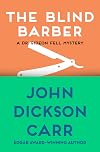
On This Page
Description
A madcap tale of murder on an ocean liner that offers "good mystery and lots of fun in the bargain" (The New York Times).The majestic ocean liner Queen Victoria is halfway through another uneventful transatlantic crossing when bad weather drives most of the passengers to their cabins. Only six have the iron stomachs necessary to take a seat at the captain's table. Of those six, one will die—and the rest will make utter fools of themselves.
The theft of a reel of top-secret government show more film sets off a chase involving stolen jewels, massive marionettes, and a corpse that won't stay put. Murder has been committed, but the passengers can't be sure who's dead—and are too busy boozing, fighting, and robbing one another to be bothered. They do embark on an inadvisable attempt at amateur detective work—but every clue they turn up drives them deeper into madness. It will take the timely intervention of Dr. Gideon Fell to cut through the insanity and unmask a killer.
John Dickson Carr wrote some of the most brilliant mystery novels of the golden age of detective fiction, and this book shows him at his funniest. As Anthony Boucher warned, "Never was a reader more bedeviled with distractions from detection. Who observes clues while he's wiping his laughter-streaming eyes?"
The Blind Barber is the 4th book in the Dr. Gideon Fell Mysteries, but you may enjoy reading the series in any order.
. show less
Tags
Recommendations





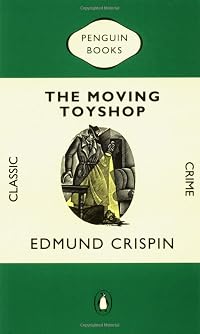

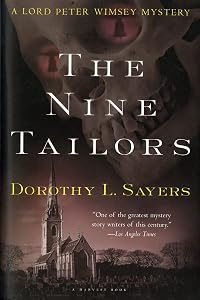


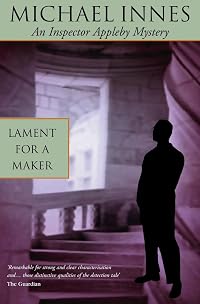


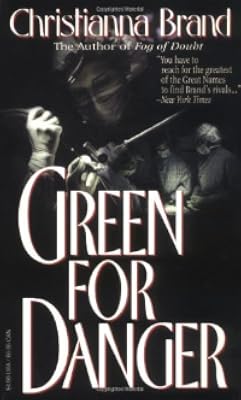






Member Recommendations

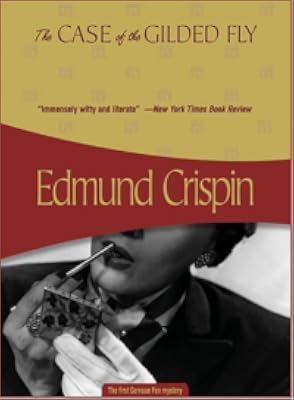
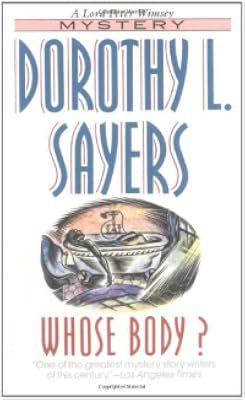
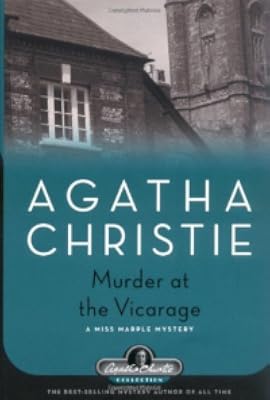
SomeGuyInVirginia Nice contrast- both are capers that take place on board trans-Atlantic sea voyages and have strong comic elements. Blind Barber also has some real chills.
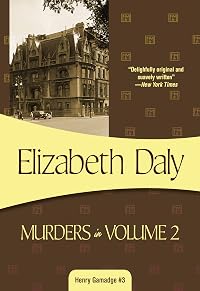
SomeGuyInVirginia Dark lark.

SomeGuyInVirginia Horrific and comic elements.
Member Reviews
A Drunken Farce, without a Locked Room
Review of The Murder Room eBook (November 19, 2012) of the Harper and Brothers hardcover original (October 1, 1934)
The Blind Barber is a particularly weak entry for the Dr. Gideon Fell series and hopefully a one-off with its reliance on drunken comic antics. Dr. Fell is approached at home by his friend, the writer Henry (Hank) Morgan who was a passenger on the Queen Victoria cruise liner due to dock at Southampton after its journey from New York City. Morgan has managed to get ashore ahead of time via a smaller crew vessel as the larger ship awaits a docking berth.
Morgan relates a tale of how he and a group of friends had got themselves mixed-up in the middle of a jewelry heist and then found a body apparently murdered by a cutthroat razor (the single brief tie-in to the title) but when bringing it to the attention of the ship's authorities they found that the body had disappeared. Enormous amounts of alcohol are consumed throughout, adding to the befuddlement of the characters. There were various other irritations such as having 3 characters deliver their dialogue in fake accented dialogue: a Norwegian, a Scot and an Italian.
What might be funny in small doses becomes insufferable when used several dozen times.
There are also extended fake French language passages, usually involving ranting about the alcohol intake.
The front cover of the original 1934 Harper and Brothers hardcover. Image sourced from Goodreads.
To top it off, there are artefacts which demonstrate that a sloppy proofread / copy edit of the text scan was done to produce the eBook edition. Various scan typos were not fixed, even some that should have been caught by spellcheck such as the word: "endorsemHnt" (sic).
Dr. Fell is able to explain it all of course and even to cable a message to the authorities to have the culprit arrested upon docking. Overall, there was too little deduction, even though Fell lists 16 clues which point to the villain during the course of the story-telling. Disappointingly, I thought the bad 'un was apparent fairly early on, unlike most John Dickson Carr books which usually involve confusing puzzles in the so-called "locked room" sub-genre.
Avoid this one, even if you are a Dr. Fell or John Dickson Carr completist.
Bonus Track
Even among the dregs and the dross, I thought this one passage describing inebriation 🥴😵 was rather good:
Trivia and Links
John Dickson Carr (1906-1977) is one of the 99 authors listed in The Book of Forgotten Authors>/i> (2017) by Christopher Fowler. He is No. 20 in the alphabetical listing which you can see towards the bottom of my review here.
John Dickson Carr took the inspiration for Dr. Gideon Fell's appearance from that of author G.K. Chesterton (1874-1936), writer of the Father Brown mysteries and other works.
See photograph at https://upload.wikimedia.org/wikipedia/commons/thumb/7/75/Gilbert_Chesterton.jpg...
Photograph of G.K. Chesterton. Image sourced from Wikipedia.
The source of the name Dr. Fell is apparently from the apocryphal epigram:
Review of The Murder Room eBook (November 19, 2012) of the Harper and Brothers hardcover original (October 1, 1934)
Uninsured jewels belonging to ?!£&/! viscounts were stolen while murdering thieves posed as Harley Street doctors at his table. Blood-stained blankets and razors mysteriously appeared in the cabins; women vanished but did not vanish; the nephews of eminent American administrators first went mad and gibbered of bears and geography then ran amok with bug-powder guns, tried to poison him and finally threatened him with razors. Indeed, an unprejudiced listener would have decided that the situation aboard the Queen Victoria was past hope. - the ship's captain summarizes the mayhem ofshow more
events on board his ship.
The Blind Barber is a particularly weak entry for the Dr. Gideon Fell series and hopefully a one-off with its reliance on drunken comic antics. Dr. Fell is approached at home by his friend, the writer Henry (Hank) Morgan who was a passenger on the Queen Victoria cruise liner due to dock at Southampton after its journey from New York City. Morgan has managed to get ashore ahead of time via a smaller crew vessel as the larger ship awaits a docking berth.
Morgan relates a tale of how he and a group of friends had got themselves mixed-up in the middle of a jewelry heist and then found a body apparently murdered by a cutthroat razor (the single brief tie-in to the title) but when bringing it to the attention of the ship's authorities they found that the body had disappeared. Enormous amounts of alcohol are consumed throughout, adding to the befuddlement of the characters. There were various other irritations such as having 3 characters deliver their dialogue in fake accented dialogue: a Norwegian, a Scot and an Italian.
“You get somet’ing to gag him wit’ till he cool down, or he call de chief mate and den maybe we iss all in de brig." “do you t’ank we are right, or iss dere a mistake? Dat wass no yoke, what dey tell us. If dey say dere is nobody missing, den ay don’t see how dere is somebody missing. Maybe we talk about a murder and dere is no murder.”
"'Auld Ayr, wham ne'er a town surpasses,'" announced Dr. Kyle, with a gesture that indicated him to be a local boy and proud of it, "'for honest men and bonnie lasses'! Aye! A statement ye ken, Mr. Morgan, frae the wairks o' the great Scottish poet, Rabbie Burrrns. Sit down Mr. Morgan. And perhaps yell tak a drap o' whusky, eh? 'The souter tauld his queerest stories__.'"
“So! So! You have trieda to de-ceive me, eh? You have a trieda toa deceive Signor Benito Furioso Camposozzi, eh? Sangua della madonne, I feex you! You tella me he eesa all-right, eh? Haah! What you call all-aright, eh? I tell you, signorina, to youra face, he eesa DRUNK!”
What might be funny in small doses becomes insufferable when used several dozen times.
There are also extended fake French language passages, usually involving ranting about the alcohol intake.
“Eh, bien, eh bien! Encore tu bois! Toujours tu bois! Ah, zut, alors!” She became cutting. “Tu m’a donné votre parole d’honneur, comme un soldat de la France! Et qu’est-ce que je trouve? Un soldat de la France, hein! Non!” She drew back witheringly. “Je te vois en buvant le GIN!”
The front cover of the original 1934 Harper and Brothers hardcover. Image sourced from Goodreads.
To top it off, there are artefacts which demonstrate that a sloppy proofread / copy edit of the text scan was done to produce the eBook edition. Various scan typos were not fixed, even some that should have been caught by spellcheck such as the word: "endorsemHnt" (sic).
Dr. Fell is able to explain it all of course and even to cable a message to the authorities to have the culprit arrested upon docking. Overall, there was too little deduction, even though Fell lists 16 clues which point to the villain during the course of the story-telling. Disappointingly, I thought the bad 'un was apparent fairly early on, unlike most John Dickson Carr books which usually involve confusing puzzles in the so-called "locked room" sub-genre.
Avoid this one, even if you are a Dr. Fell or John Dickson Carr completist.
Bonus Track
Even among the dregs and the dross, I thought this one passage describing inebriation 🥴😵 was rather good:
Each of his trio had consumed exactly one bottle of champagne; and, while he would have scorned the imputation that he could become the least sozzled on a quart of fizz, he could not in honesty deny certain insidious manifestations. For example, it seemed to him that he was entirely without legs, and that his torso must be moving through the air in a singularly ghostly fashion;
Trivia and Links
John Dickson Carr (1906-1977) is one of the 99 authors listed in The Book of Forgotten Authors>/i> (2017) by Christopher Fowler. He is No. 20 in the alphabetical listing which you can see towards the bottom of my review here.
John Dickson Carr took the inspiration for Dr. Gideon Fell's appearance from that of author G.K. Chesterton (1874-1936), writer of the Father Brown mysteries and other works.
See photograph at https://upload.wikimedia.org/wikipedia/commons/thumb/7/75/Gilbert_Chesterton.jpg...
Photograph of G.K. Chesterton. Image sourced from Wikipedia.
The source of the name Dr. Fell is apparently from the apocryphal epigram:
I do not like thee, Doctor Fell,show less
The reason why – I cannot tell;
But this I know, and know full well,
I do not like thee, Doctor Fell.
A farce with some really chilling bits thrown in, Carr really knew how to blend horror and comedy. I’d also classify Carr as a ‘fair play’ mystery author: You have to pay attention, but he doesn’t cheat. Much. The farcical elements prevail in this book and take up most of it, but when dark deeds are done they are sinister ebon.
I’ve noticed that a lot of mysteries written in the 30s have strong cinematic elements, this one included. Who can’t read how the murderer accomplished the deed in Marsh’s ‘A Man Lay Dead’ and not see it as one would see a film sequence, and be utterly chilled by it? Although on reflection mysteries depend on strong descriptive passages that evoke powerful images and feelings, and this applies to show more many that were written before the movies as it does to the mysteries of the 30s. The 30s mysteries seem to have scenes that can be confined to a frame, at least more neatly. It’s late and I might be rambling; Sherlock Holmes’ adventures almost play out as mind movies so I may be totally off base. I wonder what it is about the 30s mysteries and how they remind me so much of film scenes?
‘The Blind Barber’ is a treat, be good to yourself and read it. Some cold and rainy night, by a fire, alone in the house, miles from anyone... show less
I’ve noticed that a lot of mysteries written in the 30s have strong cinematic elements, this one included. Who can’t read how the murderer accomplished the deed in Marsh’s ‘A Man Lay Dead’ and not see it as one would see a film sequence, and be utterly chilled by it? Although on reflection mysteries depend on strong descriptive passages that evoke powerful images and feelings, and this applies to show more many that were written before the movies as it does to the mysteries of the 30s. The 30s mysteries seem to have scenes that can be confined to a frame, at least more neatly. It’s late and I might be rambling; Sherlock Holmes’ adventures almost play out as mind movies so I may be totally off base. I wonder what it is about the 30s mysteries and how they remind me so much of film scenes?
‘The Blind Barber’ is a treat, be good to yourself and read it. Some cold and rainy night, by a fire, alone in the house, miles from anyone... show less
This 4th book in the Gideon Fell series is not typical of the handful of others I have read! It is, as Anthony Boucher says in his introduction, a farce - indeed a plot that would be suitable for Wodehouse or a Marx Brothers movie! Wrapped in this comedy is a murder mystery which is very clever. So why only 3 and half stars? For me, it came down to the fact that despite all the antics, Carr never succeeded in making me laugh. Perhaps it is in the writing style or perhaps it was just my mood but while my brain could see the humor, it just didn't strike my funny bone. And that is odd because it is exactly the sort of shenanigans that do make me laugh in a Wodehouse book...
Carr very effectively used the humor to distract the reader (and show more most of the characters) from concentrating too hard on the murder. Morgan does try to do so but his companions keep pulling his attention away to deal with their craziness. Even so, I doubt that I would have been able to figure it out! Fell, of course, makes it all sound obvious once he expounds the solution. show less
Carr very effectively used the humor to distract the reader (and show more most of the characters) from concentrating too hard on the murder. Morgan does try to do so but his companions keep pulling his attention away to deal with their craziness. Even so, I doubt that I would have been able to figure it out! Fell, of course, makes it all sound obvious once he expounds the solution. show less
"The Blind Barber" started out very well. A group of people, including Henry Morgan, the well-known detective fiction writer of previous books in this series, are on an ocean liner returning to England. One of the people, Curtis Warren, is carrying some reels of film that if found would put some members of the US government in a predicament -- and right away he's given a cosh on the head and a few reels are stolen. Then while Warren and his friends are in the cabin next door, waiting for the attacker to return for the rest, a woman calls out to him and the friends go out in the hall to check it out. They find a woman, badly injured and take her in the cabin. They go to get help and return...but she's gone and the bed has been remade. On show more top of everything else, an emerald elephant of great value goes missing. So with all of this crime going on, the story should have been very interesting.
However, this series of mysteries rapidly devolved into something a bit farcical and silly. It is not until the ship reaches England that Dr. Gideon Fell is brought into the picture -- and then he is able to do his magic.
I didn't really care much for this book, but it started out well and I was sucked in right away. It goes very well until the last few chapters. I didn't care about any of the characters, really -- they seemed to be just silly and unmemorable.
Would I recommend it? Probably not, even though it got sterling ratings on Amazon (but there again, I'm usually among the lone fish swimming upstream there). You can skip this one if you're reading the series and probably not miss much. show less
However, this series of mysteries rapidly devolved into something a bit farcical and silly. It is not until the ship reaches England that Dr. Gideon Fell is brought into the picture -- and then he is able to do his magic.
I didn't really care much for this book, but it started out well and I was sucked in right away. It goes very well until the last few chapters. I didn't care about any of the characters, really -- they seemed to be just silly and unmemorable.
Would I recommend it? Probably not, even though it got sterling ratings on Amazon (but there again, I'm usually among the lone fish swimming upstream there). You can skip this one if you're reading the series and probably not miss much. show less
Anthony Boucher finds this as funny as Car/Carter Dickson's Henry Merrivale stories, but I do not. It concerns a murderous manic on an Atlantic liner in the 1930s and is too grim for my taste.
Slight, but funny, mystery/farce.
Members
- Recently Added By
Lists

Must Read Detective Stories (Nick Fuller)
278 works; 2 members
Author Information

231+ Works 19,014 Members
John Dickson Carr, the master of locked room mysteries, was born in Uniontown, Pennsylvania, in 1906. He was educated at Haverford College and the Sorbonne in Paris. Carr is a prolific writer with more than 80 novels and collections of short stories to his credit. He began his writing career at the age of 26 with his first published novel, It show more Walks At Night. Some of his most popular works are The Three Coffins (1935), The Burning Coat (1937), and The Bride of Newgate (1951). Carr also collaborated with Adrian Doyle, the son of Sir Arthur Conan Doyle in The Exploits of Sherlock Holmes (1954). Carr met his wife in 1932 and settled in England in 1933. He was drafted by the United States military in World War II, and was ordered to remain in England and work with the BBC. He lived in many cities throughout the world until 1967, when he permanently moved to Greenville, South Carolina. John Dickson Carr also wrote mystery novels under the name Carter Dickson. He died in Greenville in 1977. (Bowker Author Biography) show less
Series

Belongs to Publisher Series
Colecção Vampiro (67)
Adey's Locked Room Murders (0295)
Work Relationships
Is contained in
Common Knowledge
- Canonical title
- The Blind Barber
- Original title
- The Blind Barber; The blind barber
- Original publication date
- 1934
- People/Characters
- Dr. Gideon Fell; Henry Morgan; Curt Warren; Dr. Oliver Kyle; Thomassen Valvick; Peggy Glenn
- First words
- When the liner Queen Victoria left New York bound for Southampton and Cherbourg, it was said that two fairly well-known people were aboard, and it was whispered that a highly notorious third person was aboard also.
- Last words*
- (Click to show. Warning: May contain spoilers.)Guten Abend, meine Herren, und besten Dank.
- Original language
- English
*Some information comes from Common Knowledge in other languages. Click "Edit" for more information.
Classifications
Statistics
- Members
- 331
- Popularity
- 95,897
- Reviews
- 7
- Rating
- (3.48)
- Languages
- 8 — Czech, Dutch, English, German, Italian, Portuguese, Spanish, Swedish
- Media
- Paper, Ebook
- ISBNs
- 17
- ASINs
- 23