
On This Page
Description
Things on board the RMS Atlantic are terribly, terribly complicated. Monty Bodkin loves Gertrude, who thinks he likes Lotus Blossom, a starlet who definitely adores Ambrose, who thinks that she has a thing for his brother, Reggie, who is struck by Mabel Spence, sister-in-law of Ikey Llewellyn (movie mogul, Ambrose's prospective employer, and reluctant smuggler), but hasn't the means to marry her. With the well-meaning but unhelpful ship's steward, Albert Peasemarch, and a toy mouse with a show more screw-top head thrown in for good measure, it will, indeed, take the luck of the Bodkins to sort it all out. show lessTags
Recommendations
























Member Recommendations

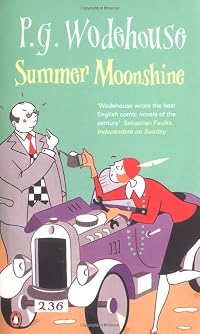
SomeGuyInVirginia Both take place aboard a liner crossing the Atlantic, have comic elements, and involve a missing or stolen item. Blind Barber also has some real chills.
Member Reviews
It could use a little more wordplay, but I loved the characters, the brilliant dialog, and the lightweight, farcical plot.
> The steward's face suddenly cleared. He looked like a man who has been poring over a clue in a crossword puzzle, at a loss to divine what 'large Australian bird' can possibly be, and in an unexpected flash has had it come to him. Just as such a man will quiver in every limb and cry 'Emu!’, just as Archimedes on a well-known occasion quivered in every limb and cried 'Eureka!' - so now did Albert Peasemarch quiver in every limb and cry 'Coo!'
> The emotions which flooded Monty Bodkin's bosom as he beheld his old friend sauntering into the state-room were similar to, though more intense than, those which must have show more come to the beleaguered troops in Lucknow as they heard the swirl of the Highland pipes
> It was the first faint glimmering of a silver lining that had come to brighten the cloud wrack of Monty's horizon. He definitely perked up. 'Why, of course!' he said. 'Why, of course!' said Reggie. 'Why, of course, sir!' said Albert Peasemarch. 'Why, of course!' said Monty.
> 'He's as jealous as billy-o. Smear a bit of burnt cork on him, and he could step right on to any stage and play Othello without rehearsal.
> That things were looking a trifle glutinous, he could not deny. Bodkins, from the days of the great crusader, Sieur Pharamond de Bodkyn, had done their bit in England's rough island story, running risks of which their insurance companies would not have approved, but not a Bodkin on the list, he felt, had ever been in a tougher spot than that in which their twentieth-century representative now found himself. For what is a jab from a Paynim lance or a bullet through the leg at Fontenoy compared with the prospect of having one's life's happiness laid in ruins?
> Then Monty shook from tie to socks as with an ague, and for an instant it seemed as if words like molten lava were about to gush from him. But they remained unspoken. His was not an extensive vocabulary, and he found it impossible to think of anything which would really do justice to his feelings regarding Albert. Shakespeare might have managed it. So might Rabelais. Monty could not. Of all the nouns and adjectives which presented themselves for his inspection there was not one that he did not recognize as paltry and inadequate. So, being in no mood to accept the second best, he remained silent
> He seemed to picture the world as a vast cauldron of soup, with good men like himself for ever standing on the brink and for ever being shoved into it by the Albert Peasemarches.
> 'Oh, there you are,' said Reggie. Monty might have re plied that what the other saw before him was not really the Bodkin he knew but merely the shell or husk of that Bodkin after Albert Peasemarch had done with it But he was not equal to metaphysical flights. He said yes, there he was.
> It was only after Monty had had one quick and another rather slower that he seemed to return to this world from whatever misty empyrean it was in which his soul had been wandering.
> And when I protested and said you couldn't ask an artist to change his act at the eleventh hour like that, he threatened to dock me a day's pay. So here I am, faced with this "Bandolero" and only about an hour to go. Can you wonder, miss, that I'm all of a twitter?' Gertrude's gentle heart was touched. It ached for the man. Hers had been till now the easy, sheltered life of the normal English girl, and she had come but rarely into contact with tragedy.
> Once a ten-minute egg, Ivor Llewellyn had become a Cheeryble brother.
> He felt as if he had just ground a rattlesnake under his heel, and nothing tones up the system like a brisk spell of rattlesnake-grinding.
> Mr Llewellyn nodded briefly. He was listening intently. And, as he listened, his eyes slowly protruded from his face and his complexion took on that purple tinge which always made it so pretty to look at in times of great emotion. Presently he began to splutter incoherently. show less
> The steward's face suddenly cleared. He looked like a man who has been poring over a clue in a crossword puzzle, at a loss to divine what 'large Australian bird' can possibly be, and in an unexpected flash has had it come to him. Just as such a man will quiver in every limb and cry 'Emu!’, just as Archimedes on a well-known occasion quivered in every limb and cried 'Eureka!' - so now did Albert Peasemarch quiver in every limb and cry 'Coo!'
> The emotions which flooded Monty Bodkin's bosom as he beheld his old friend sauntering into the state-room were similar to, though more intense than, those which must have show more come to the beleaguered troops in Lucknow as they heard the swirl of the Highland pipes
> It was the first faint glimmering of a silver lining that had come to brighten the cloud wrack of Monty's horizon. He definitely perked up. 'Why, of course!' he said. 'Why, of course!' said Reggie. 'Why, of course, sir!' said Albert Peasemarch. 'Why, of course!' said Monty.
> 'He's as jealous as billy-o. Smear a bit of burnt cork on him, and he could step right on to any stage and play Othello without rehearsal.
> That things were looking a trifle glutinous, he could not deny. Bodkins, from the days of the great crusader, Sieur Pharamond de Bodkyn, had done their bit in England's rough island story, running risks of which their insurance companies would not have approved, but not a Bodkin on the list, he felt, had ever been in a tougher spot than that in which their twentieth-century representative now found himself. For what is a jab from a Paynim lance or a bullet through the leg at Fontenoy compared with the prospect of having one's life's happiness laid in ruins?
> Then Monty shook from tie to socks as with an ague, and for an instant it seemed as if words like molten lava were about to gush from him. But they remained unspoken. His was not an extensive vocabulary, and he found it impossible to think of anything which would really do justice to his feelings regarding Albert. Shakespeare might have managed it. So might Rabelais. Monty could not. Of all the nouns and adjectives which presented themselves for his inspection there was not one that he did not recognize as paltry and inadequate. So, being in no mood to accept the second best, he remained silent
> He seemed to picture the world as a vast cauldron of soup, with good men like himself for ever standing on the brink and for ever being shoved into it by the Albert Peasemarches.
> 'Oh, there you are,' said Reggie. Monty might have re plied that what the other saw before him was not really the Bodkin he knew but merely the shell or husk of that Bodkin after Albert Peasemarch had done with it But he was not equal to metaphysical flights. He said yes, there he was.
> It was only after Monty had had one quick and another rather slower that he seemed to return to this world from whatever misty empyrean it was in which his soul had been wandering.
> And when I protested and said you couldn't ask an artist to change his act at the eleventh hour like that, he threatened to dock me a day's pay. So here I am, faced with this "Bandolero" and only about an hour to go. Can you wonder, miss, that I'm all of a twitter?' Gertrude's gentle heart was touched. It ached for the man. Hers had been till now the easy, sheltered life of the normal English girl, and she had come but rarely into contact with tragedy.
> Once a ten-minute egg, Ivor Llewellyn had become a Cheeryble brother.
> He felt as if he had just ground a rattlesnake under his heel, and nothing tones up the system like a brisk spell of rattlesnake-grinding.
> Mr Llewellyn nodded briefly. He was listening intently. And, as he listened, his eyes slowly protruded from his face and his complexion took on that purple tinge which always made it so pretty to look at in times of great emotion. Presently he began to splutter incoherently. show less
Do you find the following funny?
Regarding starving writers in 1935 or so Hollywood: "This girl said that if you make a noise like a mutton chop anywhere within a radius of ten miles of Hollywood Boulevard, authors come bounding out of every nook and cranny, howling like wolves." (How do you sound like a mutton chop?)
Regarding an earnest cousin: "The fact of the matter is, Gertrude's the soul of honour. I believe it comes from playing hockey."
Regarding unexpected news: "He observed that the young man's knotted and combined locks had parted and that each particular hair now stood on end like quills upon the fretful porpentine."
If the answer's yes, or you're a Wodehouse fan, you'll enjoy The Luck of the Bodkins. Convoluted romantic show more relationships, a Hollywood mogul ready to make any deal to save himself from the Customs inspector, misunderstandings, broken hearts and tearful make-ups, capers and hijinks, all on a cruise to America. If you're feeling glum, you won't after this one. I remember someone saying reading Wodehouse is like experiencing a musical comedy in a book. Can't help but smile. show less
Regarding starving writers in 1935 or so Hollywood: "This girl said that if you make a noise like a mutton chop anywhere within a radius of ten miles of Hollywood Boulevard, authors come bounding out of every nook and cranny, howling like wolves." (How do you sound like a mutton chop?)
Regarding an earnest cousin: "The fact of the matter is, Gertrude's the soul of honour. I believe it comes from playing hockey."
Regarding unexpected news: "He observed that the young man's knotted and combined locks had parted and that each particular hair now stood on end like quills upon the fretful porpentine."
If the answer's yes, or you're a Wodehouse fan, you'll enjoy The Luck of the Bodkins. Convoluted romantic show more relationships, a Hollywood mogul ready to make any deal to save himself from the Customs inspector, misunderstandings, broken hearts and tearful make-ups, capers and hijinks, all on a cruise to America. If you're feeling glum, you won't after this one. I remember someone saying reading Wodehouse is like experiencing a musical comedy in a book. Can't help but smile. show less
This is one of my favourite books from Wodehouse's golden period, the mid-1930s. It reintroduces the character of Monty Bodkin, who previously appeared in Heavy Weather, and brings in the Sam Goldwyn-esque film magnate Ivor ("Ikey") Llewellyn and the irrepressible ship's steward Albert Peasemarch, both of whom return in later novels.
The story opens in the South of France, where Wodehouse was living at the time, and concludes in New York, but most of the action takes place on the liner RMS Atlantic at sea between Southampton and New York. There is a tightly-knit theatrical plot, with three couples separated by a series of misunderstandings (involving a stuffed Mickey Mouse, a pearl necklace and a pet alligator, inter alia) that are show more sorted out in a splendidly complicated finale. Not a line is wasted, every element in the book is required to get us to the happy ending that the form dictates, but the route by which we get there is anything but predictable.
An unusual feature of the book is that it throws in quite a bit of what must presumably be authentic shipboard jargon (the head steward is known as "Jimmy the One", his assistant as the "Doocer", etc.). Wodehouse didn't go in for research, as a rule, but it looks as though here he must have had a talkative steward on one of his many Atlantic crossings and kept notes of the language he used. show less
The story opens in the South of France, where Wodehouse was living at the time, and concludes in New York, but most of the action takes place on the liner RMS Atlantic at sea between Southampton and New York. There is a tightly-knit theatrical plot, with three couples separated by a series of misunderstandings (involving a stuffed Mickey Mouse, a pearl necklace and a pet alligator, inter alia) that are show more sorted out in a splendidly complicated finale. Not a line is wasted, every element in the book is required to get us to the happy ending that the form dictates, but the route by which we get there is anything but predictable.
An unusual feature of the book is that it throws in quite a bit of what must presumably be authentic shipboard jargon (the head steward is known as "Jimmy the One", his assistant as the "Doocer", etc.). Wodehouse didn't go in for research, as a rule, but it looks as though here he must have had a talkative steward on one of his many Atlantic crossings and kept notes of the language he used. show less
The Luck of the Bodkins is another of Wodehouse's twisty stories about love gone wrong — and then right — and then wrong again in the next sentence. Monty Bodkin is engaged to Miss Gertrude Butterwick, and is shocked when she suddenly breaks their engagement via telegram. He has been on holiday, and hops on the next boat to set things straight with his adored fair one. But the complications that ensure are immense and boggling. There is a necklace that must be smuggled through customs... a motion picture magnate who is constantly being pestered to give everyone and his brother a job... a steward by the name of Albert Peasemarch who becomes, quite without knowing it, an instrument of doom to those he waits upon... and a stuffed show more Mickey Mouse who may well hold the secret of everyone's love lives (and one or two other trifling things).
This one was funny, but not one of my favorite Wodehouse titles. The constant change in romantic status (everything patched up, engaged again — then unengaged in the very next breath) kept me off-balance. It was hilarious the first few times, but then it got just a teensy bit stale. Wodehouse's characters are, as usual, quite funny and yet they have a touch of reality to them. You feel as if you could plausibly meet them in real life. I found Ikey Llewellyn, the motion picture magnate, especially funny. His attempts to bribe Monty (when Monty wasn't even a secret agent after all) were so comical! Should I worry the next time someone asks me how to spell something?
This was my first time meeting Monty Bodkin, and I look forward to seeing more of him. I do hope he gets the knot safely tied before romantic catastrophe strikes again! But I suppose that all depends on Mickey Mouse... show less
This one was funny, but not one of my favorite Wodehouse titles. The constant change in romantic status (everything patched up, engaged again — then unengaged in the very next breath) kept me off-balance. It was hilarious the first few times, but then it got just a teensy bit stale. Wodehouse's characters are, as usual, quite funny and yet they have a touch of reality to them. You feel as if you could plausibly meet them in real life. I found Ikey Llewellyn, the motion picture magnate, especially funny. His attempts to bribe Monty (when Monty wasn't even a secret agent after all) were so comical! Should I worry the next time someone asks me how to spell something?
This was my first time meeting Monty Bodkin, and I look forward to seeing more of him. I do hope he gets the knot safely tied before romantic catastrophe strikes again! But I suppose that all depends on Mickey Mouse... show less
This is the 59th of Wodehouse canon that I have read (40 to go) and I can confirm that I do not tire of reading them (provided I do not read them back to back).
And this is so, even if the plots of the novels (the short stories are a little more varied) follow a not unfamiliar plot involving:
-people falling in and out of love/engagement (they are not the same
thing!);
-mistaken identities;
-misunderstandings;
-some people holding sway over others, mostly falling short of blackmail;
-interactions between different classes (in this case, Hollywood stars, Hollywood aspirants, the rich and ship bound waiters, porters and pursers); odious uncles/aunts/trustees;
-some legal shenanigans (in this case an attempt to smuggle some jewels to avoid show more customs taxes); and
-most importantly, a satisfactory conclusion where all of the good guys and gals come through happy and unscathed in a manner that seems to be as if it was always inevitably going to be that way, though you doubted that would be so until it actually happens.
This is largely a ship borne comedy moving from England to the USA, without any of the more famous characters (Jeeves, Wooster, the Blandings Castle crew etc) but is no the lesser for it.
I look forward to reading in due course the second (and last) of the Bodkins books.
Big Ship
3 Feb 2026 show less
And this is so, even if the plots of the novels (the short stories are a little more varied) follow a not unfamiliar plot involving:
-people falling in and out of love/engagement (they are not the same
thing!);
-mistaken identities;
-misunderstandings;
-some people holding sway over others, mostly falling short of blackmail;
-interactions between different classes (in this case, Hollywood stars, Hollywood aspirants, the rich and ship bound waiters, porters and pursers); odious uncles/aunts/trustees;
-some legal shenanigans (in this case an attempt to smuggle some jewels to avoid show more customs taxes); and
-most importantly, a satisfactory conclusion where all of the good guys and gals come through happy and unscathed in a manner that seems to be as if it was always inevitably going to be that way, though you doubted that would be so until it actually happens.
This is largely a ship borne comedy moving from England to the USA, without any of the more famous characters (Jeeves, Wooster, the Blandings Castle crew etc) but is no the lesser for it.
I look forward to reading in due course the second (and last) of the Bodkins books.
Big Ship
3 Feb 2026 show less
Strong Woodhouse at the top of his form. The plotting is as good as anything he did, but the setting (a transatlantic liner) is a little claustrophobic and some of that characters are a little broad even for Wodehouse (the movie producer and star, and especially the purser).
At times the pace is slowed by a rambling third-person narrative, but on the whole, this is one of P. G. Wodehouse’s funniest offerings.
The characters and their dialogue exchanges are what make this such a brilliant comedy.
Lottie “Lotus” Blossom is among my favourite female characters created by this author. Most of the scenes that she features in are hilarious.
Gertrude Butterwick, the leading lady of the piece, is also highly entertaining.
The characters and their dialogue exchanges are what make this such a brilliant comedy.
Lottie “Lotus” Blossom is among my favourite female characters created by this author. Most of the scenes that she features in are hilarious.
Gertrude Butterwick, the leading lady of the piece, is also highly entertaining.
Members
- Recently Added By
Lists

Recommend the 20 best books you've read in the last five years
2,168 works; 606 members

Top Five Books of 2014
1,064 works; 398 members

Books Read in 2018
4,360 works; 110 members
Author Information

657+ Works 110,817 Members
P. G. Wodehouse was born in Guildford, United Kingdom on October 15, 1881. After completing school, he spent two years as a banker at the Hong Kong and Shanghai Bank in London and then took a job as a sports reporter and columnist for the Globe newspaper. His first novel, The Pothunters, was published in 1902. He wrote over 100 novels and short show more story collections during his lifetime including A Perfect Uncle, Love Among the Chickens, The Swoop, P. Smith in the City, Meet Mr. Milliner, Doctor Sally, Quick Service, The Old Reliable, Uneasy Money, A Damsel in Distress, Jill the Reckless, The Adventures of Sally, A Pelican at Blandings, The Girl in Blue, and Aunts Aren't Gentlemen. His most famous characters, Bertie Wooster and his manservant, Jeeves, appeared in books such as Much Obliged, Jeeves. He also wrote lyrics for musical comedies and worked as screenwriter in Hollywood in the 1930s. In 1939, he bought a villa in Le Touquet on the coast of France. He remained there when World War II started in 1939. The following year, the Germans appropriated the villa, confiscated property, and arrested him. He was detained in various German camps for almost one year before being released in 1941. He went to Berlin and spoke of his experience in five radio talks to be broadcast to America and England. The talks themselves were completely innocuous, but he was charged with treason in England. He was cleared, but settled permanently in the United States. He became a citizen in 1955. He was made a Knight Commander of the Order of the British Empire in 1975. He died from a heart attack after a long illness on February 14, 1975 at the age of 93. (Bowker Author Biography) show less
Some Editions
Series

Belongs to Publisher Series
Work Relationships
Is contained in
Common Knowledge
- Canonical title*
- Nära ögat
- Original title
- The Luck of the Bodkins
- Original publication date
- 1935-10-11
- People/Characters
- Monty Bodkin; Gertrude Butterwick (Monty's fiance); Ambrose Tennyson (Gertrude's cousin); Ivor Llewellyn ('Ikey' | Hollywood motion picture maker); Grayce (Llewellyn's wife); Mabel Spence (Grayce's sister) (show all 26); George (Grace's brother); Reginald Tennyson ('Reggie' | Ambrose's brother); John G. Butterwick (Gertrude's father); Gregory (Monty's uncle); Lord Tilbury (Monty's ex-employer); Lord Emsworth (Monty's ex-employer); Pilbeam (private enquiry agency | Monty's employer); Catsmeat Potter Pirbright (Drones Club); Lotus Blossom ('Lottie'); Sue Brown (Mrs Reggie O. Fish); Reggie O. Fish; Jane Passenger (All England Ladies' Hockey Team captain); Albert Eustace Peasemarch (C-deck steward); Alfred Lord Tennyson; Nobby Clarke (C-deck steward); Harold Blenkinsop (Butterwick's butler); Angela Prosser (All England Ladies' Hockey Team inside left); J. G. Garges; Wilfred (Lottie's alligator); Miss Purdue (All England Ladies' Hockey Team)
- Important places
- Cannes, Alpes-Maritimes, Provence-Alpes-Côte d'Azur, France; Waterloo Station, London, England, UK; RMS Atlantic; New York, New York, USA
- First words
- Into the face of the young man who sat on the terrace of the Hotel Magnifique at Cannes there had crept a look of furtive shame, the shifty, hangdog look which announces that an Englishman is about to talk French.
- Quotations
- "Sure. I used to sing in the chorus, till they found out where the noise was coming from. ..." [p. 103]
He was saying to himself that he must be strong, that he must have control and ride himself on the curb. Juries, he knew, looked askance at men who strangled even the half-witted in their beds. - Last words
- (Click to show. Warning: May contain spoilers.)"Room Service," he said.
- Original language*
- Inglês
*Some information comes from Common Knowledge in other languages. Click "Edit" for more information.
Classifications
Statistics
- Members
- 1,049
- Popularity
- 24,633
- Reviews
- 22
- Rating
- (4.05)
- Languages
- 9 — Czech, Dutch, English, French, German, Hungarian, Italian, Spanish, Swedish
- Media
- Paper, Audiobook, Ebook
- ISBNs
- 21
- ASINs
- 34