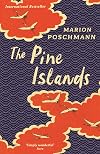
The Pine Islands
by Marion Poschmann
On This Page
Description
When Gilbert Silvester, a journeyman lecturer on beard fashions in film, awakes one day from a dream that his wife has cheated on him, he flees - immediately, irrationally, inexplicably - for Japan. In Tokyo he discovers the travel writings of the great Japanese poet Basho. Suddenly, from Gilbert's directionless crisis there emerges a purpose: a pilgrimage in the footsteps of the poet to see the moon rise over the pine islands of Matsushima. Falling into step with another pilgrim - a young show more Japanese student called Yosa, clutching a copy of The Complete Manual of Suicide - Gilbert travels with Yosa across Basho's disappearing Japan, one in search of his perfect ending and the other the new beginning that will give his life meaning. The Pine Islands is a serene, playful, profoundly moving story of the transformations we seek and the ones we find along the way. show lessTags
Recommendations

















































Member Recommendations

Member Reviews
A short, quirky and determinedly ambiguous novel that manages to be captivatingly deep and mournful at the same time as being delightfully superficial and funny. And a book that operates as much through symbols as it does through explicit narrative (stand by for a lot of hair and trees...). Poschmann is clearly a writer who doesn't trouble to switch off the "poet" side of herself when she's playing the role of a novelist.
With - respectively - Basho's Narrow road to the deep north and The complete manual of suicide under their arms, Gilbert and Yosa, who have met by chance on the end of a station platform in Tokyo, set off on a modern version of the poet's pilgrimage to the pine islands of Matsushima. Both of them are at low points in show more their lives: Gilbert, who has been doing research (without very much conviction of its utility) into the iconography of beards in the cultural studies department of a German university, has run away from his breadwinner-wife after having a bad dream about her Medusa-like hair; Yosa, who even with a false beard doesn't manage to live up to his own ideal of Japanese masculinity, has decided to kill himself after becoming convinced that he has done badly in an exam. But, for a while at least, their respective failings complement each other and allow the two of them to form an uneasy team to navigate the strange world of modern Japan together.
Poschmann enjoys herself using the cultural collisions involved in this unlikely setup to make fun of the odder and less defensible aspects of Japanese and European cultures (and, in passing, of some of our ideas about masculinity), but at the same time she draws European readers into an appreciation of some of the less obvious strengths of the Japanese way of looking at the world. A pilgrimage to look at a rock or a tree isn't as obvious a thing to do as a pilgrimage to look at a building or a great painting, particularly if we find the tree in the middle of a building site or a traffic island, but it isn't hard to see (when we look at it through her eyes) how it can also have value to us.
Of course, the resulting book isn't a well-formed novel in a conventional western way - the explicit story doesn't come to a satisfactory resolution, and the situation isn't one that would bear rationalising - Gilbert's reasons for leaving his wife would seem flimsy even by the standards of Othello, and he seems to have learnt as much about Japan 24 hours after his unplanned arrival there as the author did after three months of intensive study, for instance. But that doesn't seem to matter: This is another of those books that make you want to plan a re-read as soon as you put them down. show less
With - respectively - Basho's Narrow road to the deep north and The complete manual of suicide under their arms, Gilbert and Yosa, who have met by chance on the end of a station platform in Tokyo, set off on a modern version of the poet's pilgrimage to the pine islands of Matsushima. Both of them are at low points in show more their lives: Gilbert, who has been doing research (without very much conviction of its utility) into the iconography of beards in the cultural studies department of a German university, has run away from his breadwinner-wife after having a bad dream about her Medusa-like hair; Yosa, who even with a false beard doesn't manage to live up to his own ideal of Japanese masculinity, has decided to kill himself after becoming convinced that he has done badly in an exam. But, for a while at least, their respective failings complement each other and allow the two of them to form an uneasy team to navigate the strange world of modern Japan together.
Poschmann enjoys herself using the cultural collisions involved in this unlikely setup to make fun of the odder and less defensible aspects of Japanese and European cultures (and, in passing, of some of our ideas about masculinity), but at the same time she draws European readers into an appreciation of some of the less obvious strengths of the Japanese way of looking at the world. A pilgrimage to look at a rock or a tree isn't as obvious a thing to do as a pilgrimage to look at a building or a great painting, particularly if we find the tree in the middle of a building site or a traffic island, but it isn't hard to see (when we look at it through her eyes) how it can also have value to us.
Of course, the resulting book isn't a well-formed novel in a conventional western way - the explicit story doesn't come to a satisfactory resolution, and the situation isn't one that would bear rationalising - Gilbert's reasons for leaving his wife would seem flimsy even by the standards of Othello, and he seems to have learnt as much about Japan 24 hours after his unplanned arrival there as the author did after three months of intensive study, for instance. But that doesn't seem to matter: This is another of those books that make you want to plan a re-read as soon as you put them down. show less
Wenn aus Träumen Realität wird, kann daraus eine tiefgründige und humorvolle Reise nach Japan werden; so wie in diesem Buch.
Gilbert Silvester ist einer jener Männer, die irgendwann feststellen, dass sich ihr Leben nicht so entwickelt hat, wie sie es sich in jungen Jahren vorstellten. Statt wie viele seiner früheren Kommilitionen Karriere zu machen, hangelt er sich von Projektvertrag zu Projektvertrag, während seine Frau als Gymnasiallehrerin erfolgreich ist. Eines Nachts träumt er, dass sie ihm untreu ist und als er erwacht, ist klar, dass dieser Traum die Wahrheit darstellt. Fassungslos verlässt er das Haus und fliegt schnellstmöglich so weit weg wie es geht - nach Tokio. Dort plant er eine Reise auf den Spuren des Dichters show more Bashō, doch noch bevor er sie antritt, kann er den Selbstmord des jungen Japaners Yosa verhindern. Dieser schließt sich ihm an und gemeinsam machen sie sich auf den Weg.
Es ist eine ruhige, stellenweise poetische und auch philosophische Geschichte, die jedoch nicht ohne Humor ist. Gilbert ist ein etwas dröger 'Held', der sich seines beruflichen Mißerfolges zwar durchaus bewusst ist, verantwortlich dafür sind aber die Fehler der Anderen: die Kritikunfähigkeit seines Doktorvaters, der nicht geschätzte Auslandsaufenthalt - irgendwas war immer. Stets ist er das Opfer, nun das seiner Frau, die ihn mit ihrer Untreue (wenn auch nur geträumt) nach Japan getrieben hat. Wirklich amüsant wird es, als er Yosa begegnet und versucht, ihm die Welt zu erklären, die japanische natürlich. Und ihm (gedachte) Vorhaltungen macht, die exakt auf seine eigene Person zutreffen, was mir Gilbert aber wieder sympathischer machte (wie häufig, wenn ich über Personen lächeln muss ;-)).
Voller Poesie sind die zahlreichen Naturbeschreibungen, ganz im Sinne des Dichters Bashō, für den Poesie einen eigenen Lebensstil darstellte; selbst die des Selbstmörderwaldes, der tatsächlich existiert. Und auch die philosophischen Gedankengänge Gilberts von der Bartbetrachtung (seinem aktuellen Forschungsprojekt) bis zum Allmachtsparadoxon sind lesenswert-amüsant.
Ein ungemein vielschichtiges Buch, das mit Genuss und Aufmerksamkeit gelesen werden sollte und aus dem man viel über Japan erfahren kann. show less
Gilbert Silvester ist einer jener Männer, die irgendwann feststellen, dass sich ihr Leben nicht so entwickelt hat, wie sie es sich in jungen Jahren vorstellten. Statt wie viele seiner früheren Kommilitionen Karriere zu machen, hangelt er sich von Projektvertrag zu Projektvertrag, während seine Frau als Gymnasiallehrerin erfolgreich ist. Eines Nachts träumt er, dass sie ihm untreu ist und als er erwacht, ist klar, dass dieser Traum die Wahrheit darstellt. Fassungslos verlässt er das Haus und fliegt schnellstmöglich so weit weg wie es geht - nach Tokio. Dort plant er eine Reise auf den Spuren des Dichters show more Bashō, doch noch bevor er sie antritt, kann er den Selbstmord des jungen Japaners Yosa verhindern. Dieser schließt sich ihm an und gemeinsam machen sie sich auf den Weg.
Es ist eine ruhige, stellenweise poetische und auch philosophische Geschichte, die jedoch nicht ohne Humor ist. Gilbert ist ein etwas dröger 'Held', der sich seines beruflichen Mißerfolges zwar durchaus bewusst ist, verantwortlich dafür sind aber die Fehler der Anderen: die Kritikunfähigkeit seines Doktorvaters, der nicht geschätzte Auslandsaufenthalt - irgendwas war immer. Stets ist er das Opfer, nun das seiner Frau, die ihn mit ihrer Untreue (wenn auch nur geträumt) nach Japan getrieben hat. Wirklich amüsant wird es, als er Yosa begegnet und versucht, ihm die Welt zu erklären, die japanische natürlich. Und ihm (gedachte) Vorhaltungen macht, die exakt auf seine eigene Person zutreffen, was mir Gilbert aber wieder sympathischer machte (wie häufig, wenn ich über Personen lächeln muss ;-)).
Voller Poesie sind die zahlreichen Naturbeschreibungen, ganz im Sinne des Dichters Bashō, für den Poesie einen eigenen Lebensstil darstellte; selbst die des Selbstmörderwaldes, der tatsächlich existiert. Und auch die philosophischen Gedankengänge Gilberts von der Bartbetrachtung (seinem aktuellen Forschungsprojekt) bis zum Allmachtsparadoxon sind lesenswert-amüsant.
Ein ungemein vielschichtiges Buch, das mit Genuss und Aufmerksamkeit gelesen werden sollte und aus dem man viel über Japan erfahren kann. show less
I almost think I shouldn't have liked this book, but I did quite enjoy it. It's very dream-like (particularly towards the end) and there are a lot of reflective side wanderings about beards and trees and whatnot that are kind of dull but also kind of hilarious. And I did find this book funny, mostly because of the ridiculousness of Gilbert. He's less of an unreliable narrator and more of a "the narrator is full of bullshit". He's pretentious, pompous, and a completely self-involved egotist that views himself as supremely selfless and enlightened. He thinks his Japanese traveling companion is not Japanese enough and must be educated, so Gilbert lectures him about Japanese aesthetic, history, religion... Most of the time I'd not enjoy show more that type of protagonist but there was something in this that instead made me laugh. (Also, his Japanese companion that he keeps trying to prevent from committing suicide? His last name is Tamagotchi, which tickles me greatly.) Overall, while I enjoyed this book, I can definitely see how one could dislike or be annoyed by it. show less
In Marion Poschmann’s leisurely paced yet captivating novel The Pine Islands, eminent German scholar and authority on beard styles in film, Gilbert Silvester, has dreamed that his wife, Matilda, has cheated on him. Unable to shake the certainty that the dream is a reflection of the truth, he returns home after work that evening and confronts her. She denies the accusation, which “only confirmed his suspicions.” Gilbert retrieves his passport, gathers a few items together, leaves the house, and the next morning finds himself on board a flight to Tokyo. Gilbert’s journey through Japan occupies the remainder of the book. At a station in Tokyo he meets a young man, Yosa Tamagotchi, who becomes his reluctant traveling companion after show more Gilbert prevents him from jumping from the platform into the path of a train. The precise nature of Gilbert’s search is left unspecified, but it does seem that he is looking for self-knowledge, which will only come when he attains distance from the ills of society that are preventing him from accepting who and what he is. In addition to the insecurity he feels about his marriage, he has been frustrated in his career (“humble researcher, an associate lecturer”) because he never learned how to schmooze and get chummy with those in a position to help him advance. Yosa, on the other hand, who feels he has failed himself because he is certain he will not pass his exams and failed his parents because he refused to join the family’s tea business, is searching for the perfect place to end his life. Poschmann’s narrative achieves a solemn, meditative tone as Gilbert and Yosa meander from place to place—some haunted, others not—each nursing private grievances and regrets. Together they find solace in Japan’s natural beauty and the haiku poetry of Matsuo Bashō, whose journey through the country in search of enlightenment they follow. Finally, amidst the Pine Islands of Matsushima, Gilbert finds the tranquility he’s been seeking. An oddly soothing book that can also be droll and surprising. Exquisitely translated by Jen Calleja, The Pine Islands was shortlisted for the Man Booker International Prize in 2019. show less
I don’t know how Poschmann did it but this novel captures with exquisite perfection the disorienting experience that living in Japan can be, for an attentive non-Japanese person who comes to Japan with no agenda and with some time to look around.
There is such an extreme level of discernment here in this novel...every scene nails it. I would guess most people who have not spent a lot of time in Japan—enough for instance to know about the deeply strange and almost obligatory love every Japanese person professes to feel about Matsushima—would feel like this book is exaggerated satire, when actually it just is the way Japan IS.
I’m kind of in awe and a little woozy from the experience of having just finished this excellent and very show more funny book, so maybe I will come back and try to be more coherent in my review in a few days. I lived in Japan for years and this novel hit me hard with a lovely nostalgia for a place I still love so its impossible for me to know how anyone else without this experience will react to it. show less
There is such an extreme level of discernment here in this novel...every scene nails it. I would guess most people who have not spent a lot of time in Japan—enough for instance to know about the deeply strange and almost obligatory love every Japanese person professes to feel about Matsushima—would feel like this book is exaggerated satire, when actually it just is the way Japan IS.
I’m kind of in awe and a little woozy from the experience of having just finished this excellent and very show more funny book, so maybe I will come back and try to be more coherent in my review in a few days. I lived in Japan for years and this novel hit me hard with a lovely nostalgia for a place I still love so its impossible for me to know how anyone else without this experience will react to it. show less
A short, amusing, thoughtful and poetic novel. A german specialist in beard fashions argues with his wife, in a huff goes to the airport and buys a ticket on the first long haul flight available. To Tokyo. There he bumps into and befriends, well not really; or teams up with, no not that either, well he travels in tandem with a young man contemplating suicide. The journey turns into a contemplation of Japanese concepts of natural beauty in the wake of Saigyo and Basho. His young travelling companion possibly becomes a ghost. He sends emails to his wife who is annoyed but not as puzzled as you might hve thought by his long distance grump. And who would have thought beard fashions could be so interesting?
Read as part of the MBI 2019 longlist. Poschmann is a highly acclaimed poet and novelist in Germany but her work does not appear to have been widely translated and promoted in the US or UK. This novel won a major German literary prize when it came out.
The story is narrated by Gilbert Silvester, a member of the academic precariat who wakes up one morning after having had a dream that his wife is cheating on him. He accuses her, she denies it, and he decides to leave her and fly immediately to the most remote place he can find: Tokyo. After a long and restless flight he lands in Narita and picks up a handful of Japanese classics in English, including a volume of the great poet Basho’s haikus.
Tokyo is not an obvious place for Gilbert to show more go: he is a coffee drinker flying to the ultimate land of tea, a scholar of beards as they are depicted in art and film in a land where men rarely wear beards, and without much of a plan beyond escaping his current trauma. But his journey is soon shaped by two events: he meets Yosa Tamagotchi, a young Japanese student who is afraid he has failed his exams and is planning to commit suicide; and a desire to reproduce Basho’s journey to the Pine Islands, famed for their natural beauty.
After persuading Yosa not to throw himself in front a train, Gilbert takes him back to his hotel room, where Yosa treats him with deference and politeness. Yosa has been consulting a book entitled The Complete Manual of Suicide and Gilbert persuades Yosa to postpone his plan and come with him on his journey. Yosa stipulates and Gilbert accepts the condition that they will visit sites of famous suicides that are described in the Manual and which are considered particularly memorable and beautiful. These combined destinations take the two men on a journey from south of Tokyo back to the city, then on past Fukushima and finally, late in the novel, to the Pine Islands, with stops at many sites of natural beauty along the way. Poschmann is known for her writing about the natural world and it is beautifully depicted and translated here.
The book begins with a quirky and satirical tone and the catalytic event reminded me of Andrew Sean Greer’s Pulitzer-prize winning novel, Less. Gilbert is not nearly as lovable as Arthur Less, but there are more layers to this novel. The interaction of Western male and Eastern society is at first just as purposefully stereotypical and cliche-ridden, but then it becomes more deeply explored. Gilbert’s intellectual complacency and self-satisfaction is foregrounded against a society that is revealed to be entirely resistant to his presence. In the end, he changes nothing in Japan, but his experiences change him, or at least they force him to look inward in ways that are good for him and that he can’t control.
The Gilbert-Yosa pairing mimics Basho’s journey with his companion, Sora. But as Yosa’s surname, Tamagotchi, suggests, part of Gilbert’s job is to keep Yosa alive. Gilbert seems to perceive Yosa in a way that is similar to how the electronic toy was perceived, i.e., young, unformed, unable even to grow a beard. Preventing him from killing himself gives Gilbert a purpose in his otherwise unfocused travels, and Yosa provides information and insight about the places they go. He also writes much better haiku.
But Gilbert can’t keep Yosa from continuing to attempt to fulfill his objective, and when they are separated and Yosa disappears at a train junction Gilbert starts to fall apart. His complacency and belief in his own intellectual superiority starts to fade away. He enters and leaves dreamlike states and becomes more keenly aware of the world around him. Poschmann contrasts the brutalism and functionality of the built environment with the beautiful and wild natural world (even the carefully tended pines in the Imperial Palace Gardens are encouraged to grow in winding branches). Tea starts to taste almost good to him.
The comic tone of the first half of the novel is replaced by a darker, more poetic, and even more atmospheric style as Gilbert grows closer to and then immerses himself in the Pine Islands. The ending is ambiguous, although there is a hint that Yosa didn’t just disappear.
And what about Gilbert’s wife, Mathilda? She calls him frantically when he first leaves and he finally responds, but he refuses to believe she is innocent of the acts his dream told him about. Nevertheless, while in Japan he writes her long, philosophical letters about beards, trees, and the Japanese settings he is experiencing. We never see Mathilda except as an extension of Gilbert’s world, not her own person in the book, which might be off-putting to some readers.
There has been discussion in GR reviews about whether the text is appropriating Japanese culture and stereotyping the culture and people. My take is that while there are scenes and passages that do this quite explicitly, they are from Gilbert’s perspective and therefore part of the thematic structure of the novel. Gilbert is a sendup of the Western traveler who is complacent and self-satisfied about his own take on other cultures, to the point where he lectures Yosa on Japanese history. As the story progresses and as Gilbert becomes increasingly unmoored, those aspects also diminish in the novel. That suggests to me that it was an authorial choice, not unconscious appropriation or stereotyping.
There are many layers in this book that I’m sure I missed because I’m not as familiar with the German references as other readers might be. There are clearly parallels with trees and forests, and more generally an emphasis on the importance of the natural world, but nuances beyond that were lost to me. Nevertheless, I found this quite a compelling read. The first part was obviously comic, and then the second half became much more thickly atmospheric. show less
The story is narrated by Gilbert Silvester, a member of the academic precariat who wakes up one morning after having had a dream that his wife is cheating on him. He accuses her, she denies it, and he decides to leave her and fly immediately to the most remote place he can find: Tokyo. After a long and restless flight he lands in Narita and picks up a handful of Japanese classics in English, including a volume of the great poet Basho’s haikus.
Tokyo is not an obvious place for Gilbert to show more go: he is a coffee drinker flying to the ultimate land of tea, a scholar of beards as they are depicted in art and film in a land where men rarely wear beards, and without much of a plan beyond escaping his current trauma. But his journey is soon shaped by two events: he meets Yosa Tamagotchi, a young Japanese student who is afraid he has failed his exams and is planning to commit suicide; and a desire to reproduce Basho’s journey to the Pine Islands, famed for their natural beauty.
After persuading Yosa not to throw himself in front a train, Gilbert takes him back to his hotel room, where Yosa treats him with deference and politeness. Yosa has been consulting a book entitled The Complete Manual of Suicide and Gilbert persuades Yosa to postpone his plan and come with him on his journey. Yosa stipulates and Gilbert accepts the condition that they will visit sites of famous suicides that are described in the Manual and which are considered particularly memorable and beautiful. These combined destinations take the two men on a journey from south of Tokyo back to the city, then on past Fukushima and finally, late in the novel, to the Pine Islands, with stops at many sites of natural beauty along the way. Poschmann is known for her writing about the natural world and it is beautifully depicted and translated here.
The book begins with a quirky and satirical tone and the catalytic event reminded me of Andrew Sean Greer’s Pulitzer-prize winning novel, Less. Gilbert is not nearly as lovable as Arthur Less, but there are more layers to this novel. The interaction of Western male and Eastern society is at first just as purposefully stereotypical and cliche-ridden, but then it becomes more deeply explored. Gilbert’s intellectual complacency and self-satisfaction is foregrounded against a society that is revealed to be entirely resistant to his presence. In the end, he changes nothing in Japan, but his experiences change him, or at least they force him to look inward in ways that are good for him and that he can’t control.
The Gilbert-Yosa pairing mimics Basho’s journey with his companion, Sora. But as Yosa’s surname, Tamagotchi, suggests, part of Gilbert’s job is to keep Yosa alive. Gilbert seems to perceive Yosa in a way that is similar to how the electronic toy was perceived, i.e., young, unformed, unable even to grow a beard. Preventing him from killing himself gives Gilbert a purpose in his otherwise unfocused travels, and Yosa provides information and insight about the places they go. He also writes much better haiku.
But Gilbert can’t keep Yosa from continuing to attempt to fulfill his objective, and when they are separated and Yosa disappears at a train junction Gilbert starts to fall apart. His complacency and belief in his own intellectual superiority starts to fade away. He enters and leaves dreamlike states and becomes more keenly aware of the world around him. Poschmann contrasts the brutalism and functionality of the built environment with the beautiful and wild natural world (even the carefully tended pines in the Imperial Palace Gardens are encouraged to grow in winding branches). Tea starts to taste almost good to him.
The comic tone of the first half of the novel is replaced by a darker, more poetic, and even more atmospheric style as Gilbert grows closer to and then immerses himself in the Pine Islands. The ending is ambiguous, although there is a hint that Yosa didn’t just disappear.
And what about Gilbert’s wife, Mathilda? She calls him frantically when he first leaves and he finally responds, but he refuses to believe she is innocent of the acts his dream told him about. Nevertheless, while in Japan he writes her long, philosophical letters about beards, trees, and the Japanese settings he is experiencing. We never see Mathilda except as an extension of Gilbert’s world, not her own person in the book, which might be off-putting to some readers.
There has been discussion in GR reviews about whether the text is appropriating Japanese culture and stereotyping the culture and people. My take is that while there are scenes and passages that do this quite explicitly, they are from Gilbert’s perspective and therefore part of the thematic structure of the novel. Gilbert is a sendup of the Western traveler who is complacent and self-satisfied about his own take on other cultures, to the point where he lectures Yosa on Japanese history. As the story progresses and as Gilbert becomes increasingly unmoored, those aspects also diminish in the novel. That suggests to me that it was an authorial choice, not unconscious appropriation or stereotyping.
There are many layers in this book that I’m sure I missed because I’m not as familiar with the German references as other readers might be. There are clearly parallels with trees and forests, and more generally an emphasis on the importance of the natural world, but nuances beyond that were lost to me. Nevertheless, I found this quite a compelling read. The first part was obviously comic, and then the second half became much more thickly atmospheric. show less
Members
- Recently Added By
Published Reviews
ThingScore 75
Here is a short novel almost miraculous in its successful blending of potentially clashing tones. This may be one benefit of a writer growing up in their own language, and being translated only when they have achieved escape velocity. As a result Marion Poschmann, a multi-award-winning poet and novelist in her native Germany, now appears in English fully formed, translated by Jen Calleja, and show more has all the air of uncovered greatness: this month the book was longlisted for the Man Booker International prize. show less
added by Nevov
Lists

Books Read in 2019
4,052 works; 108 members
Author Information

20+ Works 245 Members
Some Editions
Awards and Honors
Awards
Distinctions
Work Relationships
Was inspired by
Common Knowledge
- Canonical title
- The Pine Islands
- Original title
- Die Kieferninseln
- Original publication date
- 2019 (English translation) (English translation); 2017
- People/Characters
- Matsuo Bashō
- Important places
- Japan
- Epigraph
- ‘Go to the pine if you want to learn about the pine.’
Matsuo Bashō
Willst du etwas über Kiefern wissen — geh zu den Kiefern. Matsuo Bashō - First words
- Er hatte geträumt, daß seine Frau ihn betrog.
- Last words
- (Click to show. Warning: May contain spoilers.)Die Laubfärbung beginnt.
- Original language
- German
Classifications
Statistics
- Members
- 166
- Popularity
- 197,205
- Reviews
- 17
- Rating
- (3.60)
- Languages
- 5 — Dutch, English, German, Spanish, Swedish
- Media
- Paper, Audiobook, Ebook
- ISBNs
- 15
- ASINs
- 6