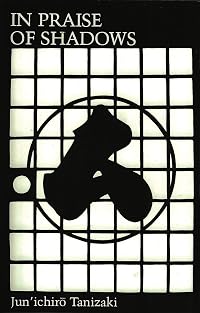
In Praise of Shadows
by Jun'ichirō Tanizaki
There is 1 current discussion about this work.
On This Page
Description
'Were it not for shadows there would be no beauty.' In Praise of Shadows is an eloquent tribute to the austere beauty of traditional Japanese aesthetics. Through architecture, ceramics, theatre, food, women and even toilets, Tanizaki explains the essence of shadows and darkness, and how they are able to augment beauty. He laments the heavy electric lighting of the West and its introduction to Japan, and shows how the artificial, bright and polished aesthetic of the West contrasts show more unfavourably with the moody and natural light of the East. Dreamy, melancholic and mysterious, In Praise of Shadows is a haunting insight into a forgotten world. show lessTags
Recommendations





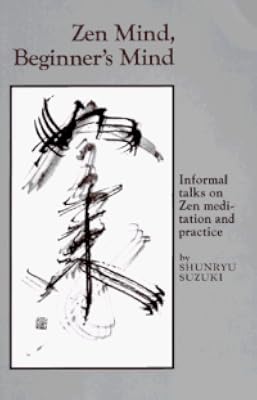
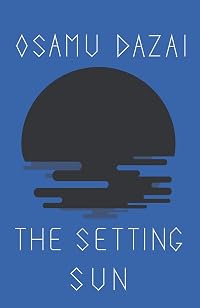
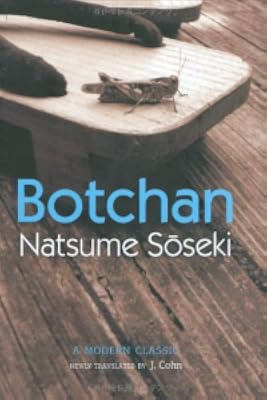
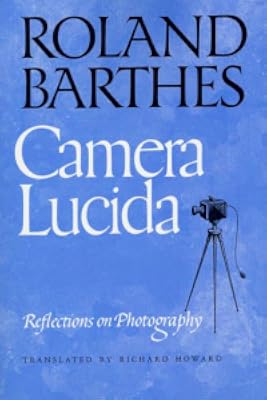


Member Recommendations

Member Reviews
What an odd blend of poetic imagery and grumpy old-man syndrome. If you're inclined toward focusing on the beauty of old ways and old things then there's a lot to agree with here. Measured prose and evocative imagery paint the dark on light as is the author's theme, but it overlies a disdain for change. This disdain is a rot at the foundations of the premise.
Where the focus is on the sublime natural elements of rain or wood grain we charge along with nods, imagining ourselves in these peaceful moments and settings. That tranquility vanishes with comparison. Once modern life creeps its way into the work our tranquility vanishes, but not from the pen and western paper, but from the tonal change toward scorn.
And finally, this book is only show more about 50 pages, but it really manages to pack in a lot of racism and sexism in that space. Not much else to say there. It's a problem.
I kept finding myself saying, "Go back to musing on your special toilet, old man." show less
Where the focus is on the sublime natural elements of rain or wood grain we charge along with nods, imagining ourselves in these peaceful moments and settings. That tranquility vanishes with comparison. Once modern life creeps its way into the work our tranquility vanishes, but not from the pen and western paper, but from the tonal change toward scorn.
And finally, this book is only show more about 50 pages, but it really manages to pack in a lot of racism and sexism in that space. Not much else to say there. It's a problem.
I kept finding myself saying, "Go back to musing on your special toilet, old man." show less
On the surface, an inconsequential set of ramblings about how Japan's pursuit of Western illumination has ruined certain aesthetic traditions. I had to remind myself that it was written in the 1930s, at a time when Western-style "progress" was eating away at centuries of tradition in Japan. Tanizaki posits some interesting theories about why Japanese architecture and notions of beauty developed the way they did, embracing shadows and focusing on single aspects of beauty to be highlighted by the existence of the surrounding shade. I'm one of the Westerners he's perplexed by - I love light, and would throw open curtains, doors and windows to let it in. But I also understand his love of muted light, natural light, preferring it to the show more harsh glare of electric light as he does. Japan has changed too much over the past 80 years for me to ever experience the aesthetics Tanuzaki appreciated and mourned, so I won't ever be able to fully understand this essay, but I enjoyed it all the same. show less
Refreshing to read an unabashed aesthetic defense, as well as one where the west is an alluring intruder set to destroy tradition with inventions like hideous electric lighting. The historical background of this being pre-WWII and an era of nationalism gives some context for the traditionalist sentiment, and with that in mind the essay is quite mild, much like the soft shadows that the author prefers. Some of this clash of civilizations can still be felt between the glass highrises interwoven with a traditional wood-joined temples when visiting Japan. Neon lights and shoji walls.
I'm currently reading The Power of Chowa, wherein Akemi mentions this book in passing. When i read the name of the writer i was sure i had some of his books in my pile of books waiting to be read, and sure enough, one of those books was this one.
So i put aside The Power of Chowa for a while and gave this a read to fully understand the impression that Akemi was trying to give.
And wow, this is definitely one to put on the shelf next to The Book of Tea. Both books have wonderful passages of ranting, but it's intelligent ranting fuelled by a genuine passion for something truly precious; and in between the passages of ranting one gets some wonderful, thought provoking passages of delightful, descriptive writing: this book is like a show more painting in words.
Written in the 1930's, concerning Japan's modernisation it's news to me to read how, even before WWII and the surrender to the USA, Japan's desire to ape American culture was already underway. But, that aside, i do feel that Junichiro fails to appreciate that even in the west we have lost so many of our own shadows. It seems that most of my life that here in Europe, we have been hell bent on illuminating everything to ridiculous levels, banishing all shadow wherever it may lurk.
The never ending pursuit of cleaning out the dirt and dust and any corners where it may lurk: banish the shadows for your own health's sake! The continued insistence on ridiculous levels of cleanliness and sterility within and without our homes, which has lead to ever lower immune function and plenty of allergies along with it.
And it's not just the shadows, it's any semblance of quiet we will blast sound into. Where now can we truly be quiet and stare into the night sky and see the stars as they truly are? When was the last time you truly experienced the peaceful quite and shadows of the real world without modern technology to protect and coddle you? Or are you one of the new people, ever terrified of what unknowns may be lurking there where you hear and see nothing but vague outlines and impressions?
I agree with Junichiro, we have lost something truly precious.
The only thing i would say about this book is that, for me at least, the "Afterword" would be better placed as a "Foreword". I just feel that it would focus ones attention on certain things a lot more if they had been pointed out before hand instead of afterwards. I will definitely be reading this again at some point before i die and when i do i will definitely read the "Afterword" first. show less
So i put aside The Power of Chowa for a while and gave this a read to fully understand the impression that Akemi was trying to give.
And wow, this is definitely one to put on the shelf next to The Book of Tea. Both books have wonderful passages of ranting, but it's intelligent ranting fuelled by a genuine passion for something truly precious; and in between the passages of ranting one gets some wonderful, thought provoking passages of delightful, descriptive writing: this book is like a show more painting in words.
Written in the 1930's, concerning Japan's modernisation it's news to me to read how, even before WWII and the surrender to the USA, Japan's desire to ape American culture was already underway. But, that aside, i do feel that Junichiro fails to appreciate that even in the west we have lost so many of our own shadows. It seems that most of my life that here in Europe, we have been hell bent on illuminating everything to ridiculous levels, banishing all shadow wherever it may lurk.
The never ending pursuit of cleaning out the dirt and dust and any corners where it may lurk: banish the shadows for your own health's sake! The continued insistence on ridiculous levels of cleanliness and sterility within and without our homes, which has lead to ever lower immune function and plenty of allergies along with it.
And it's not just the shadows, it's any semblance of quiet we will blast sound into. Where now can we truly be quiet and stare into the night sky and see the stars as they truly are? When was the last time you truly experienced the peaceful quite and shadows of the real world without modern technology to protect and coddle you? Or are you one of the new people, ever terrified of what unknowns may be lurking there where you hear and see nothing but vague outlines and impressions?
I agree with Junichiro, we have lost something truly precious.
The only thing i would say about this book is that, for me at least, the "Afterword" would be better placed as a "Foreword". I just feel that it would focus ones attention on certain things a lot more if they had been pointed out before hand instead of afterwards. I will definitely be reading this again at some point before i die and when i do i will definitely read the "Afterword" first. show less
“We find beauty not in the thing itself but in the patterns of shadows, the light and the darkness, that one thing against another creates… Were it not for shadows, there would be no beauty.”
This is a fascinating, surprising, occasionally amusing essay that lauds and explains traditional Japanese aesthetics relating to light and its absence. It’s applied to architecture, music, writing, the costumes of theatres and temples, women, and food. It contrasts Japanese principles with the western ones that were increasingly influential in 1933, and asks if progress is necessarily good, particularly when it’s imported from another culture.
Image: “The beauty of a Japanese room depends on a variation of shadows, heavy shadows show more against light shadows” - that’s why there are so few ornaments. (Source.)
Dark and Light, East and West
“How different everything would be if we in the Orient had developed our own science.”
It’s not just a matter of taste. Tanizaki sees the differences arising from the landscape and the people themselves, giving rise to different paths of development - a cultural butterfly effect.
He explains how the fountain pen, "an insignificant little piece of writing equipment", was invented in the west, so there is no brush, no gentle seeping of black ink, and different paper is required. It makes writing a viscerally different experience, and its adoption in the east triggered suggestions to replace characters with Roman script, and will inevitably influence the type of literature Japanese writers write.
Image: You can now buy hybrid cartridge-filled brush pens. (Source.)
But I was challenged by the conclusions of this self-described Oriental that the fundamental reason for Japanese preference for dark and shadows was skin colour: how light plays on Japanese skin which, though pale, is "tainted by a slight cloudiness" akin to dirt in a clear pool. He even empathises with “pure-blooded whites” upset by the sight of those with other skin tones!
Protect Difference or Accept Hegemony?
In a broader sense, this is a topical question, nearly a century after it was written. How do we balance embracing the richness of other cultures with maintaining the essence of their distinct identities?
Tanizaki observes fundamental differences between east and west, and he doesn’t want to erase them, though he accepts some of the conveniences that come from afar.
I remember travelling in China in 2008, being struck by how different the fashion and cosmetic ads were compared with my previous trip in 1992. They all used the palest, least Chinese-looking models - apart from those that used western models. It’s one thing desiring western products, but wanting to look like a different race is tragic - except for the burgeoning cosmetic surgery sector, with specialisms in eye-surgery, skin whitening, and even leg lengthening.
Darkness to Enhance Other Senses
“Our cooking depends upon shadows and is inseparable from darkness.”
I once went to a restaurant whose USP was eating in total darkness. It was an experience like no other, and flavours were surprisingly hard to identify. I relished the novelty, and the enhanced sensations of shape and texture. That’s not a viable option day to day, but eating in more normal low-light, and without the distractions of cluttered walls, and background music certainly engages one more in the food itself. Conversely, too many dinners in front of the TV, where you barely notice what you eat, let alone how much, surely contribute to the obesity problem.
Tanizaki is at his most lyrical when writing about aged lacquerware in traditional low light (see quotes below):
“Only in dim half-light is the true beauty of Japanese lacquerware revealed.”
Image: Ōnishi Isao, a traditional lacquerware craftsman works by candlelight. (Source.)
Quotes
In places, this reads almost like poetry, but is by a novelist who was shortlisted for the Nobel Prize in Literature in 1964: Jun'ichirō Tanizaki.
• “The Japanese toilet is truly a place of spiritual repose. It always stands apart from the main building, at the end of a corridor, in a grove fragrant with leaves and moss. No words can describe that sensation as one sits in the dim light, basking in the faint glow reflected from the shoji, lost in meditation or gazing out at the garden.”
• “Japanese paper gives us a certain feeling of warmth, of calm and repose… Western paper turns away the light, while our paper seems to take it in, to envelop it gently, like the soft surface of a first snowfall. It gives off no sound when it is crumpled or folded, it is quiet and pliant to the touch as the leaf of a tree.”
• “We find it hard to be really at home with things that shine and glitter. The Westerner uses silver and steel and nickel tableware, and polishes it to a fine brilliance… We begin to enjoy it only when the luster has worn off, when it has begun to take on a dark, smoky patina.
• “We do not dislike everything that shines, but we do prefer a pensive luster to a shallow brilliance, a murky light that, whether in a stone or an artifact, bespeaks a sheen of antiquity.”
• “Darkness is an indispensable element of the beauty of lacquerware… [Traditional lacquerware] was finished in black, brown, or red, colors built up of countless layers of darkness, the inevitable product of the darkness in which life was lived.”
• “In the Gothic cathedral of the West, the roof is thrust up and up so as to place its pinnacle as high in the heavens as possible… In the temples of Japan, on the other hand, a roof of heavy tiles is first laid out, and in the deep, spacious shadows created by the eaves the rest of the structure is built.”
• “Japanese music is above all a music of reticence, of atmosphere… In conversation, too, we prefer the soft voice, the understatement. Most important of all are the pauses.”
• “Light is used not for reading and writing or sewing but for dispelling the shadows in the farthest corners, and this runs against the basic idea of the Japanese room.”
• “So dilute is the light there that no matter what the season, on fair days or cloudy, morning, midday, or evening, the pale, white glow scarcely varies. And the shadows at the interstices of the ribs seem strangely immobile, as if dust collected in the corners had become a part of the paper itself. I blink in uncertainty at this dreamlike luminescence, feeling as though some misty film were blunting my vision.”
• “The color of that ‘darkness seen by candlelight.’ It was different in quality from darkness on the road at night. It was a repletion, a pregnancy of tiny particles like fine ashes, each particle luminous as a rainbow.”
Themes
After reading this, I discovered a different edition labels 16 sections. I couldn’t actually work out where all the section breaks would go, so I’m glad I read it as one continuous piece. All the themes are covered, but not solely in this sequence:
1. On construction
2. The toilet aesthetic
3. A different course
4. A novelist's daydreams
5. On paper, tin and dirt
6. Candlelight and lacquerware
7. Bowls of broth
8. The enigma of shadows
9. An uncanny silence
10. Reflections in darkness
11. Shadows on the stage
12. The woman of old
13. Beauty in the dark
14. A world of shadows
15. A cool breeze in total darkness
16. Final grumblings
See also
• The only fiction I've read by Tanizaki also switches between cold light and very dark. See my review of The Tattooer, HERE.
• For a collection of mini reviews of stories about people and their shadows in European tales, see my review of Hans Christian Andersen's The Shadow, HERE. show less
This is a fascinating, surprising, occasionally amusing essay that lauds and explains traditional Japanese aesthetics relating to light and its absence. It’s applied to architecture, music, writing, the costumes of theatres and temples, women, and food. It contrasts Japanese principles with the western ones that were increasingly influential in 1933, and asks if progress is necessarily good, particularly when it’s imported from another culture.
Image: “The beauty of a Japanese room depends on a variation of shadows, heavy shadows show more against light shadows” - that’s why there are so few ornaments. (Source.)
Dark and Light, East and West
“How different everything would be if we in the Orient had developed our own science.”
It’s not just a matter of taste. Tanizaki sees the differences arising from the landscape and the people themselves, giving rise to different paths of development - a cultural butterfly effect.
He explains how the fountain pen, "an insignificant little piece of writing equipment", was invented in the west, so there is no brush, no gentle seeping of black ink, and different paper is required. It makes writing a viscerally different experience, and its adoption in the east triggered suggestions to replace characters with Roman script, and will inevitably influence the type of literature Japanese writers write.
Image: You can now buy hybrid cartridge-filled brush pens. (Source.)
But I was challenged by the conclusions of this self-described Oriental that the fundamental reason for Japanese preference for dark and shadows was skin colour: how light plays on Japanese skin which, though pale, is "tainted by a slight cloudiness" akin to dirt in a clear pool. He even empathises with “pure-blooded whites” upset by the sight of those with other skin tones!
Protect Difference or Accept Hegemony?
In a broader sense, this is a topical question, nearly a century after it was written. How do we balance embracing the richness of other cultures with maintaining the essence of their distinct identities?
Tanizaki observes fundamental differences between east and west, and he doesn’t want to erase them, though he accepts some of the conveniences that come from afar.
I remember travelling in China in 2008, being struck by how different the fashion and cosmetic ads were compared with my previous trip in 1992. They all used the palest, least Chinese-looking models - apart from those that used western models. It’s one thing desiring western products, but wanting to look like a different race is tragic - except for the burgeoning cosmetic surgery sector, with specialisms in eye-surgery, skin whitening, and even leg lengthening.
Darkness to Enhance Other Senses
“Our cooking depends upon shadows and is inseparable from darkness.”
I once went to a restaurant whose USP was eating in total darkness. It was an experience like no other, and flavours were surprisingly hard to identify. I relished the novelty, and the enhanced sensations of shape and texture. That’s not a viable option day to day, but eating in more normal low-light, and without the distractions of cluttered walls, and background music certainly engages one more in the food itself. Conversely, too many dinners in front of the TV, where you barely notice what you eat, let alone how much, surely contribute to the obesity problem.
Tanizaki is at his most lyrical when writing about aged lacquerware in traditional low light (see quotes below):
“Only in dim half-light is the true beauty of Japanese lacquerware revealed.”
Image: Ōnishi Isao, a traditional lacquerware craftsman works by candlelight. (Source.)
Quotes
In places, this reads almost like poetry, but is by a novelist who was shortlisted for the Nobel Prize in Literature in 1964: Jun'ichirō Tanizaki.
• “The Japanese toilet is truly a place of spiritual repose. It always stands apart from the main building, at the end of a corridor, in a grove fragrant with leaves and moss. No words can describe that sensation as one sits in the dim light, basking in the faint glow reflected from the shoji, lost in meditation or gazing out at the garden.”
• “Japanese paper gives us a certain feeling of warmth, of calm and repose… Western paper turns away the light, while our paper seems to take it in, to envelop it gently, like the soft surface of a first snowfall. It gives off no sound when it is crumpled or folded, it is quiet and pliant to the touch as the leaf of a tree.”
• “We find it hard to be really at home with things that shine and glitter. The Westerner uses silver and steel and nickel tableware, and polishes it to a fine brilliance… We begin to enjoy it only when the luster has worn off, when it has begun to take on a dark, smoky patina.
• “We do not dislike everything that shines, but we do prefer a pensive luster to a shallow brilliance, a murky light that, whether in a stone or an artifact, bespeaks a sheen of antiquity.”
• “Darkness is an indispensable element of the beauty of lacquerware… [Traditional lacquerware] was finished in black, brown, or red, colors built up of countless layers of darkness, the inevitable product of the darkness in which life was lived.”
• “In the Gothic cathedral of the West, the roof is thrust up and up so as to place its pinnacle as high in the heavens as possible… In the temples of Japan, on the other hand, a roof of heavy tiles is first laid out, and in the deep, spacious shadows created by the eaves the rest of the structure is built.”
• “Japanese music is above all a music of reticence, of atmosphere… In conversation, too, we prefer the soft voice, the understatement. Most important of all are the pauses.”
• “Light is used not for reading and writing or sewing but for dispelling the shadows in the farthest corners, and this runs against the basic idea of the Japanese room.”
• “So dilute is the light there that no matter what the season, on fair days or cloudy, morning, midday, or evening, the pale, white glow scarcely varies. And the shadows at the interstices of the ribs seem strangely immobile, as if dust collected in the corners had become a part of the paper itself. I blink in uncertainty at this dreamlike luminescence, feeling as though some misty film were blunting my vision.”
• “The color of that ‘darkness seen by candlelight.’ It was different in quality from darkness on the road at night. It was a repletion, a pregnancy of tiny particles like fine ashes, each particle luminous as a rainbow.”
Themes
After reading this, I discovered a different edition labels 16 sections. I couldn’t actually work out where all the section breaks would go, so I’m glad I read it as one continuous piece. All the themes are covered, but not solely in this sequence:
1. On construction
2. The toilet aesthetic
3. A different course
4. A novelist's daydreams
5. On paper, tin and dirt
6. Candlelight and lacquerware
7. Bowls of broth
8. The enigma of shadows
9. An uncanny silence
10. Reflections in darkness
11. Shadows on the stage
12. The woman of old
13. Beauty in the dark
14. A world of shadows
15. A cool breeze in total darkness
16. Final grumblings
See also
• The only fiction I've read by Tanizaki also switches between cold light and very dark. See my review of The Tattooer, HERE.
• For a collection of mini reviews of stories about people and their shadows in European tales, see my review of Hans Christian Andersen's The Shadow, HERE. show less
Esse pequeno relato incrivelmente evocativo e repleto de fascinante descrições e avaliações minuciosas, aborda, do ponto de vista de um nacionalismo reacionário, de um romantismo barroco, de um gótico muito observador, pra usar anacronismos, uma estética japonesa tradicional. Isso na década de 30, quando o Japão era tomado pela modernização. Assim, o autor contrapõe um estilo próprio da cultura local, especulativamente ligado à características fenotípicas (um povo, com uma gama de cores de pele específicas). Um que valoriza a sombra, o esconder, o encoberto (invocando o sinistro da beleza da mulher como um pedaço de madeira sem carne, estandarte para as roupas ali situadas; a ideia de marionete que paira aí), além do show more colocar-se em situação, contra uma tendência moderna, européia-ocidental, de iluminação, lâmpadas elétricas e equipamentos que relegam o estético a um papel menor, subsidiário. Nisso ele acaba avançando uma visão de que a estética deveria ser prioritária na harmonização das coisas da cultura, mas também que a modernização respondem a ensejos estéticos por clareza e limpidez excessiva, típica dos europeus, e ligada à compleição dos mesmos. Destaque para a descrição tão cativante quanto excêntrica das belezas das latrinas japonesas tradicionais. Ao final, entretanto, em que pese o mito do passado melhor, que o autor admite, há de fato, em meio a transições desenfreadas, a necessidade de pararmos e ponderarmos sobre a ligação entre o bem viver e a estética, sua colocação em situação, o que envolve a ideia de harmonização com o que já é dado. O refúgio das sombras, frente à modernização, acabará sendo a literatura, ele conclui. E pratica. show less
A brief, but wonderful book on Japanese aesthetics from the novelist Junichiro Tanizaki, who today, is perhaps most famous for the book The Makioka Sisters (which was made into a film by Kon Ichikawa).
I thought some of his reflections were very interesting.
The beauty of patina, the love of shadows in Japanese architecture, the aesthetics of lacquerware and the bathroom as a sanctuary. He wrote on "controlled darkness" (when everything is made perfectly visible, a space can lose its layered depth).
I thought some of his reflections were very interesting.
The beauty of patina, the love of shadows in Japanese architecture, the aesthetics of lacquerware and the bathroom as a sanctuary. He wrote on "controlled darkness" (when everything is made perfectly visible, a space can lose its layered depth).
Members
- Recently Added By
Published Reviews
Tanizaki's relish in the world and its ordinary pleasures offers a sharp contrast to the functional, plastic, disposable aesthetic of modern western life. Although his aesthetic is associated with a cultural perspective markedly different from western varieties, there is nevertheless something essentially familiar about it. It addresses the felt quality of experience in the lived moment, not show more just as an end in itself but because each such moment belongs to a lifelong series (in the ideal) in which beauty and richness of experience are important components of the good life. show less
added by lilithcat
“In Praise of Shadows” (In-ei Raison) is a long essay published in 1934, in which Tanizaki sums up what he feels Japan has lost in becoming modern. In brief, it is his view that the traditional Japanese arts thrived in the shade, and that the glaring light of the Twentieth Century is destroying them. Anyone who has winced at the violent cerises and magentas of the modern Kabuki can see show more what he means when he suggests at the end of the essay that we try turning down the lights. show less
added by lilithcat
Lists

Best Architecture Books
87 works; 14 members

Japanese Literature
230 works; 40 members

Books Read in 2018
4,360 works; 110 members

SHOULD Read Books!
354 works; 9 members

1930s
262 works; 5 members

Widely acclaimed, one book per year
105 works; 3 members

jewels
8 works; 1 member

NTS Book Channel
316 works; 1 member
Talk Discussions
Current Discussions
2nd edn Winner Discussion: In Praise of Shadows in Consensus Press (January 14)
Author Information

Some Editions
Awards and Honors
Notable Lists
Series
Belongs to Publisher Series
Work Relationships
Is contained in
Common Knowledge
- Canonical title
- In Praise of Shadows
- Original title
- 陰翳礼讃; Inʾei raisan
- Original publication date
- 1933
- Important places
- Japan
- Quotations
- Such is our way of thinking – we find beauty not in the thing itself, but in the patterns of shadows, the light and the darkness, that one thing against another creates.
- Original language
- Japanese
- Canonical DDC/MDS
- 895.644
Classifications
- Genres
- Nonfiction, Art & Design
- DDC/MDS
- 895.644 — Literature & rhetoric Literatures of other languages Literatures of East and Southeast Asia Japanese Japanese essays 1868–1945
- LCC
- PL839 .A7 .A25 — Language and Literature Languages and literatures of Eastern Asia, Africa, Oceania Languages of Eastern Asia, Africa, Oceania Japanese language and literature Japanese literature Individual authors and works
- BISAC
Statistics
- Members
- 2,564
- Popularity
- 7,453
- Reviews
- 67
- Rating
- (3.91)
- Languages
- 18 — Catalan, Chinese, Czech, Dutch, English, Estonian, Finnish, French, German, Greek, Italian, Japanese, Polish, Russian, Spanish, Swedish, Turkish, Portuguese (Portugal)
- Media
- Paper, Audiobook, Ebook
- ISBNs
- 72
- ASINs
- 20