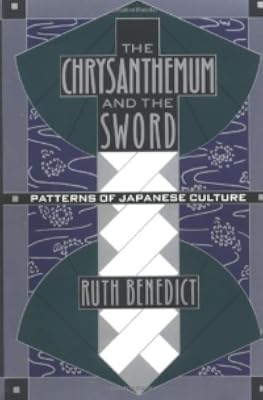
The Chrysanthemum and the Sword: Patterns of Japanese Culture
by Ruth Benedict
On This Page
Description
Essential for anyone interested in Japanese culture, this unsurpassed masterwork opens an intriguing window on Japan. The World War II-era study by the cultural anthropologist Ruth Benedict paints an illuminating contrast between the people of Japan and those of the United States. The Chrysanthemum and the Sword is a revealing look at how and why our societies differ, making it the perfect introduction to Japanese history and customs.Tags
Recommendations







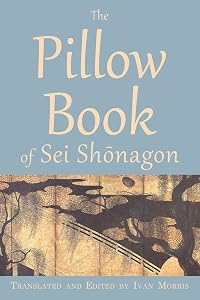
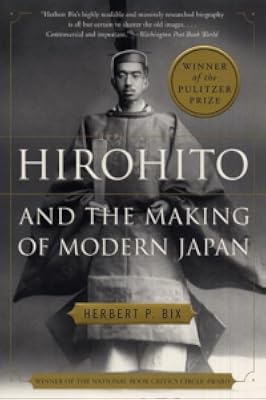
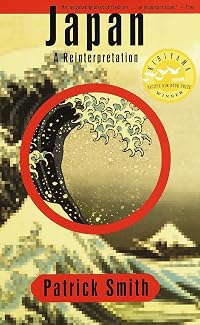

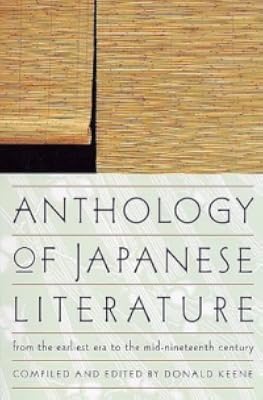









Member Recommendations
Member Reviews
It's supremely dodgy as anthropology--researched from across the Pacific, the main informant a disgruntled nisei, and ultimately even when it has real insights mistaking a profoundly dislocated, damaged point in Japanese social history for business as usual--but so much of this has been so influential on my life: a myth of Japan that became a myth of another way to be, a way of stepping away from the things my own culture and upbringing took as so obvious as to be invisible. Looking into a mirror to see your soul; self-respect being not holding to a set of personal morals, but behaving appropriately, cleaving to the circumstances--the ultimate in/flexibility--and never letting the strain show; "thank you" as "It cannot be borne, the show more burden you place on me by putting me in your debt." This all remained latent as long as life was selfish and easy, but as I've tried to be a dad in difficult circumstances and work with my son's mum so carefully and cause no harm, it's come up again and again. I mean this book may only say an indeterminate amount about Japan, but it's the closest thing I've found to a manual for being stronger than you are. show less
Es un libro interesante, aunque me costó ponerle puntaje.
Lo mejor es sin duda alguna la descripción de las diversas obligaciones que tiene el japonés: para con el emperador, su familia, su «buen nombre», etc. También se destaca de manera especial el capítulo sobre la educación de los niños.
Lo peor es, bueno, cierto bias, algo de esperar en un ensayo realizado a) sin poner un pie en Japón; y b) comisionado por el gobierno de los Estados Unidos.
Hubo muchas partes que me resultaron algo densas y descoloridas; el capítulo sobre el Zen me resultó particularmente aburrido, y en general terminé este libro porque me lo puse como meta. No termina de ser una lectura entretenida, pero contiene información muy valiosa que, si bien show more puede intuirse, uno no alcanza a procesar con los pocos datos recogidos tras ver anime o leer a Murakami. show less
Lo mejor es sin duda alguna la descripción de las diversas obligaciones que tiene el japonés: para con el emperador, su familia, su «buen nombre», etc. También se destaca de manera especial el capítulo sobre la educación de los niños.
Lo peor es, bueno, cierto bias, algo de esperar en un ensayo realizado a) sin poner un pie en Japón; y b) comisionado por el gobierno de los Estados Unidos.
Hubo muchas partes que me resultaron algo densas y descoloridas; el capítulo sobre el Zen me resultó particularmente aburrido, y en general terminé este libro porque me lo puse como meta. No termina de ser una lectura entretenida, pero contiene información muy valiosa que, si bien show more puede intuirse, uno no alcanza a procesar con los pocos datos recogidos tras ver anime o leer a Murakami. show less
An excellent really engrossing exploration of the perplexing, contradictory Japanese mind and culture. This is really WW II, post- and the near term after the occupation. It makes me more interested to know more, if I ever could --- The complete comprehension of such an intriguing and different world can only be truly understood over a lifetime I am sure, but this book is a fascinating vista into this unique and incomprehensible culture.
Really good examination of Japanese values and character right after World War 2 ended. Makes it clear why they did not become vindictive.
I have read elsewhere that it has errors in terminology, etc., but it is still one of the best on Japan. It is a classic.
I have read elsewhere that it has errors in terminology, etc., but it is still one of the best on Japan. It is a classic.
This was a really interesting read, I learned a lot. But I wonder how accurate it is sixty years on?
This is an analysis of Japanese culture written during World War II and published just after the war during the occupation of Japan by American forces. Ruth Benedict never traveled to Japan, so her analysis is based on secondary sources, as well as interviews with Japanese and Japanese-Americans. Because of the indirect nature of the research, one should probably take the findings with a grain of salt. However, I still found the book enlightening and believe it will be useful in my travels to Japan and interactions with Japanese people. The main focus is the system of obligations that a typical person in Japan lives under. "On" is an obligation passively incurred; that is, when someone does something for you. Doing someone a nice turn show more can create an obligation from them to you that the recipient feels burdened to meet. That's something a Westerner should remember before offering a helping hand in Japan. Another form of obligation is "gimu," an obligation to the emperor, your parents, or to your profession. Since the war, the government has emphasized this form of obligation over "giri", which is an obligation to to honor one's name and to clear any insult or failure. Giri was apparently responsible for a lot of bloodshed in samurai times. Also, inability to clear one's name can lead quickly to suicide, and Japan certainly has a reputation for a high suicide rate. Benedict also includes an interesting description of how personal freedom in Japan traditionally decreases with age. A child has almost complete freedom, whereas an adult is extremely confined by the network of obligations he must operate within, and then in old age the network of obligations dissipates to again allow a great deal of freedom.
Benedict's analysis of Japan's behavior following the war is based on these concepts. She also makes predictions about Japanese economic success based on Japanese culture that proved to be true, at least until the real estate bust and deflation that occurred in the 80s and 90s. show less
Benedict's analysis of Japan's behavior following the war is based on these concepts. She also makes predictions about Japanese economic success based on Japanese culture that proved to be true, at least until the real estate bust and deflation that occurred in the 80s and 90s. show less
The history part was informative and interesting to some extent, but the explanation of Japanese people's behavior was just too condescending IMO. I'm currently living in Japan, and I don't think much of it is accurate. I daresay the book is heavily outdated.
It got sooo boring at the halfway mark, it was taking me forever to make progress. After putting me sleep for several weeks, I finally decided to quit on this book.
The fact that the version I read had so many typographical errors didn't help one bit.
Read it for the history part only if you want, but there will definitely be better options available.
It got sooo boring at the halfway mark, it was taking me forever to make progress. After putting me sleep for several weeks, I finally decided to quit on this book.
The fact that the version I read had so many typographical errors didn't help one bit.
Read it for the history part only if you want, but there will definitely be better options available.
Members
- Recently Added By
Lists

Mad Men Reading List
25 works; 5 members
My Mad Men Reading List
47 works; 1 member
Author Information

11+ Works 2,790 Members
Some Editions
Series
Belongs to Publisher Series
Common Knowledge
- Original title
- The Chrysanthemum and the Sword: Patterns of Japanese Culture
- Original publication date
- 1946
- Important places
- Japan
- First words
- The Japanese were the most alien enemy the United States had ever fought in an all-out struggle.
- Last words
- (Click to show. Warning: May contain spoilers.)If it has failed elsewhere, Japan can set herself to prove how well she has learned the lesson that imperialistic dynastic enterprises are no road to honor.
- Original language
- English
Classifications
Statistics
- Members
- 1,412
- Popularity
- 16,725
- Reviews
- 17
- Rating
- (3.70)
- Languages
- 16 — Chinese, Czech, English, French, German, Hungarian, Indonesian, Italian, Japanese, Korean, Polish, Russian, Spanish, Swedish, Turkish, Portuguese (Portugal)
- Media
- Paper, Audiobook, Ebook
- ISBNs
- 58
- UPCs
- 2
- ASINs
- 23